
Limestone direct import Gilbert projects deliver one of the most significant cost advantages available in Arizona’s stone market — but only when you understand exactly where the savings originate and how to structure your procurement to capture them fully. Most buyers assume the price difference between domestic distribution and direct import is modest, maybe 10 or 15 percent. The real gap, when you account for multiple distribution markups, domestic warehousing fees, and regional freight premiums, typically runs 30 to 45 percent on large orders. That’s the number that changes project economics entirely.
How Direct Import Pricing Actually Works
The conventional supply chain for natural stone in Arizona runs through at least three hands before it reaches your project site — quarry, overseas exporter, domestic importer, regional distributor, and then you. Each transfer point adds margin. Limestone direct import collapses that chain to two steps: quarry to your project. The arithmetic is straightforward, but the operational requirements behind it are where most buyers run into problems.
You’ll need to commit to container-quantity orders to access factory-direct pricing. A standard 20-foot container holds roughly 18 to 22 pallets of limestone paving slabs, depending on thickness and slab dimensions. A 40-foot container roughly doubles that. The minimum order threshold that unlocks genuine limestone factory direct Arizona pricing sits around 500 square feet at the low end, but the real per-unit economics don’t sharpen until you’re sourcing 1,000 square feet or more in a single purchase order.
For Gilbert projects specifically, the local volume of commercial and residential development creates natural opportunities to aggregate orders across multiple jobs or partner with neighboring contractors on shared containers. This is a strategy that experienced procurement teams use routinely — and it’s one of the most effective ways to eliminate middlemen without shouldering the full container minimum alone.
Limestone Grades and What Import Specifications Actually Mean
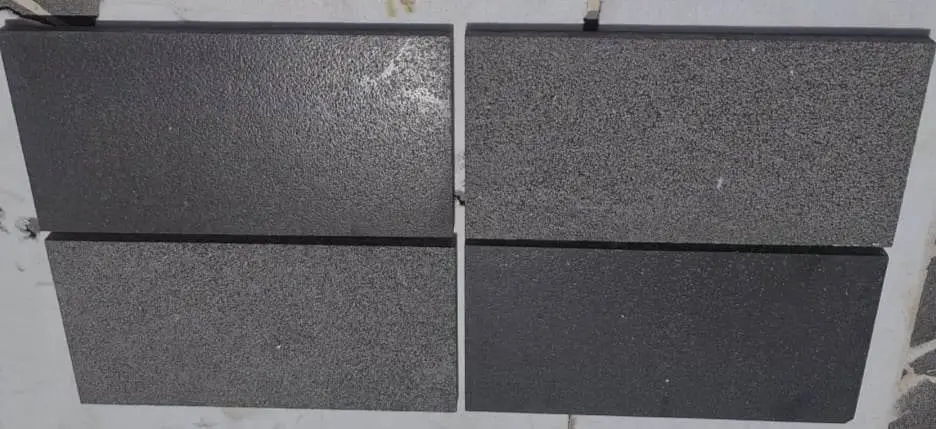
Not all limestone that arrives through direct import channels is equivalent. When you’re sourcing factory direct, you’re responsible for specifying the right material — there’s no domestic distributor filtering stock for you. The three variables that matter most for Arizona applications are density, absorption rate, and surface finish tolerance.
- Density should run 145 to 160 lbs/ft³ for exterior paving applications — softer stone in the 120 to 135 lbs/ft³ range will deteriorate prematurely under Arizona’s UV intensity and thermal cycling
- Water absorption rate below 3% is the threshold for exterior-grade performance in desert climates; stone above this threshold will accumulate mineral deposits and surface spalling within 3 to 5 years
- Surface finish tolerance for calibrated limestone should hold to ±2mm across the slab face — anything looser creates lippage issues during installation that your installers will spend hours grinding down
- Hardness on the Mohs scale for workable exterior limestone typically falls between 3 and 4; below 3 and you’re looking at surface wear that becomes visible within 2 to 3 years in high-traffic areas
- Compressive strength specifications for driveways and commercial applications should target a minimum of 7,500 PSI — this is the threshold that separates architectural-grade from residential-grade product
Here’s what most specifiers miss when reading import documentation: the country of origin matters less than the quarry’s internal grading standards. Turkey, Portugal, and certain Israeli quarries maintain very consistent grading protocols. Some lower-cost suppliers from other regions mix grades within a single container, which creates installation headaches that cost more to resolve than the savings you captured upfront.
Gilbert Import Savings: Where the Numbers Land
The Gilbert import savings opportunity is most tangible when you map it against specific project types. For a standard residential patio project running 600 to 800 square feet, the direct import route versus regional distribution typically saves $4 to $7 per square foot on material cost alone. At 700 square feet, that’s $2,800 to $4,900 back into your project budget — enough to cover installation labor on a modest-sized job.
Commercial projects in Gilbert’s growing mixed-use corridors see even sharper returns. A 3,000 square foot commercial courtyard spec’d with 2-inch limestone paving slabs through a regional distributor might run $22 to $28 per square foot in material cost. Arizona direct sourcing on the same specification, in container quantity, typically lands between $13 and $18 per square foot. The gap funds meaningful upgrades elsewhere in the project scope.
There’s an important caveat most procurement guides skip over: direct import comes with lead time exposure that domestic distribution doesn’t carry. Your container ships on a fixed schedule, and transit from Mediterranean or European quarries runs 6 to 10 weeks depending on port routing. You need to build that window into your project schedule explicitly. Projects in Chandler that require phased delivery — say, an initial patio installation followed by a driveway extension 60 days later — sometimes find that a hybrid approach works better: direct import for the large initial volume, domestic stock for smaller follow-on phases.
Base Preparation Requirements for Import Limestone in Arizona
The material savings from Arizona direct sourcing only hold their value if the installation performs. In Gilbert’s soil conditions — predominantly sandy loam with caliche deposits at varying depths — base preparation is the variable that determines longevity. A well-specified import limestone laid on an inadequate base is a 7-year installation. The same stone on a properly engineered base is a 20 to 25-year installation.
- Minimum compacted aggregate base depth for foot-traffic areas: 4 inches of 3/4-inch crushed aggregate, compacted to 95% Modified Proctor density
- Driveways and vehicle access areas require 6 to 8 inches of compacted aggregate, with geotextile fabric at the subgrade interface to prevent fines migration in sandy soils
- Caliche layers, when encountered, should be evaluated before breaking — intact caliche at 18 to 24 inches provides an excellent natural sub-base and doesn’t require excavation unless drainage is compromised
- Setting bed sand should be coarse, clean, and no deeper than 1 inch — bedding sand deeper than 1.5 inches creates a compressible layer that allows slab settlement under thermal loading
- Joint spacing for 24×24-inch limestone paving slabs in Gilbert’s climate zone should run 3/16 inch minimum to accommodate thermal expansion at summer surface temperatures that routinely exceed 140°F
The limestone paving slabs you source through limestone direct import Gilbert orders will arrive calibrated to a specific nominal thickness — typically 3/4 inch, 1.25 inch, or 2 inch. Verify your base depth calculations against the actual calibrated thickness on your purchase order, not the nominal spec. Thickness tolerance on import limestone typically runs ±3mm, which affects your finished elevation math.
Logistics and Delivery Planning for Container Orders
Getting limestone direct import Gilbert logistics right requires planning that starts well before you commit to a purchase order. Container delivery to Gilbert project sites involves coordination that differs meaningfully from standard pallet delivery off a distributor’s truck.
A loaded 40-foot container weighs 55,000 to 65,000 lbs. Your site access needs to accommodate a semi-trailer chassis — that means turning radius, overhead clearance, and ground bearing capacity all need evaluation before delivery day. For residential projects in established Gilbert neighborhoods, street access is frequently the limiting factor. Projects in Tempe with similar tight-access constraints often specify side-load delivery or arrange for a local transload point where the container is broken down and delivered in smaller truck loads — this adds cost but is sometimes the only workable option.
At Citadel Stone, we coordinate delivery logistics as part of the procurement process, not as an afterthought. Our team reviews site access conditions before finalizing delivery scheduling, which prevents the costly re-delivery fees that can erode a significant portion of your import savings if a container truck can’t complete the delivery on the first attempt.
Warehouse inventory availability is a separate consideration from import lead times. For projects that can’t wait 6 to 10 weeks for a direct container, in-stock limestone paving slabs at a regional warehouse may bridge the gap. The unit cost is higher, but the carrying cost of a delayed project often exceeds the material price difference. Your procurement strategy should evaluate both paths with realistic timeline data before committing.
Choosing the Right Thickness for Gilbert Applications
Thickness selection is one of the specification decisions that import buyers frequently get wrong because they default to whatever thickness the supplier is offering at the best price point. The right thickness for your application is determined by load requirements and installation method — not by what arrived at the best FOB price.
For pedestrian-only applications — patios, pool decks, garden paths — 3/4-inch to 1.25-inch calibrated limestone performs adequately when set on a prepared mortar bed or tight sand base. For mixed-use areas that see occasional vehicle access, 1.5 to 2 inch is the minimum defensible specification. Full vehicular driveways should run 2 to 2.5 inch nominal, with the understanding that the setting method shifts to a mortar bed rather than sand setting at these thicknesses.
For a deeper look at material options across Arizona applications, our limestone paving slabs in Arizona resource covers the full specification range with climate-specific guidance that translates directly to Gilbert and the broader East Valley market.
Sealing and Maintenance Protocols for Import Limestone
Direct import limestone often arrives with a higher surface porosity than buyers anticipate, particularly if the stone was honed rather than polished or tumbled. This isn’t a defect — it’s a characteristic of how the stone was finished at the quarry level, and it’s manageable with the right sealing protocol. What matters is addressing it before the stone is exposed to Arizona’s mineral-rich water and dust.
- Initial penetrating sealer application should occur within 30 days of installation, after the stone has acclimated to ambient conditions and any installation adhesives have fully cured
- Silane-siloxane based penetrating sealers are the appropriate choice for exterior limestone in Arizona — they allow vapor transmission while blocking liquid water infiltration
- Reapplication intervals for exterior applications in Gilbert’s climate zone run 18 to 24 months — the UV intensity and thermal cycling break down sealer chemistry faster than in cooler climates
- Efflorescence — the white mineral deposits that appear on unsealed or under-sealed limestone — is more pronounced with some import stones than domestic stock due to higher soluble salt content in certain quarry regions
- Joint sand maintenance is as important as surface sealing: polymeric sand at 90 to 95% joint fill depth prevents weed establishment and maintains structural interlock between slabs
The detail that matters most for long-term performance is the first sealer application. Stone that goes unsealed through its first Arizona summer absorbs dust, mineral deposits, and UV-accelerated oxidation that are difficult to reverse without professional restoration. Budget for proper sealing as a line item in your project cost, not as an optional add-on.
Aggregating Orders to Maximize Gilbert Import Savings
The most effective strategy for capturing genuine Gilbert import savings on projects that fall below container minimums is order aggregation. This means coordinating purchase timing across multiple projects so a single container order satisfies the volume threshold that unlocks factory-direct pricing. It’s a procurement approach that larger contractors use routinely, and it’s accessible to smaller operations that plan ahead.
The mechanics are straightforward: identify two or three projects within a 6 to 12 week installation window, confirm the combined square footage crosses the container threshold, and structure a single import order with phased delivery from a local distribution point. The stone arrives in Gilbert on one container, gets stored at a transload facility or on-site if space allows, and is distributed to each project as the installation schedule requires. For projects in Surprise that are geographically further from central distribution, this kind of coordinated import order can make the economics of Arizona direct sourcing work even for mid-scale residential projects that wouldn’t otherwise reach the threshold independently.
Our technical team at Citadel Stone has helped Gilbert-area contractors structure aggregated orders across multiple job sites, coordinating specifications so different projects within a shared container order use compatible stone families — which means one quality inspection covers the entire shipment. It’s an approach that requires some advance planning but delivers the per-unit economics that make limestone direct import the most competitive material sourcing option available in the Arizona market.
Last Word
Limestone direct import Gilbert projects succeed when the procurement decision is treated as a specification decision, not just a purchasing decision. The material you select, the thickness you specify, the base preparation you require, and the sealing protocol you mandate all interact to determine whether the cost advantage you captured through direct sourcing actually delivers long-term value — or gets spent on early repairs and replacements. Getting the specification right is what converts the price advantage into a performance advantage.
The direct import path requires more planning effort than buying from regional distribution, but the planning is front-loaded: lead times, container logistics, site access evaluation, and aggregated order coordination all happen before the stone ships. Once those variables are managed, the installation proceeds like any other high-quality limestone project. For Gilbert contractors and developers who run multiple projects annually, building a direct import sourcing workflow pays dividends that compound across every subsequent project. If you’re managing large-scale installations across the East Valley, Limestone Paving Bulk Discounts for Chandler Large Areas covers complementary volume pricing strategies that apply across the broader Phoenix metro market — a natural extension of the eliminate middlemen approach that drives savings on every direct import order. We supply limestone paving slabs Arizona pools need to stay cool and safe in the summer.