

Limestone remnants Scottsdale buyers are sourcing for accent walls, garden edging, and courtyard infill represent one of the most underutilized value plays in Arizona’s natural stone market — and knowing exactly how to work with them separates a polished finished project from an awkward patchwork. Remnant pieces carry the same geological density and surface character as full-format slabs, but the batch logic is entirely different, and that changes your planning approach from the ground up. Your project timeline, your cutting sequence, and your layout strategy all need to adapt when you’re working with offcut inventory rather than freshly quarried full runs.
What Limestone Remnants Actually Are
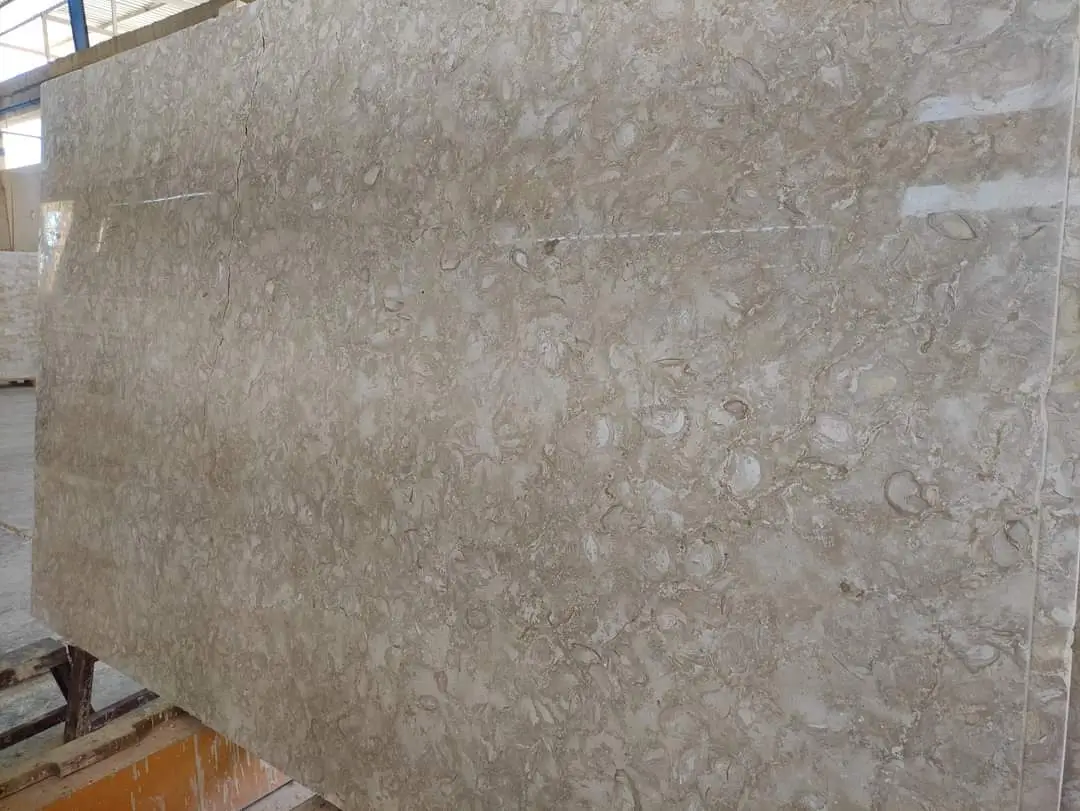
Most people assume remnants are damaged goods or seconds — that’s not accurate. Scottsdale leftover slabs typically come from two sources: end-of-batch cuts from large commercial orders where the final pieces didn’t fit a standard module, and quarry trims where the natural bed produced irregular shapes at the margins. The stone itself is structurally identical to full inventory. Compressive strength still runs in the 8,000–12,000 PSI range for quality Arizona-sourced limestone, and the porosity profile — typically 3–8% absorption — matches what you’d see in any full slab from the same quarry seam.
The practical difference is geometry. You’re working with asymmetric pieces that require more layout planning, and you’re working from a fixed pool of material rather than an open order. That constraint actually pushes better design decisions in smaller spaces — it forces you to think about piece placement the way a mosaic artist would rather than defaulting to a grid repeat.
Why Scottsdale Small Projects Are Ideal Candidates
The residential scale in Scottsdale — courtyard entries, side-yard paths, plunge pool surrounds, and covered patio insets — aligns almost perfectly with the piece sizes that come out of remnant batches. You’re rarely covering more than 80–150 square feet in these applications, and that’s precisely where limestone offcut pieces Arizona suppliers have in consistent supply. Full-slab orders for areas this small carry a cost premium that doesn’t make financial sense, and remnant pricing typically runs 30–45% below standard slab rates for comparable material quality.
- Courtyard entries averaging 40–60 square feet can be completed with a single remnant batch without needing supplemental material
- Garden border runs of 15–25 linear feet are natural fits for irregular-edge pieces that would otherwise require expensive custom cuts
- Step treads and threshold details benefit from the natural cleft faces common in remnant stock
- Accent insets within existing concrete or tile areas use remnant savings to create visual interest without full demolition
The thermal performance argument for limestone in Scottsdale is also significant. Surface temperatures on limestone run 18–25°F cooler than adjacent concrete under full afternoon sun exposure, which matters in a climate where ground surfaces regularly exceed 160°F on standard grey concrete.
Sorting and Grading Your Remnant Batch
Before you commit to a layout plan, sort your pieces by three criteria: thickness tolerance, surface finish consistency, and minimum usable dimension. Thickness variation in remnant batches commonly runs ±3/8 inch rather than the ±1/8 inch you’d expect from a premium full-slab order. That range is workable, but your setting bed has to compensate — a dry-pack mortar bed at 1–1.5 inches gives you the adjustment range you need without creating lippage issues.
Surface finish consistency matters more for seating areas and entries than for garden paths. Honed remnants mixed with tumbled pieces in the same run create a jarring visual shift that’s hard to correct after installation. Sort your batch into finish categories first, then plan your layout zones based on what you have. The pieces with minor edge chips or corner breaks are often your best cuts for borders and perimeter pieces where a straight edge gets buried in your edging system anyway. These sorting steps are equally applicable to any Arizona small area solutions involving Scottsdale leftover slabs or offcut inventory from other metro suppliers.
- Thickness range: flag any piece deviating more than 1/2 inch from batch median for use in secondary locations
- Minimum usable piece size for field installation: 6 inches in the shortest dimension
- Pieces under 6 inches work well for grout-joint fill or decorative aggregate applications
- Check for through-cracks running across the full piece width — these are structural failures, not cosmetic issues
Base Preparation for Remnant Installations
The base system for a remnant installation in Arizona small area solutions doesn’t change just because you’re using offcut pieces — but the leveling tolerance requirements tighten. A full uniform slab can absorb minor base inconsistency through the slab’s own rigidity. Smaller irregular pieces have no such advantage. Your compacted aggregate base needs to be dead flat within 3/16 inch over a 10-foot straightedge, and that means checking your grade at closer intervals than you would for a large uniform pour.
In projects across the Phoenix metro area, the caliche layer commonly encountered at 12–24 inches acts as a natural subgrade with excellent bearing capacity — but the layer above it often includes expansive clay that creates differential movement. For small remnant installations where you’re tying into existing hardscape, that movement becomes visible at piece joints much faster than in large continuous runs. A 4-inch compacted Class II base over a compacted native subgrade (or stabilized caliche) handles the load without the movement risk.
- Compact base material to 95% Proctor density minimum
- Slope the base at 1/8 inch per foot minimum for drainage — more critical with small irregular pieces that create irregular joint patterns
- Use a screed pipe system to establish consistent setting bed depth before placing pieces
- Allow 24 hours after base compaction before setting bed placement in summer heat conditions
Layout Strategies That Work with Irregular Pieces
Dry-laying your full batch before committing to mortar is non-negotiable with remnant pieces — and that means you need a clear flat area at least as large as your installation zone to stage the dry layout. The puzzle-fit approach works best: start with your largest pieces in the center field, work toward the perimeter, and save your smallest pieces for edge fill and corner details. Avoid forcing tight fits in the field area — joints between 3/8 inch and 3/4 inch actually read better aesthetically with natural stone than the tight 1/8-inch joints you’d target with machine-cut full slabs.
For Arizona small area solutions that include curves or irregular perimeters, limestone cuts cleanly with a 4-inch diamond blade on an angle grinder. You’ll want a straightedge guide clamped to the piece when cutting — freehand cuts on natural stone almost always show a slight drift that becomes obvious after grouting. Score your cut line with a pencil rather than chalk, since chalk can migrate into the stone’s open pore structure and affect sealer adhesion later. Limestone remnants Scottsdale installers source for curved path work are particularly well suited to this technique because the irregular batch geometry already encourages organic layout patterns.
Remnant Savings: Understanding the Real Cost Picture
The remnant savings calculation isn’t just about the per-square-foot material cost — you need to account for the higher waste factor. A standard full-slab installation on a square area runs 8–12% waste. Remnant batch installations on irregular small areas typically run 18–25% waste depending on piece geometry and layout complexity. Your net material cost advantage narrows, but it rarely disappears — most remnant projects still come in 20–30% below comparable full-slab installations when you account for the full waste factor and actual usable yield.
For projects where you can access Tucson or Phoenix warehouse inventory directly, checking stock levels before finalizing your layout plan avoids the frustrating situation of designing around pieces that aren’t available in quantity. At Citadel Stone, we recommend confirming your piece count with at least a 20% overage buffer before your layout is finalized — remnant batches don’t get replenished from the same quarry run, and mixing two different batches in the same project almost always produces a visible color variation.
- Calculate your net usable square footage at 75–80% of total batch area, not 90%
- Price comparison should use net usable yield, not gross batch weight or area
- Factor in additional labor time for layout: remnant installations typically add 20–30% to layout labor compared to uniform slab work
- The final remnant savings advantage is strongest in projects under 120 square feet
For projects where the budget allows a hybrid approach, combining remnant field pieces with our limestone slab wholesale border material gives you cost efficiency in the field area without sacrificing the clean perimeter lines that define a finished installation.
Sealing and Finishing Limestone Offcut Pieces
Sealing protocols for limestone offcut pieces Arizona projects require differ from standard full-slab maintenance primarily because of joint geometry. Irregular piece layouts create more total joint length per square foot than grid installations, and those joints are the primary entry point for efflorescence and organic staining from irrigation overspray — both common issues in Scottsdale’s irrigated desert landscape context.
Sealer selection depends on the finish category you sorted into. Honed limestone in small residential areas benefits from a penetrating silane-siloxane sealer at 15–20% solids — it doesn’t alter the surface appearance but cuts absorption from the 3–8% natural rate down to under 1%. Tumbled or brushed pieces where you want to enhance the warm beige tones of the stone can accept a topical enhancing sealer, but you’ll need to reapply every 18–24 months in Scottsdale’s UV environment. The UV index at this latitude accelerates topical sealer breakdown faster than any other failure mode.
- Apply sealer only when stone surface temperature is between 50°F and 80°F — early morning application is mandatory in summer months
- Allow 72 hours minimum cure time after final grout or joint sand installation before sealing
- Two thin coats outperform one heavy coat for penetrating sealers — allow 30 minutes between coats
- Re-seal irregular joint areas first, since those surfaces see the most direct water intrusion during monsoon events
Ordering and Delivery Logistics for Small Batches
Small remnant batch deliveries present a logistics consideration that full-pallet orders don’t — you’re often receiving mixed-piece packages that require careful unloading to avoid edge damage. Your site access needs to accommodate at minimum a standard flatbed truck, and the drop zone should be within 30 feet of the installation area to avoid the cumulative edge chipping that happens when natural stone pieces are hand-carried long distances across rough terrain. Even small pieces of quality limestone weigh 12–18 lbs per square foot at standard 1.25-inch thickness.
Warehouse lead times for remnant batches are typically shorter than standard slab orders — Citadel Stone usually has remnant inventory available for same-week truck delivery rather than the 2–4 week lead time for fresh-quarried full slabs. That shorter timeline is an advantage when you’re working on a renovation project where the homeowner needs to see material progress quickly. Confirm your delivery window at least 48 hours in advance so the warehouse team can stage your specific batch on a dedicated pallet rather than pulling pieces from bulk storage the morning of delivery.
Moving Forward
Limestone remnants Scottsdale projects benefit from most when the planning process starts with an honest inventory of what you have, not what you wish you had. Sort your batch, establish your base tolerances, and design your layout around your actual piece geometry — that sequence produces better results than forcing irregular material into a layout designed for uniform stock. The material quality in properly sourced remnant batches is genuinely excellent, and the irregular character of the pieces often produces more visually interesting finished work than a perfectly uniform grid ever would.
As you explore the full range of Arizona stone options for your property’s landscape, complementary reclaimed applications are worth considering alongside fresh remnant stock. Reclaimed Limestone Paving for Phoenix Eco-Friendly Savings covers how reclaimed limestone performs in a related residential context, with useful overlap for anyone working with non-standard piece formats in the Arizona desert climate. We offer end-of-batch deals for cheap limestone paving in Arizona for smaller landscaping jobs.