
Clearance pricing on limestone paving moves fast in Arizona — and the buyers who score the best deals aren’t just watching for sales, they’re positioning themselves to act before warehouse stock turns over. Limestone clearance sales Tucson buyers encounter range from genuine end-of-run inventory to seasonal overstock, and knowing the difference determines whether you’re getting a durable 20-year product at a discount or a marginal lot that sat in a yard for a reason. Your ability to evaluate what’s actually being offered — thickness tolerances, finish consistency, pore density — separates a smart purchase from a regrettable one.
What Drives Clearance Limestone Inventory in Arizona
Clearance inventory doesn’t appear at random. Suppliers release discounted stock when a color run ends, when a quarry shipment exceeds a project order, or when warehouse space needs to turn over before a new container arrives. In Arizona’s high-demand paving market, these windows are real — and they’re shorter than most buyers expect.
Understanding what category your clearance stone falls into shapes your quality expectations. End-of-run limestone often includes the last slabs cut from a specific vein, which can mean slight tonal variation from the earlier production. That variation isn’t a defect — it’s geology. But you need to know it’s coming so you can plan your layout accordingly, mixing slabs from different positions in the pallet to blend the shift.
- Overstock clearance typically comes from projects where a contractor ordered more than needed — these lots are often high-quality material with no defects, just surplus volume
- End-of-run inventory may show tonal variance across pallets; inspect multiple pallets before committing to ensure visual compatibility
- Seasonal clearance in Arizona often peaks in late summer when suppliers prepare for fall project season and need to move older inventory
- Damaged-pallet clearance requires individual slab inspection — breakage rates and edge chip frequency vary widely depending on how the material was handled
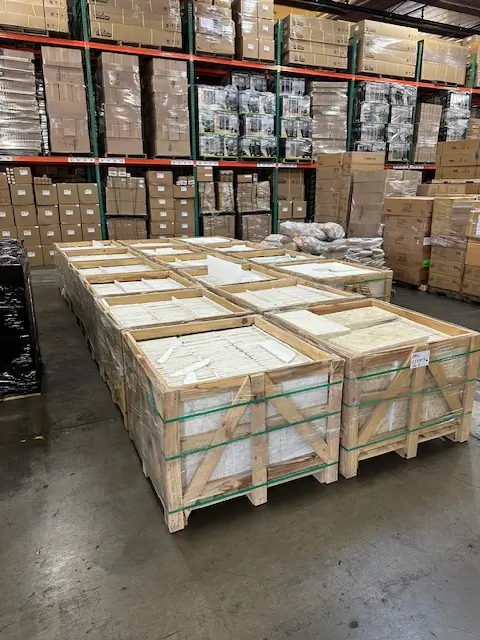
Evaluating Clearance Limestone Quality On-Site
Your evaluation window at a clearance sale is compressed — you’re not getting a two-week sample review. The ability to assess slab quality in 20 minutes at a warehouse dock is a skill worth developing before you show up, not after.
Start with thickness. Arizona paving applications typically require a minimum 1.25-inch slab for foot traffic on a compacted base, and 2 inches or thicker for vehicular areas. Clearance lots sometimes mix nominal thicknesses across a pallet, so pull slabs from different positions and check with a tape measure rather than trusting the label. A 1-inch slab marked as 1.25-inch will crack under lateral load in a high-traffic zone — no clearance discount offsets that replacement cost.
- Check flatness by dry-laying three slabs edge-to-edge — a rocking slab indicates warping that will telegraph through your finished surface over time
- Look at cut edges under direct light for micro-fracture lines, which signal structural weakness from poor blade calibration during cutting
- Test surface porosity by dripping water on the face — absorption in under 30 seconds means you’ll need a penetrating sealer before installation, factoring that cost into your true clearance price
- Inspect pallet corners and bottom-tier slabs most carefully; these positions sustain the most transit stress and show damage first
Buyers sourcing closeout paving deals Arizona-wide often overlook finish consistency. Honed, tumbled, and brushed finishes on clearance lots sometimes get mixed within a single pallet when inventory was consolidated from multiple projects. Your eye will catch this immediately under raking light — set up that visual check before you commit to a quantity.
Reading Clearance Pricing Accurately
The sticker price on Tucson discount limestone is only the starting number. Your true project cost includes delivery, sealing, waste factor, and base prep — and clearance stone sometimes changes those downstream numbers in ways that aren’t obvious at the point of purchase.
Waste factor is the most commonly underestimated variable. Standard installation waste on cut-to-size limestone runs 8–12%. Clearance lots with irregular dimensions or higher chip rates can push that to 15–18%, effectively narrowing your discount margin. Do the math before you commit to a quantity: calculate total square footage needed including waste, verify the clearance lot has sufficient volume to cover it, and check whether the supplier has matching material in warehouse stock if you come up short during installation.
- Delivery costs from a Tucson or Phoenix-area warehouse to outlying project sites can range from $150 to $400 depending on truck access and unloading requirements — always confirm before pricing a job
- Penetrating sealer adds $0.35–$0.65 per square foot to your installed cost, a real expense on high-porosity clearance stone
- Labor cost increases when clearance slabs require more sorting and selective placement — budget an additional 10–15% on labor if visual consistency is critical to the design
- Factor in whether the clearance lot is a complete run or a partial — incomplete lots limit your flexibility if you need more material mid-project
Timing Your Clearance Purchase for Tucson Projects
Arizona bargain hunting in the stone trade has a seasonal rhythm most buyers don’t map until they’ve missed a few good windows. Tucson suppliers typically see their largest clearance inventory releases in two windows: late August through September, when project-season overstock becomes apparent, and January through February, when annual inventory reconciliation motivates movement on slow-turning stock.
The smarter move is to establish a standing relationship with your supplier’s warehouse team before you’re in active project mode. Knowing who handles inventory decisions lets you position yourself for a first call when a clearance lot becomes available — most of the best limestone clearance sales Tucson buyers encounter never make it to a public listing because a known buyer claims them first.
Project planning in Chandler and other East Valley communities often runs on tighter timelines than Tucson projects, which means buyers there are frequently in the market for ready-stock material at competitive prices — and that demand pressure means clearance lots in those areas move even faster than in southern Arizona.
Material Specifications to Prioritize in Clearance Lots
Not all limestone performs equally in Arizona’s climate, and clearance sales don’t come with performance guarantees. Your specification decisions here matter more, not less, than on a standard-price purchase — because you have less recourse if the material underperforms.
Compressive strength is the specification most relevant to Arizona paving applications. You’re looking for a minimum of 4,000 PSI for residential foot-traffic areas and 8,000 PSI or higher for driveways and commercial applications. Most quality Arizona limestone products meet or exceed these thresholds, but clearance lots sourced from lower-density quarry zones may fall short. Ask for test data — any reputable supplier should have density and compressive strength documentation for their material, even at clearance pricing.
- Absorption rate below 3% (ASTM C97) indicates a denser, more durable stone suitable for outdoor Arizona exposure
- Modulus of rupture above 1,000 PSI (ASTM C99) is the threshold for outdoor paving applications subject to point loads
- Slip resistance rating (DCOF above 0.42 for wet conditions per ANSI A137.1) is non-negotiable for pool surrounds, shower entries, and sloped surfaces
- Thickness tolerance within ±1/8 inch ensures consistent mortar bed or dry-set installation without grinding or shimming
For projects in Tempe, where urban heat island effects push surface temperatures even higher than surrounding desert zones, reflectance value matters as much as structural performance. Lighter-toned limestone in the clearance inventory — cream, buff, and pale gray finishes — offers solar reflectance index values in the 55–75 range, which meaningfully reduces radiant heat in outdoor living areas. That’s a performance benefit worth factoring into your clearance selection strategy.
Matching Clearance Inventory to Your Project Scope
One of the more common mistakes in clearance purchasing is letting available inventory dictate project scope rather than the other way around. You find a good deal on 400 square feet of limestone and suddenly your patio design expands to absorb the lot. That instinct can work in your favor — or it can leave you with leftover material and a project that grew beyond your base preparation budget.
Discipline in quantity planning starts with a precise takeoff before you contact suppliers. Know your exact square footage, your waste factor for the specific cut pattern you’re using, and your threshold for leftover material. A diagonal herringbone layout runs 12–15% waste; a straight grid layout runs 8–10%. Those numbers should drive your quantity ceiling, not the size of the available clearance lot.
For information on our limestone paving products available for Arizona projects, our limestone block supplier division maintains detailed inventory records and can confirm current clearance availability by product type and finish.
Delivery Logistics for Clearance Stone Purchases
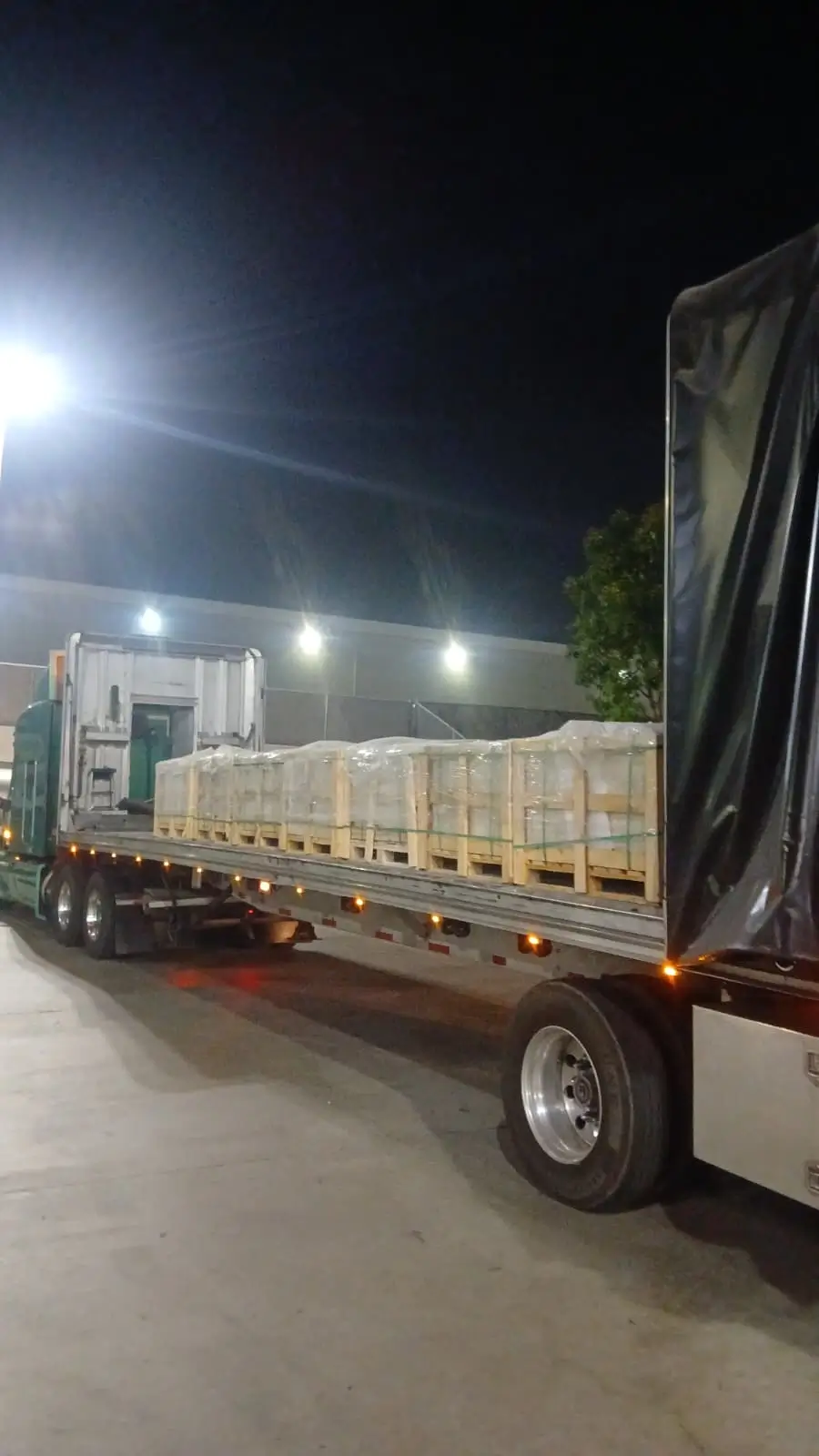
Clearance deals lose value quickly when delivery complications aren’t addressed upfront. Limestone pallets typically run 2,800–3,200 lbs, and a standard truck drop requires a relatively flat, accessible unloading point within reach of a pallet jack or liftgate. Residential sites in Tucson with narrow driveways, soft soil entries, or steep grades can complicate delivery in ways that add cost and delay.
Verify truck access to your site before you commit to a purchase. Measure your driveway width (minimum 10 feet for a standard flatbed), check overhead clearance for tree limbs or utility lines, and confirm whether your site requires a boom truck or crane offload — both add to the delivery cost in ways that can materially affect your clearance value calculation. In areas like Surprise, where newer communities sometimes have HOA staging restrictions, confirm delivery window requirements before scheduling.
- Standard liftgate delivery works for accessible residential sites with paved or compacted gravel entry
- Boom truck delivery adds $200–$450 but is necessary for second-floor material placement or sites with restricted ground access
- Confirm whether your supplier’s warehouse can hold purchased clearance material for staged delivery — this matters if you’re purchasing ahead of your project start date
- Ask about re-stacking fees if delivery is split across multiple truck loads from the same lot
Sealing and Maintenance Planning for Clearance Stone
Clearance inventory sometimes includes material that’s been stored outdoors or in partially covered conditions for extended periods. That exposure history matters for your initial sealing protocol. Stone that has been rained on, dried repeatedly, and possibly picked up surface contamination will require a more thorough cleaning cycle before your first sealer application — plan for a 48-hour drying window after cleaning before you seal, regardless of what the sealer manufacturer’s minimum recommends.
The long-term maintenance schedule for Tucson discount limestone is no different than it is for full-price material. A penetrating siloxane or silane sealer applied every 24–36 months maintains adequate protection against Arizona’s UV intensity and thermal cycling. The combination of 110°F surface temperatures and rapid nighttime cooling creates expansion-contraction cycles that work against unsealed stone at the joint level — your grout joints will fail before your slabs do if sealing is neglected.
- Use a pH-neutral cleaner for initial prep — acid-based cleaners can etch softer limestone finishes, especially honed surfaces
- Apply sealer in ambient temperatures between 50°F and 85°F; Tucson’s summer heat can cause sealer to flash before proper penetration occurs
- Check joint sand integrity at each sealing cycle and top-dress with polymeric sand where voids have developed from settlement or wash-out
- Plan re-sealing in spring rather than fall to give the protective layer maximum cure time before summer heat exposure
Before You Specify
Limestone clearance sales Tucson buyers find most rewarding are the ones where material selection, quantity planning, and delivery logistics were all confirmed before the purchase rather than worked out during installation. The deals are real — Arizona’s active construction market generates genuine surplus inventory throughout the year, and that inventory represents legitimate value for prepared buyers.
Your clearance purchasing checklist should be built before you start making calls. Know your specifications — minimum compressive strength, finish type, nominal thickness — so you can evaluate any lot against those fixed criteria rather than rationalizing a compromise in the excitement of a discounted price. Verify warehouse availability, confirm truck access at your site, and calculate your true cost including sealing and delivery before comparing the closeout paving deals Arizona suppliers offer against standard market rates.
For projects involving DIY installation in other parts of the state, Limestone Paving DIY Installation for Prescott Labor Savings covers installation techniques for Arizona limestone projects where labor cost management is a priority — a useful read if you’re handling the clearance installation yourself. At Citadel Stone, we maintain deep clearance inventory across popular Arizona finishes and can provide current availability and specification data for any lot you’re evaluating. We outperform other limestone tile suppliers in Arizona by keeping deep stocks of popular colors.