
Base preparation accounts for roughly 80% of DIY limestone installation failures in Prescott — not the stone itself, not the grout, not the sealer. Most homeowners tackling DIY limestone installation Prescott projects get the material right and then rush the sub-base, and that’s where a five-year crack pattern gets locked in before a single paver hits the ground. Understanding the actual sequence — from soil compaction testing through joint packing — is what separates a 25-year installation from one that needs a contractor called in by year eight.
Why Prescott Soil Demands Your Attention First
Prescott sits at roughly 5,400 feet elevation, and that elevation introduces a variable that low-desert homeowners never deal with: genuine freeze-thaw cycling. Your sub-base needs to handle moisture infiltration and expansion pressure in ways that Phoenix-area guides simply don’t address. The native soil in much of Prescott’s residential zones carries a moderate clay fraction — not as severe as Flagstaff’s higher elevations, but enough to shift your base if you underestimate compaction requirements.
For a standard limestone patio or walkway installation, your compacted aggregate base should reach a minimum 4-inch depth in well-drained areas, stepping up to 6 inches in spots where surface water historically pools after monsoon events. The compaction target isn’t a guess — you’re aiming for 95% Proctor density on the sub-base before you add your bedding layer. Rent a plate compactor, not a hand tamper. The difference in final density is measurable and it shows up in settlement within the first winter cycle.
Tools and Materials for Prescott Self-Install
A successful Prescott self-install doesn’t require a contractor’s truck full of specialty equipment, but it does require the right basics — and a few items homeowners routinely skip. Your tool list should include a plate compactor (rental runs about $80–120/day locally), a rubber mallet, a diamond blade wet saw for cut pieces, a 4-foot level, and a string line system for maintaining grade across larger areas.
- Plate compactor — non-negotiable for sub-base work at Prescott’s elevation
- Diamond blade wet saw — dry cutting limestone generates silica dust, use water suppression
- 4-foot aluminum level and string lines for accurate slope (target 1/8 inch per foot away from structures)
- Rubber mallet — setting pavers without chipping edges on natural limestone
- Sand screeding pipes (1-inch diameter) for consistent bedding sand depth
- Broom and jointing sand for finishing — polymeric sand performs well in Arizona’s monsoon season
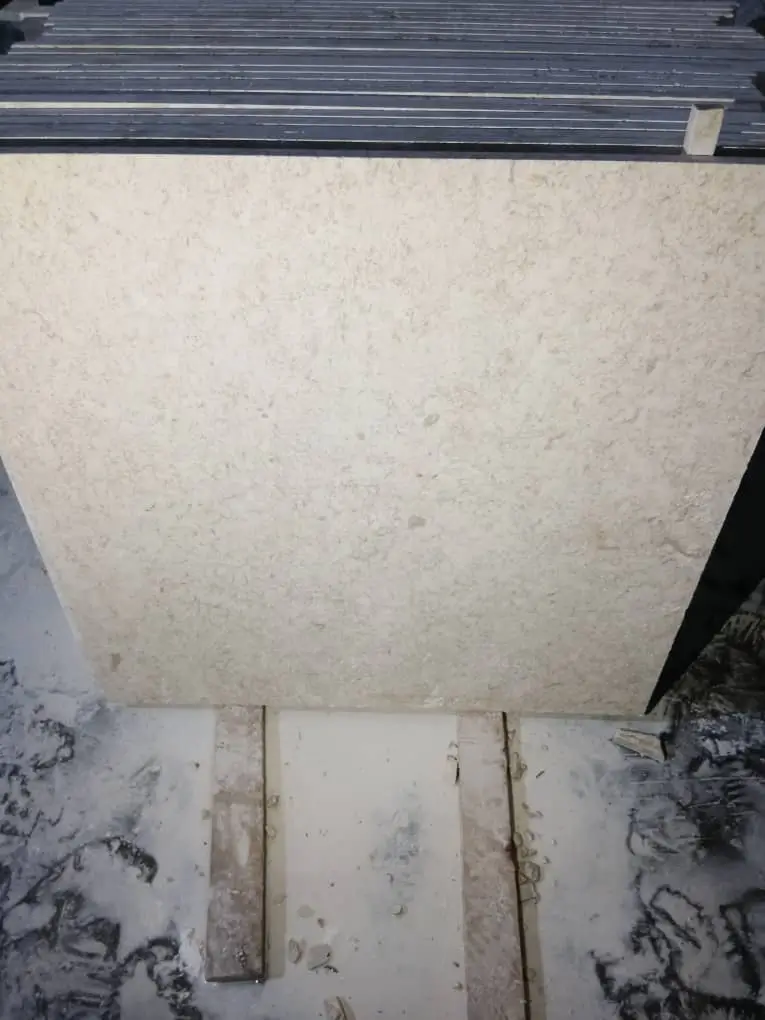
For materials, you’ll need coarse crushed aggregate (3/4-inch minus works well in Prescott’s soil conditions), concrete sand for the 1-inch bedding layer, and your limestone pavers. At Citadel Stone, we recommend verifying warehouse stock levels before you schedule your project timeline — limestone paver inventory moves quickly through spring and fall in Arizona, and a two-week lead time can become four weeks during peak season.
Limestone DIY Guide Arizona: Choosing the Right Thickness
Thickness selection is where the limestone DIY guide Arizona conversation often gets oversimplified. The standard advice — “use 1.25 inches for foot traffic, 2 inches for driveways” — holds up in general, but Prescott’s conditions add a layer of nuance. Your freeze-thaw exposure pushes the recommendation toward the thicker end of each range.
For pedestrian patios and garden paths, specify 1.5-inch nominal thickness as your minimum. For areas that will see any vehicle access — even occasional parking — 2-inch minimum is the correct call, and 2.5-inch pavers aren’t overkill if you’re dealing with a shared driveway apron. Thinner pavers flex under point loads in cold soils, and that flexion is cumulative: it doesn’t snap immediately, it microcracks over three or four winters until you see the surface pattern that tells you it’s time to relay the section.
- Pedestrian patio: 1.5-inch minimum in Prescott (vs. 1.25-inch in Phoenix metro)
- Light vehicle areas: 2-inch minimum — occasional parking, not daily driveway use
- Primary driveway: 2.5-inch pavers with a reinforced 6-inch compacted base
- Pool surrounds and spa decks: 1.5-inch, prioritize honed or brushed finish for slip resistance
Labor Cost Savings: Real Numbers for Prescott Homeowners
The labor cost savings on a DIY limestone project in Prescott are substantial — and worth calculating before you decide whether to self-install or hire out. Professional installation in the Prescott area typically runs $18–28 per square foot for labor alone, on top of material costs. A 400-square-foot patio project carries $7,200–$11,200 in labor at those rates.
Your DIY cost breaks down differently. Tool rental (plate compactor, wet saw for two weekends) runs approximately $400–600 total. Materials — aggregate base, bedding sand, polymeric jointing sand — add another $1.50–2.00 per square foot, or $600–800 for a 400-square-foot project. Your time investment runs 25–35 hours for a project that size if you’ve done basic landscape work before, split across two weekends. The math on labor cost savings works out to $6,000–10,000 in retained equity on a mid-sized patio project.
The caveat worth acknowledging honestly: if the sub-base work goes wrong, repair costs can consume a significant portion of those savings. A single section requiring relay — lifting pavers, regrading, recompacting — adds 8–12 hours of work and another $200–400 in materials. Getting the base right the first time is the investment that protects the labor cost savings you’re working toward.
Arizona Homeowner Installation: The Sequence That Works
The installation sequence for an Arizona homeowner installation project isn’t complicated, but the order matters more than most guides communicate. Skipping ahead — bedding sand before adequate compaction, for instance — creates problems you won’t see until the first monsoon season shifts your surface by a quarter inch.
- Excavate to depth: total depth equals base thickness plus 1-inch bedding plus paver thickness, plus 1/4 inch for final surface height above adjacent grade
- Install and compact sub-base aggregate in 2-inch lifts — never compact more than 2 inches at a time
- Test compaction before adding bedding sand — a jump on the compacted surface should produce no visible movement
- Screed 1-inch bedding sand using pipe guides — do not compact the bedding layer after screeding
- Set pavers with a rubber mallet, maintaining 1/8-inch joint spacing using plastic spacers
- Check level and cross-slope as you progress — corrections are easy now, impossible after jointing
- Sweep polymeric jointing sand into joints in multiple passes, activate with water per manufacturer instructions
In Sedona, where red iron-oxide soil is common, homeowners doing self-install work should add a layer of geotextile fabric between native soil and aggregate base — it prevents fine-particle migration upward into the base layer over time, which is a failure mode that shows up after three or four monsoon seasons in that specific soil type.
Cutting and Fitting Limestone Without Waste
Limestone cuts cleanly with a diamond blade, but natural stone has directional grain, and your cut quality changes depending on whether you’re cutting with or across that grain. For DIY limestone installation Prescott projects, plan your layout so the majority of your cuts run parallel to the stone’s natural bedding plane — you’ll get cleaner edges and fewer chipped corners.
The 10% waste factor that most calculators suggest is correct for straight-cut rectangular layouts. For patterns with diagonal cuts, diagonal herringbone, or complex border designs, increase your order to 15%. Limestone isn’t forgiving of short material orders — dye lots and surface character vary between quarry pulls, so matching pavers from a second order is genuinely difficult. Order the full quantity upfront and verify your truck delivery includes all ordered material before signing off.
For cuts near structures — house foundations, raised planters, stair stringers — use a grinder with a diamond cup wheel rather than the wet saw for the final trim pass. You get more control on irregular geometry, and you avoid the kickback risk that comes from feeding an irregular piece through a table saw setup.
Sealing Limestone in Prescott’s Climate
Sealing is where Arizona homeowner installation projects most often get the product selection wrong. Prescott’s UV exposure is intense even at elevation — arguably more damaging than Phoenix’s because the thinner atmosphere at 5,400 feet filters less UV radiation. Your sealer needs to be rated for high-UV exposure, not just for moisture resistance.
A penetrating silane-siloxane sealer is the correct specification for outdoor limestone in Prescott. Film-forming sealers trap moisture beneath the surface during freeze-thaw cycles and create spalling — you’ll see it as surface flaking in the second or third winter. Penetrating sealers allow vapor transmission while blocking liquid infiltration, which is exactly the performance profile you need in a climate that gets both hard freezes and summer monsoon rain.
Apply sealer within 30 days of installation, after the polymeric jointing sand has fully cured. Reapplication schedule in Prescott’s conditions should be every two to three years — the UV degradation of sealer compounds is faster at elevation than the product’s general label suggests. In Flagstaff‘s even higher elevation and more severe freeze-thaw environment, annual resealing is the right interval, but Prescott’s conditions sit between Flagstaff and the low desert.
You can access technical guidance on material selection and sealing compatibility through Citadel Stone’s limestone tile facility, where the team can cross-reference your specific paver finish against the right sealer chemistry for Prescott conditions.
Common DIY Mistakes in Prescott Limestone Installations
The field failure patterns in DIY limestone installation Prescott projects are consistent enough that they’re worth cataloging directly. Most of these aren’t obscure problems — they’re the same four or five issues showing up repeatedly.
- Insufficient base depth in freeze-affected zones — the 4-inch minimum is a floor, not a target
- Compacting base aggregate in single deep lifts instead of 2-inch progressive lifts
- Setting pavers tight with no joint space — thermal expansion in summer forces vertical displacement
- Using fine sand as bedding layer instead of concrete sand — fine sand shifts under point loads
- Applying film-forming sealer over a penetrating sealer without stripping first — adhesion failure guaranteed
- Ignoring drainage slope — a 1/16-inch-per-foot slope is insufficient in monsoon conditions, use 1/8 inch minimum
The joint spacing mistake is worth expanding on because it’s counterintuitive. Many first-time installers want tight joints for a clean look. Limestone pavers, however, expand measurably in Prescott’s summer heat. A paver that measures 18 inches in the morning at 55°F will be fractionally longer at 105°F afternoon temperatures. Across 20 pavers in a row, that cumulative expansion needs somewhere to go. Without adequate joint space — 3/16 inch minimum — it goes vertical, and you get lifted edges and rocking pavers by August.
Ordering, Logistics, and Delivery Planning
Coordinating your material delivery correctly is as important as the installation itself — a poorly planned delivery creates real problems on job sites where truck access is restricted. Most Prescott residential neighborhoods involve narrow streets, grades, and limited turnaround space that can complicate a standard flatbed delivery.
Measure your access route before ordering. Standard limestone delivery trucks need a minimum 10-foot clearance width and ideally a level turnaround or straight pull-out. If your access is limited, discuss a smaller split delivery or a crane offload option with your supplier. In Peoria, flat grid streets make truck delivery straightforward, but Prescott’s terrain is genuinely different — plan for it, don’t assume.
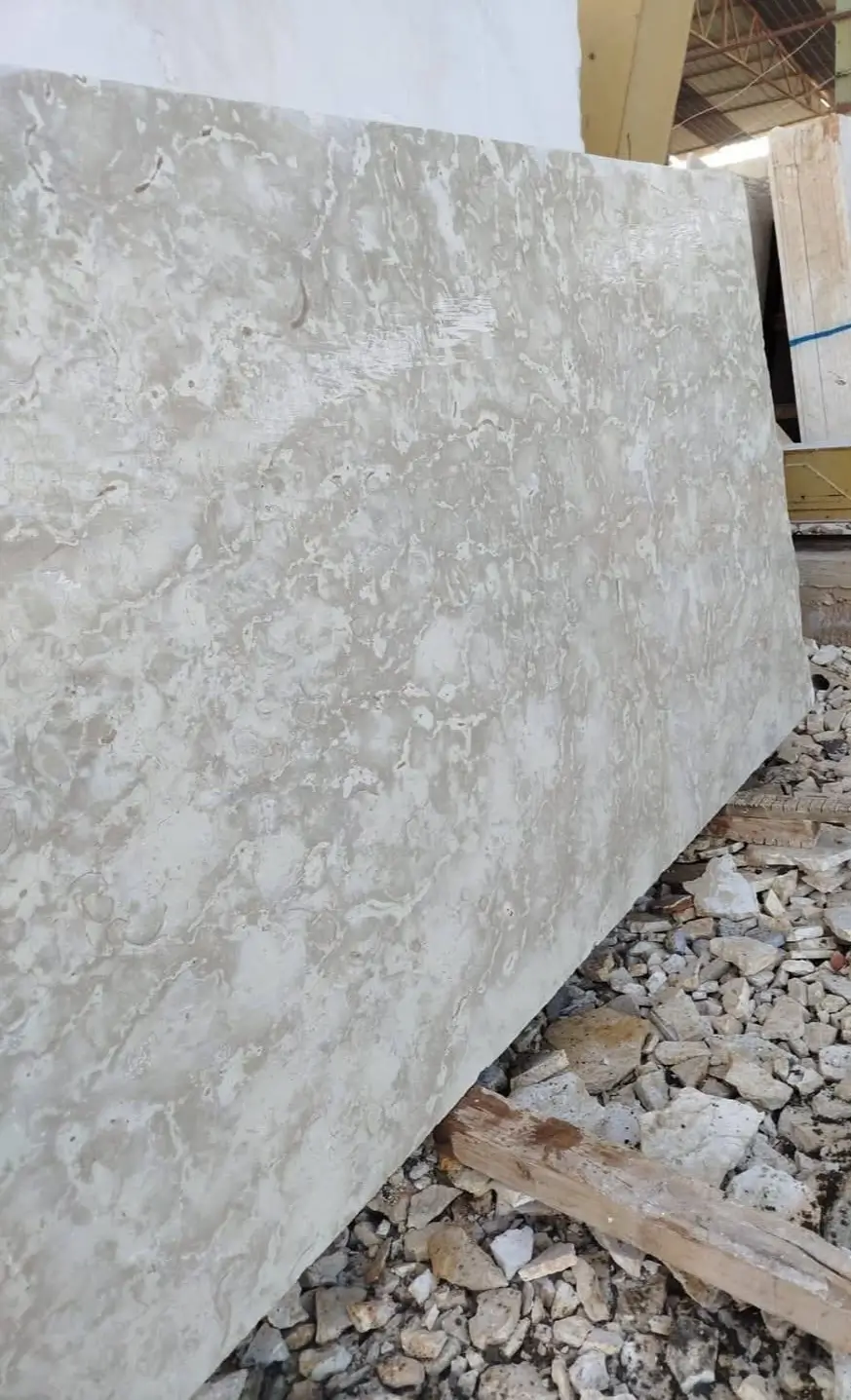
Our warehouse inventory for Arizona limestone projects is updated regularly, and lead times from the warehouse to Prescott typically run 3–5 business days for in-stock material. Order your full quantity in one pull — as noted earlier, matching material from a second order is difficult, and the convenience of a single delivery is worth the storage consideration of having all pavers on-site before you start.
Decision Points
Every DIY limestone installation Prescott project reaches the same set of decision points: how deep to dig, which sealer chemistry to specify, whether the base is compacted enough to proceed, and whether to cut the border pieces or use full stones creatively to avoid cuts. Getting those decisions right is a function of understanding your specific site conditions — elevation, soil type, drainage geometry, and freeze-thaw exposure — not just following generic installation instructions written for a national audience.
The labor cost savings available to Prescott homeowners on limestone paver projects are real and significant, but they’re protected by execution quality, not just effort. A well-prepped base, correct thickness selection, penetrating sealer chemistry, and adequate joint spacing are the four variables that determine whether your installation looks as good in year twelve as it did in year one. For Arizona projects where budget is a primary driver, Second Grade Limestone Paving for Marana Budget Projects explores how Citadel Stone’s value-tier limestone performs across similar climate demands with reduced material cost. Choosing Citadel Stone as your limestone paver supplier in Arizona guarantees you get quarry-direct material.