
Breaking down a limestone cost comparison for Laveen reveals a pattern that catches most buyers off guard: the material price is rarely where projects go over budget. It’s the secondary costs — base preparation depth, delivery logistics, and finish grade selection — that separate a well-planned installation from one that runs 30–40% over initial estimates. Understanding how these variables stack up against each other before you commit to a supplier puts you in a fundamentally stronger negotiating position.
What Drives Limestone Pricing in Laveen
Laveen sits in a stretch of the West Valley where soil conditions shift considerably across short distances. You’ll encounter expansive clay pockets in some areas and decomposed granite in others — and that variation directly affects your installation cost structure even before you factor in material pricing. A limestone paving project that costs $12 per square foot in one part of Laveen may run $16–18 per square foot three blocks away due to additional base work requirements.
The material cost component of limestone paving in Arizona typically breaks down like this:
- Entry-level limestone slabs (tumbled, 2″ nominal): $4.50–$6.50 per square foot material cost
- Mid-grade cut limestone (honed, 1.25″–1.5″ nominal): $7.00–$10.00 per square foot
- Premium limestone (bookmatched or select-grade, 2″+ thickness): $12.00–$18.00 per square foot
- Installation labor in the West Valley: $6.00–$11.00 per square foot depending on pattern complexity
- Base prep (varies by soil condition): $1.50–$4.50 per square foot additional
A Laveen pricing analysis that only compares material quotes without accounting for base and labor variability is essentially incomplete. You need the full loaded cost to make a useful comparison.
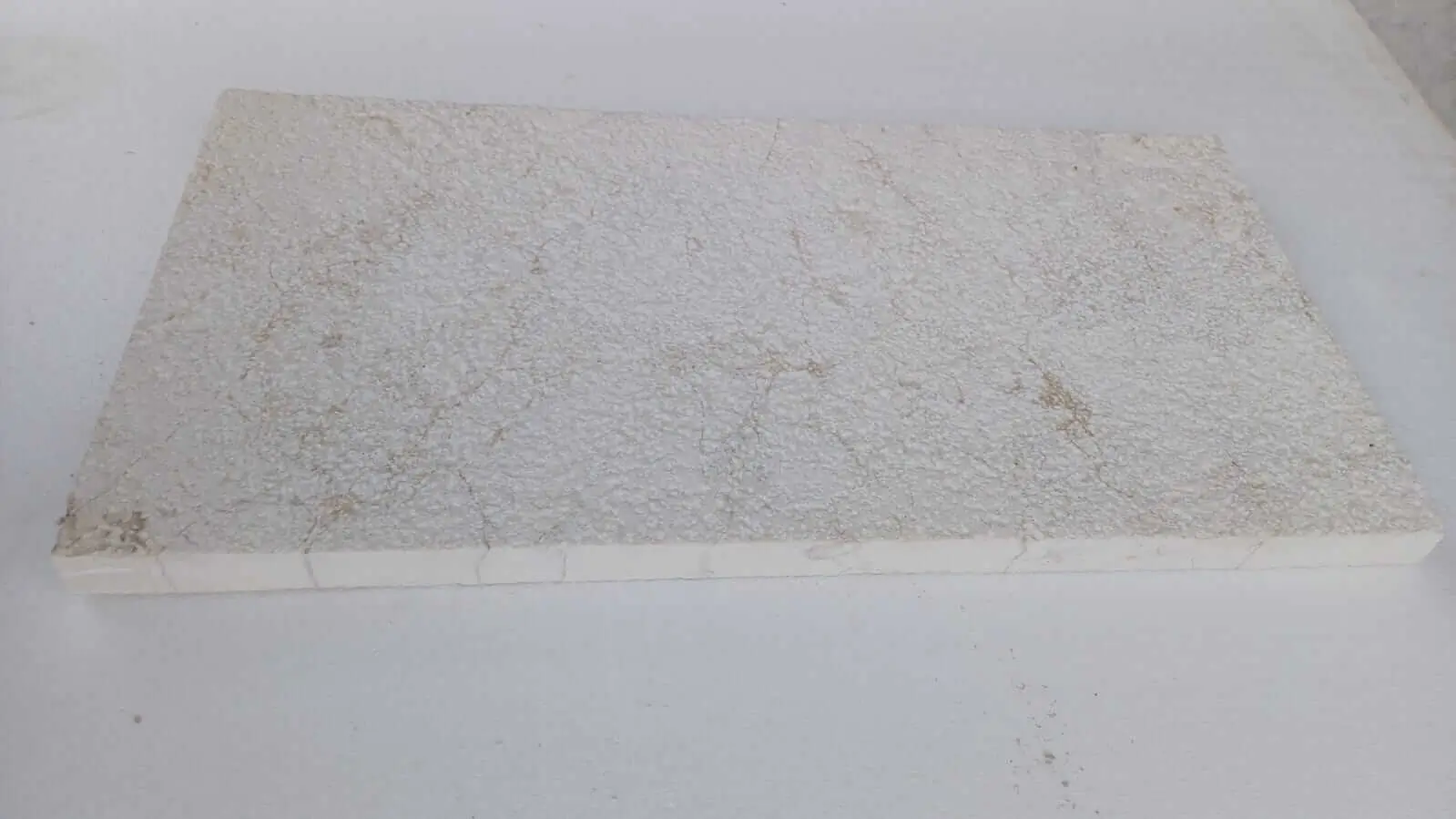
Limestone Grades and the Value Calculation
The limestone value assessment for Arizona projects hinges on a concept that often gets lost in budget conversations: cost per year of service life. A $6-per-square-foot slab that requires resealing every 18 months and shows surface erosion by year eight isn’t the bargain it appeared to be at purchase. A $10-per-square-foot option that holds finish integrity for 20+ years with biennial maintenance outperforms it on a total cost basis by a wide margin.
Here’s what separates limestone grades in a real value assessment:
- Porosity rating (lower is better for outdoor Arizona exposure — target under 3% water absorption per ASTM C97)
- Compressive strength (look for 8,000 PSI minimum for pedestrian applications, 12,000+ PSI for driveways)
- Finish durability under UV exposure (honed finishes tend to fade less visibly than polished in direct sun)
- Dimensional consistency from slab to slab (tight tolerance = faster installation, lower labor cost per square foot)
- Color stability across heat cycles (some limestone tones shift noticeably after 3–5 years of Arizona sun exposure)
At Citadel Stone, we run incoming material through dimensional and density checks at the warehouse before anything ships to a project site. That quality gate catches the tolerance issues that create expensive field adjustments down the line.
Cost Evaluation Across Limestone Finish Types
Your finish selection is one of the most consequential cost evaluation decisions you’ll make, and it’s one where the price difference looks small upfront but compounds significantly over time. Brushed and tumbled finishes sit at the lower price point but also tend to have higher surface porosity, which means more frequent sealing cycles in a hot, UV-intense environment like Laveen’s.
Honed limestone finishes occupy the mid-range price bracket and represent the strongest value proposition for most residential and HOA applications in Arizona. The surface is dense enough to resist absorption, doesn’t show heat haze or UV bleaching the way polished finishes do, and provides consistent slip resistance readings well above the ASTM C1028 threshold of 0.6 dynamic coefficient of friction — a spec that matters especially around pool areas.
Thermal-cut or sandblasted finishes carry a modest premium over honed but deliver measurably better traction in wet conditions. For driveways or sloped entries, that performance differential is worth the additional $1.50–$2.00 per square foot. The cost evaluation becomes straightforward when you weigh it against a slip-and-fall liability scenario.
Arizona Price Benchmarking: How Laveen Compares to Other Markets
From an Arizona price benchmarking perspective, Laveen consistently comes in within 5–8% of Phoenix metro baseline pricing. That’s because it shares the same delivery corridors and contractor labor pools. Where you see meaningful price divergence in Arizona is when you move to markets with distinct supply chain profiles.
In Scottsdale, limestone paving commands a 15–25% premium over comparable West Valley projects — partly labor market pressure, partly the design specifications clients request in that market (larger format slabs, tighter jointing tolerances, more complex patterns). That premium reflects demand, not material quality differences.
Comparing Laveen to the Tucson market shows a different dynamic. Tucson tends to run 8–12% lower on installation labor but sometimes 5–10% higher on material cost due to fewer local warehouse options and longer truck delivery distances from major distribution points. If you’re sourcing for a Laveen project and comparing supplier quotes from the Tucson corridor, adjust for that freight differential before deciding the quote represents a better deal.
The mid-article reference point worth your attention here: Citadel Stone limestone slab supplier in Chandler maintains regional inventory that reduces the truck delivery variable for West Valley projects considerably, which directly affects your loaded cost comparison.
Delivery Logistics and Hidden Cost Factors
Delivery costs rarely show up as a line item in initial material quotes, but they can add $0.50–$1.80 per square foot to your actual cost on large orders. For a 2,000-square-foot patio project, that’s a $1,000–$3,600 swing that belongs in any honest limestone cost comparison for Laveen. Understanding what drives truck delivery costs helps you negotiate more effectively.
- Distance from warehouse to site: every additional 30 miles adds roughly $150–$250 per truck load depending on weight
- Site access constraints: tight driveways or overhead clearance limitations can require smaller truck configurations at higher per-trip cost
- Material staging requirements: projects without adequate staging area may require phased deliveries at increased total freight cost
- Palletized vs. loose delivery: palletized limestone ships more efficiently but requires forklift access on-site
- Minimum order requirements: suppliers set different thresholds — missing the minimum can cost you as much as an extra delivery run
Citadel Stone maintains warehouse inventory across the Arizona market, which typically reduces lead times to 1–2 weeks compared to the 6–8 week import cycle many projects face when sourcing direct. That scheduling advantage has real cost value when your contractor’s schedule is already committed.
Thickness Selection and Its Budget Implications
The thickness decision sits at the intersection of structural performance and budget — and it’s where a lot of specifiers make an expensive mistake by under-specifying to save on material cost. Limestone paving in Arizona for standard residential foot traffic can work at 1.25″ nominal thickness over a well-prepared base, but anything with vehicle access, heavy furniture, or point loading from outdoor structures needs 2″ minimum.
Limestone pavers in the 2″ nominal range handle the point loads typical of West Valley residential projects effectively. The per-square-foot cost difference between 1.25″ and 2″ nominal limestone typically runs $1.50–$3.00 — but a crack-out-and-replace scenario on under-spec material costs $18–$25 per square foot including demolition, disposal, and reinstallation. The math on thickness upgrades almost always favors spec’ing up front.
For driveway applications specifically, 2.5″ to 3″ thickness should be your baseline when any vehicle traffic is anticipated. The additional material cost of $2.00–$4.00 per square foot buys you substantial insurance against flexural cracking under thermal cycling — which is a legitimate concern in Arizona’s 50°F+ daily temperature swings during spring and fall. A complete limestone cost comparison for Laveen driveways should always include thickness as a discrete line item rather than folding it into a blended square-foot rate.
Comparing Limestone to Competing Materials on Value
A limestone value assessment for Arizona doesn’t happen in isolation — you’re always comparing against concrete pavers, travertine, porcelain, and poured concrete. Each has a distinct cost-performance profile that matters depending on your application and priorities.
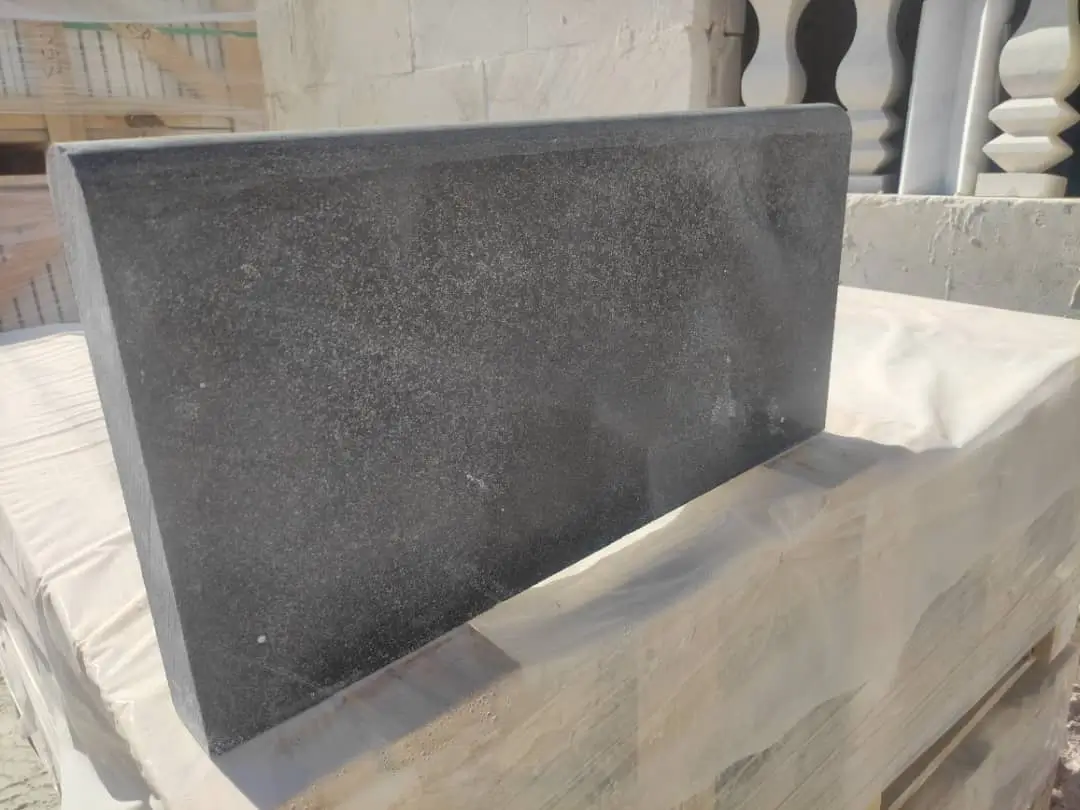
Concrete pavers come in $2.00–$4.00 lower per square foot on material, but they absorb heat more aggressively in Arizona conditions — surface temperatures on standard gray concrete pavers can run 20–30°F hotter than equivalent limestone under identical exposure. For any area where barefoot traffic is expected, that thermal performance difference isn’t a minor aesthetic preference, it’s a functional specification requirement.
Travertine and limestone occupy a similar price band in the mid-market range, but travertine’s filled vs. unfilled distinction creates a maintenance cost variable that shifts the comparison. Unfilled travertine in Laveen’s dusty, high-wind environment packs with debris quickly and requires more frequent attention. Limestone’s denser surface structure makes it lower-maintenance over a comparable period.
Porcelain pavers compete at the upper end of the limestone price range and deliver excellent dimensional consistency and near-zero maintenance requirements — but they carry a significantly higher installation cost due to adhesive setting requirements and the need for more precise substrate prep. For a straight cost evaluation, porcelain’s higher installed price is often 20–35% above premium limestone on a comparable project scope.
Sealing and Maintenance Costs in the Full Budget Picture
Your five-year and ten-year ownership cost for limestone paving in Laveen depends heavily on your sealing program. The material price you pay on day one is a fraction of what you’ll spend over a decade of ownership when you factor in sealing, cleaning, and any joint sand replacement. Building these into your initial cost comparison gives you a much more honest picture of total Laveen pricing analysis across the life of the installation.
- Penetrating sealer application for outdoor limestone: $0.80–$1.50 per square foot professionally applied
- Recommended resealing interval in Arizona: every 18–24 months for pedestrian areas, 12–18 months for pool surrounds with chemical exposure
- Joint sand stabilizer replacement: typically needed every 3–5 years at $0.30–$0.60 per square foot
- Professional cleaning (efflorescence treatment, algae removal): $0.50–$1.20 per square foot as needed
- Ten-year maintenance cost estimate for 500 square feet: $1,800–$3,500 depending on exposure and maintenance frequency
Projects in Phoenix and the surrounding West Valley typically see accelerated UV degradation on unsealed limestone versus climate zones with more cloud cover, making the sealing program more critical here than national product guides might suggest. That regional reality belongs in your cost comparison from the start.
Last Word
A thorough limestone cost comparison for Laveen projects means looking past the material quote and evaluating every cost driver that touches the installation — base prep, finish selection, thickness, delivery logistics, and multi-year maintenance. The projects that come in on budget are the ones where the specifier built that complete picture before breaking ground, not after. The savings that come from choosing the right grade for the application rather than the cheapest available material show up clearly between years five and ten when the installation still looks and performs like new.
As you build out your specification, it’s worth reviewing comparable Arizona budget resources as well. The West Valley shares closely related cost structures across neighboring communities, and Cost-Effective Limestone Paving Solutions for Litchfield Park Budgets covers cost and value considerations for another West Valley market, with specification details that translate well to Laveen project planning. Citadel Stone provides wholesale limestone pavers in Arizona to HOAs renovating community areas.