
Limestone mosaic tile Cave Creek projects demand a level of pattern planning that most suppliers don’t discuss upfront — specifically, how the grout joint width interacts with the natural variation in limestone’s color veining to either amplify or muddy your design intent. You’re not just choosing a tile size; you’re engineering a visual rhythm across a surface that needs to hold up to Cave Creek’s intense UV exposure and abrupt temperature swings between dawn and midday. The right mosaic specification accounts for tile format, setting bed depth, and grout selection simultaneously, not sequentially. This guide walks you through each of those decision points with the specificity Cave Creek projects actually require.
Why Limestone Suits Cave Creek Aesthetics
Cave Creek’s design vernacular leans hard into organic textures, earth tones, and materials that look like they belong in the Sonoran Desert landscape. Limestone mosaic tile fits that context naturally because the material carries geological character that manufactured ceramics simply can’t replicate. You get warm buff tones, cream-to-gold ranges, and occasional rust-veining that mirrors the surrounding rock formations without looking contrived.
The material’s thermal mass also works in your favor here. Limestone mosaic surfaces in Cave Creek’s climate absorb heat more gradually than porcelain alternatives and release it through the evening, which makes decorative details on covered patios and interior archways more comfortable to touch and visually consistent in direct sun. What often gets overlooked is that limestone’s slightly matte, crystalline surface reduces glare in the bright Arizona light — a detail that matters enormously when your decorative tile detail is positioned at eye level on an exterior accent wall.
For projects in Chandler, where contemporary desert architecture tends to blend natural stone accents with clean lines, limestone mosaic tile in a linear strip format provides exactly that balance — organic material, controlled geometry.
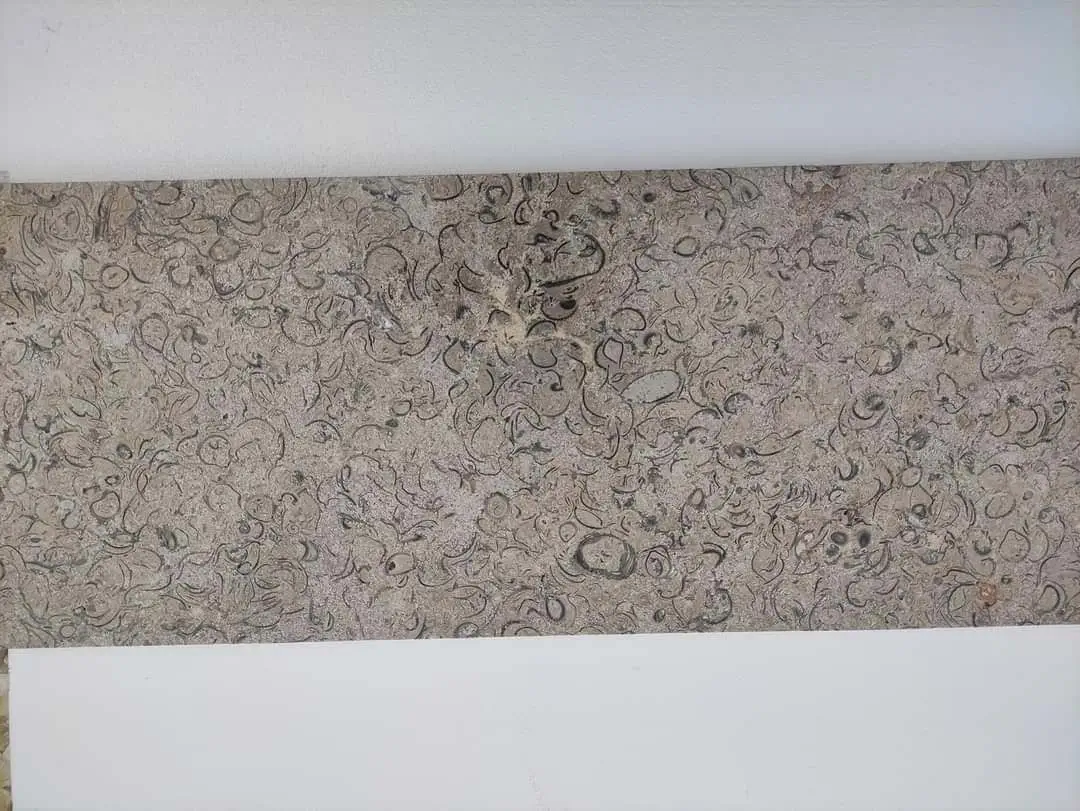
Mosaic Pattern Formats for Decorative Details
The format you choose for limestone mosaic patterns Arizona projects rely on depends heavily on the scale of your decorative detail and the viewing distance. Smaller chip formats — 1×1 or 5/8×5/8 — work best in tight niches, shower surrounds, and fireplace surrounds where the viewer is within arm’s reach. At that distance, the texture of individual chips and the interplay of natural color variation create depth. At viewing distances beyond six feet, those small chip formats start to read as a flat tone rather than a detailed surface.
- 1×1 inch chip mosaics: best for focal niches, fountain faces, and backsplash borders where close-range detail matters
- 2×2 inch formats: versatile for floor medallions and wall panel inserts — legible from both close and mid-range distances
- Linear strip mosaics (1×3, 1×4): ideal for banding details on columns, stair risers, and archway reveals
- Hexagonal formats: create strong geometric patterns that hold visual interest at longer distances without losing the organic limestone character
- Arabesque and lantern shapes: work well for interior feature walls where the shape itself carries the design load
The detail that matters most when selecting format size is your grout joint proportion. On a 1×1 chip mosaic, a 1/16-inch joint looks refined; anything wider starts to dominate the surface and obscures the stone’s pattern. On a 2×2 format, you have more flexibility — a 1/8-inch joint adds definition without overwhelming the tile face. Understanding how limestone mosaic patterns Arizona climate conditions affect grout expansion helps you avoid joint failures before the first season is out.
Small Tile Designs and Surface Layout Planning
Small tile designs require a level of layout precision that catches installers off-guard on first encounter with limestone mosaics. Because limestone chips are cut from natural material with inherent size variation — typically ±1/16 inch within a single sheet — your field measurements need to accommodate cumulative tolerance drift across large surfaces. You should dry-lay a minimum of three full mesh sheets before committing to your starting point, particularly on floors where the pattern needs to align with doorway thresholds and room centerlines simultaneously.
Your layout must also account for the directional grain in limestone. Unlike manufactured tile, limestone chips have a natural bedding plane orientation, and when multiple chips on a sheet are oriented inconsistently, you get a visual noise pattern that reads as installation error even when the mechanical work is perfect. Request sorted sheets from your supplier where the stone’s natural grain runs parallel across all chips on the mesh backing — this is a quality control detail that separates premium mosaic product from commodity material.
- Always establish two perpendicular layout lines from the room’s visual center, not the geometric center
- Plan cuts at the least-visible perimeter first — never at the feature wall or primary sightline edge
- Use a notched trowel with 3/16-inch square notches for chip formats under 2 inches to prevent lippage between adjacent chips
- Allow the setting bed to cure a minimum of 24 hours before grouting to prevent chip migration under foot traffic
Sourcing Limestone Mosaic Tile in Arizona
Working with limestone tile suppliers in Arizona who maintain local warehouse inventory eliminates one of the most common project delays — the gap between design approval and material availability. Import lead times for mosaic tile from overseas producers typically run 8–14 weeks, and that timeline can push your decorative detail installation past your overall project milestone. At Citadel Stone, we carry limestone mosaic tile Cave Creek and surrounding community projects depend on, stocked at our Arizona warehouse specifically because regional projects run on tighter schedules than the national import cycle accommodates.
You should verify warehouse stock levels before finalizing your project timeline, and always confirm that the available lot matches your approved sample in both color range and chip size tolerance. Limestone is a natural material, and quarry batches shift subtly between production runs. The safest specification practice is to pull all material for a single project from the same warehouse lot — mixing lots mid-project creates visible color banding that no amount of sealer can disguise.
Through our wholesale limestone division, we can cross-reference lot availability for mosaic tile alongside complementary field tile and coping material, which simplifies the procurement process for projects combining multiple limestone formats on a single site.
Arizona Artistic Details: Installation and Surface Prep
The setting surface preparation for limestone mosaic tile in Arizona’s climate is more demanding than most spec sheets communicate. Your substrate needs to be flat to within 1/8 inch over a 10-foot span — mosaic mesh backing is flexible enough to conform to minor undulations, but anything beyond that tolerance creates a wavy finished surface that catches raking light poorly and traps debris in the low points. In exterior applications across Cave Creek’s temperature range, substrate movement is your primary enemy.
Concrete substrates should cure a minimum of 28 days before tile installation, and in Cave Creek’s low-humidity environment, that cure often completes faster than the calendar suggests — but fast cure doesn’t mean stable cure. You’ll want to use a crack-isolation membrane over any slab less than 90 days old, particularly if your decorative detail spans a construction joint or crosses a transition between poured sections. Uncoupling membranes rated for exterior use are worth the added cost on any feature surface where replacement would require demolishing decorative work. These Arizona artistic details in substrate prep are what separate installations that last decades from those that require costly remediation within a few seasons.
- Exterior mortar beds: use a medium-bed mortar with polymer additive — standard thin-set doesn’t provide sufficient bond on vertical mosaic applications in high-heat zones
- Interior walls: an acrylic-modified thin-set at 3/16-inch coverage handles the lighter load, but back-butter each mesh sheet for full coverage on high-humidity spaces like showers
- Movement joints: place at every 8–10 feet in exterior applications, not the 12–15 feet printed in generic installation guides — Cave Creek’s temperature differential demands tighter spacing
Grout Selection, Color, and Performance
Grout color is the single most impactful finishing decision in a limestone mosaic detail, and it’s consistently underestimated during the specification phase. A grout that’s even one shade too dark creates a dominant grid pattern that overwhelms the stone’s natural color variation. A grout that perfectly matches the mid-tone of your limestone chips produces a unified surface where the mosaic pattern reads as texture rather than a grid of individual pieces — which is almost always the more sophisticated result for Cave Creek decorative tiles and architectural accents.
For Arizona artistic details in exterior locations, specify an unsanded grout for joints under 1/8 inch and a sanded grout for anything wider. Epoxy grout is worth the premium cost on pool surrounds, outdoor kitchen backsplashes, and any surface exposed to cleaning chemicals — epoxy doesn’t require sealing and resists staining from landscape irrigation mineral deposits, which are a persistent maintenance issue in Cave Creek’s hard water conditions. Standard cement grout on exterior mosaics needs sealing every 18–24 months to maintain stain resistance.
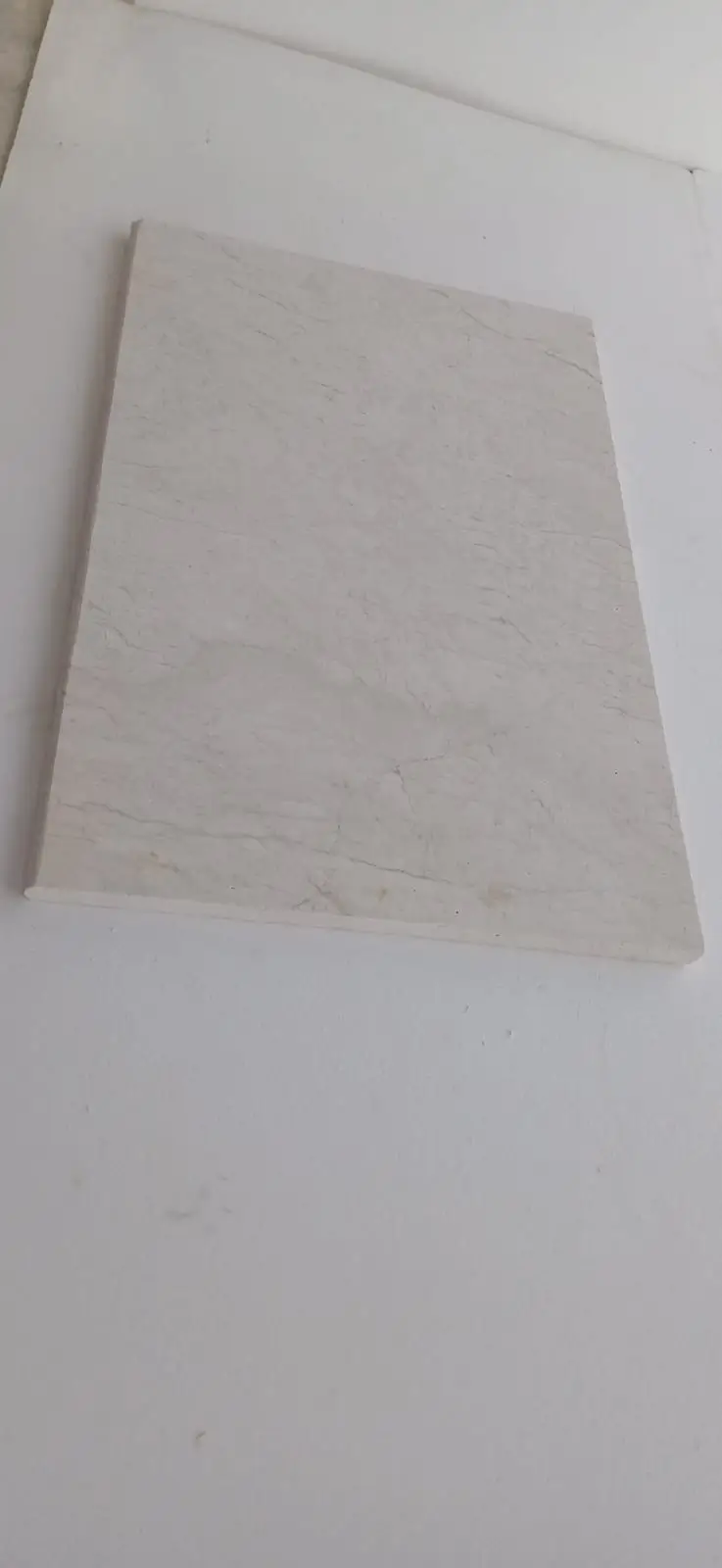
Sealing Limestone Mosaic Tile in Desert Climates
Limestone mosaic tile Cave Creek installations require sealing before grouting and again after grouting — a two-stage process that most residential installers skip to save time. The pre-grout seal protects the chip faces from grout pigment penetration, which is particularly important with buff and cream limestone where dark grout can permanently stain the stone’s surface pores during the grout application and cleanup process. A penetrating impregnator applied 24 hours before grouting and allowed to fully cure is the correct sequence.
Post-grout sealing should use a different product — a topical enhancer or color-deepening sealer that adds a subtle sheen and enriches the stone’s natural tones without creating a plastic-film appearance. In Tempe, where urban heat island conditions push surface temperatures higher than surrounding desert areas, reapplication intervals should be shortened to every 12–18 months for exterior limestone mosaics rather than the standard 24-month cycle used in cooler climates.
- Use a penetrating silane-siloxane impregnator for initial sealing — it won’t alter the stone’s appearance and provides deep pore protection
- Apply sealer in two thin coats rather than one heavy coat; heavy single applications can leave surface residue that clouds the finish
- Test sealer bead-up behavior annually — when water no longer beads on the surface, reapplication is overdue
- Avoid solvent-based sealers on mesh-backed mosaic sheets; solvent can degrade the adhesive bonding chips to the backing during handling
Coordinating Cave Creek Decorative Tiles with Field Materials
Cave Creek decorative tiles in limestone mosaic format work best when they’re specified as part of a coordinated material palette rather than selected in isolation. Your mosaic detail should share at least one color element with the primary field tile — either the body color, a vein tone, or the grout color — to create visual continuity across the surface transition. When a mosaic border sits between two different field tile formats, it acts as a visual bridge; when its colors conflict with both adjacent materials, it reads as an afterthought rather than a design element.
Thickness coordination matters more than most designers anticipate. Standard limestone mosaic tile on mesh backing typically runs 3/8 inch thick; your field tile may be 1/2 inch or thicker. You’ll need to build up the mosaic setting bed to achieve a flush transition, or accept a slight reveal at the border edge — which can actually be a refined detail when executed intentionally with a metal transition strip. Discuss this dimension coordination with your installer before setting begins, not during.
For projects in Surprise, where newer residential construction often features large-format field tile in 24×24 formats, a limestone mosaic border in a complementary chip size creates a scale contrast that reads as deliberate and sophisticated rather than transitional.
What Matters Most for Limestone Mosaic Success
Getting limestone mosaic tile right in Cave Creek comes down to decisions made before a single chip is set — lot selection, substrate preparation, layout planning, and grout color specification. These choices compound: a well-chosen mosaic format on an inadequately prepped substrate fails just as reliably as the wrong grout color on a perfectly installed surface. Your decorative tile detail is only as strong as the least-considered element in the specification chain.
Beyond this project, if you’re working on other Arizona stone surfaces, Limestone Tile Wall Cladding for Paradise Valley Accent Walls covers the specification approach for full-wall limestone applications in a neighboring community context — worth reviewing if your project includes both mosaic detail work and larger cladding surfaces. At Citadel Stone, we help specifiers and installers navigate material selection from the warehouse floor, where lot consistency, chip size tolerance, and mesh backing quality are things we evaluate physically before any truck delivers product to your job site. We have a rotating stock of cheap limestone paving slabs in Arizona for clearance hunters.