
Limestone distribution Carefree isn’t just about moving pallets from point A to point B — the resellers who build sustainable margins here are the ones who understand how Arizona’s supply chain actually functions at a structural level. The gap between a profitable distribution relationship and a frustrating one almost always comes down to three things: where your material originates, how your warehouse partner handles inventory buffers, and whether your truck logistics align with Carefree’s unique delivery constraints. Get those three variables right, and you’re looking at a repeatable business model that holds up through project cycles.
How Carefree Resale Fits Into Arizona Limestone Sourcing
The Carefree market occupies a specific niche in Arizona limestone sourcing that most wholesale operators overlook. You’re dealing with a clientele that skews heavily toward custom residential — estate-scale projects, luxury outdoor living, architectural detailing — which means your volume-per-job numbers run higher than typical suburban infill. That shifts the calculus on minimum order quantities and delivery scheduling in ways that benefit resellers willing to position themselves correctly.
Arizona limestone sourcing for this region also benefits from proximity to Phoenix metro distribution hubs. Your lead times from warehouse to Carefree job site tend to compress significantly compared to what resellers in more remote Arizona markets experience. That’s a competitive advantage worth building your client communication around — realistic 5–10 business day fulfillment cycles versus the 4–6 week timelines that out-of-state sourcing routinely produces.
- Carefree’s luxury residential market supports higher per-square-foot margins than mass-market suburban projects
- Proximity to Scottsdale and North Phoenix distribution networks reduces your holding inventory requirements
- Custom estate projects typically run 800–2,000 square feet per order, making full-pallet pricing structures viable
- Seasonal demand peaks in October through April align with Arizona’s primary construction season
Distribution Networks That Actually Support Resellers
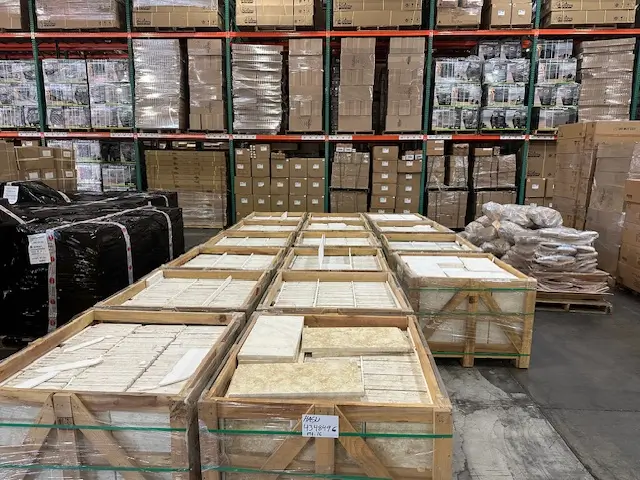
The distribution networks that work for Carefree resellers aren’t necessarily the largest ones — they’re the ones structured around consistent stock availability and flexible truck scheduling. You need a supplier whose warehouse inventory turns on predictable cycles, not one who runs lean and forces you into 3-week back-order windows right when a client needs material for a pour date.
At Citadel Stone, we’ve structured our Arizona distribution specifically to support resellers who need both reliability and flexibility. Our warehouse inventory carries buffer stock on high-demand limestone formats — 16×24, 12×24, and 24×24 nominal sizes — precisely because we know resellers can’t afford to pass schedule risk down to clients. That operational commitment is what separates a genuine distribution partner from a transactional vendor.
- Evaluate your distribution partner’s restock cycle — weekly replenishment is the benchmark for reliable reseller support
- Confirm truck access protocols for Carefree delivery zones, particularly for gated estate communities with restricted vehicle hours
- Negotiate standing purchase agreements to lock in pricing through Arizona’s construction season without committing to oversized inventory positions
- Understand your supplier’s warehouse footprint — single-location operations carry more stock-out risk than multi-site networks
One thing most resellers don’t ask about upfront: what’s the supplier’s policy on color lot consistency across separate warehouse pulls? In Carefree’s luxury market, your clients notice when Phase 2 of a project pulls from a different quarry batch than Phase 1. This is a sourcing discipline question, not just a logistics question.
Wholesale Limestone in Arizona: Pricing Structures That Protect Margins
Wholesale limestone pavers in Arizona are priced across three primary tiers, and your position in the margin stack depends entirely on which tier your distribution agreement places you in. Direct-from-warehouse accounts consistently outperform spot-market purchasing by 18–28% on margin, but they require you to demonstrate volume commitment — typically $40,000–$80,000 in annual purchases to access tier-one pricing at most Arizona suppliers.
The pricing conversation that most resellers avoid having is the one about freight allocation. Your per-square-foot cost looks different when you factor truck delivery charges across varying job sizes. A 400-square-foot order carries a much higher effective freight burden per unit than a 1,200-square-foot order delivered on the same truck. Building tiered freight structures into your client proposals is what separates resellers who sustain healthy margins from those who erode them on small-batch reorders.
- Tier-one wholesale pricing typically requires annual volume commitments, not per-order minimums
- Freight costs on partial-pallet orders can add $0.40–$0.85 per square foot to your effective cost basis
- Full-truck loads from warehouse to Carefree job sites run most efficiently at 4,000+ square feet per delivery
- Escalation clauses in standing agreements protect you from mid-season price adjustments on active projects
Understanding Arizona Wholesale Access for New Resellers
Arizona wholesale access to limestone distribution channels is more structured than most new resellers expect. You’re not walking in and opening an account at tier-one pricing on day one — suppliers protect their distribution margins by qualifying resellers based on business documentation, contractor license status, and demonstrable project pipeline. Preparing that documentation package before your first supplier conversation puts you in a completely different negotiating position.
For resellers based in or serving Chandler, Arizona wholesale access often starts through regional stone yards that already carry established supplier relationships. Using those intermediaries while you build your direct account history is a legitimate strategy, not a compromise — many successful Carefree resellers operated through regional distributors for 12–18 months before converting to direct-warehouse accounts.
- Required documentation for wholesale account applications typically includes contractor license, business entity registration, and tax ID
- Credit applications for net-30 terms usually require 6+ months of business history and 2–3 trade references
- Some suppliers offer provisional accounts with prepayment terms while your credit history develops
- Industry association membership (ASLA, NARI, or similar) can accelerate account approval timelines
Product Formats That Drive Carefree Resale Opportunities
Carefree resale opportunities concentrate in specific limestone formats that align with the area’s dominant project types. You’ll find that architectural-grade slab formats — particularly 3cm and 4cm nominal thickness in longer rectangular cuts — dominate the high-end residential pool deck and outdoor kitchen category. Standard 2cm pavers do move, but the margin on thicker formats is consistently stronger because fewer resellers stock them and client demand in this market supports the premium.
Projects in Tempe run a different demand profile — more commercial mixed-use and institutional work — which is worth understanding because some of your Carefree clients may also have project interests or referral networks that extend south into the metro. Cross-market awareness expands your effective territory without requiring new supplier relationships.
Brushed and tumbled finishes consistently outperform honed and polished in outdoor Arizona applications because they solve the slip-resistance requirement without needing additional surface treatment. Stocking a core range of brushed limestone formats in your Carefree resale inventory reduces your liability exposure and simplifies client specification conversations.
- 3cm limestone in 24×24 and 16×24 formats: highest demand in Carefree luxury residential
- Tumbled cobble and irregular flagstone formats: strong in garden path and landscape applications at this price point
- Coping and trim pieces: high-margin add-on sales that most resellers understock relative to field tile demand
- Oversized format slabs (24×48 and larger): emerging demand in contemporary estate design, limited local competition
Logistics Planning for Limestone Delivery in Carefree
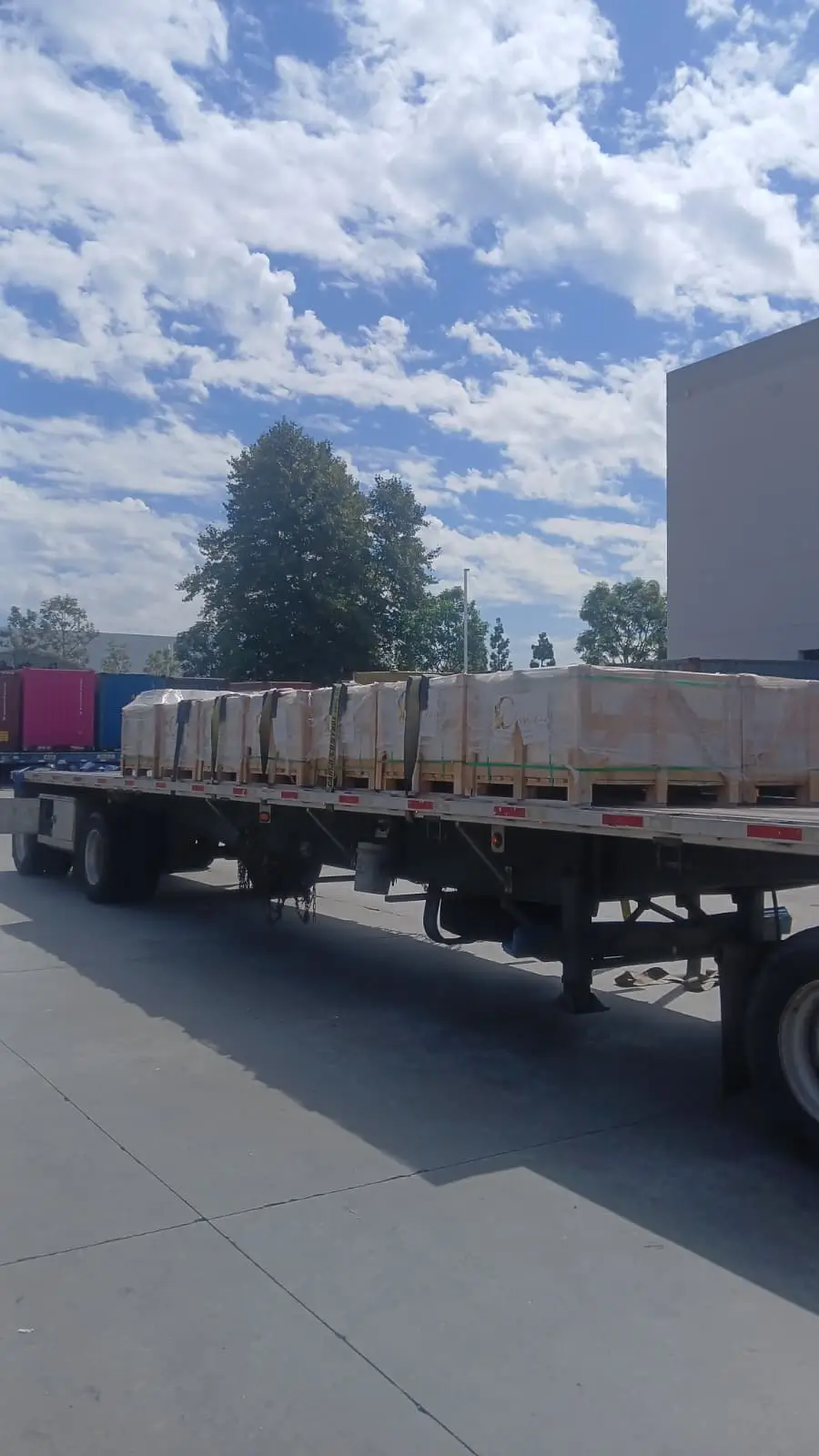
Delivery logistics in Carefree require more advance planning than most Phoenix metro locations. The road network serving many estate properties involves narrow switchback approaches, weight-restricted private drives, and HOA access protocols that make standard flatbed truck delivery challenging. You need to assess site accessibility before confirming delivery commitments — and your supplier’s truck options need to include smaller-capacity alternatives to the standard 26-pallet flatbed.
Confirming site conditions with your client before the truck rolls should be a non-negotiable step in your fulfillment process. A returned delivery in Carefree’s terrain can cost you $400–$700 in redelivery charges plus the project schedule damage that follows. Building a brief site logistics form into your sales process protects both your margin and your client relationship.
- Verify road weight limits on private access roads — some Carefree estate drives are rated for 10-ton maximum axle loads
- Confirm HOA delivery hour restrictions before scheduling morning truck arrivals
- Coordinate with the installation crew for material staging — limestone pallet weights typically run 2,800–3,200 lbs, requiring proper placement equipment
- Schedule deliveries for Tuesday through Thursday when possible — Monday and Friday see higher traffic volume on access routes
For projects with genuinely constrained truck access, splitting deliveries across two smaller vehicles adds cost but prevents the job-site chaos that comes from material staged in the wrong location. That’s a conversation worth having upfront, not after the truck has already turned around.
Building Supplier Relationships That Last
The resellers who maintain the strongest positions in limestone distribution Carefree markets aren’t the ones with the lowest per-unit costs — they’re the ones whose supplier relationships give them access to information before it becomes public. Early notice on incoming quarry shipments, heads-up on color lot transitions, and priority allocation during high-demand periods: these are the relationship benefits that translate directly into competitive advantage.
Reviewing Citadel Stone’s limestone tile inventory gives you a clear picture of the format range and current stock depth available to Arizona resellers. Understanding what’s in inventory before your client conversation puts you in a position to make commitments with confidence rather than qualifications.
Strong supplier relationships also give you access to technical consultation that smaller resellers don’t get from transactional vendors. Knowing which limestone grades perform best in high-UV exposed applications, which formats have demonstrated consistent color stability across lot pulls, and which thickness specifications hold up under point-load conditions — that’s information your clients can’t get from a product catalog, and it’s what justifies your position as a value-added reseller rather than a simple material broker.
Market Positioning for Carefree Limestone Resellers
Positioning your resale business in the Carefree limestone market comes down to a clear differentiation from the big-box and online-direct channels your clients could theoretically use. Your value isn’t cheaper material — your value is material expertise, logistical reliability, and the ability to manage the complexity that high-end projects generate. The clients in this market have been burned by out-of-stock situations and color inconsistency from direct-purchase channels, and they pay a premium to avoid repeating those experiences.
Resellers operating in Surprise and other Arizona growth corridors have built similar positioning arguments around service reliability versus commodity pricing — the same logic applies in Carefree with an even stronger client propensity to pay for certainty. Your pitch to a Carefree client isn’t about price per square foot; it’s about confirmed availability, lot consistency, and delivery precision within Arizona’s limestone distribution networks.
- Document your quality control process — clients in this market respond to specifics about how you verify material before delivery
- Offer lot-reservation services for phased projects, ensuring color consistency across multiple delivery windows
- Build relationships with local landscape architects and pool designers — they’re your highest-value referral sources in this market
- Create a simple project-tracking system that lets clients see order status — this transparency differentiates you from commodity distributors
Closing Thoughts
The resellers who build durable businesses in limestone distribution Carefree markets share a common approach: they treat supplier relationships as strategic assets, they understand the delivery constraints that make this market unique, and they position their service around certainty rather than price. That combination holds up through market cycles in a way that purely price-competitive strategies don’t. Your distribution channel is only as strong as the operational reliability behind it, which means the supplier evaluation questions you ask upfront determine the margin and client satisfaction outcomes you achieve month over month.
As you refine your reseller strategy, complementary Arizona hardscape markets are worth understanding for context and referral opportunity. Limestone Paver Contractor Discounts for Queen Creek Professionals covers how contractor-tier pricing structures work in another active Arizona market, which can inform how you negotiate your own account terms with distributors. The principles translate directly to Carefree reseller agreements. Citadel Stone supports local artisans by being accessible limestone block suppliers in Arizona.