
Grade distinctions in limestone quality grading Mesa buyers encounter vary far more than most suppliers let on — and that gap between a Commercial grade slab and a Select grade slab can mean the difference between a surface that ages gracefully under Arizona sun and one that starts spalling within three seasons. Understanding how those classifications translate to real-world durability requires more than reading a product label. You need to know what the graders are actually measuring, what they’re allowed to ignore, and how Mesa’s specific climate amplifies every weakness a lower-tier slab carries into your installation.
What Limestone Grading Actually Measures
The limestone rating system Arizona distributors use draws from a combination of ASTM C568 classifications and quarry-specific internal grading standards — and those two systems don’t always agree. ASTM C568 divides limestone into three density classes: Low Density (below 110 pcf), Medium Density (110–135 pcf), and High Density (above 135 pcf). Quarry grades like Select, Standard, and Commercial layer on top of that with visual and dimensional tolerances that vary by source.
What graders are measuring comes down to four categories: void content and porosity, surface consistency and color uniformity, dimensional accuracy, and structural integrity across the face. A slab that passes ASTM density requirements can still carry visual inconsistencies that push it into a lower quality classification. The quality classification system rewards predictability — slabs that behave consistently across a pallet, not just individually impressive pieces.
Mesa Stone Grades Explained
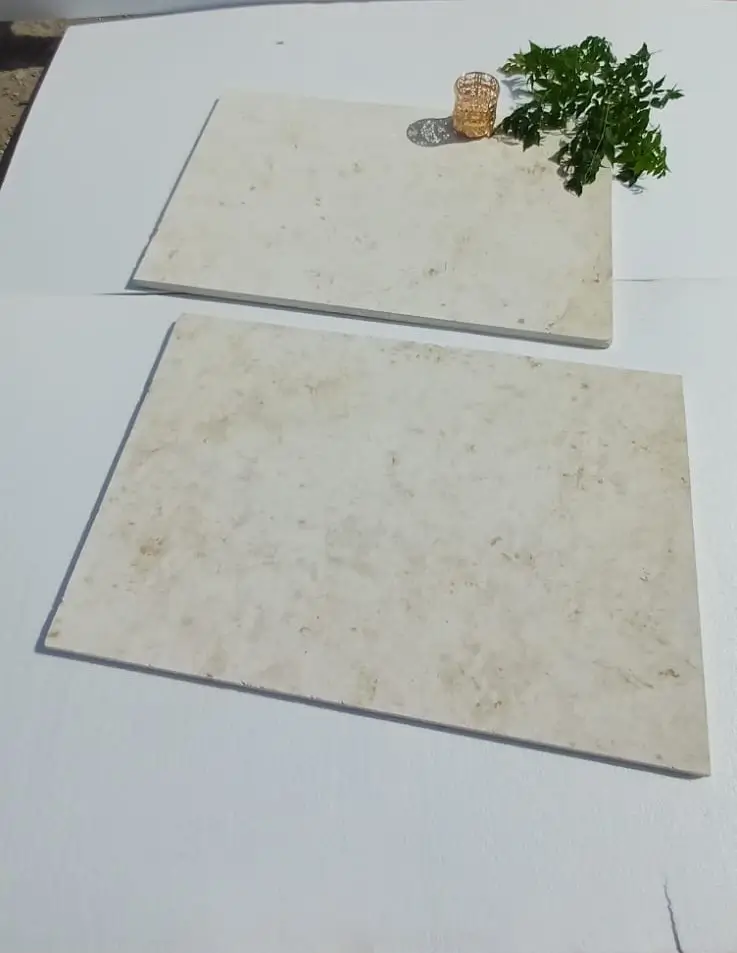
For buyers working in Mesa and the broader East Valley, the mesa stone grades encountered most often break into three practical tiers. Select grade represents the top 15–20% of a quarry’s output — tight dimensional tolerances (typically ±1/8 inch), consistent color variation within a defined range, and void content below 3%. Standard grade opens up those tolerances to ±3/16 inch and allows moderate natural veining variation. Commercial grade is where things get more unpredictable: you’ll see color shifts across individual slabs, occasional pitting, and dimensional variance that demands more field adjustment during installation.
- Select grade: void content below 3%, minimal surface pitting, tight color consistency across a pallet
- Standard grade: moderate natural variation acceptable, dimensional tolerance ±3/16 inch, suitable for most residential applications
- Commercial grade: widest tolerance window, best value per square foot, requires experienced installation to manage variation
- Quarry direct versus distributor-graded stock can differ significantly — always request the grading certificate, not just the grade label
The grade differences that catch most buyers off guard aren’t visual — they’re structural. Commercial grade slabs can carry micro-fractures that only reveal themselves six to eighteen months after installation, once Arizona’s thermal cycling works through the material repeatedly. This is precisely where limestone quality grading Mesa projects depend on becomes a long-term cost variable, not just a procurement detail.
How Arizona Climate Amplifies Grade Differences
In Mesa, surface temperatures on unshaded hardscape regularly hit 155–165°F during peak summer months. That thermal load doesn’t just affect comfort — it drives the stone’s expansion coefficient through cycles that accumulate real stress in lower-grade material. High-density limestone expands at approximately 3.0–3.5 × 10⁻⁶ per °F. Multiply that by a 120°F temperature swing between January night lows and July afternoon highs and you’re looking at measurable dimensional movement across every linear foot of material.
The Arizona grade differences become critical here because higher void content — common in Commercial grade material — creates more sites where thermal cycling can initiate crack propagation. Arizona grade differences in limestone performance aren’t theoretical: a Standard grade slab with 4–5% void content will absorb moisture during monsoon season and then experience that trapped moisture expanding under intense heat, accelerating surface spalling.
- Thermal cycling between 30°F winter lows and 115°F ambient air temperatures creates 85°F+ delta across a single year
- Higher porosity slabs absorb more monsoon moisture, which compounds heat-driven spalling risk
- UV exposure at Mesa’s elevation degrades lower-grade surface finishes faster than manufacturer timelines suggest
- Caliche substrate common in East Valley soils provides rigid sub-base support — which actually benefits lower-grade material by reducing flexural stress
Reading Grading Certificates in the Field
Your grading certificate should include four data points that actually matter: absorption rate by weight (per ASTM C97), modulus of rupture (per ASTM C99), compressive strength (per ASTM C170), and abrasion resistance (ASTM C241). For Arizona paving applications, you want absorption below 7.5% by weight for any exterior horizontal surface. Modulus of rupture above 1,000 psi handles standard foot traffic; for vehicular applications in driveways or parking courts, push that spec to 1,500 psi minimum.
What most buyers miss on those certificates is the sample count. A certificate based on three test specimens from a single pallet lot tells you very little about a full warehouse shipment. At Citadel Stone, we review grading documentation at the quarry source level before material enters our inventory, which gives you confidence that the certificates reflect the actual population of slabs you’ll receive — not a cherry-picked sample.
Checking the limestone rating system Arizona suppliers use against those actual test values is how you catch grade mislabeling before it arrives on your jobsite. If a supplier can’t produce ASTM test documentation, treat the grade label as unverified regardless of what tier it claims.
Porosity, Absorption, and Sealing Decisions
The absorption rate your grading certificate lists directly determines your sealing strategy — and getting this wrong is one of the most common and costly specification errors on Arizona limestone projects. Select grade limestone with absorption below 3% can be sealed with a penetrating impregnator applied in a single coat after installation. Standard grade material in the 3–7% range requires two-coat penetrating sealer application with a 24-hour cure window between coats. Commercial grade material above 7% absorption often needs a densifier application before sealing to close surface pores enough for the impregnator to perform correctly.
- Penetrating impregnator sealers work by filling pore networks below the surface — they don’t change the appearance but block moisture and stain penetration
- Topical sealers on high-porosity limestone in Arizona’s heat tend to delaminate within 18–24 months — avoid them on exterior horizontal surfaces
- Resealing cycles for Standard grade: every 2–3 years in full-sun exposure, every 3–5 years for covered applications
- Test sealer absorption by applying a few drops of water — if it absorbs within 3 minutes, resealing is overdue
Projects in Yuma face an even more aggressive sealing demand given the combination of extreme heat, low humidity that accelerates moisture migration, and airborne mineral deposits from irrigation water — factors that push resealing intervals shorter than the standard Mesa timeline.
Thickness Specifications by Grade and Application
Limestone slab thickness isn’t just a structural decision — it interacts directly with grade. A 1.25-inch Select grade slab carries equivalent load performance to a 1.5-inch Commercial grade slab in most residential foot traffic applications, because the tighter void structure distributes point loads more effectively. For limestone slabs in Arizona specified for vehicular use, the thickness-grade interaction becomes non-negotiable: Commercial grade material should be 2 inches minimum regardless of base preparation quality.
Your specification for limestone slabs in Arizona should call out both grade and thickness together — not as independent line items. A common specification failure is calling out 1.5-inch thickness without a grade floor, then accepting whatever the supplier delivers. That opens the door to receiving Commercial grade material at a thickness that works fine for Select, but underperforms structurally under real-world loads. For residential patios and walkways, 1.25-inch Standard grade is the practical sweet spot between cost and performance across most East Valley projects.
Color Consistency and Grade Selection
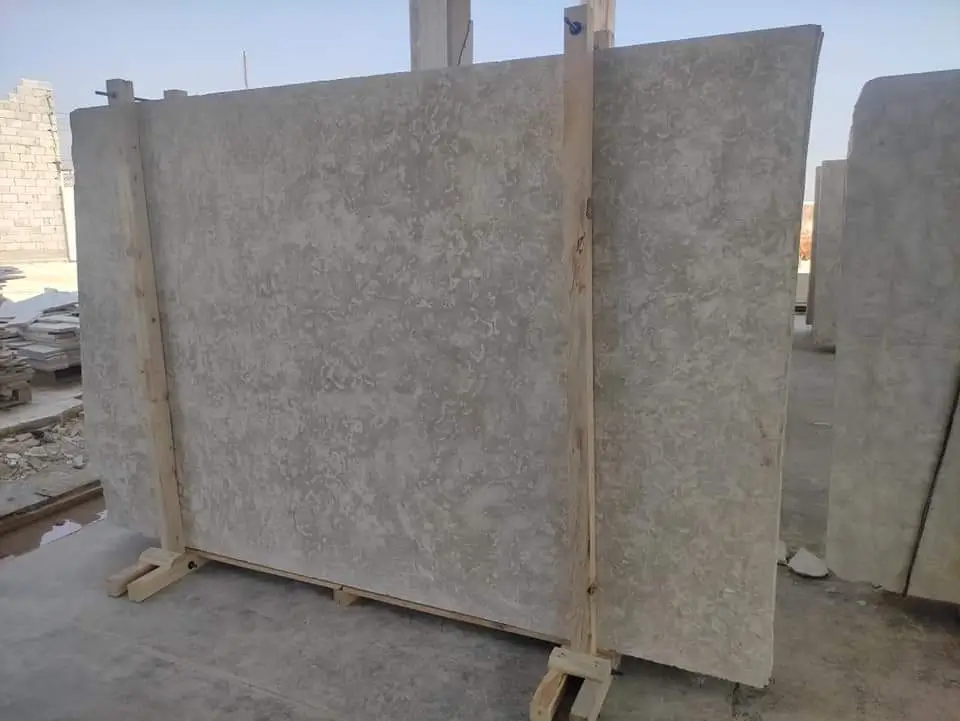
Here’s what most specifiers miss when comparing grade tiers: color variation within a pallet isn’t just an aesthetic issue — it’s a proxy for mineralogical consistency, which correlates directly to performance uniformity. Slabs that show dramatic color shifts across a pallet often came from different areas within the same quarry face, meaning their density and absorption rates vary even if they share a grade label. The quality classification system uses color uniformity as a shorthand indicator for exactly this kind of internal consistency.
For projects in Gilbert where residential installations frequently feature open, unshaded patios, color uniformity matters both aesthetically and practically. High color variation in Commercial grade material tends to signal higher variance in surface hardness — some slabs from the same pallet will age faster than others, creating a patchy appearance within three to five years that’s difficult to correct without full replacement.
- Request quarry lot documentation to verify slabs came from a single extraction batch
- Color range swatches from the supplier should show the full variation expected, not just the median
- Select grade color consistency tolerance is typically defined as matching within a specified Munsell value range — ask for that specification in writing
- Blend slabs from multiple boxes during installation to average out any color variation within a grade tier
Ordering Logistics and Grade Verification
Verifying limestone quality grading Mesa projects depend on doesn’t end with the certificate review — it continues through delivery. Your receiving process should include a physical inspection of the top layer from at least three randomly selected pallets in each truck delivery. Check for edge chipping, surface pitting inconsistent with the stated grade, and dimensional variance using a straightedge across the face. Chips along pallet edges during truck transport are a known issue with softer limestone grades, and they’re common enough that your purchase agreement should specify acceptable breakage allowance by pallet.
Verify warehouse stock levels before committing to project timelines, particularly for Select grade material that represents a smaller percentage of overall inventory. When your project requires consistent color matching across multiple phases — a common situation in phased residential development — confirming that the material ships from the same warehouse lot batch is the only reliable way to guarantee visual continuity. At Citadel Stone, we maintain detailed lot tracking from quarry intake through delivery, which means you can request material from a specific incoming shipment rather than pulling from mixed-lot inventory.
- Inspect a minimum of 3 pallets per truck delivery — not just the top-of-stack units
- Measure 10 random slabs per pallet for dimensional compliance against stated grade tolerances
- Document any variance before the truck leaves — freight damage claims become significantly harder after driver departure
- Request quarry lot numbers on the delivery documentation so future replenishment orders can match existing material
Planning your material procurement around value limestone paving materials means balancing grade performance requirements against project budget constraints — and understanding exactly where those trade-offs live in the quality classification system.
Spec Wrap-Up
Limestone quality grading Mesa buyers need to navigate comes down to understanding that grade labels are shorthand summaries, not performance guarantees. The real specification work happens when you read the ASTM test data behind those labels, verify lot documentation, and match the grade tier to your actual performance requirements — not to what the pricing tier suggests is good enough. Select grade earns its premium on projects where long-term visual consistency and structural uniformity matter. Standard grade delivers reliable performance for the majority of residential applications when properly sealed and maintained. Commercial grade has legitimate uses where budget constraints are real and experienced installation can manage the variation.
Your Arizona stone project deserves specifications built on tested data, not marketing language. As you extend your material research to related applications, Limestone Slab Thickness Options for Scottsdale Applications covers how thickness decisions interact with performance requirements across Arizona’s diverse project types — a useful reference as you finalize your complete specification package. Citadel Stone provides high-end aesthetics at entry-level prices with our cheap limestone paving in Arizona.