

Limestone slab thickness Scottsdale projects demand isn’t a single-answer specification — it’s a layered decision that shifts based on load category, subgrade conditions, and the thermal cycling your slab will endure across Arizona’s extreme temperature range. Most thickness failures don’t trace back to the stone itself; they trace back to a mismatch between the slab depth selected and the actual loading scenario on site. Get that match right from the start, and you’re looking at a 25-plus-year installation. Get it wrong by even half an inch, and you’ll be dealing with fractures within the first three summers.
Why Thickness Decisions Matter in Arizona’s Climate
Arizona’s desert environment creates a unique set of stresses that most standard thickness charts don’t fully address. Surface temperatures in Scottsdale regularly climb to 160°F on exposed hardscape, and the thermal gradient between a slab’s top face and its shaded underside can span 40°F or more during peak summer afternoons. That differential drives micro-movement in the stone — and thinner slabs simply don’t have the mass to resist it without stress fracturing at joint edges over time.
Your limestone slab thickness choice also interacts directly with base performance. A 1¼-inch slab on a poorly compacted base will telegraph every settlement crack. A 2-inch slab on the same base buys you more elastic resistance, but it won’t save a structurally deficient sub-base indefinitely. Thickness is a multiplier on base quality, not a substitute for it.
Limestone slabs for Arizona projects also need to account for the state’s caliche soil layers, which can create uneven bearing conditions when not properly addressed during excavation. Understanding how depth selection criteria interacts with your specific soil profile is where the real specification work begins.
Standard Scottsdale Slab Depths by Application
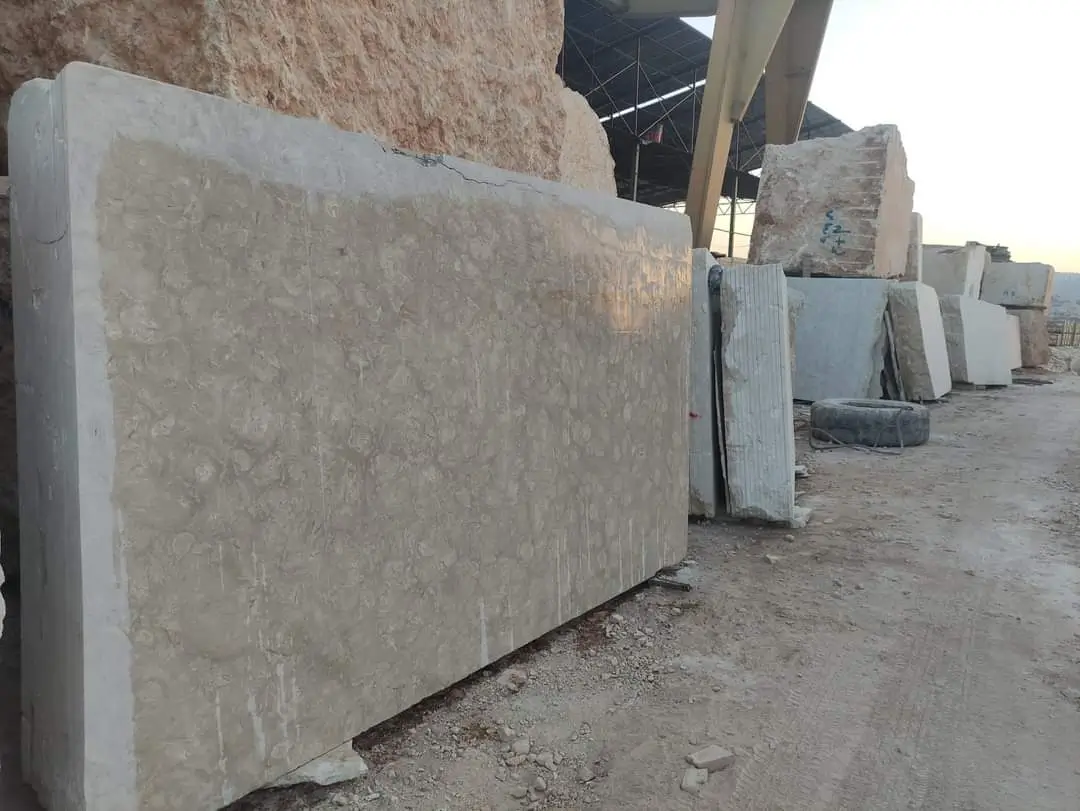
The limestone thickness guide Arizona professionals rely on isn’t a single universal chart — it’s a tiered framework organized by application type. Each tier reflects a different load category, and the Scottsdale slab depths within each tier reflect real performance data from desert installations.
- ¾-inch to 1-inch slabs: interior floors, wall cladding, and low-traffic residential surfaces where point loads are minimal and substrate support is continuous
- 1¼-inch to 1½-inch slabs: standard residential patios, pool surrounds, and covered outdoor living areas with pedestrian-only traffic
- 2-inch slabs: driveways, open patio areas with occasional vehicular encroachment, and any surface where wheeled loads are a realistic possibility
- 2½-inch to 3-inch slabs: commercial pedestrian plazas, entry courtyards subject to delivery vehicles, and installations over structural concrete decks where weight tolerance is precisely engineered
Your application probably falls clearly into one of these tiers, but the edge cases — a residential driveway that doubles as RV parking, or a patio where a golf cart regularly crosses — demand you step up one tier from what the basic category suggests. That half-inch increase in depth pays for itself the first time a heavy load crosses the surface without incident.
AZ Load-Bearing Standards and Limestone Performance
Arizona’s residential and commercial construction standards set minimum compressive strength thresholds that natural limestone comfortably exceeds in most applications. Dense limestone typically delivers compressive strength in the 8,000 to 14,000 PSI range, which positions it well above the thresholds most AZ load-bearing standards require for residential hardscape. The variable isn’t the stone’s capacity — it’s whether your slab thickness allows that capacity to be distributed across the load area without creating point stress concentrations at joints or edges.
For pedestrian applications, a 1½-inch slab with a proper 4-inch compacted aggregate base and 1-inch bedding layer meets standard residential loading with adequate safety margin. For driveways subject to standard passenger vehicles, step to 2 inches with a 6-inch compacted base. These aren’t conservative estimates — they reflect real performance data from installations across Arizona’s desert municipalities.
Limestone slabs in Arizona perform exceptionally well under distributed loads, but edge loading is a different story. Your slab edges need to be supported continuously around the perimeter, not cantilevered over loose soil. Undercutting a slab edge by even 2 inches during soil settling creates a lever-arm condition that fractures stone far faster than any compressive load would.
Thermal Expansion and Joint Spacing for Scottsdale Installs
The limestone thickness guide Arizona installers actually use in the field accounts for thermal expansion in ways that standard product literature often glosses over. Limestone expands at roughly 4.4 to 5.0 × 10⁻⁶ inches per inch per °F — a relatively low coefficient compared to concrete, but still significant across a 130°F annual temperature swing in the Scottsdale climate. A 24-inch slab panel sees approximately 0.014 inches of movement across that range, which doesn’t sound like much until you multiply it across a 500-square-foot installation with tight joints.
- Thicker slabs have greater thermal mass, which moderates the rate of temperature change across the slab body and reduces peak stress at joint locations
- 2-inch and thicker slabs allow for deeper joint profiles, which accommodate more movement material and resist washout better than shallow joints in thinner stone
- Joint spacing in Scottsdale installations should target 12 to 15 linear feet maximum between control joints — tighter than the 20-foot spacing some generic specs recommend for cooler climates
- Your joint width should scale with slab thickness: 3/16-inch minimum for 1¼-inch slabs, ¼-inch for 2-inch and thicker applications
Projects in Phoenix and surrounding communities share Scottsdale’s thermal exposure, and installers there have learned that the thermal differential between a shaded patio section and an exposed section can be enough to drive differential movement — meaning your joint layout needs to anticipate shade line transitions, not just overall panel dimensions.
Depth Selection Criteria for Pool and Outdoor Areas
Pool surrounds represent one of the more demanding applications for limestone slab thickness decisions in Scottsdale. You’re dealing with a combination of wet-dry cycling, chemical exposure from pool water, bare-foot traffic that demands a comfortable surface temperature, and the structural requirement that the stone resist movement as the pool shell itself shifts seasonally. Depth selection criteria for pool decks should begin at 1½ inches minimum and move to 2 inches for any area subject to heavy lounge chair traffic or pool equipment rolling loads.
The wet-dry cycling that pool surrounds experience is actually more damaging to thinly specified slabs than any single load event. Moisture absorption and subsequent rapid drying in Arizona’s low-humidity environment creates micro-spalling at surface edges when slabs are too thin to absorb and release moisture without stress at their faces. Thicker slabs distribute this stress more effectively through their cross-section.
If you’re working with a polished limestone slab dealer in Lake Havasu or sourcing material regionally, confirm that the specific limestone variety you’re specifying has an absorption rate below 3% — some softer limestones can reach 7-8%, which changes your thickness and sealing requirements substantially.
Base Preparation and How It Affects Thickness Requirements
Base preparation quality directly determines whether you can safely use a thinner slab or whether you need to compensate with additional depth. This is the decision point most residential specifiers underestimate, and it’s where the limestone thickness guide Arizona projects actually demand diverges most sharply from what generic online resources suggest.
- Over a well-compacted Class II base at 95% Modified Proctor density, a 1½-inch slab performs as reliably as a 2-inch slab on a 90% compaction base — the better base essentially substitutes for thickness
- Native Arizona soil, particularly expansive clay or loose sandy profiles, requires either full excavation and replacement or an upward adjustment in slab thickness by at least ½ inch from standard recommendations
- Caliche layers, when encountered, should be broken and recompacted rather than left as a rigid shelf — a caliche shelf with voids beneath it creates a point-bearing condition that concentrates load stress in unpredictable locations
- Bedding layer consistency matters as much as aggregate base quality — use a dry-set mortar or screeded sand layer held to ¾-inch to 1-inch consistent depth to ensure full slab contact
At Citadel Stone, we recommend that any project specifier visit the site before finalizing limestone slab thickness Scottsdale specifications, particularly for larger installations. Our technical team has consulted on dozens of Arizona projects where the base conditions discovered during excavation changed the thickness specification by a full half-inch from the initial design intent.
Commercial Versus Residential Limestone Slab Thickness in Scottsdale
The gap between residential and commercial limestone slab thickness in Scottsdale specifications is larger than most people expect. Residential pedestrian-only patios can be served well by 1¼-inch to 1½-inch material. Commercial courtyards, hotel entry plazas, and retail walkways should begin at 2 inches and move to 2½ inches wherever wheeled service equipment, luggage carts, or delivery dollies are a realistic daily occurrence.
Commercial projects also face a different maintenance cycle than residential ones. A residential homeowner can walk around a damaged slab; a commercial property cannot afford inconsistent surface performance that creates trip hazards and liability exposure. Specifying up in thickness on commercial applications — accepting the additional material cost and truck freight weight — is consistently the more economical decision when you factor in the cost of replacement during a commercial facility’s operating schedule.
Limestone slabs in Arizona commercial settings also need to address accessibility compliance. ADA-compliant surface tolerances require that adjacent slab edges stay within ¼-inch of flush, and thicker slabs with their additional mass are more resistant to the edge settlement that creates those deviations over time. This is a practical compliance argument for choosing 2-inch or thicker material in any commercial application, not just a structural one. The Scottsdale slab depths selected for commercial work should always reflect both AZ load-bearing standards and long-term maintenance realities.
Sourcing, Logistics, and Warehouse Availability in Arizona
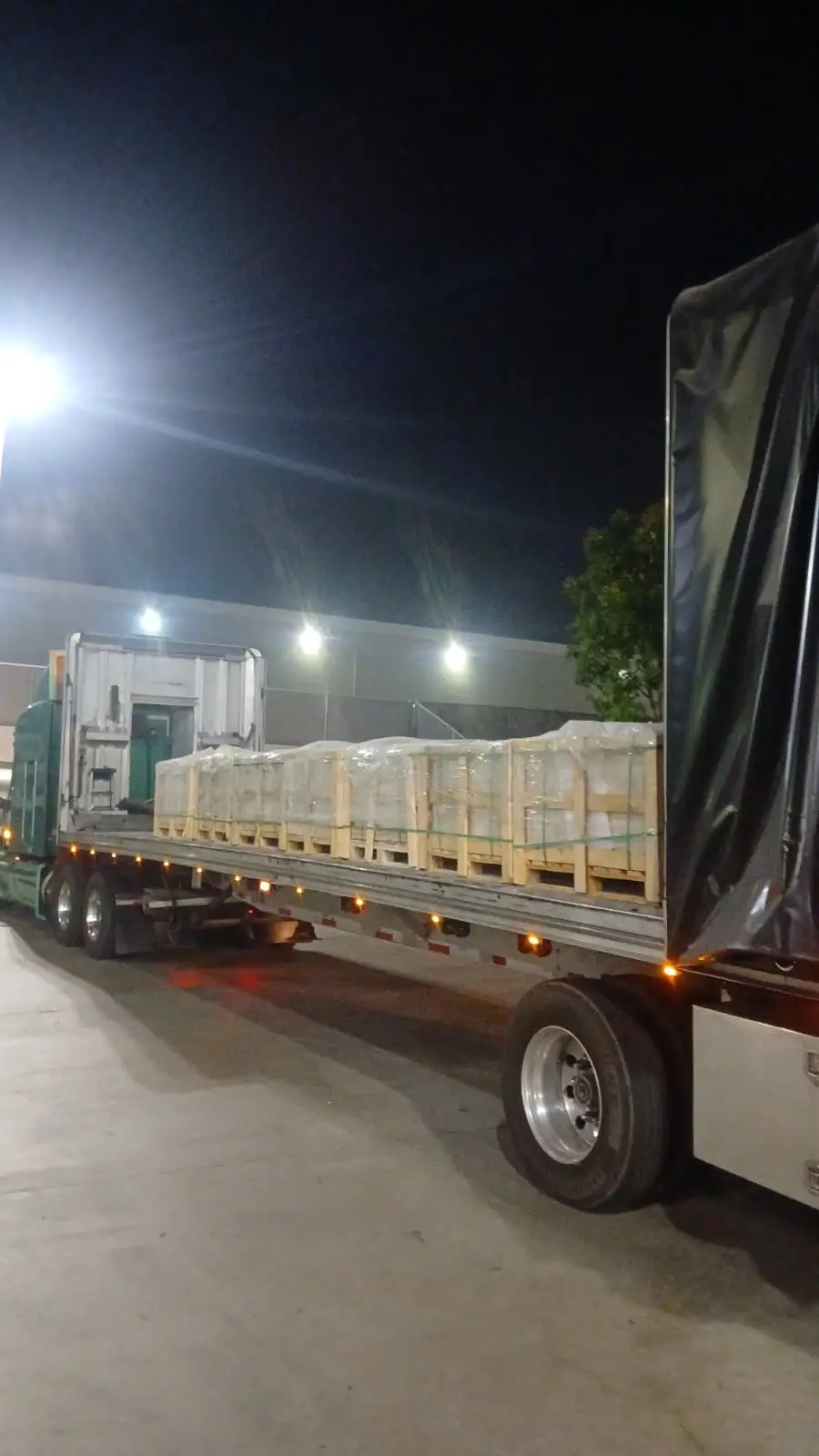
Your limestone slab thickness decision affects more than just structural performance — it directly influences your sourcing lead times and truck delivery logistics. Thicker slabs weigh more per square foot, which reduces the square footage you can load per truck run and increases freight cost per installed square foot. A 2-inch limestone slab runs approximately 25 pounds per square foot; a 1½-inch slab of the same material runs around 19 pounds. On a 1,000-square-foot project, that’s 6,000 pounds of additional material per delivery cycle.
- Verify warehouse stock of your specific thickness before committing to a project timeline — specialty thicknesses like 2½-inch and 3-inch slabs often require lead times of 4 to 6 weeks when not held in local inventory
- Standard residential thicknesses (1¼-inch and 1½-inch) are most commonly held in warehouse stock across Arizona suppliers, typically with 1 to 2 week availability
- Coordinate truck delivery timing with your base preparation completion — limestone slabs should not be staged on uncompacted sub-base areas, as forklift and pallet jack loads can disturb prepared grades
- Plan your truck access route before material arrives — 2-inch and thicker slabs on full pallets can exceed 4,000 pounds, requiring a stable surface from the street to your staging area
Projects in Tucson sometimes face longer truck lead times than Phoenix-metro projects due to routing logistics from major distribution points. If you’re working on a Tucson installation with a firm completion date, add one week to your standard warehouse lead time estimate as a planning buffer. Tucson’s soil profiles also differ from Scottsdale’s in places, with more variable caliche depth, which can influence your on-site depth selection criteria even after material has been ordered.
Decision Points
Pulling together your limestone slab thickness Scottsdale specification means resolving four overlapping variables simultaneously: application load category, base preparation quality, thermal movement accommodation, and supply chain reality. Optimizing for one variable while ignoring the others leads to specifications that look sound on paper but underperform in the field. The thickness that performs best in your specific project is the one where all four variables align — not necessarily the thickest option or the most cost-efficient one in isolation.
Your specification sequence should run in this order: confirm your load category, assess your base quality honestly, select thickness from the appropriate tier, then verify warehouse availability for that thickness before finalizing your project schedule. Reversing that sequence — picking a thickness based on what’s in stock rather than what your load scenario demands — is how projects end up with structural performance problems that cost far more to remediate than the thickness upgrade would have cost upfront.
As you finalize your Arizona stone selections, surface finish is another specification layer that works in parallel with thickness decisions. Honed Limestone Slab Finishes for Phoenix Smooth Surfaces covers the finish-side decisions that complement the structural depth choices this guide has outlined, giving you a complete specification picture for your project. At Citadel Stone, we stock a comprehensive range of limestone slab thicknesses for Arizona projects and can advise on the right depth selection for your specific application and site conditions. We are one of the few limestone block suppliers in Arizona that can fulfil special orders for solid stone columns.