
Requesting limestone paving samples before committing to a full Prescott installation is one of the smartest moves you can make — but most homeowners underestimate how much the evaluation process itself determines the final outcome. The way you handle, compare, and test limestone paving samples in Prescott’s specific climate conditions separates a confident material decision from an expensive regret. Prescott sits at roughly 5,400 feet, which means your samples need to tell you a story about freeze-thaw performance, not just aesthetic appeal.
Why Limestone Paving Samples Matter More in Prescott Than Elsewhere
Prescott’s elevation introduces a performance variable that lower-desert projects simply don’t face. You’re dealing with genuine freeze-thaw cycling — not the occasional cold snap that Peoria sees at 1,100 feet, but repeated freeze-thaw events that can work joint sand loose and cause surface spalling in under-spec stone within three to five seasons. Your Prescott stone samples need to reflect that reality before a single pallet lands on your driveway.
- Request minimum 12-inch by 12-inch samples — small chips don’t give you enough surface area to evaluate color variation, veining consistency, or finish texture under your specific light conditions
- Ask for samples from the same quarry batch you’ll be ordering from — color and density can shift meaningfully between production runs
- Get samples in the finish you’ll actually install: sawn, tumbled, or brushed surfaces absorb and reflect heat differently, and that affects barefoot comfort during Prescott summers
- Request at least two thickness options if your application sits between the 1.25-inch and 2-inch nominal ranges — the visual difference at the edge matters for coping and border details
What to Test When Your Samples Arrive
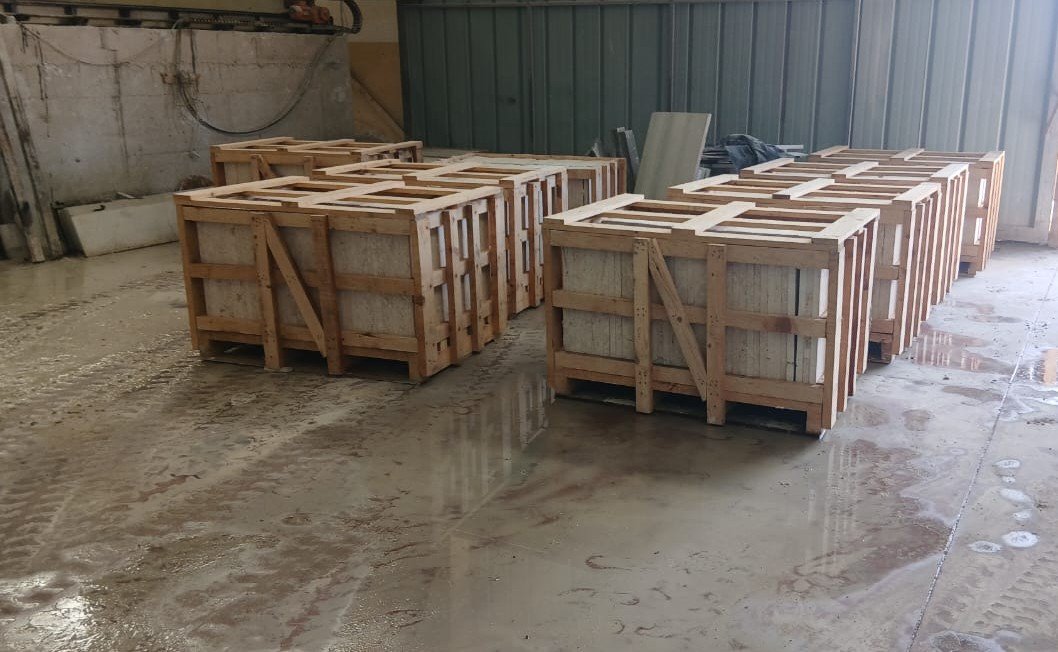
Field testing your Prescott stone samples before finalizing an order takes less than an afternoon and tells you everything a specification sheet can’t. The porosity test is your first stop: drop a tablespoon of water on each sample and time how long absorption takes. Dense limestone will hold surface water for 60 to 90 seconds before drawing it in — highly porous samples absorb in under 20 seconds and will require more aggressive sealing schedules to survive Prescott’s monsoon-to-freeze cycle. The sample selection process at this stage is fundamentally about performance screening, not aesthetic preference.
The scratch resistance check is equally straightforward. Drag a steel key across the sample face with moderate pressure. You’re not trying to gouge it — you’re checking whether the surface sheds debris cleanly or retains a visible scratch line. For any pedestrian paving in a high-UV Arizona environment, surface hardness matters because UV degradation and thermal cycling accelerate surface wear on soft stone.
- Check the bottom face of each sample, not just the top — rough, inconsistent backs create voids under thinset or mortar beds that become crack initiation points
- Wet the sample completely and compare it to the dry state — some limestone turns significantly darker or shows tone shifts that won’t match your dry-sample expectations once monsoon season hits
- Hold samples at arm’s length and view them under direct midday sun — veining and color variation read very differently under flat indoor lighting versus Arizona’s high-angle solar intensity
- Place samples directly on your intended substrate material to evaluate how the stone’s tone interacts with your specific grout color and joint width
Understanding Your Limestone Viewing Options in Arizona
The limestone viewing options Arizona homeowners have access to fall into three categories: warehouse visits, sample shipments, and digital swatch libraries. Each has a legitimate role in the sample selection process, and using all three in sequence gives you the most complete picture. A warehouse visit lets you see full slabs under natural light and assess scale — a detail that sample chips fundamentally can’t replicate. You’ll immediately understand why a color that looked neutral on a 6-inch chip reads as warm cream across a 400-square-foot patio.
Sample shipments work best for the shortlist phase, after you’ve narrowed from five options to two. At Citadel Stone, we ship physical samples to Prescott homeowners so you can evaluate material in your actual project environment — under your site’s light exposure, against your existing architecture, and at the elevation where thermal performance will actually matter. Reviewing limestone viewing options Arizona suppliers offer becomes far more productive when it’s sequential rather than simultaneous: broad visual review first, then physical testing, then on-site comparison.
- Digital swatch libraries are useful for initial screening but should never be used as your final color confirmation — screen calibration and photography conditions both introduce inaccuracies
- Warehouse visits are most valuable before monsoon season when lighting is consistent and you can view slabs standing vertically as they’ll appear on a wall, or horizontally as they’ll sit on a patio
- Sample shipments typically arrive in protective foam packaging — unwrap samples at least 24 hours before evaluation to allow any surface moisture from transit to fully equalize
Reading Freeze-Thaw Performance from Your Samples
Prescott’s freeze-thaw exposure makes this the single most important performance variable your Arizona material testing needs to address. Standard limestone paving slabs available in Arizona are often specified for low-desert applications where freeze-thaw cycling is minimal — but Prescott’s climate demands a different standard. The ASTM C880 flexural strength rating should be above 1,500 PSI for any Prescott application where you expect seasonal freeze-thaw cycling, and dense, low-absorption limestone consistently outperforms porous varieties on this metric.
Your limestone paving samples can give you a preliminary indication of freeze-thaw durability even without a laboratory test. Look at the sample edges carefully under magnification or a strong handheld light. Visible micro-layering, shell inclusions, or fossil structures that run parallel to the face indicate a stone that may delaminate under repeated freeze-thaw stress. Tight, consistent crystalline structure without visible layering tells a better durability story for Prescott conditions.
- Request the material’s water absorption rate (ASTM C97) — values below 3% indicate dense limestone suitable for freeze-thaw exposure; values above 6% warrant caution for Prescott elevations
- Check whether your sample has been honed or polished — highly polished surfaces can develop micro-fractures at the surface layer faster than brushed or sawn finishes under freeze-thaw cycling
- Cross-reference sample thickness against your expected subgrade conditions — thicker slabs (2 inches nominal) provide greater resistance to substrate movement during freeze cycles than 1.25-inch material
Color and Finish Selection for Prescott’s Specific Climate
The sample selection process for color and finish in Prescott involves trade-offs that don’t exist in Tucson or Phoenix. Lighter limestone tones — creams, warm whites, and buff varieties — reflect more solar radiation and stay cooler underfoot, which matters during Prescott’s summer months. However, lighter stones also show efflorescence more visibly, and Prescott’s occasional hard water from surface runoff can leave mineral deposits that stand out sharply against pale stone.
Medium-tone limestone in warm beige or golden ranges often performs best in Prescott aesthetically because the natural patina of weathering blends with the stone’s base tone rather than contrasting against it. For projects near Sedona, where red-rock surroundings are a visual reference, warm earth-tone limestone samples tend to create more cohesive landscape compositions than stark white or grey varieties.
- Brushed finishes offer better slip resistance than honed in Prescott’s wet-season conditions and show less surface wear over time in high-foot-traffic areas
- Tumbled limestone edges soften the visual weight of large patio areas and work particularly well with Prescott’s Craftsman and ranch-style architecture
- Sawn limestone with a natural-cleft finish provides the highest texture variation and is the most forgiving of surface staining from pine needle tannins — a real-world factor in Prescott’s tree-rich neighborhoods
- Dark limestone absorbs significantly more heat at Prescott’s elevation than you might expect — midday surface temperatures on charcoal or dark grey samples can exceed light-tone alternatives by 25–35°F
Ordering Samples and Understanding Lead Times
Your project timeline depends on building sample evaluation time into your schedule before the installation window — not during it. Limestone paving samples for Prescott projects typically require 7 to 10 business days for physical delivery depending on warehouse inventory status. At Citadel Stone, we maintain stocked inventory in Arizona, which means most standard samples ship from existing warehouse supply rather than requiring a special pull from import containers. That typically keeps sample lead times well under two weeks for most Prescott homeowners.
The bigger timing consideration is what happens after you approve a sample. Bulk pallet orders for Flagstaff and Prescott area projects can require truck delivery coordination that adds 3 to 5 business days beyond standard low-desert delivery schedules — mountain highway access, weight restrictions on certain routes, and seasonal road conditions all factor into delivery planning. Build that buffer in before you commit your installation crew to a start date.
- Request your samples no later than four weeks before your intended installation start date to allow time for evaluation, approval, and bulk order processing
- Confirm whether your sample represents current warehouse stock or is sourced from a display batch that may differ from the production lot available for your full order
- Ask about minimum order quantities relative to your project scope — sample approval of a material that only ships in full-pallet minimums can create waste for smaller Prescott projects
- Verify truck access at your delivery address — Prescott’s hillside lots and narrow driveways sometimes require smaller delivery vehicles or a transfer point
For Prescott projects that incorporate wall elements alongside paving, split-face limestone blocks offer a cohesive material family that lets you carry the same stone character from horizontal to vertical surfaces without sourcing from multiple suppliers.
Sample Comparison Techniques Professionals Use
Here’s what most homeowners skip that professionals never do: the side-by-side wet comparison. Wet all your shortlisted samples simultaneously with a spray bottle and photograph them under the same lighting conditions. You’re previewing exactly what the surface will look like after rain or cleaning — and that wet appearance often shifts the ranking of your preferred options significantly. This step alone can change your final limestone paving samples Prescott decision more than any specification sheet review.
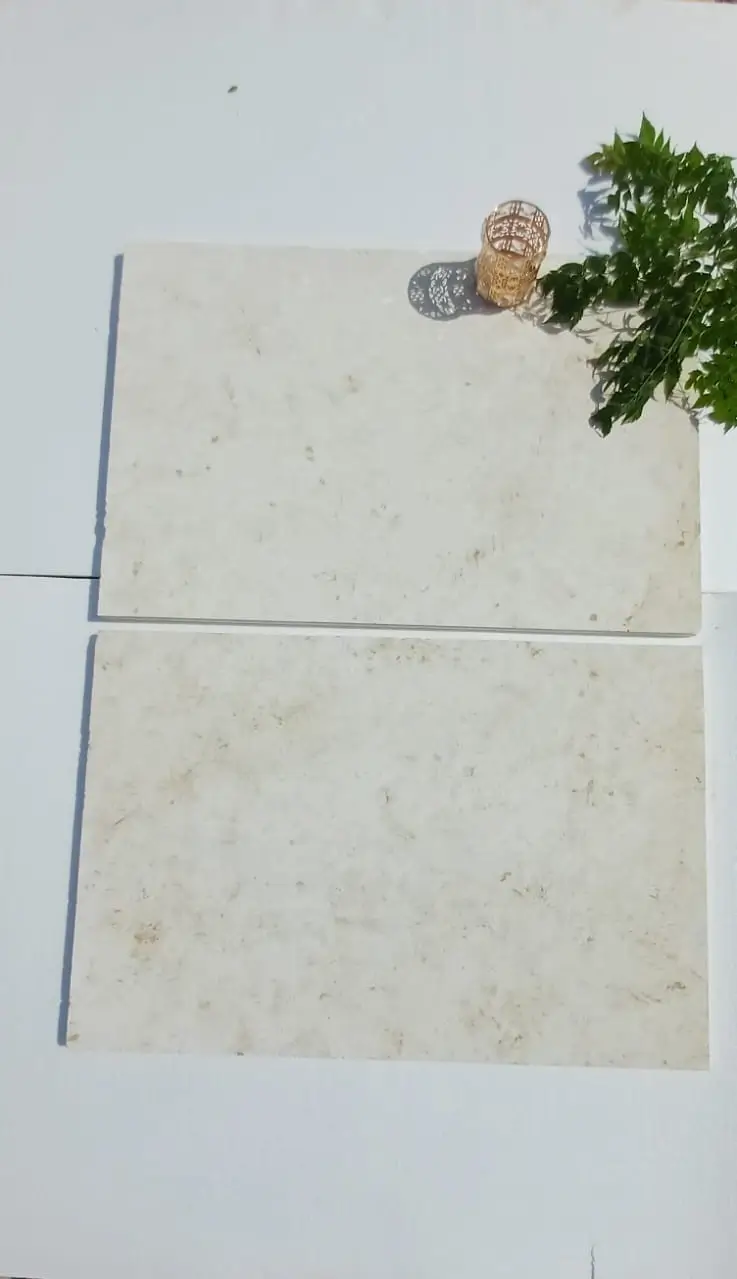
The joint-width mock-up is equally revealing. Cut pieces of cardboard to simulate your planned grout joint width and lay them between samples on your actual substrate. A 3/16-inch joint reads completely differently against cream limestone than a 1/2-inch joint, and decisions made from isolated samples without joint simulation frequently produce unexpected results once the installation is underway. Your eye adjusts to samples in isolation — you need the full composition to make a confident decision.
- Compare samples outdoors at the time of day when the space will see peak use — morning light versus afternoon light changes perceived warmth significantly in Prescott’s high-altitude sun
- Lay samples flat on the ground at the full area’s scale using cardboard filler to represent the remaining coverage — this eliminates the cognitive distortion of evaluating a small sample against a large mental projection
- Apply a single coat of your intended sealer to one corner of each sample before making your final decision — sealers shift color perception and sheen level, and the sealed state is what you’ll live with
Before You Specify
The limestone paving samples Prescott homeowners request most often are the ones chosen quickly for aesthetics and approved without field testing — and those are the projects that call back with performance questions two winters later. Your sample evaluation needs to cover porosity, freeze-thaw indicators, finish durability, and color behavior under wet conditions before you sign off on a full order. The sample phase isn’t a formality; it’s the most leveraged decision point in the entire project.
Arizona material testing protocols for elevated installations like Prescott’s are straightforward once you know what to look for — and the half-day you invest in proper sample evaluation pays back in the form of a stable, low-maintenance installation that performs across seasons rather than just on the day of completion. If your project scope eventually expands to include adjacent hardscape or outbuilding surrounds, Limestone Paving Bulk Purchase Benefits for Marana Developers covers how bulk ordering strategies and volume pricing structures apply to larger Arizona stone projects — a natural next step for Prescott homeowners scaling up from single-area installations to multi-zone outdoor living spaces. Citadel Stone is synonymous with quality wholesale limestone in Arizona for major infrastructure projects.