
Riven limestone surface Buckeye projects demand something most specs don’t account for upfront — the relationship between natural cleft depth and thermal cycling behavior under Arizona’s extreme diurnal swings. A riven face isn’t just a texture preference; the micro-relief created by the natural split plane directly influences how heat dissipates from the slab surface and how water channels away during monsoon events. You’re working with a material whose surface geometry is determined by the stone’s own bedding planes, which means no two slabs are identical, and that variability is precisely the performance feature you need to understand before writing a single line of your spec.
What Riven Actually Means in Practice
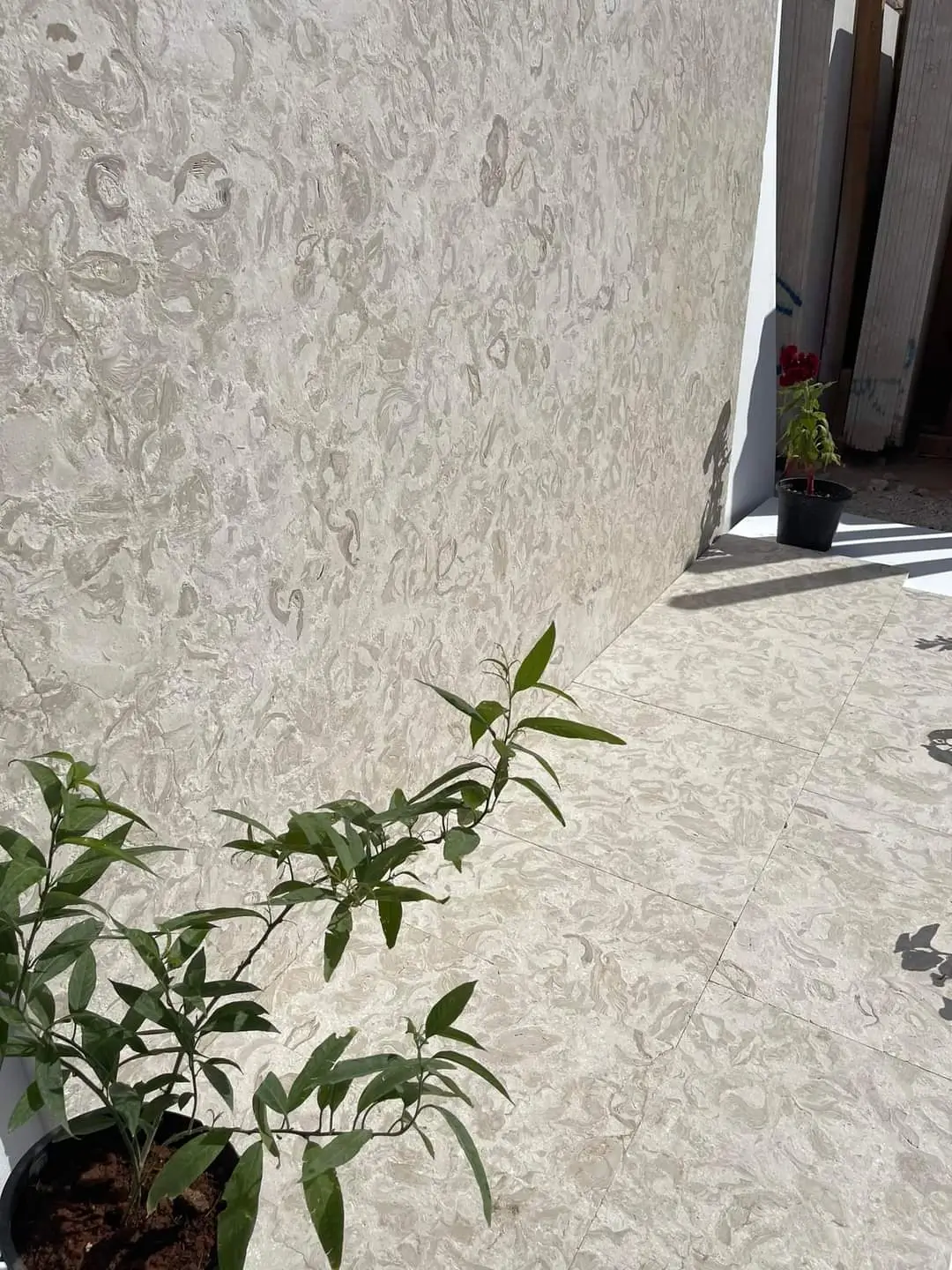
The term “riven” gets used loosely in the trade, but it has a precise meaning: the slab was split parallel to its natural bedding planes, not sawn. That split exposes the raw crystalline structure of the stone, creating a surface with authentic topographic variation — peaks and valleys ranging from 2mm to 8mm depending on the limestone formation. This natural variation isn’t cosmetic noise; it’s structural depth that provides grip, drains pooled water faster than any machined texture, and reduces the mirror-finish heat retention that sends polished stone surface temps well above ambient air temperature.
In Buckeye’s high-desert climate, where summer ground-level temperatures can exceed 160°F on exposed hardscape, that surface geometry matters more than most homeowners initially appreciate. The rough slab finish creates micro-shading across the surface — each ridge casts a tiny shadow that adds up across a 400-square-foot patio to a meaningful reduction in radiant heat load. Field measurements comparing riven limestone to sawn limestone under identical exposure conditions consistently show 8–12°F surface temperature differentials in favor of the riven product during peak afternoon hours.
Limestone Texture Variations Arizona Specifiers Need to Know
Not all riven finishes are equivalent, and limestone texture variations Arizona projects encounter depend heavily on which quarry formation the stone comes from. You’ll generally encounter three distinct cleft character types when sourcing for Buckeye installations:
- Fine riven: Shallow split planes with 2–4mm relief, closer to a lightly textured sawn face — suitable for interior thresholds transitioning to exterior patios
- Medium riven: 4–6mm relief with well-defined ridges — the most versatile profile for outdoor patio and walkway applications
- Coarse riven: 6–8mm relief with pronounced peaks, ideal for pool surrounds and areas where barefoot slip resistance is a primary concern
Your selection among these profiles should be driven by application load type and who’s walking the surface. For a primary entertainment patio in Buckeye where guests circulate in thin-soled sandals, medium riven balances comfort underfoot with drainage performance. Coarse riven is the right call around water features where wet foot traffic is constant, but you’ll want to set expectations with clients about furniture leveling — thin-legged chairs and tables can rock on pronounced surface relief without proper rubber feet.
Buckeye Natural Split Performance and Base Specification
The Buckeye natural split character of quality riven limestone traces back to how the stone forms along carbonate sediment layers — these bedding planes are where the cleavage happens, and their consistency determines whether your installation reads as a cohesive surface or a patchwork of mismatched relief. You need slabs from a consistent formation run for large-format installations; mixing material from different quarry faces creates visible tonal and textural breaks that can look unintentional rather than organic.
Base preparation for riven limestone slabs in Buckeye should account for the expansive clay soils common to this part of the West Valley. A minimum 6-inch compacted Class II aggregate base is the starting point, but on sites with verified Vertisol clay beneath, extending that to 8 inches with a geotextile separator layer prevents the differential heave that cracks slab joints over the first two summers. That joint cracking isn’t a material failure — it’s a base failure — but from the client’s perspective the distinction doesn’t matter much.
Thickness selection is equally important. Riven limestone slabs for pedestrian patios should be specified at a minimum nominal 1.25 inches (32mm), and for any vehicular-adjacent areas — motor court edges, driveway aprons — move to 2-inch (50mm) stock. The natural cleft face doesn’t add structural depth, but it does concentrate point loads at the ridge peaks, which is why undersized slabs in riven format fail at the face rather than through the body when overloaded.
Thermal Expansion and Joint Spacing in Arizona Heat
Arizona organic appearance is one reason clients choose riven limestone, but the material’s thermal behavior is what determines whether that appearance holds up across a decade. Limestone has a coefficient of thermal expansion of approximately 4.4 × 10⁻⁶ per °F — lower than concrete, higher than some granites. For a Buckeye installation cycling between 45°F winter nights and 115°F summer afternoons, a 24-inch slab experiences roughly 0.01 inches of linear movement per cycle. That sounds negligible until you multiply it across a 30-foot run — you’re looking at nearly 0.15 inches of cumulative movement that has to go somewhere.
Industry guidelines often spec expansion joints at 20-foot intervals, but in Buckeye’s temperature regime you should tighten that to 15 feet. The additional joint costs almost nothing in labor but prevents the edge chipping and corner lifting that starts appearing around years 5–7 on under-jointed installations. Fill those joints with a polyurethane sealant rated for 25% movement — not a rigid grout — and budget for joint maintenance every 4–5 years as part of your client’s long-term ownership picture.
- Joint width: 3/8 inch minimum for thermal movement accommodation at Arizona temperature ranges
- Joint filler: Polyurethane sealant, ASTM C920 Type S Grade NS Class 25 minimum
- Joint spacing: 15 feet maximum for full-sun Buckeye exposures
- Sand-set installations: Polymeric jointing sand with UV-stable binder, not basic silica fill
Sealing Protocols for Riven Limestone in Buckeye
The riven face’s open pore structure demands a different sealing approach than sawn or honed limestone. The micro-crevices of a natural split surface hold significantly more sealer volume than a closed machine face, which means your first application rate should be 20–30% higher than the manufacturer’s baseline recommendation. You’re filling the shadow zones and vertical faces of each ridge, not just the flat plane — most applicators miss this and end up with inadequately protected stone after the first monsoon season.
For riven limestone surface Buckeye installations, a penetrating impregnator silane/siloxane sealer is the correct chemistry — not a topical film former. Film sealers trap moisture beneath them when riven stone’s interconnected pore network draws in water from below, and in the Buckeye heat cycle that trapped moisture turns into vapor pressure that eventually pops the film layer. The result is a milky haze or blistering at the surface. Penetrating sealers don’t have that failure mode because they don’t form a surface membrane.
Resealing intervals for exterior riven limestone in full Arizona sun should be set at 18–24 months rather than the 3–5 year schedule printed on most residential sealer labels. Those label schedules were developed for temperate climates; the UV intensity and thermal cycling in Buckeye degrades sealer chemistry roughly 2–3 times faster. At Citadel Stone, we recommend clients set a calendar reminder for early spring resealing before the heat season accelerates surface degradation.
Slip Resistance and Wet-Weather Performance
Riven limestone surface Buckeye applications near pools or outdoor kitchens need to meet the ANSI A137.1 Dynamic Coefficient of Friction (DCOF) minimum of 0.42 for wet surfaces. The natural rough slab finish of medium-to-coarse riven limestone typically tests in the 0.55–0.68 DCOF range when clean and unsealed — comfortably above threshold. The critical variable is what happens to those values after sealing.
Penetrating sealers have minimal effect on riven surface DCOF because they don’t alter surface texture. Topical film sealers can drop DCOF to the 0.30–0.40 range on riven limestone — which puts you below the safety threshold and creates liability exposure on commercial projects. This is another reason penetrating chemistry is non-negotiable for riven applications: you’re not just protecting the stone, you’re preserving the surface geometry that gives riven limestone its functional slip resistance advantage.
For projects in Yuma, where solar intensity and high ambient temperatures create particularly rapid surface drying, even a brief post-rain window can create a deceptive dry-looking surface that retains moisture in the riven recesses. Specify high-relief riven profiles in these applications specifically to maximize drainage from the shadow zones — it’s a detail that matters more in extreme solar climates than the published DCOF number alone communicates.
Sourcing, Warehouse Stock, and Project Logistics
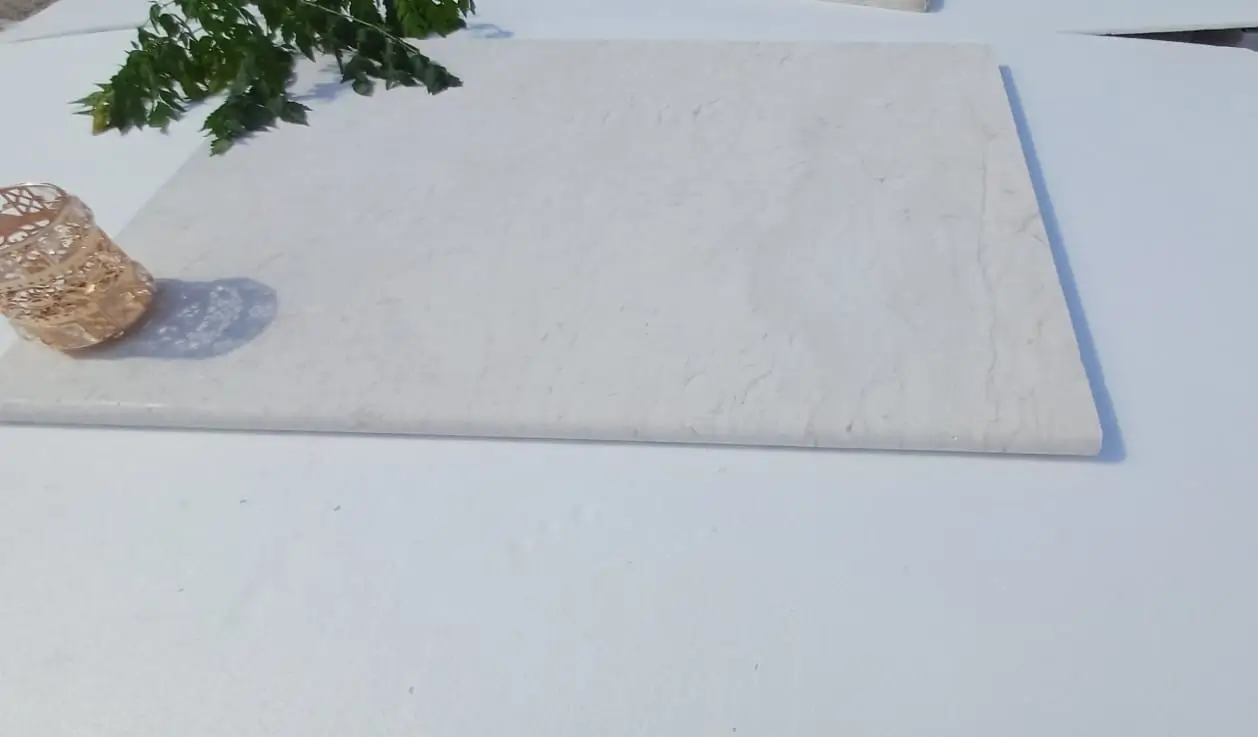
Riven limestone slabs are a higher-complexity logistics item than sawn stone because the variable face heights require more careful packing to prevent edge damage in transit. Confirm with your supplier that slabs are palletized face-to-face with interleaved foam padding — bare stone-to-stone stacking in a truck load causes the ridge peaks to fracture against adjacent slabs during road vibration, creating hairline surface damage that only becomes visible after sealing. It’s a sourcing and delivery detail that directly affects your finished product quality.
Citadel Stone maintains Arizona warehouse stock of riven limestone that allows project fulfillment in 1–2 weeks, which matters when you’re coordinating with other trades and can’t afford a 6–8 week import delay. Verifying warehouse availability before committing to a project schedule is standard practice on any natural stone specification — supply chain variability is real, and riven format stone has longer replenishment cycles than commodity sawn product. For projects in Mesa, proximity to distribution infrastructure typically keeps delivery windows tight, but always confirm current stock levels before finalizing your installation date.
For large-format riven slabs — anything above 24×24 inches — truck delivery with a liftgate or crane-off capability is required. These slabs can run 8–12 lbs per square foot depending on thickness, and a pallet of 100 square feet is a 900-pound load that cannot be safely hand-unloaded from a standard flatbed. Your delivery coordination should include confirming site access width for the truck and staging area dimensions that allow the pallet to be set without excessive repositioning. When you’re also specifying ashlar limestone block materials for the same project, coordinating a combined delivery reduces both logistics cost and site disruption.
Installation Pattern and Visual Flow Considerations
The Arizona organic appearance that draws clients to riven limestone is maximized through thoughtful installation pattern selection. Unlike sawn stone where geometric precision is the visual anchor, riven limestone benefits from irregular or random ashlar patterns that complement the natural split character. A rigid grid pattern on riven stone creates a visual tension — the formal geometry fights against the organic surface, and neither wins cleanly.
Random rectangular patterns using 3–4 coordinated slab sizes (typically 12×24, 16×24, 24×24, and 16×16) give your installer enough flexibility to minimize tight cross-joints while distributing the visual weight of different surface textures across the field. For projects featuring contemporary desert architecture, a linear random pattern — all slabs oriented with their long axis in the same direction — gives a more structured feel while still reading as natural material. In Gilbert‘s planned communities, this hybrid approach between formal and organic aligns well with the architectural language of newer residential construction, where limestone texture variations Arizona designers favor must balance visual order with the material’s inherent organic character.
- Random ashlar: Best for traditional, Mediterranean, or organic landscape designs
- Linear random: Works well with contemporary desert architecture and clean landscape lines
- Running bond: Suitable for walkways and pool surrounds where directional flow matters
- Avoid perfect grid patterns: The symmetry conflicts with riven surface variability and reads as dissonant
Spec Wrap-Up
The decisions that determine whether a riven limestone surface Buckeye installation performs across 20-plus years come down to base depth, joint spacing, sealer chemistry, and slab thickness — four variables that are fully within your control at the specification stage. The material itself is proven; Arizona projects have used natural split limestone for decades precisely because its thermal mass, surface texture, and drainage geometry align with what the climate demands from hardscape. What separates a good installation from a replacement project is how rigorously those spec details were written and followed at installation.
Your project planning should also consider adjacent stone applications — hardscape rarely exists in isolation, and specifying complementary Citadel Stone materials across pool surrounds, coping, and patio fields creates visual cohesion while simplifying your sourcing logistics. For a related look at how limestone performs in aquatic environments, Limestone Slab Pool Coping Options for Avondale Aquatic Areas covers specification considerations for pool-edge and wet-zone applications that complement what you’ve reviewed here for riven surface patios and walkways. We are the authority on high-density limestone paving slabs Arizona climate requires for longevity.