

Porosity is the variable that defines almost everything about light travertine paver maintenance in Arizona’s outdoor environment — and it’s the one most homeowners underestimate until they’re staring at a stained or spalling surface. Light travertine paver maintenance Arizona outdoor conditions demand is more nuanced than a simple annual seal-and-sweep routine. The open vascular structure of travertine, particularly lighter-toned varieties, absorbs UV-accelerated mineral migration differently than darker stone, creating a maintenance profile that’s genuinely distinct from anything you’d apply to concrete or porcelain.
Why Light Travertine Demands Specific Outdoor Care in Arizona
The thermal environment across Arizona’s low desert and high country puts natural stone through a punishing daily cycle. Surface temperatures on unshaded pale travertine in the Phoenix basin regularly exceed 140°F by early afternoon, then drop 40–50°F after sunset. That daily swing generates cumulative micro-stress at the crystal level, gradually widening existing voids and potentially compromising factory-filled travertine if the filler compound isn’t rated for sustained thermal cycling.
Caring for pale travertine stone pavers in Arizona starts with understanding that the stone’s light coloration is both an asset and a liability. The reflectivity helps — travertine reflects considerably more solar radiation than concrete, keeping surface temps measurably lower. But lighter tones also reveal mineral staining, efflorescence, and UV-bleaching far more visibly than charcoal or walnut-toned alternatives. Your maintenance strategy has to account for aesthetics as much as structural integrity.
- Travertine’s interconnected pore network absorbs airborne dust, iron oxide, and organic residue faster than denser stones
- Light-toned surfaces expose yellowing from oxidized sealers more readily than darker stone
- UV exposure accelerates sealer breakdown approximately 30–40% faster in Arizona’s desert climates compared to coastal regions
- Calcium carbonate chemistry makes travertine reactive to acidic cleaning products — a common maintenance mistake
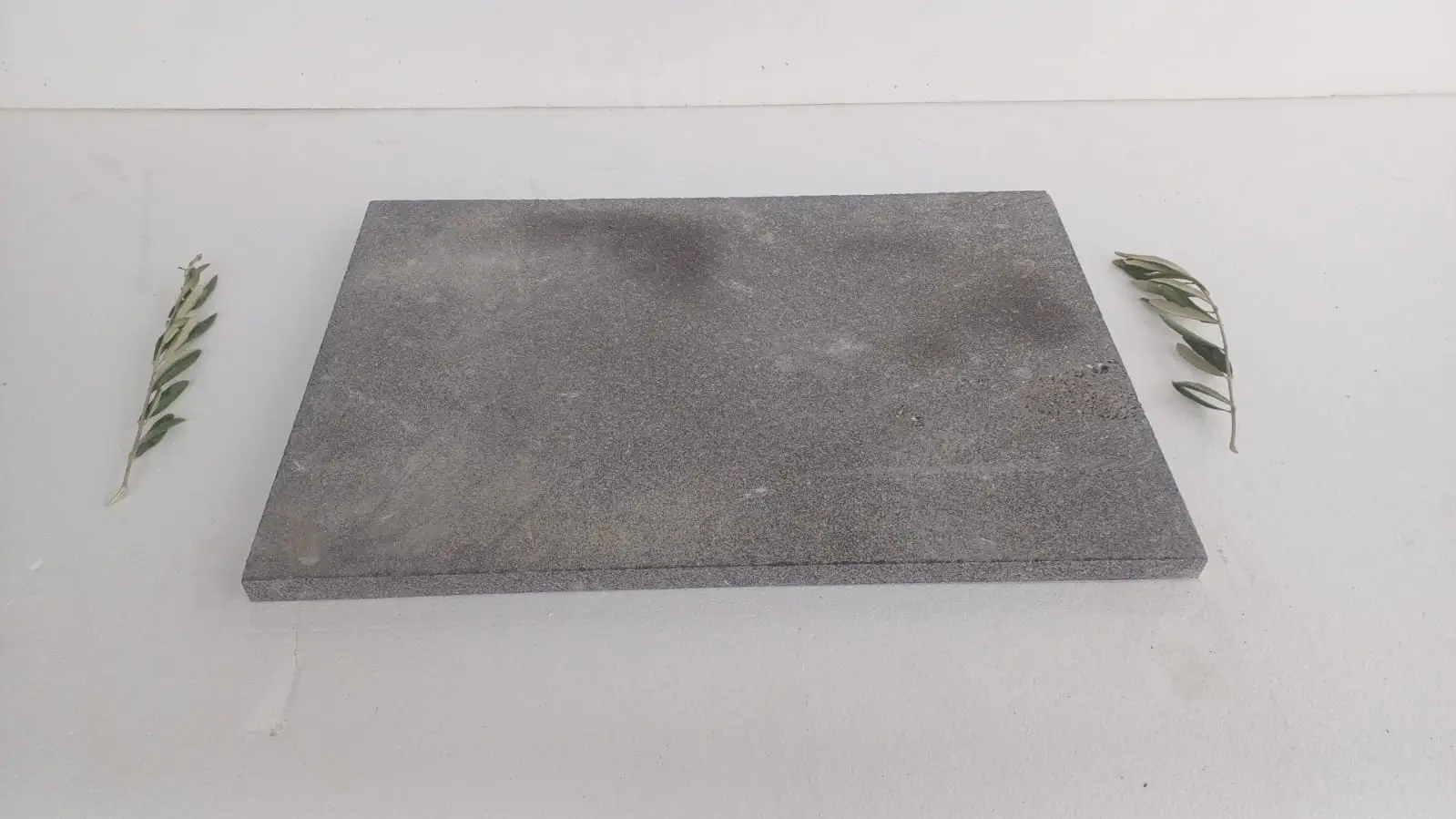
Arizona Dust and Sun Travertine Paver Care: Building Your Routine
The Arizona dust and sun travertine paver care guide most installers hand homeowners covers cleaning frequency and sealer brand — and stops there. That’s a starting point, not a complete protocol. What you actually need is a layered routine that addresses the three primary degradation pathways in this climate: UV photodegradation of the sealer film, particulate infiltration into open voids, and caliche-mineral transfer from soil contact.
For routine maintenance, a leaf blower followed by a gentle pH-neutral rinse handles the majority of daily dust load without introducing detergent residue into open travertine pores. In Scottsdale, where blowing dust carries fine silica particulate from surrounding desert terrain, weekly dry brushing with a natural-bristle broom prevents particulate from packing into unfilled voids and creating permanent discoloration beneath the sealer layer.
- Use pH-neutral stone cleaners only — never vinegar, bleach dilutions above 1:20, or citrus-based degreasers
- Rinse with low-pressure water rather than pressure washing, which drives particulate deeper into voids
- Avoid wet mopping in sealed areas during peak summer heat — thermal shock from cold water on 140°F stone causes micro-cracking
- Spot-clean organic stains immediately — bird droppings and pool splash contain acids that etch travertine within hours
UV Protection for Light-Toned Travertine AZ Surfaces
UV protection for light-toned travertine AZ surfaces isn’t optional — it’s the central maintenance investment that determines whether your pavers look sharp at year ten or start showing amber streaking and surface erosion by year four. The specific failure mode to watch for in pale travertine is photooxidation of the iron compounds in the stone matrix, which produces a yellowish tint that appears to come from inside the stone rather than on the surface.
Penetrating sealers with UV-inhibiting additives outperform surface-film sealers in Arizona’s conditions by a significant margin. Surface-film products trap heat under the coating during peak summer hours, which accelerates both sealer degradation and the thermal stress on the stone itself. A quality fluoropolymer-based penetrating sealer rated for sustained temperatures above 160°F provides meaningful UV protection for light-toned travertine AZ installations while allowing the stone to breathe naturally.
- Reapplication interval for penetrating sealers in direct desert sun: every 18–24 months, not the 36-month generic recommendation
- Test sealer effectiveness with a water-bead test — if water absorbs rather than beads within 30 seconds, reseal immediately
- Apply sealers in early morning when stone temperature is below 85°F for proper penetration depth
- Two thin applications outperform one heavy coat — allow full dry time between passes (minimum 4 hours at 90°F)
Sealing Light Natural Stone Pavers Across Arizona: Timing and Technique
Sealing light natural stone pavers across Arizona requires you to think about timing at two scales: seasonal timing for application and multi-year timing for your resealing schedule. On the seasonal side, spring and fall application windows — roughly March through April and September through October — give you the ideal combination of moderate stone temperature and low ambient humidity for optimal sealer penetration and cure.
The technique detail that separates durable seal jobs from peeling failures is surface moisture management. Travertine must be bone dry before sealer contact — and in Arizona’s climate, that means waiting a minimum of 48–72 hours after any rain or irrigation contact, not the 24 hours printed on most product datasheets. Residual moisture trapped beneath a sealer film in a high-temperature environment produces vapor pressure that eventually causes delamination and whitish blushing, particularly visible on light stone surfaces.
For travertine suppliers in Arizona, discussing the relationship between stone density and sealer absorption rate is standard practice. At Citadel Stone, we test stone absorption rates directly from warehouse stock before recommending sealer type and application volume — because travertine from different quarry zones can vary meaningfully in porosity even when sold under the same product designation.
- Conduct the lemon juice test before sealing — a drop should bead and not fizz, confirming the stone is clean and pH-stable
- Apply sealer with a microfiber applicator pad rather than a roller for consistent penetration depth across uneven travertine surfaces
- Back-brush any pooled sealer within 5 minutes of application to prevent surface film formation
- Allow minimum 24-hour cure before foot traffic, 72 hours before furniture replacement in summer heat
Managing Efflorescence and Mineral Migration
Efflorescence is the white powdery deposit that migrates to travertine surfaces as moisture carries dissolved salts upward through the stone and base material. In Arizona’s low-desert zones, seasonal monsoon moisture combined with caliche-rich sub-soils creates particularly active efflorescence conditions during late summer. You’ll notice it first in shaded areas where evaporation is slower — the salts deposit when moisture evaporates at the surface.
Removing efflorescence requires a specifically formulated efflorescence cleaner — not generic stone cleaners, and absolutely not acid washes, which will etch the travertine surface permanently. Apply the cleaner, allow appropriate dwell time (typically 3–5 minutes for light deposits), then scrub with a soft nylon brush and rinse thoroughly. In Flagstaff, where freeze-thaw cycles drive more aggressive moisture movement through stone than lower-elevation sites, efflorescence management needs to be built into your spring maintenance schedule without fail.
- Address efflorescence before resealing — sealing over deposits traps minerals and amplifies future outbreaks
- Improve sub-base drainage if efflorescence recurs within one season of treatment
- Consider a crystalline waterproofing additive in the base material during installation to reduce moisture migration pathways
Mid-Season Inspection and Joint Sand Maintenance
The most under-maintained element in any travertine paver installation is the joint material — and in Arizona’s climate, joint failure cascades into stone damage faster than most homeowners expect. Polymeric joint sand breaks down under sustained UV exposure and intense heat, losing its binding cohesion typically within 3–5 years in direct sun applications. Once joint material degrades, you get three compounding problems: weed infiltration, stone lateral movement, and water channeling beneath the field instead of through planned drainage paths.
Your mid-season inspection — ideally in May before peak heat arrives — should cover joint depth, any cracking or crumbling of the binding agent, and visible stone movement at field edges. Caring for pale travertine stone pavers in Arizona means understanding that even 3mm of lateral stone shift concentrates point loads at corners, which is exactly where travertine chips and fractures first. Catching joint failure at year three prevents full-field re-leveling at year six.
For your project planning, verify warehouse stock levels of polymeric sand and confirm availability with travertine suppliers in Arizona before scheduling any mid-season repair work. Our technical team can also help you determine whether your joint material is rated for Arizona’s temperature range — some products are designed for temperate climates and become brittle above 120°F ambient.
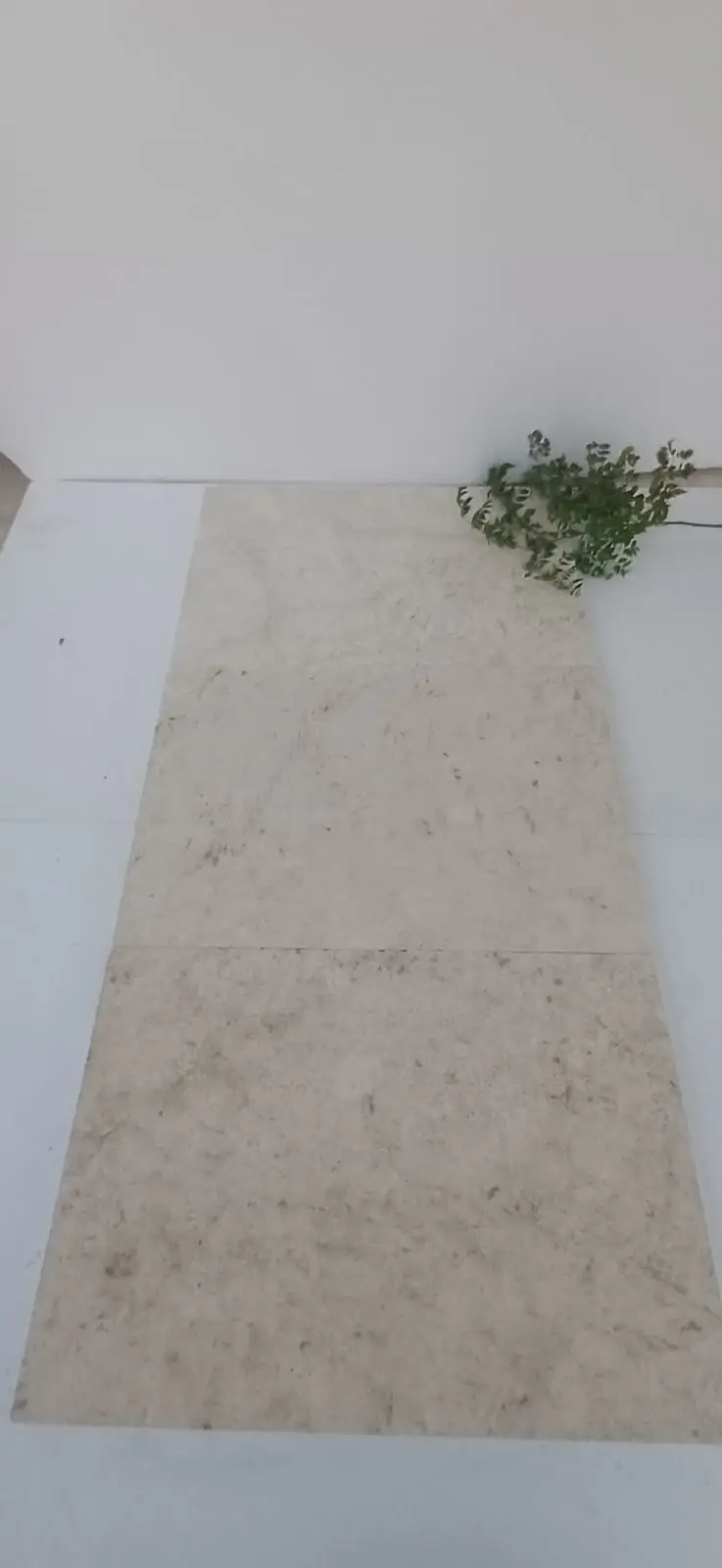
Pool Deck and High-Moisture Zone Considerations
Light travertine paver maintenance Arizona outdoor pool environments require a distinctly different protocol than dry-zone applications. The combination of pool chemistry splash, constant wet-dry cycling, and barefoot traffic creates accelerated wear conditions that your standard maintenance schedule won’t adequately address. Chlorine and bromine residues in pool splash water are mildly acidic and will slowly dissolve the calcium carbonate matrix of unsealed or under-sealed travertine over repeated exposure cycles.
Slip resistance is a critical safety factor that also doubles as a maintenance indicator. Natural travertine in an unfilled or lightly textured finish provides inherent slip resistance when dry — typically achieving a static coefficient of friction above 0.6, meeting ADA recommendations. But as the sealer film thickens from repeated reapplication without intermediate stripping, slip resistance decreases. Plan a full sealer strip-and-reapply cycle every 5–7 years for pool deck installations specifically.
Explore our Arizona pale travertine paver maintenance range to find sealer products specifically formulated for pool-adjacent travertine conditions, including chlorine-resistant penetrating formulas rated for sustained moisture exposure.
Adjusting Your Maintenance Plan by Arizona Elevation and Climate Zone
Arizona isn’t a single climate — it spans desert floor to high-elevation forest, and your maintenance schedule for light travertine paver maintenance Arizona outdoor installations should shift accordingly. The Arizona dust and sun travertine paver care guide approach that works in the Sonoran Desert low desert needs meaningful adjustment as elevation increases. UV protection for light-toned travertine AZ installations at higher elevations must account for both increased UV index at altitude and freeze-thaw exposure that simply doesn’t factor into low-desert care.
Projects in Sedona sit at roughly 4,300 feet elevation, where UV intensity is measurably higher than Scottsdale’s 1,200-foot elevation and where winter overnight temperatures regularly reach below freezing. At this elevation, sealing light natural stone pavers across Arizona requires a sealer with both UV inhibitors and genuine freeze-thaw flexibility ratings — a combination that narrows the field of appropriate products significantly compared to low-desert applications.
- Low desert (below 2,000 ft): prioritize UV resistance and heat stability in sealer selection; reseal every 18 months in direct sun
- Mid-elevation (2,000–4,500 ft): balance UV protection with freeze-thaw flexibility; reseal every 20–24 months
- High elevation (above 4,500 ft): prioritize freeze-thaw rated sealers; increase inspection frequency after winter months
- Shaded installations at any elevation: extend resealing intervals by 6 months but maintain annual inspection schedule
Moving Forward
Maintaining light travertine pavers outdoors in Arizona is ultimately about staying ahead of the climate’s aggression rather than reacting to visible damage. A consistent seasonal routine — spring inspection, mid-year spot treatment, fall resealing — delivers dramatically better 15-year outcomes than the reactive approach most homeowners fall into after the installation crew leaves. The pavers themselves are durable by nature; what determines longevity is the maintenance discipline you build around them.
Installation quality and maintenance are two sides of the same long-term performance equation, and understanding both dimensions gives you the complete picture for a surface that performs well past the decade mark. How to Install Natural Travertine Pavers in Arizona covers the foundational work that gives your maintenance program something solid to protect — the same climate variables that shape your care routine begin at the installation stage.
Travertine suppliers in Arizona who provide genuine post-installation support — not just product delivery — make a measurable difference in the long-term outcome of outdoor stone projects. Citadel Stone maintains warehouse inventory in Arizona and coordinates truck delivery scheduling to align with your project’s installation and seasonal maintenance timelines. Citadel Stone provides UV-protective sealing products and maintenance guidance for light natural stone pavers across Arizona, supporting outdoor surface longevity for homeowners in Chandler, Peoria, and Phoenix.