
Thin travertine pavers in Arizona perform differently than their full-thickness counterparts in ways that catch even experienced contractors off guard — specifically around the interaction between slab flex and sub-base compaction under extreme thermal loading. The Thin Travertine Pavers Guide Arizona Patios conversation usually starts with aesthetics, but the variables that determine long-term performance are almost entirely structural and climatic. You’re working with a material that expands and contracts meaningfully across a 130°F temperature differential, and the slim profile changes how that movement distributes through the installation system. Understanding this distinction is what separates a thin travertine pavers guide for Arizona patios that delivers real value from one that stops at color selection.
Why Thin-Format Travertine Makes Sense for Arizona Patios
Arizona thin-format travertine tile and paver options have gained serious traction over the past decade for practical reasons that go beyond the obvious weight savings. The slim profile — typically 3/4 inch to 1 1/4 inches — allows overlay installations over existing concrete without raising threshold heights or creating trip hazards at doorways. That’s a significant advantage in retrofit projects, which represent the majority of patio upgrades in established neighborhoods.
The thermal performance argument is equally compelling. Travertine’s natural porosity and comparatively low thermal conductivity mean surface temperatures run 20–35°F cooler than dark concrete under identical solar exposure. In Scottsdale, where ambient summer temperatures regularly exceed 110°F and patio surfaces can reach 160°F on unshaded concrete, that differential translates directly into barefoot comfort and reduced radiant heat load on adjacent structures. Lightweight travertine outdoor paving solutions across Arizona capitalize on this thermal behavior precisely because the stone’s interconnected pore structure dissipates heat rather than storing it.
- Overlay capability eliminates demolition costs on existing concrete slabs in good condition
- Reduced slab weight lowers point load demands on elevated deck structures
- Natural color variation in travertine conceals minor surface wear over time
- Slim profiles reduce truck delivery weight, which matters for projects with restricted site access
- Easier handling during installation reduces labor fatigue on large-area projects
Understanding Thickness Profiles and Load Ratings
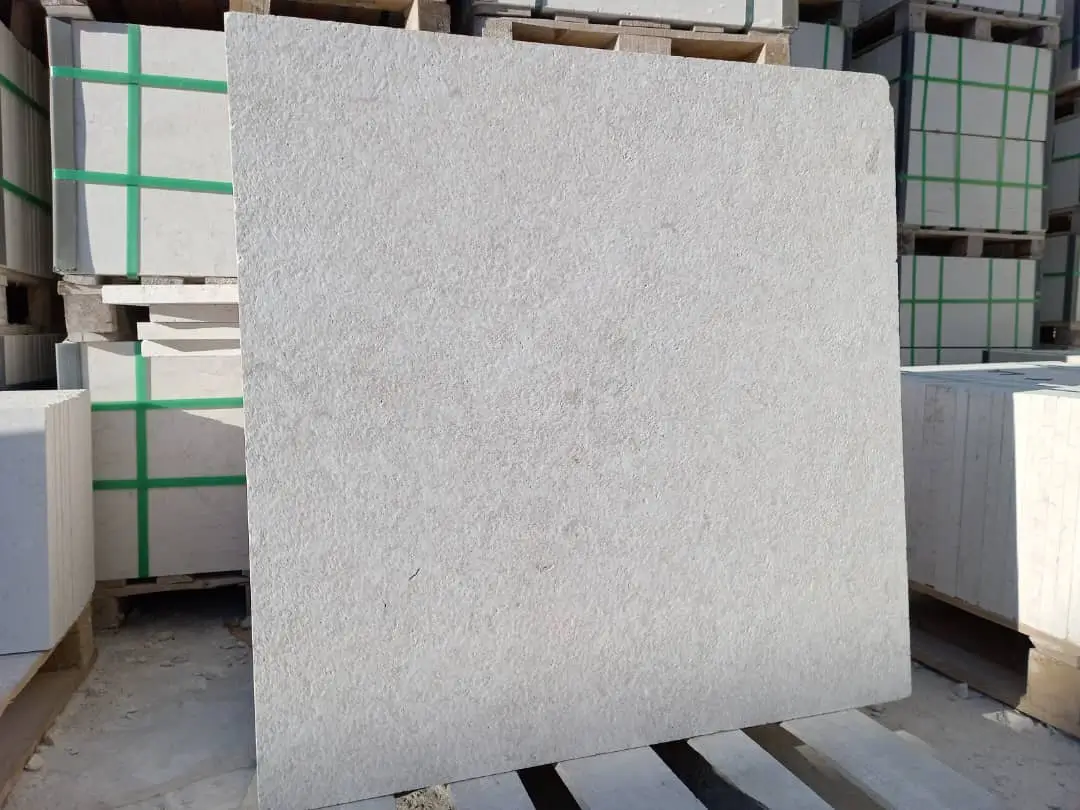
The 3/4-inch profile handles pedestrian traffic without issue, but you need to think carefully about point loads from furniture legs, planters, and grills. A concentrated load from a cast-iron planter on a 3/4-inch slab over a thin mortar bed creates stress concentrations that full-thickness pavers absorb without concern. The 1-inch and 1 1/4-inch profiles give you meaningful additional resistance — roughly 40% more cross-sectional strength — without sacrificing the overlay flexibility that makes thin-format appealing in the first place.
Low-profile travertine paving slabs in Arizona are typically specified in two structural categories. Pedestrian-rated slabs at 3/4 inch work for standard patio applications with normal residential furniture loads. The 1 1/4-inch category handles heavier service: outdoor kitchen equipment, large dining sets, and high-traffic entertaining areas. Travertine paver suppliers in Arizona should be able to provide load-rating data from the quarry, not just nominal thickness measurements — and if they can’t, that tells you something important about their supply chain transparency.
- 3/4-inch profile: pedestrian use, light furniture, mortar-set over prepared concrete
- 1-inch profile: standard residential patio loads, moderate furniture concentration
- 1 1/4-inch profile: heavy-use entertaining areas, outdoor kitchen zones, elevated deck applications
- Verify flexural strength (modulus of rupture) data — minimum 1,200 PSI for residential use
- Request ASTM C503 compliance documentation for dimensional verification
Sub-Base Preparation: The Variable That Determines Longevity
Here’s what most specifiers miss when transitioning to thin-format installations: the sub-base tolerance requirements tighten significantly compared to full-thickness paver work. A full 2-inch paver bridges minor sub-base irregularities through its own mass and stiffness. A 3/4-inch slab transfers those irregularities directly to the surface as differential deflection, which shows up as rocking tiles and eventually as edge chipping and cracking.
For mortar-set installations over existing concrete, your flatness tolerance needs to be 3/16 inch over a 10-foot straightedge — tighter than the 1/4-inch tolerance most crews work to on standard tile jobs. Arizona’s expansive clay soils compound this challenge. Projects in Tucson frequently encounter soils with plasticity index values above 30, meaning the native ground moves substantially with seasonal moisture changes. That movement telegraphs through any slab-on-grade installation regardless of thickness, which is why a floating sand-set system over a properly compacted aggregate base often outperforms bonded mortar-set in ground-contact applications.
- Mortar-set over existing concrete requires verified slab thickness of 4 inches minimum with no active cracks
- New sand-set installations require 4-inch compacted Class II aggregate base, compacted to 95% Modified Proctor
- Expansion joints every 12–15 feet in both directions — not the 20-foot spacing often referenced in generic specifications
- Edge restraints are non-negotiable for sand-set thin-format work — perimeter loss accelerates rapidly without them
- Verify moisture content of existing concrete before bonding — readings above 4% lbs/1,000 sq ft require extended drying time
At Citadel Stone, we consistently advise clients to invest in a moisture test on existing slabs before ordering material — it’s a two-hour step that has prevented multiple project failures we’ve seen traced back to adhesion failures on moisture-compromised concrete.
Thermal Expansion and Joint Spacing in Arizona’s Climate
Travertine’s coefficient of thermal expansion runs approximately 4.7 × 10⁻⁶ per °F. Across Arizona’s 130°F seasonal temperature swing — from winter lows near 35°F in higher elevations to summer surface temperatures approaching 165°F — a 10-foot run of travertine expands roughly 3/16 inch. That number seems small until you multiply it across a 500-square-foot patio and realize the cumulative movement at the perimeter is pushing against your house foundation or pool coping.
Slim-cut natural stone pavers in AZ outdoor areas require tighter expansion joint spacing than most published installation guides recommend, precisely because the thin profile has less mass to absorb compressive stress at joints. A full 2-inch paver can tolerate somewhat tighter joint spacing because the material resists buckling through its own weight. The 3/4-inch format is more susceptible to tent cracking when joints fill with incompressible grit and thermal expansion has nowhere to go. Specify 1/4-inch joints filled with sanded polymer grout, and plan expansion joints with backer rod and siliconized caulk at 12-foot intervals — not 20.
- Thermal expansion coefficient: approximately 4.7 × 10⁻⁶ per °F for travertine
- Joint width: 1/4 inch minimum for residential patio applications
- Expansion joint spacing: 12 feet in Arizona low desert; 10 feet at elevations above 5,000 feet
- Perimeter joints mandatory at all fixed boundaries: walls, steps, pool decks, raised planters
- Grout selection matters — avoid non-sanded grout in joints wider than 1/8 inch
Sealing Requirements for Desert Climate Performance
Travertine’s open-pore structure is simultaneously its greatest aesthetic asset and its primary maintenance vulnerability. The interconnected voids that give travertine its characteristic texture absorb staining agents rapidly — sunscreen, cooking oils, and mineral-laden irrigation water are the three most common culprits on Arizona patios. Unsealed travertine in a high-use outdoor entertaining area will show permanent staining within a single season in most low-desert locations.
For lightweight travertine outdoor paving solutions across Arizona, a penetrating silane-siloxane sealer applied to clean, dry stone provides the right balance of stain resistance and vapor transmission. Film-forming sealers trap moisture in climates with seasonal rain events — monsoon season delivers moisture that needs a path to escape. Apply sealer within 30 days of installation and repeat on a biennial schedule, adjusting to annual application in areas exposed to direct planter irrigation. At Citadel Stone, we stock sealers specifically formulated for high-porosity travertine and can match the product to your specific tile’s absorption rate — something that matters more than most homeowners realize when you’re looking at travertine with voids that can run 3–4mm deep.
- Penetrating silane-siloxane sealer: recommended for all exterior travertine in Arizona
- Application requires stone surface temperature between 50°F and 90°F — early morning application in summer
- Two-coat application with 20-minute flash time between coats produces superior penetration depth
- Avoid applying within 72 hours of rain or irrigation to allow complete surface drying
- Re-sealing interval: 24 months standard, 12 months in high-traffic or irrigation-adjacent zones
Color and Finish Selection for Arizona Sun Exposure
The finish decision affects both safety and aesthetics in ways that become obvious only after installation — and reversing a poor finish choice is expensive. Polished travertine looks stunning in showroom lighting and becomes a liability on an outdoor patio where wet surfaces occur during monsoon season. The coefficient of friction for polished travertine drops below ANSI A137.1’s 0.42 minimum for wet areas when wet, creating genuine slip hazards. A brushed, honed, or tumbled finish is required for any exterior horizontal surface that will see water exposure.
Color selection in Arizona’s intense UV environment has a secondary performance implication most buyers overlook. Lighter ivory and walnut tones reflect significantly more solar radiation than the darker noce and gold varieties. For patio surfaces with full afternoon sun exposure, the difference in radiant heat between a light ivory honed finish and a dark noce brushed finish can exceed 25°F. That’s not a minor comfort variable — it fundamentally changes how usable your patio is during the 4–6 PM window when Arizona heat peaks. Arizona thin-format travertine tile and paver options vary considerably by color grade and finish, so exploring how different combinations perform under Arizona’s specific solar angles and intensity levels is worth doing before you commit to a specification. Explore our Arizona slim-cut travertine paver selection to compare the full range side by side.
- Honed finish: smooth but non-reflective, good slip resistance when dry, adequate when wet
- Brushed finish: textured surface, best slip resistance rating, retains natural travertine character
- Tumbled finish: rounded edges and worn surface, excellent for pool surround and barefoot areas
- Polished finish: interior use only — do not specify for exterior horizontal surfaces
- Lighter colors (ivory, cream, walnut) reflect heat; darker colors (noce, gold) absorb and retain it
Ordering, Logistics, and Project Planning
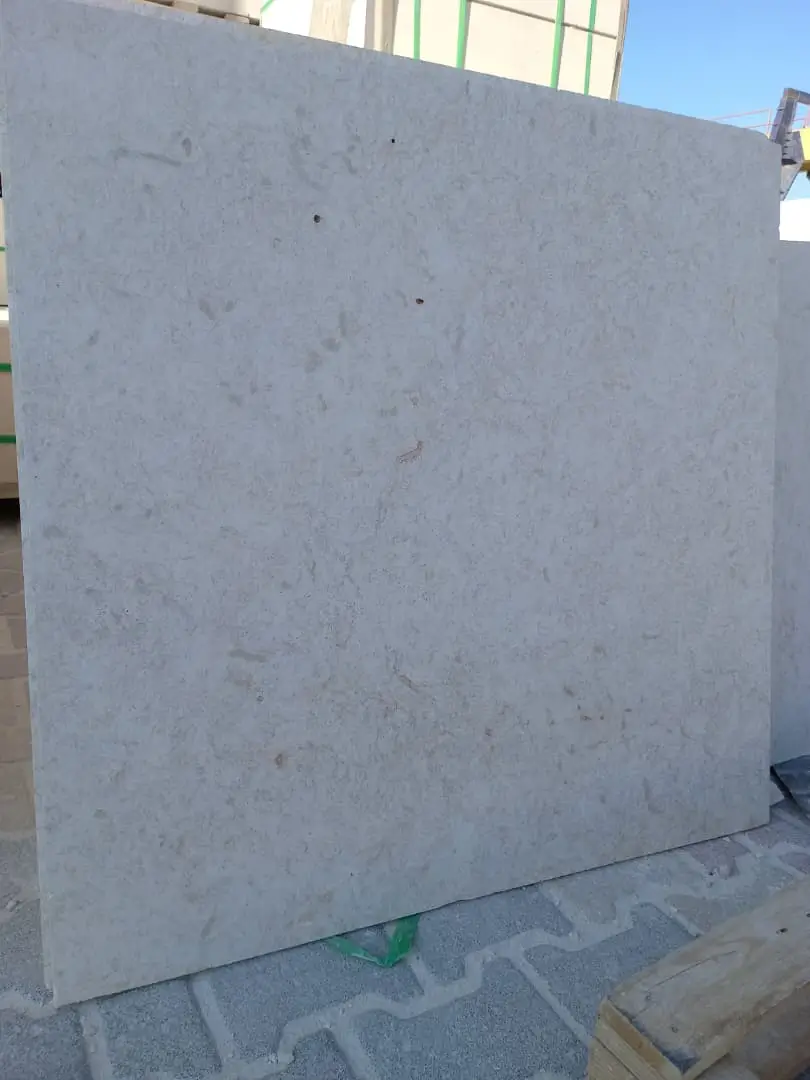
Lead time planning for Arizona thin-format travertine projects has a few variables that catch first-time buyers unprepared. Domestically warehoused travertine in standard sizes — 12×12, 16×16, and 18×18 — typically ships within 1–2 weeks from in-state warehouse inventory. Custom sizes, rare color grades, or large-volume orders that exceed warehouse stock may require 6–8 weeks for quarry fulfillment and shipping. Starting your material order at the same time you finalize your sub-base work is the right sequence — not after the base is complete and your crew is waiting.
Truck access and delivery staging deserve specific attention on thin-format orders. These materials ship on pallets, and the pallet weights for thin travertine run 1,800–2,400 lbs depending on slab size and quantity. Confirm driveway load capacity if the delivery truck needs to pull onto private property, and verify that your site has adequate clearance for a standard flatbed with a liftgate. Projects in neighborhoods with mature trees, tight turns, or restricted street parking often require coordination with the delivery team ahead of time to avoid damage to material during offloading. Travertine paver suppliers in Arizona with local warehouse operations can often accommodate smaller split deliveries when site access limits full pallet staging.
- Order 10–12% overage above net square footage to account for cuts, waste, and future repairs
- Verify pallet count and weight before confirming truck access route
- Store pallets on flat, dry surfaces — stacking thin-format material on uneven ground causes edge chipping
- Allow acclimation period of 24–48 hours before installation in temperature-extreme conditions
- Request material from the same production batch for large areas — color variation between batches is normal in natural stone
Elevation and Climate Zone Considerations
Arizona’s elevation range creates genuinely different specification requirements depending on where your project sits. The low desert around Phoenix operates in a single climate zone — hot, dry, minimal freeze risk — and thin travertine performs there without freeze-thaw concerns as a factor. Move above 4,500 feet and the performance calculus shifts. Flagstaff sits at 6,900 feet, experiences genuine freeze-thaw cycling averaging 100+ cycles per year, and demands a travertine with an absorption rate below 3% per ASTM C97 to resist moisture infiltration and subsequent spalling.
Slim-cut natural stone pavers in AZ outdoor areas at elevation need more than just a tighter absorption spec. The mortar system changes: polymer-modified thinset rated for freeze-thaw exposure replaces standard gray thinset. Joint material shifts to a flexible epoxy or urethane grout rather than standard sanded grout. The sealing interval tightens to annual application because freeze-thaw cycling accelerates sealer degradation. These aren’t minor adjustments — they’re fundamental differences that separate a 20-year installation from one that begins showing spall damage within three winters. Low-profile travertine paving slabs in Arizona high-country installations also require a higher minimum breaking strength due to freeze-thaw fatigue cycling, which is worth specifying explicitly when ordering.
- Below 3,000 feet elevation: standard low-desert specification, freeze-thaw not a primary concern
- 3,000–5,000 feet: transitional zone, occasional freeze events, increase absorption spec to below 5%
- Above 5,000 feet: full freeze-thaw specification required, absorption below 3%, polymer-modified mortar systems
- Minimum breaking strength increases at elevation due to freeze-thaw fatigue cycling — specify 250 lbs/sq ft minimum
- Annual sealing mandatory at elevations with more than 50 freeze-thaw cycles per year
Final Considerations
Choosing among the various Arizona thin-format travertine tile and paver options ultimately comes down to matching the material’s performance profile to your specific site conditions — not to showroom aesthetics alone. The projects that perform best over 15–20 years are the ones where the specifier paid as much attention to base preparation, joint design, and sealer selection as to color and finish. The material itself is forgiving; the installation system determines longevity.
For projects spanning the full range of Arizona conditions — from low-desert entertaining patios to mountain retreat installations — having a supplier relationship that includes technical consultation alongside material supply matters. Travertine paver suppliers in Arizona who can speak to quarry-level absorption data, warehouse stock availability, and installation-system compatibility give you a meaningful advantage over suppliers who simply catalog products. As you finalize your specification, Best Travertine Paver Suppliers in Arizona: Local Guide offers useful context on how to evaluate supply partners for Arizona stone projects and what to ask before committing to a source — directly relevant whether you’re sourcing for a slim-cut patio project or a larger landscape installation. Citadel Stone offers lightweight travertine paving solutions across Arizona, helping homeowners in Gilbert, Yuma, and Phoenix choose the correct profile and load rating for their outdoor patio.