
Retaining wall planters in Tucson perform a dual structural and horticultural role that most landscape architects underestimate until the first monsoon season exposes their mistakes. Designing retaining wall planters for Tucson’s vertical gardens requires you to reconcile two competing demands simultaneously — structural mass capable of handling hydrostatic pressure from saturated soil, and open drainage geometry that prevents root rot in containers that see both extreme heat and sudden flooding. Get those two factors balanced correctly, and you’ll build a vertical garden installation that outperforms poured concrete alternatives for 25 years or more. This guide walks you through the specification decisions, material choices, and construction details that separate durable Tucson installations from the ones you see crumbling on neighborhood walls three monsoon seasons in.
Why Tucson Vertical Gardens Demand Different Specifications
Tucson vertical gardening operates under conditions that simply don’t apply in most of the country. You’re dealing with a climate that delivers 105°F surface temperatures in June, sub-freezing nights in January, and monsoon rainfall rates that can hit 2 inches per hour in August. That’s a thermal swing exceeding 120°F across a single year — and your retaining wall planter system has to handle every degree of it without cracking, spalling, or losing drainage function.
The material response to that thermal range is where specifications diverge most sharply. Natural stone wall systems exhibit thermal expansion coefficients between 3.5 and 6.0 × 10⁻⁶ per °F depending on stone type. For a 20-foot retaining wall planter run, that translates to roughly 0.14 to 0.24 inches of movement across seasonal extremes — movement that builds into cracking if your control joint spacing isn’t calculated for local conditions rather than generic guidelines. You’ll want control joints no further than 12 feet apart on east-west facing walls in Tucson, where afternoon sun creates concentrated thermal mass buildup.
Arizona green walls also face a UV exposure index consistently above 10 from April through September. That matters for mortar selection, sealant longevity, and the color stability of your facing stone. Light-colored limestone and quartzite face stones hold color significantly longer than darker basalt in high UV environments — a detail that shifts material selection away from aesthetics alone and into performance territory.
Structural Requirements for Retaining Wall Planters in Tucson
The structural engineering behind retaining wall planters in Tucson starts with understanding that integrated planters add surcharge loading beyond standard soil retention calculations. Each planted pocket — typically 18 to 24 inches deep for perennial plantings — adds 80 to 120 lbs per cubic foot of saturated soil weight directly against your wall face. Factor that into your footing depth and base width calculations before you ever lay the first course.
- Footing depth in Tucson should reach 18 inches minimum below finish grade, accounting for the limited frost penetration but prioritizing bearing capacity in expansive clay soils
- Base width for gravity-style stone planter walls should equal 50 to 60% of total wall height — don’t compress that ratio to save stone
- Integrated planters require weep holes at 18-inch horizontal spacing minimum, placed in the first course above each planter floor
- Batter (backward lean) of 1 inch per foot of height provides stability without requiring engineering stamps on walls under 4 feet
- Compacted aggregate base of 6 to 8 inches using 3/4-inch crushed stone under the footing course prevents differential settlement in Tucson’s variable soils
Stone wall plant pockets in Arizona also need to account for root pressure as plants mature. You’ll see cracking at pocket corners from root expansion within 5 to 7 years on walls where pocket dimensions were undersized. Minimum interior pocket dimensions of 16 × 16 inches provide enough soil volume and root expansion room for most xeric shrubs and ornamental grasses suited to Tucson conditions.
Stone Selection for Integrated Planters
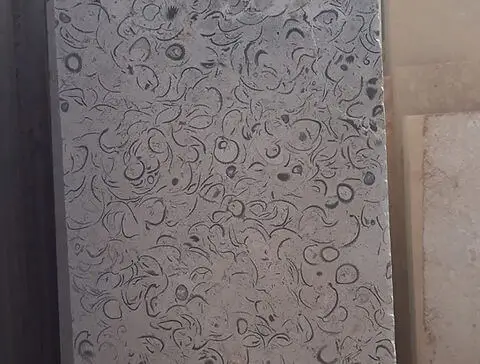
Your material choice for stone wall plant pockets in Arizona affects drainage, thermal performance, and longevity in ways that go beyond compressive strength ratings. Field performance across Arizona installations reveals the following about common choices.
- Dry-stacked limestone performs well in planter wall applications because its natural bedding planes encourage lateral drainage — water finds its way through rather than pooling against plant roots
- Quartzite offers superior UV resistance and maintains structural integrity through freeze-thaw cycles, making it worth the premium in exposed hilltop locations
- Granite facing stone provides compressive strength above 19,000 PSI, well beyond what integrated planter applications require, but its low porosity can complicate drainage geometry if you’re relying on the stone itself to manage moisture
- Tumbled sandstone creates a naturalistic appearance compatible with Tucson vertical gardening aesthetics, but absorption rates above 8% require sealing every 2 to 3 years in alkaline soil contact zones
- Fieldstone varieties offer irregular coursing that creates natural planting ledges without engineered pocket forms — a genuine advantage for informal desert garden designs
For most retaining wall planters in Tucson, a combination approach works best: structural courses in limestone or quartzite with fieldstone accent facing in the planter pocket zones. The contrast in texture reads well visually and lets you optimize each stone type for its specific performance role.
Drainage Design for Arizona Green Walls
Drainage is the specification element that fails most often in Arizona green walls — not because designers don’t understand it conceptually, but because Tucson’s monsoon pattern creates drainage demands that flat annual rainfall numbers don’t communicate. Your drainage system needs to handle peak flow rates of 2 to 3 inches per hour, not annual averages.
The standard recommendation of a 4-inch perforated pipe at the footing level is a minimum, not a target. For retaining wall planters deeper than 24 inches, run a secondary collection layer at mid-height using 3/4-inch clean aggregate wrapped in filter fabric. This dual-layer approach prevents the saturation buildup that destabilizes planter pocket soil during back-to-back monsoon events.
- Minimum 4-inch perforated drain pipe at footing level, sloped at 1% minimum toward outlet
- 6-inch clean aggregate drainage blanket between native soil and wall backfill
- Filter fabric wrapping all drainage aggregate to prevent Tucson’s fine silty soils from migrating into drain layers
- Weep holes sized at 2 inches diameter minimum — 1-inch holes clog with caliche deposits within two seasons
- Planter floor slopes of 2% toward weeps, created with mortar bed during construction rather than attempted with gravel adjustment later
One detail that experienced Tucson installers handle differently than generic guidelines suggest: weep hole positioning should account for the prevailing monsoon wind direction. On south and southwest facing walls, place weeps at the lower corner of each planter pocket rather than centered, because wind-driven rain loads that corner disproportionately.
Mortar Joint Specifications for Tucson’s Climate
Mortar selection for retaining wall planters in Tucson comes down to flexibility versus strength — and you’ll need to lean toward flexibility more than standard masonry specs suggest. Type S mortar (minimum 1,800 PSI compressive strength) is appropriate for structural courses, but the joint compound used in planter pocket interiors needs to tolerate both root pressure and the hydrostatic swings from dry to saturated in under 24 hours during monsoon season.
Field performance data across southern Arizona projects points to polymer-modified Type S mortars as the most durable choice for planter wall applications. The polymer additive increases tensile bond strength by 25 to 40% over standard Type S, which directly resists the cracking mode most common in integrated planters — horizontal crack propagation along bedding joints at planter pocket edges.
For Tucson vertical gardening installations where design emphasizes the natural stone appearance, dry-stack construction with no mortar in visible face joints is worth considering. You trade some structural capacity for drainage performance and visual authenticity, and the battered dry-stack wall system actually performs comparably to mortared construction under seismic loads because the flexible joint absorbs energy rather than transmitting it.
Planting Integration with Xeric Species
The interface between your stone wall structure and the plant material it supports is where horticultural and structural specifications intersect. Tucson vertical gardening with xeric species creates specific soil and root behavior that your pocket dimensions and drainage design need to accommodate.
- Agave and large succulent species develop lateral root systems that can extend 3 to 4 feet horizontally — your planter pocket back wall needs to be structurally continuous, not relying on the plant root zone for lateral support
- Brittlebush and globe mallow perform well in 12-inch-deep pockets and create seasonal color without root pressure concerns
- Trailing lantana in pocket plantings provides excellent erosion protection on the stone face but requires pocket drainage at floor level — its root mass is dense enough to retain moisture around weep openings
- Desert willow and other woody species need pockets of at least 24 × 24 inches and should not be planted within 18 inches of a wall corner where root expansion creates greatest stress concentration
- Native bunch grasses in upper-tier pockets create a visually dynamic wall face while their fibrous root systems actually reinforce soil stability within the pocket
Soil mix specification for stone wall plant pockets in Arizona should lean toward 60% coarse grit and 40% amended organic material for most xeric plantings. Standard potting mix retains too much moisture against the stone face, accelerating efflorescence and eventual spalling in limestone and sandstone varieties. Salt deposits appear within the first year if the soil mix isn’t adapted to the drainage geometry.
Installation Sequencing Under Field Conditions
Sequencing your retaining wall planter installation correctly in Tucson means working around both the heat and the monsoon calendar. Mortar work above 95°F ambient temperature requires hydration management — you’ll need to mist both the stone and the fresh mortar bed every 30 to 45 minutes during afternoon installation to prevent premature drying that reduces joint bond strength by 30% or more.
The practical recommendation is to schedule structural courses for morning installation, finishing by 11 AM when temperatures begin climbing sharply. Finishing and pointing work can continue into late afternoon on north-facing wall sections that stay shaded. Citadel Stone’s technical team advises scheduling delivery of stone materials to arrive ahead of installation start so warehouse-to-site transit time doesn’t compress your morning working window.
Base preparation deserves more time than most project schedules allow. Compaction testing of your aggregate base should reach 95% of standard Proctor density before you place the first course — and in Tucson’s expansive clay soils, that means thorough wetting and compaction in 2-inch lifts rather than a single pass. Plan for base work to consume 30 to 40% of total project time on sites with native clay soil. Coordinating truck deliveries of base aggregate separately from stone deliveries prevents material staging conflicts on tight residential sites.
Beyond the technical details of Tucson vertical garden walls, your broader project may involve coordinating multiple stone applications across the same property. Projects that incorporate stone pathways and driveways alongside retaining features benefit from consolidated material sourcing — you can learn more about our driveway stone operations to understand how Citadel Stone supports multi-application projects across Arizona.
Maintenance and Long-Term Performance
Retaining wall planters in Tucson require a more active maintenance schedule than standard retaining walls because the planting element continuously introduces moisture, organic acids, and root pressure into the stone system. Your maintenance program needs to address all three vectors on a regular schedule.
- Inspect weep holes and drain outlets after every significant monsoon event — caliche deposits can block 2-inch weeps within a single season if not cleared
- Repoint mortar joints showing hairline cracking before the next monsoon season — cracks above 1/16 inch allow moisture infiltration that accelerates damage
- Apply penetrating stone sealer to planter pocket interiors every 3 years for limestone and sandstone, every 5 years for quartzite and granite
- Check batter alignment annually using a level against a straight edge — any forward lean exceeding 1/4 inch per foot from original batter indicates foundation settlement requiring investigation
- Remove and replace planter pocket soil every 5 to 7 years to prevent salt accumulation from irrigation water — Tucson’s hard water deposits build up in contained soil volumes faster than in open beds
Efflorescence management is an ongoing reality for stone wall plant pockets in Arizona. The calcium carbonate deposits that appear as white streaks on your wall face come from both the stone itself and from irrigation water minerals migrating through the soil. Dilute white vinegar (5% acetic acid) applied with a stiff brush removes surface deposits without damaging the stone — avoid muriatic acid on limestone, where it causes irreversible surface etching.
Retaining Wall Planters in Arizona — Specification Considerations
The specification of retaining wall planters for integrated planter applications across Arizona reflects the diversity of conditions you encounter moving from one region to another. What works in a Tucson hillside installation may need significant adjustment for a Phoenix valley floor project or a higher-elevation site in the White Mountains. The three hypothetical project scenarios below illustrate how local conditions shape specification decisions for retaining wall planters and Tucson vertical gardening applications — this is advisory guidance, not documentation of completed projects.
Chandler Planter Wall Considerations
Chandler’s flat valley topography and predominantly sandy-loam soils change the structural calculus for retaining wall planters compared to Tucson’s hillside settings. Here, the primary specification challenge isn’t slope stability — it’s managing the heat island effect in dense suburban landscapes. Tucson vertical gardening techniques translate well to Chandler projects, but your stone selection should prioritize higher reflectance values. Light-colored limestone or quartzite facing stone in Chandler’s east-valley microclimate reduces surface temperatures at the wall face by 15 to 20°F compared to dark basalt, which directly benefits plant health in adjacent pockets. Warehouse stock availability for lighter limestone varieties in the Phoenix metro typically runs 4 to 6 weeks ahead of large project needs — plan accordingly.
Tempe Urban Vertical Garden Applications
Tempe’s urban density creates a different set of constraints for integrated planters and stone wall plant pockets. Lot setback limitations and HOA design standards frequently restrict wall heights to 36 inches maximum, which shifts the specification focus from structural mass to aesthetic performance. For Tempe projects, Arizona green walls work best as a series of tiered low walls rather than a single taller structure. That approach also improves solar access for plantings in Arizona’s low winter sun angle, a detail that matters more for Tempe’s urban canyon conditions than for suburban hillside sites. Dry-stack fieldstone with irregular coursing performs particularly well here, creating textural interest in a constrained vertical dimension while maintaining the open joint drainage geometry that xeric plantings require.
Surprise West Valley Soil Challenges
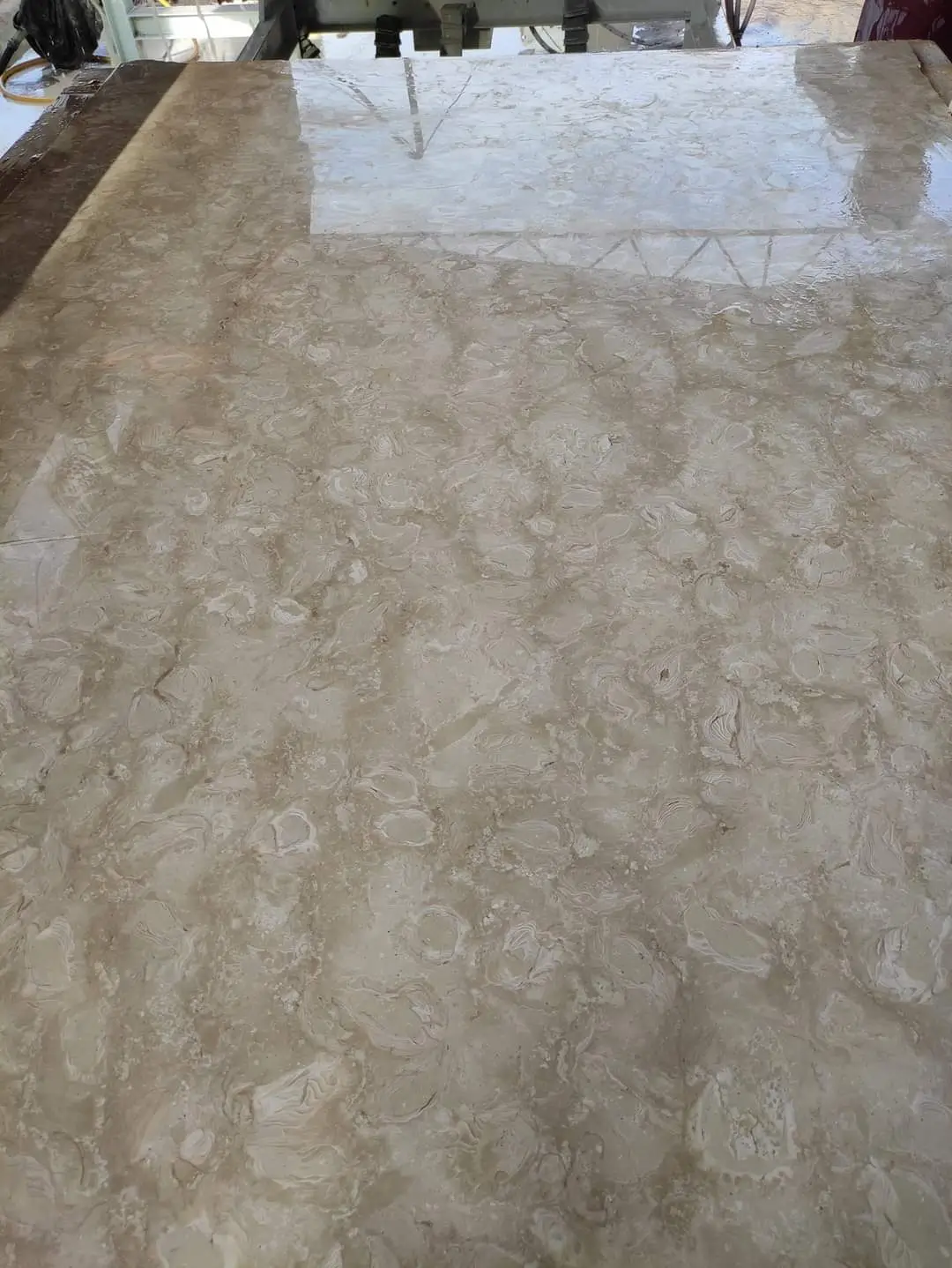
Surprise sits on some of the most expansive clay soil profiles in the Phoenix metro — a factor that directly affects footing specification for retaining wall planters. Soil expansion coefficients in the west valley can reach 3 to 4%, meaning a 10-foot-wide footing experiences 3.6 to 4.8 inches of seasonal movement if moisture content isn’t controlled. Your footing design for Surprise projects needs moisture barrier treatment below grade — a 6-mil poly vapor barrier under the aggregate base significantly reduces soil expansion variability through the irrigation season. Stone wall plant pockets in Surprise also benefit from deeper drainage aggregate layers (8 to 10 inches versus the standard 6) to buffer the rapid soil saturation that occurs when irrigation hits clay-dominant subsoils. Truck deliveries to Surprise project sites should account for west valley afternoon heat and schedule for morning unloading whenever possible to protect masonry materials from pre-installation heat exposure.
Final Field Notes
Retaining wall planters for Tucson vertical gardens represent one of the more technically demanding applications in Arizona landscape construction — not because any single element is extraordinarily complex, but because you’re integrating structural engineering, drainage hydraulics, horticultural requirements, and material durability into a single continuous system. The specifications that fail are almost always the ones that treated these as separate problems rather than an interconnected design challenge. Your material selection, drainage geometry, joint spacing, pocket dimensions, and plant species all influence each other in ways that only become obvious when one element underperforms.
Citadel Stone’s product range supports retaining wall planter applications with stone types tested for Arizona’s thermal and moisture conditions — from structural limestone courses to fieldstone facing varieties suited to Tucson vertical gardening aesthetics. At Citadel Stone, we recommend confirming warehouse inventory for your specified stone type at least 6 weeks ahead of your scheduled installation start, particularly for custom or larger-format pieces. As you plan your Arizona stone project, related hardscape applications can inform your broader material decisions — crushed stone aggregates supporting RV weight loads in Arizona driveways explores another dimension of Citadel Stone’s Arizona material performance that may be relevant to broader property development planning. Our fieldstone retaining wall stone for sale in Arizona offers a rugged natural appearance.