
Driveway stone color choices can cut surface temperatures by 20–35°F compared to standard asphalt — a gap that directly affects your home’s energy load and long-term curb appeal in Arizona’s punishing climate. Selecting the right stone color for your Carefree property isn’t purely aesthetic; it’s a thermal performance decision that ripples through your cooling costs, material longevity, and neighborhood resale dynamics. You’ll walk away from this guide with specific color strategies, material pairing logic, and installation details that actually hold up under 115°F summer conditions. The difference between a driveway that looks great at year five versus year twenty comes down to choices you make before the first truck arrives.
Why Stone Color Matters in Arizona’s Climate
Solar reflectance index — SRI — is the number you should be tracking when evaluating driveway stone color choices for Carefree home aesthetics. A surface with an SRI above 29 qualifies as a cool surface under EPA guidelines, and most light-toned natural stones land between 35 and 65. That’s not a trivial range — it translates directly into barefoot walkability during July and measurable reductions in radiant heat that push into your garage and ground-floor living spaces.
Arizona property value studies consistently show that exterior material upgrades, including driveway improvements, return 70–85 cents on the dollar in competitive markets. Stone color selection Arizona homeowners often overlook is the relationship between finish texture and perceived color depth. A honed travertine in buff appears 15–20% lighter than the same stone in a tumbled finish, simply because the surface scatters light differently. Your eye reads texture as tone.
- Light buff and cream tones: SRI 45–65, excellent heat reflection, shows dust more readily
- Medium tan and caramel tones: SRI 30–45, balanced performance, forgiving for daily traffic soil
- Charcoal and dark gray: SRI 8–18, highest heat absorption, requires shade planning or covered sections
- Warm terracotta and rust: SRI 20–35, natural integration with Sonoran palette, moderate heat performance
- White limestone and quartz aggregate: SRI 60+, maximum cooling benefit, requires annual maintenance attention
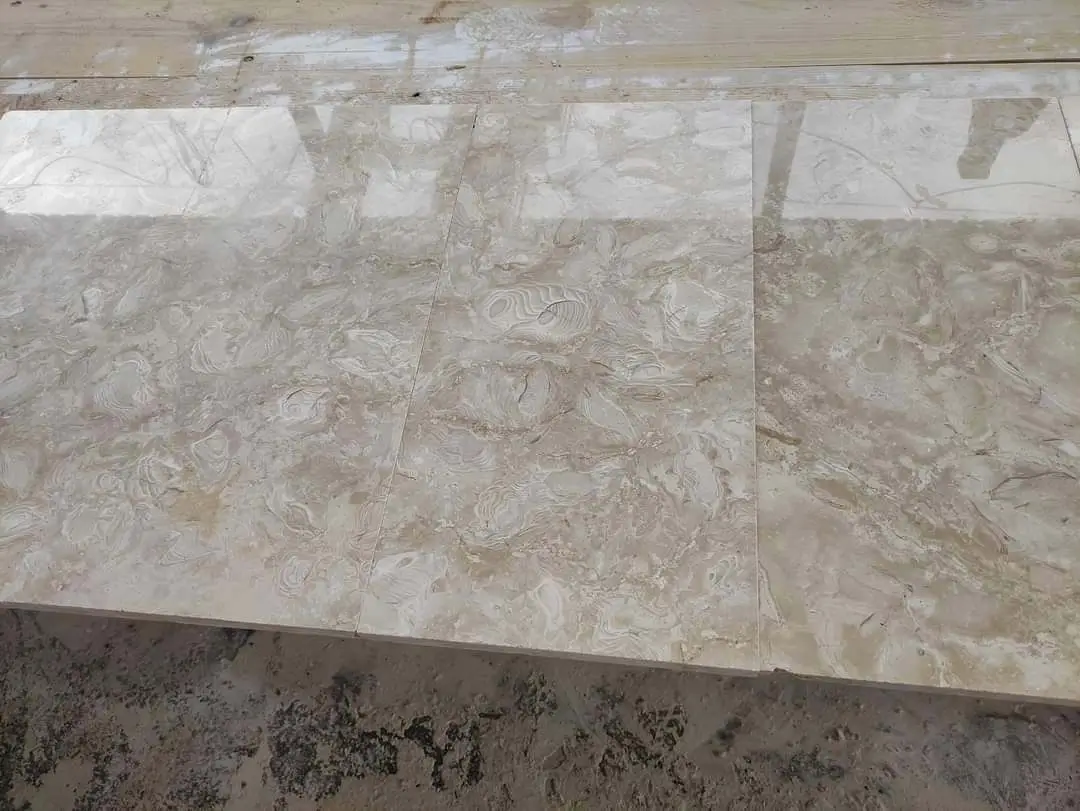
Top Stone Colors for Carefree Curb Appeal
Attractive driveways in the Carefree and Cave Creek corridor share a specific visual logic — they pull from the natural Sonoran Desert palette rather than fighting it. Desert gold decomposed granite, Arizona buff flagstone, and warm cream limestone all read as intentional because they echo the surrounding landscape rather than contrasting against it. You’re not trying to import a coastal palette into the high Sonoran; you’re curating what already belongs there.
For broader Arizona property value gains, the most durable color choices are mid-range neutrals. Pure white looks stunning in a showroom and in listing photos, but warehouse-grade white limestone requires biennial sealing and shows tire marks within the first season. The specifiers who’ve been doing this longest — and whose clients call back with compliments rather than complaints — tend toward natural buff, warm sandstone, and charcoal blend combinations that hide real-world use without sacrificing visual impact.
- Desert gold decomposed granite: natural integration, 1.5–3″ depth for stability, replenishes easily
- Arizona buff limestone pavers: 2″ minimum thickness, SRI 42, pairs well with iron-ore accent borders
- Warm cream travertine: elegant finish, requires slip-resistant honing for ramp sections
- Charcoal basalt: dramatic contrast, high heat load, best reserved for shaded entry sections
- Warm sandstone blends: SRI 38–48, most forgiving color in terms of maintenance visibility
- Pea gravel in buff or tan: budget-friendly refresh option, optimal depth 3–4″ for driveway applications
Stone Color and Thermal Performance Trade-offs
Here’s what most specifiers miss when they’re focused purely on aesthetics: thermal mass works in both directions. Light-colored driveway stone reflects heat aggressively during peak sun hours but also releases stored heat more quickly after sunset. Dark-toned stone absorbs more throughout the day but releases it slowly through the evening hours — which matters if your outdoor space is most active between 7 and 10 PM. Your family’s schedule should influence your stone color decision as much as your SRI targets.
The interaction between compacted base aggregate and surface stone color also creates micro-climate effects worth understanding. A light-colored surface over a dark DG base still absorbs thermal energy through the joint gaps. Matching your base material to the general tone of your surface stone — pale surface over pale base — maintains the cooling benefit across the full profile. Stone color selection Arizona homeowners use successfully accounts for this layered thermal dynamic.
- SRI 60+: Maximum daytime cooling, radiates heat rapidly after 5 PM — ideal for east and south-facing driveways
- SRI 30–45: Balanced thermal cycle, stores moderate heat, most comfortable during evening use
- SRI below 20: High daytime absorption, use only where shade structures or overhead coverage are planned
- Thermal expansion coefficient for limestone: 4.4 × 10⁻⁶/°F — joint spacing should allow 3/16″ per 10 linear feet in Arizona conditions
Matching Stone Colors to Your Home’s Architecture
Your roof color is the anchor point for the entire exterior palette, and your driveway stone should key off it — not compete with it. A terracotta tile roof calls for warm buff or sandstone driveway material; gray concrete tile roofs open the door to cooler limestone blends and blue-gray basalt accents. The mistake that generates the most redesign calls is choosing driveway stone color in isolation, without holding samples against the existing exterior finishes in natural afternoon light.
Carefree home aesthetics tend to run more organic and desert-contemporary than the suburban Phoenix basin. More exposed aggregate, natural tumbled edges, and warm earth tones appear in the Carefree and Cave Creek area than in Chandler or Tempe. That regional character is worth preserving — it’s also what sustains Arizona property value in that particular market segment. Attractive driveways in Carefree don’t look transplanted; they look grown-in.
- Stucco exteriors in cream or sand: pair with desert gold DG or Arizona buff limestone
- Gray or charcoal stucco contemporary homes: use warm sandstone or two-tone charcoal-buff blend
- Spanish Colonial with red tile: warm terracotta or buff flagstone with iron-spot brick border
- Modern minimalist with white or dark panel: white limestone or charcoal basalt with tight joint lines
- Adobe and natural wood exteriors: any warm earth tone DG or random-pattern flagstone
Installation Details That Protect Your Color Choice Long-Term
The detail that matters most for maintaining driveway stone color in Arizona isn’t the sealer — it’s the base preparation. A minimum 4″ compacted Class II base is required under any paver installation, and 6″ is the honest target for vehicles heavier than standard passenger cars. Base failures don’t just cause structural problems; they cause differential settling that creates shadow lines across your driveway surface, making the stone appear darker and mottled regardless of its original color.
Sealer selection directly affects perceived color. A high-gloss sealer on buff limestone creates a wet look that shifts the apparent tone toward amber — sometimes desirable, sometimes not. A penetrating matte sealer maintains the natural color reading while providing UV protection against bleaching. In Arizona’s UV index range of 10–12 during peak months, unprotected lighter stones can fade and chalk within 18–24 months, losing the clean crisp tone that made them attractive. Applying penetrating sealer within 30 days of installation and every 24–36 months thereafter is the standard practice for durable stone color selection Arizona conditions demand.
- Verify truck access clearance before delivery scheduling — side-tipper trucks need 12′ minimum width for DG delivery
- Base compaction target: 95% Modified Proctor density before any surface stone placement
- Joint sand should be polymeric, set at 92–95% joint depth before sealing
- Expansion joints every 12–15 feet (not the 20-foot spacing common in temperate-climate specs)
- Sealer type: penetrating siloxane for porous limestone, acrylic for DG applications
- Slope minimum 1.5% away from structure — 2% preferred in high-rainfall monsoon zones
Budget Planning Across Color and Quality Tiers
Driveway stone color choices don’t exist in a vacuum — they’re tied directly to material cost tiers that affect your project budget and timeline. Decomposed granite in desert gold runs $35–55 per ton installed, making it the most accessible entry point for attractive driveways without sacrificing the Sonoran aesthetic. At the upper end, premium tumbled travertine or honed limestone pavers in custom color blends can reach $18–28 per square foot installed, with lead times from the warehouse extending 2–4 weeks for specialty cuts.
Mid-range options — Arizona buff flagstone, standard limestone pavers, and stabilized DG — sit in the $6–14 per square foot range and represent the best value proposition for most residential projects. Your project’s truck delivery logistics can actually affect cost more than most homeowners expect. Remote parcels in the Carefree hills sometimes require smaller truck loads due to access constraints, increasing per-ton delivery costs by 15–25%. Factor that into your budget before committing to any material quantity estimate.
Stopping by Citadel Stone’s driveway stone facility lets you pull material samples in natural light, which is the only reliable way to evaluate how a stone color will actually read on your specific property in Arizona conditions.
Best Retaining Wall Stone for Sale in Arizona — Specifying for Real Conditions
Citadel Stone’s retaining wall stone inventory covers structural-grade limestone, basalt block, and natural sandstone suitable for gravity and reinforced wall systems across Arizona’s diverse soil and slope conditions. This section outlines how those materials would be specified for driveway perimeter and tiered landscape applications — this is hypothetical guidance based on typical site conditions, not documentation of completed projects. You’ll find these recommendations useful whether you’re specifying a small entry terrace wall or a full cut-and-fill retaining structure along a sloped driveway approach.
Retaining wall stone for sale in Arizona needs to meet a different performance bar than surface paving material. Long-term lateral load resistance, frost-free but thermally active conditions, and soil profiles that range from sandy loam in the lower valley to caliche-heavy clay in the Carefree and Cave Creek uplands all factor into material selection. Stone color selection Arizona designers use for retaining walls also feeds into the overall Carefree home aesthetics story — your wall material should coordinate with your driveway surface material while providing enough contrast to read as a distinct design element.
Chandler Driveway Specification
Chandler’s predominantly sandy loam and fine-grained alluvial soils support excellent drainage but require proper base compaction to prevent long-term settlement under vehicle loads. For a typical Chandler driveway with retaining wall perimeter, warm buff limestone pavers would be the recommended surface material — SRI 42, 2″ thickness, set on a 4″ Class II base with polymeric joint sand. The retaining wall element would specify coursed limestone block in a matching warm buff tone, providing visual continuity that supports the attractive driveways and Arizona property value goals common in Chandler’s established neighborhoods. Truck access in most Chandler subdivisions accommodates standard 18-wheel flat delivery, keeping material costs predictable.
Tempe Urban Driveway Approach
Tempe’s infill urban lots and mature street trees create different constraints than suburban Chandler. Driveway widths are often restricted, and tree root zones limit how aggressively you can excavate for base preparation. A stabilized decomposed granite surface in desert gold — compacted to 95% density with 4″ Portland cement stabilizer layer — works well here because it doesn’t require the deep base cut that full paver installations demand. Retaining wall stone for sale in Arizona that fits Tempe’s character tends toward clean-cut sandstone block or tumbled limestone, maintaining Carefree home aesthetics even in denser urban settings.

Surprise New Construction Specification
Surprise’s newer construction stock often sits on engineered fill with variable compaction quality — a fact that changes your base specification considerably. The recommended approach here includes a geotextile fabric layer below the Class II base to prevent migration of fine-grained subgrade material upward through the base course over time. Arizona buff limestone pavers or a mid-range sandstone blend in warm tan tones coordinates with Surprise’s predominantly tan and cream stucco neighborhoods while delivering stone color selection Arizona homeowners need for long-term curb appeal. The warehouse typically stocks these tones year-round given regional demand, keeping lead times to 5–10 business days.
Key Takeaways
Driveway stone color choices for Carefree curb appeal come down to matching thermal performance targets, architectural context, and realistic maintenance expectations — not just picking a tone that photographs well. You’ll get the most durable, attractive result by prioritizing SRI-appropriate mid-range neutrals, investing in proper base preparation, and applying penetrating sealer within 30 days of installation. Stone color selection Arizona projects require goes beyond the surface sample; it accounts for joint sand tone, base material color, and how texture modifies apparent lightness across different sun angles throughout the day.
Attractive driveways that hold their visual impact at year fifteen look that way because someone made deliberate decisions early — not because the material was expensive. Carefree home aesthetics favor materials that age gracefully in the desert environment rather than fighting it, and Arizona property value data supports that approach. Foundation depth requirements vary significantly across Queen Creek soil types, and the same variability applies to Carefree’s hillside parcels — your base specification should always be site-specific, not borrowed from a flat-valley project. Our pea gravel Driveway Stone for sale in Arizona is a budget-friendly option for quick refreshes.