
Curved retaining walls Cave Creek projects experience thermal surface differentials of up to 70°F between sunrise and peak afternoon — a stress cycle that repeats 200+ times annually and shapes every specification decision from stone selection to joint design. Your ability to harness natural wall shapes within Cave Creek’s desert landscape depends on understanding how curved stone design Arizona conditions demand more than standard rectilinear wall logic. Arizona flowing landscapes reward specifiers who treat wall geometry as a structural and aesthetic system, not just a visual preference. This guide gives you the technical framework to design, specify, and execute curved retaining walls that perform for decades in one of the most demanding climates in North America.
Why Curved Retaining Walls Cave Creek Conditions Demand Natural Shapes
Cave Creek’s terrain isn’t flat — it’s a mosaic of granite outcroppings, arroyos, and sloped desert grades that fight back against hard geometric lines. Curved stone design Arizona professionals have learned that organic wall profiles distribute lateral soil pressure more efficiently than straight runs. The arch principle applies here: a curved wall face redirects hydrostatic and soil pressure along the wall’s geometry, reducing point-load stress concentrations at any single course.
You’ll also find that Cave Creek organic walls blend with the Sonoran Desert’s visual rhythm in ways that straight walls simply can’t replicate. Saguaro cacti, ocotillo, and brittlebush grow in flowing, irregular patterns. A wall that mirrors those organic contours reads as intentional and contextually appropriate rather than imposed. Your clients in Cave Creek aren’t just buying structural retention — they’re buying landscape coherence.
- Curved geometry reduces effective soil pressure per linear foot by distributing lateral loads across a longer contact arc
- You’ll achieve better long-term settlement performance when wall curves align with natural drainage channels
- Arizona flowing landscapes require wall radii that complement existing grade changes — minimum inside radius of 4 feet for standard block units
- Natural wall shapes reduce the visual mass of tall walls, making 4-foot retention feel proportional in open desert settings
Stone Selection for Curved Retaining Walls Cave Creek Projects
Material choice for curved retaining walls Cave Creek applications narrows quickly once you factor in thermal cycling, UV exposure, and the need for dimensional flexibility around curves. Not every stone cuts or lays cleanly on a radius, and that becomes your primary constraint before structural performance even enters the conversation.
Arizona flagstone and tumbled sandstone perform well on gentle curves because their irregular face profiles absorb the slight angular offsets between courses. For tighter radii under 6 feet, you’ll want split-face limestone or irregular dry-stack fieldstone — units that don’t require precision-cut joints to read as intentional. Thermal expansion coefficients for limestone run approximately 4.4 × 10⁻⁶ per °F, which means a 20-foot curved wall segment can move up to 3/8 inch seasonally. Your joint design needs to accommodate that movement, especially on convex curves where joints open outward under heat expansion.
- Compressive strength minimum of 8,000 PSI for structural wall stone in Arizona desert applications
- You should specify water absorption below 6% to prevent spalling during monsoon saturation followed by rapid evaporation
- Porosity between 3–7% supports drainage without creating freeze-thaw vulnerability in higher-elevation Cave Creek sites
- Your stone selection should prioritize units with consistent bed depth — variance beyond ±1/2 inch creates visible coursing irregularities on curved walls
- Split-face finishes hide minor joint misalignment on curves better than smooth sawn faces
Base Preparation That Actually Works for Arizona Flowing Landscapes
Base preparation for curved retaining walls Cave Creek installations is where most field failures originate — not from material quality, but from under-engineered foundations that can’t handle desert soil behavior. Cave Creek soils frequently contain expansive clay fractions that swell 4–8% volumetrically during monsoon saturation. Your base needs to neutralize that movement before it reaches the wall structure.
You should excavate a minimum of 24 inches below finished grade for walls up to 3 feet tall, increasing to 36 inches for 4- to 5-foot walls. Compact crushed 3/4-inch angular aggregate — not rounded river rock — in 4-inch lifts to 95% Modified Proctor density. The angular particle interlock is non-negotiable on curved base layouts because rounded aggregate migrates laterally under point loads at curve tangent points. You’ll also want to carry your base compaction 18 inches beyond the back face of the wall to prevent the soil wedge behind the curve from undermining base integrity during heavy monsoon events.
- You should install a perforated drain pipe at the base of every wall taller than 2 feet — curved wall geometry can create low points that concentrate drainage
- Geotextile fabric between native soil and aggregate base prevents fines migration that degrades compaction over time
- Your base aggregate depth should increase by 25% at the inside of tight curves where soil pressure concentrates
- Compaction verification with a nuclear density gauge — not just a plate compactor pass count — is the professional standard for Cave Creek sites
Laying Stone on Curves: What Cave Creek Organic Walls Actually Require
Curved stone design Arizona work demands a different installation rhythm than straight wall construction. You can’t string-line a curve — you need a center-point stake and a measured radius arc laid out with a chalk line or radius rod before the first stone goes down. Professional crews establish the curve geometry on the compacted base before any stone is placed, not after.
For concave curves (inside faces), your stone joints will fan inward and close at the face. You’ll need to maintain consistent joint widths at the mid-depth of each unit — typically 3/4 to 1 inch for coursed walls — while allowing joints to tighten slightly at the wall face. For convex curves (outside faces), joints open at the face. You’ll want to fill those widening joints with appropriately sized aggregate or mortar depending on whether your wall is dry-stack or mortared construction. Leaving convex face joints unfilled creates water infiltration pathways that undermine wall base integrity within 2–3 monsoon seasons.
Drainage Design for Natural Wall Shapes in Cave Creek
Cave Creek’s monsoon season delivers intense short-duration rainfall that generates hydrostatic pressure behind retaining walls faster than most drainage systems can relieve it. Arizona flowing landscapes mean your drainage design has to handle both diffuse slope runoff and concentrated arroyo-adjacent flows — sometimes simultaneously.
Curved retaining walls Cave Creek applications benefit from weep holes positioned at the wall’s lowest elevation points, which shift with every curve. You can’t just space weep holes at uniform intervals like you would on a straight wall — you need to survey the finished base elevation along the full wall arc and position weep holes at actual low points. Every 10 linear feet of wall should have at least one weep hole with a minimum 3/4-inch opening, increasing to every 6 feet for walls over 4 feet tall. Your backfill drainage layer — minimum 12 inches of clean 3/4-inch aggregate directly behind the wall face — needs to extend continuously around all curves without gaps at tangent transitions.
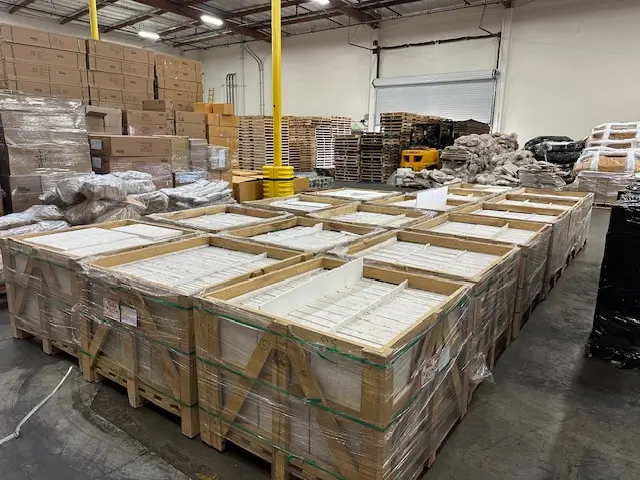
- You should verify warehouse stock of drainage aggregate before laying stone — running out mid-installation and substituting finer material is a common field mistake that causes long-term drainage failure
- Outlet pipe ends must daylight at grade elevation — never terminate inside the wall base
- Natural wall shapes create variable drainage flow paths you need to map in advance, not troubleshoot after installation
Mortar vs. Dry-Stack for Curved Stone Design Arizona Projects
Curved retaining walls Cave Creek projects present a meaningful choice between mortared and dry-stack construction — and the decision affects long-term performance more than most specifiers realize. Dry-stack construction allows natural drainage through the wall mass, which is advantageous during intense monsoon events. Mortared construction provides superior structural continuity on tighter radii where stone units can’t achieve full bearing contact through dry placement alone.
You’ll find that Arizona flowing landscapes often call for dry-stack aesthetics even when structural requirements push toward mortared construction. The professional approach is a hybrid: mortared core courses for structural integrity on walls over 3 feet, with dry-stack face stones on the exposed surface that preserve the organic visual character. This combination gives you the structural performance of mortar without sacrificing the natural wall shapes that define Cave Creek’s landscape aesthetic. Your mortar specification should use a Type S mix — never Type N — in desert applications where temperature cycling stresses mortar joints repeatedly throughout the year.
Thermal Expansion Management for Curved Retaining Walls Cave Creek
Curved retaining walls Cave Creek installations face thermal expansion challenges that straight walls handle differently. On a straight wall, you place expansion joints at regular intervals and move on. Curved geometry changes the expansion behavior because the wall resists linear movement — thermal expansion on a curved wall creates outward-radiating force vectors that push perpendicular to the wall face at each point along the curve.
You should plan control joints at every 15 linear feet along the wall arc — not every 15 feet of horizontal distance. Arc length is consistently greater than chord distance, and specifying by chord length means your joints end up under-spaced where the curve is tightest. For walls with radii under 8 feet, reduce joint spacing to 10 feet of arc length. Use closed-cell backer rod and a siliconized acrylic sealant rated for 450°F surface temperatures — standard acrylic caulk degrades within 18 months under Arizona sun exposure. You can explore our retaining wall materials available for specification-grade stone options that perform across Cave Creek’s full thermal range.
Tiered Curved Wall Systems for Arizona Flowing Landscapes
Significant grade changes in Cave Creek — often 6 to 12 feet across a residential lot — call for tiered curved retaining wall systems rather than single tall walls. Single walls over 4 feet in unengineered residential applications carry structural and liability risks that tiered systems avoid. You should plan tiers with a minimum setback of 1.5 times the lower wall’s height before the next tier begins. This prevents the upper wall’s soil load from surcharging the lower wall’s foundation.
Tiered curved retaining walls Cave Creek designs allow you to vary curve radii between tiers, creating Arizona flowing landscapes that evolve as they rise in elevation. The lower tier can carry a broad sweeping radius while the upper tier uses tighter curves that frame planting terraces. Visually, this gradient of curve tightness creates depth and naturalistic complexity that flat-terraced walls can’t match. Your planting design between tiers should factor in root zone pressures — aggressive desert shrubs like lantana and Texas sage can generate root pressure against wall bases over 5–8 years if planted too close.
- Minimum 1.5:1 setback ratio between tier wall heights prevents surcharge loading conditions
- You should stagger tier curve tangent points so no two tiers share a continuous vertical joint line
- Planting pockets built into curved wall faces add organic character and reduce apparent wall mass
- Your truck delivery access for tiered wall sites requires pre-planning — stone for upper tiers often can’t be crane-lifted and needs manual relay from accessible lower staging areas
Finishing and Sealing Curved Stone Design Arizona Installations
Curved stone design Arizona walls need sealer protection, but the application methodology on curved surfaces differs from flat work. You can’t rely on a roller applicator to maintain consistent coverage around tight curves — surface coverage rates drop 15–20% on convex faces as the applicator loses full contact. Your application crew needs to use a brush or low-pressure sprayer to ensure uniform sealer penetration across all face angles.
Penetrating silane-siloxane sealers work best for Cave Creek’s climate — they reduce water absorption by 85–90% while allowing vapor transmission, which is critical for dry-stack walls that need to breathe. Film-forming sealers trap moisture in mortared walls during monsoon events and create hydrostatic pressure that accelerates face-stone delamination. You should plan resealing every 3–5 years, with annual inspections after each monsoon season to identify areas where sealer has failed at joint intersections on the curves. Early sealer maintenance costs a fraction of face-stone replacement.
Common Specification Mistakes on Cave Creek Organic Walls
Cave Creek organic walls fail prematurely for predictable reasons — most of which show up in the specification before construction begins. The most common error is applying straight-wall joint spacing calculations to curved wall geometry without adjusting for arc length and differential thermal movement. The second most common is under-specifying base compaction for expansive desert soils.
- Specifying joint spacing by chord length instead of arc length — this under-spaces expansion joints on tight curves
- You should never specify rounded aggregate for base compaction on curved wall bases — lateral migration undermines curve tangent points within 2–3 years
- Assuming dry-stack walls need no drainage design — every wall, dry or mortared, needs a drainage aggregate layer and weep outlets
- You should verify warehouse inventory for your specified stone before finalizing the construction schedule — cave creek organic walls often require irregular units that aren’t standard warehouse stock
- Overlooking root zone planning between tiered walls — aggressive desert plantings compromise structural integrity within 5–8 years
- Applying film-forming sealers to dry-stack curved walls — vapor entrapment accelerates stone delamination in Arizona heat
How Citadel Stone — Premier Driveway Stone Suppliers in Arizona — Would Specify Curved Walls for Three Arizona Cities
Citadel Stone provides specification-grade natural stone products as driveway stone suppliers in Arizona serving residential, commercial, and landscape applications across the state. This section outlines how you would approach curved retaining wall specification in three representative Arizona cities using Citadel Stone materials. These scenarios are hypothetical and intended to illustrate how regional conditions affect specification decisions — not to represent completed projects.
Chandler Wall Specifications
Chandler’s urban heat island effect amplifies the thermal cycling challenges that curved retaining walls Cave Creek applications face, but in a more developed suburban context. You would specify a split-face limestone with minimum 9,000 PSI compressive strength to handle the compacted clay soils common across Chandler’s residential developments. Your base preparation would require 36-inch excavation depth with geotextile separation fabric, given the higher fines content in Chandler valley soils. Curved stone design Arizona in Chandler benefits from moderate curve radii — 8 to 12 feet — that allow machine-assisted stone placement without sacrificing the natural wall shapes your clients expect. At Citadel Stone, we recommend penetrating silane-siloxane sealer application within 30 days of wall completion in Chandler’s high-UV environment.
Tempe Drainage Requirements
Tempe’s proximity to the Salt River system means curved retaining walls Cave Creek-style designs in Tempe need enhanced drainage engineering. You would increase drainage aggregate depth to 18 inches behind wall faces on any Tempe site within 1,500 feet of a wash or drainage channel. Arizona flowing landscapes in Tempe’s older neighborhoods often integrate curved walls with mature desert plantings — your root zone planning should account for established plant pressure if walls are built adjacent to existing landscape. Thermal expansion joint spacing at 12-foot arc intervals is appropriate for Tempe’s sun exposure levels. Your truck delivery scheduling for Tempe sites needs to account for traffic-sensitive access windows during university event periods.
Surprise Climate Considerations
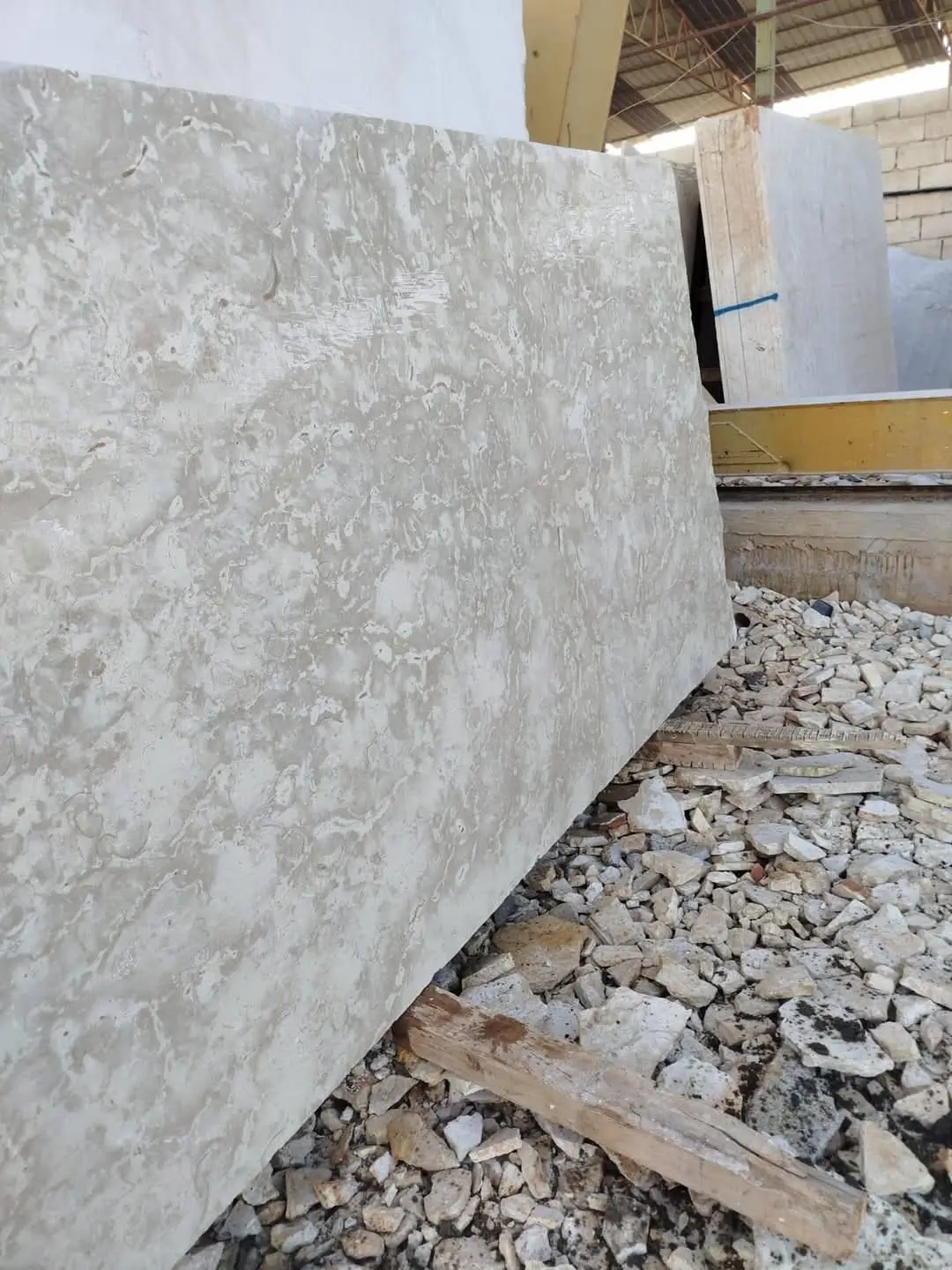
Surprise sits in the northwest Valley where summer temperatures push past 115°F and soil expansion during monsoon saturation is among the highest in the Phoenix metro region. Curved retaining walls Cave Creek design principles translate well to Surprise projects because both areas deal with rocky desert grades and expansive native soils. You would specify a minimum 36-inch compacted aggregate base for all walls over 2 feet, with nuclear density verification at each 4-inch lift. Natural wall shapes in Surprise developments work particularly well with tumbled sandstone — its rounded edges and varied face texture match the natural rock character of the northwest Valley’s Sonoran landscape. Your expansion joint placement should reduce to 10-foot arc intervals given Surprise’s extreme thermal exposure conditions.
Working with Citadel Stone for Curved Stone Design Arizona Projects
Your specification process for curved retaining walls Cave Creek and broader Arizona projects benefits from material partners who understand desert performance requirements at a technical level, not just a catalog level. Citadel Stone provides specification-grade natural stone in dimensional profiles appropriate for curved stone design Arizona applications — including irregular flagstone, split-face limestone, and tumbled sandstone in dimensions compatible with tight-radius curved retaining walls Cave Creek designs.
You should confirm warehouse stock levels for your specified units before finalizing your construction schedule. Irregular stone profiles — particularly those suited to natural wall shapes — are not always maintained in standard warehouse inventory and may require lead times of 2–4 weeks depending on volume. Your project timeline should include a minimum 1-week buffer between material confirmation and first scheduled installation day. At Citadel Stone, we maintain warehouse inventory across Arizona for the most commonly specified curved wall stone profiles, and our technical team can advise you on which profiles are available for immediate truck delivery versus custom lead time orders.
- You should request dimensional samples before specifying — field stone dimensions can vary ±15% from catalog specifications
- Arizona flowing landscapes require varied unit sizing — ask about mixed-size pallet options for organic wall appearance
- Your truck access requirements should be communicated during the order process — staging limitations affect delivery scheduling
- Citadel Stone technical staff can provide joint spacing recommendations specific to your curve geometry and stone unit dimensions
Next Steps
Curved retaining walls Cave Creek projects represent some of the most rewarding work in Arizona landscape construction — the combination of challenging desert terrain, organic design philosophy, and demanding climate performance requirements separates well-specified walls from premature failures. Your specification decisions around stone selection, base preparation, drainage design, and thermal expansion management determine whether your installation performs for 10 years or 30. Arizona flowing landscapes reward the specifier who treats curved stone design Arizona work as a discipline, not just an aesthetic preference. Cave Creek organic walls built to proper technical standards become permanent landscape features that enhance property value and visual character for generations. For additional planning resources, review Optimal driveway width specifications for Arizona luxury residential properties as you finalize your project documents. We are the driveway stone suppliers in Arizona that ensure consistent gradation in every load.