
Retaining Wall Stone Design Scottsdale: What the Spec Must Address
What separates durable retaining wall stone design Scottsdale installations from premature failures often has nothing to do with material quality. The specification decisions made before the first delivery arrives — base depth, joint width, drainage slope — determine long-term performance more than the stone itself. Scottsdale slope solutions demand precise engineering because the desert’s thermal cycling, expansive soils, and monsoon-driven hydrostatic pressure create a combination that exposes every weak point in a wall system. Your approach to terraced yard stone Arizona projects needs to account for all three forces simultaneously, not sequentially.
Arizona Elevation Management and Structural Wall Logic
Arizona elevation management isn’t just about moving dirt — it’s about redistributing force across a permanent stone structure that will absorb decades of thermal expansion and soil movement. Scottsdale’s terrain shifts significantly across even modest residential lots, and that grade change translates directly into lateral earth pressure against your wall face. The calculation most specifiers use underestimates pressure by 15-20% in expansive clay soils, which cover roughly 40% of the greater Scottsdale area.
Your structural approach needs to differentiate between gravity walls, which rely on mass to resist movement, and mechanically stabilized earth systems, which use geogrid reinforcement. For walls exceeding 36 inches in retained height, gravity wall design alone is rarely sufficient in Arizona’s soil conditions. You’ll find that the combination of expansive soil and hydrostatic pressure from monsoon infiltration creates lateral loads that simple mass calculations don’t capture accurately.
- You should conduct soil expansion index testing before specifying wall depth and batter — expansive soils require battered wall faces of 1 inch per foot of height minimum
- Hydrostatic pressure relief requires gravel backfill extending at least 12 inches behind the wall face with drain tile at the base
- Your footing depth must clear the frost line and reach undisturbed native material — in Scottsdale, that typically means 18-24 inches minimum
- Arizona elevation management projects with retained heights over 4 feet typically require engineered stamped drawings for permit approval
Wall Design Principles That Hold Up in Desert Conditions
Wall design principles developed for temperate climates need adjustment before they apply in Scottsdale. The standard recommendation to batter walls at 1:6 (horizontal to vertical) often needs to increase to 1:4 in zones with high expansion index soils. That adjustment matters because Scottsdale’s caliche layers — the calcium carbonate hardpan found 18-36 inches below grade in many neighborhoods — create unpredictable drainage conditions that amplify lateral pressure.
Thermal expansion is the variable most wall design principles underweight for desert applications. Natural stone in direct sun reaches surface temperatures of 160-170°F in Scottsdale summers, creating thermal gradients between the sun-exposed face and the shaded back of the wall that exceed 60°F. Over a 20-year service life, that daily cycling accumulates into significant cumulative stress. Your mortar selection needs to accommodate that movement — rigid portland cement mortars frequently fail at joints within 5-8 years in these conditions.
- You should specify Type S mortar as a minimum — Type M offers compressive strength but reduced flexibility, which accelerates joint cracking in thermal cycling environments
- Expansion joints at 20-foot intervals are mandatory; reduce to 15 feet on south-facing walls with full solar exposure
- Your coping detail at the wall top is a critical thermal stress point — cap stones need independent movement capability from the wall face below
- Wall design principles for dry-stack installations require tighter tolerances on stone sizing — dimensional variance beyond 3/8 inch creates structural weak points that become visible within two seasons
Terraced Yard Stone Arizona: Choosing the Right Material
Terraced yard stone Arizona projects have a narrower viable material window than most designers initially expect. The combination of UV degradation, thermal cycling, and alkaline soil chemistry eliminates soft sedimentary stones — limestone with compressive strength below 6,000 PSI, for example, typically shows surface spalling within 3-5 years in direct sun exposure. You need materials that perform across all three failure modes simultaneously.
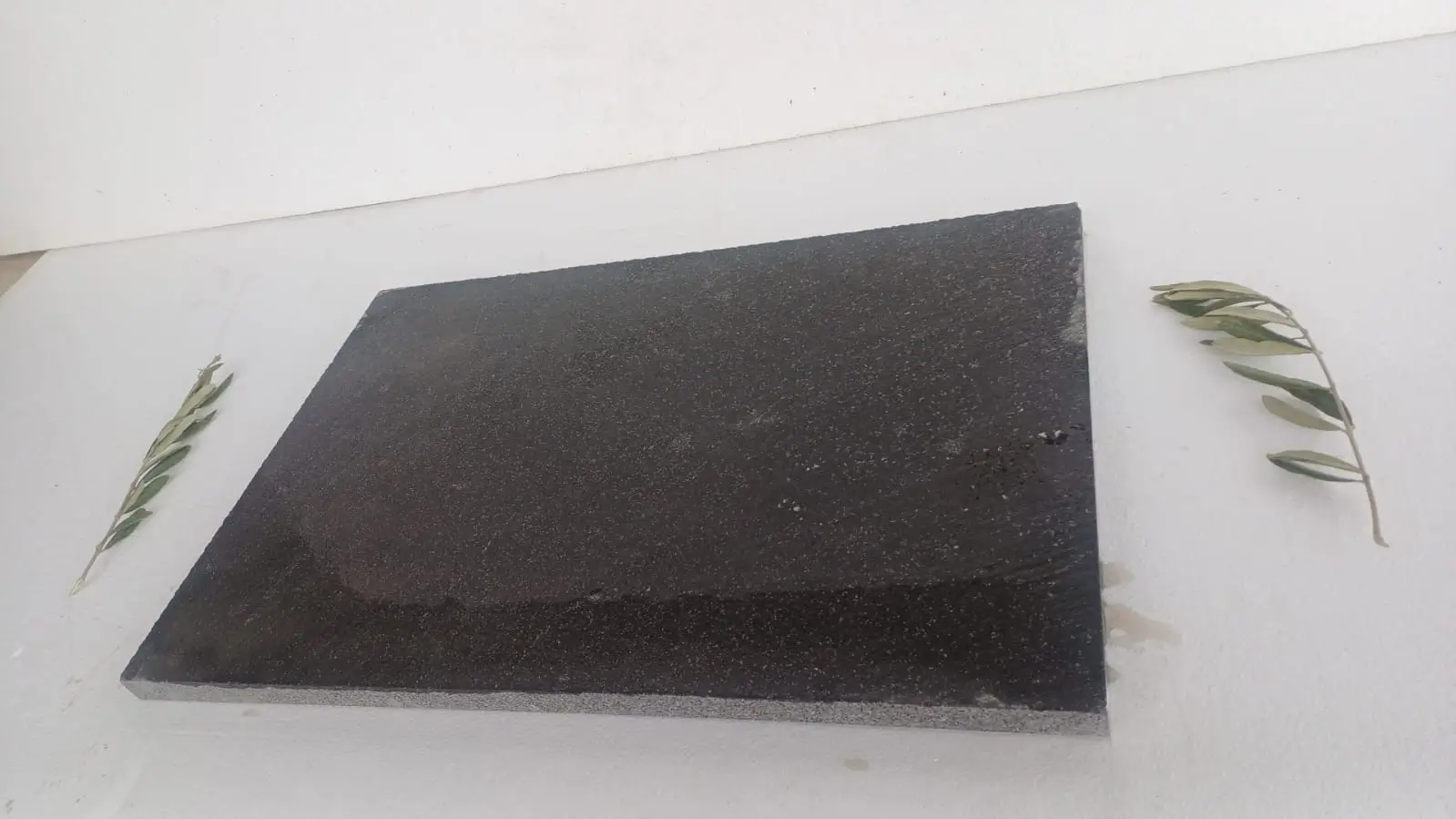
Granite performs exceptionally well in terraced yard stone Arizona applications because its interlocking crystalline structure resists both thermal stress and alkaline attack. Compressive strength typically ranges from 15,000-25,000 PSI, thermal expansion coefficients run 4.5-5.5 × 10⁻⁶ per °F, and the material’s low absorption rate (under 0.5%) means monsoon saturation cycles don’t create internal pressure. The trade-off is cutting and fitting difficulty — granite’s hardness means field adjustments require diamond-blade equipment that not every installation crew carries.
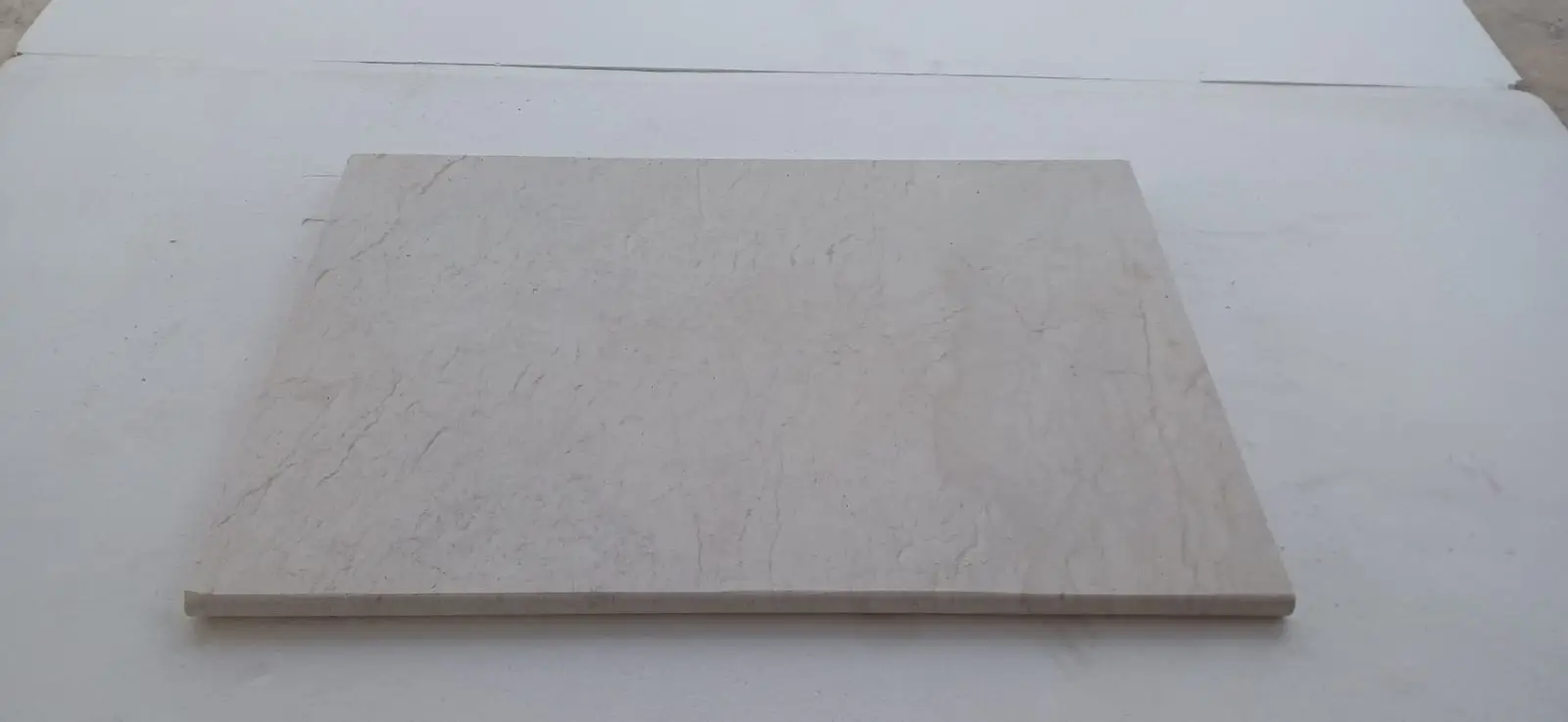
Sandstone offers a practical middle ground for terraced yard stone Arizona applications where warm color tones are part of the design intent. Arizona buff and red sandstone varieties typically achieve 8,000-12,000 PSI compressive strength with absorption rates of 3-6%. You should verify that your sandstone source meets ASTM C616 requirements for quarried building stone — not all commercially available sandstone meets this threshold, and the variance in quality between quarries is significant.
- You need to request third-party laboratory test reports for compressive strength, absorption rate, and modulus of rupture before approving any stone for structural wall applications
- Absorption rates above 6% create freeze-thaw risk — less critical in Scottsdale proper but relevant for higher-elevation Scottsdale-area projects above 2,500 feet elevation
- Surface finish selection affects both thermal performance and traction — split-face finishes run 8-12°F cooler than sawn-smooth faces under equivalent solar exposure
- Your material approval process should include mockup panels evaluated after one full Arizona summer before full installation commitment
Scottsdale Slope Solutions: Engineering Drainage That Actually Works
Scottsdale slope solutions fail most often at drainage, not at the wall face itself. The Sonoran Desert’s monsoon season delivers 2-3 inches of rain in under two hours — a hydraulic event that overwhelms drainage systems designed for gradual precipitation. Your drainage design needs to handle peak flow, not average annual rainfall, and that distinction changes the specification substantially.
Behind every retaining wall in a Scottsdale slope solution, you need a drainage composite or gravel column that moves water faster than it enters. The standard 3/4-inch clean gravel drainage column works adequately in low-slope applications, but terraced yard systems with multiple walls create cascading drainage loads that require upsizing. Each wall tier adds hydraulic head pressure to the tier below — a three-tier system can generate 3-4 times the drainage demand at the base wall compared to a single-tier installation.
- You should install perforated drain pipe at the base of each gravel column, sloped at minimum 1% grade to a positive outlet point
- Weep holes through the wall face — 3-inch diameter at 6-foot centers — provide emergency pressure relief when primary drainage is overwhelmed
- Your surface drainage design needs to direct water away from the wall top rather than allowing sheet flow to cascade over the face
- Geotextile fabric separating gravel backfill from native soil prevents fines migration that gradually clogs drainage systems — expect 15-20 year replacement cycles without it
For guidance on related hardscape material specifications, see our retaining wall stone services to compare performance data across Arizona-rated products. You’ll find that drainage specifications for retaining walls and adjacent hardscape surfaces need to be coordinated as an integrated system rather than specified independently.
Retaining Wall Stone Design Scottsdale: Installation Sequence and Field Standards
Retaining wall stone design Scottsdale projects succeed or fail based on installation sequence discipline. The temptation to begin wall construction before drainage infrastructure is complete creates rework conditions that are both expensive and structurally compromising. Your project schedule needs to enforce drainage-first sequencing, even when that creates apparent inefficiencies in the construction flow.
Base course preparation is where most field failures originate. The base course stone needs to be set on compacted native material or engineered fill compacted to 95% standard Proctor density — not on loose backfill, not on caliche crust that looks solid but hasn’t been tested. Caliche’s deceptive surface hardness conceals void structures underneath that consolidate under load, causing differential settlement that’s impossible to correct without demolishing the wall.
- You should conduct proof-roll testing on prepared base material before setting any stone — soft spots visible during proof-roll require over-excavation and replacement with compacted base material
- Level the first course within 1/8 inch across the full wall length — errors compound upward and become structurally and visually unacceptable by the fourth course
- Your backfill compaction process needs to use hand-operated compaction equipment within 3 feet of the wall face — mechanical plate compactors generate lateral forces that can displace freshly set stone before mortar cures
- Retaining wall stone design Scottsdale specifications should require 28-day mortar cure before backfilling against mortared walls — Arizona’s summer heat accelerates surface cure but not through-cure, and premature loading cracks joints at the wall-soil interface
Joint Specification for Long-Term Retaining Wall Performance
Retaining wall stone design Scottsdale joint specifications need to treat mortar joints and dry-stack joints as separate technical systems requiring different approaches. Mortared walls in Scottsdale’s climate need flexible sealant over-joints at expansion points, not additional mortar — a detail that often gets omitted in field execution because it requires a second mobilization after mortar cure.
Dry-stack retaining wall stone design Scottsdale installations require tighter dimensional tolerances on the stone units themselves. Head joints in excess of 1.5 inches create structural weak points that progressively widen as thermal cycling works individual stones. Your stone procurement specification should require dimensional tolerance certification from the supplier — not all quarry operations maintain consistent sizing, and field sorting to achieve tight joints adds significant labor cost.
- You should specify joint profiles that shed water — tooled concave profiles outperform flush joints by directing water away from the mortar face
- Raked joints look good at installation but create ledges that retain water and accelerate mortar degradation — avoid them in retaining wall applications
- Your color selection for mortar should be finalized before installation begins, not corrected after the fact — mortar color is permanent once cured
Long-Term Maintenance for Scottsdale Retaining Walls
Retaining wall performance over a 20-30 year service life depends on maintenance protocols that most installation specifications fail to address. You should build a maintenance plan into your project documentation rather than leaving it to the owner’s initiative — the two highest-risk maintenance gaps are drainage system inspection and joint repointing, and both have defined service intervals.
Drainage system inspection after each monsoon season is the single highest-value maintenance activity for Scottsdale retaining walls. Debris accumulation at outlet points is common after monsoon events, and blocked drainage converts a performing wall system into a hydrostatic pressure vessel. Your maintenance protocol should include outlet point clearing as a post-monsoon standard procedure, not an as-needed activity.
- Mortar joint inspection every 3-5 years allows early intervention before minor cracking becomes water infiltration — partial repointing costs a fraction of full wall reconstruction
- You should apply penetrating sealer to natural stone faces every 5-7 years in Scottsdale’s UV environment — unsealed stone absorbs alkaline soils over time, creating efflorescence that’s difficult to remediate without acid washing
- Vegetation control within 18 inches of the wall base prevents root penetration that progressively destabilizes base course setting
- Your wall monitoring program should document any visible movement annually — digital photo documentation from fixed reference points makes progressive movement visible before it becomes structural failure
Retaining Wall Stone Design Scottsdale: Realistic Cost Planning
Retaining wall stone design Scottsdale budget planning requires separating material costs from system costs — a distinction that frequently creates specification surprises when drainage infrastructure, engineering fees, and permit costs are added to initial stone material estimates. Material costs typically represent 35-45% of total installed cost; the balance covers base preparation, drainage systems, labor, and engineering.
You should verify warehouse stock levels for your specified material before committing to project timelines. Natural stone supply chains can run 6-10 week lead times from quarry to warehouse, and Scottsdale projects that schedule installation before confirming warehouse availability frequently face costly delays. At Citadel Stone, we recommend confirming warehouse inventory concurrent with design development, not after permit approval.
- Budget 15-20% contingency for unforeseen subsurface conditions — caliche layers, buried debris, and utility conflicts are common in Scottsdale residential lots
- You should get truck access confirmed during the planning phase — narrow lot access in established Scottsdale neighborhoods sometimes requires smaller delivery vehicles that affect per-unit material cost
- Engineered wall designs add upfront professional fees but typically reduce material cost by optimizing section dimensions — the net cost difference is often neutral to favorable on walls over 4 feet in height
- Your phasing plan should account for concrete curing time between phases on multi-tier walls — compressed schedules that skip cure time windows create quality problems that cost more than the schedule savings
Driveway Stone Suppliers in Arizona: How Citadel Stone Would Approach Scottsdale Retaining Wall Specifications
Citadel Stone’s position as one of the leading driveway stone suppliers in Arizona extends to full hardscape specification support, including retaining wall stone design for sloped residential and commercial properties. At Citadel Stone, we provide technical guidance for project scenarios across Arizona’s diverse climate zones and soil conditions. The following outlines how you would approach specification decisions for three representative Arizona cities, using the material and engineering principles that guide professional retaining wall practice.
Phoenix Spec Notes
Phoenix retaining wall projects contend with surface temperatures that regularly exceed 165°F on south-facing stone in peak summer. You would need to specify materials with thermal expansion coefficients below 6.0 × 10⁻⁶ per °F and maintain expansion joint intervals no greater than 15 feet on sun-exposed faces. Your drainage specification in the Phoenix metro should account for the urban heat island effect, which accelerates evaporation and concentrates monsoon runoff. Granite and dense basalt perform well in Phoenix applications — you should verify compressive strength minimums of 15,000 PSI for structural wall courses. Warehouse lead times from Phoenix distribution typically run 3-5 business days for stocked materials, which allows tighter project scheduling than remote quarry sources.
Tucson Slope Considerations
Tucson’s higher elevation zones introduce diurnal temperature swings of 40-50°F that create more aggressive thermal cycling than Phoenix despite lower peak temperatures. Your terraced yard stone Arizona specification for Tucson projects should account for this cycling frequency — the wall system experiences more cumulative thermal stress annually than Phoenix equivalents. Tucson’s soil profile includes significant caliche presence in northern and eastern sectors, which you would need to address through over-excavation and engineered fill protocols. Arizona elevation management in Tucson’s hillside neighborhoods frequently involves retained heights of 5-8 feet that require engineered wall designs and stamped drawings. You should confirm truck access routes early in Tucson hillside projects — narrow residential streets in the Catalina Foothills sometimes limit standard delivery vehicle dimensions.
Scottsdale Design Approach
Scottsdale retaining wall stone design represents the most specification-intensive environment among Arizona’s major metros, combining premium aesthetic expectations with demanding structural requirements. You would approach a Scottsdale slope solutions project by first commissioning a geotechnical investigation that documents soil expansion index, caliche depth, and drainage characteristics — information that directly controls wall section design. Your material selection for Scottsdale would prioritize dimensional consistency alongside structural performance, since Scottsdale’s design standards typically require tighter aesthetic tolerances than utilitarian applications elsewhere. Sandstone in warm buff and red tones integrates naturally with Scottsdale’s desert landscape character while meeting structural requirements when properly sourced. At Citadel Stone, we maintain inventory of Arizona-quarried sandstone that meets ASTM C616 standards and is sized for consistent wall course alignment. Your retaining wall stone design Scottsdale specification should also address coping detail at the wall top — a design element that carries both structural and aesthetic significance in high-visibility Scottsdale residential applications.
Key Takeaways
Retaining wall stone design Scottsdale demands a specification approach that integrates structural engineering, drainage design, material science, and installation sequencing into a coherent system. You can’t optimize one element in isolation — the interaction between soil expansion, hydrostatic pressure, thermal cycling, and joint performance determines whether your wall reaches its design service life or requires costly remediation within a decade. Wall design principles from temperate climates need deliberate adjustment before they apply in Scottsdale’s desert conditions, and the adjustments compound across every decision point in the specification process.
Your project outcomes improve substantially when you treat retaining wall stone design Scottsdale as an engineered system rather than a material selection exercise. Scottsdale slope solutions that perform over 20-30 year service lives share consistent characteristics: proper geotechnical investigation, drainage infrastructure sized for peak monsoon events, materials meeting verified laboratory standards, and installation sequences that don’t compress cure and settlement time. For professional guidance on complementary hardscape material selection, review Selecting heat-resistant stone materials for Arizona desert driveways before you finalize your project documents. Our sandstone retaining wall stone for sale in Arizona brings warm red and gold tones to your yard.