

When you’re designing stone slab pergola flooring Paradise Valley installations, you’re working with one of the most demanding outdoor environments in Arizona. The combination of intense UV exposure, extreme heat buildup, and minimal direct rainfall creates unique performance requirements that separate successful installations from premature failures. You need to understand how shaded conditions under Paradise Valley covered areas affect material selection differently than fully exposed applications.
Your pergola creates a microclimate that modifies thermal cycling patterns compared to open patio spaces. While direct solar gain is reduced, heat radiation from surrounding surfaces and trapped convective currents can elevate temperatures under the structure by 8-12°F compared to ambient readings. This affects how stone slab pergola flooring Paradise Valley projects perform over 20+ year service lives.
Thermal Performance in Shaded Installations
You’ll encounter a common misconception that pergola stone floors Arizona installations experience reduced thermal stress because they’re partially shaded. In practice, the opposite often occurs during peak summer months. Pergolas create radiant heat traps where thermal energy reflects between overhead beams, vertical supports, and the floor surface itself.
Your material selection needs to account for thermal mass behavior under these conditions. Stone slabs with higher density ratings (165+ lbs/cubic foot) demonstrate superior performance because they moderate temperature swings more effectively. When you specify lower-density materials, you’ll see surface temperature fluctuations of 25-30°F between morning and afternoon readings, which accelerates joint degradation and increases efflorescence risk.
- You should verify thermal expansion coefficients remain below 6.0 × 10⁻⁶ per °F for shaded applications
- Your specification must address heat retention characteristics during evening hours when ambient temperatures drop rapidly
- You need to account for differential expansion rates between stone surfaces and pergola structural elements
- You’ll want to plan for thermal bridging where slab edges contact metal posts or concrete footings
The reality you’re dealing with is that Paradise Valley covered areas function as partial greenhouses during May through September. Solar radiation enters at oblique angles during morning and late afternoon hours, heating surfaces that then radiate thermal energy throughout the covered space. Professional installations account for this by adjusting joint spacing to 20% wider than manufacturer base recommendations.
Material Specifications for Covered Structures
When you evaluate stone options for pergola stone floors Arizona projects, porosity becomes your primary selection criterion. Materials with 4-7% absorption rates provide the optimal balance between structural integrity and thermal stress accommodation. Below 4%, you risk stress fractures from thermal expansion. Above 7%, you’ll encounter moisture-related issues even in Arizona’s low-humidity environment.
Your specification should reference ASTM C1528 for slip resistance verification, but recognize that shaded conditions create different surface characteristics than sun-exposed applications. Moisture from irrigation overspray, morning condensation, and cleaning operations evaporates 40-50% slower under pergola structures. This means you need DCOF ratings of 0.55 or higher, compared to 0.48-0.52 for open patio installations.
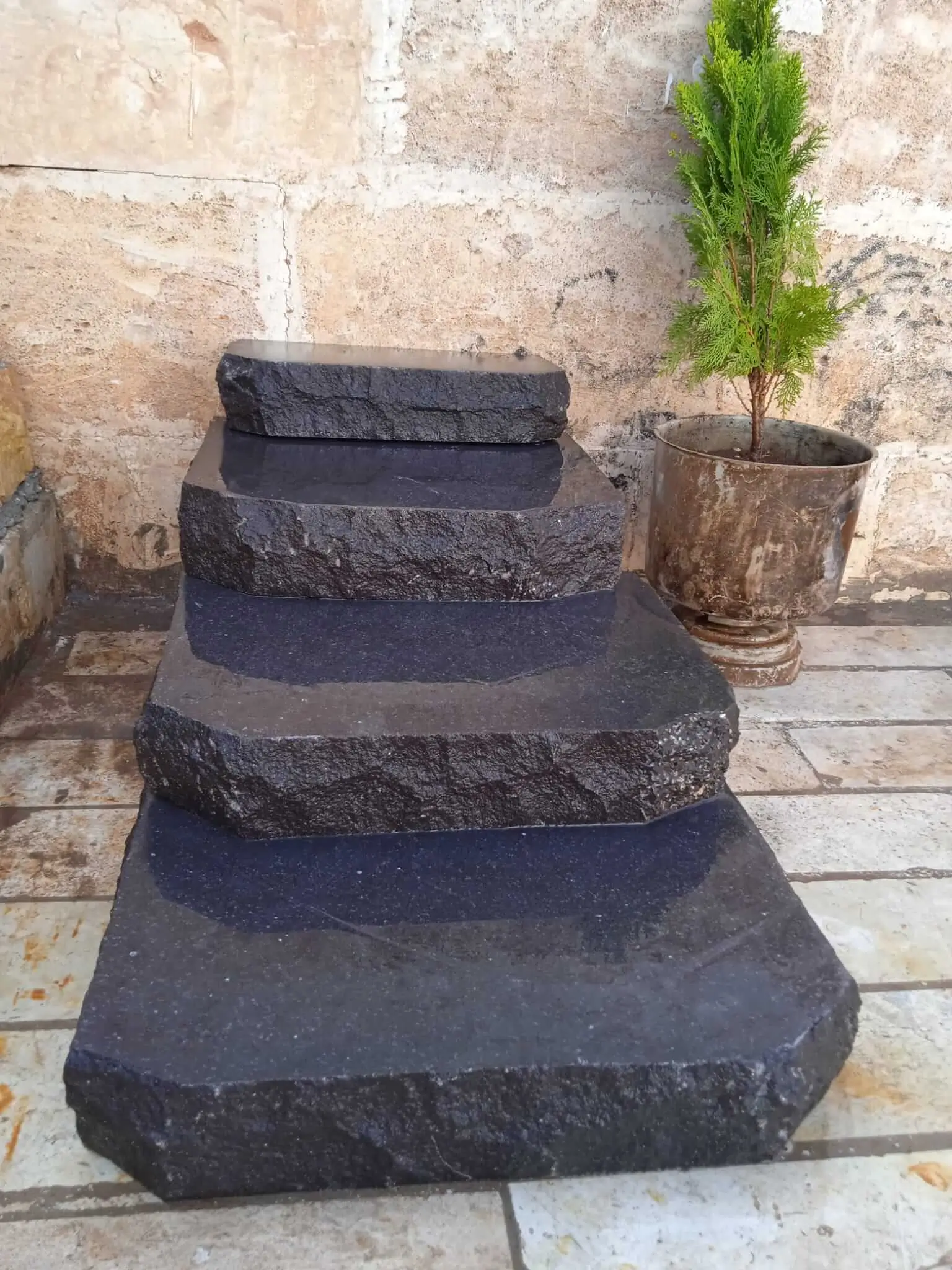
The compressive strength requirements for stone slab pergola flooring Paradise Valley applications differ from standard paving specifications. You’re looking at minimum 9,500 PSI ratings because shaded installations often support heavier furniture loads and concentrated point loads from pergola support posts. Standard 8,000 PSI materials work for open patios, but confined pergola spaces see 2-3x the furniture density per square foot.
- You should specify materials with flexural strength ratings above 1,200 PSI for areas within 3 feet of support posts
- Your project requires edge profile specifications that accommodate thermal movement without visible joint degradation
- You need to verify that absorption rates remain consistent across the material’s full thickness, not just surface measurements
- You’ll want to test for efflorescence resistance using accelerated aging protocols that simulate 10+ years of Arizona exposure
For guidance on related material considerations, see professional slab supplier for comprehensive comparison data across multiple stone types suitable for covered applications. Your material selection process should include warehouse verification of current stock availability, especially for projects requiring color consistency across 400+ square foot installations.
Surface Finish Considerations
You need to make critical decisions about surface finish based on how Arizona protected patios function as hybrid indoor-outdoor spaces. Honed finishes provide superior slip resistance (DCOF 0.58-0.64) but show traffic patterns more readily in high-use areas. Polished finishes maintain aesthetic appearance longer but require aggressive slip-resistance treatments that compromise the visual uniformity you’re trying to achieve.
The challenge you’re managing is that shaded slab spaces accumulate fine dust particles that create a polishing effect over time. Even honed finishes will develop subtle sheen in traffic lanes within 3-5 years. You should plan for this by specifying finishes one grade rougher than you’d use for exposed applications—if you’re considering honed, specify thermal finish instead. If you want polished appearance, start with honed and allow natural traffic polishing to develop.
- You should avoid flamed finishes in covered areas because the aggressive texture traps debris and becomes difficult to maintain
- Your finish selection must account for cleaning method compatibility with the pergola’s drainage design
- You need to specify that finish consistency tolerances be verified across all material batches before delivery
Base Preparation Requirements
When you design base systems for stone slab pergola flooring Paradise Valley installations, you’re working with soil conditions that differ significantly from typical Arizona patio applications. The reduced moisture exposure under pergolas creates stable substrate conditions, but you can’t reduce base specifications accordingly—pergola support posts concentrate vertical loads that require enhanced base performance.
Your base design should incorporate 6-8 inches of compacted aggregate (compared to 4-6 inches for open patios) within a 4-foot radius of each support post. This distribution prevents differential settlement that creates lippage at slab joints. You’ll want to specify crushed granite or decomposed granite with maximum ¾-inch particle size and less than 8% fines content.
The compaction requirements you’re targeting are 95-97% modified Proctor density throughout the base layer. Standard 92-94% compaction works for residential patios, but confined pergola spaces can’t tolerate the subtle settlement that lower compaction allows. You should require plate compactor verification testing at 10-foot grid intervals, with additional testing at each post location.
- You need to account for utility trenching that may compromise base integrity near pergola perimeters
- Your specification should address how existing landscape irrigation affects base moisture content during installation
- You’ll want to verify that base material pH remains below 8.0 to minimize efflorescence risk
- You should require geotextile separation fabric only where native soil exhibits clay content above 30%
Joint Spacing and Thermal Movement
You’ll need to adjust standard joint spacing recommendations when you work on Paradise Valley covered areas because the modified thermal environment changes expansion behavior. Open patio installations typically use 3/16-inch joints with 1/8-inch minimum spacing. Under pergola structures, you should increase this to ¼-inch nominal joints with 3/16-inch minimum to accommodate the accelerated thermal cycling that occurs in partially shaded spaces.
Your joint spacing decisions must account for individual slab dimensions and their relationship to pergola beam locations. When slab edges align with overhead beams, they experience 6-8°F lower peak temperatures than slabs positioned between beams. This creates differential expansion that standard uniform joint spacing doesn’t address. Professional specifications vary joint width by ±1/32 inch based on shading patterns mapped at summer solstice noon.
The joint sand retention you’re trying to achieve requires polymer-modified products rather than standard silica sand. Covered spaces see minimal rainfall to consolidate joint material, so you need products that achieve mechanical stability without moisture activation. You’ll want to specify polymer content of 15-20% by weight, with maximum grain size of 1.2mm for ¼-inch joints.
- You should plan for joint sand replenishment at 18-month intervals rather than the 24-36 month cycle common for exposed patios
- Your project requires edge restraint systems that allow lateral thermal movement while preventing slab migration
- You need to specify that joints be fully packed to 100% capacity initially, expecting 15-20% settlement in the first 90 days
Drainage Design for Covered Spaces
When you design drainage for pergola stone floors Arizona applications, you’re dealing with reduced water volumes but concentrated flow patterns that create unique challenges. A typical pergola channels 70-80% of rainfall to specific drip zones rather than distributing it evenly across the surface. You need to accommodate flow rates of 3-5 gallons per minute per linear foot along primary drip lines during monsoon events.
Your drainage slope requirements should increase to minimum 2% grade (compared to 1.5% for open patios) because water flow velocity is lower under covered structures. The pergola’s overhead elements create air turbulence that reduces rainfall energy, meaning water doesn’t sheet across the surface as readily. Without adequate slope, you’ll see standing water in low spots that takes 2-3 hours to evaporate rather than 30-45 minutes on exposed surfaces.
The base permeability you’re targeting is 12-15 inches per hour minimum, compared to 8-10 inches per hour for standard applications. This accounts for the concentrated flow patterns mentioned earlier. You should verify permeability through field infiltration testing after base installation but before slab placement—catching inadequate drainage at this stage saves significant remediation costs.
Color Consistency and Shade Variations
You need to understand that stone slab pergola flooring Paradise Valley installations reveal color inconsistencies more readily than open patio applications. The controlled lighting environment under pergolas eliminates the color-masking effects of direct sunlight and shadow variation. What appears acceptably consistent in full sun shows obvious color banding under filtered pergola light.
Your material selection should specify that all slabs come from the same quarry production run, ideally from adjacent bed layers. Standard ±15% color variation tolerances that work for open patios should tighten to ±8% for covered installations. You’ll want to require physical samples from the actual production lot rather than relying on manufacturer standard samples that may not represent current quarry conditions.
- You should plan job site layout with color grouping strategies that place similar tones in contiguous zones
- Your specification needs to address how wet-versus-dry appearance affects color perception under shaded conditions
- You’ll want to verify warehouse stock quantities before finalizing material selection to ensure sufficient volume from single production runs
- You need to account for how UV-blocking pergola roof materials affect perceived color temperature of the stone surface
Maintenance Protocols for Covered Installations
When you develop maintenance specifications for shaded slab spaces, you’re working with different soiling patterns than exposed applications. Covered pergola floors accumulate fine airborne dust that bonds with residual moisture from morning condensation, creating a film that dulls surface appearance within 6-8 months. Open patios see this material blown away by wind or washed off by direct rainfall.
Your maintenance program should specify quarterly cleaning using pH-neutral cleaners with surfactant content below 2%. Higher surfactant levels leave residue that actually attracts more dust under covered conditions. You’ll want to require soft-bristle brush application rather than pressure washing, which can erode joint sand in spaces that don’t receive rainfall replenishment.
The sealer selection you’re making needs to account for reduced UV exposure under pergolas. Standard sealers formulated for Arizona sun exposure contain UV inhibitors that increase cost without providing value in shaded applications. You should specify non-film-forming penetrating sealers with 15-18% solids content, applied at 150-175 square feet per gallon (compared to 125-150 sq ft/gal for exposed surfaces).
Arizona Stone Slab Suppliers: How Citadel Stone Would Approach Paradise Valley Covered Areas
When you consider Citadel Stone’s stone slab suppliers in Arizona for your Paradise Valley covered patio projects, you’re evaluating premium materials engineered specifically for Arizona’s extreme climate performance. At Citadel Stone, we provide technical guidance for hypothetical applications across Arizona’s diverse microclimates. This section outlines how you would approach specification decisions for three representative cities where pergola installations present distinct challenges.
Your material selection process should account for regional climate variations that affect thermal mass behavior, moisture dynamics, and long-term durability. Each Arizona location presents specific conditions that modify how Paradise Valley covered areas perform compared to open patio installations. You’ll need to adjust base specifications, joint spacing, and maintenance protocols based on local temperature extremes and precipitation patterns.
Flagstaff Climate Factors
In Flagstaff’s high-elevation environment, you would need to address freeze-thaw cycling that occurs even under covered pergola structures. Your specification should require materials with absorption rates below 5% and verified ASTM C666 performance showing less than 0.5% mass loss after 300 freeze-thaw cycles. You’ll encounter temperature swings from 15°F nighttime lows to 65°F afternoon highs during shoulder seasons, creating thermal stress that demands enhanced joint flexibility. You should specify polymer-modified setting beds rather than standard sand bases to accommodate this movement. The reduced snow melt exposure under pergolas doesn’t eliminate freeze risk—radiant cooling to night skies creates surface temperatures 5-8°F below ambient air readings.
Sedona Red Rock Integration
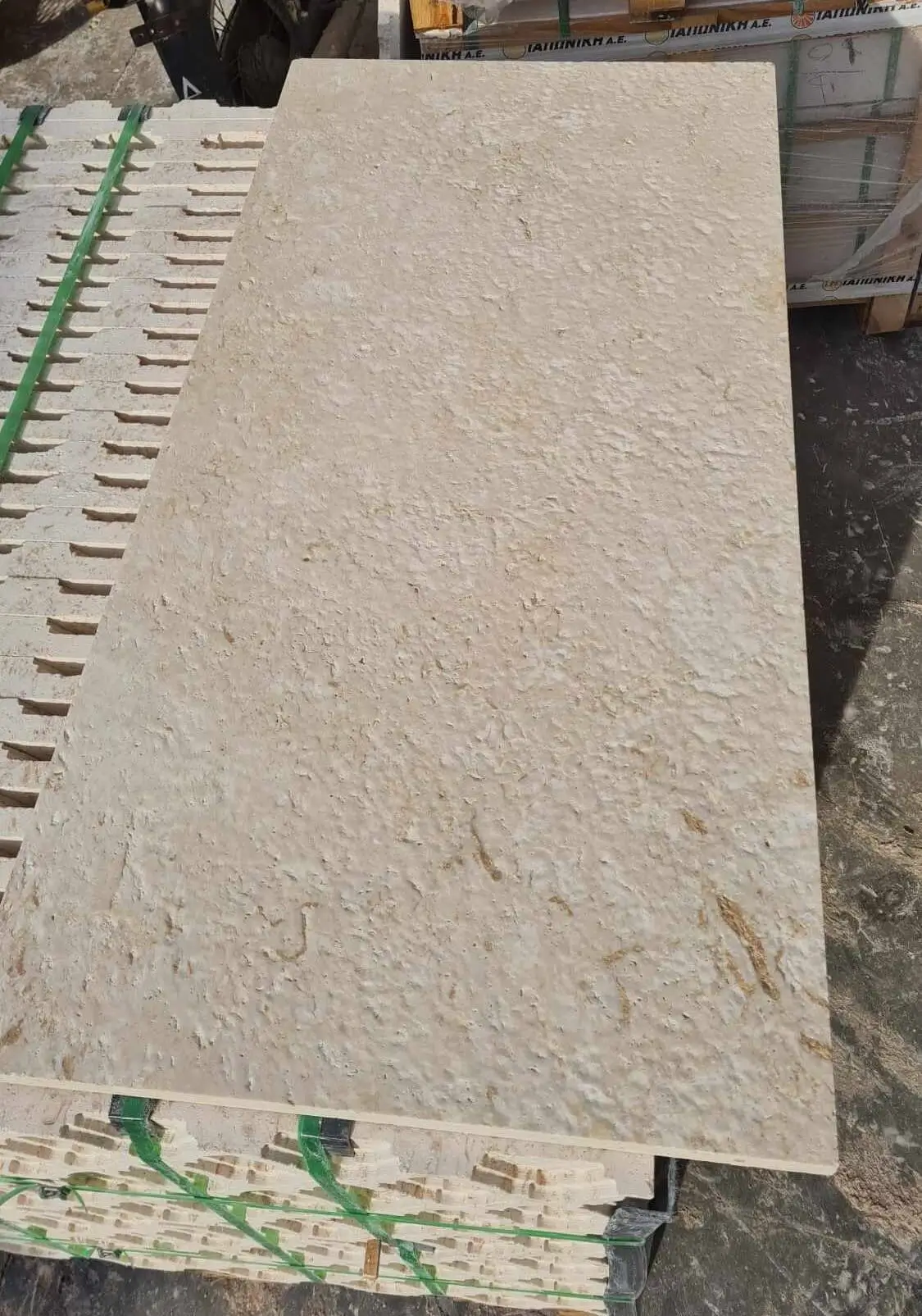
You would approach Sedona installations with careful attention to color compatibility with the surrounding red rock landscape. Your stone selection should complement rather than compete with natural sandstone tones, typically specifying materials in warm beige to light terra cotta ranges. The area’s intense UV exposure (even under pergolas due to reflection from red rock formations) requires you to verify colorfastness through accelerated weathering testing equivalent to 15+ years Arizona exposure. You’ll want to account for iron oxide staining potential from windblown red soil particles, which means selecting stone with minimal surface porosity (under 6%) and planning for biannual cleaning protocols. At Citadel Stone, we would recommend sealed surfaces for Sedona applications to prevent permanent soil staining that develops within 2-3 years on unsealed installations.
Peoria Urban Heat Considerations
In Peoria’s west valley location, you would need to address extreme urban heat island effects that elevate temperatures under covered structures by 10-15°F above readings in natural desert settings. Your material specification should prioritize thermal reflectance values above 0.65 (solar reflectance index) to minimize heat absorption. You’ll encounter temperature-driven challenges with lighter-colored stones showing better performance than darker materials—surface temperature differentials of 20-25°F between white limestone and dark granite under identical pergola coverage. You should verify that your selected material maintains structural integrity through daily thermal cycling that reaches 140-145°F peak temperatures under pergola cover during July and August. Your truck delivery scheduling would need to account for summer heat affecting material handling—early morning deliveries reduce thermal stress on materials during unloading and placement.
Edge Detail Specifications
You need to make specific decisions about perimeter edge conditions for stone slab pergola flooring Paradise Valley projects because standard patio edge details don’t address the visual prominence of covered space boundaries. Pergola floors function as defined rooms rather than open terraces, which means edges are viewed at close range and require refined detailing.
Your edge specification should incorporate either soldier course borders using the same material turned 90 degrees, or contrasting accent borders that define the space architecturally. When you use soldier courses, you’re creating 50% more linear edge footage that requires precise cutting and fitting. You’ll want to specify that all soldier course pieces be cut from full slabs rather than using remnants to ensure consistent thickness and color matching.
- You should require that edge pieces receive the same surface finish as field material to maintain visual continuity
- Your detailing must address how edges transition to landscape areas without creating trip hazards
- You need to specify edge restraint systems that remain concealed while providing structural support against lateral movement
Structural Load Considerations
When you evaluate pergola stone floors Arizona installations for structural performance, you’re working with load conditions that differ from typical patio applications. Pergola spaces concentrate furniture and activity in defined areas rather than distributing loads across open surfaces. You need to verify that your selected material and base system can handle point loads from furniture legs, planter containers, and built-in seating elements.
Your specification should require minimum 10,000 PSI compressive strength for areas designated as seating zones or outdoor kitchen locations. Standard 8,000-9,000 PSI materials work for circulation paths, but concentrated furniture loads create stress conditions that demand higher performance. You’ll want to conduct bearing capacity calculations for your base system that account for 150-200 pounds per square inch localized loading rather than the 50-75 PSI distributed loads typical for open patios.
The thickness requirements you’re establishing should increase from standard 1¼-inch pavers to minimum 1½-inch slabs for covered pergola applications. This additional 25% thickness provides 45-50% increase in load-bearing capacity and significantly reduces deflection under point loads. You should verify thickness consistency across all material pieces to within ±1/8 inch tolerance.
Lighting Integration Factors
You’ll encounter unique challenges when you integrate lighting with stone slab pergola flooring Paradise Valley installations because light fixtures create localized heat zones that affect material performance. Recessed uplights can generate surface temperatures 40-50°F above ambient levels within 6-inch radius of fixture locations. This demands special attention to joint spacing and material selection around lighting elements.
Your lighting integration plan should maintain minimum 8-inch clearance between fixture edges and slab joints to prevent accelerated joint degradation from thermal stress. When fixtures must be positioned closer to joints, you need to specify high-temperature joint sand products rated for 200°F+ exposure. Standard polymer-modified sands begin to soften at 160-175°F, which recessed fixtures easily exceed during evening operation.
- You should coordinate with electrical contractors to verify fixture heat output specifications before finalizing slab layout
- Your specification needs to address how fixture mounting details affect base integrity and drainage performance
- You’ll want to plan for future fixture access without requiring slab removal by incorporating removable fixture collars
Final Specifications
Your professional specification process for Arizona protected patios requires you to balance competing performance requirements while maintaining budget parameters and aesthetic goals. You should develop comprehensive technical specifications that address material properties, installation standards, and maintenance requirements specific to covered pergola environments. When you finalize project documents, you need to verify that all performance criteria align with actual site conditions rather than generic patio standards. For additional installation insights, review Techniques for matching stone slab colors in desert climates before you complete your material selection process. We are the source for slate stone slabs for sale Arizona relies on.