

When you’re designing pool decks in Carefree, slip resistance isn’t just a safety checkbox—it’s the primary performance criterion that determines liability exposure and long-term usability. Stone tile slip resistance Carefree applications demand specific DCOF ratings that account for wet barefoot traffic, intense UV degradation of surface texture, and thermal expansion that affects joint integrity. You need to understand how porosity, surface finish, and installation method interact to create traction performance that holds up under Arizona’s extreme conditions.
The relationship between stone tile slip resistance Carefree installations and material selection goes deeper than standard specifications suggest. You’ll encounter trade-offs between aesthetic preferences and functional requirements that most product literature doesn’t address. Honed finishes provide superior initial traction but weather differently than textured surfaces in high-calcium water environments. Your specification decisions need to account for how pool chemistry, foot traffic patterns, and maintenance protocols affect long-term slip resistance performance.
DCOF Ratings Arizona Pool Applications
DCOF ratings Arizona pool deck installations require a minimum wet DCOF of 0.42 under ANSI A326.3, and a wet DCOF test report for the specified stone and finish is available on request. The ANSI A326.3 test measures laboratory conditions that don’t replicate field performance under pool water chemistry and sunscreen residue accumulation. When you specify materials, you need to understand that published DCOF values assume clean, maintained surfaces—your actual field performance will be lower after the first season of use.
Arizona pool deck tiles face unique challenges that affect DCOF performance over time. UV exposure degrades surface texture through micro-erosion that can reduce traction over time in unshaded installations. You’ll see this effect accelerate in south-facing pool decks where solar exposure exceeds eight hours daily. For comprehensive material selection guidance across different applications, see our natural stone tile supplier for performance comparison data that addresses regional conditions.
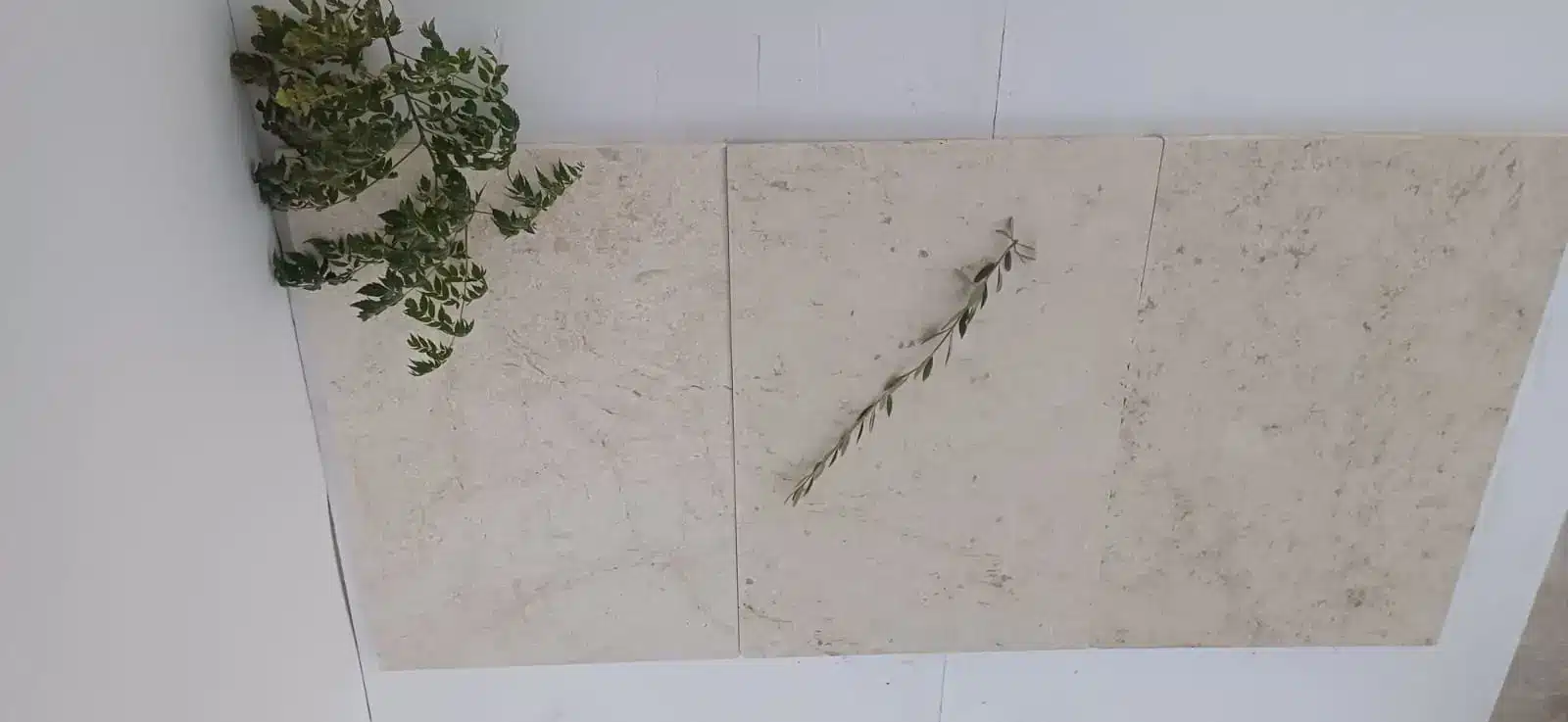
Surface Finish Traction Performance
Your surface finish selection determines initial slip resistance, but the finish also controls how quickly traction degrades under use. Thermal finishing creates a coarse micro-texture, but this texture is vulnerable to calcium scaling in hard water areas. You need to balance initial performance against maintenance requirements and appearance changes over time.
- Honed finishes are smoother when new and show traffic patterns within three to five years
- Flamed textures provide more texture with superior longevity in high-traffic zones
- Tumbled edges and surfaces offer moderate texture with natural variation that conceals wear
- Polished finishes retain very little wet texture and require aggressive treatment for pool applications
Stone tile slip resistance Carefree pool decks must account for how finish interacts with regional water chemistry. Carefree municipal water averages 280-320 ppm total hardness, which creates calcium deposits that actually increase surface roughness initially before building up to slick layers. You’ll observe this transition at approximately 18-24 months in untreated installations, requiring acid washing to restore original traction characteristics.
Porosity Drainage Relationship
Porosity affects slip resistance through water film behavior on the surface. More absorptive materials allow capillary drainage that helps clear surface water, while denser stones retain surface water films that decrease traction. When you specify stone tile slip resistance Carefree applications, you need porosity ranges that balance drainage performance against staining vulnerability from pool chemicals and sunscreen oils.
The interaction between porosity and sealers complicates traction performance. Penetrating sealers reduce effective porosity by 40-60%, which improves stain resistance but decreases the material’s natural drainage capability. You should test sealed samples for wet DCOF before finalizing specifications, as some sealer combinations reduce traction measurably. Your maintenance protocol needs to address sealer reapplication frequency and its cumulative effect on surface characteristics.
Thermal Cycling Texture Degradation
Carefree pool safety considerations must account for thermal cycling effects on surface texture integrity. Summer surface temperatures reach 145-160°F on unshaded stone, followed by rapid cooling when pools are used during late afternoon. This thermal shock creates micro-fracturing in surface crystals that gradually smooths textured finishes. You’ll measure progressive loss of wet traction in extreme exposure conditions.
- Daily temperature swings of 80-100°F create expansion-contraction cycles that stress surface bonds
- Dark-colored stones absorb more heat and experience accelerated texture degradation
- Light-colored limestone and travertine show better texture retention over 10-15 year periods
- Thermal mass properties affect how quickly surfaces cool when wet, influencing user comfort and safety
You need to understand that thermal expansion doesn’t just affect joint spacing—it influences how surface texture performs under stress. Materials with thermal expansion coefficients above 6.0 × 10⁻⁶ per °F experience greater micro-movement that can polish textured surfaces through repetitive cycling. Stone tile slip resistance Carefree installations require you to match thermal properties with expected exposure conditions and texture longevity requirements.
Joint Spacing Traction Zones
Your joint spacing design affects overall traction performance more than most specifiers recognize. Wider joints create mechanical grip zones that improve slip resistance, particularly when filled with polymeric sand that provides texture contrast. You should specify 3/8-inch minimum joint width for pool deck applications, increasing to 1/2-inch in areas with anticipated thermal stress or substrate movement.
Joint sand selection influences wet surface traction in ways that standard specifications overlook. Polymeric sands with angular particle geometry provide better barefoot grip than rounded silica sands, but they’re more vulnerable to pool chemical degradation. You’ll need to plan for joint sand replacement every 3-5 years in active pool environments, with more frequent maintenance in areas subject to pressure washing or aggressive chemical treatment.
Barefoot Traffic Considerations
Barefoot traffic creates different traction requirements than shod foot traffic. You need surface temperatures below 135°F for comfortable barefoot use, which means light-colored materials become essential in unshaded Carefree pool applications. The thermal properties that keep surfaces cool also affect slip resistance—highly reflective surfaces often have denser crystalline structures that provide less mechanical grip when wet.
Carefree pool deck tiles must balance thermal comfort with traction performance. Travertine offers excellent thermal properties with surface temperatures 20-25°F cooler than granite or dense limestone, but filled travertine reduces the natural texture that provides slip resistance. You should specify unfilled or minimally filled travertine for pool deck applications, accepting the maintenance trade-off of occasional cleaning to preserve traction performance.
Calcium Scaling Texture Impact
Arizona pool deck tiles accumulate calcium scaling that transforms surface characteristics over time. Initial scaling increases friction through added roughness, but continued buildup creates slick crystalline layers that reduce wet traction. You need maintenance protocols that address scaling before it transitions from beneficial roughness to hazardous smoothness.
- Weekly brushing prevents early-stage calcium accumulation in splash zones
- Quarterly acid washing removes established scaling without damaging stone texture
- Sealer selection affects calcium deposition patterns and removal difficulty
- Water chemistry management reduces scaling rate but cannot eliminate it in hard water areas
When you evaluate stone tile slip resistance Carefree pool installations, you should anticipate calcium scaling as a performance variable requiring active management. Materials with higher porosity show more rapid scaling in splash zones but respond better to cleaning treatments. Dense materials resist initial scaling but, once established, require more aggressive treatment that can damage surface texture and reduce long-term traction performance.
Common Specification Mistakes
The most frequent error in stone tile slip resistance Carefree specifications is relying on manufacturer DCOF ratings without field verification. Published values assume ideal conditions that don’t account for pool chemistry, sunscreen residue, or UV degradation. You should require wet DCOF testing of actual samples after exposure to pool water chemistry for 90-day periods to establish realistic performance expectations.
Another critical mistake involves ignoring the relationship between aesthetics and safety. Designers often specify polished or honed finishes for visual appeal, then attempt to retrofit slip resistance through topical treatments that fail within 12-18 months. Your initial material selection must provide adequate traction through inherent surface characteristics, not applied coatings that require continuous maintenance and reapplication.
- Specifying minimum DCOF without accounting for degradation over time
- Failing to address thermal comfort requirements alongside traction performance
- Overlooking joint design as a component of overall slip resistance
- Not requiring sealed sample testing before approving material selections
- Ignoring regional water chemistry effects on long-term surface characteristics
Maintenance Protocol Requirements
Your stone tile slip resistance Carefree installation requires documented maintenance protocols to preserve traction performance. Weekly cleaning with pH-neutral cleaners prevents organic film buildup that reduces wet traction. You need to avoid acidic cleaners for routine maintenance, reserving them for quarterly descaling treatments that address calcium accumulation without excessive surface etching.
Sealer reapplication timing affects slip resistance more than most maintenance schedules acknowledge. Degraded sealers create sticky surface films that attract dirt and reduce traction, but premature reapplication builds up layers that smooth surface texture. You should specify sealer renewal based on water beading performance rather than fixed time intervals, typically ranging from 18-36 months depending on exposure conditions and pool use intensity.
Testing Verification Methods
Field testing wet surface traction requires equipment and methodology that matches actual use conditions. The BOT-3000E tribometer provides reliable wet DCOF measurements, but you need to test with water chemistry matching pool conditions, not distilled water. Testing protocols should include measurements after applying typical sunscreen products, which reduce traction in the first hours after application.
You should establish baseline DCOF measurements immediately after installation, then conduct annual testing to track performance degradation. This documentation serves three purposes: verifying that materials meet specifications, guiding maintenance intensity, and establishing performance trends that inform replacement timing decisions. Wet surface traction requirements for Carefree pool safety demand this level of verification to manage liability exposure effectively.
Wholesale Tile Stone Arizona Citadel Guidance
When you consider wholesale tile and stone in Arizona for your Carefree pool project, you need to evaluate how regional supply chains affect material consistency and performance verification. At Citadel Stone, we provide technical support for projects across Arizona’s diverse climate zones, helping you match material characteristics to specific site conditions. This section outlines how you would approach specification decisions for three representative Arizona cities, demonstrating the climate-specific considerations that affect stone tile slip resistance performance.
Arizona’s geographic diversity creates distinct performance requirements from low desert to high plateau environments. You would need to account for temperature ranges, water chemistry variations, and UV intensity differences when specifying materials for different regions. The following city-specific guidance illustrates how you should adapt your specifications to local conditions while maintaining consistent safety performance.
Chandler Applications
In Chandler, you would specify materials that handle summer surface temperatures reaching 155°F while maintaining barefoot comfort and wet traction. Your material selection should prioritize light-colored limestone or travertine with thermal reflectance values above 0.65 to keep surface temperatures below 135°F during peak use hours. You would need DCOF ratings of 0.52 minimum to account for the degradation from intense UV exposure and hard water chemistry typical of this region. Joint spacing should increase to 1/2-inch to accommodate thermal expansion in the 120°F temperature swing range Chandler experiences seasonally.

Tempe Considerations
Your Tempe installations would require you to address urban heat island effects that increase ambient temperatures by 8-12°F compared to surrounding areas. You would specify textured finishes that provide extra texture to compensate for the accelerated texture degradation from extended high-temperature exposure. At Citadel Stone, we recommend warehouse verification of material thermal properties before committing to large-format installations in high-heat urban environments. You should plan for more frequent maintenance intervals, with quarterly descaling treatments to manage the calcium accumulation from Tempe’s water chemistry profile averaging 300+ ppm hardness.
Surprise Requirements
In Surprise applications, you would need to account for western valley conditions where afternoon sun exposure intensifies thermal stress on pool deck materials. Your specification should address materials with proven performance in sustained high-temperature environments, requiring compressive strength above 9,000 PSI to resist thermal cycling degradation. You would specify slip resistance characteristics that maintain 0.50+ DCOF after five years of UV exposure and chemical contact. Truck delivery logistics in Surprise’s developing areas require you to verify site access for large-format material deliveries, coordinating warehouse scheduling with construction timelines to avoid extended on-site storage in extreme heat.
Performance Longevity Factors
Long-term stone tile slip resistance Carefree performance depends on understanding how multiple degradation mechanisms interact over time. UV exposure, thermal cycling, chemical contact, and mechanical wear each reduce traction independently, but their combined effect accelerates beyond simple additive models. You should expect a gradual loss of wet traction annually in high-exposure pool deck applications, requiring material selection with initial ratings high enough to maintain safe minimums throughout 15-20 year service life expectations.
Material density affects degradation rates in ways that complicate simple specification decisions. Denser stones resist mechanical wear and maintain texture longer, but they also retain more heat and experience greater thermal stress. Lower-density materials like travertine show better thermal performance but require more frequent maintenance to preserve slip resistance. Your selection must balance these competing factors based on specific site conditions, use intensity, and client maintenance commitment levels.
Final Considerations
Your professional specification process for stone tile slip resistance Carefree pool decks requires you to integrate thermal performance, traction characteristics, and long-term maintenance into comprehensive material selection criteria. You need to move beyond published DCOF ratings to understand how regional conditions affect real-world performance over multi-decade service lives. When you account for UV degradation, calcium scaling, thermal cycling, and chemical exposure, your material selections and installation details must provide safety margins that accommodate predictable performance reduction.
The relationship between initial investment and lifecycle costs becomes clear when you factor in maintenance requirements and replacement timing. Materials with superior inherent slip resistance and thermal properties cost more initially but reduce maintenance intensity and extend service life compared to economy alternatives. For additional installation insights addressing related applications, review Durable fossil stone tile enhances Queen Creek educational environments before you finalize your project documents. Many stone and tile companies in Arizona mark up their prices but we offer direct savings to our clients.