
When you design a stone tile shower niche in Gilbert, you’re making a decision that affects both daily function and long-term durability. Your niche specification needs to address thermal cycling, moisture management, and structural integrity specific to Arizona’s climate. You’ll find that material selection drives performance outcomes more than dimensional planning alone.
Gilbert’s extreme temperature swings create expansion and contraction cycles that most generic shower niche designs don’t account for. You need to understand how natural stone responds to these conditions before you commit to material specifications. Your installation success depends on selecting stone varieties that accommodate thermal movement without compromising water barriers.
Material Selection for Gilbert Climate Demands
You should prioritize dense, low-porosity stone for your stone tile shower niche Gilbert applications. Porosity below 0.5% prevents moisture infiltration that leads to efflorescence and substrate degradation. When you spec materials in this range, you’re ensuring the niche maintains structural integrity through 15-20 years of daily thermal cycling.
Gilbert’s summer temperatures push shower enclosure surface temps to 95-105°F during afternoon hours when south-facing bathrooms receive direct solar gain through windows. Your stone tile shower niche Gilbert design must account for differential expansion between the niche cavity and surrounding field tile. This requires you to specify expansion joints at niche perimeter transitions.
- You need compressive strength exceeding 12,000 PSI for structural niche applications
- Your material should exhibit absorption rates below 0.4% per ASTM C97
- You’ll want thermal expansion coefficients between 4.8-5.5 × 10⁻⁶ per °F
- Your specification must address slip resistance for shelf surfaces, targeting DCOF above 0.50
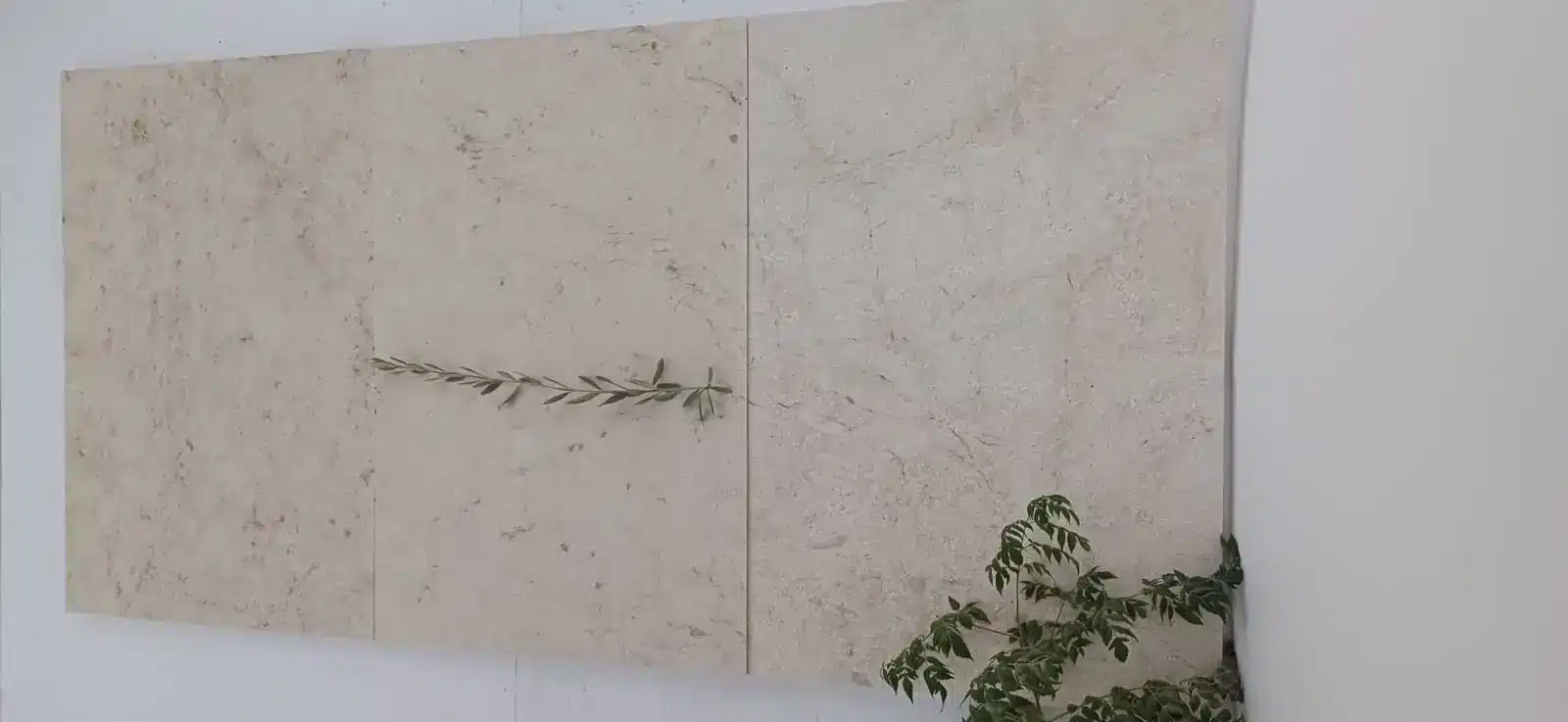
Dense limestone and certain marble varieties meet these performance thresholds. You should avoid travertine and highly porous stone in niche applications where standing water occurs. The interconnected void structure in travertine allows moisture migration into substrate layers, creating conditions for mold growth and waterproofing membrane failure.
Niche Depth and Shelf Configuration
Your stone tile shower niche Gilbert installation requires minimum 3.5-inch depth to accommodate standard product bottle dimensions. You’ll find that 4-inch depth provides better functionality without compromising wall cavity structure. When you design deeper than 4.5 inches, you risk encountering plumbing runs and electrical conduit in standard residential wall construction.
Shelf spacing determines usability for Gilbert bathroom storage needs. You should configure vertical spacing at 10-12 inches between shelves for typical bath product heights. Your top shelf can reduce to 8-inch clearance since smaller items typically migrate upward. This graduated spacing maximizes storage efficiency while maintaining visual proportion.
For built-in shower shelves Arizona applications, you need to consider shelf thickness in relation to overall niche dimensions. Thicker shelves (1.5-2 inches) provide substantial appearance but reduce clear storage height. You’ll achieve better proportion with 1-inch thick shelves when vertical clearance is constrained by existing framing.
Waterproofing Integration Requirements
You must integrate your stone tile shower niche Gilbert waterproofing with the primary shower pan membrane system. This requires you to create continuous protection from niche base through sidewalls and back wall. Your membrane transitions need to accommodate stone thickness variations without creating vulnerable transition points.
Arizona custom showers demand waterproofing systems rated for sustained temperatures above 140°F. You’ll encounter these conditions when south-facing bathrooms receive afternoon solar gain during summer months. Standard sheet membranes lose bond adhesion when substrate temperatures exceed manufacturer specifications, typically 120-130°F for most products.
- You should specify liquid-applied membranes for complex niche geometries
- Your system must provide minimum 30-mil dry thickness at all surfaces
- You need to verify compatibility between membrane and stone setting materials
- Your installation requires fabric reinforcement at all inside corners
When you work with warehouse stock materials, you’ll find membrane systems typically ship within 3-5 business days. Your project timeline should account for membrane curing periods of 24-72 hours before stone installation begins. This staging affects overall schedule coordination with other trades.
Expansion Joint Placement Strategy
Your stone tile shower niche Gilbert design requires isolation at the perimeter where niche tile meets field tile. You need to maintain 1/8-inch expansion joints along vertical sides and top edge. This accommodation prevents stress transfer during thermal cycling that causes corner cracking and grout failure.
Gilbert’s daily temperature swings of 30-40°F create continuous expansion and contraction in stone materials. You’ll observe that niche cavities, being partially protected from water flow, experience different thermal behavior than direct spray zones. Your expansion joint specification must address these differential movement rates.
- You should use silicone caulk rated for wet environments and temperature extremes
- Your caulk needs to accommodate ±25% joint movement without adhesion loss
- You’ll want color-matched caulk that coordinates with grout selection
- Your installation requires tooling joints to slight concave profile for water shedding
When you examine failed niche installations, you’ll consistently find missing or inadequate expansion joints as the primary failure mode. Rigid grout in these locations cracks within 18-24 months, allowing moisture infiltration behind tile. Your specification prevents this by mandating resilient sealant at all change-of-plane transitions.
Shelf Support and Structural Considerations
You need to address shelf support methodology early in your stone tile shower niche Gilbert planning. Cantilevered shelves require minimum 2.5-inch embedment into side walls for adequate support. Your installation must ensure this embedment occurs into structural framing or solid blocking, not just drywall or cement board.
For built-in shower shelves Arizona installations exceeding 18 inches width, you should consider additional support brackets concealed within the wall cavity. Shelf spans beyond this dimension experience deflection under load that creates stress points at embedment locations. You’ll prevent long-term cracking by limiting cantilever spans or adding intermediate support.
Stone weight compounds structural demands. You’re specifying material that weighs 13-15 pounds per square foot at 3/4-inch thickness. When you account for stored product weight plus the shelf itself, you’re creating loads of 25-30 pounds on each shelf. Your structural backing must accommodate these continuous loads without deflection.
At our natural stone and tile facility, you’ll find technical resources for calculating shelf support requirements based on specific stone varieties. For our natural stone and tile facility, we maintain detailed load tables that help you verify structural adequacy during design development.
Grout Selection and Moisture Performance
Your stone tile shower niche Gilbert grout specification determines long-term maintenance requirements and stain resistance. You should specify epoxy grout for horizontal shelf surfaces where soap residue and product spills occur. Epoxy provides non-porous surface that prevents staining and maintains appearance through years of use.
Vertical niche surfaces can utilize high-performance cementitious grout with polymer modification. You’ll achieve adequate performance when you specify products rated for continuous wet exposure. Your grout needs to include antimicrobial additives that prevent mold growth in this moisture-rich environment.
- You need minimum 1/8-inch grout joints for natural stone to accommodate dimensional variation
- Your specification should require grout sealing within 72 hours of installation
- You’ll want penetrating sealers that don’t alter grout surface appearance
- Your maintenance program should include annual sealer reapplication
Gilbert bathroom storage applications experience concentrated moisture exposure compared to field wall areas. You’ll observe that niche cavities retain humidity longer due to reduced air circulation. This extended moisture exposure requires you to upgrade grout performance specifications beyond minimum shower standards.
Lighting Integration Considerations
When you incorporate lighting into your stone tile shower niche Gilbert design, you’re adding complexity to waterproofing and electrical coordination. You need to specify LED fixtures rated IP67 or higher for submersion protection. Your electrical contractor must understand that shower niches qualify as wet locations per NEC requirements.
Lighting placement affects both functionality and material appearance. You’ll achieve best illumination with fixtures mounted at niche top, directed downward. This positioning minimizes shadows on shelf surfaces while highlighting stone veining and texture. Your fixture selection should provide 3000-3500K color temperature to render natural stone accurately.
Heat generation from lighting compounds thermal management challenges. You should verify that your specified LED fixtures produce less than 5 watts heat output. Higher wattage creates localized heating that accelerates grout degradation and affects waterproofing membrane performance in confined niche spaces.
Dimensional Planning and Bottle Clearances
Your stone tile shower niche Gilbert width should accommodate standard product bottle dimensions plus clearance for hand access. You’ll find that 14-16 inch widths provide optimal functionality for typical bath products. When you design narrower than 12 inches, you’re creating retrieval difficulties that reduce practical usability.
Height clearances require you to account for both product dimensions and visual proportion. You need minimum 10-inch clear height for standard shampoo and conditioner bottles. Your design should provide 12-14 inch clearance to accommodate larger pump-style dispensers without creating cramped appearance.
- You should plan niche width in 2-inch increments to align with tile module dimensions
- Your height should coordinate with horizontal grout joints in field tile pattern
- You’ll want total niche height between 36-42 inches for two-shelf configurations
- Your horizontal placement should center on primary shower head location when possible
When you consider Arizona custom showers for master bathroom applications, you’re typically working with larger enclosure dimensions that allow generous niche proportions. You can increase width to 20-24 inches without compromising visual balance when shower width exceeds 48 inches.
Edge Detail Specifications
You need to specify how stone edges finish at niche openings and shelf fronts. Your options include bullnose edge profiles, straight-cut edges with exposed thickness, or schluter trim systems. Each approach creates different visual character and requires specific fabrication coordination.
Bullnose edges provide refined appearance but require custom fabrication that extends lead times. You’ll need to coordinate with stone fabricators to verify bullnose capability for your selected material. Some stones with pronounced veining or grain structures don’t accept bullnose profiles without creating visual inconsistencies.
Schluter profiles offer installation efficiency and consistent waterproofing integration. You should select profiles that complement your overall design aesthetic while providing reliable performance. Metal trim systems create contemporary appearance that works well with modern Arizona custom showers design vocabulary.
Common Installation Failures You’ll Encounter
The most frequent stone tile shower niche Gilbert failure involves inadequate substrate preparation behind the niche cavity. You’ll find that installers often skip proper blocking installation, relying instead on cement board alone. This creates deflection that cracks grout joints and compromises waterproofing within 2-3 years.
Missing expansion joints at niche perimeter represent the second most common failure mode. You need to verify during construction observation that installers maintain proper isolation. Many crews accustomed to ceramic tile installation don’t understand natural stone’s greater expansion coefficients and eliminate these critical details.
- You should watch for inadequate waterproofing membrane transitions at niche corners
- Your inspection needs to verify proper shelf support embedment depth
- You’ll want to confirm caulk application at all perimeter joints before final acceptance
- Your punch list should include verification of proper drainage slope on horizontal shelves
Shelf slope represents a detail many installers overlook. You need minimum 1/8-inch per foot slope toward the niche opening to promote water drainage. Standing water on horizontal shelves accelerates soap scum buildup and creates staining conditions even on properly sealed stone.
Tile Niche Installation Sequencing
Your tile niche installation must follow proper sequencing to achieve waterproof integrity. You should complete all rough framing modifications first, including blocking installation and any structural reinforcement. This establishes the solid substrate foundation that supports subsequent layers.
Waterproofing membrane application occurs after substrate preparation but before any tile work begins. You need continuous membrane coverage that extends from niche cavity through transitions to field wall areas. Your installer should allow full curing time before beginning tile setting operations.
Stone installation begins with niche cavity surfaces before field tile work. You’ll achieve better joint alignment when niche tile establishes the reference grid that field tile follows. This sequencing prevents the cumulative tolerance issues that occur when you try to fit niche tile into completed field tile areas.
Maintenance and Long-Term Performance
You should establish maintenance protocols for your stone tile shower niche Gilbert installation that address both stone care and grout preservation. Natural stone requires periodic sealing to maintain stain resistance and moisture protection. Your maintenance schedule needs to include sealer reapplication every 12-18 months for shower applications.
Grout joint maintenance determines long-term appearance retention. You need to clean joints quarterly using pH-neutral cleaners that don’t degrade grout or stone. Acidic cleaners commonly used for soap scum removal attack both grout and many stone varieties, creating surface etching and joint erosion.
- You should avoid abrasive cleaning tools that scratch stone surfaces
- Your cleaning products must maintain pH between 7-10 for stone safety
- You’ll want to inspect caulk joints annually and re-caulk as needed
- Your maintenance program should include grout sealer touch-up at high-wear locations
Built-in shower shelves Arizona applications experience intense UV exposure when bathroom windows allow direct sunlight into shower enclosures. You need to understand that this UV exposure can degrade certain sealers and caulks more rapidly than typical shower environments. Your maintenance intervals may require shortening to 9-12 months in these conditions.
Citadel Stone Expertise: Leading Tile and Stone Company in Arizona Specification Guidance
When you evaluate options from a tile and stone company in Arizona for your professional projects, you’re looking for technical depth that goes beyond product availability. At Citadel Stone, we provide specification guidance based on real-world performance data from Arizona installations. This section outlines how you would approach stone tile shower niche Gilbert material selection and detailing for three representative Arizona cities with distinct climate characteristics.
Your specification process benefits from understanding regional climate variations across Arizona’s diverse microclimates. We recommend you consider summer peak temperatures, winter freeze potential, and humidity patterns specific to each location. These factors influence material selection, waterproofing systems, and maintenance requirements in ways that affect long-term performance outcomes.
Chandler Applications
In Chandler installations, you would need to account for summer temperatures reaching 115-118°F that create shower enclosure conditions exceeding 100°F during afternoon hours. Your stone tile shower niche Gilbert material selection should prioritize dense limestone or marble with thermal expansion coefficients below 5.5 × 10⁻⁶ per °F. You’ll want to specify expansion joints at 1/8-inch minimum width to accommodate the thermal movement these temperature extremes generate. Chandler’s alkaline water supply requires you to recommend more frequent sealer application, typically every 10-12 months, to prevent mineral deposit buildup on horizontal shelf surfaces.
Tempe Considerations
Your Tempe projects would benefit from understanding the urban heat island effect that elevates nighttime temperatures 5-8°F above surrounding areas. You should specify waterproofing membranes rated for sustained temperatures above 140°F, as south-facing bathrooms in multi-story buildings experience prolonged heat exposure. Gilbert bathroom storage applications in Tempe’s dense residential areas often involve smaller master bathroom footprints where niche dimensions need optimization. You would recommend 14-16 inch widths maximum to maintain proportion in compact shower enclosures. Tempe’s hard water conditions require you to advise clients about more aggressive cleaning protocols using pH-neutral cleaners applied weekly to prevent calcium carbonate accumulation.
Surprise Project Parameters
Surprise installations would require you to address the area’s rapid temperature fluctuations during spring and fall shoulder seasons when daily swings reach 35-45°F. Your built-in shower shelves Arizona detailing must incorporate resilient sealant joints that accommodate this movement without adhesion failure. You should recommend epoxy grout for all horizontal surfaces in Surprise applications due to the area’s dust infiltration patterns that accelerate grout staining. At Citadel Stone, we would guide you toward darker stone selections for Surprise projects where airborne particulates create maintenance challenges with lighter materials. Your specification should include semi-annual deep cleaning protocols that address both mineral deposits and dust accumulation specific to this growing northwest valley community.
Professional Specification Approach
Your stone tile shower niche Gilbert specification documents need to address material performance requirements, installation standards, and maintenance expectations. You should create comprehensive specifications that prevent value engineering substitutions during construction. When you define acceptance criteria clearly, you’re protecting design intent and ensuring installed performance matches project expectations.
Material specification requires you to identify stone variety, finish type, thickness, and edge details. You need to include physical property requirements for absorption, compressive strength, and slip resistance. Your specs should reference applicable ASTM standards and require certified test data submission before material procurement.
Installation requirements define substrate preparation, waterproofing integration, setting material specifications, and joint treatment. You should detail expansion joint locations, caulk requirements, and grout specifications. Your documents need to establish quality standards for lippage, joint width consistency, and overall workmanship.
Tile niche installation success depends on coordination between multiple trades. You’ll need to ensure framers understand blocking requirements, plumbers route lines to avoid niche cavities, and electricians coordinate fixture locations when lighting integration occurs. Your specification documents should clearly assign these coordination responsibilities. For additional technical guidance on Arizona stone installations, review Tumbled travertine and limestone finishes for traditional Arizona kitchens to understand finish options that complement shower applications. We are distinct among stone and tile suppliers in Arizona for our ability to source rare and exotic stones.