
When you specify large format stone tiles for Tempe contemporary design projects, you’re working with material that fundamentally changes how interior spaces function and appear. Large format stone tiles Tempe installations typically start at 24×24 inches and extend to 48×72 inches or larger, creating visual continuity that smaller formats can’t match. You’ll find that these oversized panels reduce grout joint visibility by 60-70% compared to standard 12×12 tiles, which directly impacts maintenance requirements and long-term aesthetic performance.
Your material selection process for large format stone tiles Tempe projects needs to account for substrate deflection limits that don’t apply to smaller tiles. When you’re working with slabs exceeding 18 square feet, substrate deflection can’t exceed L/720 under live load — that’s considerably more stringent than the L/360 standard for conventional tile. You should verify that your structural engineer accounts for this during the design phase, because remediation after installation costs 4-6 times more than proper initial specification.
Material Characteristics for Tempe Installations
Large format stone tiles Tempe applications demand specific material properties that perform in Arizona’s extreme thermal environment. You need to understand that thermal expansion becomes exponentially more critical as tile dimensions increase. A 48×48 inch limestone slab will expand approximately 0.032 inches when temperature shifts from 70°F to 110°F — that’s enough movement to telegraph through grout joints and create lippage if you don’t account for it in your layout.
Tempe contemporary design aesthetics favor minimal grout joints, which means you’re often working with 1/16 inch joint widths. At this dimension, joint compound selection becomes critical. You’ll want to specify epoxy grout for joints under 1/8 inch, because cement-based products don’t achieve adequate compressive strength at narrow widths. The compressive strength differential matters — epoxy grouts achieve 8,000-10,000 PSI versus 3,500-5,000 PSI for cement grouts in confined spaces.
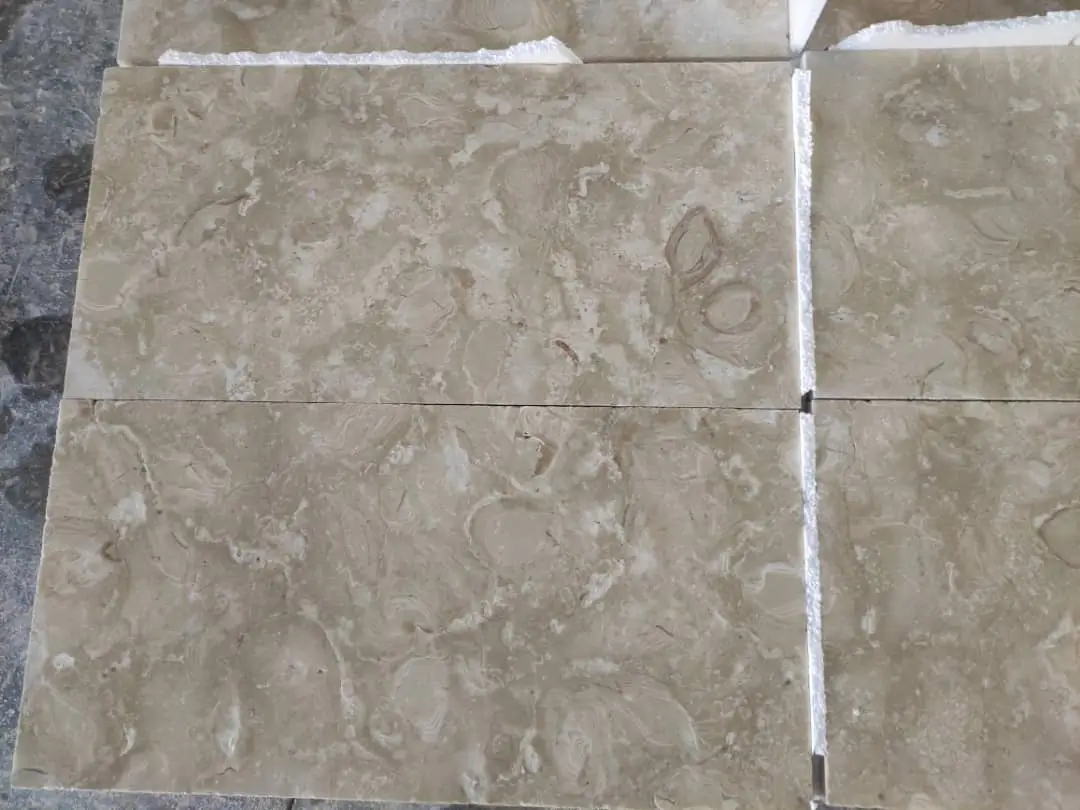
Your specification for modern stone tiles Arizona projects should address warpage tolerances explicitly. Industry standards allow ±0.25% warpage for large format tiles, but in practice, you’ll encounter material that approaches this limit. On a 48 inch tile, that translates to potential 1/8 inch center warpage. When you’re installing with 1/16 inch joints, this creates immediate lippage issues that become focal points in contemporary spaces with dramatic lighting.
Substrate Preparation Requirements
Oversized tile installation success depends entirely on substrate preparation that most contractors underestimate. You need to achieve flatness within 1/8 inch over 10 feet for large format stone tiles Tempe applications — that’s twice as stringent as standard tile requirements. When you measure existing concrete slabs in Tempe residential and commercial spaces, you’ll typically find 1/4 inch variation over 10 feet, which means every project requires substrate correction.
- You should specify self-leveling underlayment with minimum 4,500 PSI compressive strength for large format applications
- Your substrate moisture content must register below 3 pounds per 1,000 square feet per 24 hours using calcium chloride testing
- You’ll need to verify that expansion joints in the substrate align with tile layout joints to prevent stress transfer
- Deflection testing should confirm L/720 compliance before you authorize material delivery
When you work with an integrated tile and stone provider, you’ll coordinate substrate verification with material selection to ensure compatibility. The relationship between substrate preparation and material performance isn’t linear — small substrate deficiencies create disproportionate installation failures with large format tiles.
Thermal Performance Considerations
Arizona large tiles face thermal cycling that creates specific performance challenges you won’t encounter in moderate climates. Interior surfaces near south and west-facing windows in Tempe buildings can reach 95-105°F during summer afternoons, even with functioning HVAC systems. You need to account for this when you specify stone type and thickness for large format stone tiles Tempe installations.
Limestone and travertine exhibit thermal expansion coefficients around 4.8-5.3 × 10⁻⁶ per °F, while granite and quartzite range from 4.3-4.7 × 10⁻⁶ per °F. This difference seems minimal until you calculate actual movement in large format applications. A 48×60 inch limestone tile experiencing a 35°F temperature swing will expand approximately 0.038 inches — compared to 0.032 inches for granite of identical dimensions. That 0.006 inch differential accumulates across installations and determines whether joints remain stable or develop progressive lippage.
Edge Detail Specifications
Your edge treatment selection for oversized tile installation projects impacts both aesthetics and long-term performance. Rectified edges allow the minimal joint widths that Tempe contemporary design demands, but they’re more susceptible to chipping during handling and installation. You’ll see 3-5% edge damage rates with rectified large format tiles compared to 1-2% with cushioned edges. Factor this into your material order quantities — you should add 12-15% overage for rectified large format stone tiles versus the standard 10% for conventional tiles.
Installation Methodology
Modern stone tiles Arizona installations require modified thin-set application methods that differ significantly from conventional tile procedures. You can’t use standard notched trowel techniques with large format stone tiles Tempe projects — the material weight and dimensional requirements demand full-coverage adhesive application. When you specify installation procedures, you need to mandate that installers achieve 95% or greater thin-set coverage on both substrate and tile back.
The thin-set application process for large format stone tiles Tempe interiors follows specific sequencing. Your installer should apply thin-set to the substrate using a 1/2 × 1/2 inch square-notched trowel, then back-butter each tile with a 3/8 × 3/8 inch trowel in a perpendicular direction. This cross-troweling technique eliminates air pockets that create hollow spots. You’ll want to specify this explicitly in your installation drawings, because many installers default to single-direction troweling that produces only 70-80% coverage.
- You should verify that your specified thin-set has minimum 500 PSI shear strength for large format applications
- Your installation timeline must allow thin-set to cure 48-72 hours before grouting begins
- You’ll need to confirm that installers use lippage control systems rated for the tile thickness and size you’ve specified
- Movement joint spacing should occur every 12-15 feet in each direction for large format installations
Material Selection Criteria
When you evaluate stone types for large format stone tiles Tempe projects, you’re balancing aesthetic requirements against performance constraints that become more critical as tile size increases. Porosity directly affects installation success — stones with porosity above 5% require sealing before grouting, and this step becomes logistically complex with oversized tiles. You’ll find that limestone typically ranges from 4-12% porosity, travertine from 6-18%, and granite from 0.5-2%. These differences determine your installation schedule and warranty exposure.
Tempe contemporary design specifications often favor light-colored stones that enhance natural lighting and complement minimalist aesthetics. You should understand that light limestone and marble face specific challenges in Arizona installations. Surface porosity in light stones makes them susceptible to iron oxide staining when moisture migrates through the material. You’ll see this most frequently in bathroom installations where substrate moisture levels fluctuate. Your specification should mandate moisture barrier membranes under large format stone tiles in any wet area application.
Thickness Requirements
Arizona large tiles require thickness specifications that account for both structural performance and installation practicality. Industry standards recommend minimum 3/8 inch thickness for tiles up to 16×16 inches, 1/2 inch for tiles up to 24×24 inches, and 5/8 inch for larger formats. When you’re specifying modern stone tiles Arizona projects with 36×36 inch or larger tiles, you’ll want to increase this to 3/4 inch minimum. The relationship between dimensional stability and thickness isn’t proportional — it’s exponential above certain size thresholds.
Layout Planning Strategies
Your layout approach for large format stone tiles Tempe installations determines whether the finished space achieves the seamless appearance that justifies the material premium. You need to plan layouts that minimize cuts and maintain visual symmetry, because even small layout miscalculations become obvious with oversized tiles. When you’re working with 48×48 inch tiles in a 15-foot-wide room, you have essentially zero layout flexibility — you’ll end up with either a centered full tile arrangement or visible asymmetry.
Oversized tile installation layouts should start with a comprehensive field measurement verification. You can’t rely on architectural drawings alone, because as-built dimensions typically vary ±1-2 inches from design documents. When you’re working with large format stone tiles, even 1 inch dimensional variance forces layout revisions that affect material quantities and visual balance. You should conduct field verification before finalizing material orders, because changing from 36×36 to 32×32 tiles might be the difference between a successful layout and visible compromise.
- You’ll want to locate movement joints at natural transition points like doorways and material changes
- Your layout should align grout joints with architectural features like window mullions and cabinetry edges
- You need to plan tile orientation so natural veining patterns flow in consistent directions
- Warehouse stock verification should occur before you commit to specific dimensions and quantities
Grout Joint Engineering
When you specify joint widths for Tempe contemporary design projects using large format stone tiles, you’re engineering connections that must accommodate thermal movement while maintaining aesthetic continuity. The prevailing preference for minimal joints conflicts with thermal expansion reality. A 1/16 inch joint provides only 0.031 inches of total movement capacity in a 48 inch span — that’s barely adequate for the thermal expansion you’ll encounter in Tempe interiors near solar-exposed glazing.
Your grout specification for modern stone tiles Arizona applications should address both width and compound selection. Epoxy grouts work better than cement-based products in narrow joints, but they’re also more susceptible to UV yellowing. In spaces with significant natural lighting, you’ll see color shift in white and light-colored epoxy grouts within 18-24 months. You need to specify UV-stable epoxy formulations explicitly, because standard epoxy grouts aren’t formulated for high-UV environments.
Movement Joint Placement
Large format stone tiles Tempe installations require movement joints at closer intervals than conventional tile, despite the visual preference for continuous surfaces. You should locate movement joints every 12-15 feet in each direction as a baseline, then add joints at specific stress points. Interior corners, column penetrations, and floor-to-wall transitions all require movement accommodation. When you omit these joints to maintain visual continuity, you’re accepting deferred failure — tenting and delamination will occur, it’s just a question of timeline.
Color Variation Management
Arizona large tiles in natural stone exhibit color and veining variation that becomes more prominent as tile size increases. When you’re working with 12×12 inch tiles, you can blend variations across hundreds of pieces. With 48×48 inch large format stone tiles Tempe projects, you might have only 25-30 tiles in a 500-square-foot space. Each individual tile becomes a visual statement, and you can’t blend away unfavorable variations through layout manipulation.
You need to implement batch inspection protocols before installation begins. For oversized tile installation projects, you should require that all material is delivered to the site before installation starts, then conduct a complete layout dry-run. This reveals color and pattern issues while you still have time to request replacement material. Most distributors allow returns of unopened material within 30 days, but once installation begins, you own the aesthetic outcome regardless of batch variation.
Maintenance Accessibility
When you specify large format stone tiles Tempe installations, you’re committing building owners to maintenance protocols that differ from conventional tile care. The reduced grout joint quantity is often marketed as a maintenance advantage, but this oversimplifies the reality. You’ll have fewer linear feet of grout to maintain, but the grout joints you do have are more critical to structural performance. Grout degradation in a large format installation doesn’t just affect appearance — it directly compromises the edge support that prevents tile fracture.
Your maintenance specification for Tempe contemporary design projects should address sealing frequency based on stone porosity and use patterns. High-porosity limestone in commercial applications requires resealing every 12-18 months, while low-porosity granite might extend to 36-48 months. The challenge with large format stone tiles is that resealing requires complete surface access. You can’t easily mask off individual tiles for spot sealing when each tile covers 10-16 square feet.
Cost Structure Analysis
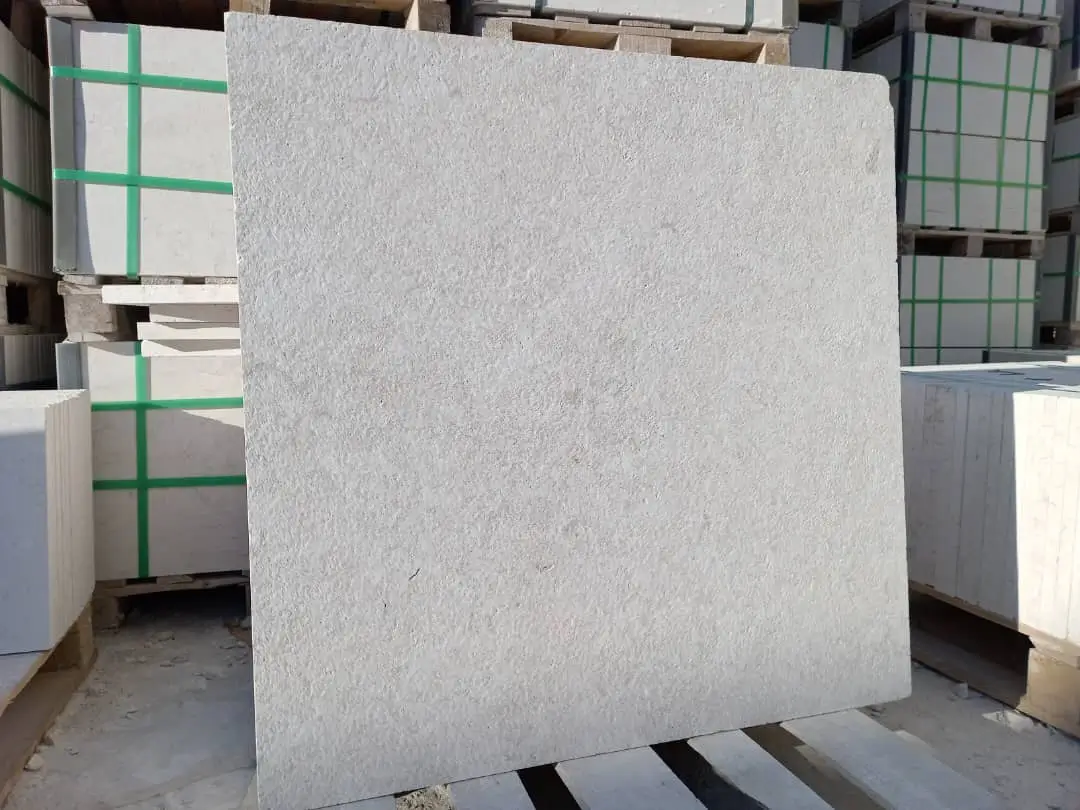
Modern stone tiles Arizona projects using large format materials carry cost structures that differ significantly from conventional tile budgets. You’ll pay premium pricing for the material itself — large format stone tiles typically cost 25-40% more per square foot than equivalent stone in standard sizes. This reflects both quarrying limitations and processing complexity. Cutting large slabs with minimal thickness variation requires specialized equipment that most fabricators don’t have in warehouse inventory.
Installation labor for large format stone tiles Tempe applications runs 40-60% higher than conventional tile. The material weight alone drives this differential — a 48×48 inch, 3/4 inch thick limestone tile weighs approximately 80-90 pounds. Moving, positioning, and adjusting these tiles requires two installers plus mechanical assistance for large projects. You should factor 8-12 square feet per hour installation rates for large format work, compared to 15-20 square feet per hour for standard tile.
Common Specification Errors
You’ll encounter recurring specification mistakes in oversized tile installation projects that create predictable failures. The most common error is specifying large format stone tiles Tempe applications without corresponding substrate specification updates. When architectural drawings show large format tiles but structural drawings reflect standard L/360 deflection criteria, you’ve created a conflict that will result in either tile failure or expensive change orders.
- Specifying thin-set adhesives rated only for standard tiles fails to address the extended open time and non-sag properties large format installations require
- Omitting lippage control system requirements leaves installation quality to installer discretion rather than specification mandate
- Failing to address movement joint locations in reflected ceiling plans creates coordination conflicts during installation
- Not specifying substrate flatness tolerances explicitly allows contractors to interpret requirements loosely
Best tile and stone companies in Arizona: How Citadel Stone Would Specify for Arizona
When you evaluate options among tile and stone companies in Arizona for your Tempe contemporary design project, you’re looking for technical guidance that addresses Arizona’s specific climate challenges. At Citadel Stone, we provide specification support for large format stone tiles Tempe applications across diverse project types. This section outlines how you would approach material selection and installation planning for three representative Arizona cities, demonstrating the climate-specific considerations that professional specifications must address.
San Tan Valley Considerations
In San Tan Valley residential projects, you would need to account for significant diurnal temperature swings that affect interior stone performance. Summer temperature variations of 30-35°F between night and day create expansion-contraction cycles that stress grout joints in large format installations. You should specify movement joints every 12 feet rather than the 15-foot spacing adequate for more temperate regions. Your material selection would favor lower-expansion stones like granite or quartzite over higher-expansion limestone when working with modern stone tiles Arizona projects in this climate zone.
Yuma Performance Factors
Yuma’s extreme heat and low humidity would require you to adjust installation timing and adhesive selection for oversized tile installation projects. When ambient temperatures exceed 105°F, thin-set open time decreases by 40-50%, creating skinning issues that compromise bond strength. You would need to specify extended-open-time modified thin-sets and mandate that large format stone tiles Tempe installations occur during morning hours when temperatures remain below 95°F. Your specification would also address accelerated curing protocols, because low humidity can cause cement-based products to cure too rapidly, reducing ultimate bond strength by 15-20%.
Avondale Commercial Applications
For Avondale commercial spaces, you would focus on material durability under higher traffic loads combined with Arizona’s thermal environment. You should specify minimum 5/8 inch thickness for Arizona large tiles in commercial applications, increasing to 3/4 inch for areas expecting 200+ daily foot traffic. Your abrasion resistance requirements would mandate stones with minimum Mohs hardness of 4.0, which eliminates softer limestones and restricts you to harder marbles, granites, and quartzites. Warehouse coordination becomes critical for commercial projects, as you’d need to verify that sufficient inventory exists to complete large installations without batch transitions that create visible color variation.
Specification Best Practices
Your specification documents for large format stone tiles Tempe projects should function as complete installation roadmaps that eliminate interpretation gaps. You need to create specifications that address substrate preparation, material characteristics, installation methodology, and acceptance criteria in measurable terms. Subjective language like “ensure proper adhesion” creates disputes — objective language like “achieve minimum 95% thin-set coverage verified by random tile removal” provides enforceable standards.
When you write technical specifications for modern stone tiles Arizona installations, you should reference relevant ASTM and ANSI standards explicitly. ASTM C1028 governs slip resistance testing, ANSI A108.19 addresses glass tile and large format tile installation, and ASTM C482 covers bond strength testing. You don’t need to reproduce these standards in your specifications, but you should reference them by number and specify which provisions apply to your project. This gives you enforceable performance criteria without writing custom testing protocols.
Performance Expectations
You should set realistic performance expectations for large format stone tiles Tempe installations based on material properties and installation quality. With proper specification and installation, you can expect 25-35 year service life in residential applications and 15-25 years in commercial settings. These ranges reflect real-world performance data from projects installed in similar climate conditions. Your maintenance requirements directly affect where projects fall within these ranges — deferred maintenance typically reduces service life by 30-40%.
The relationship between installation quality and long-term performance is exponential with large format tiles. Small installation deficiencies that might create minor aesthetic issues in conventional tile applications can cause catastrophic failure in oversized tile installation projects. A hollow spot representing 10% void space under a 12×12 inch tile might go unnoticed for years. That same void under a 48×48 inch tile creates a stress concentration that will eventually cause fracture. You need to enforce installation quality standards strictly, because you can’t remediate installation defects after grouting without complete removal and reinstallation.
Final Planning Considerations
When you’re ready to finalize your specifications for large format stone tiles Tempe contemporary design projects, you should coordinate with all project stakeholders to ensure alignment. Your structural engineer needs to verify deflection criteria, your MEP engineer needs to coordinate floor penetrations with tile layout, and your contractor needs to confirm that substrate preparation capacities match specification requirements. These coordination steps take 2-3 weeks in typical projects but prevent months of delay and dispute during construction.
Your procurement timeline for Arizona large tiles requires longer lead times than conventional materials. You should allow 6-8 weeks from order to delivery for standard large format materials, extending to 12-16 weeks for custom sizes or less-common stone types. Some suppliers maintain warehouse inventory of popular sizes in high-demand stones, but you can’t assume availability without verification. For guidance on related maintenance requirements, review Protecting limestone tiles from Arizona desert heat and dust before you finalize your specifications. We are the natural stone tile company in Arizona to call for custom-cut treads and sills.