
When you plan natural stone tile installation Phoenix projects for kitchen backsplashes, you’re stepping into a material selection process that demands more than aesthetic judgment. Your success hinges on understanding how the Sonoran Desert’s extreme thermal cycles interact with stone porosity, substrate movement, and adhesive chemistry. Most specifications miss critical details about thermal expansion coefficients and how they affect grout joint integrity in homes where interior temperatures can swing 30°F during monsoon season power outages.
Here’s what catches specifiers off-guard: natural stone tile installation Phoenix environments creates unique challenges that don’t appear in manufacturer literature. You’ll encounter substrate temperatures that reach 140°F on exterior walls during July and August, affecting thin-set curing times and bond strength development. The difference between a 15-year installation and one that develops hollow spots within 18 months often comes down to three factors most kitchen backsplash Phoenix specs overlook completely.
Material Selection for Thermal Performance
Your stone tile kitchen Arizona specification needs to address coefficient of thermal expansion matching between substrate, adhesive, stone, and grout. When you ignore this relationship, you create a four-layer system where each material expands and contracts at different rates. The result shows up as grout cracking along perimeter edges within the first heating season, particularly where backsplashes meet countertops or upper cabinet soffits.
Marble exhibits thermal expansion around 5.5 × 10⁻⁶ per °F, while granite ranges from 4.4 to 6.0 × 10⁻⁶ depending on mineral composition. Your thin-set mortar typically expands at 6.5 to 7.5 × 10⁻⁶, and standard cementitious grout falls between 6.0 and 8.0 × 10⁻⁶. When you specify materials at opposite ends of these ranges, you’re building in movement that concentrates stress at bond lines.
- You should verify that your stone selection falls within 1.5 × 10⁻⁶ of your thin-set expansion coefficient
- Your grout specification must account for joint width variations that accommodate differential movement
- You need to recognize that travertine’s porous structure provides some stress relief that denser stones don’t offer
- You’ll find that limestone varieties with higher calcite content generally match thin-set properties more closely than dolomitic types
What often surprises architects is how kitchen heat sources affect the equation. When you install natural stone tile installation Phoenix backsplashes behind cooktops, you’re adding localized heating that can elevate surface temperatures to 160-180°F during heavy cooking. This isn’t uniform heating—it creates thermal gradients across the installation that standard expansion joint spacing doesn’t address.
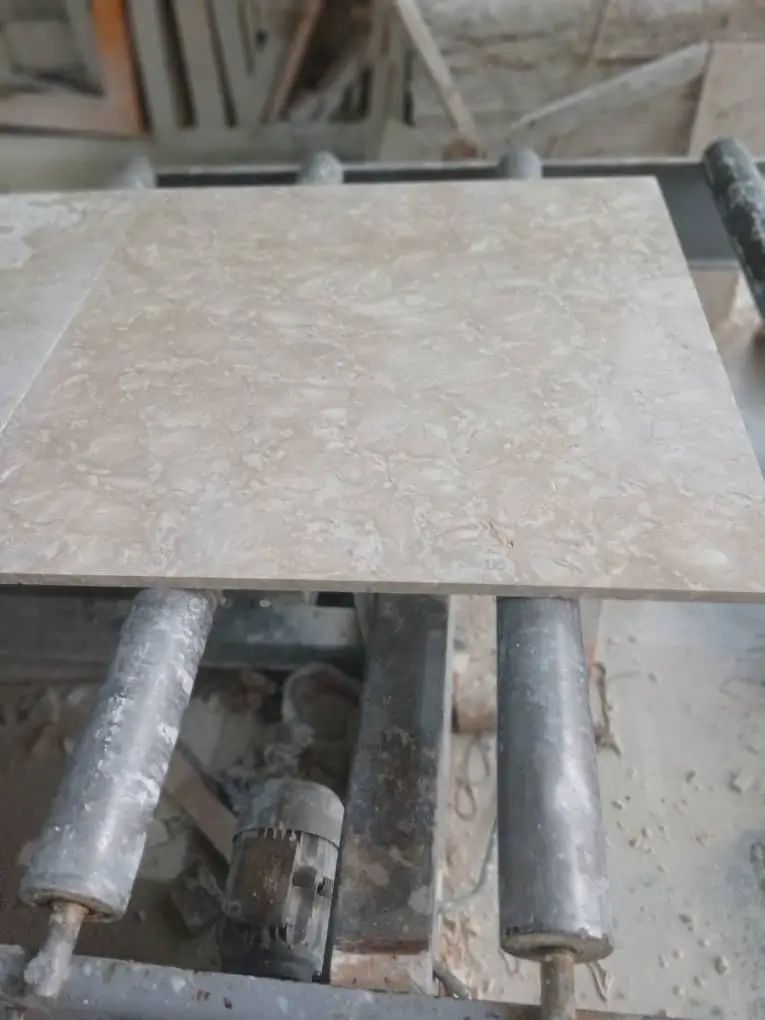
Substrate Preparation Standards
Your substrate condition determines 60% of long-term installation success, yet it’s where most Phoenix tile installation projects cut corners. You need to understand that Phoenix’s low humidity creates different drying conditions than coastal or humid climates. Drywall mud and joint compound cure faster but often retain residual moisture in deeper layers that affects thin-set bond development.
When you evaluate substrate readiness, you’re looking for three critical factors: flatness within 1/8 inch over 10 feet, surface porosity that allows mechanical bond, and moisture content below 4%. That third factor becomes tricky in kitchen backsplash Phoenix applications because the area above dishwashers and sinks experiences higher humidity than surrounding walls. You’ll need to test these zones separately, not rely on a single reading.
The paint question comes up on every remodel project. When you encounter existing painted drywall, you cannot apply thin-set directly over latex or oil-based paints—the bond fails at the paint-to-drywall interface, not at the thin-set-to-paint layer. You have three options: complete paint removal through sanding, application of a bonding primer rated for thin-set adhesion, or installation of cement backer board over the painted surface.
- You should specify cement backer board in all wet areas extending 24 inches beyond sink edges
- Your specification must require scratch coat application on smooth drywall surfaces to enhance mechanical bond
- You need to verify that wall studs are 16 inches on center maximum for 1/2-inch backer board applications
- You’ll want to confirm that corner bead installations don’t create protrusions that affect tile plane alignment
Adhesive Chemistry for Desert Conditions
Standard thin-set mortars formulated for moderate climates don’t perform optimally in natural stone tile installation Phoenix environments. You’re working with ambient humidity that regularly drops below 15% during spring months, which affects water retention in cement-based adhesives. When thin-set loses moisture too quickly, you get incomplete hydration that reduces ultimate bond strength by 30-40%.
Your adhesive selection needs to account for open time—the window between trowel application and tile placement. In Phoenix conditions with substrate temperatures above 85°F, standard thin-sets skin over in 8-12 minutes versus the 20-30 minutes you’d see in humid climates. This matters because you’re typically working with natural stone that requires back-buttering, which adds time to each tile placement.
Modified thin-sets with latex polymer additives provide better bond strength and flexibility, but they require specific curing conditions. When you use polymer-modified adhesives, you need to prevent rapid moisture loss during the first 72 hours. In stone tile kitchen Arizona installations, this means misting the installation twice daily or using curing blankets—a step that rarely appears in contractor schedules but dramatically affects outcomes.
- You should specify medium-bed mortars for tiles with warpage exceeding 1/16 inch across diagonal measurements
- Your project requires non-sag formulations for vertical applications above 4 feet in height
- You need to verify that white thin-set is specified for translucent stones where gray mortar would show through
- You’ll find that rapid-set formulations help in occupied remodels but reduce working time to 4-6 minutes in summer heat
The epoxy option deserves consideration for backsplash installation guide applications where you need maximum bond strength and water resistance. Epoxy thin-sets cost 4-5 times more than cementitious products, but they cure through chemical reaction rather than hydration, eliminating moisture-related variables. You sacrifice some working time flexibility and increase cleanup difficulty, but you gain near-permanent bonds that won’t fail from substrate movement.
Grout Joint Engineering
When you design grout joints for natural stone tile installation Phoenix backsplashes, you’re not just addressing aesthetics—you’re engineering stress relief gaps that accommodate material movement. Your joint width directly affects crack resistance, with narrower joints transferring more stress to tile edges and wider joints providing better movement accommodation but requiring more maintenance.
Industry standards recommend 1/8-inch minimum joints for rectified tiles and 3/16-inch for non-rectified edges, but these guidelines assume moderate climate conditions. In Phoenix environments where you experience 60-80°F daily temperature swings during shoulder seasons, you should increase joint widths by 25-30%. This means 3/16-inch joints for rectified stone and 1/4-inch for standard-edge tiles.
Your grout selection involves more complexity than choosing a color. Unsanded grouts work only for joints under 1/8 inch and provide less crack resistance. Sanded formulations handle wider joints and offer better structural integrity, but the sand can scratch polished stone surfaces during application. When you work with honed marble or polished granite, you need to test grout on sample tiles to verify that cleanup won’t cause surface damage.
- You should specify epoxy grouts in areas within 6 inches of sinks and cooktops where water and grease exposure is constant
- Your specification must address grout sealing schedules—cementitious grouts need resealing every 12-18 months in kitchen applications
- You need to recognize that grout color affects perceived joint width, with contrasting colors making joints appear wider
- You’ll want to verify that grout mixing follows exact water ratios—excess water reduces strength by up to 50%
Stone Porosity Performance Factors
The porosity of your selected stone determines water absorption, stain resistance, and sealing requirements. When you specify natural stone tile installation Phoenix backsplashes, you’re typically working with materials ranging from 0.5% porosity (dense granite) to 8% (travertine). This characteristic affects not just maintenance but also installation methodology and long-term performance.
Travertine’s interconnected pore structure creates challenges and benefits. You get natural texture and visual interest, but you also create pathways for moisture and staining agents. In kitchen backsplash Phoenix applications behind cooktops, you’ll see cooking oil vapor penetrate unsealed travertine within 6-12 months, creating darkened areas that can’t be cleaned with surface treatments.
Your sealing specification needs to distinguish between penetrating sealers and topical coatings. Penetrating sealers enter the stone’s pore structure and repel water and oil without changing surface appearance. Topical sealers create surface films that enhance color but can appear plastic-like and require more frequent maintenance. For most stone tile kitchen Arizona installations, you want penetrating sealers applied before grouting and again after grout cleanup.
- You should test sealer performance on sample tiles by applying cooking oil after sealing and checking penetration after 24 hours
- Your specification must require sealing of cut edges, not just face surfaces, since edges often have higher porosity
- You need to account for the fact that honed finishes absorb more than polished surfaces and require different sealer formulations
- You’ll find that some sealers darken light-colored stones, which requires testing before full application
Layout Planning and Pattern Precision
Your layout decisions affect material waste, visual balance, and installation efficiency. When you plan natural stone tile installation Phoenix backsplashes, you need to account for actual wall dimensions, tile size variations, and grout joint widths. The goal is minimizing cut tiles at visible edges while maintaining pattern symmetry around focal points like windows or range hoods.
Most kitchen backsplashes span 18-24 inches vertically between countertops and upper cabinets. When you divide this dimension by tile height plus joint width, you rarely get even numbers. You’re left with either a cut row at the top (less visible) or bottom (more visible). Professional layouts place full tiles at the countertop line and cut tiles at the upper cabinet soffit where they’re less noticeable.
Horizontal centering matters more than most realize. You should establish your centerline on the range or cooktop—the kitchen’s visual focal point. When you work outward from this centerline with full tiles, you ensure balanced cuts at inside and outside corners. This approach wastes slightly more material than starting at corners, but the visual result justifies the cost.
- You need to dry-lay at least three rows before beginning installation to verify pattern alignment and cut locations
- Your specification should address tile size variation tolerance—natural stone can vary ±1/8 inch even in rectified products
- You should plan layout to avoid narrow slivers less than 2 inches wide at corners, which break easily during cutting and installation
- You’ll want to specify that visible outside corners receive full tiles, not cuts, even if this means adjusting the overall layout
Cutting Techniques and Edge Quality
When you cut natural stone for backsplash installation guide projects, you’re exposing fresh stone that has different porosity and appearance than factory edges. Your cutting method affects edge quality, dimensional accuracy, and how much time you spend on each piece. Wet saws with diamond blades are standard, but blade selection makes the difference between clean cuts and chipped edges.
Continuous rim blades produce the smoothest cuts with minimal chipping, but they cut slowly and generate significant heat. Segmented blades cut faster and run cooler but create more edge roughness. For most stone tile kitchen Arizona installations, you want segmented blades for straight cuts and continuous rim blades for detailed work around outlets and corners.
The finishing step that many installers skip is edge polishing. When you cut through polished stone, you create a rough edge that contrasts with factory-polished faces. At outside corners and along exposed edges, these rough cuts are visible and collect dirt. You should specify that all visible cut edges receive polishing with progressively finer diamond pads, matching the factory finish as closely as possible.
- You need to verify that your installer uses proper feed rates—forcing cuts causes blade deflection and tapered edges
- Your specification should require blade changes when cutting speed decreases noticeably, typically after 150-200 linear feet
- You should confirm that outlet and switch plate cutouts maintain 1/16-inch minimum clearance around boxes for grout application
- You’ll find that scoring face surfaces before cutting reduces chipping on delicate stones like marble
Installation Sequence Methodology
Your installation sequence affects efficiency and quality outcomes. When you approach natural stone tile installation Phoenix backsplashes, you need to coordinate substrate preparation, material staging, cutting operations, and setting in a logical flow that minimizes delays and reduces errors. The common mistake is setting tiles before completing layout verification and test fits.
Professional installations begin with story poles—vertical guides marked with tile courses and joint widths that show exactly where each row falls. When you create story poles for both horizontal and vertical planes, you identify problem areas before spreading thin-set. This 30-minute investment prevents situations where you discover layout problems three rows into installation when thin-set is already setting.
Material staging deserves more attention than it typically receives. You should open at least six cartons and blend tiles during installation to distribute natural color variation evenly. When you pull tiles sequentially from single cartons, you risk creating bands of lighter or darker stone that become obvious after grouting. This blending process is especially important with travertine and limestone that show significant variation between pieces.
- You need to maintain consistent thin-set trowel notch direction within each tile placement for even coverage
- Your specification must require minimum 95% thin-set coverage verified through periodic lift checks during installation
- You should establish that corner installations begin with back-buttered tiles to ensure full adhesive contact at edges
- You’ll want to verify that spacers are removed before thin-set initial set, typically within 45-60 minutes of placement
The leveling system question comes up frequently. When you work with large-format tiles or stones with significant warpage, leveling clips help achieve flat installations by preventing tile edges from settling at different heights. These systems add cost and installation time but dramatically improve outcomes when you’re using tiles larger than 12×12 inches or stone with warpage exceeding 1/16 inch.
Expansion Joint Requirements
When you design natural stone tile installation Phoenix backsplashes, you must incorporate expansion joints at specific locations to accommodate building movement and material expansion. Your installation will experience stress from temperature changes, substrate deflection, and long-term settling. Without proper expansion joints, this stress concentrates at grout lines, causing cracks.
Industry standards require expansion joints at transitions between different materials, at inside corners, along perimeter edges where tile meets cabinets or countertops, and at penetrations through the tile field. In Phoenix tile installation projects, you should add expansion joints every 16 feet in continuous runs, though most backsplashes don’t reach this length. The critical locations are countertop interfaces and upper cabinet soffits.
Your expansion joint material cannot be standard grout. You need flexible sealants that accommodate movement without cracking—typically silicone or urethane caulks color-matched to grout. These materials compress and expand with building movement while maintaining weather-tight seals. The common mistake is using standard grout at these locations, which cracks within the first year.
- You should specify that expansion joints maintain minimum 1/4-inch width to allow adequate movement
- Your specification must address backing rod installation in joints deeper than 1/4 inch to control sealant depth
- You need to verify that installers don’t place thin-set in expansion joint locations, which defeats their purpose
- You’ll find that tool-finished sealant joints create cleaner appearances than untooled applications
Electrical Fixture Integration
Your backsplash design must integrate with electrical outlets, switches, and under-cabinet lighting. When you approach natural stone tile installation Phoenix kitchens, you’re typically working around 4-8 electrical boxes that need precise cutouts. The relationship between tile pattern, grout joints, and box locations determines whether your installation looks planned or haphazard.
Professional layouts adjust tile placement so that outlet boxes fall at grout joints rather than in tile centers when possible. This approach reduces cutting complexity and creates cleaner appearances. When you can’t avoid cutting through tiles, you should center the box within the tile or position it at predictable locations like quarter points. Random off-center placements look accidental.
The cutting technique for electrical boxes requires different tools than straight cuts. You need diamond hole saws for circular penetrations or careful scoring and nibbling for rectangular boxes. When you rush these cuts, you create oversized openings that look crude even after plate installation. Your specification should require maximum 1/16-inch clearance around boxes—just enough for grout but not so much that plates don’t cover gaps.
- You need to verify that electrical boxes are set at proper depth so wall plates sit flat against tile surfaces
- Your specification should confirm that box extenders are installed before tiling when boxes sit too deep
- You should establish that power is shut off during installation to prevent shock hazards from wet cutting near energized circuits
- You’ll want to specify that outlet and switch plates are left off until final grout cleanup prevents scratching finished surfaces
Citadel Stone – Leading Stone Tile Suppliers in Arizona Specification Guidance
When you evaluate options among stone tile suppliers in Arizona for natural stone tile installation Phoenix backsplashes, you’re assessing material quality, technical support, and supply reliability. At Citadel Stone, we provide comprehensive specification guidance for hypothetical projects across Arizona’s varied climate zones. This section outlines how you would approach material selection and installation planning for three representative cities, demonstrating the climate-specific considerations that separate successful installations from premature failures.
Your specification process for Arizona projects requires understanding how regional temperature extremes, humidity variations, and soil conditions affect material performance. The following city-specific scenarios illustrate technical factors you would address when planning kitchen backsplash Phoenix installations in diverse Arizona locations. These hypothetical examples demonstrate professional specification methodology rather than completed project documentation.
San Tan Valley Applications
In San Tan Valley installations, you would account for temperature swings reaching 50°F between day and night during spring and fall months. Your material selection would prioritize stones with moderate thermal mass that don’t store excessive heat. You’d specify lighter-colored limestone or cream travertine that reflects rather than absorbs solar radiation penetrating through windows. When you plan adhesive schedules, you would avoid installation during June through August when ambient temperatures make thin-set curing unpredictable. Your expansion joint spacing would decrease by 15% compared to moderate climate recommendations to accommodate the thermal cycling that affects substrate movement in this rapidly developing area.
Yuma Heat Considerations
Your Yuma project specifications would address extreme heat that regularly exceeds 115°F from June through September. You’d select dense granites or quartzites with minimal porosity to resist the thermal stress that causes spalling in softer stones. When you specify adhesives, you would require modified thin-sets with extended open times formulated for high-temperature applications. Your sealing specifications would call for solvent-based penetrating sealers that don’t soften in extreme heat like some water-based products. You would plan installation schedules for October through April when temperature moderation allows proper thin-set curing and reduces installer heat stress that affects workmanship quality.
Avondale Urban Environment
In Avondale applications, you would consider urban heat island effects that elevate ambient temperatures 8-12°F above surrounding desert areas. Your stone selection would favor materials with proven performance in sustained high-heat environments, such as honed granite or textured limestone. When you specify installation methodology, you would require afternoon installations to be halted when substrate temperatures exceed 100°F, which affects thin-set working characteristics. You’d incorporate enhanced ventilation requirements during installation to manage indoor humidity from water-based adhesives in air-conditioned spaces. Your grout specifications would call for polymer-modified formulations that maintain flexibility under the thermal cycling common in west valley locations where daytime heating and nighttime air conditioning create continuous expansion and contraction cycles.
Maintenance Protocol Development
Your maintenance specifications determine whether natural stone tile installation Phoenix backsplashes maintain their appearance for 15-20 years or deteriorate within 5-7 years. When you develop maintenance protocols, you’re addressing three distinct categories: daily cleaning, periodic sealing, and damage repair. Each category requires specific products and procedures that preserve stone integrity without causing surface degradation.
Daily cleaning involves more nuance than most homeowners expect. You need pH-neutral cleaners specifically formulated for natural stone—standard kitchen cleaners often contain acids or alkalis that etch marble, dissolve limestone, or strip sealers. When you specify cleaning products, you should recommend those with pH between 7 and 10 that won’t affect stone composition or grout integrity.
- You should establish that acidic cleaners including vinegar, lemon juice, and most glass cleaners are prohibited on marble and limestone
- Your maintenance guide must specify that abrasive scrubbing pads damage polished surfaces and should be replaced with soft cloths
- You need to recommend that cooking grease be removed promptly, as petroleum-based residues penetrate stone pores within hours
- You’ll want to specify that hard water deposits be addressed with stone-safe descaling products rather than acidic bathroom cleaners
Sealer reapplication schedules depend on stone porosity, sealer type, and exposure conditions. When you work with dense granites, you might specify resealing every 3-5 years. Porous travertine in heavy-use areas may require annual resealing. The water-drop test provides a simple verification method—when water no longer beads on the surface and begins absorbing within 5-10 minutes, resealing is needed.
Common Installation Failures and Prevention
When you analyze failed natural stone tile installation Phoenix backsplashes, you find that 80% of problems trace to five specific mistakes that professional specifications should explicitly prohibit. Understanding these failure modes allows you to write specifications that prevent them rather than trying to diagnose and repair after the fact.
Hollow tiles represent the most common failure. When you hear tapping across the installation and detect hollow-sounding areas, you’re identifying locations where thin-set didn’t achieve adequate coverage. This occurs from insufficient adhesive application, improper trowel notch size, or failure to back-butter tiles. You prevent this through specifications requiring minimum 95% coverage verified through periodic lift checks during installation.
Grout cracking appears in predictable patterns. When you see cracks running parallel to countertops or following upper cabinet lines, you’re seeing expansion joint failures. The installation transferred stress that should have been absorbed by flexible sealant into rigid grout that cracked under movement. You prevent this by specifying expansion joints at all plane changes and material transitions.
- You should specify that lippage—tile edges at different heights—not exceed 1/32 inch between adjacent tiles
- Your specification must prohibit installation when substrate moisture content exceeds 4% or ambient humidity rises above 85%
- You need to require that tiles be installed within thin-set open time, verified by touch-testing for tackiness before placement
- You’ll want to establish minimum 72-hour cure times before grouting and 14-day cure before allowing water exposure
Efflorescence appears as white crystalline deposits on stone surfaces, particularly on limestone and travertine. When you identify this issue, you’re seeing soluble salts migrating through stone pores and crystallizing on surfaces as moisture evaporates. You prevent efflorescence through proper substrate moisture management, adequate thin-set curing, and initial sealer application that blocks salt migration pathways.
Professional Specification Elements
Your written specifications serve as the contractual basis for installation quality. When you develop comprehensive specifications for natural stone tile installation Phoenix projects, you need to address material standards, installation methodology, workmanship criteria, and acceptance testing. Vague specifications create disputes and allow substandard work to meet technical compliance while failing functional requirements.
Material specifications should reference industry standards while adding project-specific requirements. When you specify stone, you might reference ASTM C503 for marble dimension stone but add requirements for minimum Mohs hardness, maximum porosity, or specific absorption coefficients. Generic references to standards without project-specific criteria allow suppliers to provide compliant but unsuitable materials.
Installation methodology specifications need to address substrate preparation standards, adhesive mixing ratios, trowel notch sizes, coverage requirements, and curing conditions. When you write these sections, you’re creating enforceable quality metrics rather than general guidelines. Statements like “follow manufacturer recommendations” shift responsibility without establishing clear standards. Better specifications state “achieve minimum 95% thin-set coverage verified through pull tests at frequency of one test per 100 square feet.”
- You should specify that mock-up installations be completed and approved before proceeding with full installation work
- Your specification must establish that variations in stone color and veining are inherent characteristics, defining acceptable range through approved samples
- You need to require that installer qualifications include minimum three years’ experience with natural stone and provide reference projects for verification
- You’ll want to specify warranty terms that address both material defects and installation workmanship with clear delineation of responsibilities
Cost Analysis and Value Engineering
When you evaluate costs for natural stone tile installation Phoenix backsplashes, you need to analyze both initial installation expenses and long-term ownership costs. Your value engineering process should compare material options based on total cost of ownership rather than just material purchase price. A stone that costs 40% more initially but requires half the maintenance over 20 years often represents better value.
Material costs vary significantly across stone types. You might pay $8-12 per square foot for standard travertine, $15-25 for marble, or $25-40 for exotic granites. These prices reflect quarry location, material rarity, processing complexity, and transportation costs. When you specify imported stones, you should account for lead times from warehouse that can extend 6-8 weeks versus domestic materials available within days.
Installation labor typically equals or exceeds material costs. When you budget projects, you should estimate $12-18 per square foot for professional installation of standard tiles and $18-28 for complex patterns, large formats, or difficult access conditions. Your budget needs to include substrate preparation, which can add $4-8 per square foot when extensive repairs or backer board installation is required.
- You should account for waste factors of 10-15% for standard installations and 20-25% for diagonal patterns or complex layouts
- Your budget must include sealer costs of $50-100 per backsplash for initial application and periodic resealing supplies
- You need to consider that removal of existing backsplashes adds $3-6 per square foot to project costs
- You’ll find that specialty trim pieces and edge profiles can add 15-20% to material costs compared to field tile pricing
Final Considerations
Your professional approach to natural stone tile installation Phoenix backsplashes requires balancing aesthetic goals with technical performance requirements. When you develop comprehensive specifications that address climate-specific factors, material properties, installation methodology, and long-term maintenance, you create conditions for installations that perform reliably for decades. The difference between adequate backsplashes and exceptional ones lies in the details that separate generic specifications from climate-optimized, performance-focused technical documents.
Successful projects start with material selection that accounts for thermal expansion compatibility, continues through substrate preparation that ensures proper adhesive bonding, and extends through installation practices that prevent common failure modes. Your specification process should treat stone tile kitchen Arizona projects as engineered systems rather than decorative applications. For comprehensive guidance on selecting premium stone tile dealer in Phoenix materials optimized for desert performance, and additional insights on protecting stone installations in varying climate conditions, review Protecting travertine pavers from freeze-thaw damage in Flagstaff before you finalize project specifications. We are consistently rated highly among tile and stone companies in Arizona for our reliable delivery service.