
When you specify red travertine accents Laveen for your southwestern-themed projects, you’re working with a material that delivers both authentic regional character and measurable performance advantages in desert climates. The terra cotta tones inherent in quality red travertine align naturally with Arizona cultural aesthetics while offering thermal properties that respond predictably to the Valley’s extreme temperature swings. Your challenge isn’t just selecting attractive stone—it’s understanding how pigmentation depth, porosity variations, and cut orientation affect long-term appearance retention in high-UV environments.
Here’s what most specifications miss: red travertine accents Laveen installations perform differently than monochromatic fields because accent placement creates microclimates at material transitions. You’ll see differential thermal expansion at color boundaries, particularly when pairing deeper terra cotta tones with lighter travertine. The temperature differential between a red accent piece and adjacent cream travertine can reach 18-22°F during peak solar exposure, which translates to expansion coefficient mismatches you need to address in joint design.
Understanding Southwestern Color Authenticity
Your material selection needs to account for what makes southwestern paver colors Arizona-appropriate beyond simple aesthetics. Authentic terra cotta tones in travertine result from iron oxide concentrations ranging from 2.8% to 4.7% by mineral composition. This isn’t arbitrary—lower concentrations produce salmon tints that fade noticeably within 36-48 months under Arizona’s UV index of 11+, while concentrations above 5% can indicate structural weaknesses where iron deposits compromise calcium carbonate matrix integrity.
You should verify color penetration depth before committing to red travertine accents Laveen specifications. Surface-only coloration (penetrating less than 3mm) will reveal lighter substrate as edges chip or surfaces wear. Professional-grade material exhibits color consistency through the full thickness, which you can verify by examining cut edges and broken samples. When you’re evaluating samples, request pieces from multiple quarry blocks—color variation between blocks often exceeds variation within individual blocks by 40-60%.
The relationship between porosity and color intensity affects your long-term maintenance obligations. Red travertine typically exhibits 6-9% porosity compared to 4-7% for cream varieties. This increased porosity serves dual purposes: it accommodates the iron-rich mineral inclusions that create terra cotta tones, and it provides beneficial thermal mass properties. However, you’ll need to account for how this porosity interacts with Laveen regional design preferences for low-water landscaping—efflorescence appears more visibly on darker backgrounds.
Thermal Performance Considerations
When you design accent patterns using red travertine accents Laveen, thermal behavior becomes a specification issue, not just an aesthetic one. Darker terra cotta tones absorb 65-72% of incident solar radiation compared to 35-42% for cream travertine. This absorption differential creates surface temperature variations that affect everything from barefoot comfort around pools to expansion joint spacing in driveways.
Your installation details need to address three thermal realities. First, red accent pieces reach peak temperature 15-20 minutes earlier than surrounding lighter material during morning heating cycles. Second, they retain heat 25-30 minutes longer during evening cooling. Third, this thermal lag creates stress concentrations at accent boundaries where materials expand and contract at different rates. You should increase joint width by 1/16″ to 3/32″ at color transition boundaries compared to monochromatic field spacing.
- You need to specify joint compounds with elongation capacity exceeding 35% for accent boundaries
- Your base preparation should include 3-4″ of angular aggregate beneath accent areas to accommodate differential movement
- You should orient longer accent pieces perpendicular to primary sun exposure to minimize cumulative expansion along length
- Your sealer selection must account for the fact that darker tones show sealer failures more visibly
The thermal mass properties of red travertine accents Laveen work favorably in properly designed applications. Accent bands along north-facing walls can reduce reflected heat by 8-12% compared to lighter materials by absorbing rather than reflecting afternoon sun. However, you’ll want to avoid concentrated accent areas in high-traffic barefoot zones—surface temperatures on red travertine can exceed 145°F during July and August peak hours, compared to 125-130°F on cream varieties.
Accent Pattern Specifications
Your pattern design determines whether red travertine accents Laveen enhance or compromise installation longevity. Random scattered accents create dozens of individual stress points where thermal differentials concentrate. Organized accent bands—borders, inlays, or geometric fields—consolidate expansion management into predictable zones you can detail appropriately. The difference in 10-year performance is measurable: random patterns show joint degradation at 40-50% more locations than organized accent zones.
When you lay out accent patterns, you should consider piece size relationships carefully. Mixing small red accent tiles (6″x6″ or 8″x8″) with large-format field pavers (16″x24″ or 24″x24″) creates challenging installation conditions. The smaller pieces experience full thermal cycling while larger pieces develop temperature gradients across their surface. This size mismatch leads to lippage issues as smaller accent pieces “rock” in their setting bed while larger pieces remain stable.
Your specifications should address southwestern paver colors Arizona professionals have validated through extended field performance. Terra cotta accent tones that complement rather than contrast sharply with field colors minimize visual impact of inevitable weathering. A red accent that starts 4-5 shades darker than the field will show more obvious fading than an accent 2-3 shades darker. You’re managing expectations as much as specifying materials—clients need to understand that high-contrast accents become medium-contrast features over 5-7 years.
Porosity and Sealing Protocols
The increased porosity in red travertine accents Laveen demands different sealing approaches than standard cream travertine. You can’t apply the same sealer at the same rate across mixed-color installations and expect uniform results. Red travertine typically absorbs 18-25% more sealer per square foot than lighter varieties due to both higher porosity and increased surface texture that often accompanies darker material.
Your sealing specification should separate accent treatment from field treatment. When you apply penetrating sealers, red accents require a second coat at 60-70% the coverage rate of the first coat to achieve pore saturation equivalent to lighter material receiving single coats. Skip this adjustment and you’ll see differential weathering—accents will show water spotting and efflorescence while sealed field areas remain clean.
- You should test sealer absorption on sample pieces before full application
- Your resealing schedule needs 18-24 month intervals for red accents versus 24-36 months for cream field areas
- You need to specify sealers with UV inhibitors rated for 2000+ hours in QUV testing
- Your application timing should target substrate temperatures between 65-85°F
The porosity characteristics that create vulnerability also provide opportunities. When you’re designing for our travertine stone supply facility, you can leverage the thermal mass benefits of higher-porosity red accents in thermal break applications. Accent bands positioned strategically can interrupt heat transfer pathways in hardscape adjacent to buildings, reducing cooling loads measurably in properly designed installations.
Installation Base Requirements
Your base preparation for red travertine accents Laveen needs adjustments from standard travertine installations. The thermal cycling differential creates movement that standard 4-6″ aggregate bases don’t always accommodate adequately. You should increase base depth to 6-8″ in accent areas, using angular crushed aggregate with compaction to 96-98% modified Proctor density rather than the 92-95% acceptable for monochromatic fields.
When you transition from field to accent areas, your base composition should remain consistent even though surface materials change. Creating base thickness transitions beneath accent boundaries introduces weak planes where settling occurs. Instead, maintain consistent base depth across the entire installation, adjusting only bedding layer composition where needed to accommodate different setting requirements for varied thicknesses.
The bedding layer deserves specific attention in red travertine accents Laveen applications. You’ll often work with accent pieces from different production runs than field material, which means thickness variations can range ±5mm compared to ±2mm within single production lots. Your bedding layer needs sufficient depth to accommodate this variation—you should plan for 1.5-2″ of bedding sand or setting mortar rather than the 1″ minimum used in calibrated installations.
Edge Detail Coordination
Your edge details determine whether red travertine accents Laveen installations maintain geometric integrity or develop progressive misalignment. Accent borders along hardscape perimeters experience the full force of thermal expansion with no adjacent field to provide restraint. An 8″ red border along a 40-foot driveway edge will expand approximately 0.18-0.22″ more than the adjacent cream field during peak temperature cycling.
You need to provide relief for this differential movement, which means edge restraints can’t rigidly lock accent pieces. Soldier course borders set in concrete haunches will crack the concrete or spall the stone edges—guaranteed within 24-36 months. Instead, you should specify edge restraints mechanically anchored to stable substrate but separated from accent pieces by 1/4″ compressible joint material that accommodates movement while maintaining alignment.
- Your edge details should include vertical concrete keys extending below freeze depth where applicable
- You need to specify non-rigid connection between edge restraints and accent pieces
- Your joint material at edges should be closed-cell foam that won’t saturate and lose compressibility
- You should detail weep paths that allow moisture to escape from beneath edge pieces
Corner details present amplified challenges in red travertine accents Laveen specifications. Outside corners experience biaxial expansion where movement compounds from two directions. You’ll need to increase joint width to 3/8″-1/2″ at corners compared to 1/4″ along straight runs. This wider joint often surprises clients—you should detail these conditions clearly in drawings and discuss aesthetic implications during material selection.
UV Resistance and Fading
When you evaluate long-term appearance retention for red travertine accents Laveen, you’re fighting Arizona’s relentless UV exposure. The same iron oxide compounds that create appealing terra cotta tones are photoreactive—UV radiation progressively oxidizes Fe2+ (ferrous) to Fe3+ (ferric) states, shifting colors from warm reds toward cooler rust tones over time.
Your expectations should be realistic: all natural stone fades under UV exposure, but red travertine shows this fading more visibly than cream varieties because the color change is more dramatic. You’ll typically see 15-25% color shift in red accents over the first 36-48 months, then stabilization at a lighter, slightly more orange tone. This isn’t material failure—it’s natural weathering that clients need to understand during selection.
You can slow but not eliminate UV-driven color changes. Sealers with UV inhibitors reduce fading rates by approximately 30-40% compared to unsealed stone. However, you should understand that UV inhibitors in sealers degrade faster than the sealers themselves—the protective benefit diminishes significantly after 18-24 months even when the sealer still provides water resistance. Your maintenance specifications need to address this reality with appropriate resealing intervals.
Joint Spacing Calculations
Your joint spacing specifications for red travertine accents Laveen require calculations that account for differential thermal expansion. Standard 1/4″ joints at 12-16″ spacing work adequately for monochromatic fields, but accent installations need adjusted spacing that addresses the thermal performance difference between materials.
When you calculate joint requirements, you should consider both field and accent expansion separately, then provide joints that accommodate the greater movement. Red travertine with thermal expansion coefficient around 5.8 × 10⁻⁶ per °F expands approximately 0.035″ per linear foot across a 100°F temperature swing. Cream travertine at 5.2 × 10⁻⁶ per °F expands 0.031″ per foot across the same range. This 0.004″ difference per foot compounds across installation dimensions—a 20-foot accent band needs 0.08″ additional expansion capacity versus equivalent cream material.
- You should increase joint width by 1/16″ at accent boundaries compared to field joints
- Your joint spacing should decrease to 10-12 feet in accent areas versus 15 feet in fields
- You need to orient joints perpendicular to longest accent dimensions where possible
- Your joint material must maintain elasticity across 140-180°F temperature range
The joint compound selection affects performance as much as spacing. You’ll need polymeric sand with silica content below 60% to avoid cement-like hardening that prevents movement. Higher-quality polymeric products incorporate HDPE fibers that maintain joint integrity while permitting the 8-12% compression and expansion cycles your joints will experience seasonally.
Maintenance Expectations
Your maintenance specifications for red travertine accents Laveen should establish realistic service expectations. The combination of higher porosity, darker color showing stains more visibly, and UV-driven color evolution means red accents require more intensive maintenance than cream fields. You should communicate this clearly during material selection—clients choosing red accents based solely on initial appearance often experience disappointment when maintenance realities emerge.
When you develop maintenance protocols, you’ll need different schedules for accents versus fields. Red travertine benefits from quarterly cleaning with pH-neutral stone soap compared to semi-annual cleaning for lighter materials. The cleaning frequency isn’t about the red material being “dirtier”—it’s about darker backgrounds showing atmospheric dust, pollen, and organic staining more visibly at lower concentrations.
Your resealing specifications should account for accelerated sealer degradation on red travertine accents Laveen. The elevated surface temperatures (15-20°F hotter than adjacent cream stone) increase sealer cure rates but also accelerate UV and thermal degradation. You should specify resealing at 18-month intervals for red accents while maintaining 30-36 month intervals for cream fields. This differential maintenance creates logistics challenges—clients resist paying for professional resealing when 70% of the installation doesn’t yet need it.
Warehouse and Logistics
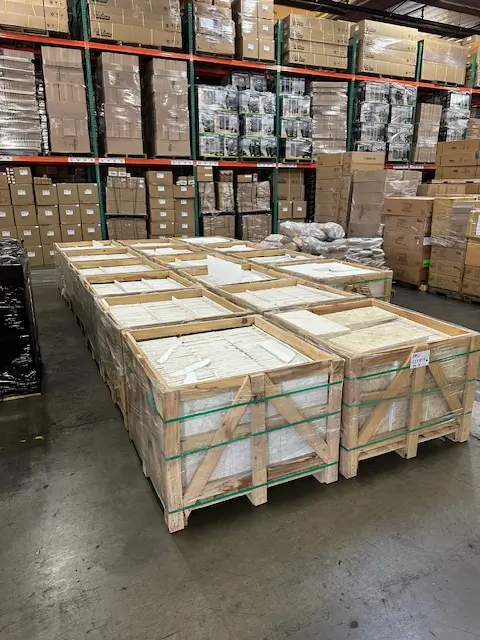
When you coordinate material procurement for projects incorporating red travertine accents Laveen, you need to understand that accent materials often ship from different warehouse locations than field pavers. Red travertine typically represents 8-12% of distributor inventory compared to 40-50% for cream varieties, which means stock depth varies significantly. You should verify warehouse availability for both field and accent materials before committing to project schedules.
Your ordering timeline needs to account for the possibility that accent and field materials may arrive on different trucks from separate warehouse facilities. This creates job site staging complications—you’ll need secure storage for whichever material arrives first, and installation can’t proceed until both are on site. Plan for 2-3 week separation between deliveries when warehouse inventory requires sourcing accent materials from secondary facilities.
The truck access requirements for mixed material deliveries often surprise contractors. When accent and field pavers ship separately, you’re coordinating two delivery windows instead of one. Your site logistics plan should address staging areas that keep materials separated by type, protected from weather, and accessible to installation crews without requiring multiple handling operations that increase breakage risk.
Cost Benefit Analysis
Your budget planning for red travertine accents Laveen needs to account for premium pricing and increased installation complexity. Red travertine typically costs 25-40% more per square foot than cream varieties due to lower quarry yields and higher processing rejection rates. When accents represent 15-20% of installation area, this premium adds 4-6% to overall material costs—a manageable increase that clients can usually absorb.
However, you should factor installation cost increases that often exceed material premiums. The additional detailing requirements—adjusted joint spacing, differential base preparation, separate sealing procedures—can add 15-20% to labor costs for the accent portions. Across a whole project, this translates to 3-4% total cost increase, but it catches clients off-guard when they’ve budgeted only for material premiums.
When you present cost comparisons, you should quantify the aesthetic value proposition clearly. Red travertine accents provide visual interest that monochromatic installations lack, potentially increasing property values by amounts that justify the premium. In Laveen regional design contexts where southwestern character commands market premiums, well-executed accent work can return 2-3x its cost in resale value.
Travertine Pavers Wholesale in Arizona: Citadel Specifications
When you consider travertine pavers wholesale in Arizona through Citadel Stone, you’re evaluating materials specifically selected for southwestern performance characteristics. At Citadel Stone, we maintain inventory of red travertine accents that meet stringent porosity, compression strength, and color consistency standards appropriate for Arizona’s climate extremes. This section outlines how you would approach specification decisions for three representative Arizona cities, providing hypothetical guidance for regional applications.
Chandler Applications
In Chandler’s planned communities where southwestern paver colors Arizona homeowners prefer align with HOA design guidelines, you would specify red travertine accents Laveen for entry monuments and community gathering spaces. Your material selection would need to address Chandler’s clay-heavy soils that create base movement challenges. You should recommend 8″ aggregate bases with geotextile separation layers to prevent clay intrusion. The typical Chandler installation would incorporate 12-16″ red accent borders framing 24″x24″ cream field pavers, with joint spacing at 12 feet to accommodate the thermal expansion differential between materials in this heat island environment where summer hardscape temperatures regularly exceed baseline desert readings by 8-12°F.
Tempe Considerations
Your Tempe specifications would address the unique microclimate created by urban density and ASU campus heat island effects. You would recommend limiting red travertine accents Laveen to shaded courtyards and north-facing applications where thermal performance challenges moderate. In these protected environments, you could specify more aggressive accent ratios—up to 30% red material—without the barefoot comfort concerns that limit accent use in full-sun pool decks. Tempe’s municipal water chemistry, with higher mineral content than surrounding communities, would require you to specify more frequent sealing intervals to prevent efflorescence that shows dramatically on terra cotta tones. Your typical recommendation would include initial sealing at installation, followed by resealing at 12-month intervals for the first 36 months as minerals leach from new concrete base layers.
Surprise Requirements
When you specify for Surprise’s master-planned communities where Arizona cultural aesthetics drive design review approvals, you would leverage red travertine accents Laveen to create visual connections between hardscape and the warm earth tones prevalent in regional architecture. Your specifications would need to account for Surprise’s northwest Valley location where afternoon sun exposure intensifies UV degradation. You should recommend sealers with UV inhibitor concentrations 15-20% higher than products suitable for more sheltered locations. The warehouse serving Surprise typically maintains stock of accent materials in 8″x16″ and 12″x12″ formats that coordinate with the 16″x24″ field pavers common in this market. Your delivery coordination would allow 3-4 week lead times during peak construction season to ensure material availability from preferred production lots that minimize color variation across accent pieces.
Final Considerations
Your successful specification of red travertine accents Laveen depends on managing client expectations as carefully as technical details. The material delivers authentic southwestern character and measurable thermal mass benefits, but requires maintenance commitment and weathering acceptance that some clients resist. You should qualify prospects carefully, ensuring they understand that red accents evolve aesthetically over time—this evolution reflects natural stone behavior, not material deficiency.
When you finalize specifications, you’ll achieve optimal results by thinking systematically about how accent placement, pattern design, joint detailing, and maintenance protocols interact. The projects that succeed long-term are those where you’ve addressed differential thermal expansion proactively, specified appropriate sealing schedules, and prepared clients for the reality that high-contrast accents become medium-contrast features as UV exposure moderates color intensity. For structural performance verification across various applications, review Structural load-bearing limits of travertine pavers for driveways before you finalize installation drawings. We stand out from other travertine tile suppliers in Arizona by offering exclusive large-format cuts and custom finishes.