
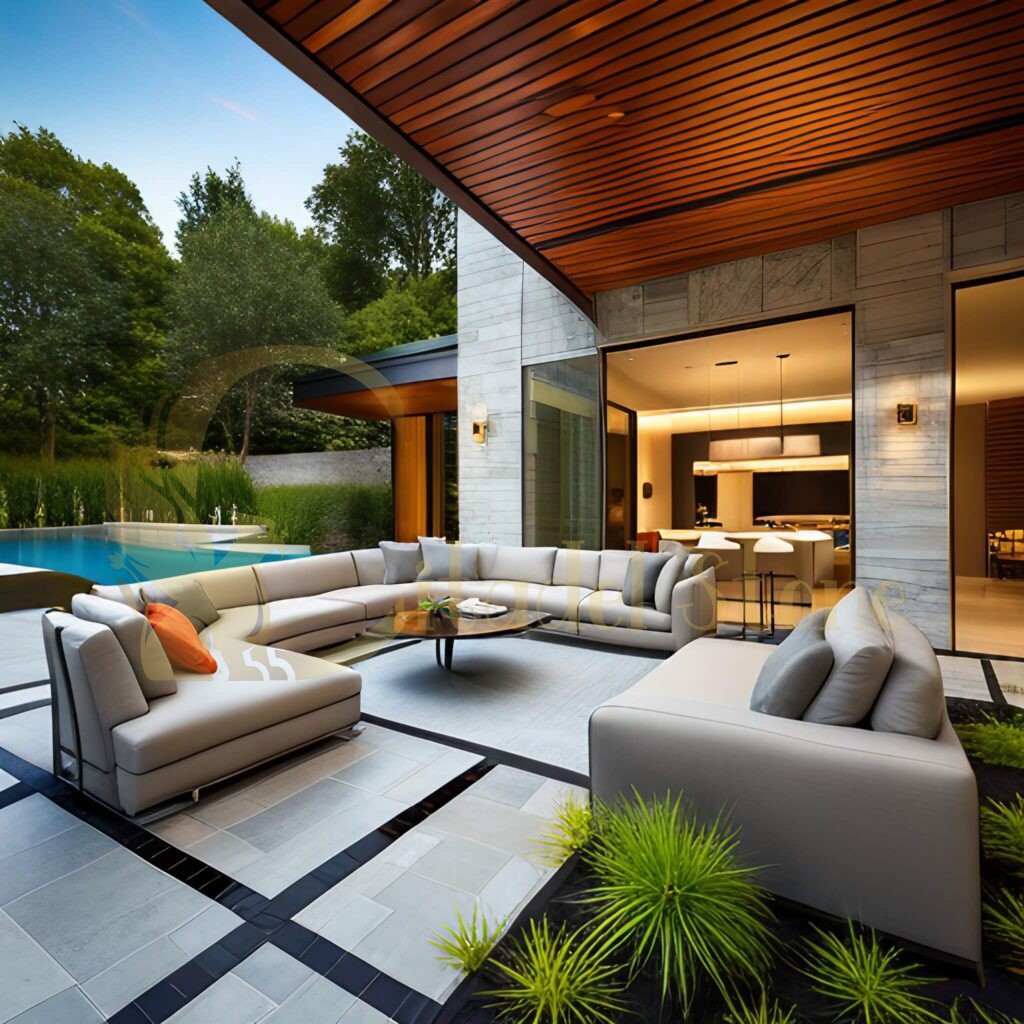
When you design outdoor entertainment spaces in Carefree, the material you select for your bar and BBQ area determines both performance and aesthetics for decades to come. Travertine outdoor bar Carefree installations deliver thermal performance that concrete and porcelain simply can’t match in Arizona’s extreme desert climate. You’ll find that travertine’s natural porosity creates a cooler surface underfoot while maintaining structural integrity through temperature swings that exceed 60°F daily during peak season.
Your specification decisions for Carefree entertainment spaces need to account for the unique microclimate conditions found at elevations between 2,400 and 3,000 feet. The material selection affects everything from surface temperature management to long-term maintenance requirements. You should understand that travertine’s crystalline structure provides inherent slip resistance that improves with proper finishing — a critical factor when you’re dealing with BBQ area pavers Arizona applications where grease and moisture create hazard conditions.
Thermal Performance in Carefree’s High Desert Climate
You need to understand how thermal mass behavior affects your travertine outdoor bar Carefree installation throughout the day. The material’s density ranges from 140 to 165 pounds per cubic foot, creating a thermal lag time of approximately 3-4 hours between peak air temperature and peak surface temperature. This characteristic becomes essential when you plan afternoon and evening entertainment schedules — your bar surface reaches maximum temperature around 6-7 PM, well after the 3 PM peak air temperature.
When you specify outdoor kitchen surfaces for Carefree locations, the albedo effect provides measurable advantages. Travertine in lighter tones reflects 55-65% of incident solar radiation, compared to 20-30% for darker granite or concrete alternatives. Your guests will notice surface temperature differences of 15-25°F between travertine and alternative materials during peak exposure hours. This isn’t just comfort — it’s functional performance that extends usable hours for your entertainment space.
The porosity characteristics of travertine create natural evaporative cooling that you won’t find in dense stone materials. When you maintain proper sealing protocols, the material retains enough porosity to allow minimal moisture transmission that cools the surface through evaporation. You should target porosity levels between 2-5% for outdoor bar applications — below 2% eliminates the cooling benefit, while above 5% creates maintenance complications in areas with hard water.
Material Specification Considerations for Outdoor Bars
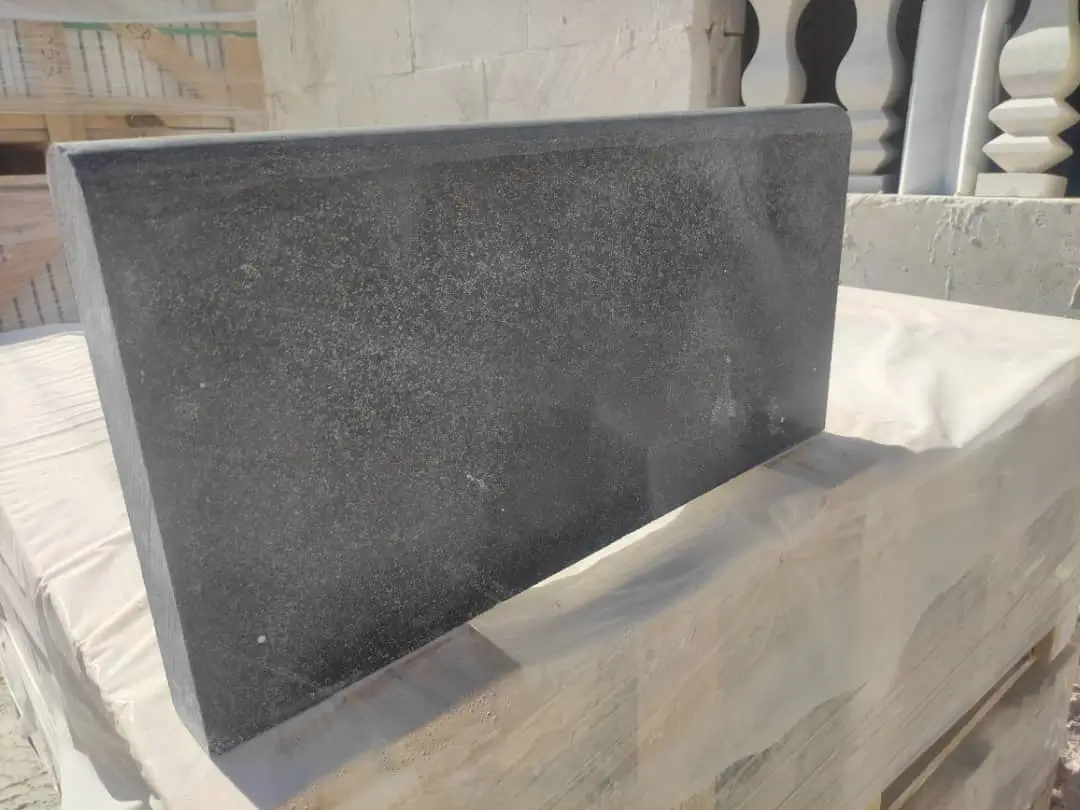
Your travertine outdoor bar Carefree specification requires attention to several performance factors that interact with installation method and long-term durability. When you evaluate material options, you’ll encounter trade-offs between visual consistency and structural performance that aren’t immediately obvious from product literature.
- You should specify compressive strength minimum of 7,500 PSI for horizontal bar surfaces that support equipment weight and point loads from bar stools
- Your thickness selection needs to account for span distances — 1.25-inch material works for spans up to 16 inches, while 2-inch thickness handles spans to 24 inches without edge support
- You’ll want to verify flexural strength exceeds 1,200 PSI for cantilever applications common in bar overhang details
- Your edge profile selection affects both aesthetics and durability — eased edges perform better than sharp 90-degree profiles in high-traffic scenarios
- You need to consider how vein orientation affects structural integrity when you layout field-cut penetrations for plumbing and electrical
The finish you specify determines slip resistance performance in wet conditions common around bar areas. Tumbled finishes provide DCOF ratings between 0.52-0.58 wet, while honed finishes measure 0.48-0.54 wet. You should avoid polished finishes for horizontal surfaces in Arizona cooking areas where water and food preparation create slip hazards. For guidance on related applications and finishing options, see our travertine wholesale division for comprehensive technical specifications.
When you detail transitions between bar surfaces and adjacent paving, thermal expansion coefficients become critical. Travertine expands at approximately 5.5 × 10⁻⁶ per °F, requiring you to provide expansion joints every 12-15 feet in Carefree’s temperature range. Your joint sizing should accommodate 3/16-inch movement for every 10 feet of run — undersized joints lead to buckling and lippage that appears 18-24 months after installation.
BBQ Area Integration and Layout Strategies
You’ll find that BBQ area pavers Arizona installations require different performance specifications than general patio paving. The concentrated heat from grills, smokers, and fire features creates localized thermal stress that affects material selection and installation details. Your layout strategy needs to address both functional workflow and material performance zones.
When you plan travertine outdoor bar Carefree spaces that integrate cooking areas, you should establish thermal zones based on equipment placement. Primary heat zones within 18 inches of grill perimeters experience surface temperatures 30-40°F higher than ambient paving. You need to account for this in your sealer selection — standard topical sealers break down within 12-18 months in these high-heat zones, while penetrating sealers maintain performance for 3-4 years.
- You should detail your cooking zone with 2-inch thick material to provide thermal mass that moderates temperature fluctuations
- Your grout joint specification needs to increase from standard 3/16-inch to 1/4-inch in areas within 24 inches of heat sources
- You’ll want to specify light-toned travertine for the primary cooking area to minimize heat absorption and maximize reflectivity
- Your base preparation under BBQ equipment requires additional compaction to 98% modified Proctor to prevent settlement from repeated thermal cycling
The workflow triangle principle applies to outdoor kitchen layouts just as it does to interior kitchens. You need to position your bar, grill, and prep areas to create efficient movement patterns that don’t require guests or cooks to cross traffic paths. Your travertine specification should reflect these functional zones — bar seating areas can use 1.25-inch material, while standing work zones around the grill require 2-inch thickness for stability.
Base Preparation and Substrate Requirements
Your base preparation determines 70% of long-term performance outcomes for travertine outdoor bar Carefree installations. When you evaluate site conditions in Carefree, you’re typically dealing with decomposed granite, caliche layers, or sandy soils that require different preparation strategies. You should perform soil testing to determine bearing capacity and expansion potential before you commit to base design.
The standard base assembly for outdoor kitchen surfaces requires more robust construction than pedestrian paving. You need to provide a minimum 6-inch compacted aggregate base for bar and cooking areas, increasing to 8 inches where you’ll install heavy equipment like built-in grills or refrigeration units. Your aggregate gradation should follow ASTM D448 Size No. 57 or equivalent — this provides the particle size distribution that achieves optimal compaction and drainage performance.
When you detail the setting bed, mortar-set applications over concrete slabs provide superior performance compared to sand-set methods for outdoor kitchen surfaces. You should specify a minimum 4-inch reinforced concrete slab with 3,000 PSI compressive strength as your substrate. Your mortar bed thickness needs to range from 3/4 to 1-1/4 inches using a medium-bed mortar that accommodates the natural thickness variation in travertine.
- You need to verify that your concrete substrate has proper drainage slope of 1/4-inch per foot minimum away from structures
- Your waterproofing membrane becomes critical when the bar or cooking area sits above interior spaces — sheet membranes outperform liquid-applied products in this application
- You should detail control joints in the concrete substrate that align with planned grout joints in the travertine surface
- Your curing time for the concrete slab must reach 28 days before you begin travertine installation to prevent bond failure from residual moisture
Edge Details and Cantilever Considerations
The bar overhang detail creates one of the most challenging specification scenarios in travertine outdoor bar Carefree projects. You’re working with a natural material that has directional strength properties, combined with cantilever loads that concentrate stress at the support transition. Your edge detail needs to address structural requirements, visual proportions, and weathering protection.
Standard practice allows 10-inch maximum cantilever for 2-inch thick travertine when you provide proper reinforcement and support brackets. You’ll find that exceeding this dimension creates deflection issues that lead to cracking at the support line within 2-3 years. When your design requires longer overhangs for bar stool clearance, you need to transition to steel-reinforced composite construction where travertine serves as a veneer over structural framework.
Your edge profile selection affects both visual weight and durability. A bullnose profile softens the appearance but requires 30% more material removal during fabrication, increasing cost and reducing edge strength. You should consider half-bullnose or quarter-round profiles that provide the rounded edge benefit while maintaining more material thickness at the most vulnerable location. Carefree entertainment spaces benefit from these softer profiles that reduce injury risk in high-traffic areas.
The underside treatment of your cantilever section requires attention that often gets overlooked during specification. You need to seal the bottom surface just as thoroughly as the top — moisture wicks into the material from below through capillary action, creating efflorescence and freeze-thaw damage. Your sealer application on undersides should use penetrating formulations that don’t create visible buildup or drips.
Joint Sizing and Movement Accommodation
When you specify grout joints for travertine outdoor bar Carefree installations, you’re balancing aesthetic preferences against functional requirements for thermal movement and installation tolerance. The joint serves as your accommodation mechanism for the inevitable dimensional changes that occur throughout daily and seasonal temperature cycles. You can’t eliminate movement — you can only plan for it.
Your minimum joint width should measure 3/16 inch for bar surfaces and BBQ area pavers Arizona applications. This dimension provides adequate space for sanded grout that achieves proper bond to the stone edges while accommodating normal thermal expansion. You’ll find that narrower joints create problems within the first year — the grout cracks and debonds as the stone expands, leading to infiltration and base degradation.
- You should increase joint width to 1/4 inch in areas exposed to direct sun for more than 6 hours daily
- Your joint depth needs to reach minimum 2/3 of the stone thickness to provide adequate bond surface
- You need to specify color-stable grout formulations that resist UV degradation in Arizona’s intense sunlight
- Your grout selection should prioritize flexibility over compressive strength — some movement accommodation outperforms rigid resistance
The expansion joint placement strategy requires you to analyze your layout geometry and identify potential stress concentration points. You need to provide isolation joints where the bar surface meets vertical elements like posts, walls, or equipment housings. Your detail should show a 1/4-inch minimum gap filled with flexible sealant rather than rigid grout — this allows differential movement between the horizontal surface and fixed vertical elements.
Sealer Selection and Maintenance Protocols
Your sealer specification determines how your travertine outdoor bar Carefree installation performs against staining, moisture infiltration, and surface degradation over its service life. You’re choosing between penetrating sealers that work within the stone’s pore structure and topical sealers that create a surface film — each approach offers distinct advantages and limitations for outdoor kitchen surfaces.
Penetrating sealers provide the most natural appearance and longest durability for Arizona cooking areas. You should specify silane/siloxane formulations that chemically bond within the stone’s pore structure rather than sitting on the surface. These products maintain breathability that allows moisture vapor to escape while blocking liquid water infiltration. Your reapplication schedule typically extends to 3-4 years for penetrating products, compared to 12-18 months for topical alternatives.
When you evaluate topical sealers, you’re prioritizing stain resistance and surface enhancement over natural appearance. These products create a film on the stone surface that provides superior protection against oil-based staining common in BBQ environments. You’ll notice that topical sealers enhance color depth and can add gloss levels from matte to high-shine. The trade-off comes in durability — high-traffic areas show wear patterns within 18 months, requiring spot treatment or complete reapplication.
- You need to verify warehouse stock levels for your selected sealer before you commit to product specifications
- Your initial sealer application should occur 28 days after grouting to allow complete curing of mortars and grouts
- You should plan maintenance resealing during cooler months when surface temperatures remain below 85°F
- Your sealer testing protocol needs to include water drop tests every 6 months to verify continued performance
Stain Resistance and Common Contamination Issues
You’ll encounter staining challenges in travertine outdoor bar Carefree installations that don’t occur in standard paving applications. The combination of food preparation, beverage service, and cooking activities creates exposure to acids, oils, and organic materials that can permanently discolor unsealed or improperly maintained travertine. Your stain prevention strategy needs to address both initial protection and ongoing maintenance protocols.
The most common staining scenarios in Carefree entertainment spaces come from acidic beverages, cooking oils, and organic materials like leaves or food residue. You should understand that travertine’s calcium carbonate composition reacts with acids to create etching — a physical change in the surface texture that sealer can’t prevent. Your client education needs to emphasize immediate cleanup of acidic spills like citrus, wine, or vinegar-based marinades.
Oil-based staining from grilling and food preparation requires different prevention strategies than acid etching. You’ll find that penetrating sealers provide effective oil resistance when properly applied, but they’re not impervious to prolonged contact. Your specification should include splash zones around cooking equipment where you increase sealer application rates by 50% to provide enhanced protection.
When you address existing stains during maintenance, you need to identify whether you’re dealing with surface contamination or subsurface absorption. Surface stains typically respond to poultice treatments using appropriate solvents — oil stains extract with acetone-based poultices, while organic stains respond to hydrogen peroxide formulations. Subsurface staining that has penetrated beyond the effective depth of poultice treatments may require professional restoration including diamond honing to remove affected material.
Lighting Integration and Nighttime Functionality
Your travertine outdoor bar Carefree specification needs to address lighting integration that enhances both functionality and ambiance for evening entertainment. The material’s light-reflective properties affect how you position and specify lighting fixtures to achieve uniform illumination without glare or harsh shadows. You should coordinate lighting design with material selection early in the planning process.
When you specify under-counter lighting for bar areas, LED strip lights provide energy efficiency and minimal heat generation that won’t damage travertine or adjacent materials. You need to detail proper mounting that maintains minimum 2-inch clearance from the stone underside to prevent heat concentration. Your lighting placement should create 30-50 footcandles of illumination at the bar surface for food preparation tasks, reducing to 10-20 footcandles in seating areas.
The natural color variation in travertine affects how the material appears under different lighting temperatures. You’ll find that warm white LEDs (2700-3000K) enhance the golden and beige tones naturally present in most travertine selections, while cool white (4000-5000K) creates a more contemporary appearance but may emphasize gray tones. Your lighting specification should account for how color temperature interacts with your specific material selection.
- You should specify dimmable lighting systems that allow adjustment for different entertainment scenarios
- Your fixture selection needs IP65 or higher rating to withstand moisture exposure in outdoor kitchen environments
- You need to coordinate conduit paths with base construction to avoid conflicts with drainage systems
- Your lighting control location should provide convenient access while maintaining aesthetic integration with the overall design
Equipment Integration and Support Details
When you integrate cooking equipment into your travertine outdoor bar Carefree design, you’re creating point load conditions that require special structural consideration. Built-in grills, refrigeration units, and sink installations concentrate weight in small areas while introducing utility connections that penetrate the waterproof assembly. Your detailing needs to address both load distribution and penetration management.
Standard residential travertine installations over properly compacted bases support 40-60 PSF distributed loads without special reinforcement. You’ll exceed these parameters when you install built-in equipment — a typical 36-inch grill unit weighs 150-200 pounds, creating point loads that require local base reinforcement. You should detail concrete pad foundations under major equipment locations that extend 6 inches beyond the equipment footprint in all directions.
Your utility penetrations through the travertine surface need careful waterproofing details to prevent subsurface infiltration. You’ll typically encounter gas lines, electrical conduit, and water supply lines that must pass through the stone and waterproofing layers. Each penetration requires individual boot flashing that bonds to the waterproofing membrane and seals around the utility line with compression fittings.
The equipment support structure affects how you detail the surrounding travertine field. You need to maintain your thermal expansion joints at the equipment perimeter, but you can’t create joints that compromise the equipment support. Your solution typically involves creating a concrete collar around the equipment location that accepts the equipment load, with the travertine field terminating at a flexible joint at the collar perimeter. This allows the travertine field to move independently while the equipment remains on stable support.
Budget Considerations and Value Engineering Options
Your budget planning for travertine outdoor bar Carefree projects needs to account for several cost factors beyond basic material pricing. When you develop project estimates, you should understand how material selection, fabrication complexity, and installation methods interact to determine final costs. You’ll find opportunities for value engineering that reduce expenses without compromising performance.
Material selection represents 35-45% of total installed cost for outdoor kitchen surfaces. You can reduce material expense by specifying commercial grade travertine instead of premium grade — the performance difference is minimal for outdoor applications where perfect uniformity isn’t required. Your cost savings typically reach 20-30% when you accept natural color variation and minor filling that doesn’t affect structural integrity.
Fabrication complexity drives another 25-35% of project cost. You’ll reduce expenses by simplifying edge profiles, minimizing custom cuts, and standardizing dimensions where possible. A straight bullnose edge costs approximately 40% less than a compound curved profile with decorative details. Your layout planning should maximize full-piece usage and minimize field cuts that require specialized equipment and skilled labor.
- You should evaluate truck delivery costs early in planning — residential site access limitations may require smaller vehicles and multiple deliveries that increase logistics expenses
- Your installation method selection between mortar-set and sand-set applications affects labor costs by approximately 35%
- You need to account for waste factors between 8-12% depending on layout complexity and material size availability
- Your timing decisions affect pricing — material from warehouse inventory ships faster but may limit selection compared to factory-direct orders
When you consider long-term value rather than initial cost, travertine’s durability and low maintenance requirements justify premium pricing compared to alternatives. You should calculate lifecycle costs over 20-25 years that include resealing, repairs, and eventual replacement. Travertine installations properly detailed and maintained reach 25-30 year service life, while concrete alternatives typically require replacement at 15-18 years in Arizona’s climate.
Common Specification Mistakes and How to Avoid Them
You’ll encounter several recurring specification errors in travertine outdoor bar Carefree projects that create performance problems and client dissatisfaction. When you understand these common mistakes, you can implement preventive measures during design development that eliminate issues before they reach the field. Most problems trace back to incomplete specifications that don’t address the unique requirements of outdoor kitchen applications.
The most frequent error involves specifying inadequate thickness for the application. You can’t use 1-inch thick material for bar countertops with 10-inch overhangs — the flexural strength doesn’t support the cantilever loads. Your specification needs to match thickness to span and loading conditions, typically requiring 2-inch minimum thickness for bar surfaces and cantilevered edges. This mistake appears 12-18 months after installation when cracks develop at stress concentration points.
Another common problem occurs when you fail to specify proper movement joints in continuous runs. Travertine outdoor bar Carefree installations exceeding 12 feet without expansion joints will develop problems. You’ll see grout line cracking, corner lifting, and buckling when thermal expansion has nowhere to go. Your joint spacing needs to account for maximum temperature range in the installation location — Carefree’s 60-70°F daily temperature swing during summer requires joints every 12-15 feet maximum.
- You should avoid specifying polished finishes for horizontal surfaces in wet areas where slip resistance becomes critical
- Your sealer specification needs to match the application environment rather than selecting based solely on appearance enhancement
- You need to detail base drainage that prevents water accumulation under the stone surface during monsoon season
- Your grout selection should prioritize UV stability to prevent color shift and degradation in direct sun exposure
The substrate preparation specification often receives insufficient attention during design development. You can’t install travertine over existing surfaces without proper evaluation and preparation. Your specification should require substrate moisture testing, flatness verification, and bond strength assessment before you allow installation to proceed. Shortcuts in base preparation create 60% of long-term performance failures.
Citadel Stone — Premier travertine distributors in Arizona Serving Carefree
When you evaluate travertine sources for your Carefree project, you need a distributor who understands both material performance and regional installation requirements. At Citadel Stone, we provide comprehensive technical support for outdoor kitchen applications throughout Arizona. This section outlines how you would approach material specification using our products for three representative Arizona cities with distinct climate characteristics.
Your project success depends on matching material properties to local environmental conditions. We offer guidance on thickness selection, finish options, and sealer specifications based on actual performance data from similar installations. You should consider factors including elevation, temperature range, precipitation patterns, and site-specific exposure when you make final material selections.
Yuma Applications
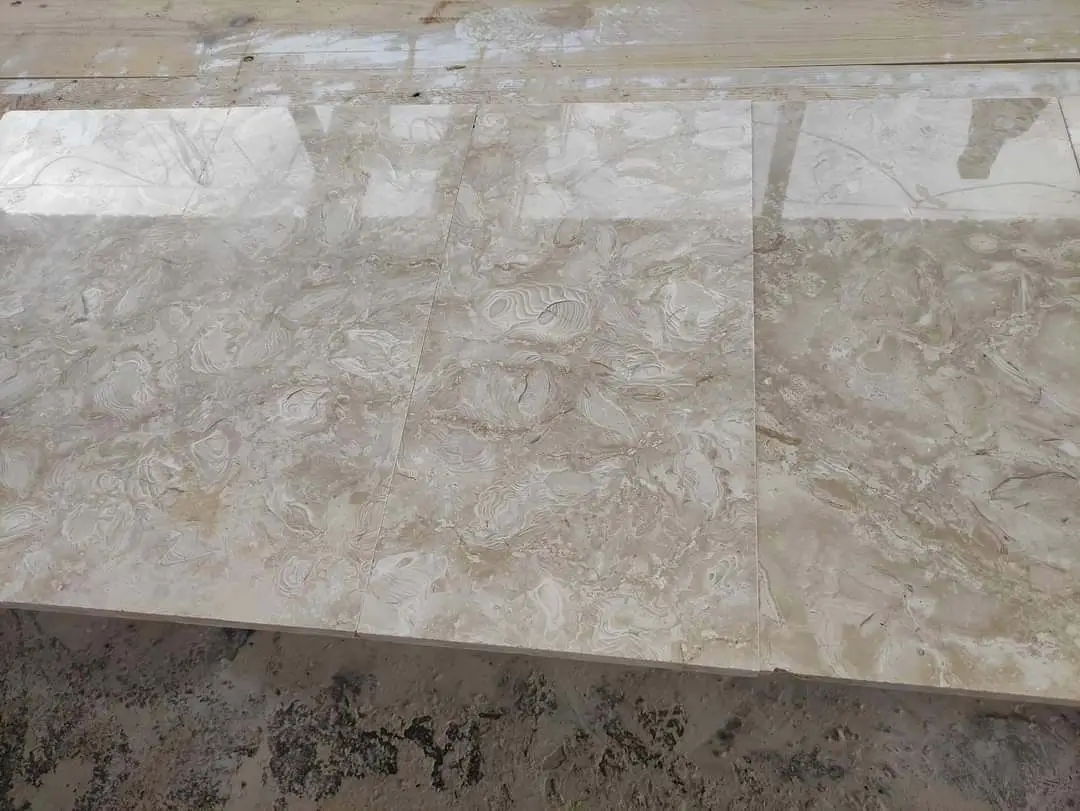
In Yuma’s extreme heat environment, you would specify lighter-toned travertine with maximum reflectivity to manage surface temperatures that regularly exceed 120°F. Your outdoor bar installation would require enhanced sealer application rates due to intense UV exposure that degrades standard formulations within 18 months. You should account for minimal freeze-thaw concerns but increased thermal cycling that demands 1/4-inch expansion joints every 12 feet. The low elevation and high summer humidity affect curing times for mortars and grouts — you would need to extend your installation schedule by 15-20% compared to higher elevation locations.
Mesa Specifications
When you plan installations in Mesa, you’re working with moderate elevation around 1,200 feet that creates slightly less extreme temperature conditions than lower desert locations. Your travertine outdoor bar Carefree specifications would translate well to Mesa applications with minor adjustments for local soil conditions. You would need to address the clay component common in Mesa soils that requires more robust base preparation including geotextile separation layers. Your material selection could include mid-tone options that balance heat reflection with aesthetic preferences. The urban heat island effect in developed Mesa areas adds 5-8°F to ambient temperatures, affecting your thermal expansion calculations.
Gilbert Considerations
Your Gilbert projects would benefit from travertine’s thermal mass properties that moderate the temperature swings common at this 1,200-foot elevation. You should specify 2-inch thickness for bar surfaces to maximize thermal lag benefits that extend comfortable evening entertainment hours. The rapid residential development in Gilbert creates opportunities for outdoor kitchen integration in new construction where you can coordinate base preparation with initial site work. You would want to verify material availability through warehouse inventory to meet typical Gilbert project timelines that compress due to builder schedules. Your finish selection should account for the family-oriented demographics that prioritize slip resistance and stain resistance over formal appearance.
Essential Planning Steps
Your successful travertine outdoor bar Carefree project requires coordinated planning that addresses material specification, base preparation, installation methodology, and long-term maintenance from the earliest design phases. You need to verify that all project team members understand the performance requirements and installation details specific to outdoor kitchen applications in Arizona’s desert climate. Your specification documents should provide clear guidance on acceptable materials, installation standards, and quality control procedures.
When you finalize your material selections, you should request samples that represent the actual material grade and finish you’ll receive on the project. Photograph samples don’t capture the texture, porosity, and dimensional characteristics that affect installation and performance. You need to evaluate physical samples under natural lighting conditions that approximate your installation location. Your approval process should include verification of technical specifications including compressive strength, absorption rate, and slip resistance testing.
The coordination between your design intent and field installation reality determines final project success. You should plan site visits during critical installation phases including base preparation, waterproofing application, and stone setting to verify compliance with specifications. Your punch list process needs to address both visual quality and functional performance including drainage verification, joint consistency, and surface treatment completion. For additional perspectives on related applications, review Travertine cobblestone pavers for rustic Arizona home exteriors before you finalize your project documentation. Your project deserves the best so choose Citadel Stone as your dedicated travertine pavers supplier in Arizona.