
When you’re specifying chiseled edge travertine Arizona installations for rustic-themed projects, you’re working with a material that delivers authentic texture through hand-tooled fabrication methods. The chiseled edge profile creates irregular, naturally fractured perimeters that distinguish these pavers from standard tumbled or brushed finishes. You’ll find this edge treatment particularly effective in country home designs where visual softness matters more than geometric precision.
Chiseled edge travertine Arizona applications require you to understand how manual edge fabrication affects dimensional tolerances and installation protocols. Unlike machine-cut square edges that maintain ±1/16″ consistency, chiseled profiles vary by 3/16″ to 5/16″ along each edge. Your installation crew needs to account for this variability when establishing joint spacing and pattern layouts.
Edge Fabrication Methods
The chiseled edge process involves pneumatic tools that fracture travertine along natural cleavage planes rather than sawing through the material. You should recognize that this fabrication method exposes the stone’s internal structure differently than diamond blade cutting. When you examine chiseled edges closely, you’ll notice micro-fissures and surface texture that create light-scattering properties absent in sawn edges.
Your specification needs to address the relationship between chiseled edge geometry and joint performance. The irregular profile increases edge-to-edge contact points, which affects load transfer between adjacent pavers. For rustic paver finishes, this characteristic becomes advantageous—you’re distributing point loads across more contact surfaces, reducing individual paver stress concentrations.
- You need to specify minimum edge engagement of 3/4″ to ensure structural integrity despite profile irregularity
- Your joint sand selection should include angular particles that mechanically lock within the textured edge surfaces
- You should account for 12-18% more joint sand volume compared to straight-edge installations
- Polymeric sand formulations designed for wide joints perform better with chiseled edges than standard formulations
Thermal Performance in Desert Climates
Chiseled edge travertine Arizona installations perform distinctively in high-solar environments because edge geometry affects thermal cycling behavior. You’ll observe that irregular edges create micro-shadows throughout the day, reducing peak surface temperatures by 4-7°F compared to uniform square-edge layouts. This isn’t trivial—for barefoot comfort around pools and patios, those degrees matter significantly.
When you’re designing for Arizona country homes, you need to consider how travertine’s thermal mass interacts with chiseled edge shadow patterns. The material absorbs heat during peak sun exposure and releases it gradually through evening hours. For guidance on thermal properties across different travertine products, see bulk wholesale travertine tile for comprehensive thermal performance data. You should factor this lag time into outdoor space usage planning—peak material temperature occurs 3-4 hours after peak air temperature.
Porosity Considerations for Textured Surfaces
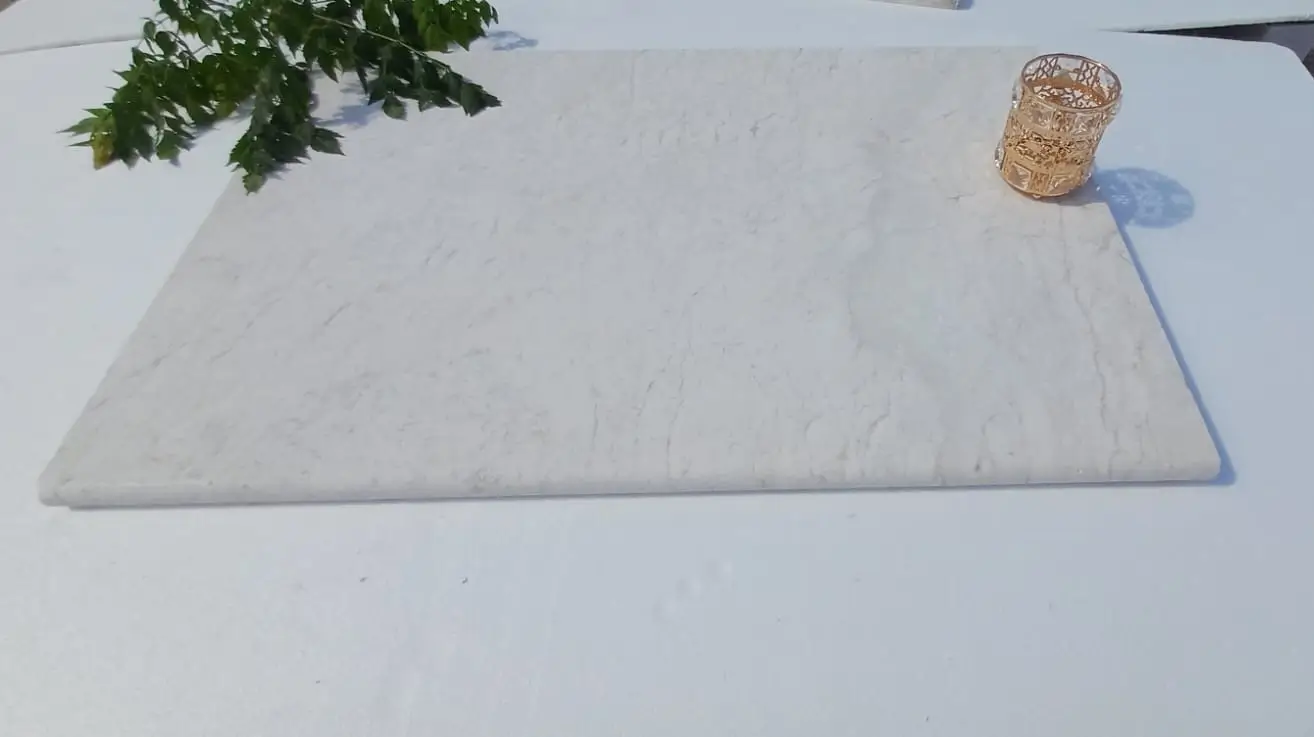
You’re working with material that exhibits 5-8% porosity in Arizona-grade travertine, but chiseled edges expose additional pore structures along fractured surfaces. This increases effective porosity along perimeters by 15-20% compared to core material. Your sealing protocol needs to account for this differential—edge surfaces absorb sealers more aggressively than top surfaces.
When you specify chiseled edge travertine Arizona pavers, you should understand that textured stone edges require modified application techniques. Standard roller application of penetrating sealers leaves edges under-treated because surface tension pulls sealer away from irregular profiles. You’ll achieve better results using brush application along all four edges before rolling top surfaces.
- Edge porosity affects efflorescence patterns—you’ll see mineral deposits appear along chiseled edges first
- Your maintenance schedule should include edge inspection every 18 months rather than standard 24-month intervals
- Polymeric sand adhesion to porous edges extends joint stability from 5-7 years to 8-10 years in properly sealed installations
Dimensional Tolerance Impacts on Installation
You need to approach chiseled edge installations differently than precision-cut pavers because tolerance stacking behaves unpredictably. When you’re laying out natural-look pavers with ±5/16″ edge variation, traditional string-line methods don’t provide useful reference points. Your installation team should instead establish datum points every 8-10 feet and work in modules rather than continuous runs.
The irregular edge profile means you can’t achieve consistent joint widths across large areas. You should specify acceptable joint width ranges rather than single target dimensions—typically 3/8″ to 5/8″ for chiseled edge applications. This range accommodates natural variation while maintaining visual consistency. Professional installations aim for average joint width rather than individual joint precision.
Color Variation and Rustic Character
Chiseled edge fabrication exposes travertine’s internal color stratification more dramatically than top surface finishes reveal. You’ll notice that edge faces often display different tonal ranges than horizontal surfaces—typically 10-15% lighter because you’re seeing cross-sections through sedimentary layers rather than weathered surface planes.
When you’re selecting material for Arizona country homes, this color differential enhances rustic authenticity. The variation creates depth perception that uniform pavers lack. You should communicate to clients that edge color differences aren’t defects but rather evidence of genuine geological formation. Projects using chiseled edge travertine Arizona material benefit from this natural variation—it reinforces the organic aesthetic that draws specifiers to this edge profile.
- You can expect 20-30% more visible color variation in chiseled edge installations compared to tumbled edge profiles
- Mineral veining becomes more prominent along fractured edges, adding visual interest
- UV exposure affects edge faces differently than top surfaces—edges fade 15-20% slower over 10-year periods
- Your material selection should include viewing edge profiles, not just top surfaces, during sample approval
Structural Load Distribution Through Irregular Edges
You need to understand that chiseled edges create point-loading conditions rather than continuous edge bearing. Traditional engineering calculations assume uniform load transfer across straight edges, but irregular profiles concentrate forces at high points along each edge. This affects your base preparation requirements—you need higher compaction levels to prevent differential settlement at load concentration points.
When you specify base preparation for chiseled edge travertine Arizona installations, you should require 95-96% compaction rather than the 92-94% standard for square-edge pavers. The 2-3% difference significantly reduces micro-settlement that becomes visible as lippage in irregular-edge installations. Your base aggregate should include finer particles in the top 2″ to create conforming support for irregular edge geometry.
Joint Sand Retention Strategies
The textured surface of chiseled edges provides mechanical keying that improves joint sand retention compared to smooth-edge profiles. You’ll observe that angular joint sand particles wedge into the irregular edge texture, creating interlock that resists both lateral and vertical displacement. This characteristic extends rustic paver finishes joint stability significantly—properly installed chiseled edge joints lose 15-20% less sand over five-year periods compared to straight-edge joints.
Your joint sand specification should capitalize on this mechanical advantage. You need angular sand with particle sizes ranging from #30 to #50 mesh—this range provides particles small enough to fill edge texture irregularities while remaining large enough to resist wind erosion. When you’re working in high-wind areas common across Arizona, this selection becomes critical for long-term joint performance.
- You should specify initial joint filling to 100% capacity, then plan for replenishment to 95-98% at 6-month intervals for the first two years
- Polymeric sand activation requires 20-25% more water for chiseled edges compared to manufacturer standard recommendations due to increased absorption
- Your installation should include mechanical compaction of joint sand using plate compactors, making three passes rather than the two-pass standard
Slip Resistance Profiles
Chiseled edge travertine Arizona pavers demonstrate superior slip resistance compared to honed or polished finishes because the fractured edge texture extends micro-roughness across the entire paver surface. You’ll measure DCOF values between 0.54 and 0.62 in dry conditions, exceeding ADA requirements by comfortable margins. Wet conditions reduce these values by approximately 0.12 points, but you’re still maintaining compliant slip resistance.
When you’re specifying textured stone edges for pool decks or water features, you should recognize that chiseled profiles channel water differently than smooth surfaces. The irregular edge geometry creates micro-drainage paths that reduce standing water accumulation along joints. This characteristic improves safety performance in wet areas where smooth-edge pavers would retain surface water longer.
Maintenance Protocol Differences
You need to adjust standard maintenance procedures for chiseled edge installations because the irregular edge geometry traps organic debris more readily than smooth profiles. Your maintenance specification should include quarterly compressed air cleaning along joints to remove accumulated material before it decomposes and stains edge surfaces. This step prevents the organic staining that appears along chiseled edges after 2-3 years in standard maintenance programs.
Sealer reapplication requires modified technique for chiseled edge travertine Arizona installations. You can’t rely on spray application alone—edge surfaces need brush application to ensure sealer penetrates the irregular texture completely. Your maintenance schedule should specify resealing every 3-4 years rather than the 5-year interval common for smooth-edge travertine, because the increased edge surface area experiences faster sealer degradation.
Cost Considerations and Material Availability
Chiseled edge fabrication adds 18-24% to material costs compared to standard square-cut edges because the process requires skilled manual labor rather than automated sawing. You should account for this premium when budgeting rustic-themed projects. The cost differential narrows for larger orders—warehouse stock availability affects pricing significantly, and you’ll find better pricing when material is already in inventory rather than requiring special fabrication runs.
Your project timeline needs to accommodate longer lead times for chiseled edge travertine Arizona material. Standard travertine might ship in 7-10 days, but chiseled edge profiles often require 3-4 weeks because fabrication occurs on-demand rather than as stock production. When you’re coordinating project schedules, you should verify warehouse availability before committing to installation dates. For truck delivery to remote Arizona locations, you’ll encounter additional lead time for logistics coordination—typically 3-5 days beyond standard metro delivery windows.
Installation Pattern Options
You’ll achieve the most authentic rustic appearance using random pattern layouts rather than structured patterns like herringbone or basketweave. The irregular edge geometry works against geometric precision—attempting structured patterns with chiseled edges creates visual tension between intended geometry and actual edge variation. Your layout specification should embrace this reality rather than fighting it.
When you’re detailing natural-look pavers for country home applications, you should specify modular random patterns using three or four size modules. This approach distributes edge irregularity naturally across the installation, preventing the eye from registering individual joint width variations. You’ll need to order material in pre-calculated size ratios—typically 40% large format, 35% medium, 25% small modules—to maintain pattern continuity without field cutting.
- Random patterns with chiseled edges require 8-12% more installation time compared to structured patterns with square edges
- Your specification should prohibit field modifications to chiseled edges—cutting destroys the authentic fractured appearance
- Pattern layouts should avoid long continuous joints that emphasize edge irregularity
- You need to specify that installers work from mixed pallet pulls to distribute color and edge variation naturally
Expert Guidance: Travertine Stone Suppliers in Arizona
When you evaluate Citadel Stone’s travertine stone suppliers in Arizona for your project, you’re considering materials specifically selected for desert climate performance and rustic aesthetic requirements. At Citadel Stone, we provide technical specification guidance for hypothetical applications across Arizona’s varied regional conditions. This section outlines how you would approach chiseled edge travertine Arizona selection for three representative cities, addressing climate-specific factors that affect long-term performance.
Yuma Heat Specifications
In Yuma, you’ll confront the most extreme heat conditions in Arizona—summer temperatures consistently exceed 110°F, creating surface temperatures on pavers that reach 145-155°F. Your chiseled edge travertine specification needs to prioritize light-toned material that reflects maximum solar radiation. You should verify that selected material exhibits reflectance values above 65% to maintain acceptable surface temperatures for barefoot traffic. The chiseled edge profile provides micro-shading that reduces peak temperatures by 5-7°F compared to smooth-edge alternatives, making this detail particularly valuable in Yuma installations. You’d want to coordinate warehouse inventory verification early in your planning process because demand for light travertine peaks during spring construction season.
Mesa Urban Applications
Mesa projects require you to balance urban design aesthetics with rustic material characteristics. You would specify chiseled edge travertine Arizona pavers that maintain natural texture while coordinating with contemporary architectural elements common in Mesa developments. Your material selection should address the urban heat island effect—Mesa temperatures run 6-9°F higher than surrounding areas during summer months. You’d recommend chiseled edge profiles for their thermal performance advantages and specify sealing protocols that account for increased airborne particulate deposition in urban environments. When you plan installations in Mesa’s residential communities, you should account for HOA design review requirements that may require sample installations before full project approval.
Gilbert Country Estates
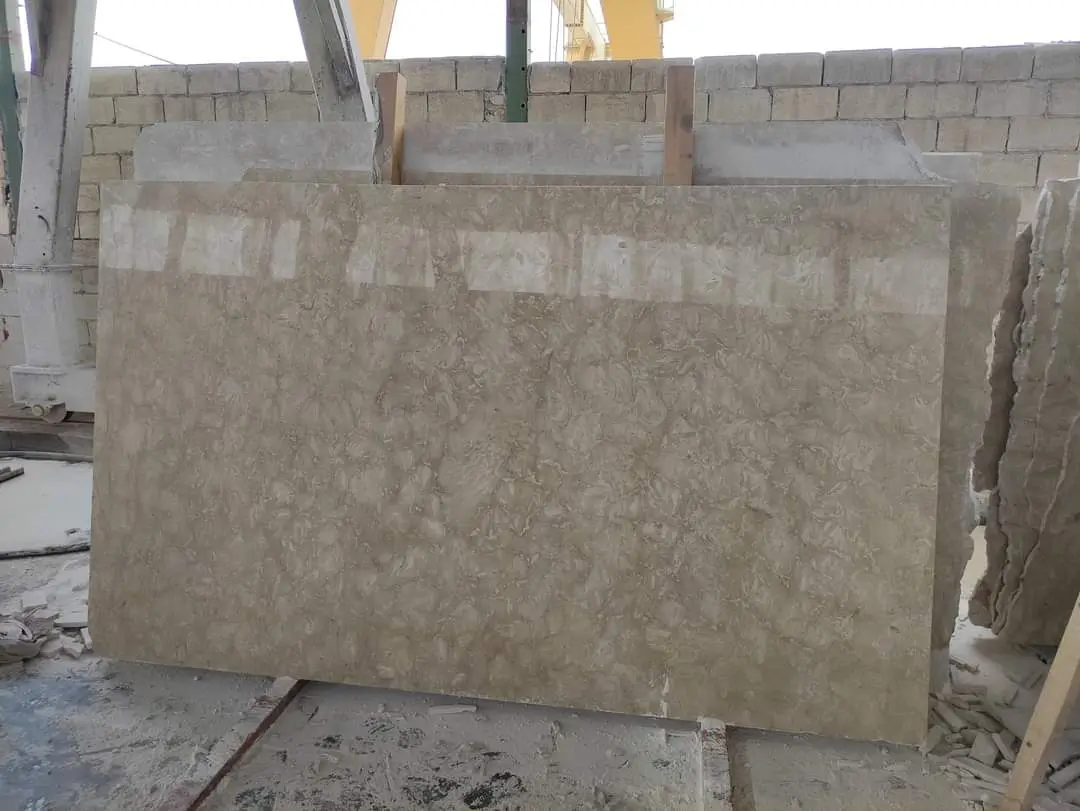
Gilbert’s expanding country estate developments provide ideal contexts for chiseled edge travertine applications. You would specify material that emphasizes rustic character while delivering the durability required for high-value residential installations. Your specification should address Gilbert’s caliche-heavy soil conditions—base preparation requires removal of caliche layers and installation of engineered aggregate bases that prevent differential movement. You’d recommend chiseled edge profiles that complement the ranch-style and transitional architecture prevalent in Gilbert’s rural developments. When you coordinate material selection, you should specify color ranges that harmonize with native desert landscaping while providing sufficient contrast to define outdoor living spaces clearly. At Citadel Stone, we maintain technical resources that address Gilbert’s specific installation challenges, including soil chemistry interactions with travertine sealers.
Long-Term Performance Expectations
You should communicate realistic performance timelines to clients considering chiseled edge travertine Arizona installations. Properly installed and maintained chiseled edge travertine delivers 25-35 years of functional performance in Arizona climates. You’ll observe gradual edge softening over this period—the sharp fractured appearance mellows as weathering rounds high points on edge profiles. This aging characteristic enhances rustic authenticity rather than diminishing it.
Your specification should address the evolution of appearance over time. Chiseled edges develop patina differently than smooth surfaces because the irregular geometry creates varied micro-climates along each edge. UV exposure affects raised portions more than recessed areas, creating subtle color gradation that increases visual depth. When you’re discussing long-term appearance with clients, you should frame this aging process as desirable character development rather than degradation. For additional installation insights regarding complementary applications, review Travertine pavers surrounding fire pits in Tucson outdoor spaces before you finalize your project specifications. Linear drain channels coordinate with Citadel Stone’s shower travertine pavers supplier in Arizona wet-area products.