

When you’re planning your Glendale patio project, you’ll face a critical decision between two popular paver material options that perform very differently in Arizona’s extreme climate. Travertine vs Saltillo Arizona represents more than a simple aesthetic choice — this decision determines your outdoor space’s longevity, maintenance requirements, and thermal comfort for the next 15-25 years. You need to understand how each material responds to 115°F summer temperatures, monsoon moisture cycles, and intense UV exposure before you commit to specifications.
The paver material comparison between these two options reveals fundamental differences in porosity, thermal mass behavior, and structural integrity under desert conditions. Your project success depends on matching material properties to site-specific performance requirements, not just selecting based on initial appearance or cost. Desert patio materials must withstand thermal expansion coefficients that exceed those in temperate climates by 30-40%, creating installation challenges most generic specifications don’t address.
Understanding Material Composition Differences
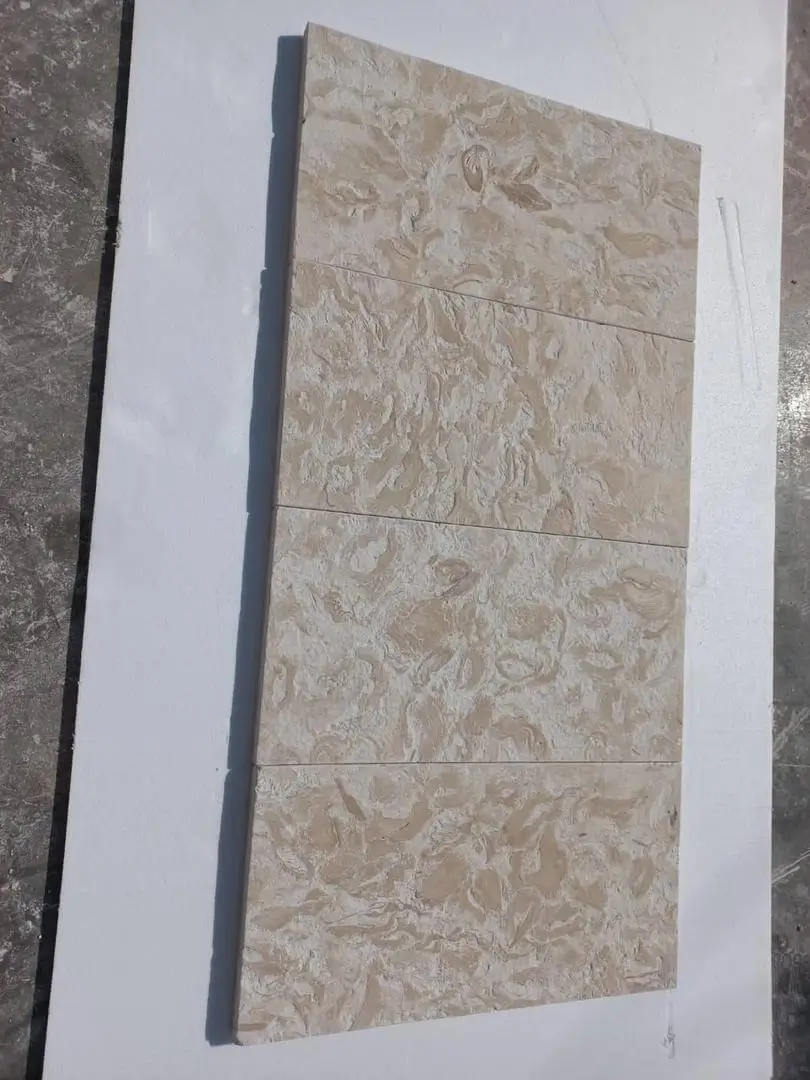
Travertine forms through calcium carbonate precipitation at hot springs, creating a crystalline structure with interconnected porosity ranging from 3-8%. When you specify travertine for Arizona installations, you’re working with a material that exhibits consistent density between 140-160 lb/ft³ and compressive strength exceeding 8,000 PSI. This geological formation process produces the characteristic linear veining and natural pitting that defines travertine’s aesthetic.
Saltillo tiles represent hand-formed terracotta clay fired at relatively low temperatures (1,800-2,000°F compared to commercial tile’s 2,100-2,400°F). You’ll find porosity rates between 12-18% in traditional Saltillo — nearly double that of travertine. This higher porosity creates absorption rates that become problematic when you’re dealing with Arizona’s intense monsoon events followed by immediate solar drying cycles. The clay composition varies significantly between production batches, giving you dimensional tolerances of ±3/8″ that complicate field installation.
Thermal Performance in Desert Conditions
The thermal behavior difference between Travertine vs Saltillo Arizona installations becomes critical during Glendale’s June-August peak season when surface temperatures regularly exceed ambient air by 40-50°F. Travertine’s lighter natural coloration reflects 55-65% of solar radiation, while its crystalline structure distributes absorbed heat more evenly throughout the material mass. You’ll measure surface temperatures on tumbled travertine at 125-135°F during mid-afternoon, compared to 145-160°F on traditional terra cotta Saltillo.
Your clients will experience this temperature differential immediately upon barefoot contact. Travertine maintains walkable surface temperatures approximately 20-25°F cooler than Saltillo under identical exposure conditions. This isn’t just comfort — it’s a safety specification for pool deck applications and family outdoor spaces. The thermal mass properties also affect evening cooling rates. Travertine releases stored heat 30-40% faster than Saltillo’s dense clay structure, making your outdoor spaces usable earlier in the evening.
- You should specify light-colored travertine for maximum solar reflectance in full-sun exposures
- Your installation needs expansion joints every 12-15 feet to accommodate thermal cycling
- You need to account for coefficient of thermal expansion differences when detailing perimeter transitions
- Your substrate preparation must allow for differential movement between material and base
Moisture Absorption and Weather Resistance
When you evaluate Travertine vs Saltillo Arizona performance during monsoon season, absorption behavior determines long-term durability. Travertine’s 3-8% porosity creates controlled absorption that allows the material to accept moisture and release it through evaporation without structural compromise. You’ll see absorption rates of 2-4% by weight during ASTM C97 testing, well within performance specifications for exterior applications.
Saltillo’s 12-18% porosity presents challenges in Glendale outdoor flooring applications. During monsoon events, traditional unsealed Saltillo can absorb 8-12% of its weight in water within 24 hours. When you combine this absorption capacity with rapid solar heating, you create internal stress that manifests as surface spalling within 3-5 years. The differential between saturated and dry states generates enough internal pressure to separate the fired surface layer from the clay body beneath.
Your sealing strategy must address these differences. Travertine requires penetrating sealers applied biannually to maintain stain resistance while preserving natural breathability. Saltillo demands both penetrating and topical sealers, creating a maintenance protocol that costs 60-70% more over a 10-year service life. For comprehensive guidance on material performance standards, see regional travertine distribution hub in Glendale for technical specification data.
Durability and Structural Longevity
The structural performance gap between these materials becomes evident when you examine 15-year installations across Arizona tile options. Travertine maintains 95-98% of its original surface integrity when properly installed and maintained. You’ll see natural patina development that enhances character without compromising structural performance. The crystalline calcium carbonate structure resists UV degradation that affects polymer-modified materials and maintains compressive strength throughout its service life.
Saltillo exhibits progressive deterioration beginning in years 5-7 for Glendale applications. You’ll observe surface layer delamination in high-traffic areas, edge chipping that accelerates once initiated, and color fade that reduces aesthetic appeal. The hand-formed manufacturing process creates density variations within individual tiles — soft spots that wear preferentially under foot traffic. When you specify Saltillo, you’re accepting a replacement timeline of 12-15 years compared to travertine’s 25-30 year performance expectation.
Installation Requirements and Base Preparation
Your installation approach for Travertine vs Saltillo Arizona projects differs significantly in base preparation and setting methodology. Travertine installation requires a compacted aggregate base at 95% modified Proctor density, topped with a 1″ setting bed of coarse sand or fine crusher fines. You’ll maintain consistent 3/16″ joints filled with polymeric sand that accommodates the material’s moderate thermal expansion while preventing weed intrusion and ant colonization.
When you install travertine, you’re working with dimensional tolerances of ±1/16″ that allow for tight joints and clean sight lines. The material’s consistent thickness (typically 1.25″ for pavers) means you’ll achieve uniform bedding with minimal adjustment. Your crew can maintain installation rates of 120-150 SF per person per day once layout is established.
- You need to verify base aggregate meets ASTM D2940 gradation requirements
- Your setting bed should maintain 1″ consistent depth across the installation area
- You should use polymeric sand rated for joint widths matching your specification
- Your edge restraint must accommodate lateral forces from thermal expansion
Saltillo installation becomes complicated by dimensional inconsistency. You’ll need to sort tiles by thickness and adjust setting bed depth tile-by-tile to maintain surface plane. This sorting and adjustment reduces installation efficiency to 60-80 SF per person per day. The material’s fragility during handling increases breakage rates to 8-12% compared to travertine’s 2-3% typical loss.
Long-Term Maintenance Requirements
Your maintenance specification for these desert patio materials creates dramatically different ownership experiences. Travertine requires biannual sealer application using penetrating siloxane or silane products that cost $0.18-0.24 per SF including labor. You’ll schedule pressure washing at 1,200-1,500 PSI annually to remove organic growth and refresh joint sand. Total annual maintenance cost averages $0.45-0.60 per SF for professional service.
Saltillo demands more intensive care protocols. You need to strip and reseal topical coatings every 18-24 months at $0.35-0.45 per SF. Between sealing cycles, you’ll apply maintenance coats of acrylic or urethane sealers at $0.12-0.16 per SF every 6 months. Surface repairs for delaminated areas add $2.50-3.50 per SF as damage accumulates. Your total maintenance cost reaches $0.85-1.20 per SF annually, nearly double travertine’s requirement.
Color Stability and Visual Aging
The way these materials age under Arizona’s intense UV exposure affects your long-term design intent. Travertine develops a natural patina that enriches color depth while maintaining the fundamental tone you specified. Light ivory travertine may shift slightly warmer over 5-7 years, but you won’t see the dramatic color fade that affects clay-based products. The material’s crystalline structure reflects light consistently throughout its service life.
Saltillo undergoes significant color transformation. The vibrant terra cotta tones you see at installation fade 30-40% within the first three years of Arizona exposure. UV degradation breaks down iron oxide pigments in the clay body, shifting colors toward pale salmon or washed-out orange. When you specify Saltillo, you need to set client expectations for this inevitable color change. Resealing temporarily enriches color, but the underlying fade continues progressively.
True Cost Comparison Over Service Life
When you analyze the economics of Travertine vs Saltillo Arizona projects, initial material cost represents only 30-35% of total ownership expense. Travertine material costs range from $4.50-7.50 per SF depending on finish and grade, with installation adding $6.50-8.50 per SF for professional crews. Your initial investment totals $11.00-16.00 per SF installed.
Saltillo appears initially economical at $2.50-4.00 per SF for materials. However, installation complexity increases labor to $7.50-9.50 per SF due to sorting, variable bedding, and higher breakage. Your installed cost reaches $10.00-13.50 per SF — not dramatically different from travertine despite lower material pricing.
The ownership cost divergence becomes clear when you project maintenance and replacement expenses. Over 20 years, travertine maintenance totals $9.00-12.00 per SF with zero replacement requirement. Saltillo maintenance reaches $17.00-24.00 per SF plus full replacement at year 12-15 adding another $10.00-13.50 per SF. You’re looking at 20-year costs of $20.00-28.00 per SF for travertine versus $37.00-51.50 per SF for Saltillo.
Slip Resistance and Safety Performance
Your safety specification must address both dry and wet slip resistance for pool decks, entry areas, and shaded outdoor spaces where moisture accumulates. Travertine in tumbled or brushed finish achieves DCOF (Dynamic Coefficient of Friction) ratings between 0.50-0.58 dry and 0.42-0.48 wet. This performance meets ADA requirements and provides secure footing across varied conditions common in Glendale outdoor flooring applications.
The material’s natural pitting and texture create microscopic surface irregularities that maintain friction even when wet. You don’t need aggressive surface treatments that compromise aesthetic appeal. Standard tumbled finishes deliver appropriate slip resistance for residential applications, while brushed finishes work well for commercial specs requiring higher traffic durability.
- You should specify tumbled finish for pool decks and spa surrounds
- Your commercial applications may require brushed finish for enhanced durability
- You need to verify DCOF ratings meet local code requirements for your application
- Your specification should address wet testing protocols using ASTM standards
Saltillo presents inconsistent slip resistance due to surface sealer requirements. Freshly sealed Saltillo with glossy topical coatings can drop to DCOF 0.28-0.35 wet — well below safe thresholds. You’ll need to specify anti-slip additives in sealer formulations, creating a textured surface that compromises the smooth aesthetic clients expect from traditional Saltillo. As sealers wear in traffic areas, slip resistance improves but surface protection deteriorates, forcing you into an earlier reseal cycle.
Premium Travertine Suppliers in Arizona — Citadel Stone Regional Specification Guide
When you evaluate travertine suppliers in Arizona for your Glendale project, you’re assessing material quality, technical support, and logistics capabilities that determine installation success. At Citadel Stone, we provide premium travertine products specifically selected for desert climate performance. This section outlines how you would approach material specification for three representative Arizona cities, demonstrating the regional considerations that affect your project planning.
Yuma Extreme Heat
In Yuma’s extreme conditions where summer temperatures consistently exceed 115°F, you would specify light-colored travertine with maximum solar reflectance. Your material selection should prioritize ivory or light beige tones that maintain surface temperatures 15-20°F cooler than medium-colored alternatives. The city’s position as Arizona’s hottest location requires you to account for thermal expansion rates at the upper end of specification ranges. You would detail expansion joints every 12 feet rather than the standard 15-foot spacing, and your base preparation should include stabilized aggregate that resists the thermal cycling Yuma experiences. When you plan deliveries from warehouse locations, you need to coordinate around summer temperature constraints that limit installation windows to early morning hours.
Mesa Urban Applications
Mesa’s urban environment presents different challenges where you’re often working with established landscaping and existing hardscape. Your travertine specification in this context should address integration with concrete, existing pavers, and irrigation systems. You would recommend tumbled-edge travertine that accommodates the slight dimensional variations inevitable when tying into existing work. Mesa’s clay-heavy soils require you to verify proper base drainage, typically specifying 4-6 inches of Class 2 aggregate base rather than the minimum 4 inches. The urban heat island effect in developed Mesa neighborhoods adds 5-8°F to ambient temperatures, pushing your material selection toward lighter colors even for shaded applications. You should coordinate truck access through established neighborhoods where street parking and mature trees may limit delivery options during typical warehouse shipping schedules.
Gilbert Residential Standards
Gilbert’s newer residential developments typically feature modern desert landscaping where travertine complements contemporary design aesthetics. You would specify consistent-grade travertine with tight dimensional tolerances for the clean lines and precise installations these projects demand. Your material recommendation should include premium select grade rather than standard commercial grade, ensuring the uniform appearance Gilbert homeowners expect. The area’s good soil conditions allow standard base preparation without the enhanced drainage requirements needed elsewhere. However, you need to account for HOA design review processes that may specify particular color ranges or joint configurations. When you coordinate material deliveries, Gilbert’s planned community infrastructure generally provides excellent truck access and staging areas that simplify logistics compared to older urban cores.
Common Specification Errors to Avoid
When you specify paver material comparison requirements for Travertine vs Saltillo Arizona projects, several recurring mistakes compromise installation success. The most common error involves failing to address sealer compatibility in your specification. You need to explicitly require penetrating sealers for travertine rather than leaving sealer selection to the installer’s discretion. Generic “seal per manufacturer recommendations” language allows substitution of inappropriate topical sealers that create maintenance problems.
Another frequent mistake involves inadequate joint specification. You’ll see specs calling for standard 1/8″ joints that don’t accommodate travertine’s thermal expansion in desert conditions. Your joint specification should require minimum 3/16″ spacing, and you need to specify polymeric sand rated for high-temperature applications rather than standard formulations that break down under Arizona’s extreme heat.
- You must specify actual thermal expansion accommodation in your joint detailing
- Your base preparation requirements should reference ASTM standards with climate-appropriate modifications
- You need to address edge restraint that prevents lateral movement under thermal cycling
- Your specification should include explicit sealer type and application frequency requirements
Integration With Landscape Elements
Your paving material selection affects how you detail transitions to landscape elements throughout the project. Travertine coordinates naturally with desert-adapted plantings, decomposed granite pathways, and natural stone accents common in Arizona landscape design. You can create clean borders between travertine and planted areas using the same material in soldier course configuration, maintaining design continuity without introducing additional materials.
When you detail drainage integration, travertine’s moderate porosity works well with permeable landscape strategies. You can direct sheet flow from paved areas into planted swales without the erosion concerns that arise with high-velocity runoff from impermeable surfaces. Your grading plan should maintain 2% minimum slope away from structures, directing water toward landscape areas that benefit from the moisture.
The material’s neutral color palette doesn’t compete with landscape focal points. You can use bold accent plants, colorful pottery, or dramatic lighting features without visual conflict. This versatility makes travertine appropriate for design styles ranging from minimalist contemporary to traditional Southwestern aesthetics common in Glendale outdoor environments.
Material Testing and Quality Verification
Before you approve material for delivery, you should require compliance testing documentation. Travertine suppliers should provide ASTM C1526 test results confirming minimum 8,000 PSI compressive strength. You need absorption data from ASTM C97 testing showing porosity within your specified range. Slip resistance verification through ANSI A326.3 testing confirms safety performance meets your project requirements.
When materials arrive on site, you should conduct visual inspection before installation begins. Check for consistent coloration within acceptable variation ranges, verify dimensional tolerances fall within ±1/16″ specifications, and examine edges for shipping damage that could affect installation. Your quality control process should include rejecting any material showing structural flaws, excessive veining variations, or surface defects that compromise appearance.
Project Planning Essentials
Your successful paver material selection depends on matching performance characteristics to site-specific requirements rather than choosing based solely on initial material cost. Travertine vs Saltillo Arizona comparisons consistently favor travertine when you account for thermal performance, durability, maintenance requirements, and total ownership costs over realistic service life expectations. You achieve better client satisfaction, reduced callback risk, and professional reputation enhancement when you specify materials proven for desert climate performance.
The material’s moderate initial cost premium pays dividends through reduced maintenance expenses, extended service life, and superior thermal comfort that makes outdoor spaces genuinely usable during Arizona’s extended warm season. When you add these factors to travertine’s aesthetic stability and consistent performance across varied applications, the specification decision becomes straightforward for professional landscape architects and builders focused on long-term value. For additional technical guidance on finish options and regional applications, review Contemporary gray travertine paver applications in Arizona landscapes before you finalize your material selections and begin coordinating delivery schedules. Sealing services complement Citadel Stone’s comprehensive travertine manufacturers in Arizona aftercare support.