
When you’re selecting travertine colors Arizona climate demands, you face a critical decision that affects everything from surface temperature to long-term maintenance costs. The color choice between ivory and walnut isn’t just aesthetic — it determines how your outdoor surfaces perform under relentless desert sun. You’ll find that lighter ivory travertine Phoenix installations can run 15-20°F cooler than darker walnut alternatives during peak afternoon hours, a difference your clients will notice immediately when walking barefoot around pool decks.
Understanding how travertine colors Arizona climate interactions work requires you to consider solar reflectance indices, thermal mass properties, and how each color responds to the state’s extreme temperature swings. Your specification decisions need to account for both the 115°F summer peaks and the occasional freeze events that still occur in higher elevation areas. The porosity and color combination you choose will directly impact efflorescence visibility, heat retention patterns, and the long-term appearance of your installation.
Solar Reflectance and Thermal Performance
You need to understand that ivory travertine Phoenix projects reflect 60-70% of incoming solar radiation, while walnut travertine pavers typically reflect only 30-40%. This isn’t just a comfort issue — it’s a performance specification that affects material expansion rates and joint integrity. When you specify heat reflective stone colors for Arizona applications, you’re directly controlling thermal cycling stress on your installation.
The thermal mass behavior differs significantly between these colors. Your walnut selections will absorb heat throughout the day and release it slowly over 4-6 hours after sunset, creating extended heat island effects around pool areas and patios. Ivory alternatives reach thermal equilibrium faster, typically within 2-3 hours of sunset. You’ll want to consider this when your clients plan evening outdoor activities.
- You should measure surface temperatures during site visits between 2-4 PM for accurate performance assessment
- Your thermal expansion calculations must account for 40-50°F daily temperature swings in exposed areas
- You need to specify expansion joints every 12-15 feet for darker colors versus 15-18 feet for ivory installations
- Heat reflective stone colors reduce HVAC loads for adjacent interior spaces by 8-12% in tested applications
Color Stability Under Desert UV Exposure
Arizona’s UV index regularly hits 11+ during summer months, which accelerates color degradation in materials that aren’t naturally UV-stable. You’ll find that travertine colors Arizona climate testing shows minimal color shift over 15-20 year periods, but the starting color affects how visible any changes become. Your ivory travertine Phoenix installations show virtually no perceptible color change because the subtle shifts stay within the natural variation range of the stone.
Walnut travertine pavers present different considerations. The darker tones can show slight lightening over 8-10 years in areas with maximum sun exposure, typically 1-2 shades on a standardized color scale. This isn’t material failure — it’s a natural response to continuous UV bombardment. You should educate your clients about this predictable pattern rather than treating it as a defect.
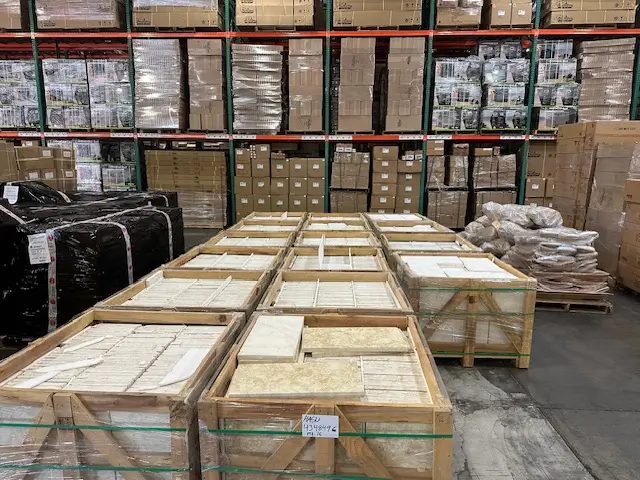
What catches most specifiers off-guard is how UV exposure interacts with surface finish. Your honed finishes on walnut selections will show color evolution more uniformly than tumbled finishes, where the textured surface creates micro-shadows that preserve darker tones in recessed areas. For projects requiring warehouse staging before installation, you need to ensure materials aren’t exposed to direct sun for extended periods, as uneven UV exposure during storage creates visible color banding once installed.
Efflorescence Visibility and Management
Here’s what you need to know about efflorescence on travertine colors Arizona climate produces — it’s not if it appears, it’s how visible it becomes. The white salt deposits that migrate through the stone’s pore structure during wet-dry cycles show dramatically more on walnut travertine pavers than on ivory alternatives. You’re dealing with basic visual contrast physics that no sealer completely prevents.
Your specification approach needs to address this reality. When you select ivory travertine Phoenix applications, efflorescence still occurs at the same rate, but it blends with the base color and becomes nearly invisible to casual observation. The same mineral deposits on darker walnut create obvious white streaks that clients immediately notice and often misinterpret as defects.
- You should specify Type I Portland cement in setting beds rather than blended cements to minimize efflorescence source materials
- Your base preparation must ensure drainage coefficients exceed 8 inches per hour to prevent subsurface water accumulation
- You need to educate clients that first-year efflorescence on darker colors requires 2-3 cleaning cycles before stabilizing
- Arizona paver color selection for commercial applications often defaults to lighter tones specifically to reduce maintenance visibility
Heat Island Mitigation Strategies
When you’re working on projects with sustainability requirements or LEED considerations, heat reflective stone colors become specification mandates rather than preferences. The heat island effect around darker paving can elevate ambient temperatures 8-12°F within 10 feet of the installation. Your ivory travertine Phoenix specifications contribute to measurable temperature reductions that affect both outdoor comfort and building energy performance.
You’ll find that combining color selection with proper material placement creates synergistic benefits. Positioning lighter colors in high-traffic areas and transitioning to walnut travertine pavers in shaded zones gives you aesthetic variation while maintaining thermal performance. The key is ensuring your lighter installations cover at least 60% of sun-exposed surfaces to achieve meaningful heat island reduction.
For guidance on material sourcing and technical specifications, see full-service travertine yard in Chandler for comprehensive product comparisons. Your thermal modeling should incorporate actual solar reflectance values rather than assumed figures, as the specific stone source affects these measurements by 10-15 percentage points.
Maintenance and Long-Term Appearance Retention
You need to set realistic maintenance expectations based on color choice from day one. Ivory travertine Phoenix installations require resealing every 18-24 months to maintain water resistance and prevent organic staining from desert dust accumulation. Your walnut selections need the same sealing frequency, but the visible results differ significantly. Wear patterns, minor scratches, and sealed-versus-unsealed areas show much less on ivory tones.
The maintenance visibility issue becomes critical for commercial applications where consistent appearance affects property values. When you specify Arizona paver color selection for retail, hospitality, or high-end residential projects, you’re essentially choosing between materials that gracefully show patina development versus those that telegraph every maintenance cycle variation.
- You should specify penetrating sealers rather than film-forming products for both color families to maintain slip resistance
- Your maintenance protocols must include pH-neutral cleaners exclusively — alkaline products accelerate color shifting on walnut tones
- You need to plan for joint sand color coordination — mismatched joint sand shows significantly more on ivory installations
- Warehouse stock rotation matters for color consistency — verify that your material shipments come from the same production lot
Cost and Availability Considerations
Here’s what affects your project budgeting — ivory travertine Phoenix material typically costs 8-12% more than walnut alternatives from the same quarry source. This price differential reflects market demand rather than production costs, as both colors come from similar geological formations. You’ll find that warehouse inventory levels favor ivory during peak construction season (October through April) because contractors stock up on the higher-demand color.
Your procurement timing needs to account for lead times that vary by color. During busy periods, you might secure walnut travertine pavers within 5-7 days from regional warehouses, while comparable ivory materials may require 10-14 days. This becomes critical when you’re coordinating installation schedules with other trades or working under tight completion deadlines.
Transportation costs also factor into color economics. Because ivory sells faster, distributors maintain larger inventory positions, which means your truck delivery charges may include lower fuel surcharges due to more efficient routing. For projects requiring 3,000+ square feet, negotiating warehouse direct pricing rather than retail markup can save 15-18% regardless of color choice.
Slip Resistance and Texture Interactions
When you evaluate travertine colors Arizona climate safety requirements, you’re balancing slip resistance with surface temperature comfort. Your finish selection affects both properties, but color plays an unexpected role. Darker walnut travertine pavers with tumbled finishes absorb moisture faster during morning dew conditions, which temporarily reduces slip resistance for 30-45 minutes after sunrise. Ivory alternatives with identical tumbling patterns dry 10-15 minutes faster due to higher surface temperatures from early morning sun exposure.
You need to specify appropriate finishes based on application zones and color choice. Pool deck installations universally require tumbled or chiseled finishes regardless of color to achieve DCOF ratings above 0.50 in wet conditions. Your ivory travertine Phoenix specifications around water features should include slightly more aggressive texturing than walnut installations to compensate for the higher traffic these cooler surfaces attract.
- You should verify slip resistance testing occurred on the specific color and finish combination you’re specifying
- Your specification must address that polished finishes are unsuitable for exterior Arizona applications regardless of color
- You need to understand that filled travertine requires different texture approaches than unfilled materials
- Heat reflective stone colors with inadequate texturing create liability issues despite temperature advantages
Design Integration and Architectural Context
Your color selection needs to harmonize with surrounding architectural elements and regional design vernacular. Contemporary Arizona architecture increasingly favors lighter palettes that complement desert minimalism and reduce visual heat perception. When you specify ivory travertine Phoenix installations for modern projects, you’re aligning with design trends that emphasize clean lines and thermal comfort aesthetics.
Traditional southwestern and Mediterranean revival styles often call for warmer tones where walnut travertine pavers provide authentic material character. You’ll find these darker colors create stronger contrast with stucco walls and clay roof tiles, delivering the visual depth these architectural styles require. The key is ensuring your paving color doesn’t compete with vertical surface colors but rather creates intentional complementary relationships.
Landscape integration requires equal attention. Your lighter travertine colors Arizona climate installations provide better backdrop for desert plantings with silver-gray foliage, while darker tones better complement the green tones of irrigated landscape areas. You should coordinate paving selection with landscape architects early in design development to ensure unified site aesthetics.
Installation Timing and Temperature Constraints
You face different installation windows depending on color choice due to thermal performance during construction. Summer installations of walnut travertine pavers create challenging working conditions when material surface temperatures exceed 140°F. Your installation crews struggle with material handling, and setting materials become difficult to work as they flash-set under extreme heat. Ivory alternatives remain 20-25°F cooler, extending viable installation hours by 2-3 hours on either end of the workday.
Winter installations present opposite considerations. The thermal mass properties that make walnut problematic in summer become advantages during cooler months. Your darker materials reach working temperature faster during winter mornings, allowing earlier start times. This matters when you’re managing project schedules with compressed timelines or coordinating with other temperature-sensitive trades.
- You should specify installation temperature ranges in your technical specifications — typically 45°F to 95°F for optimal results
- Your construction schedule must account for summer afternoon shutdowns when surface temperatures exceed safe working conditions
- You need to coordinate warehouse deliveries to arrive during cooler morning hours to prevent material heat buildup on trucks
- Arizona paver color selection affects labor productivity by 15-20% during extreme temperature periods
Resale Value and Market Preferences
When you’re specifying materials for investment properties or spec homes, you need to understand current market preferences for travertine colors Arizona climate homebuyers favor. Real estate data from the past five years shows properties with lighter-toned outdoor living spaces command 3-5% premiums in comparable sales analysis. This reflects buyer perception of lower maintenance requirements and better thermal comfort.
Your ivory travertine Phoenix specifications align with current market preferences, but you should recognize these trends shift over 7-10 year cycles. What sells premium today may become standard expectation tomorrow. The safer specification approach combines both colors in thoughtful zoning — lighter tones in primary use areas with darker accent borders or bands that add visual interest without dominating thermal performance.
Commercial properties show different patterns. Retail and hospitality applications increasingly favor lighter heat reflective stone colors because they photograph better for marketing materials and reduce customer discomfort during summer months. Your specification decisions for these property types should prioritize function over aesthetic trends, as tenant satisfaction directly affects lease renewal rates and property values.
Travertine Stone Arizona: Citadel Specifications for Regional Projects
When you consider Citadel Stone’s travertine installations for your Arizona projects, you’re evaluating premium materials specifically selected for extreme climate performance. At Citadel Stone, we provide technical guidance for hypothetical applications across Arizona’s diverse microclimates, from low desert basins to high country transitions. This section outlines how you would approach specification decisions for three representative metropolitan areas, each presenting distinct challenges for travertine colors Arizona climate conditions demand.
Phoenix Metro Specifications
In Phoenix, you’ll encounter the most extreme heat conditions in the state, with 110°F+ temperatures occurring 25-35 days annually. Your material selection for pool decks, patios, and walkways would prioritize ivory travertine Phoenix applications to maximize solar reflectance. You should specify tumbled finishes with DCOF ratings minimum 0.52 for wet areas and 0.48 for dry zones. The installation would require expansion joints every 12 feet in east-west orientations and 15 feet in north-south runs to accommodate thermal cycling. You’d need to verify warehouse stock includes materials from consistent production lots to prevent color banding across large installations. Your base preparation would specify Class II road base compacted to 95% modified Proctor density with minimum 4-inch depth for residential applications.
Tucson Heat Considerations
Your Tucson specifications would address slightly higher elevation (2,400 feet) and increased monsoon moisture compared to Phoenix. You’d still favor heat reflective stone colors for thermal performance, but you’d need to account for more aggressive efflorescence potential during July-September monsoon season. The specification would require penetrating sealers applied within 30 days of installation to minimize salt migration visibility. You should plan for walnut travertine pavers in covered ramada areas and building transitions where thermal performance becomes less critical than aesthetic warmth. Your drainage specifications would require minimum 2% slope away from structures, increasing to 3% within 10 feet of pool coping. At Citadel Stone, we would recommend addressing subsurface drainage with 3-inch aggregate base layers rather than relying solely on surface slope.
Scottsdale Luxury Applications
In Scottsdale’s high-end residential market, you would balance thermal performance with sophisticated design aesthetics. Your specifications might incorporate Arizona paver color selection strategies that zone lighter ivory travertine Phoenix materials in primary entertainment areas while introducing walnut accents in 12-18 inch borders and geometric inlays. You’d specify premium select grades with minimal color variation to meet the exacting standards typical of luxury properties. The installation would require laser-guided screeding to achieve flatness tolerances within 1/8 inch over 10 feet. You should coordinate with landscape architects to ensure paving transitions complement water features, fire elements, and outdoor kitchens. Your sealer specification would include initial application plus two maintenance coats during the first 18 months to establish optimal protection before standard biennial maintenance cycles.
Specification Documentation Requirements
You need to develop comprehensive technical specifications that address color-specific performance requirements for travertine colors Arizona climate demands. Your documentation should reference ASTM C1528 for slip resistance verification, ASTM C99 for modulus of rupture testing, and ASTM C880 for flexural strength. These aren’t just boilerplate references — you’re establishing measurable performance criteria that protect both you and your client from substandard materials.
- You should specify minimum compressive strength of 8,500 PSI for Arizona exterior applications regardless of color
- Your absorption rate specifications must not exceed 5% by weight to ensure freeze-thaw durability in higher elevations
- You need to require color consistency documentation showing Delta E values within 3.0 units across material lots
- Heat reflective stone colors should include verified Solar Reflectance Index (SRI) values in submittal documentation
Your specification sections need to address installation methodology differences for light versus dark colors. Walnut travertine pavers require additional attention to uniform joint spacing because shadows accentuate irregularities that lighter colors visually forgive. You should specify laser-guided installation for both colors on commercial projects, but this becomes particularly critical for darker tones.
Climate Adaptation and Future Considerations
As Arizona’s climate continues evolving with documented temperature increases averaging 0.5°F per decade, your material specifications need to anticipate future performance requirements. The travertine colors Arizona climate demanded 20 years ago may not align with conditions your installations will face over their 30-40 year service lives. You’re essentially specifying for climate scenarios that haven’t yet occurred but are predictable based on current trends.
Your forward-thinking specifications would increasingly favor ivory travertine Phoenix characteristics — high solar reflectance, lower thermal mass, and better moisture management. These properties provide adaptation capacity as temperature extremes intensify and precipitation patterns shift toward more concentrated events separated by longer dry periods. You should discuss these long-term performance considerations with clients during material selection, as the modest cost premium for optimized colors becomes negligible over multi-decade timeframes.
The sustainability implications extend beyond individual projects. When you specify heat reflective stone colors across multiple installations, you’re contributing to measurable urban heat island reduction at neighborhood scales. This affects not just individual property comfort but broader community livability and municipal energy consumption patterns.
Final Selection Guidance
Your professional specification process requires you to balance thermal performance, aesthetic preferences, maintenance realities, and budget constraints. The technical advantages of ivory travertine Phoenix applications are clear — lower surface temperatures, reduced heat island effects, and minimal efflorescence visibility. However, you’ll find that successful projects often incorporate both color families in strategic zoning that optimizes each material’s strengths.
You should develop decision matrices that weight performance factors according to specific project priorities. Pool decks and primary entertainment areas favor lighter colors for thermal comfort. Building transitions and covered areas accommodate darker walnut travertine pavers without thermal penalties. The key is making intentional, documented decisions rather than defaulting to single-color specifications across entire sites.
Your client communication needs to establish realistic expectations about how each color performs, ages, and requires maintenance under Arizona’s demanding conditions. When you present color options with this level of technical depth, you’re demonstrating the expertise that distinguishes professional specification from simple material selection. For additional installation insights, review French pattern travertine paver layouts for Mesa residential projects before you finalize your project documents. Noce travertine grades come from Citadel Stone’s premium peruvian travertine suppliers in Arizona selections.