

When you specify stone facades for high-rise construction in Arizona, you’re dealing with wind forces that exceed conventional residential applications by significant margins. Your design needs to account for exposure categories that shift dramatically as building height increases, and you’ll encounter pressure coefficients that vary across facade zones in ways that generic tables don’t capture. Wind load stone calculations Arizona demand precision because a miscalculation at the specification stage creates liability that extends through the entire project lifecycle.
You should understand that Arizona’s wind environment presents unique challenges — the state experiences extreme thermal gradients that affect atmospheric stability, creating turbulence patterns not adequately addressed by simplified code provisions. When you work on tall building design in urban cores like Phoenix or Temso, the urban heat island effect modifies wind behavior in ways that require you to adjust your structural calculations beyond baseline code minimums. Your responsibility includes recognizing when standard calculation methods fall short and when you need specialized wind tunnel testing.
Exposure Classification and Base Wind Pressure
You need to start with accurate exposure category determination because this single decision affects every subsequent calculation in your wind load analysis. Arizona’s desert terrain typically qualifies as Exposure C or D, but you’ll find transition zones near urban development where exposure shifts within a single project site. Your wind load stone calculations Arizona must account for these transitions because pressure coefficients can vary by 25-30% between adjacent exposure categories.
The base wind speed for Arizona ranges from 105 to 115 mph for Risk Category II structures, but when you’re specifying for tall building design, you’re likely working with Risk Category III or IV, which increases design wind speeds by 10-15%. You should verify local amendments to ASCE 7 because some Arizona jurisdictions have adopted modified wind speed maps based on localized meteorological data. For guidance on material performance under extreme conditions, see Citadel Stone building stone available for comprehensive comparison data across different stone types.
Here’s what catches most specifiers off-guard with wind pressure calculations — the velocity pressure exposure coefficient (Kz) increases exponentially with height, not linearly. At 15 feet, your Kz might be 0.85 in Exposure C, but at 200 feet it jumps to 1.53, nearly doubling your design pressure. You’ll need to calculate pressure at multiple height intervals for tall building design, typically every 20-30 feet of elevation change, because using a single averaged coefficient creates unsafe conditions in upper facade zones.
- Verify exposure category within 1,000 feet of your building footprint in all directions
- Calculate Kz values at maximum 30-foot vertical intervals for buildings exceeding 60 feet
- Apply topographic factors (Kzt) when your site is within 2 miles of escarpments or ridges
- Account for directionality factors that vary by building geometry and orientation
Pressure Coefficient Variations Across Facade Zones
Your facade experiences dramatically different pressure distributions depending on location — corner zones, edge zones, and field zones each require different pressure coefficients (GCp) in your wind load stone calculations Arizona. What often surprises engineers is that corner zones experience negative pressures (suction) that exceed positive pressure zones by 40-60%, creating uplift forces that demand different anchorage strategies than you’d use in field zones.
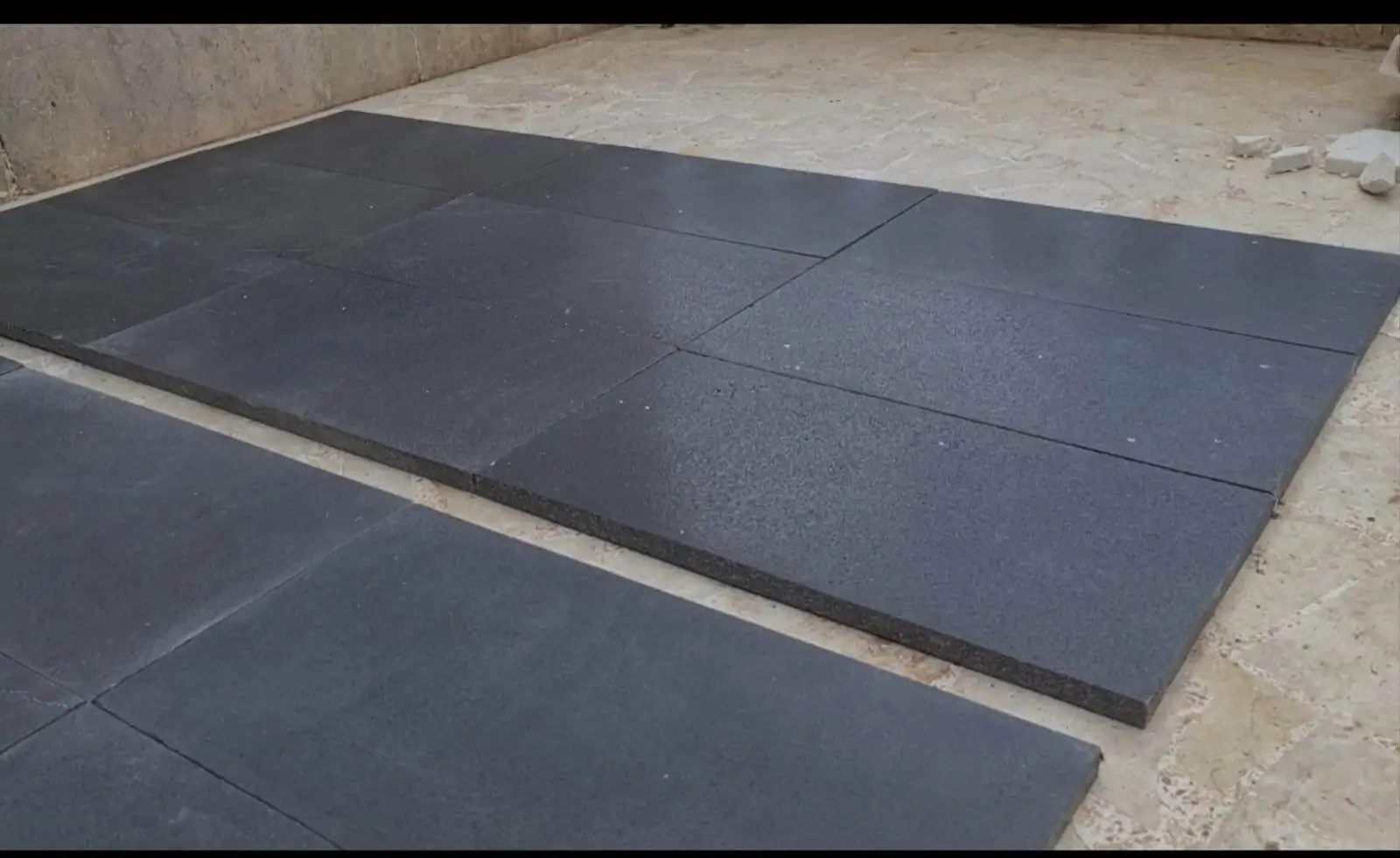
For tall building design, you’re required to define effective wind areas for each panel or stone unit, and this calculation determines which pressure coefficient table you reference. Stone panels with effective wind areas below 10 square feet use Component and Cladding (C&C) coefficients, while larger assemblies may qualify for Main Wind Force Resisting System (MWFRS) coefficients. You should recognize that C&C coefficients are typically 30-50% higher than MWFRS values, significantly impacting your anchorage requirements and stone thickness specifications.
The distinction between positive and negative pressure zones affects your structural calculations in ways that extend beyond simple magnitude differences. When you design for positive pressure (windward zones), you’re primarily concerned with compressive capacity and panel deflection. In negative pressure zones (leeward, side walls, and corners), you need to verify tensile capacity of anchors, uplift resistance of the stone itself, and potential for progressive failure if one anchor point fails. Your load analysis must address both conditions independently because failure modes differ completely.
Stone Material Properties Affecting Wind Resistance
You can’t separate wind load calculations from material selection because stone properties directly influence both the loads your facade experiences and its capacity to resist them. The density of your selected stone affects dead load, which provides beneficial resistance to uplift in negative pressure zones but increases seismic demands in Arizona’s moderate seismic zones. You’ll find that limestone typically ranges from 135-165 pcf, while granite runs 160-180 pcf, and this 25-30% density variation changes your load combinations significantly.
Flexural strength becomes your governing property for wind load stone calculations Arizona when you’re working with thin stone veneers or large panel dimensions. Your specification should require four-point bend testing per ASTM C880, but you need to understand that published flexural strengths assume ideal conditions. In practice, you should apply a 30-40% reduction factor to catalog values to account for natural stone variability, micro-cracking from fabrication, and strength reduction from weathering. For a 30mm thick limestone panel, your effective flexural strength might be 800-1,000 PSI rather than the 1,400 PSI shown in product literature.
- Specify minimum flexural strength based on maximum calculated tensile stress plus 2.5x safety factor
- Require compressive strength minimum 8,000 PSI for exterior cladding applications
- Verify thermal expansion coefficients match adjacent materials within 15% to prevent differential movement
- Test absorption rates because stones exceeding 3% absorption require modified anchorage details
The modulus of elasticity determines panel deflection under wind load, and this becomes critical when you’re designing against deflection limits rather than strength limits. You should understand that stone deflection criteria aren’t just about aesthetics — excessive deflection creates stress concentrations at anchor points that can initiate progressive failure. Your industry certifications and testing protocols should verify that mid-span deflection under design wind load doesn’t exceed L/600 for visibility reasons and L/360 for structural integrity.
Anchorage Systems and Load Transfer Mechanisms
When you design anchor systems for stone facades, you’re creating the critical load path between wind pressure and the building structure, and this is where most field failures originate. Your structural calculations must account for anchor capacity in shear, tension, and combined loading conditions because wind creates multi-directional forces that vary across the facade. You’ll find that corner anchors often experience combined tension and shear that reduces their capacity by 35-50% compared to single-axis loading.
The anchor type you specify determines load distribution patterns across the stone panel. Kerf anchors create stress concentrations at specific points, requiring you to verify local bearing stresses don’t exceed stone capacity at the anchor location. Through-bolt systems distribute loads more evenly but require you to account for the weakening effect of drilling holes through the stone — each hole reduces effective cross-section and creates potential crack initiation points. Your wind load stone calculations Arizona need to address both global panel capacity and local capacity at anchor locations.
Here’s what requires careful attention in tall building design — differential movement between stone and structure. Your building frame deflects under wind load, creating displacement at anchor points that the stone system must accommodate without overstressing. You should specify anchor systems with minimum 1/4-inch multi-directional movement capacity for buildings exceeding 100 feet in height, increasing to 3/8-inch for buildings over 200 feet. This movement capacity must exist while maintaining load transfer capability, which eliminates many low-cost anchor systems from consideration.
Thickness Requirements and Panel Sizing Criteria
You’ll encounter a direct relationship between stone thickness and maximum allowable panel dimensions under wind load, and this relationship isn’t linear — it follows a cubic function that means small thickness increases provide disproportionate capacity gains. A 30mm panel might span 24 inches between supports under your design wind pressure, but increasing to 40mm allows you to span 36 inches, a 50% dimension increase from a 33% thickness increase. Your load analysis should explore this relationship because optimizing thickness versus panel size often reduces overall project costs despite higher material expenses.
The maximum unsupported dimension you can specify depends on your wind pressure, stone flexural strength, and acceptable deflection limits. For typical Arizona wind loads (30-45 PSF on upper facades of tall building design), you’ll find that 30mm limestone limits you to approximately 20-24 inch maximum spans in high-pressure zones. If you’re working in corner zones with pressure coefficients reaching -65 to -85 PSF, your maximum span drops to 14-18 inches at the same thickness. You need to create zone-specific panel layouts that respond to calculated pressures rather than using uniform sizing across the facade.
- Calculate required thickness using T = sqrt(P × S² / (8 × Fb × FS)), where P is pressure, S is span, Fb is flexural strength, and FS is safety factor
- Verify L/600 deflection limit using actual modulus of elasticity from testing, not catalog values
- Increase thickness by 10mm minimum in corner zones compared to field zones on the same facade
- Account for thickness tolerance stacking when panels abut — specify clearances of 3/16 inch minimum
You should recognize that thicker isn’t always better from a system performance perspective. As stone thickness increases beyond 50mm, you’re adding significant dead load that increases seismic forces and structural frame requirements. Your warehouse stock typically includes 30mm, 40mm, and 50mm thicknesses, and you’ll find that 40mm represents the optimal balance for most tall building design applications in Arizona — adequate capacity without excessive weight. Going to 60mm or greater usually indicates a design inefficiency that could be resolved through revised panel sizing or additional support points.
Wind Tunnel Testing and When It’s Required
You’re required to conduct wind tunnel testing for buildings exceeding certain height thresholds, and in Arizona, that threshold is typically 120 feet for Risk Category II structures and lower for higher risk categories. What many specifiers don’t realize is that wind tunnel testing isn’t just a compliance exercise — it frequently reveals pressure distributions that differ from code-prescribed values by 20-40%, sometimes in your favor but often creating higher localized pressures that would compromise a code-based design.
The wind tunnel process provides you with pressure coefficients specific to your building geometry, orientation, and surrounding terrain. You’ll receive pressure distributions across hundreds of facade zones rather than the simplified corner/edge/field zones from code provisions. When you’re working on tall building design with complex geometries, irregular shapes, or significant nearby structures, wind tunnel data becomes essential because code provisions explicitly state they don’t apply to buildings with atypical configurations. Your wind load stone calculations Arizona based on tunnel testing will be more accurate but almost always more complex, requiring zone-by-zone analysis rather than simplified approaches.
At Citadel Stone, we recommend initiating wind tunnel discussions early in design development because results may require you to modify building shape, orientation, or facade articulation to manage wind loads effectively. You should budget 12-16 weeks for tunnel testing from contract to final report, and costs typically range from $35,000 to $75,000 depending on model complexity. This investment often pays for itself through optimized structural calculations that reduce anchorage density or allow thinner stone selections in lower-pressure zones.
Combined Loading Conditions and Load Factors
Your facade design must address wind loads in combination with other forces, and these load combinations often govern design rather than wind alone. You need to evaluate dead load plus wind, dead load plus wind plus thermal, and dead load plus wind plus seismic for Arizona applications. What catches engineers off-guard is that thermal loads can equal or exceed wind loads in magnitude — a 100°F temperature swing creates significant expansion forces that combine with wind pressure to increase stress in stone panels and anchorage systems.
The load factors you apply vary by load combination, and ASCE 7 provides multiple combinations that you must evaluate independently. For strength design, you’ll typically use 1.0D + 1.0W, where D is dead load and W is wind load, but when you add thermal effects, the combination becomes 1.0D + 1.0W + 0.5T. You should understand that dead load can be beneficial or detrimental depending on load direction — in negative pressure zones, dead load reduces net uplift (beneficial), but in positive pressure zones, it adds to compressive demand (detrimental).
- Evaluate minimum six load combinations per ASCE 7 Section 2.3 for each facade zone
- Account for thermal gradients of 80-100°F for dark stone in Arizona direct sun exposure
- Apply seismic interaction factors when buildings exceed 100 feet in Seismic Design Category C or higher
- Verify serviceability combinations using reduced load factors to check deflection criteria
When you’re conducting load analysis for structural calculations, you need to recognize that maximum stress in the stone doesn’t necessarily occur at maximum wind speed. The critical load case might be moderate wind combined with extreme thermal gradient, or minimum dead load (manufacturing tolerance) combined with maximum uplift. Your analysis should explore multiple scenarios across the range of probable conditions, not just the single worst-case assumption for each individual load type.
Deflection Limits and Performance Criteria
You must design stone facades to meet both strength and serviceability criteria, and in many Arizona applications, deflection limits govern rather than material strength. The industry certifications and standards typically require L/600 maximum deflection for visibility and L/360 for structural performance, but these limits apply to different loading conditions. You’ll use L/600 for total load combinations to prevent visible bowing or distortion, while L/360 applies to incremental wind load only to ensure structural integrity.
What requires careful consideration in your wind load stone calculations Arizona is that deflection compounds when you have multiple support spans. If individual panels each deflect to their allowable limit, the cumulative effect across a large facade creates noticeable waviness that reads as quality deficiency even though each panel meets specification. You should consider specifying tighter deflection criteria (L/800 or L/1000) for facades with repetitive geometry where cumulative effects become visually apparent, particularly on street-level facades where viewing angles emphasize surface irregularities.
The relationship between deflection and stress concentration at anchors is significant but often overlooked. As your panel deflects under wind load, rotation occurs at anchor points, creating prying action that increases local stress beyond simple shear or tension. You need to account for this effect in your structural calculations, particularly for edge-mounted anchors on thin panels. Testing shows that prying action can increase effective anchor stress by 25-35% compared to pure axial loading, and this factor should be included in your safety factor calculations.
Safety Factors and Design Margins
When you establish safety factors for stone facade systems, you’re accounting for material variability, installation tolerances, strength reduction over time, and uncertainties in load prediction. The industry standard minimum safety factor is 2.5 for natural stone in tension (flexural loading), and 4.0 for anchorage systems, but you should understand these represent bare minimums. For tall building design in Arizona’s harsh environment, professional practice indicates using 3.0-3.5 for stone and 5.0-6.0 for anchors provides appropriate long-term reliability.
Your safety factors need to address multiple uncertainty sources independently rather than lumping everything into a single factor. Material strength varies by 20-30% within a single block of stone, fabrication processes can introduce micro-cracking that reduces strength by 15-25%, and environmental exposure degrades surface strength by 10-15% over 30 years. You should apply factors that compound to address all sources: base strength × 0.75 (variability) × 0.80 (fabrication) × 0.85 (weathering) × 2.5 (safety) = effective design strength approximately 1.3 times ultimate load.
- Apply minimum 3.0 safety factor to stone flexural strength for exterior facade applications
- Use minimum 5.0 safety factor for mechanical anchors in tension or combined loading
- Increase safety factors by 0.5 for stones with absorption rates exceeding 2%
- Apply additional 1.2 factor for facades with limited inspection access during installation
You’ll find that anchor safety factors deserve particular attention because failure modes differ from stone failure. Stone typically fails progressively, showing cracking or spalling before complete failure, giving warning of distress. Anchors can fail suddenly without warning, particularly in fatigue under cyclic wind loading. Your wind load stone calculations Arizona should recognize this difference by applying higher factors to anchorage components than to stone panels, creating a failure hierarchy where stone shows distress before anchors reach capacity.
Quality Control and Testing Protocols
You need comprehensive testing protocols that verify your stone meets specified properties and that installed systems perform as calculated. The industry certifications require testing per ASTM standards, but you should understand that standard test frequencies may be inadequate for large projects. You’ll want to specify testing for each production lot, not just each quarry block, because properties can vary significantly even within supposedly uniform material from the same source.
Your testing program should include flexural strength (ASTM C880), compressive strength (ASTM C170), absorption (ASTM C97), and modulus of rupture at minimum. For tall building design, you should add freeze-thaw testing (ASTM C666) even in Arizona because upper-level facades can experience freezing conditions that ground-level climate data doesn’t capture. Testing shows that buildings above 300 feet in elevation can experience 15-25 freeze-thaw cycles annually in northern Arizona locations, sufficient to cause deterioration in stones with marginal freeze-thaw resistance.
Field testing of installed systems provides verification that your structural calculations translate to actual performance. You should specify pull testing of anchor systems at 150% of design load for a minimum 5% of installed anchors, distributed across all facade zones and installation crews. This testing frequently reveals installation deficiencies that aren’t apparent through visual inspection — anchor depths 10-15% shallower than specified, incorrect anchor orientation creating reduced capacity, or substrate conditions that don’t match design assumptions.
Citadel Stone – Premier stone hardscape in Arizona Specifications for Arizona High-Performance Applications
When you consider Citadel Stone’s stone hardscape in Arizona options for your Arizona high-rise project, you’re evaluating materials engineered for extreme environmental conditions and structural demands. At Citadel Stone, we provide technical guidance for hypothetical tall building applications across Arizona’s diverse climate zones. This section outlines how you would approach wind load stone calculations Arizona for three representative cities, demonstrating the specification adjustments required by regional conditions.
You’ll find that our stone hardscape in Arizona inventory includes materials tested specifically for the combined stresses of high wind loads, extreme thermal cycling, and intense UV exposure characteristic of Arizona installations. Your specification decisions should account for how these factors interact rather than evaluating them independently, because material performance under combined loading differs from single-factor test results.
Yuma Facade Considerations
In Yuma, you would encounter base wind speeds of 105 mph combined with extreme thermal conditions reaching 120°F surface temperatures on south and west facades. Your wind load stone calculations Arizona for this location should account for Exposure C conditions typical of the flat desert terrain. You’d specify stone with proven thermal stability and flexural strength minimum 1,200 PSI to handle combined thermal and wind stresses. The low humidity in Yuma creates rapid thermal cycling as temperatures drop 30-40°F after sunset, creating fatigue conditions that require you to apply additional safety factors of 1.15-1.25 to standard calculations.
Mesa Urban Applications
When you design for Mesa’s urban environment, you would address modified wind patterns from surrounding development and urban heat island amplification of thermal loads. Your tall building design in this location should account for transitional exposure categories that shift from Exposure B near dense development to Exposure C in open areas. You’d calculate wind pressures at 10-15% above baseline code values for corner zones where urban channeling effects concentrate flow. Material selection would emphasize stones with thermal expansion coefficients below 6.0 × 10⁻⁶ per °F to minimize differential movement between stone and aluminum or steel support systems common in commercial construction.
Gilbert Climate Factors
Your Gilbert applications would benefit from slightly moderated temperatures compared to urban cores but would require you to address rapid suburban development changing wind exposure conditions. You should specify load analysis that anticipates future construction within 1,000 feet of your building that could modify exposure category from D to C. The structural calculations for Gilbert projects would incorporate wind speeds of 110 mph for Risk Category III structures, typical of the commercial and institutional buildings dominating recent development. You’d recommend anchor systems with enhanced corrosion protection because Gilbert’s irrigation-intensive landscaping creates localized humidity that accelerates corrosion of carbon steel components, reducing long-term capacity by 15-20% compared to arid locations.
Documentation and Specification Requirements
You need comprehensive documentation that demonstrates your wind load stone calculations Arizona comply with code requirements and provide a clear basis for construction. Your specification package should include calculation sheets showing wind pressure by facade zone, stone stress analysis for critical panels, anchor capacity verification, and deflection calculations for maximum span conditions. You’ll find that building departments increasingly require PE-stamped calculations for stone facades on buildings exceeding 40 feet, and you should budget for third-party peer review on projects over 100 feet or Risk Category III and above.
The specification narrative must translate your calculations into clear installation requirements that field crews can execute. You should specify anchor types, locations, and installation torque values by facade zone. Generic specifications that reference “manufacturer’s recommendations” create ambiguity that leads to field interpretation and inconsistent installation. Your specifications should state explicit requirements: “Install stainless steel kerf anchors at 18-inch vertical spacing and 24-inch horizontal spacing in field zones, reducing to 16-inch vertical and 20-inch horizontal in edge zones, with installation torque of 15-18 ft-lbs verified by calibrated torque wrench.”
You’ll need shop drawing review procedures that verify fabricator interpretation of your design intent. Shop drawings should show anchor locations dimensioned from panel edges, material certifications demonstrating specified properties, and fabrication tolerances for critical dimensions. At Citadel Stone, we recommend requiring fabricator calculations that verify their panel layouts and anchor spacing achieve the required capacities from your design calculations, creating an additional verification layer before production begins.
Field Verification and Installation Oversight
Your design assumptions require field verification because actual conditions frequently differ from design documents. You should specify pre-installation mock-ups that allow testing of anchor pull-out capacity, verification of substrate conditions, and evaluation of installation sequencing. These mock-ups typically measure 8 feet by 8 feet minimum and include all facade zone types represented in the project. Testing at 150% design load confirms adequate capacity and reveals installation issues before they’re replicated across thousands of square feet.
Installation oversight should include verification of substrate preparation, anchor installation depth and angle, and panel positioning within specified tolerances. You’ll find that anchor depth variations of 1/4 inch can reduce capacity by 15-20%, and angle deviations beyond 5 degrees create eccentric loading that reduces capacity by similar amounts. Your quality control protocol should require verification measurements for minimum 10% of anchors, with increased frequency if deficiencies are identified. Professional practice indicates that projects with dedicated installation oversight experience 60-70% fewer punch-list items and warranty claims compared to projects relying solely on contractor self-inspection.
- Verify substrate concrete or CMU compressive strength meets minimum 2,500 PSI before anchor installation
- Confirm anchor embedment depth using depth gauges for minimum 10% of installed anchors
- Document actual panel spans and compare to design maximums before accepting installation
- Test joint widths and sealant installation to ensure accommodation of calculated thermal movement
You should recognize that wind load performance depends on proper joint treatment as much as structural capacity. Joints must accommodate thermal movement without overstressing adjacent panels, and sealants must maintain weatherproofing while allowing movement. Your field verification should confirm joint widths match calculated movement requirements with appropriate safety margin — typically 50% larger than calculated maximum movement to account for uncertainties and long-term sealant degradation.
Long-Term Performance Monitoring
Your responsibility extends beyond installation to ensuring long-term performance monitoring protocols are established. You should recommend periodic inspection programs that verify anchor integrity, identify early signs of stone deterioration, and confirm that maintenance procedures don’t compromise structural capacity. For tall building design, these inspections should occur at 2-year intervals for the first 6 years, then 5-year intervals thereafter, with increased frequency if issues are identified.
Monitoring should focus on high-stress zones where first signs of distress typically appear — corner panels, upper-level facades with maximum wind exposure, and panels adjacent to building features that create local pressure concentrations. You’ll want to document crack propagation, spalling, anchor corrosion, and joint sealant condition. Digital photography from consistent locations allows comparison over time to identify progressive degradation that might not be apparent during single-point inspections. This documentation creates a performance database that informs maintenance decisions and validates your original structural calculations.
The inspection program should include periodic re-evaluation of design assumptions as surrounding development modifies wind exposure conditions. If new construction occurs within 500 feet of your building, you should reassess exposure category and consider whether changed wind patterns create loads exceeding original design. This rarely requires facade modification but might indicate need for enhanced inspection frequency or anchor supplementation in affected zones. Your professional specification process requires you to balance performance requirements with budget constraints while ensuring long-term durability. For additional installation insights, review Mortar mix design optimization for stone masonry in arid climates before you finalize your project documents. Citadel Stone simplifies the procurement process for all your building supplies stone in Arizona with our selected quarry-direct sourcing.