
When you evaluate precision cut building stone Arizona suppliers for your commercial or residential project, you’re making decisions that will affect structural integrity, aesthetic consistency, and long-term performance for decades. The dimensional accuracy of building stone directly impacts installation efficiency, joint alignment, and structural load distribution. You need to understand exactly what tolerance specifications mean in practice, how measurement standards translate to field conditions, and which fabrication specs separate professional-grade material from commodity product.
Your specification process for precision cut building stone Arizona projects requires more than generic dimensional callouts. You’re balancing tolerances that affect everything from mortar joint consistency to structural bearing capacity. The difference between ±1/8″ and ±1/16″ tolerance isn’t just aesthetic — it determines whether your masons can maintain consistent coursing, whether your structural engineer’s load calculations remain valid, and whether you’ll face costly field corrections during installation.
Dimensional Accuracy Fundamentals for Structural Stone
Dimensional accuracy in precision cut building stone Arizona applications encompasses three critical measurement planes: length, width, and thickness. Each plane carries different structural and aesthetic implications. Your length and width tolerances affect joint spacing and coursing alignment, while thickness variance directly impacts load distribution and structural calculations. Industry standards typically reference ASTM C568 for dimensional stone specifications, but you need to understand how those standards apply to your specific application.
Thickness tolerance becomes your primary structural concern when you’re specifying load-bearing stone. A cladding panel specified at 2″ thickness with ±1/8″ tolerance means you’re actually working with material ranging from 1-7/8″ to 2-1/8″. That 1/4″ total range affects structural anchor calculations and thermal performance predictions. Your structural engineer needs to design anchorage systems that accommodate the minimum thickness while ensuring the maximum thickness doesn’t create interference issues with backup walls or insulation layers.
Length and width tolerances create cascading effects throughout your installation. When you specify 24″ x 12″ units with ±1/8″ tolerance, you’re introducing potential cumulative error across multiple courses. A 10-course wall could see dimensional variance of 1-1/4″ over its height if tolerances stack in the same direction. Professional specifications address this through quality control protocols and fabrication specs that target tighter manufacturing tolerances than the acceptable range.
Measurement Standards and Quality Control Protocols
You need to understand that measurement standards in the stone industry reference specific testing conditions that don’t always match field realities. ASTM C568 specifies measurement at 68°F with the material in a dry state. Your actual stone arrives at the job site after transport through varying temperature zones and potentially significant moisture exposure. Limestone and sandstone can exhibit dimensional changes of 0.002″ per foot per 10°F temperature variance — seemingly minor until you scale it to a 40-foot facade section experiencing 40°F temperature swing.
Quality control for precision cut building stone Arizona projects requires verification at multiple stages. You should specify measurement verification at the fabrication facility, upon delivery to the warehouse, and during installation staging. Professional fabricators maintain calibrated measurement equipment with accuracy to ±0.005″, but field conditions rarely allow that precision. Your installation crew needs practical measurement protocols that account for thermal expansion, moisture content, and reasonable handling expectations.
- You should verify fabrication shop equipment is calibrated within the past 90 days using NIST-traceable standards
- Your receiving inspection protocol needs to sample minimum 10% of delivered units, measuring all three dimensions at multiple points
- You’ll want to establish acceptable measurement locations that avoid natural edge irregularities inherent to saw-cut stone
- Your quality control specification should address how to handle borderline units that fall at tolerance limits but don’t technically fail specification
For comprehensive material selection guidance that complements dimensional accuracy considerations, review landscaping stone construction materials specifications. Precision cutting alone doesn’t guarantee project success — you need to integrate dimensional tolerances with material performance characteristics, installation methodology, and long-term maintenance requirements.
Fabrication Specifications and Cutting Method Impact
The cutting method used for precision cut building stone Arizona fabrication directly affects achievable tolerances and surface characteristics. Gang saws, block cutters, and CNC wire saws each produce different dimensional accuracy ranges and surface finishes. You need to specify not just final dimensions but also acceptable cutting methods based on your project’s structural and aesthetic requirements.
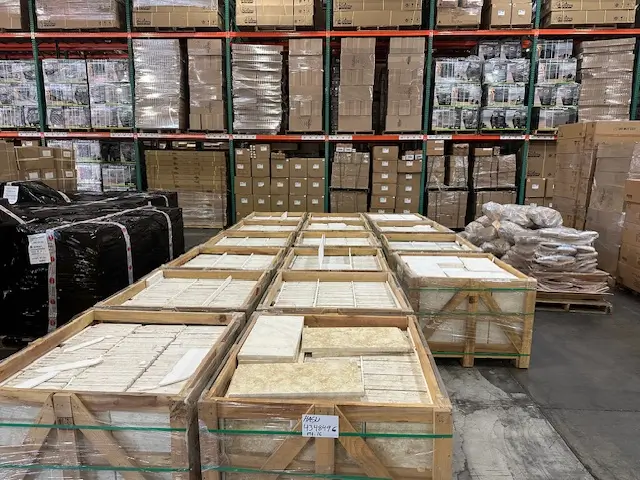
Gang saws produce multiple slabs simultaneously from a single block, creating inherent dimensional consistency within a batch but potential variation between batches. When you specify gang-sawn material, you’re typically working with thickness tolerances of ±1/16″ to ±1/8″. The sawing process leaves parallel saw marks that affect surface texture and light reflection patterns. Your specification should address whether saw marks remain visible or require additional finishing operations that will affect final dimensions.
CNC wire saw technology enables tighter tolerances — down to ±1/32″ on controlled dimension — but at higher fabrication cost. You’ll find this precision cutting essential for applications requiring exact dimensional matching, such as prefabricated panel systems with minimal joint widths or load-bearing applications where structural calculations depend on precise thickness. The wire saw process produces smoother saw-cut surfaces with less material waste, but cutting rates run slower than gang saws, affecting production schedules and lead times from the warehouse.
Block cutters and slab saws handle individual cuts with maximum flexibility but introduce operator-dependent variation. When you specify block-cut precision cut building stone Arizona material, you’re accepting wider tolerance ranges — typically ±1/8″ to ±3/16″ — in exchange for greater dimensional customization. This cutting method works well for projects requiring non-standard sizes or where field verification might necessitate dimension adjustments before final fabrication.
Tolerance Stacking and Structural Load Implications
Tolerance stacking occurs when individual unit variations accumulate across multiple courses or adjacent units, creating cumulative dimensional error that exceeds single-unit tolerance specifications. You need to account for this phenomenon during structural design and installation planning. A veneer system with 20 vertical courses, each with ±1/8″ thickness tolerance, could theoretically accumulate 2-1/2″ of dimensional variance if all tolerances stack in the same direction — though statistical probability makes extreme stacking unlikely.
Your structural calculations for load-bearing applications must accommodate minimum material thickness rather than nominal thickness. When you specify 3″ thick lintels with ±1/8″ tolerance, your structural engineer designs for 2-7/8″ effective thickness to maintain safety factors. This conservative approach ensures structural adequacy but can result in over-designed support systems if fabrication quality consistently delivers tighter-than-specified tolerances. Professional specifications sometimes establish “target dimensions” tighter than acceptable tolerance ranges to center the statistical distribution away from minimum values.
Bearing surface area calculations face similar challenges with length and width tolerances. A pier cap specified as 24″ x 24″ with ±1/8″ tolerance provides minimum bearing area of 23-7/8″ x 23-7/8″ — about 570 square inches versus 576 square inches at nominal dimension. That 1% reduction might seem minor, but when combined with thickness variation and load eccentricity factors, you’re introducing multiple percentage points of structural margin reduction. Your specifications need to communicate clearly whether structural calculations use nominal or minimum dimensions.
Joint Width Control and Coursing Consistency
Joint width consistency depends entirely on dimensional accuracy of adjacent stone units. When you specify 3/8″ mortar joints with precision cut building stone Arizona material, you’re assuming stone units arrive within specified length tolerances. A unit running 1/8″ over nominal length forces your mason to either reduce adjacent joint widths or introduce a dimensional correction joint somewhere in the course. Neither solution maintains the visual consistency you designed.
Professional masons can accommodate reasonable dimensional variation through joint width manipulation, but there are practical limits. Joint widths below 1/4″ become difficult to properly fill and tool, while joints exceeding 3/4″ start reading as design features rather than construction joints. Your workable adjustment range typically spans about 1/4″, meaning if you specify 3/8″ joints, your masons can reasonably work within 1/4″ to 5/8″ without obvious visual disruption. Stone dimensional tolerance must stay within limits that keep joint adjustment within this workable range.
- You should calculate cumulative length tolerance for your typical wall section to verify joint adjustment capacity
- Your specification needs to establish maximum acceptable joint width variation — typically ±1/8″ from specified width
- You’ll want to require fabricators to batch material by measured dimension so masons can group similar-sized units
- Your installation guidelines should address where to locate dimensional correction joints if tolerance stacking requires adjustment
Surface Finish Effects on Dimensional Precision
Surface finishing operations after initial cutting affect final dimensions and achievable tolerances. When you specify honed, polished, or thermal-finished surfaces for precision cut building stone Arizona applications, you’re removing additional material that must be accounted for in fabrication specs. A honed finish typically removes 1/16″ to 1/8″ of material from the sawn surface, while achieving polish can remove up to 3/16″ through progressive grinding stages.
Your dimensional specifications must clarify whether stated dimensions represent saw-cut size or finished size after surface treatment. This distinction becomes critical for precision applications. If you specify 2″ finished thickness with honed surfaces, fabricators need to cut initial blanks at approximately 2-1/8″ to allow for material removal during finishing while maintaining final dimension within tolerance. Failure to communicate this clearly results in undersize finished units that technically meet saw-cut specifications but fail finished dimension requirements.
Thermal finishing creates additional complexity because the surface treatment process induces minor dimensional changes through rapid heating and cooling cycles. Thermal-finished surfaces typically show 1/32″ to 1/16″ of material removal plus potential thermal expansion effects that can temporarily affect measured dimensions. You need to specify measurement protocols that allow thermal-finished units to return to ambient temperature and stabilize before final dimensional verification.
Climate Impact on Dimensional Stability
Arizona’s extreme temperature cycling directly affects dimensional stability of precision cut building stone Arizona installations. Thermal expansion and contraction occur at rates specific to each stone type, with limestone expanding at approximately 5.1 × 10⁻⁶ per °F and granite at 4.7 × 10⁻⁶ per °F. These coefficients seem mathematically trivial until you apply them to real-world conditions. A 30-foot limestone wall section experiencing 100°F temperature swing — common between winter night and summer afternoon in Arizona — expands approximately 0.18″ (30 ft × 12 in/ft × 100°F × 0.000051).
You need to provide expansion joints that accommodate this thermal movement without compromising structural integrity or creating visual disruption. The dimensional precision you specify for individual stone units becomes meaningless if you don’t account for collective thermal behavior across the assembly. Your expansion joint spacing depends on stone type, color (darker stones absorb more heat and expand more), orientation, and temperature exposure. Professional specifications typically require expansion joints every 20-30 feet for limestone in Arizona applications, reducing to 15-20 feet for south-facing facades with direct solar exposure exceeding 8 hours daily.
Moisture-induced dimensional changes compound thermal effects, particularly with sedimentary stones showing higher porosity. Limestone and sandstone can expand 0.001″ per foot when transitioning from oven-dry to saturated condition. This moisture expansion occurs primarily perpendicular to bedding planes, making stone orientation during fabrication and installation a dimensional consideration. When you specify precision cut building stone Arizona material, your fabrication specs should address bedding plane orientation relative to primary dimensional axes to minimize moisture-related dimensional instability.
Premium Stone Building Materials Arizona: Citadel Stone Specification Guidance
When you consider Citadel Stone’s premium stone building materials Arizona solutions for your architectural project, you’re evaluating dimensional accuracy standards that exceed commodity material specifications. At Citadel Stone, we provide technical guidance for hypothetical applications across Arizona’s diverse climate zones, helping you understand how precision cutting, quality control, and measurement standards interact with regional environmental conditions. This section outlines how you would approach specification decisions for three representative Arizona cities, each presenting distinct challenges for dimensional accuracy and long-term performance.
San Tan Valley Applications
In San Tan Valley, you would need to account for rapid suburban development patterns where truck access and warehouse delivery coordination become critical schedule factors. Your precision cut building stone Arizona specifications would address temperature extremes ranging from occasional freezing to 115°F summers, creating 125°F annual thermal cycling. You’d specify expansion joint spacing at 20 feet maximum for limestone applications, reducing to 18 feet for south and west facades. The predominantly alkaline soils in this region require you to detail base courses that prevent efflorescence migration that could affect dimensional stability of lower courses over time.
Yuma Considerations
Yuma’s extreme heat environment would require you to tighten thermal expansion provisions beyond standard specifications. Your precision cut building stone Arizona material selection would favor lighter-colored stones with lower solar absorption coefficients to minimize thermal expansion magnitude. You’d specify expansion joints at 15-18 foot intervals for south and west exposures, increasing to 20 feet for shaded facades. The minimal freeze-thaw cycling allows you to consider higher-porosity limestone options that might be problematic in northern Arizona, but you’d need to address how dimensional accuracy specifications account for occasional moisture exposure from irrigation systems in this desert climate.
Avondale Specifications
In Avondale’s urban heat island environment within the Phoenix metropolitan area, you would specify precision cutting tolerances at the tighter end of acceptable ranges because thermal expansion effects intensify with ambient temperature increases. Your quality control protocols would emphasize thickness consistency since load-bearing applications in mid-rise construction dominate this market. You’d coordinate warehouse delivery schedules that account for material acclimation periods, allowing stone to stabilize at project site ambient temperature before installation begins. At Citadel Stone, we would recommend measurement verification 24-48 hours after delivery when material has equilibrated with local conditions, providing more accurate assessment of installed dimensions.
Fabrication Shop Drawing Requirements
Shop drawings represent the critical translation between your design intent and actual fabrication execution. When you approve shop drawings for precision cut building stone Arizona projects, you’re accepting the fabricator’s interpretation of your dimensional specifications, tolerance allocations, and measurement protocols. Professional shop drawings communicate far more than simple dimensions — they indicate measurement datum references, acceptable tolerance stacking strategies, cutting method specifications, and quality control verification points.
Your shop drawing review process needs to verify several critical elements that directly affect dimensional accuracy. The drawing should indicate which dimension represents the “control dimension” that will be held to tightest tolerance, with secondary dimensions allowed greater variance. For example, on a 3′ × 2′ × 2″ veneer panel, you might specify length as control dimension at ±1/32″, width at ±1/16″, and thickness at ±1/8″. This hierarchy allows fabricators to optimize cutting efficiency while maintaining critical alignment dimensions.
- You should verify shop drawings indicate measurement datum points that correspond to actual reference surfaces used during fabrication
- Your review needs to confirm dimensional tolerances match specification requirements and aren’t inadvertently loosened
- You’ll want to see cutting sequence notation that demonstrates how fabricator will maintain cumulative tolerance control across batch production
- Your approved shop drawings should include surface finish specifications with dimensional impact noted for each finishing operation
Receiving Inspection and Dimensional Verification
Dimensional verification during receiving inspection represents your last opportunity to reject non-conforming material before installation costs are incurred. You need practical inspection protocols that balance statistical validity with project schedule realities. A comprehensive inspection measuring every dimension of every unit becomes economically impractical, while spot-checking only a handful of units provides insufficient confidence in lot conformance.
Industry best practices typically specify 10% random sampling with 100% measurement of sampled units across all specified dimensions. Your inspection protocol should measure length, width, and thickness at three locations per dimension to identify edge irregularities or fabrication inconsistencies. When you encounter units exceeding tolerance specifications, you’re facing a decision between rejecting the entire lot, rejecting only non-conforming units, or accepting material with design adjustments to accommodate the dimensional variance.
Your specification should pre-establish acceptance criteria for borderline situations. Material measuring at exactly the tolerance limit technically conforms to specification, but you’re getting minimum acceptable quality. Professional specifications sometimes establish “target dimensions” at tolerance midpoint with acceptance ranges extending to specification limits. This approach encourages fabricators to aim for better-than-minimum accuracy while maintaining contractual acceptance criteria for edge cases. When warehouse inventory runs tight and replacement material extends project schedules by weeks, having clearly defined acceptance criteria prevents disputes and supports informed decision-making.
Anchor System Design and Tolerance Coordination
Dimensional tolerances of precision cut building stone Arizona panels directly impact anchor system design and installation feasibility. Your structural engineer designs anchor locations based on nominal stone dimensions, but actual fabricated dimensions vary within tolerance ranges. An anchor located 6″ from panel edge based on nominal 24″ panel width could find itself 5-7/8″ or 6-1/8″ from actual edge if the panel measures at tolerance extremes. This variation affects load eccentricity calculations and anchor edge distance requirements.
You need to coordinate dimensional tolerances between stone fabrication specs and anchor system installation tolerances. Stone anchor standards typically require minimum edge distances of 4 times anchor diameter to prevent edge splitting. A 1/2″ diameter anchor needs 2″ minimum edge distance, but if your panel dimension varies by ±1/8″ and anchor hole location varies by ±1/16″, you could see actual edge distance reduced to 1-13/16″ under worst-case tolerance stacking. Professional design practice applies safety factors that accommodate these tolerance combinations, but you must ensure your specifications communicate the complete tolerance picture to all trades.
Slotted anchor holes provide adjustment capability that accommodates stone dimensional variance during installation. When you specify 1/2″ diameter anchors in 9/16″ × 3/4″ slotted holes, you’re providing 1/8″ vertical adjustment and 1/4″ horizontal adjustment. This adjustment range must exceed the combined tolerances of stone dimension, backup wall placement, and anchor positioning. Your specification coordination needs to verify that anchor slot dimensions provide adequate adjustment for cumulative tolerance effects while maintaining required anchor engagement and structural capacity.
Common Specification Errors and Tolerance Conflicts
Specification conflicts between dimensional tolerance and other performance requirements create field problems that manifest during installation when correction becomes expensive. You might specify tight dimensional tolerances for aesthetic consistency while simultaneously requiring thermal finishing that inherently produces dimensional variation. These conflicting requirements force fabricators into compliance impossibility or require expensive secondary processing to achieve both objectives.
- You should avoid specifying tighter tolerances than the selected cutting method can achieve without extraordinary measures that multiply fabrication costs
- Your specifications need to reconcile dimensional tolerance with surface finish requirements that remove material and affect final dimensions
- You’ll encounter problems when structural calculations use nominal dimensions while tolerances permit significant variation from nominal values
- Your project coordination must address how installation tolerances interact with fabrication tolerances to affect final assembly dimensions
Another common error involves specifying precision tolerances for non-critical dimensions while accepting loose tolerances on dimensions that directly affect installation feasibility. You might hold length and width to ±1/32″ for aesthetic coursing while allowing ±1/8″ thickness tolerance that creates structural anchor conflicts. Professional specifications prioritize tolerance allocation based on functional and structural criticality, tightening control where variation creates consequences and relaxing tolerances where variation has minimal impact.
Long-Term Dimensional Stability Considerations
Dimensional accuracy verification at installation represents only initial conformance. Your long-term performance expectations need to account for dimensional changes that occur over years of service exposure. Sedimentary building stones undergo gradual dimensional changes through repeated thermal cycling, moisture exposure variations, and potential chemical interaction with mortar or sealant compounds. These long-term dimensional changes typically measure small — 0.001″ to 0.003″ per foot over 20-year service life — but accumulate across large facade sections into measurable deflections.
You should design expansion joint systems that accommodate not just initial thermal movement but also long-term dimensional creep. Limestone under sustained compressive loading exhibits creep behavior that can reduce thickness by 0.5-1% over extended service life under high stress conditions. A pier supporting significant structural loads might experience measurable dimensional reduction over decades, requiring anchor systems and support details that maintain structural integrity despite gradual dimensional change. Your structural design should account for these long-term effects in critical applications rather than assuming dimensional stability remains constant.
Differential movement between building stone elements and backup structural systems creates additional dimensional stability challenges. When you install precision cut building stone Arizona veneer over steel stud backup walls, you’re combining materials with vastly different thermal expansion coefficients and long-term dimensional behavior. Your detail design must provide positive attachment that maintains structural connection while accommodating differential movement that could reach 1/4″ or more across building height under extreme thermal cycling conditions. This requires anchor systems with adequate adjustment capability and expansion joints that remain functional throughout building service life.
Implementation and Verification Strategies
Your implementation strategy for dimensional accuracy requirements needs to address the entire supply chain from quarry extraction through final installation. Professional specifications establish verification checkpoints at fabrication shop, warehouse receiving, job site delivery, and pre-installation staging. Each checkpoint serves specific purposes in catching dimensional non-conformance before correction costs escalate.
Fabrication shop verification catches problems at lowest correction cost since non-conforming units can be re-cut or repurposed before transportation expenses accumulate. You should require fabricators to provide dimensional inspection reports for random samples representing each production batch, with reports certified by shop quality control personnel. These reports become part of project documentation and provide traceability if dimensional problems appear during installation.
Warehouse receiving inspection provides your final rejection opportunity before material enters project-specific inventory. At this stage, you’re verifying lot conformance and catching systematic dimensional errors that might indicate fabrication equipment problems or specification misinterpretation. Your receiving protocol should sample material from multiple pallets throughout the delivery to detect dimension variance across the production run rather than measuring only conveniently accessible units.
Job site staging inspection verifies material has survived transportation without damage that affects dimensions and allows final quality assessment under actual installation lighting conditions. You’ll sometimes discover dimensional issues during staging that weren’t apparent in warehouse inspection, particularly edge chips or corner damage that occurred during transport. Your staging inspection protocol should include measurement verification of critical dimensions for randomly selected units, with particular attention to panel edges and corners vulnerable to truck loading and unloading damage.
For additional performance considerations affecting stone installation success, review Seismic design standards for stone masonry in Arizona before you finalize your construction documents. Religious buildings incorporate Citadel Stone’s sacred stone building supplies in Arizona worship space materials.