
When you specify slate for Arizona projects, understanding gauge measurement becomes critical to your installation success. Slate gauge measurement Arizona requirements differ from coastal or northern climates because thermal cycling, UV exposure, and substrate stability create unique performance challenges. You’ll need to verify that your material meets dimensional tolerances that account for desert conditions — something generic specifications often overlook.
Your slate thickness testing protocols should address more than nominal dimensions. In practice, Arizona’s 60-80°F diurnal temperature swings create expansion-contraction cycles that expose weaknesses in materials with inconsistent gauge. When you evaluate slate dimension control during procurement, you’re really assessing long-term structural integrity under thermal stress.
The slate measurement standards you reference need to account for how gauge variation affects installation performance. A ±3mm tolerance might seem acceptable in moderate climates, but in Arizona applications, that same variance translates to differential expansion rates that create visible lippage within 18-24 months. You should understand that slate size consistency directly impacts joint spacing calculations, drainage performance, and long-term aesthetic quality.
Understanding Gauge Measurement Fundamentals
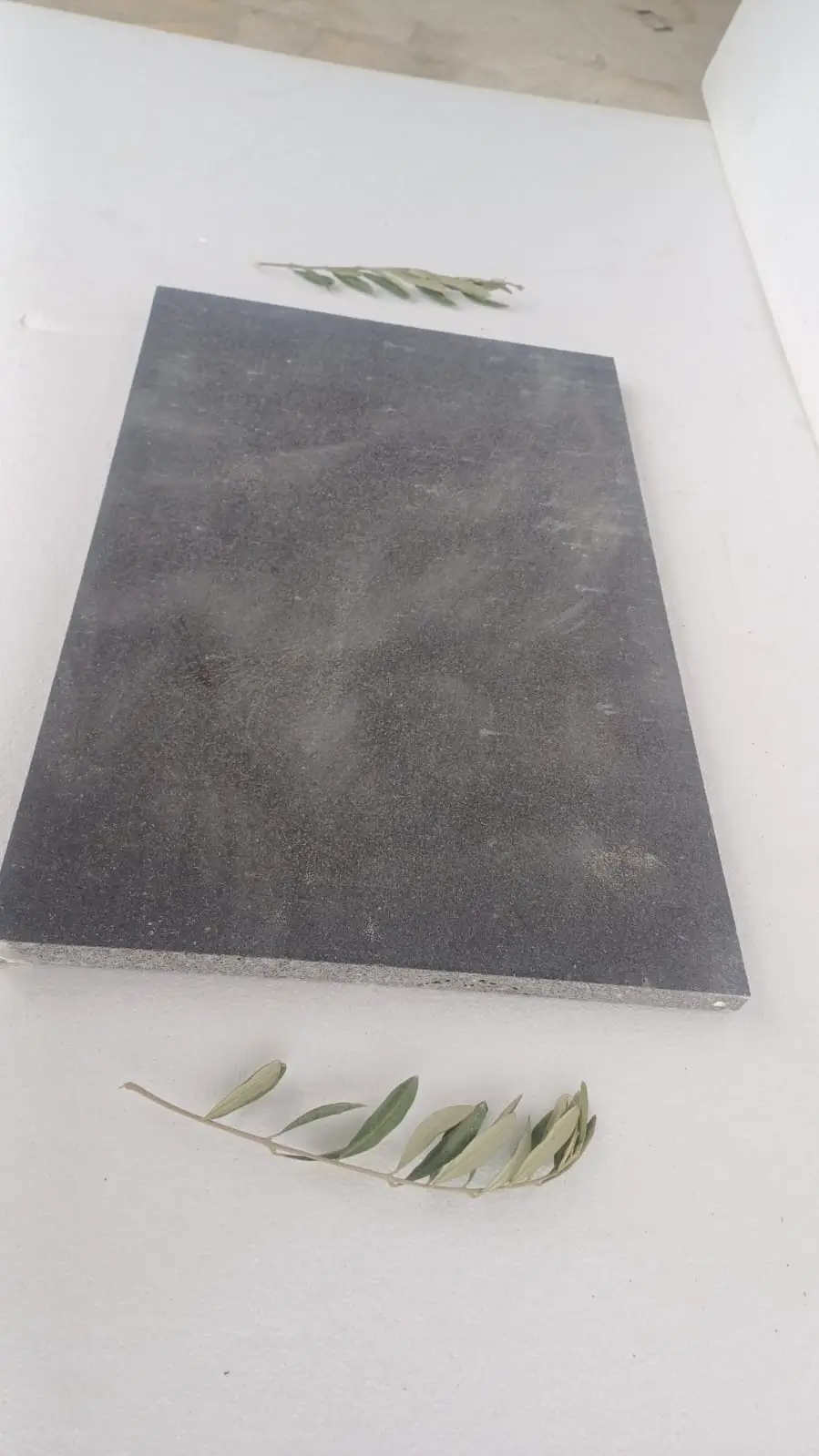
Gauge measurement refers to slate thickness at specific points across the stone’s surface. Unlike length and width dimensions, thickness variations occur naturally during quarrying and fabrication processes. Your specification needs to distinguish between nominal gauge (the target thickness) and actual measured gauge at multiple points per unit.
Professional slate gauge measurement Arizona protocols require you to measure at five points: four corners and center. You’ll find that corner measurements typically show the greatest variation because fabrication processes prioritize face dimensions over edge consistency. The center measurement often provides the most accurate representation of structural thickness, which determines load-bearing capacity.
When you evaluate slate thickness testing results, pay attention to the range between minimum and maximum measurements. A 20mm nominal gauge slate might measure 18-22mm across five points — that 4mm spread affects everything from mortar bed depth to finished elevation. You need to understand how your installation method accommodates this natural variation.
- You should verify gauge at all five points before accepting material deliveries
- Your quality control process must reject units where thickness variation exceeds project tolerances
- You’ll need to sort delivered material by actual gauge ranges for consistent installation zones
- Slate dimension control becomes critical when you’re matching new material to existing installations
Thermal Cycling Impact on Gauge Performance
Arizona’s thermal environment creates conditions that most slate specifications don’t adequately address. You’re dealing with surface temperatures that can reach 165°F on summer afternoons, dropping to 85°F by sunrise. This 80-degree cycle repeats daily for 120+ days annually, creating cumulative stress that exploits any weakness in material consistency.
Your slate gauge measurement Arizona verification should account for how thermal expansion interacts with gauge variation. Thicker sections of the same stone expand more than thinner sections under identical temperature exposure. When you install slate with significant gauge inconsistency, you’re creating differential expansion rates within single units — this manifests as internal stress fractures that appear 2-4 years post-installation.
The coefficient of thermal expansion for slate ranges from 8.5-10.5 × 10⁻⁶ per °F depending on mineral composition. Here’s what this means for your project: a 24-inch slate with 20mm gauge will expand approximately 0.018 inches across its length during a 70°F temperature rise. If adjacent units have 18mm and 22mm gauges, their expansion rates differ by roughly 10%, creating joint stress and potential spalling at contact points.
You need to specify slate thickness testing that verifies consistent gauge across your material shipment. Warehouse stock from different quarry runs often shows gauge variation even when nominally identical. Your procurement process should include batch sampling — pull 10 random units per pallet and measure all five points. If the range exceeds 15% of nominal gauge, you’re looking at potential performance issues.
Specification Language for Dimensional Control
Generic slate specifications rarely provide the detail you need for Arizona applications. Your spec section should state explicit tolerances for gauge variation, measurement methodology, and acceptance criteria. Vague language like “uniform thickness” doesn’t give you enforcement leverage when materials arrive with unacceptable variation.
Professional specifications for slate gauge measurement Arizona projects should include these elements:
- You must define nominal gauge and acceptable deviation range in millimeters
- Your spec should require five-point measurement protocol for quality verification
- You need to establish maximum permissible range between thinnest and thickest measurements
- Slate measurement standards should reference ASTM C629 but add Arizona-specific thermal cycling requirements
- You should specify rejection criteria based on percentage variation from nominal gauge
When you write slate size consistency requirements, address both individual unit variation and lot-to-lot consistency. A single pallet might meet tolerances while showing 6mm gauge difference between first and last pallets delivered. You’ll discover this creates installation challenges that add labor costs and extend timelines.
Your specification language should mandate pre-installation meetings where you review actual gauge measurements from delivered material. This gives you the opportunity to adjust installation details — mortar bed depth, leveling protocols, joint sizing — based on real material characteristics rather than catalog data. For comprehensive material evaluation standards, see Citadel Stone slate walling stone facility for batch consistency protocols that professional specifiers use in high-stakes projects.
Field Measurement Protocols and Tools
You can’t rely on supplier certifications alone — field verification protects your project from costly remediation. Your site team needs proper measurement tools and clear protocols for accepting or rejecting delivered slate. Digital calipers provide the accuracy you need, but analog dial calipers work when you’re measuring multiple units rapidly.
The measurement technique matters more than most installers realize. You should measure perpendicular to the face surface, applying consistent pressure without forcing the caliper into the stone. Natural slate surfaces aren’t perfectly flat — you’re measuring through minor texture variations that can add ±0.5mm apparent thickness depending on contact point.
Your field protocol should document measurements in a log that tracks pallet numbers, measurement locations, and actual dimensions. This creates the quality record you need if disputes arise, but more importantly, it helps you identify patterns. You might discover that corner measurements consistently run thin, or that certain pallet positions in truck shipments show greater variation due to transport stress.
Establishing Site Quality Benchmarks
Before installation begins, you need to establish acceptance benchmarks using the first pallet delivered. Select 20 random units, measure all five points per unit, and calculate the statistical distribution. Your mean gauge becomes the practical target for installation planning. The standard deviation tells you how much adjustment your installation system needs to accommodate.
When standard deviation exceeds 8% of nominal gauge, you’re facing installation challenges that require modified techniques. You’ll need to sort material into gauge ranges and install similar thicknesses in adjacent zones. This adds labor but prevents the lippage issues that plague installations where gauge variation is ignored.
Substrate Preparation and Gauge Compatibility
Your substrate preparation must account for the actual gauge variation in delivered material. A setting bed designed for uniform 20mm slate doesn’t perform adequately when actual material ranges from 17-23mm. You need additional mortar depth to accommodate the thicker units while maintaining consistent finished elevation.
Professional installers working with slate gauge measurement Arizona specifications typically add 30-40% to nominal mortar bed depth when gauge variation exceeds 10%. This provides the adjustment range needed during installation without creating voids under thinner units. You should verify that your structural design accounts for this additional weight — 10mm extra mortar across 500 square feet adds approximately 300 pounds.
The substrate flatness tolerance interacts with slate gauge variation in ways that compound installation challenges. If your concrete slab shows ±1/4 inch elevation variance and your slate shows 3mm gauge variation, you’re managing combined tolerances that require skilled leveling throughout installation. Your crew needs to establish string lines or laser references at 4-foot intervals to maintain consistent finished plane.
- You should specify substrate flatness to 1/8 inch in 10 feet for gauge-sensitive slate installations
- Your mortar mix design must provide workability for depth adjustments without excessive shrinkage
- You need to establish finished elevation benchmarks before installation begins rather than adjusting dynamically
Quality Control During Installation Phases
Installation quality control for slate dimension control requires continuous monitoring, not just initial material acceptance. You should implement checkpoints at 10%, 50%, and 90% completion where you re-verify gauge consistency in installed material and assess performance indicators like joint alignment and surface plane consistency.
Your 10% checkpoint reveals whether installation techniques adequately address gauge variation. You’ll measure lippage at 20 random locations using a straightedge and feeler gauges. If you’re finding lippage exceeding 1/16 inch, your installation system isn’t compensating for gauge differences — this requires process adjustment before continuing.
The 50% checkpoint assesses whether material consistency is holding across multiple pallets or if variation is increasing. You should pull random units from unopened pallets and verify gauge measurements match earlier batches. Discovering significant variation at mid-project gives you time to adjust techniques or source supplemental material if needed.
By the 90% checkpoint, you’re verifying long-term performance indicators. Look for differential settlement, edge chipping at joints, or emerging crack patterns that suggest gauge-related stress. These issues appear early in Arizona’s thermal environment — what you see at substantial completion predicts 5-year performance.
Common Gauge Variation Complications
Even when you implement rigorous slate thickness testing and quality control, certain complications arise repeatedly in Arizona installations. Understanding these patterns helps you prevent problems rather than react to them.
The most frequent issue involves corner thinning during fabrication. Saw blades cutting slate don’t maintain perfectly consistent depth, especially near edges where material support changes. You’ll find corner measurements averaging 1-2mm thinner than center gauge. When you install these units with corners adjacent to full-thickness units, the height differential creates trip hazards and accelerated edge wear.
Another common complication occurs with warehouse storage practices. Palletized slate stored outdoors in Arizona experiences thermal cycling even before installation. Units near pallet tops and edges undergo more extreme temperature swings than interior units, sometimes causing micro-fractures that aren’t visible during initial inspection. Your slate measurement standards should include post-storage inspection before installation, not just receiving inspection.
- You’ll encounter batch-to-batch gauge variation even from single quarries due to natural geological stratification
- Your material can show moisture-related dimension changes when warehouse conditions differ significantly from installation environment
- You need to account for how fabrication methods affect gauge consistency — water-jet cutting produces different results than saw cutting
- Slate size consistency suffers when suppliers mix material from multiple quarry locations to fill large orders
Long-Term Performance Monitoring
Your responsibility doesn’t end at installation completion. Arizona’s environment reveals material and installation deficiencies over 2-5 year periods. Professional practice includes establishing monitoring protocols that track performance indicators tied to gauge consistency.
You should document initial conditions photographically with particular attention to joint lines, surface plane consistency, and transition details. These baseline images become invaluable when assessing whether observed changes represent normal weathering or gauge-related failures. Include scale references and consistent lighting angles for meaningful comparison.
Annual inspections during late summer months — after maximum thermal stress cycles — reveal emerging issues early. You’re looking for joint separation exceeding 1/8 inch, crack propagation from corners or edges, and surface plane changes suggesting differential movement. When you detect these indicators, investigation of underlying gauge variation often reveals the root cause.
The five-year performance threshold represents critical evaluation for slate gauge measurement Arizona installations. By this point, cumulative thermal cycling has stressed every weakness in material consistency. Installations showing minimal deterioration at five years typically demonstrate 20-30 year service life. Those showing significant issues require intervention before failures accelerate.
Citadel Stone Slate Slabs for Yard Arizona Specifications
When you consider Citadel Stone’s slate slabs for yard applications in your Arizona project, you’re evaluating material engineered specifically for extreme thermal cycling and UV exposure. At Citadel Stone, we provide technical guidance for hypothetical yard installations across Arizona’s diverse microclimates. This section outlines how you would approach slate gauge measurement Arizona requirements for three representative cities where dimensional consistency becomes critical to long-term performance.
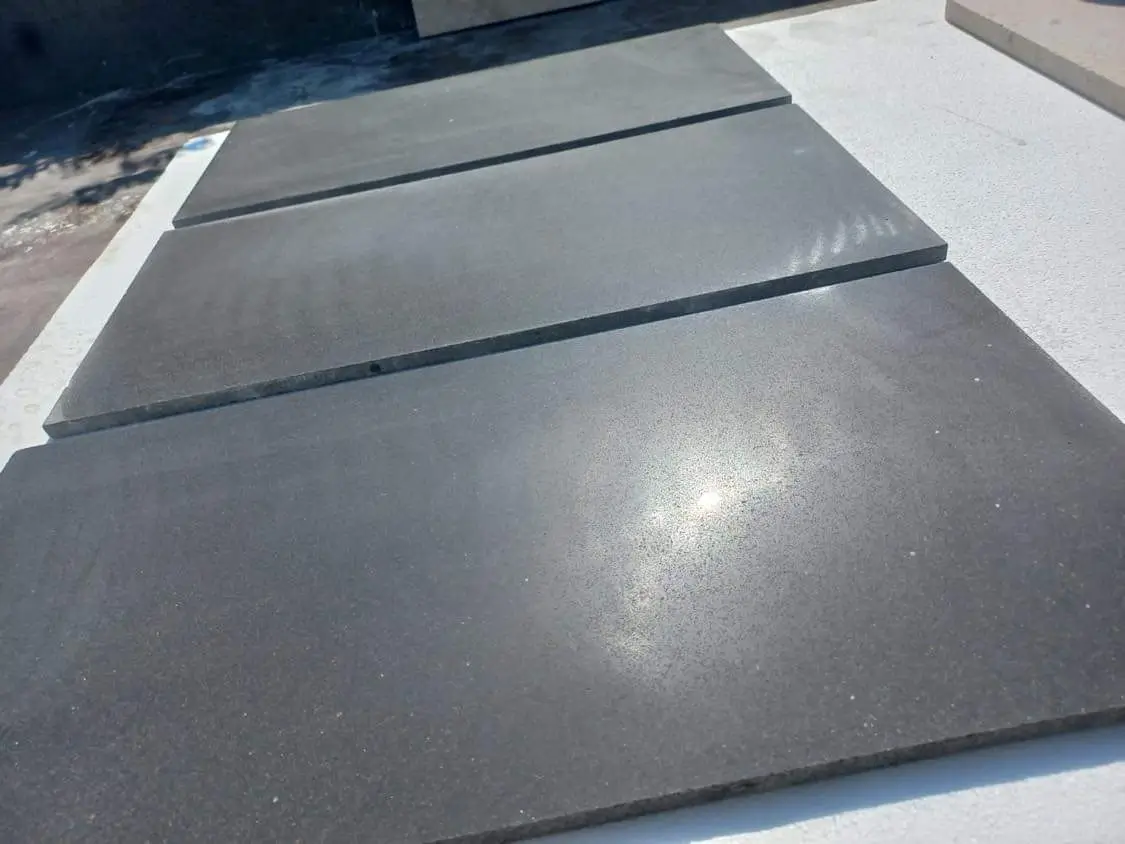
Your specification process for yard applications requires understanding how gauge variation affects not just installation but ongoing maintenance and safety. Slate slabs for yard use experience full solar exposure, direct precipitation (though limited), and traffic patterns that exploit any dimensional inconsistency. You need to verify that material meets tighter tolerances than indoor applications.
Chandler Residential Yards
In Chandler installations, you would encounter suburban residential conditions with moderate shade from surrounding structures but predominant solar exposure. Your slate thickness testing protocols would need to verify 18-22mm gauge consistency for standard yard paving applications, with maximum 2mm variation per unit. You’d specify sorting procedures to group similar-gauge material in continuous zones rather than random placement. The clay-heavy soils typical in Chandler require you to account for seasonal substrate movement that amplifies any gauge inconsistency — thinner slate sections show accelerated wear when differential settlement occurs. You would recommend warehouse inspection of material before delivery to ensure batch consistency meets the tighter tolerances residential yards demand.
Tempe Urban Heat Applications
Tempe’s urban heat island effect would require you to specify slate measurement standards that account for sustained elevated temperatures. Your material selection would prioritize gauge consistency within ±1.5mm to minimize differential expansion stress. You’d need to verify that slate dimension control during fabrication maintains parallel faces — wedge-shaped units create progressive lippage in grid installations common in urban yards. Your specification would address the interaction between gauge variation and joint width, recommending 3/8-inch minimum joints when gauge spread exceeds 2mm. At Citadel Stone, we would recommend pre-installation gauge mapping where you measure and document every unit’s thickness profile, allowing strategic placement that minimizes problematic transitions.
Surprise Desert Climate Performance
Your Surprise specifications would address the most extreme thermal conditions in Arizona’s residential developments. You’d require slate size consistency verification showing maximum 3% gauge variation across entire material shipments, not just individual units. The loose, sandy substrates common in Surprise demand you account for how gauge variation affects load distribution — thinner sections concentrate stress, accelerating substrate degradation. You would specify that slate thickness testing include structural verification at 2,000 PSI minimum to ensure thinner gauge sections maintain adequate strength. Your installation protocols would mandate bedding mortar formulations that provide support across the full unit area, eliminating voids that occur when gauge variation creates gaps between slate and substrate.
Maintenance Implications of Gauge Consistency
Your maintenance program effectiveness directly correlates with initial gauge consistency. Slate installations with well-controlled dimensions require minimal intervention beyond routine cleaning. Those with significant gauge variation develop problems that escalate maintenance requirements and costs.
Joint maintenance becomes more demanding when gauge inconsistency creates uneven joint widths. You’ll find that polymeric sand performs poorly in joints varying more than 1/8 inch in width due to adjacent unit gauge differences. Your maintenance protocol needs more frequent joint replenishment — annually instead of every 3-5 years — to maintain interlock and prevent edge chipping.
Surface cleaning procedures require modification for gauge-inconsistent installations. Pressure washing at standard 1,500-1,800 PSI settings can damage edges of thinner slate sections while barely affecting thicker areas. You need to reduce pressure to the lowest effective setting, which extends cleaning time and increases labor costs.
- You should expect 40-60% higher maintenance costs over 10 years when gauge variation exceeds 15% of nominal thickness
- Your resealing schedule may need to accelerate because uneven surfaces trap moisture differentially
- You’ll require more frequent joint inspection and repair due to accelerated deterioration at gauge transitions
Cost Implications and Value Engineering
Understanding the full cost implications of slate gauge measurement Arizona requirements helps you make informed value engineering decisions. Tighter gauge tolerances increase material cost by 8-15% due to additional fabrication quality control and higher rejection rates. You need to evaluate whether this premium delivers proportional performance value for your specific application.
Your value engineering analysis should account for installation labor differentials. Gauge-consistent material installs 15-20% faster because your crews spend less time on individual unit leveling and adjustment. The labor savings often offset 60-80% of material premium, making tight-tolerance specification economically neutral on first cost basis.
Long-term cost analysis favors gauge-consistent material even more decisively. When you factor maintenance cost increases, earlier replacement requirements, and potential safety liability from trip hazards, loose-tolerance material shows 35-50% higher total cost of ownership over 15-year analysis periods. Your specification decision should reflect these lifecycle economics, not just initial procurement costs.
Truck delivery logistics also affect project economics. You may need additional deliveries when tight gauge specifications reduce usable yield from quarry production. Your project schedule should account for potential extended lead times when you specify gauge tolerances tighter than supplier standard production capabilities.
Technical Testing Methodologies
Beyond basic dimensional measurement, comprehensive quality assurance for slate gauge measurement Arizona applications includes structural testing that verifies thickness adequacy. You should require that suppliers provide test data showing compressive strength, flexural strength, and modulus of rupture for the actual gauge supplied, not just standard thickness values.
Compressive strength testing per ASTM C170 reveals whether thinner gauge sections maintain structural integrity. You need minimum 9,000 PSI compressive strength for exterior paving applications with vehicle traffic potential. Testing should sample the thinnest measured gauge in your material lot — if corner measurements run 18mm while nominal gauge is 20mm, test results for 18mm thickness determine your structural confidence.
Flexural strength becomes critical when you’re spanning irregular substrates or when gauge variation creates cantilevered conditions. ASTM C880 testing should verify minimum 8,500 PSI modulus of rupture. You’ll find that flexural strength varies considerably with thickness — a 15% gauge reduction typically reduces flexural capacity by 25-30% due to the squared relationship between thickness and bending resistance.
Water absorption testing per ASTM C121 provides insight into material density consistency, which correlates strongly with gauge consistency. You should specify maximum 0.25% absorption for dense slate suitable for Arizona’s freeze-thaw cycles (yes, they occur at elevation). Higher absorption rates often indicate material from less consistent quarry strata where gauge control is inherently more difficult.
Contractor Qualification and Training
Even perfect material specifications fail when installation contractors lack understanding of gauge-related requirements. Your contractor qualification process should verify experience with dimensionally critical slate installations and include specific training on measurement protocols and quality standards.
You should require that contractors demonstrate their measurement capabilities during pre-qualification. Have them measure 10 slate samples using their proposed tools and compare results to calibrated laboratory measurements. Variations exceeding ±0.3mm indicate inadequate technique or equipment — this predicts field quality control problems.
Your pre-construction meeting must include hands-on training where you review the five-point measurement protocol, demonstrate proper caliper technique, and establish documentation procedures. Don’t assume that experienced contractors automatically understand the heightened requirements for slate gauge measurement Arizona applications — desert thermal stress creates performance demands most contractors haven’t encountered elsewhere.
- You need to verify that field supervision personnel can accurately interpret gauge measurements and make real-time acceptance decisions
- Your quality control plan should identify which crew members are authorized to perform measurements and documentation
- You should establish clear communication protocols for when measured gauge falls outside specifications — who gets notified and what are the response procedures
Future Specification Directions
Industry evolution is moving toward tighter dimensional control as fabrication technology improves and performance expectations increase. You should anticipate that slate measurement standards will progressively reduce acceptable tolerance ranges, particularly for premium applications where material cost represents small percentages of total project value.
Digital measurement technologies including laser scanning and photogrammetry are becoming cost-effective for large projects. These systems can measure entire pallet loads in minutes, providing complete dimensional mapping rather than statistical sampling. Your specifications might soon reference digital documentation standards rather than manual five-point protocols.
The interaction between gauge consistency and sustainable building practices is gaining attention. Tighter tolerances reduce installation waste — you’re not rejecting and discarding units that fall outside spec. This supports LEED and other green building certification requirements that increasingly scrutinize material efficiency and construction waste streams.
Professional Implementation Strategies
Successfully implementing comprehensive slate gauge measurement Arizona requirements requires systematic approach from specification through closeout. You need to establish clear roles, communication protocols, and decision trees that keep projects moving while maintaining quality standards.
Your implementation strategy should designate a single point of authority for gauge-related decisions. When field measurements reveal issues, you can’t afford delays while multiple stakeholders debate acceptable solutions. The designated authority — typically the architect or owner’s representative — needs pre-established criteria for making accept/reject decisions quickly.
Documentation systems must capture measurement data efficiently without burdening installation progress. Digital forms on tablets work well, allowing crews to photograph measurements, record dimensions, and timestamp documentation in real-time. This data should flow automatically to project management systems where you can monitor trends and identify developing problems before they affect substantial areas.
Your closeout documentation should include complete measurement records, photographic documentation showing representative conditions, and certified test reports for structural and absorption testing. This creates the baseline for long-term performance monitoring and provides protection if disputes arise regarding material quality or installation standards. For additional guidance on maintaining optimal performance after installation, review Slate Delamination Resistance Arizona to ensure your dimensional investments deliver full lifecycle value. Trade accounts access Citadel Stone’s preferred slate wholesale contractor rates.