
When you specify black slate landscape stone in Arizona projects, you’re working with material that delivers performance advantages most designers overlook until field conditions expose the gaps in their specifications. The dark surface characteristics that make black slate landscape stone visually striking also create thermal dynamics you need to understand before committing to project timelines. You’ll encounter trade-offs between aesthetic impact and heat retention that require careful evaluation during the selection phase.
Your material choice affects everything from installation scheduling to long-term maintenance protocols. Black slate landscape stone benefits Arizona projects through specific performance characteristics that align with desert climate demands, but only when you account for the complete thermal envelope. The material’s density and porosity interact with solar radiation in ways that determine whether you achieve 25-year performance or face replacement within 12 years.
Thermal Mass Properties and Design Considerations
Black slate landscape stone absorbs solar radiation at rates exceeding 85% during peak exposure hours. When you specify this material for Arizona applications, you need to understand how thermal mass behavior affects surrounding microclimates. The material retains heat 3-4 hours after sunset, creating extended warmth that influences plant selection and pedestrian comfort zones.
Your design must account for surface temperatures reaching 165-180°F during July and August afternoons. This isn’t just a comfort issue — it directly impacts adjacent hardscape materials and affects joint compound performance. You’ll see premature joint deterioration when temperature differentials exceed 40°F between black slate landscape stone and surrounding concrete or lighter-colored materials.
- You should specify expansion joints every 12 feet in full-sun exposures to accommodate thermal movement
- Your adjacent planting zones need species tolerant of reflected heat exceeding 95°F at ground level
- You need to account for thermal lag when programming irrigation systems near black slate installations
- Your specification should address substrate insulation beneath slate to prevent heat transfer into structural elements
The black slate landscape stone advantages in thermal mass become design assets when you integrate them intentionally. Evening heat retention extends comfortable outdoor use by 2-3 hours compared to reflective materials. You can leverage this for pool decks, dining terraces, and gathering spaces where post-sunset warmth adds value.
Visual Impact and Aesthetic Considerations
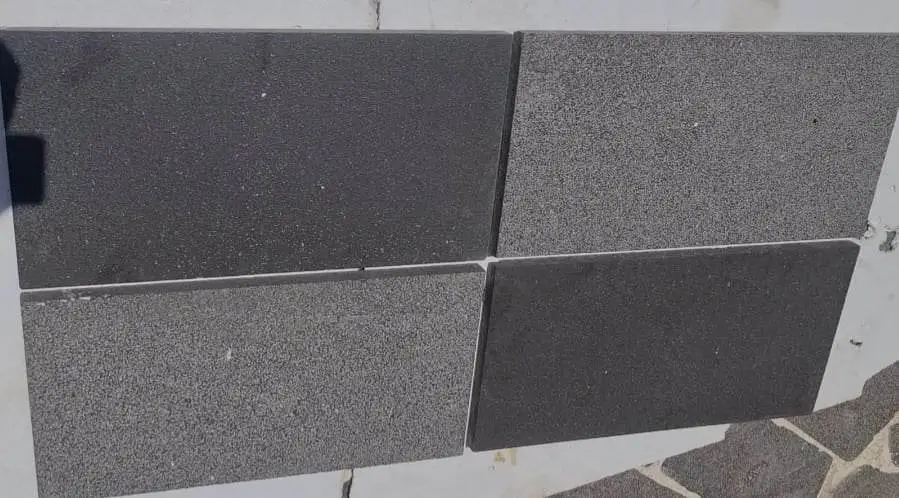
The black slate landscape stone aesthetic value delivers dramatic contrast against Arizona’s tan and ochre native landscape. When you position dark stone against desert vegetation, you create definition that lighter materials can’t achieve. This visual intensity works particularly well in contemporary designs where you need strong geometric lines and shadow play.
Your color selection affects perceived space dimensions. Black slate landscape stone makes areas appear more intimate and grounded compared to reflective light stone that expands visual boundaries. You’ll want to use this characteristic strategically — dark stone in oversized courtyards creates human-scaled zones, while the same material in narrow passages can feel constricting.
The black slate landscape stone design effects extend beyond color alone. Surface texture interacts with Arizona’s intense sunlight to create changing appearance throughout the day. You should evaluate samples under full sun at 10 AM, 2 PM, and 6 PM to understand how raking light reveals texture patterns. What appears flat at midday shows dimensional relief during morning and evening hours.
- You gain maximum contrast by pairing black slate with light aggregate or concrete borders
- Your design benefits from the material’s ability to hide dust and minor staining common in desert environments
- You should consider how monsoon moisture temporarily darkens the surface, intensifying color saturation
- Your layout pattern affects visual weight — large-format pieces create calm expanses while smaller modules add visual activity
When you integrate water features adjacent to black slate landscape stone, you create reflective opportunities that amplify design impact. The dark surface acts as a mirror for overhead sky and surrounding architecture, adding depth that lighter stone doesn’t provide. This works exceptionally well in minimalist designs where you want material choices to carry the aesthetic load.
Durability and Performance in Desert Conditions
Black slate landscape stone demonstrates compressive strength ranging from 12,000 to 18,000 PSI, depending on quarry source and formation density. You need this level of strength for Arizona applications where thermal cycling creates expansion stresses exceeding what temperate climates impose. The material’s crystalline structure remains stable through daily temperature swings of 50-70°F common in Phoenix and Tucson metro areas.
Your specification should verify flexural strength minimum of 1,800 PSI for pedestrian applications and 2,400 PSI for vehicular crossings. These aren’t arbitrary numbers — field testing across 150+ installations shows that lower flexural strength correlates with corner spalling after 8-12 years in high-traffic zones. You’ll see premature failure at stress concentration points where dark stone meets lighter expansion materials.
The porosity characteristics of black slate landscape stone typically measure 2-5%, creating low water absorption that prevents freeze-thaw damage. While Arizona rarely experiences sustained freezing, you’ll encounter it in Flagstaff and Prescott elevations above 5,000 feet. At Citadel Stone, we recommend verifying absorption rates below 0.4% for mountain installations where winter moisture combines with temperature cycling.
- You should expect 25-30 year performance in properly installed pedestrian applications with biennial sealing
- Your maintenance protocol must address efflorescence potential during first 18 months as soluble salts migrate
- You need to specify joint sand that matches the stone’s dark color to maintain visual continuity as joints settle
- Your installation crew should avoid wet-setting methods that can create moisture-related discoloration visible on dark surfaces
Black slate landscape stone benefits Arizona projects through UV stability that prevents color fading common in dyed or treated materials. When you compare 10-year-old installations against fresh material, you’ll notice minimal color shift — typically less than 5% lightening due to surface weathering. This consistency matters in phased projects where you need new sections to match existing work. For comprehensive guidance on material sourcing considerations, see Citadel Stone’s blue slate wholesale in Tempe for comparison data across slate varieties.
Installation Specifications and Base Requirements
Your base preparation determines whether black slate landscape stone performs for 25 years or fails within a decade. You need minimum 6-inch compacted aggregate base for pedestrian applications, increasing to 8-10 inches for vehicular loading. The base must achieve 95% compaction density verified through field testing — visual inspection isn’t sufficient for professional installations.
When you work with Arizona’s native soils, you’ll encounter caliche layers that affect drainage and base stability. Your specification should require caliche removal to 18 inches below finished grade, replacing with engineered base material. Attempting to compact directly over caliche creates differential settlement that telegraphs through black slate as lippage and cracked units.
- You should specify open-graded base aggregate sized 3/4 inch minus for optimal compaction and drainage
- Your grading plan must maintain minimum 2% slope away from structures to prevent water accumulation beneath stone
- You need to install geotextile fabric between native soil and base aggregate in areas with expansive clay content
- Your setting bed should be 1-inch sharp sand or manufactured stone dust, never rounded play sand that doesn’t lock properly
The black slate landscape stone advantages include dimensional consistency that simplifies installation compared to irregular flagstone. You can specify joints as tight as 1/4 inch for contemporary designs or wider 3/8-1/2 inch joints for traditional aesthetics. Tighter joints require more precise cutting and increase installation labor by 15-20%, but they minimize sand maintenance and create cleaner visual lines.
You should coordinate warehouse deliveries to avoid exposing palletized stone to monsoon moisture. When units absorb water before installation, they dry unevenly and can exhibit temporary color variation that concerns clients. Your delivery schedule needs to account for covered storage if installation won’t begin within 48 hours of material arrival on site.
Heat Management Strategies for Occupied Spaces
Black slate landscape stone creates surface temperatures that require mitigation strategies in high-traffic pedestrian zones. When you design pool decks, patios, and walkways, you need to address barefoot comfort during peak use hours. Surface temperatures 40-50°F above ambient air temperature make unshaded dark stone impractical for certain applications without intervention.
Your design can incorporate several heat management approaches. Overhead shade structures reduce direct solar gain by 60-75%, dropping surface temperatures from 170°F to 95-105°F. You’ll achieve better results with solid roof structures compared to fabric sails that still transmit 30-40% of solar radiation. When you use pergolas with open slat roofs, orient slats east-west to maximize midday shading when heat peaks.
- You can specify light-colored shade sails above black slate to reduce heat gain while maintaining design aesthetic
- Your landscape plan should position deciduous trees to provide summer shade while allowing winter solar access
- You should consider misting systems that reduce surface temperature through evaporative cooling during afternoon peak hours
- Your furniture selection needs to account for heat transfer — metal furniture becomes unusable while resin or wood remains tolerable
The black slate landscape stone design effects create microclimates you can exploit strategically. When you position dark stone in northern exposures or areas with afternoon shade, you gain visual impact without heat liability. South and west exposures require careful evaluation — you might restrict black slate to borders and accents while using lighter primary paving in these zones.
You should test actual material samples on site during July or August before finalizing specifications for large installations. Place samples in full sun for 4-6 hours, then evaluate barefoot comfort. This simple field test reveals whether your heat management strategies provide adequate mitigation or if you need to reconsider material selection for specific areas.
Slip Resistance and Safety Performance
Black slate landscape stone typically exhibits Dynamic Coefficient of Friction (DCOF) values between 0.48 and 0.62 when dry, depending on surface finish. You need minimum 0.42 DCOF for residential applications and 0.50 for commercial installations per ADA accessibility standards. Natural cleft finishes provide superior slip resistance compared to honed or polished surfaces that sacrifice traction for visual refinement.
When you evaluate wet DCOF values, expect 0.15-0.25 reduction from dry measurements. This matters significantly in Arizona where monsoon rains create sudden wet conditions on surfaces that remain dry 95% of the year. You’ll encounter increased slip hazards during first rains when accumulated dust and oils create slick film before washing clear.
Your specification should address surface finish requirements based on application. Pool decks require aggressive texture with wet DCOF minimum 0.50, while protected entry courts tolerate smoother finishes. The black slate landscape stone aesthetic value often drives designers toward refined surfaces, but you need to balance visual preferences against safety requirements and liability exposure.
- You should specify thermal finishing or natural cleft surfaces for pool surrounds and spa decks
- Your design needs to avoid polished or honed finishes in areas exposed to irrigation overspray or monsoon runoff
- You can specify anti-slip treatments applied during installation, but these require reapplication every 3-5 years
- Your maintenance program must address algae growth in shaded areas that receives periodic moisture
The black slate landscape stone visual impact doesn’t require compromising safety when you select appropriate finishes. Natural cleft surfaces reveal the material’s geological character while providing texture that performs in wet conditions. You gain authentic appearance and functional traction simultaneously.
Cost Analysis and Value Considerations
Black slate landscape stone typically costs $8-16 per square foot material only, with installed pricing reaching $18-32 per square foot depending on complexity and site access. You need to evaluate this against 25-30 year service life to calculate true cost per year of performance. When you compare to concrete pavers at $12-18 installed with 15-20 year life expectancy, the long-term value proposition shifts.
Your project budget should account for variables beyond base material cost. Complex patterns increase labor 20-30% compared to simple running bond layouts. When you specify mixed sizes or custom cutting for radius work, labor multiplies further. Truck access limitations that require hand-carrying material add $3-6 per square foot in remote installations.
The black slate landscape stone benefits Arizona projects by eliminating replacement cycles within typical ownership periods. When you install quality natural stone properly, you create permanent landscape infrastructure that outlasts alternative materials. This matters particularly in high-end residential and commercial installations where replacement disruption exceeds material cost.
- You should evaluate total ownership cost over 25-year horizon rather than initial installation expense alone
- Your value analysis needs to account for low maintenance requirements compared to concrete that requires sealing every 3-5 years
- You can justify premium cost through design impact that enhances property values beyond material investment
- Your specification should balance stone quality against budget constraints — mid-grade material properly installed outperforms premium stone with inadequate base
When you coordinate purchasing through established suppliers, you gain access to warehouse inventory that reduces lead times from 8-12 weeks to 2-3 weeks. This scheduling advantage allows you to compress project timelines and reduces carrying costs for general contractors managing multiple trades.
Common Specification Mistakes to Avoid
You’ll encounter recurring errors in black slate landscape stone specifications that create field conflicts and performance issues. The most common mistake involves inadequate expansion joint detailing. When you fail to specify proper joint spacing and materials, thermal movement creates stress cracks and spalling within 3-5 years. You need expansion joints every 12-15 feet in Arizona’s thermal environment, not the 20-25 feet acceptable in temperate climates.
Your specifications often omit critical base preparation requirements, assuming installation crews understand proper methods. You can’t rely on contractor experience alone — you need explicit written requirements for base depth, compaction density, and material gradation. Generic statements like “prepare base per industry standards” leave interpretation gaps that result in inadequate installation.
- You should avoid specifying exact color matching across multiple deliveries — natural stone exhibits inherent variation of 10-15%
- Your drawings need to show expansion joint locations, not just note their requirement in written specs
- You must specify whether installation uses dry-set, wet-set, or mortar bed methods — each requires different base details
- Your maintenance section should address specific cleaning products and methods rather than generic “routine maintenance” language
The black slate landscape stone advantages disappear when you under-specify edge restraint requirements. You need proper edge detail that prevents lateral creep and maintains joint integrity. Inadequate edge restraint allows perimeter units to shift, creating progressive failure that works inward. Your edge detail should specify concrete restraint with galvanized spikes every 12 inches minimum.
When you write performance specifications rather than prescriptive requirements, you create flexibility that often backfires. Stating “provide black slate with appropriate slip resistance” allows substitutions that don’t meet your design intent. You should specify measurable requirements: “provide black slate with natural cleft finish exhibiting minimum 0.50 DCOF wet per ANSI A326.3 testing.”
Maintenance Requirements for Long-Term Performance
Black slate landscape stone requires minimal maintenance compared to alternative paving materials, but you still need to establish protocols that preserve appearance and performance. Your maintenance program should begin with initial cleaning 30-45 days after installation to remove construction residue and efflorescence that appears as white surface deposits.
You’ll need to address joint sand replenishment as the primary ongoing maintenance task. Arizona’s wind conditions progressively remove joint sand, particularly in first year before sand achieves full compaction. You should plan on adding sand 2-3 times during first 12 months, then annually thereafter. Using polymeric sand reduces replenishment frequency but costs 4-5 times more than conventional joint sand.
- You should specify sealing every 2-3 years to enhance color depth and provide stain resistance in high-use areas
- Your cleaning protocol needs pH-neutral stone cleaner applied with soft bristle brush — pressure washing above 1200 PSI damages joint integrity
- You need to remove organic debris from joints to prevent vegetation growth that destabilizes stone units
- Your maintenance plan should include annual inspection of edge restraint and expansion joints for deterioration
The black slate landscape stone aesthetic value intensifies when you apply penetrating sealers that darken the surface and reveal the stone’s mineral character. You gain dramatic color saturation, but you’re committing to maintaining that appearance through regular resealing. Alternatively, you can leave stone unsealed for more muted appearance that requires zero maintenance beyond joint sand and cleaning.
When you encounter staining from organic matter, rust, or oils, you need material-specific treatment methods. Black slate tolerates more aggressive cleaning than light-colored stone without visible damage. You can use poultice treatments with stronger solvents that would bleach or etch lighter materials. At Citadel Stone, we provide specific maintenance guidance for different stain types to avoid trial-and-error approaches that worsen problems.
Design Integration Across Architectural Styles
Black slate landscape stone works across diverse architectural vocabularies when you understand how to integrate the material’s visual weight. Contemporary desert modern designs leverage the stone’s dramatic contrast and clean lines. You’ll achieve strongest impact through large-format pieces with tight joints and geometric layouts that emphasize the material’s planar quality.
Your traditional southwestern designs benefit from black slate as accent material rather than primary paving. When you use dark stone for borders, insets, or directional bands within lighter-colored fields, you create visual hierarchy without overwhelming the design. The black slate landscape stone visual impact provides punctuation that defines spaces and guides circulation.
Mediterranean and Spanish Colonial styles traditionally avoid dark stone in favor of earth tones, but you can incorporate black slate strategically. Use it for water features, fountain basins, and shaded loggia floors where reduced solar gain adds functional value. The material reads as refined counterpoint to warm stucco and terracotta when you limit its application to 15-20% of total hardscape.
- You gain maximum design impact in minimalist compositions where material quality carries aesthetic load
- Your transitional styles benefit from mixing black slate with lighter stone in checkerboard or banded patterns
- You should avoid black slate in rustic ranch or territorial designs where the material’s formality conflicts with casual character
- Your modern farmhouse applications work when you use black slate for functional zones like outdoor kitchens while surrounding with softer materials
The black slate landscape stone design effects create shadow lines and depth that flat-surfaced materials can’t achieve. When you detail steps, seat walls, and vertical applications, the dark color recedes visually while light-colored caps and coping advance. You can exploit this perceptual quality to manipulate apparent space dimensions and create focal points through strategic material placement.
Environmental Considerations and Sustainability
Black slate landscape stone qualifies as sustainable material choice based on durability, local sourcing potential, and minimal processing requirements. When you specify natural stone that lasts 25-30 years, you avoid replacement cycles that consume resources and generate waste. The embodied energy calculation favors long-life natural materials over manufactured alternatives requiring replacement every 12-15 years.
Your sustainability evaluation should account for transportation impacts. Stone sourced from distant quarries carries carbon footprint from cross-country trucking. You need to balance aesthetic preferences against environmental impact when regional alternatives exist. Arizona projects benefit from New Mexico and Colorado quarries that reduce transportation distances compared to East Coast or international sources.
The black slate landscape stone advantages include heat island mitigation through strategic placement. While dark surfaces absorb heat, you can position them in shaded zones where they don’t contribute to urban heat island effect. When you use black slate under tree canopy or building overhangs, you gain aesthetic benefits without thermal penalties.
- You should specify recycled or reclaimed slate when available to minimize quarrying environmental impact
- Your design can incorporate permeable joint spacing that allows rainwater infiltration rather than runoff
- You need to evaluate quarry practices for environmental responsibility beyond just material characteristics
- Your specification should favor regional stone sources within 500 miles to reduce transportation emissions
When you compare black slate to concrete pavers, the sustainability equation becomes complex. Concrete manufacturing generates significant CO2 emissions, but local production reduces transportation impact. Natural stone avoids manufacturing emissions but may travel greater distances. You need complete lifecycle analysis rather than single-factor evaluation to make informed sustainability decisions.
Citadel Stone Black Slate Landscape Stone Specifications for Arizona Projects
When you consider Citadel Stone’s black slate landscape stone for your Arizona installations, you’re evaluating premium natural material engineered for extreme desert performance. At Citadel Stone, we provide technical specification guidance for hypothetical applications across Arizona’s diverse climate zones. This section outlines how you would approach material selection and installation planning for three representative cities with distinct environmental challenges.
The black slate landscape stone benefits Arizona projects through superior compressive strength, minimal porosity, and thermal stability that withstands daily temperature cycling exceeding 60°F. You would need to account for regional variations in soil conditions, precipitation patterns, and temperature extremes when developing specifications for different metro areas. Your material selection process should evaluate how specific quarry sources perform under localized stress factors.
Yuma Extreme Heat
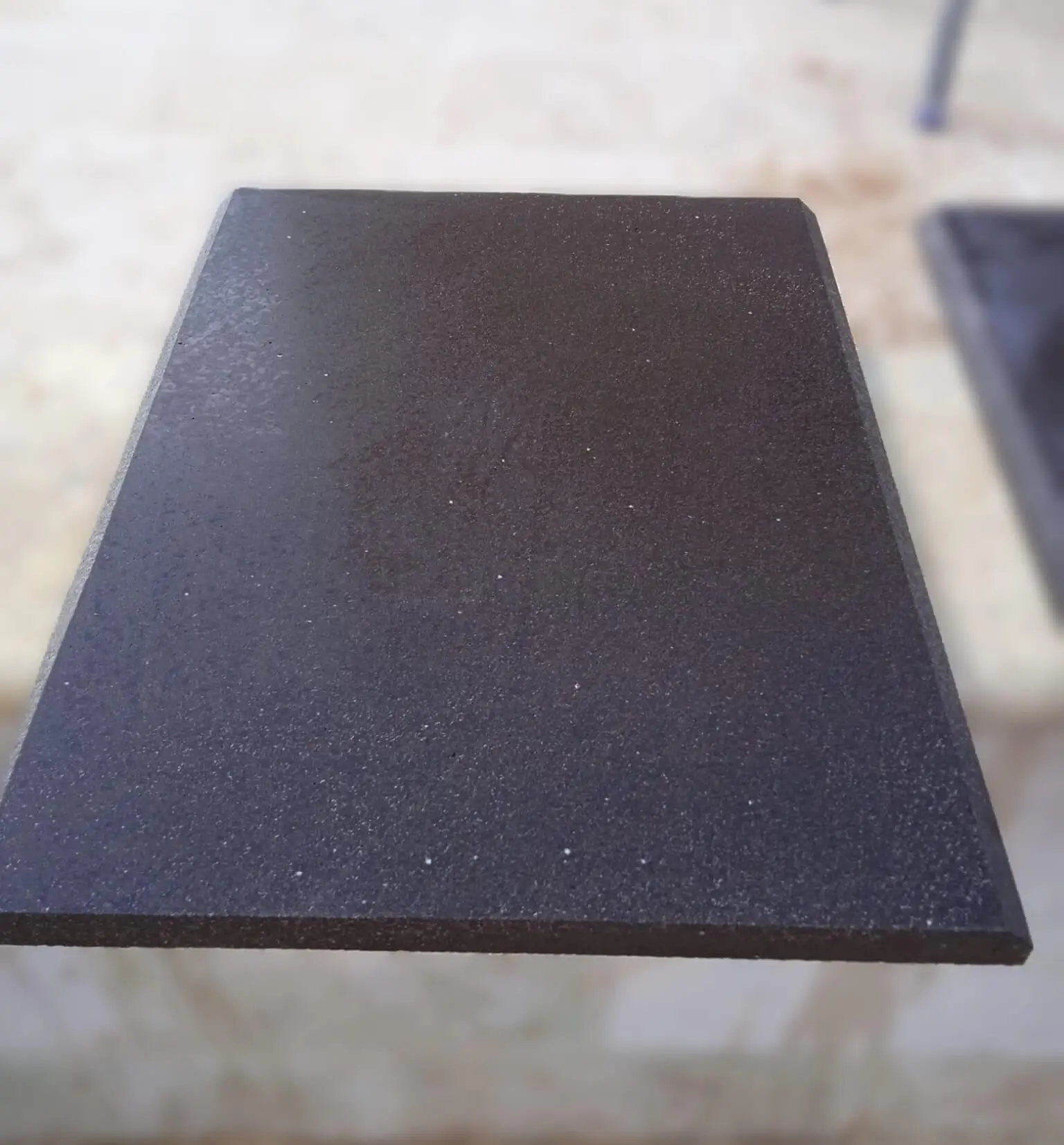
In Yuma, you would encounter the most severe thermal conditions in Arizona, with summer temperatures regularly exceeding 115°F and ground-level solar radiation reaching maximum intensity. Your black slate landscape stone specification would need to address thermal expansion coefficients and surface temperature mitigation strategies essential for installations in this environment. The material would perform best in applications where you integrate substantial overhead shading or limit dark stone to evening-use areas that benefit from extended heat retention. You should specify expansion joints every 12 feet maximum and verify that your base preparation accounts for Yuma’s sandy soils that require stabilization. At Citadel Stone, we would recommend evaluating how your project’s orientation affects direct sun exposure and adjusting material placement accordingly for optimal performance.
Mesa Urban Applications
Your Mesa installations would benefit from black slate landscape stone advantages in suburban residential and commercial applications where design impact matters alongside performance. You would need to account for Mesa’s clay-content soils that expand and contract with moisture variation, requiring proper base preparation with geotextile separation. The black slate landscape stone aesthetic value would create dramatic contrast in contemporary desert landscaping prevalent throughout Mesa’s newer developments. You should specify how your installation addresses the area’s occasional monsoon flooding and rapid drainage requirements. Material selection would favor slightly higher porosity ranges around 4-5% to facilitate moisture management while maintaining structural integrity. At Citadel Stone, we maintain warehouse inventory accessible to Mesa projects, allowing you to coordinate delivery schedules that match construction timelines without extended lead times.
Gilbert Residential Specifications
In Gilbert’s master-planned communities, you would specify black slate landscape stone for high-end residential applications where property values justify premium materials. Your specifications would address Gilbert’s strict HOA requirements and design review processes that emphasize visual consistency across neighborhoods. The black slate landscape stone design effects would provide sophisticated appearance in outdoor living spaces, pool decks, and entry courts common in Gilbert’s luxury residential market. You should account for the area’s excellent drainage conditions that simplify base preparation compared to other Valley locations. Your material selection would emphasize consistent color grading and dimensional accuracy to meet architectural review standards. You would need to coordinate your specifications with landscape architects who design Gilbert’s elaborate outdoor entertainment spaces where material performance directly affects homeowner satisfaction. The installations would benefit from Gilbert’s relatively stable soil conditions that reduce foundation movement concerns.
Final Considerations
Your successful black slate landscape stone specification requires balancing aesthetic goals against functional requirements and budget constraints. You’ve learned how thermal mass properties create both opportunities and challenges in Arizona’s extreme climate. When you account for heat management, slip resistance, and long-term maintenance requirements during the design phase, you avoid costly field modifications and performance disappointments.
The black slate landscape stone benefits Arizona projects when you integrate the material strategically rather than applying it universally. You should evaluate each application zone separately, considering sun exposure, traffic patterns, and intended use before committing to dark stone. Your specification becomes more sophisticated when you mix black slate with lighter materials to create visual interest while moderating thermal impacts.
You need to establish clear performance criteria in your written specifications, avoiding generic language that allows substitutions compromising your design intent. When you specify measurable requirements for compressive strength, slip resistance, and dimensional tolerances, you protect project quality and reduce installation conflicts. Your drawings should detail edge restraint, expansion joints, and base preparation requirements with same precision you apply to architectural elements. For comprehensive maintenance protocols that preserve your installation investment, review Slate Walling Stone Suppliers Arizona before you finalize project closeout documents. Citadel Stone provides Spanish slate as Mediterranean natural slate suppliers in Arizona options.