
When you evaluate slate wholesale container pricing Arizona, you need to understand how international logistics directly impact your project budget. Container load economics require you to calculate landed costs that include ocean freight, customs duties, port handling, and domestic transportation to your Arizona job site. You’ll find that full container loads (FCL) provide significantly better per-unit pricing compared to less-than-container-load (LCL) shipments, but they demand careful planning around warehouse capacity and project phasing.
Your specification decisions affect total landed costs more than you might expect. Material density, pallet configuration, and dimensional tolerances all influence how much slate fits in a standard 40-foot container. You should factor these variables early in your procurement process because they determine whether you’re looking at 22 or 26 tons per shipment — that difference translates to 15-18% variance in per-square-foot costs before the material even reaches your Southwest distribution point.
Container Load Economics: Full Shipment Structure
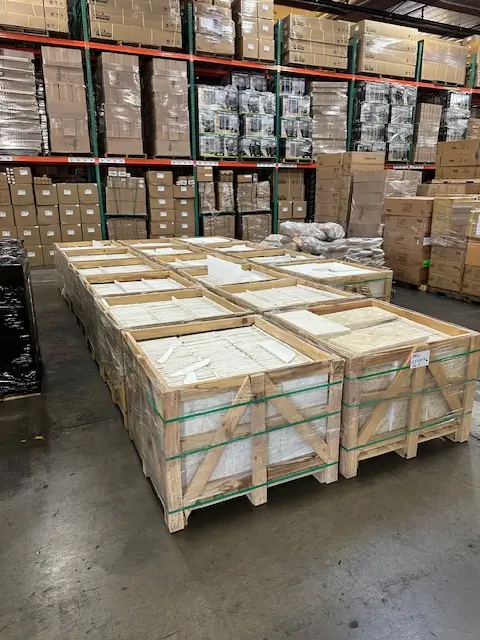
Full container loads operate on fundamentally different pricing structures than partial shipments. When you commit to FCL procurement, you’re securing dedicated container space that doesn’t share cargo with other importers. This eliminates consolidation delays and reduces handling touchpoints that often damage natural stone products. Your slate wholesale container pricing Arizona calculations should start with understanding that a standard 40-foot high-cube container accommodates 24-28 pallets depending on pallet height and load configuration.
The weight limit becomes your practical constraint before volume does. Standard containers max out at 26-28 tons of cargo weight, and slate’s density means you’ll hit weight limits before filling cubic capacity. You need to work with suppliers who understand dimensional weight optimization — poorly configured pallets waste 12-18% of available container capacity, directly inflating your per-unit costs. For commercial-scale procurement, review Citadel Stone slate stone available to evaluate material specifications that maximize container utilization.
Your slate wholesale import costs depend heavily on origin port selection. Brazilian quarries ship through Santos or Rio de Janeiro, while Indian slate typically moves through Kandla or Mundra ports. Chinese slate exports primarily through Shanghai or Ningbo. Each origin presents different baseline costs:
- You’ll pay $2,800-$3,400 for 40-foot container from Indian ports to Long Beach
- Brazilian routing costs $3,200-$3,800 for equivalent container capacity
- Chinese exports range $2,400-$3,000 depending on seasonal demand fluctuations
- Your final Arizona delivery adds $800-$1,200 from West Coast ports depending on destination city
Ocean freight rates fluctuate based on global shipping capacity and seasonal demand cycles. You should lock pricing 90-120 days before required delivery dates to avoid spot market volatility that can spike costs by 30-40% during peak construction seasons. Container availability at origin ports affects lead times more than most specifiers anticipate — during high-demand periods, you might wait 3-4 weeks just for empty container allocation before loading even begins.
Customs Duties: Import Classification Impact
Your slate wholesale shipping expenses include customs duties calculated on Harmonized Tariff Schedule (HTS) classifications. Natural slate falls under HTS 6803.00, but the specific duty rate depends on whether material is rough blocks, sawn slabs, or finished pavers. You need to verify classification with your customs broker because misclassification creates costly delays and penalty assessments that can add 8-15% to total landed costs.
Current duty rates for slate imports to the United States range from 2.8% to 5.1% of declared customs value depending on material processing level and country of origin. Your customs value includes the FOB (free on board) price plus international freight and insurance costs. You should understand that declared value scrutiny has increased significantly — undervaluing shipments to reduce duty payments creates serious legal exposure and potential cargo seizure.
Customs processing timeframes affect your warehouse scheduling and project delivery commitments. Standard clearance takes 2-5 business days after container arrival at U.S. ports, but USDA agricultural inspections (required for all stone on wooden pallets) can extend this to 7-10 days. You’ll want to factor these delays into project timelines because late deliveries trigger costly schedule compression on job sites with fixed completion dates.
Port Handling: Drayage Cost Components
Port handling and drayage charges represent hidden costs that catch many specifiers off-guard when calculating slate wholesale container pricing Arizona. Drayage refers to short-distance transportation from port terminals to nearby warehouses or rail yards. Your container incurs per-diem charges (typically $75-$125 daily) if not removed from port terminals within the free time window — usually 3-5 days after vessel discharge.
Port congestion directly affects your drayage expenses. West Coast ports experience significant variability in container turnaround times based on labor availability, chassis shortages, and terminal capacity constraints. You should budget an additional $400-$700 per container for drayage from Long Beach or Los Angeles ports to regional distribution centers. Your slate wholesale freight pricing needs to account for potential detention charges if truck access delays prevent timely container return to port equipment pools.
- Terminal handling charges add $250-$400 per container regardless of cargo type
- Chassis rental fees cost $35-$55 per day for equipment securing containers during transport
- Overweight penalties apply if your loaded container exceeds 44,000 pounds gross weight for highway transport
- Your project timeline must accommodate weekend and holiday restrictions at most port facilities
Inland Transportation: Arizona Delivery Variables
Once containers clear customs and leave West Coast ports, your slate wholesale transportation fees depend on Arizona destination and delivery requirements. Full truck transportation from California ports to Phoenix costs $900-$1,300 per container, while Tucson destinations run $1,100-$1,500. Remote job sites in northern Arizona or along the state’s western border with California and Nevada can add another $300-$600 to baseline transportation costs.
Your delivery site characteristics significantly impact final-mile logistics costs. Truck access requirements, unloading equipment availability, and on-site storage capacity all affect whether you can accept full container deliveries directly to job sites or need to route through distribution warehouses first. You’ll need adequate turning radius for 53-foot trailers, firm ground capable of supporting 80,000-pound gross vehicle weights, and either forklift capacity or plans for manual unloading that extend driver wait times and trigger additional charges.
Detention charges apply when drivers wait longer than the standard 2-hour free time for unloading. You should coordinate with your receiving crew to ensure immediate unloading capability when containers arrive because detention runs $75-$125 per hour after free time expires. For projects without adequate unloading equipment, you might need to arrange warehouse transfer where specialized material handling equipment can efficiently devan containers, then schedule smaller delivery trucks to transport material to final job sites as installation progresses.
Material Density: Container Capacity Optimization
Slate’s specific gravity ranges from 2.7 to 2.9, making it substantially denser than many other paving materials. This density characteristic means you’ll reach container weight limits before maximizing cubic volume. A 40-foot high-cube container offers 2,700 cubic feet of cargo space, but weight restrictions limit slate loads to approximately 24-26 tons depending on material thickness and packaging configuration.
You need to calculate realistic square footage yields per container based on material thickness. For 20mm thick slate pavers with typical packaging, expect 1,800-2,200 square feet per container. Thicker 30mm material reduces this to 1,200-1,500 square feet because weight limits are reached with fewer pieces. Your slate wholesale container pricing Arizona should be calculated on per-square-foot basis rather than per-ton to accurately compare against domestic stone options and alternative paving materials.
Packaging methodology affects both material protection and container utilization efficiency. Wooden crate packaging provides superior edge protection but reduces usable square footage per container by 8-12% compared to shrink-wrapped pallet configurations. You should evaluate whether your project scope justifies the additional freight cost of protective crating versus accepting slightly higher breakage rates with standard pallet packaging. For high-value commercial installations where material consistency is critical, crating often proves economical despite higher upfront shipping costs.
Lead Time Planning: Procurement Cycle Realities
Your slate wholesale container pricing Arizona depends partially on how far in advance you can commit to orders. Lead times from order placement to Arizona delivery typically span 90-150 days depending on origin country, production queue at quarries, and current shipping schedules. You’ll need to account for multiple sequential timeframes that each introduce potential delays:
- Quarry production and material selection requires 20-35 days for most suppliers
- Container loading and export documentation adds 7-12 days at origin ports
- Ocean transit consumes 18-28 days from Asian ports, 24-32 days from South American origins
- Port clearance and inland transportation contribute another 10-18 days to Arizona destinations
You should build 15-20% schedule buffer into your project timeline to accommodate inevitable delays in international supply chains. Weather disruptions, port congestion, customs inspections, and equipment shortages all create variability that affects delivery precision. For projects with firm installation dates, you might need to advance order placement by 4-5 months rather than the theoretical 3-month minimum lead time.
Seasonal demand patterns affect both slate wholesale import costs and container availability. Spring and early summer represent peak construction material demand periods when shipping capacity tightens and rates increase. You’ll typically secure better pricing and more reliable scheduling when ordering during fall and winter months for delivery the following construction season. This procurement strategy requires warehouse capacity to store material between arrival and installation, but the 12-18% cost savings on slate wholesale shipping expenses often justifies storage expenses.
Quality Verification: Pre-Shipment Inspection Value
When you commit to full container loads, you’re purchasing 20+ tons of material sight-unseen unless you implement quality verification protocols. Pre-shipment inspection services cost $400-$800 per container but provide critical risk mitigation for high-value orders. Third-party inspectors verify that material matches approved samples, confirm dimensional tolerances meet specifications, and document packaging quality before containers leave origin countries.
Your inspection protocol should address the specific performance characteristics critical to Arizona applications. You need verification of dimensional consistency because thickness variation beyond ±2mm creates installation difficulties and aesthetic inconsistencies. Color and texture matching to approved samples prevents costly rejections after material reaches job sites. Verification that material is properly seasoned and kiln-dried prevents installation failures caused by excessive moisture content that leads to efflorescence and staining issues in Arizona’s arid climate.
Documentation requirements for slate wholesale freight pricing include detailed packing lists, material safety data sheets, and country-of-origin certifications. You should require high-resolution photography of loaded containers showing packaging methodology and material condition before shipment departs. This documentation becomes essential if you need to file damage claims with carriers or resolve quality disputes with suppliers. Without comprehensive pre-shipment documentation, you’ll find yourself in difficult positions trying to assign responsibility for damage or quality issues discovered after material arrives in Arizona.
Insurance Coverage: Cargo Risk Management
Cargo insurance for slate shipments costs 0.3-0.8% of declared value but protects against total financial loss if containers are damaged, lost at sea, or destroyed during transportation. Standard ocean freight includes minimal carrier liability that caps at $500 per container regardless of actual cargo value. When you’re shipping $25,000-$45,000 worth of slate, you need supplemental cargo insurance that covers full replacement value.
Your insurance policy should address specific risks relevant to natural stone transportation. All-risk marine cargo insurance covers physical loss or damage from any external cause during ocean transit, port handling, and inland transportation to final destination. You’ll want to verify that coverage includes “sue and labor” provisions that reimburse reasonable expenses incurred to minimize losses after damage occurs. Your slate wholesale transportation fees should include insurance costs calculated into total landed pricing to avoid budget surprises.
Claims documentation requirements make pre-shipment and delivery inspection records essential. You need to photograph container conditions upon arrival, document any visible damage before unloading, and conduct piece counts during devanning to identify shortages. Insurance carriers require this documentation within specific timeframes — typically 3-5 business days after delivery — to process claims. Missing these documentation windows can result in claim denials even when legitimate damage occurred.
Payment Terms: Financial Logistics Coordination
International slate procurement involves payment structures that differ significantly from domestic material purchases. Most overseas suppliers require 30-50% deposits upon order confirmation with balance due before shipment release. You’ll typically arrange payment through letters of credit or wire transfers rather than standard commercial credit terms available with domestic suppliers.
Letters of credit provide security for both buyers and suppliers but add $500-$1,200 in bank fees to transaction costs. Your financial institution issues the letter of credit guaranteeing payment to suppliers once they provide specified shipping documentation proving material was dispatched. This arrangement protects you from paying for goods never shipped while assuring suppliers they’ll receive payment for completed orders. You should factor these financial service fees into total slate wholesale container pricing Arizona calculations.
Currency exchange fluctuations affect final costs when you’re purchasing from international suppliers. If you receive quotes in foreign currencies, you face exchange rate risk between order placement and final payment that can swing total costs by 3-8%. You might negotiate USD-denominated pricing to transfer exchange risk to suppliers, but this often results in slightly higher base prices as suppliers build in their own hedging costs. For large projects spanning multiple container orders, you should consult with financial advisors about currency hedging strategies that lock in exchange rates for future payment obligations.
Citadel Stone Slate Wholesale Arizona: Specification Scenarios
When you consider Citadel Stone’s slate wholesale materials for your Arizona project, you’re evaluating premium natural stone with proven performance characteristics in extreme Southwestern climates. At Citadel Stone, we provide technical guidance for hypothetical applications across Arizona’s diverse climate zones, from low-desert regions experiencing 115°F+ summer temperatures to high-elevation areas with significant freeze-thaw cycling. This section outlines how you would approach slate wholesale container pricing Arizona decisions for three representative cities, accounting for local climate conditions, logistics infrastructure, and typical project requirements that affect material selection and procurement strategies.
San Tan Valley Projects
In San Tan Valley, you would specify slate materials that accommodate extreme temperature fluctuations characteristic of desert valley microclimates. Summer ground temperatures exceed 165°F on unshaded surfaces, requiring slate with low thermal expansion coefficients and proven dimensional stability. Your slate wholesale import costs for San Tan Valley projects would benefit from proximity to Phoenix distribution infrastructure, reducing inland transportation expenses by $150-$250 per container compared to more remote Arizona locations. You should plan delivery logistics around summer monsoon patterns that create temporary access challenges on unpaved construction roads common in developing areas of this rapidly growing community.
Yuma Specifications
Yuma’s position as one of the hottest and driest cities in North America demands that you select slate with exceptional UV resistance and minimal moisture absorption characteristics. Your specifications would address material performance in sustained 110°F+ temperatures that persist for 120+ days annually. Yuma’s western Arizona location near California borders reduces slate wholesale shipping expenses slightly due to shorter distances from West Coast port facilities — you would save approximately $200-$300 per container on inland freight compared to eastern Arizona destinations. You need to account for limited warehouse infrastructure in the Yuma market, meaning most projects require direct job site delivery with adequate on-site storage and security provisions.
Avondale Applications
For Avondale installations in the rapidly developing West Valley region, you would leverage proximity to Phoenix metropolitan logistics infrastructure while accounting for the area’s slightly higher soil alkalinity that affects long-term efflorescence potential. Your slate wholesale freight pricing benefits from Avondale’s position along major interstate corridors connecting to California ports, providing competitive transportation rates and reliable delivery scheduling. You should specify slate materials with proven resistance to alkaline soil interactions because native soils in this region exhibit pH levels of 7.8-8.4 that can accelerate mineral leaching in more porous stone materials. When you plan container deliveries to Avondale projects, you’ll find better warehouse availability and material handling services compared to more remote Arizona markets.
Split Load Coordination: Multiple Project Supply
When you operate multiple Arizona projects simultaneously, you might consider splitting container loads across job sites to optimize slate wholesale container pricing Arizona. This strategy works effectively when you have 2-3 active projects that collectively justify full container procurement but individually need only partial quantities. You’ll need warehouse facilities capable of receiving full containers, breaking down loads, and redistributing material to multiple destinations.
Your split-load logistics add $300-$600 per container to total costs but can significantly reduce per-project material expenses compared to ordering separate LCL shipments for each job. You need to coordinate project timelines carefully because material sits in warehouse storage between container arrival and final distribution to individual sites. Storage costs typically run $45-$75 per pallet monthly, so extended warehousing periods erode the economic advantages of full container procurement.
Material tracking becomes more complex when you split containers across projects. You should implement inventory management systems that maintain lot number traceability so all material on each individual project comes from the same production run. This ensures color and texture consistency within each installation while allowing you to source material for multiple projects from single container shipments. Without disciplined inventory control, you risk mixing material from different production lots on single projects, creating visible color variations that compromise installation quality.
Alternative Supply Chain Models
Beyond direct container importation, you might evaluate alternative supply chain models that shift logistics complexity to specialized importers and distributors. Regional distributors who maintain warehouse inventory in Arizona markets can provide smaller quantities without requiring you to manage full container procurement. You’ll pay 15-25% premiums over direct import costs, but you eliminate customs management, warehousing requirements, and minimum order quantities.
Your decision between direct importation and distributor sourcing depends on project scale and organizational logistics capabilities. For projects exceeding 5,000 square feet of slate paving, direct container procurement typically provides better economics despite added complexity. Smaller projects under 2,000 square feet often benefit from distributor sourcing that provides just-in-time delivery without excess inventory management. You should calculate break-even thresholds specific to your operational structure and typical project profiles.
Domestic slate sources provide another alternative worth evaluating. While North American slate quarries operate primarily in Pennsylvania, Vermont, and Virginia, transportation costs to Arizona often make imports more economical for large-volume projects. You might find domestic slate advantageous for smaller specialty applications where material consistency and simplified logistics justify 20-30% price premiums. Your slate wholesale import costs for international material will nearly always undercut domestic sources on projects exceeding 3,000 square feet once you account for full container economics.
Project Execution Considerations
Your professional specification process for slate wholesale container pricing Arizona requires you to balance multiple competing factors that affect total project economics. Material cost represents only 30-40% of total installed costs — you need to evaluate how procurement decisions affect installation labor productivity, schedule reliability, and long-term performance outcomes. When you commit to full container orders, you’re making decisions with 4-6 month planning horizons that require accurate project pipeline forecasting and confident demand projections.
For guidance on maintenance requirements that affect life-cycle costs, consult Slate Stone Suppliers Arizona: Regional Sourcing before finalizing material selections and project budgets. Walkway installations use Citadel Stone’s durable slate slabs for yard pedestrian areas.