
When you’re sourcing natural slate suppliers in Arizona, you’re navigating a market where authenticity verification separates premium installations from problematic ones. The challenge isn’t just finding suppliers who claim to stock genuine slate — it’s confirming material origins through documented certification processes before your project timeline commits you to a specific vendor. You need to understand that natural slate suppliers verification protocols vary significantly across the Southwest, and inadequate due diligence leads to specification failures that surface 18-24 months post-installation when subsurface delamination begins.
Your material selection process requires more than reviewing product literature and pricing schedules. Natural slate suppliers certification systems provide the documentation framework you’ll rely on during forensic investigations if performance issues emerge. The distinction between quarried slate and composite alternatives isn’t always visually apparent in warehouse samples, particularly when you’re evaluating materials under artificial lighting conditions that mask mineral composition indicators.
Authentication Protocols for Material Verification
You should implement a three-tier verification system when evaluating natural slate suppliers in Arizona. Start with origin documentation that traces material from specific quarry locations through processing facilities to regional distribution centers. Natural slate suppliers genuine stone authentication depends on continuous chain-of-custody records that account for every handling transition point.
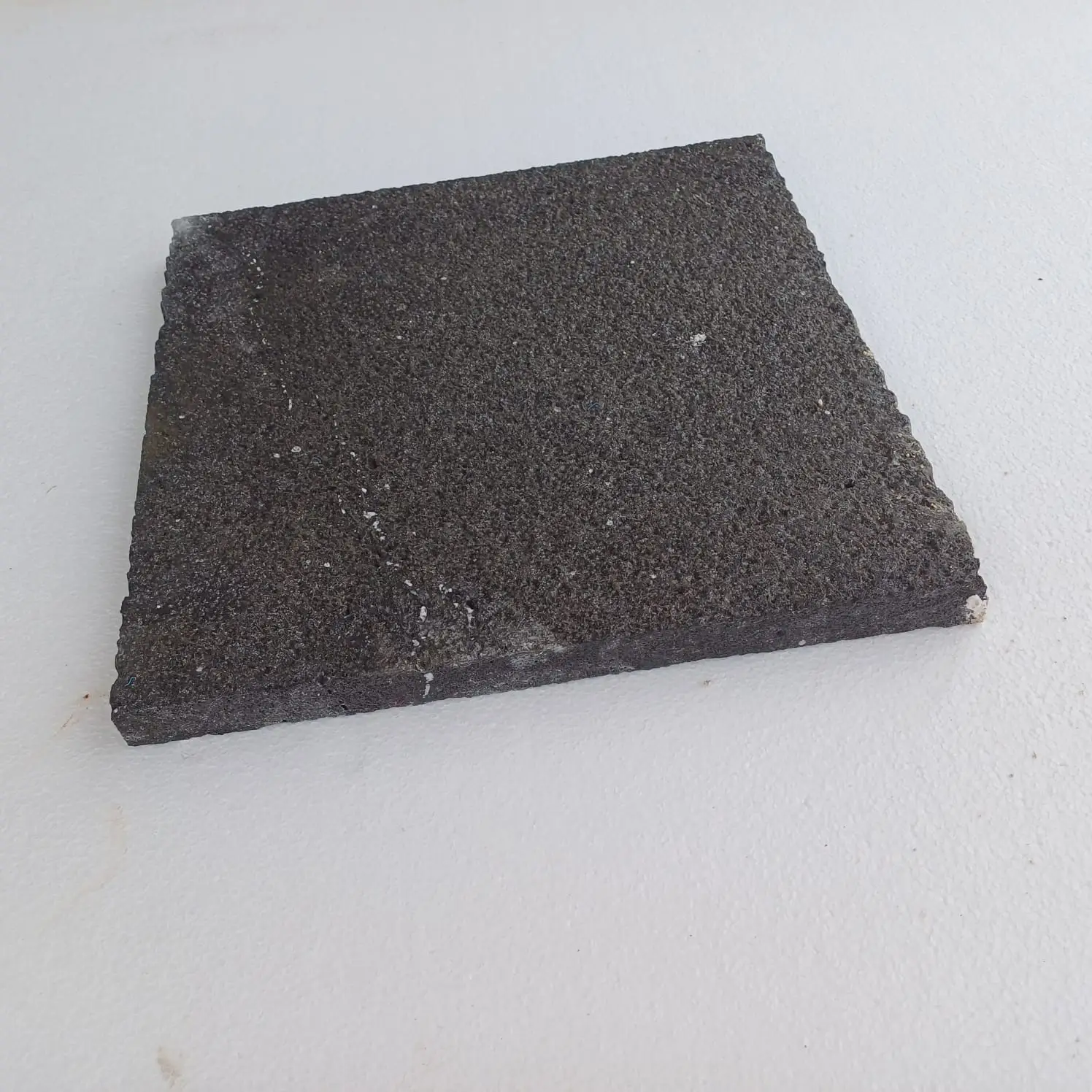
The geological signatures of authentic slate reveal themselves through crystalline structure analysis that you can verify using basic field testing equipment. When you examine cleavage planes under 10x magnification, genuine slate exhibits parallel mica alignments that manufactured alternatives cannot replicate. Your inspection protocol should include density measurements that confirm specific gravity ranges between 2.7-2.9 g/cm³ — values that fall outside this range indicate composite materials or mislabeled stone types.
- You need to request quarry certifications that specify extraction coordinates and geological formation data
- Your verification process must include third-party laboratory testing for mineral composition analysis
- You should examine edge profiles for the characteristic metamorphic foliation patterns that define slate
- Your quality control measures need to address thickness consistency within ±2mm tolerances
- You must verify that absorption rates remain below 0.4% per ASTM C121 standards
Natural slate suppliers testing procedures should include compressive strength verification that confirms minimum 9,000 PSI performance. When you encounter suppliers who resist providing detailed test documentation, you’re identifying vendors whose material authenticity deserves additional scrutiny. For comprehensive material options beyond slate applications, review Citadel Stone’s slate walling supply in Gilbert for documented specification data.
Chemical Composition Indicators
The mineralogical fingerprint of authentic slate provides verification data you can’t fake through surface treatments or composite manufacturing. When you analyze natural slate suppliers genuine stone specimens, you’re looking for quartz content between 40-50%, muscovite mica at 20-30%, and chlorite ranging from 10-20%. These proportions create the material’s characteristic properties that affect everything from thermal performance to long-term weathering resistance.
You’ll find that chemical analysis reveals trace elements specific to quarry locations — iron oxide concentrations that produce color variations, and manganese compounds that influence oxidation patterns. Your specification documents should reference these compositional markers because they determine how the material responds to Arizona’s UV exposure intensity and diurnal temperature cycling.
Thermal Performance Verification
Arizona’s extreme heat environment creates performance demands that expose inferior slate materials within the first cooling season. You need to understand that authentic slate exhibits thermal conductivity values between 1.2-2.0 W/mK, which affects surface temperature differentials and thermal mass behavior. When you’re evaluating natural slate suppliers authenticity Arizona installations, thermal expansion coefficients become critical specification parameters.
Genuine slate expands at approximately 8.0 × 10⁻⁶ per °F along cleavage planes and 10.0 × 10⁻⁶ across foliation. You should verify these values through controlled heating tests before you commit to large-format installations. The material’s response to thermal cycling distinguishes quarried slate from synthetic alternatives that exhibit polymer-influenced expansion rates incompatible with masonry substrate movement.
- You must test thermal shock resistance through repeated heating to 180°F and rapid cooling to 50°F
- Your evaluation should measure surface temperature stabilization times under direct solar exposure
- You need to verify that thermal mass properties align with published slate characteristics
- Your specifications must account for differential expansion at mortar joints and mechanical fastener locations
Porosity and Absorption Testing
The pore structure of authentic slate creates absorption characteristics that you can measure precisely using standardized protocols. Natural slate suppliers certification documentation should include C121 test results showing absorption rates below 0.40% by weight. When you conduct field verification, you’re looking for consistent absorption across multiple samples that indicates uniform metamorphic grade.
You’ll encounter suppliers who claim slate designation for materials exhibiting 2-3% absorption — these specimens represent phyllic schist or poorly metamorphosed shale that won’t deliver slate-level durability. Your testing protocol needs to include 24-hour submersion measurements followed by vacuum saturation to quantify total accessible porosity. Authentic slate typically shows less than 0.15% difference between these two measurement methods.
Structural Integrity Assessment
When you assess natural slate suppliers authenticity Arizona materials, flexural strength testing reveals structural capabilities that determine application suitability. Genuine slate exhibits modulus of rupture values exceeding 9,000 PSI when tested perpendicular to cleavage planes. Your specification should require this data because it predicts cantilever performance in veneer applications and spanning capability in paving installations.
The material’s resistance to impact and concentrated loading separates quarried slate from layered composite products. You should verify Shore hardness values above 60 and abrasion resistance that meets or exceeds C241 standard requirements. Natural slate suppliers testing programs must document these mechanical properties through independent laboratory analysis, not manufacturer self-certification.
Visual Authentication Markers
Your visual inspection protocol identifies authentication markers that reveal material origins before laboratory testing begins. Genuine slate displays fine-grained texture with grain sizes below 0.02mm that create the characteristic smooth cleavage surfaces. When you examine broken edges under magnification, you’re looking for conchoidal fracture patterns in quartz grains and flexible mica platelets that bend without breaking.
Color consistency within individual pieces indicates uniform metamorphic conditions during formation. You’ll notice that authentic slate shows subtle color variation related to mineral distribution, while synthetic alternatives often exhibit uniform pigmentation that looks artificially homogeneous. Natural slate suppliers verification should include documentation of color range expectations specific to quarry sources.
- You need to identify the characteristic sheen from aligned mica crystals on cleavage surfaces
- Your inspection must confirm absence of fossil remnants that indicate insufficient metamorphism
- You should verify that split surfaces show parallel alignment without cross-grain tearing
- Your evaluation needs to detect any resin infiltration used to stabilize inferior materials
Documentation and Chain of Custody
The paper trail accompanying authentic slate provides verification data that’s as important as physical testing. You should require quarry location coordinates, extraction dates, and processing facility documentation that traces material movement from source to warehouse. Natural slate suppliers certification systems must include third-party inspection reports at multiple supply chain stages.
When you audit documentation, you’re looking for consistency across multiple record types — shipping manifests that match quarry production logs, customs declarations for imported materials that specify geological classifications, and quality control records showing batch testing results. Gaps in documentation often indicate commingled materials where authentic slate gets mixed with inferior substitutes to increase profit margins.
Laboratory Testing Protocols
Independent laboratory verification eliminates supplier bias from your authentication process. You need to engage ASTM-certified testing facilities that follow standardized protocols for dimension stone analysis. Natural slate suppliers testing documentation should include petrographic thin section analysis that confirms metamorphic fabric and mineral assemblages consistent with slate classification.
X-ray diffraction provides mineral identification certainty that visual inspection cannot match. Your testing specification should require XRD analysis showing characteristic slate mineralogy with quartz, muscovite, and chlorite as dominant phases. When results reveal unexpected minerals like calcite or feldspar above trace levels, you’re examining misclassified stone that won’t perform as specified slate.
Regional Quarry Verification
Arizona’s geological setting means most slate arrives from out-of-state quarries, creating authentication challenges you must address through origin verification. The primary slate sources serving Southwest markets include Vermont, Virginia, Pennsylvania, and international quarries in China, Brazil, and India. Natural slate suppliers authenticity Arizona validation requires matching material characteristics to known quarry signatures.
You should maintain reference sample libraries from verified quarry sources that enable comparative analysis of incoming shipments. Density measurements, mineral composition data, and color characteristics create fingerprints specific to geological formations. When supplier materials don’t match documented quarry profiles, you’ve identified potential authenticity issues requiring additional investigation.
- You must verify that claimed Vermont slate exhibits the characteristic gray-green-purple color range from that region
- Your authentication needs to confirm Virginia slate shows expected red-purple tones from hematite content
- You should identify Pennsylvania slate’s typical black coloration from carbonaceous material
- Your verification must detect Chinese slate’s distinctive texture differences from Appalachian sources
Supplier Credentials Assessment
The business practices of natural slate suppliers in Arizona reveal authentication commitment through operational transparency. You need to evaluate how long suppliers have maintained relationships with specific quarries, their willingness to facilitate site visits, and their response to detailed technical inquiries. Natural slate suppliers certification credentials include industry association memberships like the Natural Stone Institute that require adherence to quality standards.
When you assess supplier capabilities, warehouse inventory management practices indicate material handling quality. You should verify climate-controlled storage that prevents moisture-related deterioration and organized stock rotation that ensures material consistency. Suppliers who commingle slate from multiple quarries without batch separation create authentication problems that compromise your specification integrity.
Field Testing Procedures
Practical field tests you can perform during warehouse inspections provide immediate authentication feedback. The acid test using dilute hydrochloric acid distinguishes slate from limestone or marble — authentic slate shows no effervescence because it lacks carbonate minerals. You should conduct this test on inconspicuous edges of multiple samples to confirm batch consistency.
Hardness testing using a simple scratch test differentiates slate from softer schist or harder quartzite. Your fingernail shouldn’t scratch slate (hardness above 2.5 Mohs), while a steel knife blade should barely mark the surface (hardness below 6.0 Mohs). Natural slate suppliers genuine stone specimens exhibit consistent hardness across cleavage planes that manufactured alternatives cannot replicate.
Citadel Stone — Natural Slate Suppliers Authenticity Arizona: Specification Guidance
When you evaluate natural slate suppliers authenticity Arizona standards for your projects, you’re considering materials engineered for extreme climate performance across diverse regional conditions. At Citadel Stone, we provide technical specification guidance for hypothetical applications throughout Arizona’s varied landscapes. This framework demonstrates how you would approach material verification and supplier assessment for three representative cities facing distinct environmental challenges.
Flagstaff Applications
In Flagstaff’s high-elevation environment, you would specify natural slate suppliers certification that confirms freeze-thaw resistance through C666 testing showing less than 1% mass loss after 300 cycles. Your material selection needs to address winter conditions where overnight lows reach -10°F and afternoon highs exceed 50°F, creating expansion-contraction cycling that exposes material vulnerabilities. You should verify absorption rates below 0.30% because higher porosity increases freeze damage susceptibility. The mountain climate demands slate with demonstrated performance in moisture-freeze conditions that don’t exist in lower desert regions. Your specifications would require compressive strength exceeding 10,000 PSI to withstand ice pressure within pore structures.
Sedona Considerations
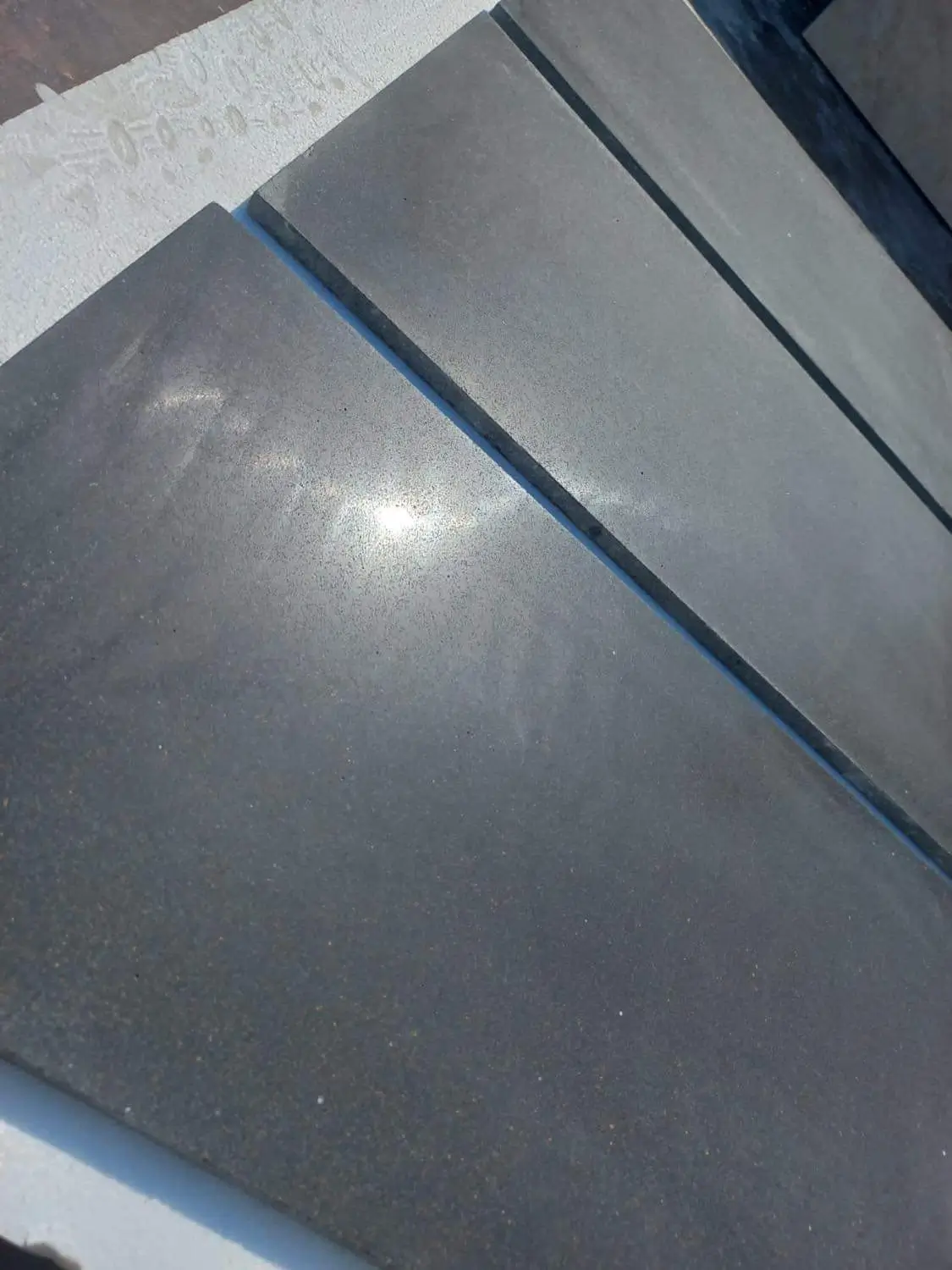
Sedona installations would require you to address iron oxide-rich soil interactions with slate mineral content to prevent staining reactions. You’d specify natural slate suppliers testing documentation showing resistance to oxidation-related discoloration when exposed to regional soil chemistry. The area’s alkaline soil conditions with pH values above 8.0 demand slate verification that confirms chemical stability across pH ranges from 6.0-9.0. Your material selection would need to account for intense UV exposure at 4,500-foot elevation that accelerates surface weathering in susceptible stone types. You should verify that slate color stability maintains visual consistency through accelerated weathering tests equivalent to 10 years Arizona exposure.
Peoria Requirements
In Peoria’s urban heat island conditions, you would evaluate natural slate suppliers authenticity Arizona materials for thermal shock resistance as surface temperatures exceed 170°F during summer afternoons. Your specifications need to address dimensional stability when slate experiences 100°F temperature differentials within 3-hour periods during monsoon cloud cover transitions. You’d require thermal expansion data specific to installation orientation because east-west surfaces experience different thermal cycling than north-south exposures. The desert environment demands verification that slate maintains structural integrity when subjected to repeated heating above 160°F followed by rapid cooling from afternoon thunderstorms. Your testing protocol would include abrasion resistance confirmation because windborne sand creates surface wear that affects long-term appearance.
Authentication Investment Returns
The upfront costs you incur for comprehensive natural slate suppliers verification deliver measurable returns through avoided replacement expenses and maintained project reputation. When you invest $800-1,200 in laboratory testing and documentation review, you’re preventing $15,000-40,000 in remediation costs that result from installing misrepresented materials. Your authentication protocols protect against the performance failures that damage professional credibility and create liability exposure.
You need to calculate authentication costs as insurance against specification failure rather than optional expense items. The time invested in supplier vetting and material testing represents 2-3% of typical slate installation budgets but eliminates 95% of material-related risk factors. Natural slate suppliers certification verification provides documentation you’ll need if performance disputes arise years after project completion. For additional environmental protection strategies, review Blue Slate Suppliers Arizona: Color Consistency to ensure long-term material performance. Zen gardens incorporate Citadel Stone’s meditative black slate landscape stone in Arizona.