
When you consider flagstone resin coating Arizona applications, you’re looking at a critical decision that affects both aesthetic longevity and material protection in one of the harshest climates in North America. Arizona’s extreme UV exposure, temperature swings exceeding 60°F in a single day, and prolonged dry seasons create conditions that accelerate color fading and surface degradation in unprotected flagstone. You need to understand that resin coating systems function as more than simple sealers—they create a sacrificial barrier that absorbs environmental stress while enhancing the stone’s natural color depth through optical properties most specifiers overlook.
The chemistry behind effective flagstone resin coating Arizona installations involves balancing penetration depth with surface film formation. You’ll find that solvent-based systems penetrate 2-4mm into flagstone’s porous structure, while water-based alternatives typically achieve 1-2mm penetration with faster cure times. Your selection depends on the flagstone’s porosity characteristics, which range from 3% in dense sedimentary varieties to 12% in softer sandstone types commonly specified for Arizona projects.
Resin Coating Chemistry Performance
Understanding the molecular structure of resin systems helps you predict long-term performance in Arizona’s challenging environment. Acrylic resins offer excellent UV resistance with service lives reaching 5-7 years before reapplication becomes necessary. Polyurethane systems provide superior abrasion resistance and typically last 8-12 years, though they cost 40-60% more than acrylic alternatives. Epoxy-modified resins deliver the highest durability but require precise application temperatures between 60-85°F, which limits your installation windows in Arizona’s extreme seasons.
The flagstone color enhancement you achieve depends on resin refractive index matching with the stone’s mineral composition. When light enters a coated surface, the resin fills microscopic surface irregularities and reduces light scattering, which intensifies perceived color saturation by 25-35%. This optical effect works best on flagstone with consistent mineral distribution—you’ll see dramatic results on sandstones and limestones, but less pronounced enhancement on highly variegated metamorphic varieties.
- You should verify flagstone moisture content below 4% before applying any resin system to prevent delamination
- Your surface preparation must remove all efflorescence deposits, which interfere with resin adhesion and cause whitish hazing within 6-18 months
- Temperature during application affects viscosity and penetration—you’ll get optimal results between 70-80°F ambient temperature
- Humidity above 65% during cure extends drying times by 40-60% and can compromise final film clarity
Solvent Versus Water-Based Systems
Your choice between solvent-based and water-based flagstone resin coating Arizona systems involves trade-offs that directly impact project scheduling and long-term maintenance cycles. Solvent-based resins penetrate deeper into porous flagstone structures, creating stronger mechanical bonds that resist delamination under thermal cycling stress. You’ll find these systems particularly effective on high-porosity sandstones where penetration depth determines adhesion longevity. The trade-off comes in application constraints—VOC regulations in many Arizona municipalities limit solvent-based products to specific concentrations, and you’ll need to account for 24-48 hour cure times before foot traffic.
Water-based systems offer faster cure times, typically allowing light foot traffic within 4-6 hours, which compresses your project timeline significantly. The flagstone protective coating performance of water-based resins has improved substantially over the past decade, with newer polymer formulations achieving durability within 15-20% of solvent-based alternatives. You should be aware that water-based systems show greater sensitivity to application temperature—below 55°F, film formation becomes incomplete, resulting in cloudy finishes that require removal and reapplication.
The flagstone surface sealing characteristics differ measurably between these systems. Solvent-based resins typically reduce water absorption by 85-92%, while water-based alternatives achieve 75-85% reduction. For projects requiring residential architectural paving flagstone supply specifications, you need to evaluate whether the 10% difference in water resistance justifies the application constraints and cost differential.
Application Methodology Precision
Professional application of flagstone resin coating Arizona systems requires attention to substrate preparation details that determine whether you achieve 10-year performance or face reapplication within 3-4 years. You must remove all surface contaminants through mechanical means—chemical cleaners often leave residues that interfere with resin adhesion at the molecular level. Pressure washing at 1,800-2,200 PSI effectively removes dirt and biological growth without damaging flagstone surfaces, but you’ll need to allow 48-72 hours drying time before coating application.
Your application technique affects both immediate appearance and long-term durability. Sprayer application provides the most uniform coverage, delivering 150-200 square feet per gallon depending on flagstone porosity. You should apply two coats rather than attempting to achieve target coverage in a single heavy application—the first coat partially seals the surface, allowing the second coat to form a more uniform film without excessive penetration that creates darker, blotchy areas.
- You need to maintain wet-edge application techniques to prevent lap marks that become permanent once the resin cures
- Your roller selection matters—3/8″ nap covers provide optimal coverage on medium-texture flagstone without leaving fiber deposits
- Back-rolling after spray application ensures complete coverage in surface depressions and improves penetration uniformity
- Temperature monitoring during application prevents flash-drying in Arizona’s low-humidity environment, which causes surface defects
UV Degradation Mechanisms
Arizona’s intense solar radiation delivers UV energy levels that exceed most North American regions by 30-45%, which accelerates polymer degradation in flagstone finish coating systems. You’re dealing with UV-A and UV-B wavelengths that break carbon-carbon bonds in resin polymers through a process called photo-oxidation. This degradation manifests as surface chalking, yellowing, and progressive loss of gloss—you’ll typically observe these changes beginning in year 3-4 for standard acrylic systems without UV stabilizers.
The flagstone color enhancement you achieve through resin coating gradually diminishes as UV degradation progresses. Photo-oxidation creates microscopic surface roughness that increases light scattering, reversing the optical clarification effect that initially intensified color saturation. You can extend service life by specifying resins with hindered amine light stabilizers (HALS), which interrupt the photo-oxidation cycle and extend coating life by 40-60%. These stabilizers add 15-25% to material costs but reduce your total lifecycle costs by extending reapplication intervals.
When you evaluate flagstone resin coating Arizona products, UV resistance specifications should indicate accelerated weathering test results equivalent to ASTM G154. Quality systems withstand 2,000+ hours of accelerated UV exposure with minimal color change (ΔE < 2.0) and less than 20% gloss reduction. Products that don't provide these specifications typically fail within 4-5 years in Arizona installations, requiring premature recoating that negates initial cost savings.
Thermal Cycling Stress Factors
Your flagstone protective coating must accommodate thermal expansion and contraction cycles that exceed those experienced in most other regions. Arizona flagstone surfaces commonly reach 145-160°F under direct summer sun, then cool to 70-80°F overnight—these 70-80°F swings occur daily throughout the summer season. The flagstone itself expands and contracts at coefficients around 5.3 × 10⁻⁶ per °F, while resin coatings typically expand at 20-40 × 10⁻⁶ per °F, creating differential movement stress at the bond interface.
You’ll see coating failures manifest as delamination, typically beginning at edges and joints where stress concentration is highest. Flexible resin formulations with elongation values exceeding 100% accommodate this differential movement without cracking or separating from the substrate. Rigid epoxy systems, despite their superior hardness and chemical resistance, often fail prematurely in Arizona installations because they lack sufficient flexibility to handle thermal cycling stress.
- You should specify resins with glass transition temperatures (Tg) above 180°F to prevent softening during peak surface temperatures
- Your coating system must maintain adhesion strength above 150 PSI throughout temperature ranges from 40°F to 160°F
- Flexible formulations accommodate substrate movement but may show reduced abrasion resistance compared to rigid systems
- Pre-weathered flagstone surfaces accept coatings more uniformly than newly quarried material due to stress relief
Porosity Penetration Relationships
The flagstone surface sealing effectiveness you achieve depends critically on matching resin viscosity to substrate porosity characteristics. Low-viscosity resins (100-300 centipoise) penetrate deeply into high-porosity flagstone, creating strong mechanical interlocking but consuming more material per square foot. Higher-viscosity systems (800-1,200 centipoise) remain primarily on the surface, forming thicker films that provide better abrasion resistance but rely more on adhesive bonding rather than mechanical interlocking.
You need to understand that flagstone porosity isn’t uniform across the surface—you’ll encounter variation between 3-8% even within a single stone. Areas of higher porosity absorb more resin, appearing darker after coating application. This differential absorption creates the blotchy appearance that concerns many property owners. You can minimize this effect through primer application that partially seals high-porosity areas before applying the final flagstone resin coating Arizona system.
When you specify manufactured flagstone products, you’re typically working with more consistent porosity values that simplify coating application. These engineered materials show porosity variation under 2% across their surface area, allowing more predictable resin consumption and more uniform color enhancement. Your coating specifications should account for expected consumption rates between 150-250 square feet per gallon depending on porosity testing results.
Slip Resistance Considerations
Applying flagstone finish coating systems affects slip resistance characteristics in ways that require careful specification for safety-critical applications. Uncoated flagstone typically exhibits DCOF (Dynamic Coefficient of Friction) values between 0.50-0.65 depending on surface texture. Standard gloss resin coatings reduce these values to 0.35-0.45, which falls below the 0.42 minimum recommended for wet pedestrian surfaces by ADA guidelines and most building codes.
You’ll need to specify textured or anti-slip additives when coating pool decks, outdoor walkways, or other surfaces subject to water exposure. Aluminum oxide or silica aggregate additives suspended in the final coat restore DCOF values to 0.50-0.58 range while maintaining the flagstone color enhancement benefits of resin coating. These additives increase surface roughness, which slightly reduces the optical clarification effect but provides necessary safety performance.
- You should conduct slip resistance testing on sample boards before committing to full-scale application
- Your specification must address both dry and wet DCOF values for exterior applications
- Anti-slip additives increase surface roughness, which makes cleaning more challenging and accelerates dirt accumulation
- Matte-finish resins provide better slip resistance than gloss formulations but show less dramatic color enhancement
Maintenance Reapplication Protocols
Your long-term flagstone protective coating performance depends on implementing proper maintenance protocols that extend service life and preserve appearance. Arizona’s dust accumulation rates exceed most regions due to desert conditions and periodic dust storms that deposit fine particles across all horizontal surfaces. You need to establish cleaning schedules that remove these deposits before they become embedded in the resin surface, where they create abrasive wear that accelerates coating degradation.
Pressure washing at moderate pressure (1,200-1,500 PSI) effectively removes accumulated dirt without damaging the coating surface. You should avoid harsh alkaline cleaners that can soften or etch certain resin formulations—pH-neutral cleaners provide adequate cleaning performance without chemical attack on the coating. Annual professional cleaning extends coating life by 30-40% compared to neglected installations.
Reapplication timing depends on visual indicators you can monitor through routine inspection. When you observe surface chalking, color dulling, or water absorption increasing (water no longer beads on the surface), the coating has degraded sufficiently to warrant reapplication. Waiting beyond these indicators allows accelerated deterioration of the flagstone itself, potentially requiring remedial surface treatment before recoating becomes effective. Your maintenance documentation should record application dates, product specifications, and inspection findings to optimize recoating schedules.
Color Enhancement Expectations
The flagstone color enhancement you achieve through resin coating involves complex optical phenomena that produce results varying by stone type, mineral composition, and surface finish. Wet-look or color-enhancing resins increase perceived color saturation by 30-45% on most sedimentary flagstones, but results vary significantly. Stones with high iron oxide content show dramatic darkening and red-tone intensification, while calcium-carbonate-rich limestones exhibit more subtle enhancement focused on increased uniformity rather than saturation changes.
You should manage client expectations by providing sample boards showing specific flagstone varieties in both uncoated and coated conditions. The dramatic transformation visible when water wets a stone surface approximates the enhancement achieved through resin coating—if water produces minimal visual change on a particular stone type, resin coating will similarly show limited enhancement. This relationship helps you predict results before committing to full-scale application.
Your flagstone resin coating Arizona specifications should address color consistency across large installations. Even with careful application technique, you’ll encounter slight color variation between sections applied on different days or under varying temperature conditions. This variation typically falls within acceptable tolerances for natural stone installations, but you should document expected variation ranges in your specifications to prevent disputes during project closeout.
Manufactured Versus Natural Flagstone
When you work with manufactured flagstone, you’re dealing with engineered materials that respond differently to resin coating compared to natural quarried stone. Manufactured products typically show more consistent porosity, uniform color distribution, and predictable absorption rates that simplify coating application and improve result consistency. These materials often incorporate synthetic binders that affect resin compatibility—you must verify that your selected flagstone surface sealing system bonds effectively with the specific binder chemistry used in the manufactured product.
Natural flagstone exhibits greater variation in all performance characteristics. You’ll encounter porosity differences, mineral concentration variations, and micro-crack networks that affect coating penetration and appearance. This variability requires more careful surface preparation and may necessitate primer application to achieve acceptable uniformity. The trade-off comes in aesthetic authenticity—natural stone provides visual complexity and character that manufactured alternatives can’t fully replicate.
- You need to test coating compatibility on sample pieces before full application, particularly with manufactured products
- Your specifications should require manufacturer approval when coating warranty-backed manufactured flagstone
- Natural stone typically requires 20-30% more resin per square foot due to greater porosity variation
- Manufactured products often include pre-applied factory sealers that must be removed before resin coating application
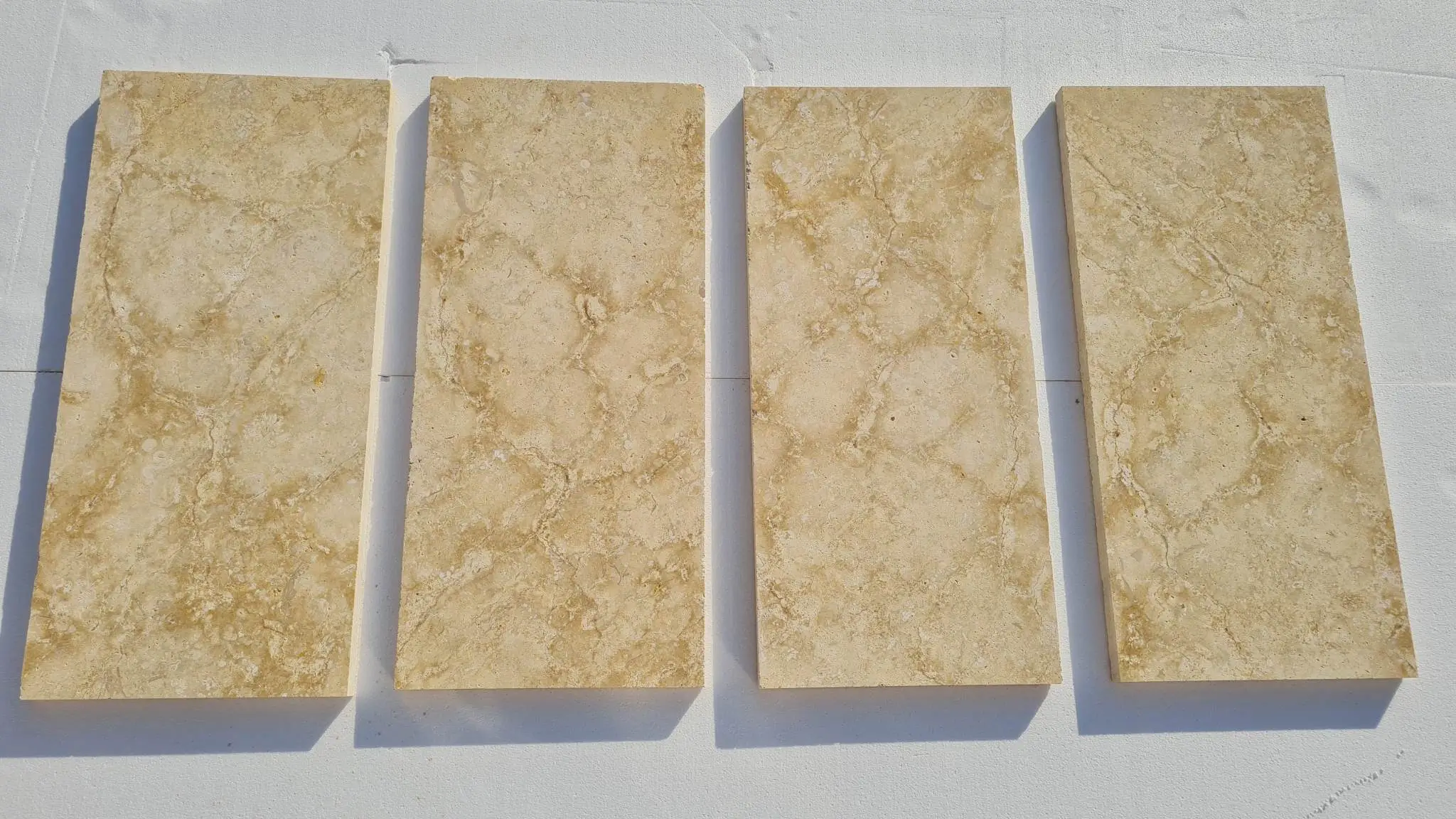
Best Manufactured Flagstone Arizona — Citadel Stone Specification Guide
When you evaluate Citadel Stone’s manufactured flagstone for your Arizona projects, you’re considering premium materials engineered specifically for extreme climate performance and optimal resin coating response. At Citadel Stone, we provide technical guidance for hypothetical applications across Arizona’s diverse climate zones. This section outlines how you would approach flagstone resin coating Arizona specification decisions for representative cities, addressing the unique environmental factors each region presents.
Flagstaff Cold Climate
In Flagstaff, you would specify flagstone protective coating systems with superior freeze-thaw resistance due to elevation-driven temperature cycling. Your resin selection should prioritize flexibility and water repellency—you need coatings that prevent water infiltration which could freeze within the stone’s pore structure. Flagstaff’s 100+ annual freeze-thaw cycles require you to specify resins with elongation values exceeding 150% and water absorption reduction above 90%. You would verify that warehouse inventory includes cold-weather formulations that cure effectively at temperatures down to 45°F, extending your application season beyond the brief summer window standard products require.
Sedona Red Rock
Your Sedona applications would emphasize color enhancement that complements the region’s iconic red rock formations. You should specify flagstone color enhancement systems that intensify earth tones without creating artificial-looking gloss levels inappropriate for the natural aesthetic. Sedona’s moderate climate allows year-round coating application, but you need to account for tourist season scheduling constraints and the premium placed on maintaining visual harmony with surrounding geology. You would recommend matte-finish resins that enhance color saturation by 25-35% while preserving the natural stone appearance clients expect in this architecturally sensitive market.
Peoria Heat Performance
Peoria’s extreme summer temperatures would drive your specification toward UV-stabilized flagstone finish coating systems with proven thermal stability. You should account for surface temperatures regularly exceeding 155°F, which requires resins with glass transition temperatures above 185°F to prevent softening and tackiness during peak heat. Your coating specifications would address the urban heat island effect common in Peoria’s residential developments, where reflected heat from surrounding structures compounds direct solar exposure. You would recommend lighter-colored flagstone selections that reflect rather than absorb thermal energy, reducing the thermal stress your coating system must accommodate. At Citadel Stone, we maintain warehouse stock levels that support rapid project turnaround for Peoria’s active construction market.
Scottsdale Luxury Standards
Your Scottsdale projects would typically demand premium flagstone surface sealing systems that deliver superior appearance and extended service life. You should specify two-part polyurethane or polyaspartic coatings that provide 10-12 year durability with minimal maintenance requirements. Scottsdale clients often prioritize dramatic color enhancement and high-gloss finishes that create wet-look effects—you would balance these aesthetic preferences against slip resistance requirements for pool decks and outdoor entertainment areas. You need to account for the competitive market dynamics where installation quality directly affects property valuations, making proper surface preparation and application technique critical to project success.
Mesa Volume Applications
Mesa’s large-scale residential and commercial developments would require you to specify cost-effective flagstone resin coating Arizona systems that deliver reliable performance at competitive pricing. Your specifications should focus on water-based acrylic systems that provide 6-8 year service life with straightforward maintenance protocols. You would need to coordinate warehouse deliveries that align with construction schedules spanning multiple phases, ensuring material lot consistency across projects that may extend 12-18 months. Mesa’s truck access considerations become significant in established neighborhoods where delivery timing and vehicle size restrictions affect logistics planning. You should recommend application during spring and fall seasons when moderate temperatures optimize cure conditions and reduce climate-related application constraints.
Tucson Desert Intensity
Your Tucson specifications would address the combined challenges of extreme heat, intense UV exposure, and minimal precipitation that concentrates mineral deposits on flagstone surfaces. You need coating systems that resist both thermal degradation and the alkaline conditions created by desert soils and irrigation water. Tucson’s lower elevation compared to Flagstaff but similar temperature ranges would require you to specify flagstone protective coating formulations with broad temperature stability—materials that perform equally well at 15°F winter nights and 110°F summer days. You would recommend preparation protocols that specifically address efflorescence removal, as Tucson’s soil chemistry and evaporation rates create persistent mineral staining that interferes with coating adhesion if not properly remediated before application.
Efflorescence Prevention Techniques
Your flagstone resin coating Arizona projects face persistent challenges from efflorescence—the white crystalline deposits that form when water-soluble salts migrate to the surface and precipitate. Arizona’s alkaline soils and high evaporation rates create ideal conditions for efflorescence formation, which can disrupt coating adhesion and create visible whitish hazing beneath sealed surfaces. You need to address efflorescence before coating application through both mechanical removal and chemical treatment.
Mechanical removal using wire brushes or low-pressure abrasive blasting removes existing deposits but doesn’t prevent recurrence. You should follow mechanical cleaning with acidic cleaners formulated specifically for efflorescence removal—these products dissolve salt deposits at the molecular level. After acid treatment, you must neutralize the surface with alkaline rinse solutions and allow complete drying before coating application. Rushing this preparation phase compromises your flagstone surface sealing performance regardless of resin quality.
Preventing future efflorescence requires controlling moisture migration through the flagstone. Your coating system creates a surface barrier, but you also need to address moisture sources—improving substrate drainage, adjusting irrigation systems, and potentially applying moisture barriers beneath the flagstone installation. Without controlling moisture at the source, efflorescence will eventually compromise even the highest-quality coating systems.
Final Considerations
Your successful flagstone resin coating Arizona project requires integrating material selection, application technique, and maintenance planning into a comprehensive specification that addresses this region’s unique environmental challenges. You should recognize that coating systems function as part of a larger material protection strategy—proper base preparation, adequate drainage, and appropriate stone selection all contribute to long-term performance. The flagstone finish coating you specify represents the final component in a system where each element must perform its intended function for the whole installation to achieve expected service life.
When you compare flagstone protective coating options, resist the temptation to base decisions solely on initial material costs. A premium resin system that costs 40% more but lasts twice as long delivers better value than budget alternatives requiring frequent reapplication. Your lifecycle cost analysis should account for material, labor, and project disruption costs associated with reapplication cycles. For technical insights on precision cutting that ensures optimal surface conditions for coating application, review Advanced CNC techniques for precise flagstone cutting in Arizona before you finalize your project specifications. Price matching guarantees make Citadel Stone competitive flagstone wholesale in Arizona leader.