
When you’re evaluating flagstone CNC machining Arizona applications, you’re entering a realm where traditional craft meets digital precision. Computer-controlled cutting transforms raw sedimentary slabs into architectural components with tolerances that hand-cutting simply cannot achieve. You need to understand how automated cutting systems interact with flagstone’s natural variability—the bedding planes, density fluctuations, and cleavage patterns that define this material. Your project’s success depends on matching machine capabilities to stone characteristics, not just programming coordinates into a controller.
The reality you’ll face is that flagstone computer controlled shaping requires more than CAD drawings and water jets. You’re working with a material that exhibits 15-20% density variation within a single pallet, porosity ranges that shift across bed planes, and fracture patterns that don’t follow digital blueprints. Professional specifications must account for how flagstone automated cutting systems handle these inconsistencies while maintaining dimensional accuracy within ±1/32 inch on critical edges.
Material Characteristics and CNC Compatibility
Flagstone digital fabrication success starts with understanding what you’re actually cutting. The sedimentary structure of flagstone creates layers of varying hardness—you’ll encounter density shifts from 140 to 165 pounds per cubic foot within the same slab. When your CNC system engages this material, tool pressure must adapt to these transitions or you’ll generate stress fractures that appear 2-3 inches beyond the cut line.
Your material selection directly impacts machining outcomes. Flagstones with interconnected porosity above 6% require adjusted cutting speeds and cooling protocols. The pore network fills with cutting fluid during operation, creating localized saturation zones that temporarily soften the matrix. You need to account for this by reducing feed rates 18-25% in high-porosity zones, particularly when executing intricate geometric cuts that demand sustained tool engagement.
- You should verify density consistency across each slab using ultrasonic testing before programming complex cut patterns
- Your CNC parameters must adjust for bedding plane orientation—cutting parallel to bedding requires 30% less tool pressure than perpendicular cuts
- You’ll encounter microfracture propagation in slabs with clay content above 8%, necessitating staged cutting approaches rather than single-pass operations
- Moisture content should stabilize below 4% before machining to prevent dimensional shift during and after cutting
The crystalline structure within flagstone creates what you’ll recognize as cleavage planes—invisible fault lines that become obvious when CNC vibration frequencies align with natural resonance points. Professional flagstone precision machining protocols include frequency analysis before production runs, identifying resonance ranges that trigger spontaneous splitting. You adjust spindle speeds and tool engagement angles to avoid these critical frequencies, typically between 2,800-3,200 RPM for standard carbide tooling on flagstone substrates.
Automated Cutting System Configurations
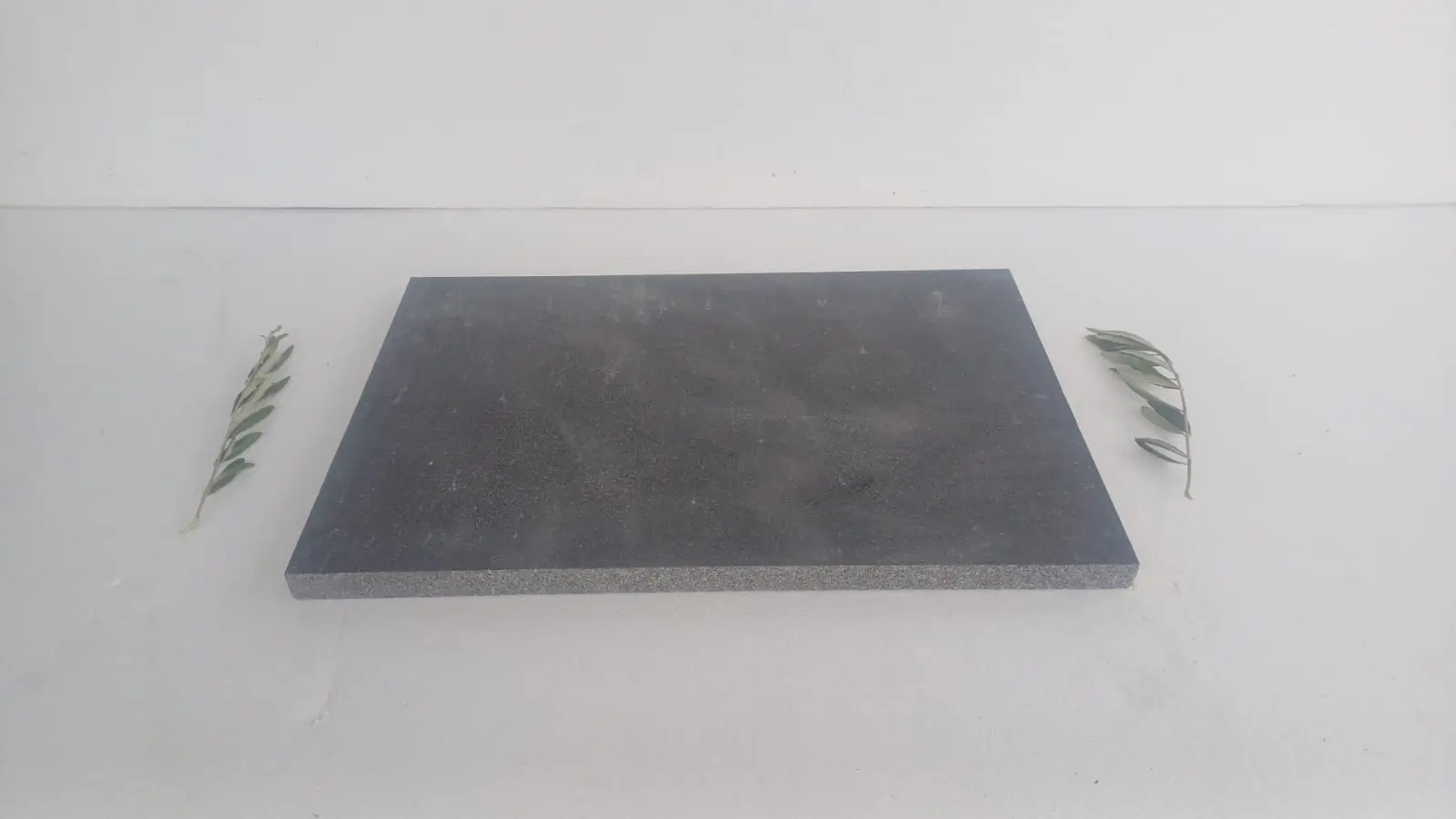
When you specify equipment for flagstone automated cutting operations, you’re choosing between waterjet, diamond wire, and router-based systems—each with distinct advantages for flagstone applications. Waterjet systems deliver the cleanest edge profiles but require 50,000-60,000 PSI pressure ratings to cut through dense flagstone layers without generating backside blowout. You’ll find that abrasive selection matters significantly—80-mesh garnet produces acceptable edges, but 120-mesh garnet reduces microchipping by 40% along cut faces.
Your router-based CNC configurations need specialized tooling for flagstone computer controlled shaping. Standard masonry bits generate excessive heat buildup that creates thermal stress fractures in flagstone’s layered structure. You should specify diamond-impregnated core bits with internal cooling channels, operating at 18,000-22,000 RPM with feed rates between 15-28 inches per minute depending on material density. The cooling system must deliver 2-3 gallons per minute of filtered water directly to the cutting interface—insufficient flow creates steam pockets that cause explosive microspalling.
Diamond wire systems offer advantages when you’re processing flagstone slabs with pronounced bedding plane separation. The continuous wire motion distributes cutting forces across a larger contact area, reducing point-load stress that triggers layer delamination. You’ll achieve optimal results with 11.5mm diameter wire assemblies featuring 40-bead-per-meter spacing, running at linear speeds between 25-32 meters per second. Wire tension requires constant monitoring—you need 280-320 newtons for consistent cutting, but exceeding 340 newtons initiates wire oscillation that transfers into the stone as harmonic vibration.
Precision Tolerance Specifications
Your tolerance expectations for flagstone CNC machining Arizona projects must acknowledge material realities. While the CNC system itself maintains ±0.005 inch repeatability, the stone’s response to cutting forces introduces additional variables. Professional specifications should call for ±1/32 inch on primary dimensional cuts and ±1/16 inch on complex curved profiles. Tighter tolerances are achievable but require multi-pass cutting protocols that increase production time by 60-85%.
Edge quality becomes critical when you’re producing flagstone components for architectural installations. The cutting process generates what you’ll recognize as microchipping—small fractures along the cut edge that measure 0.5-2mm deep. Your specifications need to address acceptable chipping limits based on final application. For pieces receiving exposed edge treatments, you should require post-machining edge honing that removes 1/16 inch material through diamond abrasive processing, reducing visible chipping by 75-80%.
- You need to specify measurement protocols that account for flagstone’s thermal expansion during cutting—material temperature rises 15-25°F during extended machining operations
- Your dimensional verification should occur after material returns to ambient temperature, typically 45-60 minutes post-cutting for 2-inch thick slabs
- You’ll achieve better geometric accuracy by programming toolpath compensation for deflection—flagstone flexes 0.010-0.018 inches under cutting pressure on unsupported spans exceeding 24 inches
- Flatness tolerances must recognize natural stone variation—expecting less than 1/8 inch deviation across 48-inch spans is unrealistic for most flagstone selections
Toolpath Programming Considerations
When you develop CAM programs for flagstone digital fabrication, you’re not just converting vector drawings to machine code. You need to analyze how tool engagement sequences interact with stone structure. Starting cuts at slab edges generates less internal stress than plunge cuts into slab centers—edge-start approaches reduce spontaneous fracture events by 55-60% in flagstone applications. Your toolpaths should prioritize perimeter definition before interior feature cutting, allowing stress relief through established free edges.
The direction of tool movement relative to bedding planes significantly affects cut quality. You’ll produce cleaner edges when cutting perpendicular to bedding planes compared to parallel orientation—parallel cuts tend to follow weak clay layers, creating wavy cut faces that require additional finishing. Your CAM programming should incorporate material orientation data, adjusting feed rates and stepover distances based on bedding plane angle. For cuts within 15 degrees of parallel to bedding, you need to reduce feed rates 25-30% and implement multiple light passes rather than single full-depth cuts.
Nested cutting patterns maximize material yield but create thermal management challenges in flagstone precision machining operations. When you program multiple closely-spaced cuts, heat accumulates in the stone matrix faster than it dissipates. You should incorporate dwell periods between adjacent cuts—15-20 second pauses allow localized cooling that prevents thermal stress buildup. For projects requiring trade wholesale flagstone pavers in Yuma, your programming must balance production efficiency against thermal stress management to maintain yield rates above 85%.
Surface Finish Capabilities
The surface finish you’ll achieve through flagstone CNC machining Arizona processes depends on final tooling passes and material characteristics. Router-based systems with diamond tooling produce surfaces with Ra values between 125-200 microinches on dense flagstone—significantly smoother than thermal-finished or cleft surfaces. You need to understand that this machined finish reveals the stone’s internal structure differently than natural surfaces, often exposing color variations and mineral inclusions that weren’t visible on the original face.
Your specifications for flagstone automated cutting should address whether machined surfaces receive additional treatment. Machined flagstone exhibits higher slip resistance than honed natural surfaces—DCOF values typically measure 0.58-0.65 on diamond-cut faces due to microscopic tool marks that create texture. For applications requiring specific slip characteristics, you’ll need to specify post-machining surface treatments: light sandblasting reduces DCOF to 0.48-0.52, while burnishing with 200-grit diamond pads increases it to 0.68-0.74.
- You should test surface absorption rates on machined flagstone—cutting exposes fresh pore structures that increase water absorption 12-18% compared to natural cleft surfaces
- Your sealing protocols must account for this increased porosity, typically requiring 20-25% more sealer per square foot on machined surfaces
- You’ll notice color darkening on machined flagstone surfaces when wet—the effect is 30-40% more pronounced than on natural surfaces due to exposed internal structure
Complex Geometry Fabrication
When you’re programming flagstone computer controlled shaping for curved or radiused elements, you’re working at the limits of what this material tolerates. Flagstone’s layered structure resists bending stresses—attempting to cut tight radius curves generates tensile stress on the outer arc that often exceeds the stone’s 800-1,200 PSI tensile strength. Your minimum radius specifications should maintain ratios of at least 8:1 relative to material thickness. For 2-inch thick flagstone, you need minimum 16-inch radius curves to maintain structural integrity through the cutting process.
Interior cutouts and piercing operations present specific challenges in flagstone digital fabrication. Plunge-cutting to start interior features creates concentrated point loads that propagate radial fractures in flagstone’s matrix. You’ll achieve better results using ramped entry cuts—the tool follows a helical path that gradually achieves full depth over 2-3 rotations, distributing entry stress across a larger area. Your CAM programs should specify ramp angles between 2-4 degrees for flagstone applications, with reduced feed rates during the ramp phase.
Three-dimensional contouring on flagstone surfaces requires understanding how material removal affects structural stability. When you machine relief patterns or sculptural elements, you’re creating areas of varying thickness within the same piece. Thin sections lose rigidity and become vulnerable to vibration-induced fracture during subsequent cutting operations. Your machining sequence should progress from thickest to thinnest areas, maintaining maximum structural support throughout the process. Final detail passes on thin sections should reduce cutting forces 40-50% through decreased depth of cut and increased stepover density.
Waste Reduction Strategies
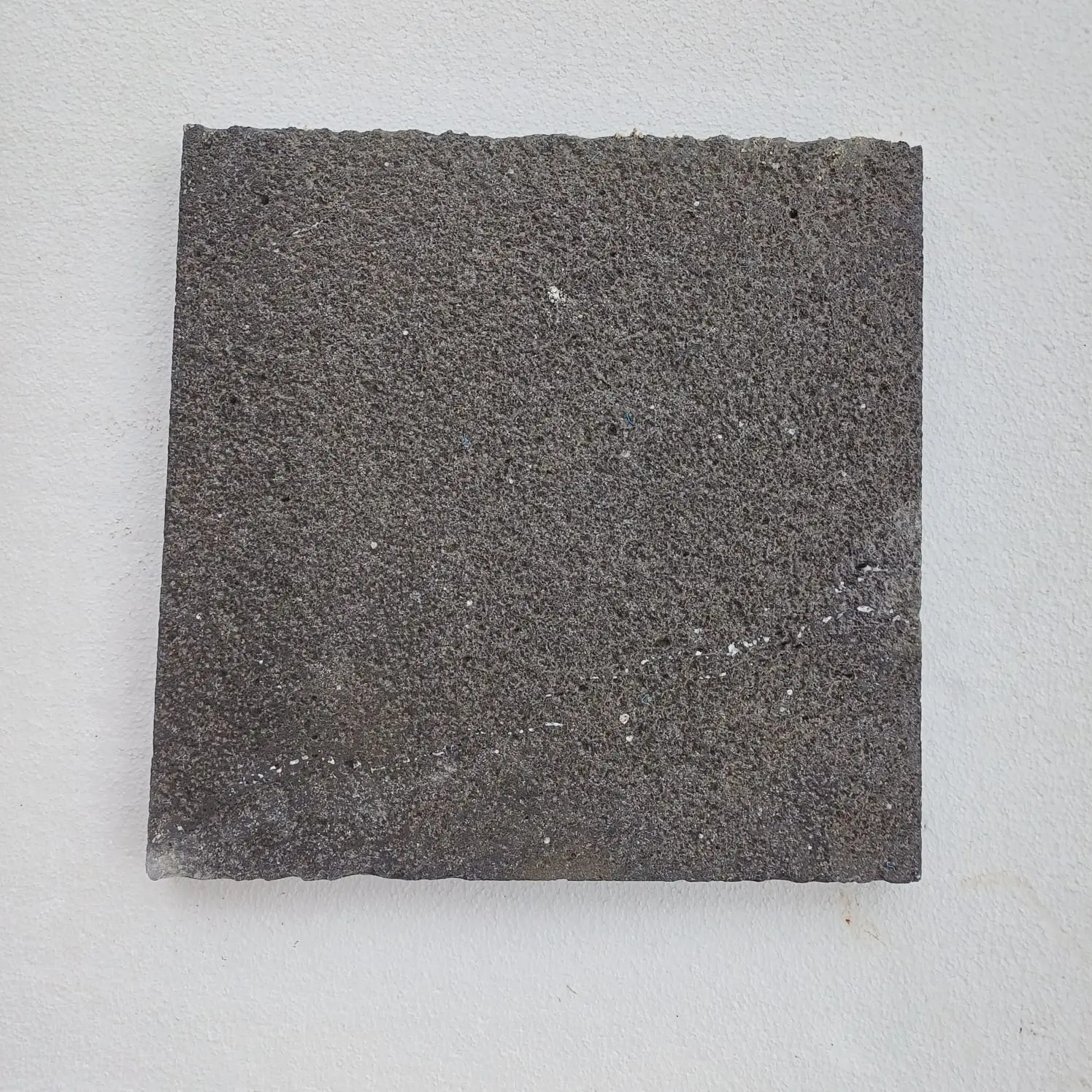
Your material utilization in flagstone precision machining operations directly impacts project economics. Raw flagstone costs $8-15 per square foot depending on grade and thickness—waste represents substantial expense. Professional nesting software optimizes part placement but can’t account for flagstone’s natural flaws and weak zones. You need manual intervention to identify and avoid areas with excessive clay veining, fossil inclusions, or incipient fractures that would fail during cutting.
Skeletal waste from nested cutting patterns can often be repurposed for smaller components. When you plan flagstone automated cutting layouts, you should identify secondary products that utilize interstitial material—border pieces, accent elements, or mosaic components that accept smaller dimensions. This approach typically recovers 15-20% of material that would otherwise become landfill waste. Your project planning should include these secondary products in initial quantity calculations to maximize yield efficiency.
- You’ll reduce waste by grouping similar-thickness components in production runs—switching between different material thicknesses creates setup waste that averages 8-12 square feet per changeover
- Your inventory management should prioritize remnant utilization—maintaining a cataloged remnant library with precise dimensions allows you to match future orders to existing partial slabs
- You should implement dimensional flexibility in designs where possible—allowing ±1/4 inch variation on non-critical dimensions enables better nesting efficiency that improves yield by 6-9%
Quality Control Protocols
When you establish inspection procedures for flagstone CNC machining Arizona production, you’re verifying both dimensional accuracy and structural integrity. Standard caliper measurements confirm cut dimensions, but you also need to inspect for subsurface damage—microfractures that formed during cutting but haven’t yet propagated to visible cracks. Ultrasonic pulse velocity testing reveals these hidden flaws: readings below 12,000 feet per second indicate compromised material that will likely fail during installation or shortly after.
Your edge inspection protocols should quantify chipping and microspalling along cut faces. Using a 10X loupe, you can identify chip depths and frequencies that predict long-term edge stability. Professional specifications typically allow maximum 1.5mm chip depth with no more than 3 chips per linear foot exceeding 1mm. Edge sections showing chip frequencies above this threshold require remediation through diamond honing or should be rejected for primary applications.
Dimensional verification on flagstone computer controlled shaping output requires three-dimensional measurement approaches. The stone’s natural surface irregularities mean that simple height gauge measurements don’t capture actual geometry. You should use coordinate measuring equipment or laser scanning to verify complex profiles, accepting that you’re measuring to theoretical planes that may not align perfectly with the stone’s natural surfaces. Your tolerance zones need to account for this reality—specifying ±1/32 inch to an idealized plane when the natural surface varies ±1/16 inch creates inspection conflicts.
Maintenance and Downtime Considerations
The abrasive nature of flagstone accelerates wear on CNC machining components. Diamond tooling maintains acceptable cut quality for 35-50 linear feet in dense flagstone before requiring replacement—significantly less than the 200-400 feet typical in limestone or sandstone applications. You need to factor this consumable cost into project budgets: diamond router bits suitable for flagstone precision machining range from $180-350 each depending on profile complexity. Your production planning should include tool change intervals that prevent quality degradation during long production runs.
Waterjet cutting systems face specific maintenance demands in flagstone automated cutting applications. The mineral content in flagstone generates abrasive slurry that accelerates wear on mixing tubes and focusing nozzles. You’ll typically achieve 60-80 cutting hours on sapphire nozzles in flagstone service versus 120-150 hours in softer materials. Your maintenance schedule should include nozzle inspection every 20 hours, looking for orifice erosion that enlarges the jet stream and reduces cutting precision.
- You should maintain dedicated tooling sets for flagstone work—the abrasive wear patterns make these tools unsuitable for precision work in softer materials after flagstone service
- Your coolant filtration systems need 25-micron or finer filters for flagstone applications—mineral particulates in recirculated coolant act as secondary abrasives that damage both tooling and workpiece surfaces
- You’ll extend equipment life by implementing staged maintenance during natural production breaks rather than running to failure—replacing worn components before complete failure prevents secondary damage to machine elements
Citadel Stone Premium Flagstone for Sale in Arizona: Precision Fabrication Specifications
When you evaluate Citadel Stone’s flagstone for sale for your Arizona projects, you’re considering material specifically selected for CNC machining compatibility. At Citadel Stone, we maintain inventory of flagstone grades that exhibit consistent density profiles and minimal bedding plane separation—characteristics that enable reliable automated cutting outcomes. This section provides technical guidance for how you would specify flagstone CNC machining Arizona applications across six representative Arizona cities, addressing regional climate factors and performance requirements in each location.
Phoenix Urban Applications
In Phoenix environments, you would specify flagstone automated cutting for architectural elements that endure extreme thermal cycling. Summer surface temperatures regularly exceed 165°F on exposed horizontal installations, creating expansion stresses that demand precise dimensional control in fitted assemblies. Your CNC programming should account for 0.040-0.055 inch thermal expansion per 10-foot run when you design joint spacing for Phoenix applications. Material selection would prioritize flagstone with thermal expansion coefficients below 6.0 × 10⁻⁶ per °F, verified through ASTM C531 testing protocols. You’d implement flagstone digital fabrication techniques to produce interlocking components with 1/4-inch joints that accommodate this expansion without creating visual gaps during cooler months.
Tucson Desert Performance
Your Tucson specifications would address monsoon moisture cycling combined with intense UV exposure. You’d program flagstone precision machining to create drainage channels and relief grooves that manage rapid water runoff during summer storms—events that can deliver 1-2 inches of precipitation in 30-minute periods. The CNC cutting would produce 1/8-inch deep channels at 6-inch spacing across horizontal surfaces, reducing standing water by 75-80% compared to flat profiles. You should specify post-machining sealing protocols that address UV degradation, recognizing that unsealed flagstone in Tucson exposure loses 12-15% surface hardness over 5-year periods due to photodegradation of binding minerals.
Scottsdale Luxury Detailing
Scottsdale installations typically demand flagstone computer controlled shaping for custom geometric patterns and precision-fitted assemblies. You would specify CNC fabrication for projects requiring curved borders, radiused step treads, and complex medallion inlays where hand-cutting tolerances prove inadequate. Your design specifications would maintain minimum 1/8-inch joints between precision-cut components, accounting for the 0.015-0.025 inch dimensional variation inherent in flagstone material structure. For high-profile applications, you’d program multi-pass finishing cuts that achieve ±0.020 inch tolerances on critical edges, then specify diamond honing to remove microchipping and create refined edge profiles suitable for upscale architectural contexts.
Flagstaff Cold Climate
In Flagstaff’s freeze-thaw environment, your flagstone CNC machining Arizona specifications would prioritize material with porosity below 5% and compressive strength exceeding 12,000 PSI. You’d program automated cutting to produce components with thickness no less than 2.25 inches for exterior horizontal applications, providing structural capacity to withstand expansion forces from trapped moisture freezing within the stone matrix. The CNC programming would incorporate chamfered edges at 15-degree angles, reducing stress concentration points where freeze-thaw spalling typically initiates. You should specify that machined flagstone receives penetrating silane/siloxane sealer application within 48 hours of cutting, before atmospheric moisture saturates the newly-exposed pore structure.
Sedona Aesthetic Integration
Your Sedona projects would utilize flagstone digital fabrication to create components that integrate with the region’s red rock landscape. You’d specify CNC cutting to produce irregular edge profiles that mimic natural stone while maintaining dimensional precision for structural stability. The programming would combine straight primary edges for concealed joints with undulating exposed edges that read as natural stone from viewing distances beyond 10 feet. You should recognize that machined surfaces in Sedona installations darken 15-20% compared to natural cleft faces due to increased mineral exposure from cutting—your material selection would account for this color shift to maintain aesthetic harmony with surrounding natural stone formations.
Yuma Extreme Heat
Yuma represents Arizona’s most extreme thermal environment where you’d encounter ambient temperatures above 110°F for extended periods. Your flagstone automated cutting specifications would address thermal stability in material that experiences 140°F surface temperatures daily during summer months. You’d program CNC operations to produce components with enhanced thickness at structural support points—increasing from 2-inch standard to 2.75-inch thickness at span centers and load transfer locations. The flagstone precision machining would create ventilation channels on undersides of horizontal elements, allowing air circulation that reduces trapped heat by 18-22°F compared to solid-back installations. Your specifications would require warehouse staging in climate-controlled storage, ensuring material moisture content stabilizes at 2-3% before installation to prevent post-installation dimensional movement from moisture equilibration.
Installation Integration Methods
When you coordinate flagstone CNC machining Arizona output with installation teams, you’re managing the handoff between precision fabrication and field reality. CNC-cut components arrive at job sites with dimensional accuracy that hand-cut stone cannot match, but you still face substrate variations, settling differentials, and environmental factors that affect final placement. Your installation specifications should include dry-fitting protocols that verify component fit before mortar or adhesive application—discovering fit issues after setting materials cure creates expensive remediation scenarios.
The precision edges produced through flagstone computer controlled shaping require modified installation techniques compared to traditional hand-cut stone. You’ll achieve better aesthetic results using narrow grout joints—3/16 to 1/4 inch spacing that emphasizes the geometric precision of CNC-cut components. Your grout selection should account for flagstone’s porosity characteristics: standard cement-based grouts can stain flagstone faces through moisture wicking if you don’t implement proper surface protection during grouting operations. You should specify rapid-set polymer-modified grouts that minimize working time exposure and reduce staining risk by 60-70%.
- You need to instruct installation crews on proper handling of CNC-cut edges—the precision corners and arrises are more vulnerable to impact damage than the irregular edges of hand-cut stone
- Your substrate preparation must achieve flatness within 1/8 inch per 10 feet for precision-cut flagstone installations—greater substrate variation negates the dimensional accuracy of CNC fabrication
- You should specify setting bed thickness between 1/2 to 3/4 inch for CNC-cut components, providing sufficient material to accommodate minor substrate irregularities while maintaining structural support
Cost Analysis Considerations
Your budget planning for flagstone digital fabrication needs to account for multiple cost components beyond raw material. CNC cutting services typically add $12-25 per square foot to material costs depending on complexity—simple rectangular cuts fall at the lower end while curved profiles and interior cutouts command premium pricing. You should compare this incremental cost against labor savings from reduced field cutting and fitting time. Professional installation crews can place 40-50 square feet per day of precision-cut flagstone versus 25-30 square feet of hand-fit material, generating labor savings that offset 45-60% of CNC cutting costs.
Material yield calculations significantly impact project economics in flagstone precision machining applications. Standard rectangular cutting from irregular flagstone slabs achieves 65-75% yield rates—you’ll generate 25-35% waste from odd-shaped remnants and natural defects. Complex nested cutting patterns can improve yield to 75-82% through optimized part placement, but require additional programming time and more sophisticated nesting software. Your cost analysis should include waste disposal expenses: flagstone cutting waste averages 140 pounds per cubic foot, creating substantial disposal costs at $45-65 per ton for inert construction waste in most Arizona jurisdictions.
Equipment amortization factors into CNC cutting costs whether you’re operating in-house facilities or contracting fabrication services. Industrial CNC routers suitable for flagstone automated cutting represent $85,000-180,000 capital investments with expected service lives of 12-15 years at moderate production volumes. Your make-versus-buy analysis should evaluate annual production volumes—projects requiring less than 2,500 square feet annually typically benefit from contracted fabrication services, while higher volumes justify capital equipment investment and in-house operations.
Troubleshooting Common Issues
When you encounter edge chipping during flagstone CNC machining Arizona operations, you’re typically dealing with excessive cutting speed or insufficient tool cooling. The solution requires reducing feed rates 20-30% and verifying coolant flow delivers 2+ gallons per minute directly at the cutting interface. You should also inspect tooling for wear—diamond segments with 0.5mm or greater recession from original profile no longer maintain proper cutting geometry and generate increased chip-out on exit cuts.
Subsurface fractures that appear hours or days after cutting indicate resonance-induced damage during machining. You’ll prevent this issue by conducting frequency sweep tests before production, identifying problematic spindle speeds that excite natural resonance in the stone structure. Your CNC programs should include speed exclusion zones that skip past these critical frequencies—typically narrow bands 200-300 RPM wide centered on resonance peaks. Modern CNC controllers support automatic frequency avoidance once you’ve identified and programmed the exclusion parameters.
- You can address dimensional inconsistency across production runs by implementing adaptive toolpath compensation that measures actual cut position and adjusts subsequent passes to correct deviation
- Your quality issues related to surface finish variation often stem from inconsistent coolant concentration—maintaining 8-10% soluble oil concentration prevents thermal damage that creates localized surface hardening
- You’ll reduce equipment downtime by implementing predictive maintenance protocols that replace wear components based on cutting hours rather than waiting for failure symptoms to appear
Project Timeline Planning
Your scheduling for flagstone computer controlled shaping projects must account for material procurement, programming, production, and quality verification phases. Material acquisition from quarries involves 3-4 week lead times for specific grades and thicknesses—you can’t compress this timeline without accepting whatever inventory is immediately available. Your project planning should identify long-lead material requirements early in design development, allowing procurement to proceed while design details finalize.
CNC programming for complex flagstone projects requires 15-25 hours per 100 unique components depending on geometric complexity. You need to factor this technical labor into project schedules—attempting to compress programming time increases error rates that create scrap and rework. Your workflow should include programming verification through simulated toolpath visualization before committing material to actual cutting operations. This verification phase typically requires 2-3 hours per program but prevents costly mistakes that waste material and delay production.
Production cutting rates for flagstone digital fabrication average 3-6 square feet per hour depending on thickness and cut complexity. You can estimate total machine time by calculating linear cutting feet required and dividing by your system’s cutting speed—typically 15-25 inches per minute for flagstone applications. Your schedule should include 15-20% contingency time for tool changes, setup adjustments, and quality verification interruptions. Attempting to maintain 100% cutting efficiency invariably leads to quality compromises and increased scrap rates.
Final Considerations
Your success with flagstone precision machining depends on matching technology capabilities to material characteristics while maintaining realistic expectations about what CNC automation can achieve. The precision and repeatability of computer-controlled cutting transform design possibilities for flagstone applications, but you’re still working with a natural material that exhibits inherent variability. Professional specifications acknowledge this reality, establishing tolerance ranges and quality standards that reflect stone behavior rather than metal or plastic manufacturing norms.
When you integrate flagstone CNC machining Arizona processes into project workflows, you’ll discover that the real value extends beyond dimensional precision. The ability to produce complex geometries, nested components, and custom profiles enables design expressions that traditional stone cutting methods cannot economically achieve. Your design approach should leverage these capabilities where they provide genuine functional or aesthetic value rather than pursuing precision for its own sake. For comprehensive guidance on surface preparation and enhancement techniques, review Professional epoxy resin techniques for filling flagstone fissures effectively to ensure your CNC-cut components achieve maximum performance in demanding Arizona environments. Saw-cut options available in Citadel Stone’s varied flagstone building supplies in Arizona profiles.