
When you specify flagstone for Arizona installations, the cleft surface represents the material’s most distinctive characteristic — that naturally split texture created when stone separates along bedding planes during quarrying. Your project’s long-term aesthetic success depends on understanding how Arizona’s intense UV exposure, extreme temperature cycling, and low humidity affect this textured surface over time. You’ll find that flagstone cleft surface preservation Arizona requires different approaches than coastal or humid climates, because the combination of 4,000+ annual sunshine hours and temperature swings exceeding 40°F daily creates surface degradation patterns most generic maintenance guides don’t address.
The challenge you face isn’t just protecting the stone — it’s maintaining the authentic split face texture that provides slip resistance and visual depth. You need to recognize that improper sealing can fill the natural texture valleys, creating a plasticky appearance that defeats the purpose of specifying natural stone. Your maintenance protocol must preserve the flagstone natural texture while preventing the accelerated erosion that occurs when Arizona’s alkaline soils interact with moisture trapped in the stone’s pore structure.
Cleft Surface Formation Characteristics
Understanding how cleft surfaces form gives you the foundation for effective preservation strategies. When quarry operators split flagstone along natural bedding planes, the resulting surface exhibits irregular peaks and valleys ranging from 1/8″ to 3/8″ depth variation — this isn’t random texture but rather the stone’s internal crystalline structure exposed through mechanical separation. You should recognize that this three-dimensional surface creates shadow patterns that change throughout the day, contributing significantly to the material’s visual appeal in landscape applications.
The flagstone split face maintenance requirements stem directly from this textured geometry. Those peaks weather differently than valleys because they receive more direct UV exposure and experience greater thermal stress. You’ll observe microfracturing at peak edges after 8-12 years in unprotected Arizona installations, while valley areas show different degradation patterns related to moisture accumulation and mineral salt precipitation. Your preservation approach must account for these differential wear patterns rather than treating the surface as uniform.
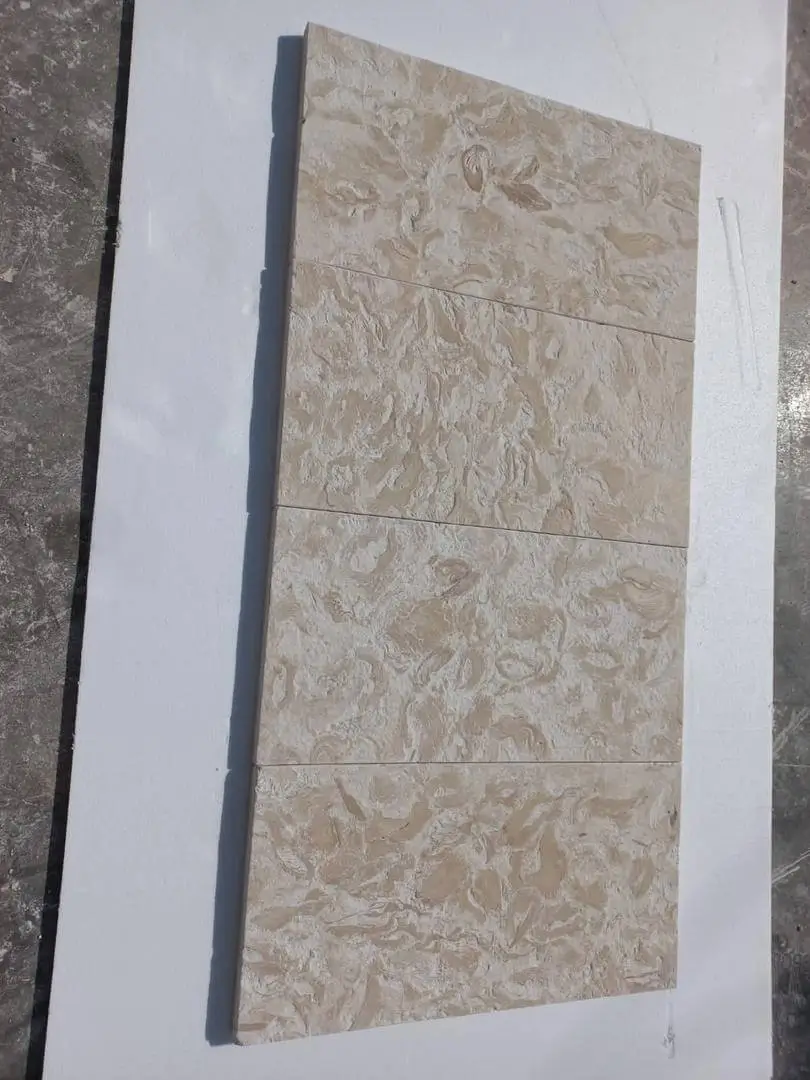
Texture Depth Specifications
When you evaluate flagstone options, cleft depth measurements directly impact both aesthetics and functional performance. Professional specifications should define acceptable texture depth ranges between 1/8″ and 5/16″ for pedestrian applications, with shallower profiles preferred for commercial spaces where wheeled cart traffic occurs. You need to understand that deeper textures provide superior slip resistance (DCOF values 0.58-0.65 wet) but accumulate organic debris more readily, requiring more frequent maintenance in areas with deciduous vegetation.
The flagstone textured surface depth also affects water drainage patterns during Arizona’s monsoon season. Deeper cleft valleys channel water more effectively, reducing surface water film that contributes to slip hazards. However, you should recognize that excessive depth creates cleaning challenges where dust and fine soil particles settle into recesses. Your specification should balance these factors based on the specific application environment and anticipated maintenance capacity.
Arizona Climate Impact on Surface Integrity
Arizona’s climate creates a unique preservation challenge because the extreme diurnal temperature cycling causes differential expansion between the stone’s surface layer and substrate. When you monitor surface temperatures throughout a Phoenix summer day, you’ll measure readings from 75°F at sunrise to 165°F at 2 PM, then back to 95°F by midnight. This 90°F cycling occurs daily for 120+ days annually, creating fatigue stress in the stone’s crystalline structure that manifests as surface spalling after 10-15 years in unprotected installations.
- You should account for UV radiation intensity in Arizona measuring 7-8 on the UV Index for over 200 days annually
- Your preservation strategy must address thermal expansion coefficients of 5.1 × 10⁻⁶ per °F in typical flagstone materials
- You need to recognize that relative humidity below 20% for extended periods accelerates surface desiccation
- You’ll encounter alkaline dust deposition rates 3-4 times higher than humid climates
The low humidity environment means moisture evaporates rapidly from the stone’s pore structure, drawing dissolved minerals to the surface through capillary action. You’ll observe this as efflorescence — white crystalline deposits that obscure the natural texture and require specific removal protocols. What makes flagstone cleft surface preservation Arizona particularly demanding is that this mineral migration occurs year-round rather than seasonally, creating continuous maintenance requirements that humid climate guidelines underestimate.
Thermal Cycling Effects
Surface texture degradation from thermal cycling doesn’t occur uniformly across the flagstone surface. You’ll notice that areas receiving direct afternoon sun exposure show accelerated peak erosion compared to morning-sun zones, because the combination of peak UV intensity and maximum surface temperature creates the most severe stress conditions. Your inspection protocols should document these wear patterns after year five to project long-term maintenance needs accurately.
The stone’s thermal mass properties mean surface temperatures lag air temperatures by approximately 90 minutes. When you plan sealing operations, this lag time determines optimal application windows — you need surface temperatures between 60°F and 85°F, which typically occurs during the 7-9 AM window in summer months. Applying penetrating sealers when surfaces exceed 95°F causes rapid flash-off that prevents proper penetration into the cleft texture valleys.
Sealer Selection for Texture Preservation
Your sealer choice determines whether you preserve or compromise the authentic flagstone appearance. Penetrating sealers designed for flagstone cleft surface preservation Arizona conditions must have molecular structures small enough to enter the stone’s pore network without bridging across texture valleys. You should specify sealers with particle sizes below 5 nanometers that create subsurface protection while leaving the cleft texture tactilely unchanged. Film-forming topical sealers — the type commonly used on polished stone — will pool in texture valleys and create glossy patches that look artificial under Arizona’s intense sunlight.
The challenge with penetrating sealers in Arizona applications involves their working time in low-humidity conditions. You’ll find that conventional products designed for 40-60% humidity environments flash off too quickly when ambient humidity drops below 25%, preventing proper penetration. Your specification should require formulations with extended open times specifically tested at relative humidity below 20%. Testing proprietary products in small, inconspicuous areas reveals whether they maintain the flagstone natural texture or create unwanted sheen.
Penetration Depth Requirements
Effective sealer protection requires penetration depths of 3-5mm into the stone substrate, not just surface coating. You can verify adequate penetration by breaking a sealed sample stone and observing color change depth under magnification. Insufficient penetration leaves the cleft texture vulnerable to moisture intrusion that causes subsurface deterioration — you’ll see this as flaking or spalling texture peaks after 3-5 years. Your application protocol should specify saturation method rather than single-pass application: apply sealer until the surface refuses additional product, indicating pore structure saturation.
The flagstone’s porosity directly affects required sealer volume. Materials with 5-8% porosity by volume require 100-150 square feet per gallon coverage, while denser stones with 3-5% porosity achieve 150-200 square feet per gallon. You need to measure actual absorption rates during initial application to calculate resealing quantities accurately — warehouse stock should reflect these measured requirements rather than manufacturer’s generalized coverage claims.
Alkaline Soil Interaction Management
Arizona soils typically measure pH 7.8-8.4, creating conditions where calcium carbonate and other mineral salts dissolve in irrigation water or rainfall, then transport into the stone’s pore structure through capillary action. When you examine deteriorated flagstone textured surface installations, you’ll often find that damage concentration occurs along joints and edges where soil contact provides continuous mineral salt sources. The cleft texture’s valleys act as collection points for these salts, which crystallize during evaporation cycles and exert expansion pressure that fractures the stone from within.
- You should test soil pH at installation sites and implement mitigation when readings exceed 8.0
- Your drainage design must prevent standing water contact between soil and stone surfaces
- You need to specify joint materials that don’t contribute additional alkaline compounds
- You’ll require periodic efflorescence removal using pH-neutral cleaners rather than acidic products
The preservation challenge intensifies in areas using Colorado River water for irrigation, which carries dissolved mineral loads 40-60% higher than groundwater sources. You should recommend irrigation system modifications that prevent overspray onto flagstone surfaces, because repeated wetting cycles accelerate salt intrusion. When designing planter bed details adjacent to flagstone, you need minimum 2″ elevation difference with the stone higher, preventing lateral soil moisture migration that carries dissolved salts into the cleft texture structure.
Subsurface Drainage Integration
Effective flagstone split face maintenance depends on preventing moisture accumulation in the base layers beneath the stone. You should specify permeable base materials with infiltration rates exceeding the stone’s surface porosity by factors of 5-10, ensuring that any water entering the system drains downward rather than remaining trapped. Trapped subsurface moisture creates capillary rise that transports soil minerals into the stone, accelerating deterioration regardless of surface sealing quality.
Your base specification should include washed aggregate in the 3/4″ to 1-1/2″ range over compacted subgrade, with geotextile separation preventing soil intrusion. In clay-heavy Arizona soils common around Phoenix and Tucson, you need perimeter drains that intercept lateral subsurface water flow, because clay’s low permeability creates saturated conditions during monsoon periods. These drainage provisions cost 8-12% more than standard base preparation but extend surface texture preservation periods from 12-15 years to 20-25 years.
UV Exposure Mitigation Strategies
Arizona’s intense ultraviolet radiation doesn’t just fade organic materials — it degrades the mineral binders within flagstone that maintain cleft texture integrity. You’ll observe this as progressive chalking or dusting of the surface, where gentle brushing removes fine particles that should remain bonded within the stone matrix. The degradation process accelerates on south and west facing installations where cumulative UV exposure exceeds 8,000 kJ/m² annually, compared to 5,000-6,000 kJ/m² on north exposures.
Your preservation approach should incorporate UV-blocking sealers that contain ceramic nanoparticles or similar light-scattering compounds. These additives reflect UV radiation before it penetrates the stone surface, reducing photochemical degradation of mineral binders by 60-70% compared to untreated surfaces. You need to verify UV protection specifications through ASTM G154 accelerated weathering data showing performance over 2,000+ hour exposures — this correlates to approximately 8-10 years of Arizona field conditions.
Shade Structure Integration
When you design Arizona flagstone installations, incorporating shade structures provides the single most effective texture preservation strategy. Even partial shading that reduces direct sun exposure by 40-50% during peak UV hours extends cleft surface integrity periods by 8-12 years. You should evaluate pergola designs, shade sails, or strategic tree placement during project planning rather than treating preservation as solely a maintenance issue. The increased initial cost of shade integration typically represents 15-20% of the hardscape budget but reduces lifecycle maintenance costs by 50-60%.
The shade pattern timing matters significantly for flagstone cleft surface preservation Arizona effectiveness. Morning sun exposure causes less thermal stress than afternoon exposure because stone surfaces start at cooler overnight temperatures. You’ll achieve better results with shade structures oriented to block 1 PM to 5 PM sun angles, allowing morning exposure that helps evaporate overnight moisture accumulation. This orientation principle applies across residential patios, commercial plazas, and custom manufactured custom manufactured flagstone pavers in Sedona projects where design flexibility exists.
Cleaning Protocols Without Texture Damage
Maintaining the flagstone authentic finish requires cleaning methods that remove contaminants without eroding the cleft texture peaks or widening the natural fissures. You should avoid pressure washing above 1,200 PSI, because higher pressures dislodge mineral particles from the texture surface, gradually smoothing the peaks and reducing slip resistance. Professional cleaning protocols specify fan-tip nozzles held at 45-degree angles, 12-18 inches from the surface, with water temperature not exceeding 140°F to prevent thermal shock.
- You need to establish quarterly cleaning schedules in high-traffic areas, semi-annually in moderate use zones
- Your cleaning specifications should require pH-neutral detergents rated between 6.5-7.5 pH
- You should prohibit wire brushes or abrasive pads that accelerate texture wear
- You’ll achieve best results with soft-bristle brushes following detergent dwell times of 10-15 minutes
Organic staining from landscape debris presents particular challenges in cleft texture valleys where tannins concentrate. When you encounter these stains, enzymatic cleaners designed for natural stone provide effective removal without the texture erosion caused by acidic cleaners. You should test cleaning products in inconspicuous areas first, because some formulations leave residues in texture valleys that attract dirt, creating a cycle of more frequent cleaning requirements.
Efflorescence Removal Techniques
The white salt deposits that appear in flagstone texture valleys require specific removal approaches that don’t damage the stone surface. You’ll find that dry brushing removes surface efflorescence temporarily, but doesn’t address the subsurface salt source causing continuous reappearance. Your remediation protocol should begin with identifying whether salts originate from the stone itself, mortar joints, or subsurface moisture — each source requires different treatment strategies.
For persistent efflorescence affecting flagstone natural texture appearance, you need poultice applications that draw salts from within the stone’s pore structure. Mix diatomaceous earth with distilled water to create paste consistency, apply 1/4″ thick over affected areas, and allow 24-48 hour drying periods. The poultice absorbs dissolved salts during drying, removing them from the stone rather than just cleaning the surface. You should repeat applications until testing shows salt concentrations below 0.05% by mass, indicating successful remediation.
Joint Material Impact on Texture Longevity
Your joint material selection significantly affects cleft texture preservation because joints represent transition zones where moisture and thermal stress concentrate. Polymeric sand joints — popular for their weed prevention properties — can create problems for flagstone split face maintenance when improperly installed. Excess polymeric sand left on the textured surface during installation creates hazing that’s nearly impossible to remove from cleft valleys without aggressive cleaning that damages the texture. You need installation specifications requiring immediate surface cleaning before polymeric activation occurs.
Traditional sand joints using washed concrete sand provide better drainage characteristics and easier maintenance compared to polymeric products, but require more frequent replenishment. You should specify angular sand particles in the 1-2mm range that interlock within joints rather than rounded particles that shift under traffic. The joint width affects sand stability — you’ll achieve optimal performance with 3/8″ to 1/2″ joints for flagstone applications, wider than the 1/4″ common in dimensional pavers.
Joint Width Optimization
Arizona’s thermal expansion requirements dictate minimum joint widths that many installers underestimate. When you calculate expansion allowances for flagstone installations, you need to account for 0.006 inches per linear foot per 100°F temperature change. A 15-foot flagstone section experiences nearly 1/8″ expansion between overnight lows of 65°F and afternoon highs of 165°F during summer. Your specification should require joints that accommodate this movement without creating compression stress that spalls the cleft texture edges.
Narrower joints concentrate expansion stress at flagstone edges, causing the textured peaks to chip and fracture. You’ll observe this damage pattern along joint lines after 5-7 years in installations with inadequate joint sizing. Professional specifications account for thermal movement by requiring 1/2″ minimum joints in Arizona applications, regardless of aesthetic preferences for tighter joints. This engineering requirement protects the long-term flagstone textured surface integrity that justifies the material’s premium cost.
Resealing Frequency and Indicators
Determining optimal resealing schedules for Arizona flagstone requires monitoring performance indicators rather than following arbitrary time intervals. You should establish baseline water absorption tests at installation, measuring how quickly water droplets absorb into the sealed surface. When absorption time drops below 60 seconds — compared to initial readings of 5-8 minutes — you’ve reached the threshold requiring resealing. This performance-based approach accounts for variations in exposure conditions, traffic levels, and cleaning frequency that make generalized schedules unreliable.
The cleft texture complicates sealer application because proper coverage requires working the product into valleys while avoiding excess on peaks. You need application methods using pump sprayers that deliver controlled volumes, followed by immediate distribution using microfiber applicators that push sealer into texture recesses. Pooling in valleys creates glossy spots that compromise the flagstone authentic finish appearance. Your resealing specification should require application rates of 150-200 square feet per gallon for first applications, increasing to 250-300 square feet per gallon for maintenance applications on properly sealed surfaces.
Penetration Testing Protocols
Before committing to full-scale resealing operations, you should conduct absorption testing across multiple locations representing different exposure conditions. Apply water droplets to cleaned, dry surfaces and time the absorption interval. Areas showing absorption under 90 seconds require resealing within 3-6 months, while surfaces maintaining 3-5 minute absorption times remain adequately protected. You’ll typically find that south and west exposures require resealing 18-24 months before north and east exposures, suggesting zone-based maintenance schedules rather than treating the entire installation uniformly.
When warehouse inventory includes multiple flagstone sources with varying porosity characteristics, you need substrate-specific sealer quantities and application frequencies. Dense materials with 3-4% porosity maintain sealer protection 4-6 years, while more porous stones with 7-9% porosity require resealing every 2-3 years. You should document original material porosity during procurement to establish accurate lifecycle maintenance projections that inform long-term budget planning.
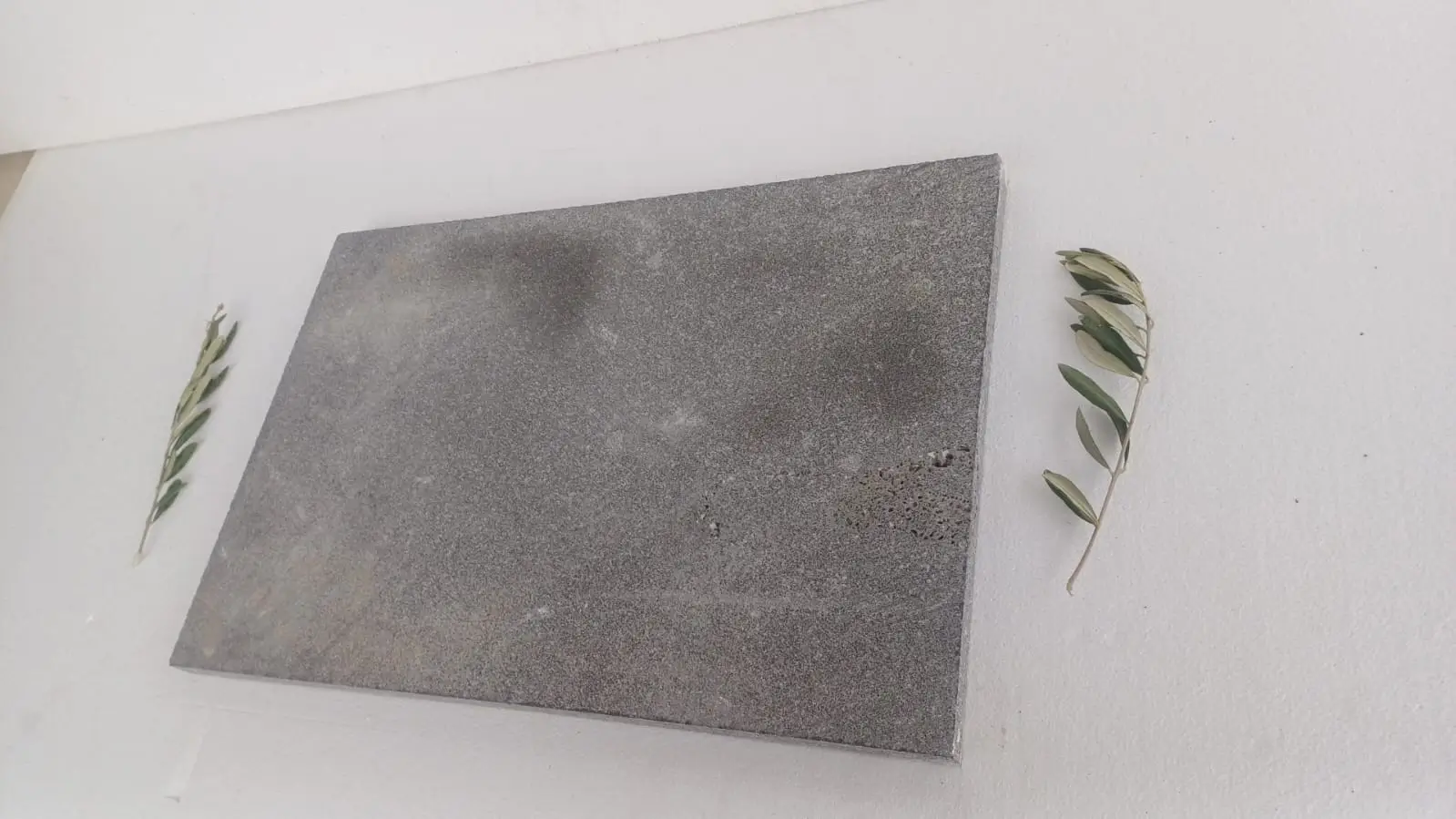
Citadel Stone’s Wholesale Flagstone Pavers for Arizona Projects
When you consider Citadel Stone’s wholesale flagstone pavers for your Arizona project, you’re evaluating premium materials specifically selected for performance in extreme desert conditions. At Citadel Stone, we provide technical guidance for hypothetical applications across Arizona’s diverse climate zones. This section outlines how you would approach specification decisions for six representative cities, addressing the unique cleft surface preservation requirements each location presents.
Phoenix Installation Factors
In Phoenix, you would need to account for the urban heat island effect that elevates ambient temperatures 8-12°F above surrounding desert areas. Your flagstone selection should prioritize lighter color values that reflect 55-65% of solar radiation, reducing peak surface temperatures from 165°F to 145°F — a difference that extends cleft texture integrity by 5-7 years. The Valley’s alkaline soil conditions require you to specify enhanced drainage provisions with minimum 6-inch aggregate base depths. You would coordinate warehouse deliveries during October through April when installation conditions allow proper sealer curing before extreme summer heat arrives.
Tucson Climate Considerations
Your Tucson installations would face similar thermal stress as Phoenix but with 15-20% higher monsoon precipitation that intensifies moisture-related preservation challenges. You should specify sealers with superior water repellency ratings, tested to ASTM C642 absorption coefficients below 2.5%. The combination of intense UV exposure and elevated moisture requires you to plan resealing schedules every 24-30 months rather than the 36-month intervals possible in drier locations. You would recommend truck access verification during project planning, because Tucson’s historic district installations often involve narrow street access requiring specialized delivery equipment.
Scottsdale Design Standards
When you specify flagstone for Scottsdale projects, you would address the city’s strict design review requirements that emphasize authentic desert materials and finishes. Your specifications should detail the natural cleft texture characteristics that satisfy architectural review boards expecting genuine split-face appearance rather than manufactured textures. The prevalence of resort and high-end residential applications requires you to establish comprehensive maintenance protocols from project inception, because these properties typically maintain active landscape management that can either preserve or damage texture through improper cleaning methods. You would coordinate material selection with Scottsdale’s common use of Colorado River water for irrigation, requiring enhanced efflorescence mitigation strategies.
Flagstaff Freeze-Thaw Performance
Flagstaff’s elevation at 7,000 feet creates unique preservation requirements because you would need to address 100+ annual freeze-thaw cycles that don’t occur in lower-elevation Arizona locations. Your material specifications must verify absorption coefficients below 3% to minimize freeze-thaw damage risk, because trapped moisture expanding during freezing cycles causes accelerated cleft texture spalling. You should recommend closed-cell foam insulation beneath flagstone installations in heavily shaded areas where snow melt creates prolonged moisture exposure. The shorter warm-weather working season requires you to plan warehouse inventory availability ensuring material arrives during the May through September installation window when proper sealer curing can occur before winter.
Sedona Aesthetic Integration
In Sedona, your flagstone specifications would emphasize color coordination with the area’s iconic red rock formations, while maintaining the natural texture that provides visual authenticity. You should select materials with warm earth tones showing natural iron oxide content that complements rather than contrasts with the surrounding landscape. The high-visibility nature of Sedona projects — many serving tourism and hospitality functions — requires you to establish rigorous texture preservation protocols maintaining pristine appearance despite heavy foot traffic. You would recommend quarterly professional maintenance inspections rather than annual reviews, because visitor traffic patterns create accelerated wear requiring proactive intervention before damage becomes visible.
Yuma Extreme Conditions
Your Yuma installations would address Arizona’s most extreme thermal conditions, with annual temperature averages 5-8°F higher than Phoenix and summer days regularly exceeding 115°F for weeks consecutively. You should specify maximum solar reflectance flagstone materials with measured SRI values above 45, combined with mandatory shade structure integration for pedestrian comfort. The region’s agricultural irrigation creates localized humidity spikes that accelerate efflorescence formation when combined with alkaline soils. You would need to specify enhanced subsurface moisture barriers and perimeter drainage preventing irrigation water intrusion into flagstone base layers. Warehouse coordination becomes critical for Yuma projects because extreme summer conditions limit installation to October through March, concentrating material demand during these months.
Maintenance Program Development
Establishing effective long-term preservation requires you to develop documented maintenance programs that specify procedures, frequencies, and performance metrics. Your maintenance program should include photographic documentation of the original texture appearance, providing reference standards for evaluating deterioration over time. You need to establish measurable performance criteria such as slip resistance values, absorption rates, and surface appearance ratings that trigger specific maintenance interventions rather than relying on subjective condition assessments.
- You should schedule professional inspections annually, documenting changes in texture depth and identifying emerging damage patterns
- Your program must define specific cleaning protocols including approved products, equipment, and techniques
- You need to establish resealing triggers based on water absorption testing rather than arbitrary time intervals
- You’ll require trained personnel who understand flagstone characteristics and avoid damaging cleaning methods
The maintenance program documentation serves multiple purposes beyond preserving the flagstone authentic finish — it provides warranty compliance evidence, supports property value documentation, and facilitates consistent care when property management changes. You should structure programs as three-tier systems: routine cleaning (quarterly to semi-annual), preventive maintenance (annual), and corrective interventions (as-needed based on condition triggers). This framework allows you to budget accurately for lifecycle costs while maintaining the surface quality that justified specifying natural stone.
Common Preservation Mistakes
Understanding typical failures helps you avoid the most costly preservation errors. The single most common mistake involves applying film-forming sealers designed for smooth stone surfaces onto cleft textures, creating glossy patches in valleys that trap moisture and look artificial. You’ll encounter this problem frequently when property managers use incorrect products, because generic “stone sealer” products sold through retail channels typically aren’t formulated for textured natural stone. Your specification should explicitly prohibit topical film-forming sealers, listing approved penetrating sealer brands by name.
Another frequent error involves pressure washing at excessive pressures that erode the cleft texture peaks. When you evaluate damaged installations, you can identify pressure washing damage by observing rounded texture peaks and widened natural fissures where high-pressure streams removed stone particles. This damage accumulates gradually — individual cleaning events may remove only 0.5-1mm of material, but after 10-15 cleaning cycles over 8-10 years, texture depth decreases 30-40%, significantly altering appearance and reducing slip resistance.
Sealer Application Timing Errors
Your sealing success depends critically on substrate conditions at application time. Applying sealers to damp flagstone — even surface moisture not visible to casual observation — prevents proper penetration and creates whitish haziness in texture valleys that requires abrasive removal. You should verify surfaces are completely dry using moisture meters reading below 4% before sealer application. In Arizona’s low humidity, this typically requires 48-72 hours after final cleaning, longer in shaded areas or following monsoon precipitation.
Temperature extremes during application cause additional problems for flagstone cleft surface preservation Arizona projects. Surface temperatures below 55°F slow sealer penetration and curing, while temperatures above 95°F cause flash-off before the product enters the stone’s pore structure. You need to plan application during the 7-9 AM window in summer months when surfaces reach optimal 65-85°F temperatures. Winter applications should occur during midday when solar warming brings surfaces into the acceptable temperature range.
Advanced Protection Technologies
Emerging preservation technologies offer enhanced protection for high-value flagstone installations. Nano-coating systems using fluoropolymer chemistry create molecular-level protection that doesn’t alter texture appearance while providing superior water and oil repellency. You should evaluate these premium products for applications where maintenance access is limited or where preservation requirements extend beyond standard 15-20 year expectations. The technology costs 3-4 times conventional penetrating sealers but provides protection periods of 8-10 years compared to 2-4 years for standard products.
Photocatalytic coatings represent another advanced option for flagstone split face maintenance in high-pollution environments. These titanium dioxide-based treatments use UV energy to break down organic contaminants, providing self-cleaning properties that reduce maintenance frequency. You need to recognize that photocatalytic effectiveness requires direct sunlight exposure — shaded areas don’t receive sufficient UV activation for the chemistry to function. Your specification should limit these products to south and west exposures receiving minimum 4-6 hours daily direct sun.
Sacrificial Coating Approaches
Some preservation programs use sacrificial coatings that wear away gradually while protecting the underlying stone texture. You would apply these coatings annually or biannually, accepting that the coating itself shows wear but prevents damage to the permanent stone surface. The approach works well for high-traffic commercial applications where visible wear on coatings is preferable to irreversible texture damage. You should evaluate whether this maintenance-intensive approach fits your project’s operational capabilities and budget compared to conventional sealing methods requiring less frequent intervention.
When you consider advanced protection technologies, cost-benefit analysis must account for the full lifecycle period. Premium products costing $4-6 per square foot initially may prove more economical than $1-2 per square foot conventional sealers when you calculate the net present value of reduced reapplication frequency and extended surface life. Your analysis should include labor costs for reapplication, which often exceed material costs in commercial settings where access coordination and site protection create significant non-material expenses.
Final Considerations
Your success with flagstone cleft surface preservation in Arizona depends on recognizing that this isn’t a one-time installation challenge but rather an ongoing commitment to maintenance protocols matched to the specific environmental conditions. The natural split texture that makes flagstone visually compelling requires protection strategies different from smooth stone materials — you can’t simply apply generic maintenance approaches and expect optimal results. When you establish comprehensive preservation programs from project inception, you protect the substantial investment that flagstone represents while maintaining the authentic character that justified specifying natural stone.
Professional preservation integrates multiple disciplines: material science understanding, climate-specific environmental factors, proper product selection, skilled application techniques, and disciplined ongoing maintenance. You should view preservation as a system where each component supports the others — failures in base drainage compromise surface sealing effectiveness, while improper cleaning damages texture regardless of sealer quality. For additional insights on related fabrication capabilities, review Advanced waterjet cutting techniques for flagstone pattern creation before finalizing your project specifications. Container-direct imports make Citadel Stone efficient flagstone distributors in Arizona value.