
When you design informal pathways for Arizona landscapes, you’re creating functional circulation routes that need to withstand extreme thermal conditions while maintaining visual appeal. Paving stone stepping stone paths Arizona installations require careful attention to spacing, material selection, and layout patterns that differ significantly from traditional continuous paving applications. You’ll encounter specific challenges related to thermal expansion, base stability in expansive soils, and surface temperature management that demand professional-level specification.
Your stepping stone pathway needs to balance aesthetic informality with structural performance. The casual appearance shouldn’t compromise longevity — you’re still specifying a permanent landscape feature that experiences the same environmental stresses as formal hardscape installations. Understanding how paving stone informal pathways Arizona function in desert conditions separates successful projects from installations requiring premature replacement.
Thermal Performance in Stepping Patterns
The spacing between individual stones creates thermal behavior you won’t find in continuous paving. Each stone functions as an isolated thermal mass unit, heating and cooling independently without transferring stress to adjacent units. When you specify paving stone stepping stone paths Arizona with 4-8 inch gaps, you eliminate thermal expansion joints entirely — the spacing itself accommodates material movement.
Surface temperatures on individual stepping stones reach 165-180°F during July afternoons in Phoenix and Tucson. What catches most designers off-guard is how this affects material selection differently than continuous paving. You don’t have cumulative thermal expansion stressing jointing systems, but you do have isolated units experiencing full solar exposure without the moderating effect of adjacent stone shading. Your material needs higher thermal shock resistance because daily temperature swings from 70°F pre-dawn to 175°F mid-afternoon create rapid expansion-contraction cycles.
The 18-24 hour thermal lag you see in thick paving installations compresses to 8-12 hours for stepping stones. Individual units measuring 18-24 inches and 2 inches thick don’t retain heat the way continuous fields do. You’ll notice surface temperatures drop 40-50°F faster after sunset compared to traditional paving, which affects evening usability. This becomes a design advantage in residential applications where you want pathways cool enough for barefoot traffic by 8 PM.
Spacing Guidelines and Functional Requirements
Your paving stone garden walk design Arizona depends on establishing stride-appropriate spacing that accommodates varying user gaits. The standard 24-inch center-to-center spacing works for average adult stride lengths of 28-32 inches, but you need to adjust based on pathway function and user demographics. Garden paths serving elderly residents require 20-22 inch spacing for shorter, more cautious strides. High-traffic routes connecting functional areas need consistent 26-inch spacing to accommodate faster walking speeds.
What often gets overlooked is how placement irregularity affects safety and usability. You can vary spacing by ±2 inches for aesthetic informality, but exceeding this tolerance creates trip hazards. When gaps exceed 10 inches, users begin perceiving the route as disconnected stones rather than a continuous path — cognitive disruption that reduces pathway effectiveness. For paving stone stepping stone paths Arizona serving as primary circulation routes, you should maintain spacing variance under 3 inches between consecutive stones.
Stone size directly influences optimal spacing ratios. For 18-inch square pavers, 6-8 inch gaps create balanced visual rhythm. When you increase to 24-inch units, gaps can extend to 8-10 inches without appearing disconnected. The ratio of stone dimension to gap width should stay between 2.5:1 and 4:1. Exceeding these ratios makes pathways appear either cramped or fragmented.
Base Preparation for Isolated Units
Base requirements for stepping stone installations differ fundamentally from continuous paving because each unit bears point loads without load distribution to adjacent stones. You’re creating individual foundation pads rather than a unified structural base. This changes your approach to depth, compaction, and material selection in ways that affect long-term stability.
Each stepping stone location needs excavation extending 4-6 inches beyond the stone perimeter. For a 20-inch square paver, you’ll excavate a 28-32 inch square area to accommodate base materials that extend past the stone edges. This perimeter extension prevents edge failure when loads concentrate near stone corners — a common failure mode you won’t see in continuous paving where adjacent units provide lateral support.
Your base depth should match or exceed depths used for continuous paving despite the reduced surface area. A 6-inch compacted aggregate base remains standard for residential paving stone casual walkways Arizona, with depth increasing to 8-10 inches in expansive clay soils. The temptation to reduce base depth because stones are isolated creates settlement problems within 18-24 months. Individual stones without interconnected base support are more vulnerable to differential settlement, not less.
Aggregate Selection Criteria
When you select base aggregates for stepping stone applications, you need angular crushed stone that achieves 95% compaction density. The 3/4-inch minus gradation used in continuous paving works equally well for isolated units. What changes is your compaction methodology — you’re working in confined areas where plate compactors may not fit effectively.
Hand tamping becomes necessary for locations where mechanical compaction equipment can’t access the excavated area. You’ll achieve 90-92% compaction with diligent hand tamping using a heavy steel tamper, which is marginally acceptable for light-duty residential pathways. For applications requiring higher performance standards, you need to plan excavation areas large enough to accommodate walk-behind plate compactors, then backfill perimeter voids after stone placement.
Material Specifications and Durability Factors
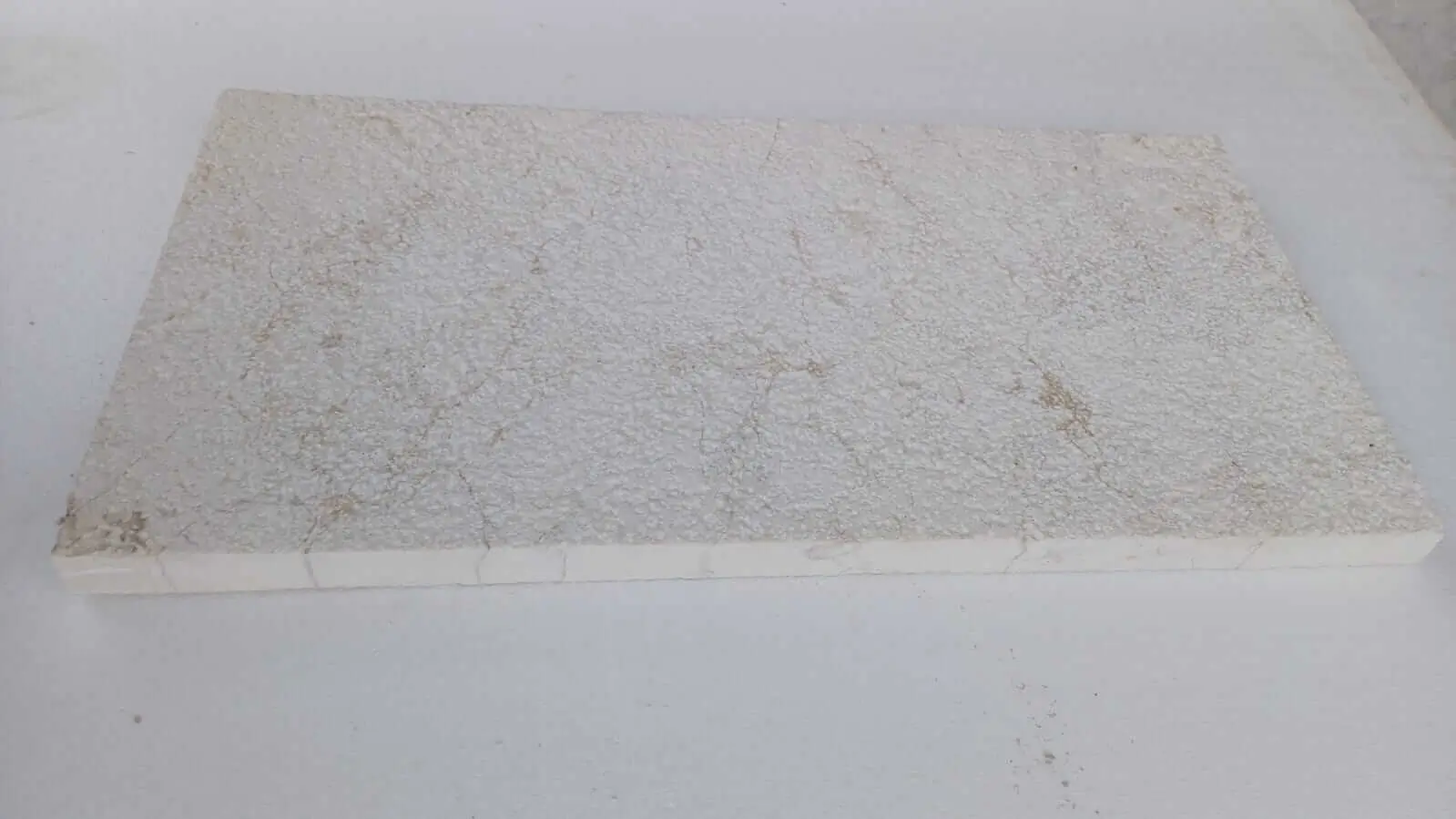
Your material selection for paving stone stepping stone paths Arizona must account for performance requirements that differ from continuous installations. Thickness specifications become more critical because isolated stones lack the structural reinforcement of interlocking patterns. You should specify minimum 2-inch thickness for pedestrian applications, increasing to 2.375 inches (60mm) for areas potentially crossed by maintenance equipment or occasional vehicles.
Compressive strength requirements remain consistent with continuous paving specifications — you need minimum 8,000 PSI for residential applications. What becomes more important is flexural strength because stepping stones experience concentrated center-loading without edge support from adjacent units. Materials with flexural strength below 1,200 PSI risk corner spalling and edge fractures under repeated impact loading from foot traffic.
Surface finish selection affects slip resistance and thermal properties simultaneously. Thermal finishes providing DCOF ratings of 0.50-0.55 offer better barefoot comfort than polished surfaces, which can reach painful temperature thresholds 15-20°F higher under identical sun exposure. You’ll find that lightly textured surfaces balance slip resistance needs with comfortable tactile properties for residential gardens where users may walk barefoot during morning hours.
Layout Patterns and Visual Continuity
When you establish layout geometry for paving stone informal pathways Arizona, you’re balancing aesthetic informality with functional wayfinding. Completely random placement creates cognitive confusion — users can’t anticipate the next stepping location, which slows walking speed and increases mental effort. Your layout should follow a subtle organizing principle that appears casual while maintaining predictable rhythm.
The curved alignment strategy works well for garden settings where you want to create meandering routes. You’ll establish a centerline curve with 12-18 foot radius (tighter curves feel forced, wider curves read as straight), then place stones along this centerline at consistent spacing. Allowing stones to rotate 5-15 degrees off perpendicular to the path direction enhances informality without disrupting stride rhythm. For paving stone stepping pattern Arizona designs, this rotation variance keeps installations feeling organic rather than rigidly geometric.
Straight pathway alignments benefit from intentional irregularity in lateral placement. Rather than centering all stones on a single axis, you can offset alternating stones 3-6 inches left and right of centerline. This creates visual interest while maintaining clear directional flow. The key is establishing a pattern variance range and applying it consistently — random variation feels chaotic, systematic variation feels intentionally informal.
Interstitial Planting Strategies
The gaps between stepping stones present planting opportunities that significantly affect pathway performance and maintenance requirements. Your planting strategy needs to address weed suppression, visual softening, and practical concerns about plant encroachment reducing effective stone surface area. When you specify paving stone garden walk design Arizona with planted gaps, you’re committing to ongoing maintenance that exceeds bare aggregate or decomposed granite infill approaches.
Low groundcovers tolerating foot traffic work in gaps along pathway edges where users rarely step. Dymondia margaretae and certain thyme varieties survive occasional踩踏 while providing visual interest. You should keep these plantings 2-3 inches away from primary stepping surfaces — encroachment onto stone surfaces creates slip hazards when wet and reduces usable stone area. The realistic expectation is 15-20% dieback annually along traffic zones, requiring periodic replanting.
Decomposed granite infill offers lower maintenance alternatives while maintaining informal aesthetics. A 2-3 inch layer of 1/4-inch minus DG compacts into gaps, suppressing weeds while allowing water infiltration. You’ll need to refresh DG every 18-24 months as material migrates and breaks down. For projects where you want to minimize ongoing involvement, this approach provides better long-term performance than planted gaps requiring irrigation and periodic replacement.
Edge Conditions and Pathway Termination
How you terminate stepping stone pathways affects visual completion and functional clarity. Abrupt endings where the final stone simply stops create unresolved compositions that feel incomplete. Your design should provide clear arrival moments that signal pathway conclusion and transition to destination spaces.
The flared termination approach widens the final 6-8 feet of pathway by adding stones laterally, creating a landing zone that visually and functionally transitions from linear path to destination area. You might increase from single file stones to a cluster of 3-4 stones arranged in a casual grouping. This works particularly well when pathways terminate at seating areas, building entries, or garden features where users need standing space.
For pathways connecting to continuous paved areas, you should overlap the final stepping stone with the destination paving by 4-6 inches. This overlap creates clear visual and physical connection rather than leaving an ambiguous gap between pathway systems. When terminating at planted areas or lawn, the final stone can sit flush with surrounding grade or slightly elevated (0.5-1 inch) to maintain definition as ground covers and grasses mature.
Drainage Considerations and Water Management
Water management around paving stone stepping stone paths Arizona operates differently than continuous paving because you’re dealing with multiple isolated infiltration points rather than managed surface drainage. Each gap between stones becomes a potential infiltration location, which affects how you plan grading and subsurface drainage integration.
Your pathway alignment should follow natural grade contours rather than fighting existing drainage patterns. When stepping stones cross slope, water flows between units rather than across surfaces — this eliminates the need for cross-slope grading you’d specify for continuous paving. The gaps function as distributed infiltration points that reduce runoff volume while maintaining pathway usability during rain events.
In areas with clay soils exhibiting low permeability, you need subsurface drainage consideration even for permeable stepping stone layouts. When seasonal precipitation saturates clay substrates, base materials remain wet for extended periods, creating stability issues. A 4-inch perforated drain line running parallel to the pathway centerline, placed 12 inches below finished grade, intercepts subsurface water before it saturates base aggregates. This level of drainage infrastructure might seem excessive for informal pathways, but it prevents the chronic settlement problems you’ll encounter in poorly draining soils.
Accessibility and Code Compliance
When your paving stone casual walkways Arizona serve as accessible routes under ADA requirements, stepping stone layouts don’t comply with accessibility standards. The gaps between stones create uneven surfaces exceeding the 0.5-inch maximum vertical discontinuity allowed for accessible routes. You’ll need to specify continuous paving for any pathway required to meet accessibility codes.
This limitation affects site planning significantly. Primary building entry routes, paths of travel to accessible parking, and connections between accessible building features must use continuous paving systems. Stepping stone pathways can serve as secondary circulation routes and garden access paths that supplement, but don’t replace, code-compliant accessible routes. Understanding this distinction during schematic design prevents costly redesign when accessibility requirements emerge during permit review.
For residential projects not subject to accessibility codes, you should still consider aging-in-place scenarios where homeowners may eventually require walker or wheelchair access. Designing primary pathways with continuous paving while using stepping stone treatments for secondary garden routes provides long-term flexibility. This approach allows properties to accommodate changing mobility needs without major hardscape reconstruction. When you consult on projects, recommending this strategy demonstrates professional foresight that clients appreciate during design development, and you may reference commercial paver materials in Prescott for continuous paving specifications that maintain design consistency with stepping stone elements.
Maintenance Requirements and Longevity
Your maintenance planning for stepping stone installations should address three primary concerns: gap material management, stone leveling, and surface cleaning. The maintenance burden differs from continuous paving because you’re managing multiple discrete elements rather than a unified surface.
Gap material migration occurs continuously as foot traffic, wind, and water movement displace infill materials. When you use decomposed granite or crushed aggregate, expect to add 0.5-1 cubic foot of material per 100 square feet of pathway annually. This replenishment maintains gap fill levels that prevent stone edges from becoming exposed and vulnerable to chipping. You should specify a consistent infill material from initial installation through long-term maintenance — switching materials creates visual inconsistency as new and aged materials weather differently.
Settlement Adjustment Procedures
Individual stone settlement requires periodic releveling that’s more intensive than maintenance for continuous paving. You’ll typically address 5-10% of stones annually, lifting settled units and adding base material to restore proper elevation. The process involves:
- You need to excavate gap materials around the settled stone to expose edges
- Prying the stone up carefully to avoid corner damage requires proper leverage techniques
- Adding compacted base aggregate in 1-2 inch lifts brings the base to proper elevation
- Resetting the stone and verifying level in both directions ensures stability
- Replacing gap materials and compacting infill completes the repair
This maintenance intensity exceeds continuous paving requirements where settlement typically affects larger areas requiring more extensive repair. The advantage is that stepping stone repairs are smaller in scope and can be completed in 15-20 minutes per stone with basic tools.
Cost Analysis and Value Engineering
When you evaluate project costs for paving stone stepping stone paths Arizona versus continuous paving, you’ll find material costs reduced by 60-75% due to decreased stone coverage. A 50-foot pathway using 20-inch square stones spaced 24 inches on center requires approximately 30 stones totaling 85 square feet. The equivalent continuous paving would require 200-220 square feet, creating substantial material cost differences.
Installation labor costs don’t scale proportionally with reduced material quantities. While you’re setting fewer stones, the layout precision and individual base preparation for each unit requires similar labor hours per stone as continuous installations. You should estimate 25-35% labor cost reduction compared to continuous paving, not the 60%+ material savings. Total installed cost typically runs 40-50% of equivalent continuous paving.
The value engineering opportunity comes from specifying stepping stone treatments for lower-priority circulation routes while reserving continuous paving for primary pathways. This tiered approach allocates budget to high-visibility, high-traffic areas while providing functional secondary access at reduced cost. Your specification strategy might designate primary entry walks and entertainment area paving as continuous installations, with garden access paths and utility routes using stepping stone layouts.
Climate-Specific Performance Factors
Arizona’s diverse climate zones create different performance requirements for paving stone informal pathways Arizona depending on elevation and regional precipitation patterns. Low desert installations in Phoenix and Yuma face extreme heat and minimal freeze-thaw exposure. High country applications in Flagstaff and Sedona encounter freeze-thaw cycling and winter snow cover requiring different material specifications.
For low desert applications, your primary concern is thermal performance and UV stability. Materials need to resist color fading under intense solar exposure exceeding 4,000 hours annually above 90°F. Lighter colors show less fading but create higher surface temperatures. The trade-off calculation typically favors mid-tone colors (tans, buffs, light grays) that balance thermal comfort with fade resistance. You should verify that your selected material has UV stabilization appropriate for Arizona’s intense sun exposure.
High elevation installations require freeze-thaw durability you won’t specify for desert locations. When you design for areas experiencing 40+ annual freeze-thaw cycles, material porosity becomes critical. You need absorption rates below 5% to prevent water saturation that leads to spalling during freeze events. The individual stone configuration helps here — gaps allow snowmelt to drain away from stone surfaces rather than pooling in joints where continuous paving installations trap water.
Citadel Stone: Premium Paver Stone Materials in Arizona — Professional Specification Guidance
When you evaluate Citadel Stone’s paver stone materials in Arizona for your projects, you’re considering manufactured products engineered specifically for extreme climate performance. At Citadel Stone, we provide technical specification guidance for architects, landscape architects, and contractors working across Arizona’s diverse climate zones. This section presents hypothetical application scenarios demonstrating how you would approach material selection and installation planning for representative Arizona municipalities.
The following city-specific scenarios illustrate professional specification considerations you should address when planning paving stone stepping stone paths Arizona installations. These represent advisory guidance for hypothetical projects, not completed installations.
Phoenix Valley Specifications
In Phoenix’s extreme heat environment, you would specify materials with high solar reflectance to manage surface temperatures. Your stepping stone layout should incorporate 8-10 inch gaps planted with heat-tolerant groundcovers providing visual relief from hardscape. The expansive clay soils common in Phoenix metro require you to increase base depth to 8 inches minimum with subsurface drainage consideration. You’d want to verify warehouse stock availability during spring months when demand peaks, as lead times can extend 3-4 weeks during high season. Material selection would prioritize light buff and tan tones providing 60-65% solar reflectance while maintaining color stability under intense UV exposure.
Tucson Desert Applications
For Tucson projects, you would address similar heat considerations as Phoenix but with different soil conditions. The caliche layers common in Tucson require excavation verification before finalizing base depth specifications. Your installation crew would need equipment capable of breaking through caliche hardpan in 40-50% of pathway locations. You should specify stepping stone patterns that work with existing drainage swales characteristic of Tucson’s wash-influenced topography. Material thickness would increase to 2.375 inches in areas where occasional vehicle crossings occur during landscape maintenance.
Scottsdale Luxury Integration
Scottsdale’s high-end residential market would drive you toward premium finishes and larger format stones in 24-30 inch dimensions. Your design approach would emphasize visual integration with contemporary desert architecture using clean-lined geometric patterns despite the informal stepping stone layout. You’d specify thermal finish surface treatment providing barefoot comfort for resort-style outdoor living areas. Base preparation would address the fast-draining alluvial soils common in Scottsdale’s bajada locations, potentially allowing reduction to 6-inch base depth in well-draining areas. Material selection would coordinate with existing hardscape palettes using warm gray and sand tones.
Flagstaff Mountain Climate
In Flagstaff’s high-elevation environment, you would prioritize freeze-thaw durability over heat management. Your material specifications would require absorption rates below 4% and verified ASTM C1645 compliance for freeze-thaw resistance. You’d need to address snow removal compatibility, potentially increasing stone size to 24-inch minimum dimensions that remain identifiable under light snow cover. Base preparation would include 10-12 inch depth to extend below frost penetration depth of 18-24 inches typical for Flagstaff. Stepping stone spacing might reduce to 20-22 inches to accommodate winter walking with shorter, more cautious strides on potentially icy surfaces.
Sedona Red Rock Context
For Sedona applications, your material selection would address aesthetic integration with the region’s distinctive red rock landscape. You’d consider warm terracotta and rust tones that complement rather than compete with natural surroundings, though you should verify color stability as red pigments can fade 15-20% over 10-year periods under high UV exposure. The rocky terrain would require you to plan irregular pathway alignments that work with existing grade and boulder features rather than following rigid geometry. Base excavation in Sedona’s rocky soils typically requires 20-30% more labor hours than valley locations, affecting your project budgeting.
Yuma Extreme Conditions
Yuma’s position as one of North America’s hottest cities would drive your specifications toward maximum solar reflectance materials. You’d prioritize white and light gray tones despite their higher maintenance requirements because thermal comfort becomes the dominant performance factor. The sandy soils common in Yuma allow excellent drainage but provide less stable base support, requiring you to compact base aggregates to 96-98% density rather than the 95% standard for clay soils. Your pathway layouts would maximize shade exposure, routing stepping stone paths under tree canopies and alongside buildings where afternoon shade reduces surface temperatures 40-50°F compared to full sun exposure.
Professional Specification Approach
When you develop comprehensive specifications for paving stone stepping stone paths Arizona, your documentation should address material properties, installation procedures, and performance expectations with the same rigor you’d apply to continuous paving projects. The informal aesthetic doesn’t justify reduced technical precision — you’re still creating permanent landscape infrastructure requiring professional-grade specification.
Your material specification section should include compressive strength minimums, absorption rate maximums, dimensional tolerances, and surface finish requirements. Installation specifications need to address excavation depth, base material gradation, compaction requirements, and stone spacing tolerances. You should include layout approval procedures where contractors submit string layouts or painted layout markings for your field verification before beginning installation. This approval step prevents expensive corrections when installed spacing doesn’t match design intent.
Performance specifications should establish realistic expectations for settlement tolerance, gap material retention, and maintenance requirements. When you specify acceptable settlement limits of ±0.25 inches over 5-year periods, you’re providing measurable criteria that separate normal performance from deficient installation. Clear maintenance specifications defining gap material replenishment frequency and stone releveling procedures help property owners budget for ongoing care. For engineering considerations affecting related installations, review Engineering principles for paving stone wall foundations in Arizona before finalizing your construction documents. Pennsylvania quality available through Citadel Stone’s authentic manufactured bluestone pavers in Arizona.