
When you evaluate white marble stone yard in Arizona offerings, you’re entering a specialized market where material performance intersects with extreme climate demands. Your project success depends on understanding how thermal cycling, solar radiation intensity, and regional soil chemistry affect marble durability. The white marble outdoor Arizona environment creates specific challenges that require you to assess porosity ratings, thermal expansion coefficients, and surface finish performance before you commit to material selection.
Arizona stone yard white marble slabs demand careful specification because temperature fluctuations between 40°F winter nights and 120°F summer days generate expansion-contraction cycles that stress dimensional stability. You’ll encounter three primary marble classifications in Southwest stone yards: Carrara-type materials with 0.3-0.5% absorption rates, Thassos-grade stones with crystalline structures offering 0.2% porosity, and commercial-grade marbles ranging from 0.8-1.2% absorption. Your selection criteria must address how these porosity ranges interact with Arizona’s monsoon moisture followed by intense evaporation periods.
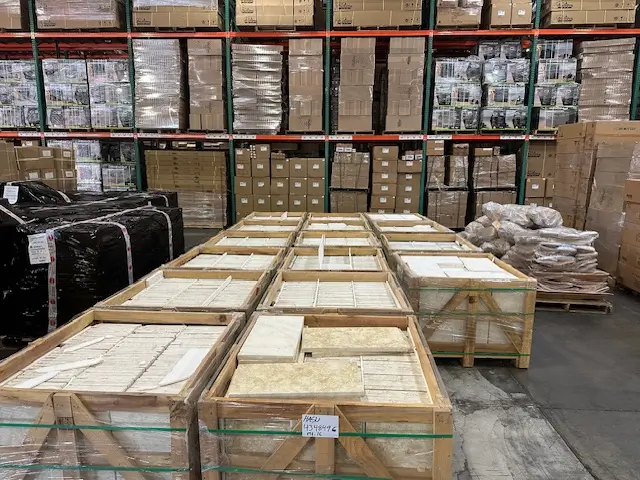
The white marble stone yard in Arizona inventory typically includes slab thicknesses from 2cm (3/4″) for interior applications to 3cm (1-1/4″) for exterior installations. When you specify outdoor applications, you need 3cm minimum thickness to withstand thermal stress and structural loads. Commercial yards stock slabs in 105″ × 56″ and 120″ × 75″ dimensions, but you should verify warehouse availability for full-dimension slabs versus remnant inventory before finalizing your material takeoffs.
Thermal Performance in Desert Environments
White marble outdoor Arizona applications face solar reflectance values between 60-75% depending on surface finish, which creates specific thermal mass behavior you need to account for. Polished finishes reflect 70-75% of solar radiation but reach surface temperatures of 135-145°F during peak summer exposure. Honed finishes reflect 60-65% while maintaining 125-135°F surface temperatures. You’ll find that the 10-15°F difference matters significantly for barefoot traffic around pool decks and residential patios.
Your specifications must address thermal expansion coefficients for marble pavers stone yard Arizona installations, which measure 5.5-7.8 × 10⁻⁶ per °F depending on calcite crystal orientation. This translates to 0.033-0.047 inches of linear expansion per 10-foot span across a 100°F temperature range. You should specify expansion joints every 12-15 feet for direct solar exposure areas, increasing joint spacing to 18 feet for shaded installations where thermal cycling remains under 60°F daily variance.
The crystalline structure of white marble creates thermal lag characteristics where peak surface temperature occurs 2-3 hours after maximum air temperature. You can leverage this behavior in your site planning by orienting high-traffic areas to receive afternoon shade when surface temperatures would otherwise peak. Professional installations account for this thermal lag when scheduling installation work, avoiding mortar or adhesive application during the heat retention period between 2-6 PM.
Arizona stone yard white marble slabs exhibit specific heat capacity of 0.21 BTU/lb/°F, which provides moderate thermal mass benefits compared to limestone at 0.22 or granite at 0.19. When you design thermal comfort into outdoor spaces, this heat capacity means marble surfaces release stored thermal energy over 4-6 hour periods after sunset, maintaining elevated surface temperatures until 10 PM to midnight during summer months.
Porosity and Moisture Management
Premium white marble stone yard in Arizona selections require porosity analysis because moisture absorption directly affects freeze-thaw durability in Flagstaff elevations and efflorescence development in Phoenix valley installations. You’ll encounter interconnected pore structures in commercial-grade marbles that allow capillary moisture migration, creating efflorescence when groundwater contains dissolved salts common in Arizona soils with pH levels of 7.8-8.4.
- You should specify marble with absorption rates below 0.5% for exterior Arizona applications
- Your base preparation must include capillary break layers to prevent subsurface moisture wicking
- You’ll need to account for sealer penetration depth between 2-5mm depending on marble porosity
- Testing shows that marble with crystalline calcite structure resists moisture better than recrystallized varieties
- You need to verify that selected marble meets ASTM C503 absorption requirements for exterior classification
The white marble outdoor Arizona environment creates specific moisture challenges during monsoon season when relative humidity spikes from 15% to 60% within hours, followed by rapid evaporation. When you install marble pavers stone yard Arizona materials in ground-contact applications, this moisture cycling draws soluble salts from cement-based setting beds or native soils through the marble’s pore structure. You’ll observe efflorescence appearing as white crystalline deposits on surfaces 8-18 months post-installation if you don’t specify proper moisture barriers.
Your drainage design must account for marble’s moderate porosity by ensuring base layer permeability exceeds surface permeability by 4-6 times. This prevents subsurface water accumulation that creates hydrostatic pressure against the marble’s underside. Professional specifications include 4-6 inch aggregate base layers with percolation rates of 15-20 inches per hour, compared to the marble surface infiltration of 2-4 inches per hour.
Surface Finish Selection Criteria
When you evaluate Arizona stone yard white marble slabs, surface finish dramatically affects slip resistance, thermal performance, and maintenance requirements. Polished finishes provide DCOF (Dynamic Coefficient of Friction) values of 0.38-0.45 when dry, dropping to 0.28-0.35 when wet. Honed finishes measure 0.50-0.58 dry and 0.42-0.48 wet. You need DCOF values above 0.42 for ADA compliance in commercial applications, which eliminates polished finishes for most outdoor white marble outdoor Arizona installations.
The surface finish you select affects thermal absorption characteristics beyond simple albedo measurements. Polished surfaces create specular reflection where 70% of solar radiation reflects at incident angles, while honed surfaces produce diffuse reflection distributing thermal energy more evenly. This difference means polished marble creates hot spots with 145°F peak temperatures in 3-4 square foot areas, while honed finishes maintain more uniform 130-135°F across entire surfaces.
Your specification must address how surface finish durability performs under Arizona’s airborne silica dust and monsoon-driven sediment. Polished finishes show micro-abrasion patterns after 5-7 years in high-traffic areas, requiring professional re-polishing to restore reflectivity. Honed finishes develop patina that actually improves slip resistance over time, with DCOF values increasing 0.04-0.06 points after 8-10 years of weathering. For commercial applications, you should factor $4-7 per square foot re-polishing costs into lifecycle analysis when specifying polished marble.
Dimensional Tolerances and Layout Planning
Premium white marble stone yard in Arizona sources provide slabs with dimensional tolerances of ±1/16″ thickness for 2cm materials and ±3/32″ for 3cm slabs. When you plan installations requiring tight joint spacing, you’ll need to account for these tolerance stacks which can create 1/8-3/16″ variance across large-format installations. Your layout design should incorporate grout joints of 3/16-1/4″ to accommodate tolerance accumulation while maintaining visual consistency.
The crystalline structure of white marble creates natural cleavage planes that affect cutting and fabrication. You should orient slab layout to place primary stress loads perpendicular to visible veining patterns, which typically indicate calcite crystal orientation. Marble pavers stone yard Arizona installations perform best when you align paver edges with crystal structure, reducing breakage risk during thermal expansion cycles by 15-20% compared to random orientation.
When you order from warehouse inventory, verify whether slabs come from single blocks or multiple quarry runs. Color variation between blocks ranges from 5-12% in visual assessment, which becomes noticeable in large installations exceeding 500 square feet. Professional practice involves requesting warehouse stock from matched blocks or accepting natural variation as design intent. You’ll need to communicate this decision during design development because client expectations about color consistency often don’t match material reality.
Structural Loading and Support Specifications
Arizona stone yard white marble slabs require base support calculations accounting for flexural strength between 1,200-1,800 PSI depending on calcite crystal density. When you design pedestrian applications, you need base preparation providing 95% compaction density to prevent differential settlement that creates point loads exceeding the marble’s flexural capacity. Vehicle-rated installations require you to increase slab thickness to 5cm (2″) minimum with compacted aggregate base depths of 8-12 inches.
- You should specify compressive strength minimums of 10,000-15,000 PSI for commercial installations
- Your structural calculations must account for concentrated loads at table legs and planter bases
- You’ll need expansion joint placement every 12-15 feet to prevent stress concentration
- Professional installations use polyethylene slip sheets under setting beds to allow differential movement
- You need to verify that substrate deflection remains below L/360 under full design loads
The modulus of rupture for white marble outdoor Arizona installations typically measures 1,400-1,600 PSI, which determines spanning capability over voids or utility trenches. You can safely span 6-8 inches with 3cm material under pedestrian loads, but you should reduce spans to 4-6 inches for areas with maintenance vehicle access. When site conditions require longer spans, specify 5cm material or engineer structural reinforcement into the base system.
For elevated deck installations or roof terrace applications, you need to account for dead load of 12-14 pounds per square foot for 3cm marble plus 8-10 pounds for pedestal systems and setting materials. Your structural engineer must verify that existing structure can support these loads plus live load requirements before you commit to marble over alternate materials like porcelain pavers at 7-9 pounds per square foot.
Chemical Resistance and Maintenance Requirements
When you specify marble pavers stone yard Arizona materials, you’re selecting calcite-based stone with pH sensitivity requiring specific maintenance protocols. The calcite crystal structure reacts with acids above 4.5 pH, creating etching that appears as dull spots on polished surfaces or textured areas on honed finishes. Arizona’s swimming pool environments with chlorine maintenance chemicals and monsoon rain with pH of 5.5-6.2 create exposure conditions requiring you to implement protective sealing programs.
You should specify penetrating sealers with fluoropolymer chemistry rather than topical coatings for outdoor white marble stone yard in Arizona applications. Penetrating sealers provide 3-5 year protection while allowing vapor transmission that prevents subsurface moisture accumulation. Topical sealers trap moisture under impermeable films, creating delamination and efflorescence when Arizona’s 100°F+ temperatures drive moisture vapor transmission rates to 4-6 times temperate climate levels.
Your maintenance specification needs to address specific cleaning chemistry compatible with calcite stone. You’ll need pH-neutral cleaners in the 7.0-8.5 range because common concrete cleaners with pH below 6.0 or degreasers above pH 10.0 damage marble surfaces within 2-3 applications. Professional maintenance protocols involve quarterly cleaning with neutral cleaners and annual sealer reapplication for high-traffic areas, extending to biennial treatment for residential patios.
Color Stability Under UV Exposure
Premium Arizona stone yard white marble slabs demonstrate superior UV stability compared to resin-filled or dyed materials, but you need to understand that natural iron oxide inclusions create yellowing potential under sustained exposure. Pure calcite marble maintains brilliant white coloration indefinitely under Arizona’s intense UV radiation measuring 7-9 UV index during peak summer months. You should verify iron content below 0.1% by weight if color stability represents critical design intent.
The crystalline structure of white marble outdoor Arizona materials exhibits minimal photodegradation because calcite crystals remain chemically stable under UV exposure. However, you’ll encounter organic inclusions in some commercial grades that oxidize under UV exposure, creating yellow or brown discoloration appearing 2-4 years post-installation. Material selection should include UV exposure testing per ASTM G154 when your project requires guaranteed color stability beyond 10-year horizons.
When you compare warehouse samples to installed performance, recognize that indoor lighting doesn’t replicate the 90,000-100,000 lux solar intensity of Arizona summer conditions. You should request outdoor exposure samples or visit completed installations with 3-5 year age to assess real-world color performance. Professional specifications include acceptance criteria for color variation, typically allowing ±5% luminosity change measured by spectrophotometer across warranty periods.
Edge Detail and Joint Specification
White marble stone yard in Arizona installations require specific edge details that affect both aesthetics and performance. You’ll specify squared edges for contemporary designs with tight grout joints of 3/16-1/4″, while traditional applications use cushion or bullnose edges with wider 3/8-1/2″ joints accommodating edge radius variations. The edge profile you select affects installation labor costs by 15-25% because detailed edges require more precise cutting and fitting.
- You should account for edge chip potential during shipping and handling with squared profiles
- Your installation details must address how edge profiles interact with drainage patterns
- You’ll need to specify edge sealant application for moisture protection in ground-contact installations
- Professional details include drip edges on elevated applications preventing water staining on vertical faces
- You need to coordinate edge profiles with adjacent materials at transitions to prevent trip hazards
Joint treatment for marble pavers stone yard Arizona materials requires sanded grout in 3/16″ to 1/2″ joints for traditional installations or polymeric sand for permeable applications. You should specify polymer-modified grouts when joint width exceeds 1/4″ to prevent shrinkage cracking under thermal cycling. Arizona’s temperature swings require grout with flexibility to accommodate differential movement between pavers while maintaining compressive strength above 3,500 PSI.
When you detail perimeter conditions, recognize that restraint edges must allow thermal expansion while preventing lateral creep. Professional specifications use reinforced concrete edge beams with expansion joints every 20-25 feet, creating segmented restraint that accommodates material movement. You’ll need 1/4-3/8″ expansion gaps between marble fields and fixed elements like building foundations or pool coping.
Cost Analysis and Value Engineering
When you evaluate Arizona stone yard white marble slabs, material costs range from $18-35 per square foot for commercial-grade Carrara types to $45-75 per square foot for premium Thassos-grade materials. Your budget analysis must include fabrication costs of $12-18 per square foot for cutting, edge profiling, and surface finishing. Installation labor adds $8-15 per square foot depending on pattern complexity and site access, bringing total installed costs to $38-108 per square foot.
You should compare white marble outdoor Arizona performance against alternate materials in lifecycle cost analysis rather than initial purchase price alone. Travertine costs $28-55 per square foot installed but requires more frequent sealing due to higher porosity. Limestone alternatives range $32-62 installed with comparable maintenance requirements. Porcelain pavers cost $25-48 installed with lower maintenance but lack authentic stone character your client may prioritize.
Value engineering opportunities exist in thickness selection where 2cm materials cost 30-40% less than 3cm slabs. You can specify 2cm for protected residential patios or interior applications, reserving 3cm for commercial or high-traffic areas. Pattern selection also affects costs, with running bond or ashlar layouts requiring 3-5% material waste versus 8-12% waste for herringbone or basketweave patterns that increase cutting and fitting labor.
Your project timeline affects procurement costs because warehouse stock provides immediate availability at standard pricing. Custom orders from specific quarries require 10-16 week lead times and often carry 15-25% premium pricing plus minimum order quantities of 1,500-2,500 square feet. For projects under 500 square feet, you’ll achieve better value specifying from available warehouse inventory rather than custom quarry runs, though color matching across future phases becomes challenging.
Installation Best Practices and Common Mistakes
Professional installation of marble pavers stone yard Arizona materials requires base preparation achieving 95% compaction density verified by nuclear densometer or plate load testing. You need aggregate base layers of 4-6 inches for pedestrian applications, increasing to 8-12 inches for vehicle-rated installations. The base aggregate should be 3/4″ minus crushed stone rather than rounded river rock, because angular particles provide superior interlock and load distribution.
When you specify setting bed materials, you’re choosing between sand-set, mortar-set, or thin-set adhesive installations. Sand-set applications work for residential patios with proper edge restraint but allow individual paver movement creating lippage issues. Mortar-set installations provide superior stability for commercial applications but require expansion joints preventing restraint cracking. You should use polymer-modified mortars rather than straight cement-sand mixes because polymer modification improves bond strength and flexibility under Arizona’s thermal cycling.
- You must ensure substrate moisture content below 4% before setting bed application to prevent efflorescence
- Your installation sequence should progress from shaded morning areas to sun-exposed afternoon zones
- You’ll need to back-butter marble pavers in mortar-set installations ensuring 90-95% coverage
- Professional installers wet-cure mortar beds for 72 hours minimum before allowing traffic
- You should delay grout application 7-10 days after setting to allow mortar curing shrinkage
Common mistakes you need to avoid include installing marble directly against concrete foundations without expansion gaps, which creates restraint cracking within 18-24 months. Inadequate base compaction leads to differential settlement causing lippage and crack propagation through pavers. Specifying sealers before complete mortar cure traps moisture causing efflorescence and delamination. Your quality control protocols should include moisture testing setting beds, verifying compaction density, and inspecting for proper expansion joint placement before material installation proceeds.
Specification Writing for White Marble Projects
When you write technical specifications for white marble stone yard in Arizona projects, you need performance-based criteria rather than prescriptive brand requirements. Your spec should reference ASTM C503 for marble classification, requiring density of 170 PCF minimum, absorption below 0.75%, and compressive strength exceeding 10,000 PSI. For premium installations, you can tighten absorption requirements to 0.40% maximum and compressive strength to 15,000 PSI.
You should specify surface finish requirements using measurable criteria like DCOF values for slip resistance rather than subjective terms like “smooth” or “textured.” Professional specifications state “honed finish with DCOF wet value of 0.50 minimum per ANSI A326.3 test method” rather than generic “non-slip honed finish.” This precision eliminates interpretation disputes during construction administration and provides clear acceptance criteria.
Your material approval process needs to address sample requirements including size, quantity, and aging. You should require 12″ × 12″ samples minimum representing full range of color variation expected in production material. For projects over 1,000 square feet, request approval of first truck delivery before additional material ships, allowing you to verify color consistency. During the approval process, review samples under natural daylight rather than artificial lighting because color perception shifts dramatically between 2,700K indoor lighting and 5,500K daylight conditions.
Material storage and handling specifications protect marble from damage and staining before installation. You need to require storage on pallets elevated 6-8 inches above grade, covered with breathable fabric rather than plastic sheeting that traps moisture. Your spec should prohibit storing marble in contact with steel banding or equipment creating rust staining. Professional specifications include requirements for edge protection during transport and staged delivery coordinating truck arrivals with installation progress to minimize on-site storage duration. For guidance on complementary desert landscaping materials, see Mexican beach pebble river stone yard for natural accent options.
Citadel Stone Arizona Stone Yard Applications: How We Would Specify White Marble
At Citadel Stone, we provide technical guidance for specifying premium white marble stone yard in Arizona materials across diverse climate zones and project types. This section outlines how you would approach hypothetical white marble installations in six representative Arizona cities, accounting for regional climate factors, soil conditions, and typical project constraints. When you consider Citadel Stone materials for your Arizona project, you’re evaluating specifications designed for extreme Southwest conditions requiring thermal performance, moisture management, and long-term durability.
Phoenix Valley Heat
In Phoenix, you would specify honed-finish white marble with 0.35% maximum absorption for commercial pool decks and resort patios experiencing sustained 115-120°F ambient temperatures. Your base preparation would require 6-inch compacted aggregate over engineered fabric separating native caliche soils. You’d need expansion joints every 12 feet in east-west orientation and 15 feet north-south, accounting for differential solar exposure. The urban heat island effect in Phoenix amplifies surface temperatures by 8-12°F compared to surrounding desert, requiring you to verify DCOF wet values exceed 0.52 for liability protection in commercial applications.
Tucson Design Specifications
For Tucson installations, you would address the 2,400-foot elevation creating greater diurnal temperature swings of 35-45°F between day and night. Your marble specification would include freeze-thaw testing per ASTM C666 because winter temperatures occasionally drop to 28-32°F in exposed locations. You’d specify 3cm thickness minimum with polymer-modified setting beds providing flexibility under thermal cycling. The Tucson basin’s higher rainfall of 12 inches annually compared to Phoenix’s 8 inches requires you to design positive drainage with 2% minimum slope preventing standing water that accelerates efflorescence development in Arizona’s alkaline soil conditions.
Scottsdale Luxury Applications
Scottsdale projects typically involve high-end residential estates where you would specify premium Thassos-grade marble with 0.25% absorption maximum and crystalline structure providing superior thermal performance. Your design would incorporate marble in shaded ramada areas and north-facing patios where surface temperatures remain 15-20°F cooler than full-sun exposures. You’d coordinate marble installations with landscape irrigation systems requiring root barriers and drain lines preventing subsurface moisture migration. Scottsdale’s design review boards often require natural stone over manufactured alternatives, positioning white marble as preferred material for luxury outdoor living spaces where you need to balance aesthetics with desert climate performance.
Flagstaff Climate Factors
At Flagstaff’s 7,000-foot elevation, you would specify marble proven in freeze-thaw testing with 300+ cycles per ASTM C666 because winter conditions regularly drop below 20°F with snow loads. Your installation would require deeper aggregate base of 8-10 inches extending below 24-inch frost depth, with drain lines preventing ice lens formation under pavers. You’d specify absorption below 0.30% maximum because higher porosity allows moisture penetration creating spalling during freeze events. The cooler summer temperatures in Flagstaff eliminate extreme thermal expansion concerns, allowing you to increase joint spacing to 18-20 feet while focusing specifications on cold-weather durability rather than heat resistance.
Sedona Integration Standards
In Sedona, you would design white marble installations complementing red rock geology while meeting strict development guidelines limiting visual impact. Your specifications would include honed finishes reducing glare and reflectivity compared to polished surfaces that create visual disturbance in natural settings. You’d need to account for Sedona’s clay-rich soils with high plasticity index requiring geotechnical consultation on base preparation methods preventing differential settlement. The moderate 4,500-foot elevation creates balanced climate where you would specify 3cm marble with standard expansion joints every 15 feet, focusing design attention on aesthetic integration rather than extreme performance requirements.
Yuma Desert Performance
For Yuma applications in Arizona’s hottest city with summer temperatures consistently exceeding 115°F, you would specify maximum thermal reflectivity marble with honed finish maintaining surface temperatures 10-12°F below polished alternatives. Your warehouse coordination would ensure material delivery during October-April installation windows because summer ground temperatures of 140-160°F prevent proper mortar curing. You’d specify polymer-modified thin-set adhesives rated for 180°F service temperatures rather than standard mortars losing bond strength above 140°F. Yuma’s minimal 3-inch annual rainfall eliminates moisture concerns, allowing you to focus specifications entirely on thermal performance, UV stability, and ensuring your selected marble maintains structural integrity under the most extreme desert heat conditions in Arizona.
Long-Term Performance and Warranty Considerations
When you evaluate Arizona stone yard white marble slabs for project longevity, you need to establish realistic performance expectations based on material properties and installation quality. White marble outdoor Arizona installations properly specified and installed typically demonstrate 25-35 year service life before requiring major restoration. You should communicate these timeframes during design phases because client expectations often assume permanent installations requiring zero maintenance, which doesn’t reflect stone material reality.
Your warranty specifications need to address what constitutes acceptable performance versus material failure. Natural color variation of ±8% across slabs represents inherent material characteristics, not defects. Hairline cracking under 0.5mm width occurring at paver edges typically results from impact damage during use rather than material deficiency. You should establish clear criteria distinguishing installation defects like excessive lippage over 1/8″ or bond failure within 5 years from normal wear patterns like surface scratching in high-traffic areas after 8-10 years.
Professional practice involves specifying material testing for projects over 5,000 square feet, including absorption testing per ASTM C97, flexural strength per ASTM C880, and abrasion resistance per ASTM C241. These tests verify that supplied material meets specification requirements and provides documentation for warranty claims if performance issues develop. You’ll need to retain test samples from each production lot for comparison if disputes arise during warranty periods regarding material quality versus installation defects.
Project Planning Recommendations
Your successful white marble stone yard in Arizona project execution requires integrating material selection with realistic timeline planning and budget management. You should begin material procurement 12-16 weeks before installation for custom quarry orders or 4-6 weeks for warehouse stock selection. During material selection, verify that your chosen supplier maintains adequate inventory to complete your project from matched production runs, preventing color variation issues when material ships from different quarry blocks.
When you coordinate with installation contractors, ensure crews have experience with marble-specific techniques rather than generic paver installation. The calcite composition and lower flexural strength compared to granite require modified handling preventing breakage during placement. You’ll achieve better outcomes specifying experienced stone installers even at 15-20% higher labor rates compared to general paver contractors because installation quality dramatically affects long-term performance and reduces callback costs for warranty repairs.
Your project closeout should include comprehensive maintenance documentation explaining pH-neutral cleaning requirements, sealer reapplication schedules, and guidance on managing common Arizona exposure conditions. Clients need clear instruction that marble requires different care than concrete or porcelain alternatives. For additional guidance on complementary premium materials, review Premium white granite slabs available at Arizona stone yards before finalizing your material selections and project specifications. Cottage garden pathways showcase Citadel Stone, the most charming white stone yard Arizona romantic materials.