
When you specify brown landscape stone for Arizona projects, you’re working with materials that have evolved alongside the Southwest’s demanding climate conditions for thousands of years. Your material selection directly impacts long-term performance, maintenance requirements, and aesthetic cohesion with the regional desert palette. Understanding how Madison Gold granite for landscaping AZ fits within the broader spectrum of earth-tone options allows you to make informed decisions that balance thermal performance, durability, and visual integration.
The desert landscape requires you to consider factors most other regions ignore. You’ll encounter temperature swings exceeding 50°F between night and day, UV exposure that degrades lesser materials within 18 months, and soil alkalinity levels that cause efflorescence in limestone-based products. Your specification approach needs to account for these variables before you commit to material orders.
Thermal Performance in Brown Stone Selections
Brown landscape materials exhibit thermal mass characteristics that directly affect your project’s microclimate performance. When you evaluate Madison Gold granite for landscaping AZ, you’re examining a material with specific heat capacity that moderates temperature fluctuations more effectively than lighter-colored alternatives. The golden-brown coloration absorbs 45-55% of incident solar radiation, compared to 70-80% for dark charcoal materials, creating a functional middle ground for your design requirements.
You need to understand that thermal mass behavior in desert installations operates differently than in temperate climates. The 4-6 hour lag time between peak air temperature and peak surface temperature determines optimal installation windows and affects how you schedule labor. Your crew will find that brown granite materials reach surface temperatures 15-20°F lower than black basalt alternatives during peak afternoon hours, reducing burn risk and extending working periods.
- You should specify materials with reflectance values between 0.40 and 0.55 for balanced thermal performance
- Your installation timeline must account for thermal expansion coefficients ranging from 4.8 to 5.6 × 10⁻⁶ per °F
- Surface temperature differentials create expansion joint requirements every 12-15 feet in direct solar exposure
- Madison Gold granite for landscaping AZ demonstrates consistent thermal cycling performance across 100+ annual temperature swings
The color variation within brown stone categories affects thermal behavior more than most specifications acknowledge. You’ll observe that lighter golden-brown specimens with quartz content above 35% reflect more infrared radiation than iron-rich darker brown varieties. This 8-12°F surface temperature difference becomes critical when you design pedestrian pathways or pet areas where contact temperature matters.
Material Composition and Desert Durability
Your understanding of mineralogical composition determines whether you specify materials that survive Arizona’s extreme conditions or require replacement within a decade. Brown landscape stone encompasses several distinct geological categories, each with unique performance characteristics. Table Mesa Brown landscape rock AZ represents sedimentary formations with different durability profiles compared to igneous Madison Gold granite for landscaping AZ options.
Granite-based brown materials provide you with superior compressive strength, typically ranging from 19,000 to 25,000 PSI. When you compare this to sedimentary sandstone alternatives at 8,000-12,000 PSI, you’re examining materials with fundamentally different structural capacities. Your vehicular applications, retaining wall installations, and high-traffic commercial zones require the higher strength values that granite compositions deliver.
Porosity measurements reveal critical information about freeze-thaw durability and moisture management. You should verify that brown granite selections maintain porosity below 3.5% for mountain community applications above 5,000 feet elevation. Flagstaff and Prescott installations encounter 40-60 annual freeze-thaw cycles that exploit any porosity above this threshold, leading to spalling and structural degradation within 5-7 years.
Color Stability and UV Resistance Factors
Arizona’s UV exposure levels rank among the highest in North America, with annual solar radiation exceeding 7.5 kWh/m²/day in southern regions. When you specify brown landscape materials, you need to evaluate color stability across 15-20 year performance horizons. Madison Gold granite for landscaping AZ maintains color consistency because the golden-brown hues derive from stable feldspar and quartz minerals rather than iron oxide surface coatings that fade or oxidize.
You’ll encounter significant color stability differences between material types. Sedimentary brown stones with iron oxide surface staining lose 20-30% of color intensity within the first 36 months of UV exposure. Your clients will notice this gradual lightening, particularly in south-facing applications receiving 8+ hours of direct sunlight daily. For comprehensive material comparisons across various Arizona applications, see Citadel Stone landscape slate pavers for detailed performance specifications.
- Granite-based brown materials maintain color stability within ±5% across 20-year exposure periods
- Sedimentary alternatives typically fade 15-25% in the first decade of UV exposure
- You should request UV accelerated aging test results following ASTM G154 protocols
- Surface sealers reduce UV degradation by 30-40% but require reapplication every 3-5 years
The color variation you observe in natural brown stone creates visual interest but also indicates mineralogical diversity that affects weathering patterns. When you examine Native Arizona river rock supply options, you’re evaluating materials shaped by centuries of water tumbling that exposed multiple mineral layers. These multi-toned specimens weather more uniformly than single-color alternatives because no dominant mineral controls the aging pattern.
Particle Size and Application Matching
Your project requirements dictate optimal particle size ranges that balance aesthetics, functionality, and installation efficiency. Brown landscape stone in Arizona markets ranges from 1/4-inch decorative colored gravel varieties AZ through 12-inch boulders for accent features. You need to match size categories to specific applications rather than selecting based solely on visual preference.
Pathway and walkway applications require you to specify 3/8-inch to 3/4-inch materials that compact adequately while providing comfortable walking surfaces. When you use Madison Gold granite for landscaping AZ in these applications, you’re working with angular fractured particles that interlock better than rounded river rock alternatives. This mechanical interlocking reduces lateral migration by 40-50% compared to smooth rounded materials, maintaining pathway definition without edge restraints.
Drainage applications demand different size considerations. You should specify 1.5-inch to 3-inch river rock for French drains and foundation drainage systems. The void space between particles determines drainage capacity—properly graded 2-inch material provides 35-40% void ratio that handles Arizona’s intense but infrequent rainfall events. Your drainage calculations must account for the 2-4 inches per hour rates that occur during monsoon storms.
Installation Base Requirements for Brown Stone
Your installation success depends more on base preparation than on the surface stone selection. Arizona’s expansive clay soils create subsurface conditions that require you to engineer stable foundations before placing decorative materials. When you skip proper base preparation, you’ll observe material settling, uneven surfaces, and premature failure regardless of the quality of brown landscape stone you’ve specified.
Base depth requirements vary by application intensity and soil conditions. You need minimum 4-inch compacted aggregate base for pedestrian pathways, increasing to 8-12 inches for vehicular applications. The base material should be Class 2 road base or equivalent, compacted to 95% modified Proctor density. Your compaction verification matters—bases compacted to only 90% density settle an additional 1.5-2 inches over the first 18 months, creating visible depressions.
- You must verify subgrade soil bearing capacity exceeds 1,500 PSF before base installation
- Your base aggregate should contain less than 8% fines passing the #200 sieve for optimal drainage
- Compaction requires moisture content within 2% of optimum for proper density achievement
- You should install geotextile fabric between native soil and base in expansive clay conditions
The interaction between base preparation and surface stone performance becomes obvious during seasonal moisture cycles. When you encounter clay soils with plasticity index above 15, you’re working with materials that expand 3-6% with moisture absorption. This expansion force exceeds the weight of decorative brown stone coverage, causing heaving and displacement. Your geotextile specification and base thickness must account for these soil characteristics.
Edge Restraint Systems and Containment
Brown landscape stone installations require you to engineer edge restraint systems that prevent lateral migration while accommodating thermal expansion. The containment approach you select affects long-term maintenance requirements and visual definition of landscape beds. When you specify Madison Gold granite for landscaping AZ in free-form landscape beds, you need restraint systems that handle both material weight and thermal movement.
Steel edging provides you with the most durable containment option, particularly for commercial installations expecting 20+ year service life. You should specify 1/4-inch thick by 4-inch deep steel edging with powder-coat finish for corrosion resistance. The thermal expansion coefficient of steel closely matches granite materials, reducing stress concentration at restraint interfaces. Your installation requires continuous edge connection—gaps longer than 6 inches allow stone migration during heavy rain events.
Concrete mow strips offer integration opportunities when you design brown stone beds adjacent to turf areas. The concrete restraint doubles as a mowing surface, eliminating string trimming requirements and reducing maintenance labor by 30-40%. You need to verify that concrete mix designs include air entrainment for freeze-thaw resistance in elevation zones above 4,000 feet. Your specification should require minimum 4-inch width and 6-inch depth for adequate structural capacity.
Drainage Integration and Stormwater Management
Arizona’s unique precipitation patterns require you to design drainage systems that handle intense short-duration events rather than sustained rainfall. When you integrate brown landscape stone into stormwater management strategies, you’re creating permeable surfaces that reduce runoff while providing aesthetic value. Table Mesa Brown landscape rock AZ works effectively in bioswales and drainage channels because the sedimentary material’s slightly higher porosity enhances water infiltration.
Your drainage calculations must account for monsoon storm intensities reaching 2-4 inches per hour in localized cells. These extreme rates overwhelm landscape beds designed for temperate climate rainfall patterns. You should engineer subsurface drainage that removes excess water from brown stone installations within 24-48 hours to prevent prolonged saturation that leads to efflorescence and staining.
- You need minimum 2% slope in landscape beds to prevent water ponding on stone surfaces
- Your subsurface drainage should include perforated pipe in beds exceeding 400 square feet
- Decorative colored gravel varieties AZ require underlying filter fabric to prevent soil migration into void spaces
- You should verify that base drainage capacity exceeds 15 inches per hour for monsoon event management
The relationship between particle size and drainage performance affects your material selection for specific applications. When you use 3/8-inch gravel in drainage swales, you’re creating 25-30% void space that clogs more rapidly than 1.5-inch materials with 38-42% void ratio. Your maintenance planning should account for this—smaller materials require cleaning or replacement every 4-6 years in high-sediment environments, while larger river rock maintains drainage capacity for 10-15 years.
Weed Suppression Strategies in Stone Beds
Your brown landscape stone installations require effective weed suppression systems that maintain aesthetic appeal without creating maintenance burdens. Arizona’s persistent weeds—particularly puncturevine, Russian thistle, and Bermuda grass—exploit any gap in weed barrier systems. When you rely solely on fabric without proper installation technique, you’ll observe weed breakthrough within the first growing season.
Commercial-grade woven polypropylene fabric provides you with the most effective weed suppression when properly installed. You should specify minimum 4-ounce weight fabric with UV stabilization rated for 15+ year service life. The installation technique matters as much as fabric quality—overlaps must be minimum 12 inches, and you need to secure fabric every 3 feet with landscape staples. Your fabric edges should extend 6 inches beyond the planned stone coverage area to prevent weed encroachment from margins.
Stone depth over fabric directly correlates with weed suppression effectiveness. You need minimum 3-inch depth for 3/4-inch materials, increasing to 4-5 inches for larger river rock. This depth prevents sunlight penetration that germinate weed seeds deposited by wind on the stone surface. When you specify Madison Gold granite for landscaping AZ at insufficient depths, you’ll see annual weeds establish in the top layer where windblown soil accumulates.
Maintenance Requirements and Long-Term Performance
Your maintenance planning determines whether brown landscape stone installations maintain design intent across 15-20 year lifecycles. Arizona’s environmental conditions create specific maintenance challenges that differ from temperate regions. Dust accumulation, organic debris from desert vegetation, and mineral deposits from irrigation water all affect appearance and require you to implement proactive maintenance protocols.
Annual maintenance should include removal of accumulated organic debris, replenishment of displaced stone material, and inspection of edge restraints. You’ll observe that wind-deposited soil accumulates at 1/4 to 1/2 inch depth annually in urban environments, creating substrate for weed establishment. Your maintenance specification should require removal of this material every 2-3 years through blower cleaning or manual removal before significant weed pressure develops.
- You should replenish stone material at 5-10% of original volume every 5 years to maintain coverage depth
- Your irrigation system requires adjustment to prevent overspray that causes mineral staining on stone surfaces
- Edge restraint inspection every 3 years identifies separation or damage requiring repair
- Native Arizona river rock supply materials require periodic rinsing to remove dust and restore color vibrancy
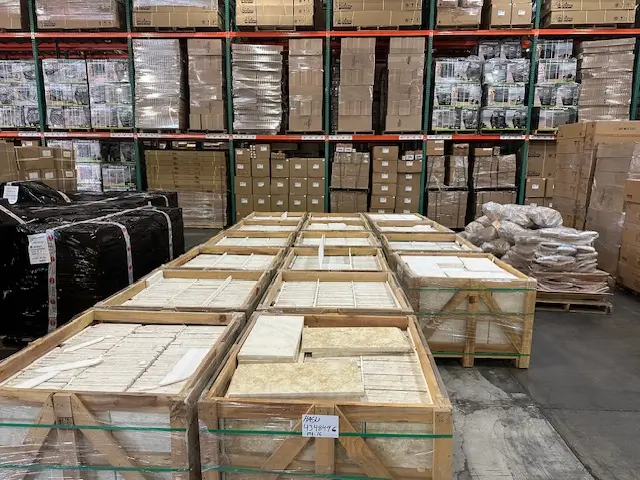
The warehouse inventory levels for replacement materials affect your long-term maintenance capabilities. You need to document the specific material source, size grade, and color lot for your installation. Natural stone varies between quarry runs, and materials sourced 10 years after initial installation may not match adequately. Your specification should require supplier commitment to maintain consistent material availability or require you to warehouse supplemental material at project initiation.
Cost Analysis and Material Selection Economics
Your budget allocation for brown landscape stone involves more than initial material cost. When you evaluate total installed cost, you’re accounting for material price, delivery logistics, base preparation, installation labor, and long-term maintenance requirements. Madison Gold granite for landscaping AZ typically costs 15-25% more per ton than sedimentary alternatives, but the total lifecycle cost often favors granite when you factor durability and maintenance intervals.
Delivery logistics significantly impact project economics in Arizona’s dispersed metropolitan areas. You should verify warehouse locations relative to your project site—delivery charges escalate rapidly beyond 50-mile radius from supply points. Truck access to your site affects delivery efficiency; locations requiring smaller vehicles for final delivery incur 20-30% premium charges due to multiple handling requirements.
Volume pricing creates opportunities for cost reduction when you consolidate purchases. Material suppliers typically offer 8-12% discounts at 20-ton minimum orders, with additional breaks at 40-ton and full truck loads. Your project phasing should consider whether consolidating stone purchases for multiple phases reduces overall material cost despite extended storage requirements.
Citadel Stone – Premium bulk landscape stone in Arizona Specifications Across Arizona Regions
When you evaluate Citadel Stone’s bulk landscape stone in Arizona for your projects, you’re considering materials engineered specifically for Southwest performance requirements. At Citadel Stone, we maintain inventory of brown landscape materials tested against Arizona’s extreme UV exposure, thermal cycling, and alkaline soil conditions. This section provides hypothetical specification guidance for six representative Arizona cities, illustrating how you would approach material selection and installation planning across the state’s diverse climate zones.
Your specification decisions require you to balance thermal performance, aesthetic integration with regional geology, and long-term durability expectations. The following city-specific scenarios demonstrate how climate variables, elevation differences, and urban heat island effects influence your material selection when you design professional landscape installations.
Phoenix Urban Applications
In Phoenix, you’ll encounter extreme heat island conditions where summer surface temperatures on dark materials exceed 165°F. Your specification of Madison Gold granite for landscaping AZ addresses this through moderate solar reflectance that reduces peak surface temperatures to 135-145°F range. You should account for 7-8 month extended UV exposure season requiring materials with verified color stability. The metropolitan area’s warehouse distribution network allows you to minimize delivery lead times to 3-5 business days for most brown stone varieties. Your base preparation must address caliche layers common at 18-36 inch depths that require mechanical breaking before proper drainage establishment.
Tucson Desert Aesthetics
Your Tucson projects benefit from specifying materials that echo the surrounding Sonoran Desert’s natural earth tones. When you select Table Mesa Brown landscape rock AZ for commercial landscape beds, you’re creating visual continuity with native bajada formations. You need to account for Tucson’s marginally higher annual rainfall compared to Phoenix—the additional 3-4 inches annually requires you to verify drainage capacity in brown stone installations prevents water logging. Elevation variations across the metropolitan area create 8-12°F temperature differentials between valley floor and foothill locations, affecting your thermal expansion joint spacing requirements.
Scottsdale Luxury Projects
Scottsdale’s high-end residential and resort projects require you to specify premium brown landscape materials with superior color consistency and minimal size variation. You should evaluate Madison Gold granite for landscaping AZ for applications where material quality directly impacts property values. Your installation approach must account for strict homeowner association standards that often require professional installation certification and detailed maintenance plans. The city’s northern sections experience 5-10°F cooler temperatures than southern areas, creating microclimates where you can specify materials with slightly different thermal performance characteristics. Truck access in gated communities requires you to coordinate delivery scheduling with security protocols and weight-restricted private streets.
Flagstaff Mountain Climate
Your Flagstaff specifications require you to prioritize freeze-thaw durability over heat resistance. At 7,000 feet elevation, you’ll encounter 60-80 annual freeze-thaw cycles that demand granite materials with porosity below 2.5%. You should verify that brown landscape stone selections meet ASTM C1526 freeze-thaw testing requirements. Snow load considerations affect your landscape bed design—you need adequate drainage to prevent ice dam formation that displaces stone materials during spring melt. Material availability requires longer lead times due to distance from primary warehouse locations, and you should plan 7-10 business days for delivery coordination.
Sedona Red Rock Context
In Sedona, you face unique aesthetic requirements where brown landscape materials must complement rather than compete with the iconic red rock formations. Your material selection should emphasize golden-brown granites that bridge between indigenous red sandstone and landscape plantings. You need to account for strict design review standards in many Sedona developments that require material samples and color approval before installation. Elevation at 4,500 feet creates moderate freeze-thaw exposure requiring you to specify materials with verified durability. Truck access on narrow canyon roads limits delivery vehicle size, potentially requiring you to coordinate multiple smaller deliveries rather than full truck loads.
Mesa Commercial Zones
Your Mesa commercial projects encounter similar thermal conditions to Phoenix but often involve larger scale installations requiring bulk material procurement. When you specify decorative colored gravel varieties AZ for office park landscapes or retail center beds, you need materials that maintain appearance with minimal maintenance intervention. The city’s extensive warehouse and distribution infrastructure provides you with competitive pricing on volume orders. You should coordinate delivery scheduling to avoid peak traffic periods on major arterials—early morning deliveries reduce truck delays by 30-40%. Your specifications must address Mesa’s soil conditions that include areas of high clay content requiring geotextile separation and enhanced drainage systems.
Color Blending and Visual Transition Techniques
Your design sophistication shows when you create visual transitions using multiple brown stone varieties rather than single-material installations. When you blend Madison Gold granite for landscaping AZ with darker brown river rock, you’re creating depth and texture that single-color applications cannot achieve. The blending technique affects both aesthetic outcome and material ordering requirements.
Gradient transitions require you to establish distinct zones with controlled mixing at boundaries. You should create a primary zone of dominant material, a secondary zone of accent material, and a 12-18 inch transition zone where you blend materials at 60/40 to 40/60 ratios. This technique prevents the harsh visual line that occurs when you abruptly change from one material to another. Your installation crew needs clear direction on mixing ratios and transition zone widths to achieve consistent results.
Material particle size affects blending success. You’ll achieve better visual integration when you blend materials of similar size grades—mixing 3/4-inch with 2-inch creates separation as the smaller material settles below larger pieces. Your specification should limit size variation to within one grade category when blending is planned. The additional labor for blending installation increases costs by 15-20% compared to single-material placement, which you need to account for in budget planning.
Professional Implementation Strategies
Your project success depends on translating design intent into clear specification language that contractors can execute consistently. When you document brown landscape stone requirements, you need to address material characteristics, installation standards, and quality verification methods. Vague specifications create variation in contractor interpretation that leads to outcomes that don’t match your design vision.
Material specifications should include supplier source, size grade with tolerance ranges, color description with acceptable variation limits, and required testing certifications. You should specify that materials match approved samples retained at the job site throughout installation. Your quality control provisions need to address rejection criteria for off-specification materials and replacement procedures that don’t delay project schedules.
Installation specifications require you to detail base preparation methods, compaction standards with verification requirements, fabric installation procedures, and stone placement depth. You should specify cleanup requirements and final surface conditions. For projects requiring Wholesale landscape rock delivery services available throughout Arizona, your specifications need to coordinate material staging areas and delivery timing with construction sequencing. Traditional aesthetics incorporate Citadel Stone’s classic brown landscape stone in Arizona sedimentary options.