
When you source flagstone for Arizona projects, you face a critical decision that impacts everything from material performance to long-term durability: verifying whether you’re specifying authentic Arizona stone or imported alternatives marketed as local material. The distinction matters because Arizona flagstone origin verification authentic practices separate professional-grade installations from projects that experience premature failure, aesthetic inconsistencies, and client dissatisfaction within 5-8 years.
You need to understand that the flagstone market includes significant volumes of imported material from India, China, and South America—stone that arrives with vague labeling and documentation that obscures true origin. Your specification process requires you to implement verification protocols that go beyond supplier claims and marketing language. When you work with Flagstone Suppliers in Arizona authentic source verification, you’re protecting your professional reputation and ensuring the material you specify matches the performance characteristics your project demands.
The challenge extends beyond simple geography. Arizona flagstone exhibits specific geological properties shaped by regional formation processes, mineral composition, and weathering patterns that imported alternatives cannot replicate. You’ll encounter density variations, porosity differences, and thermal performance characteristics that directly affect installation success and long-term serviceability in Arizona’s extreme climate conditions.
Geological Authentication Markers
Arizona flagstone origin verification authentic methodology starts with understanding the geological fingerprints that distinguish regional stone from imported materials. When you examine authentic Arizona flagstone, you’re looking at sedimentary formations deposited 270-300 million years ago during the Permian period, creating distinctive layering patterns and mineral compositions that imported stone cannot duplicate.
Your authentication process should focus on several geological indicators. Arizona flagstone typically exhibits iron oxide concentrations that produce characteristic red, pink, and tan colorations—the result of oxidation processes specific to regional groundwater chemistry and depositional environments. You’ll find these color variations occur in predictable layering patterns, unlike the more uniform or artificially enhanced appearances common in imported materials.
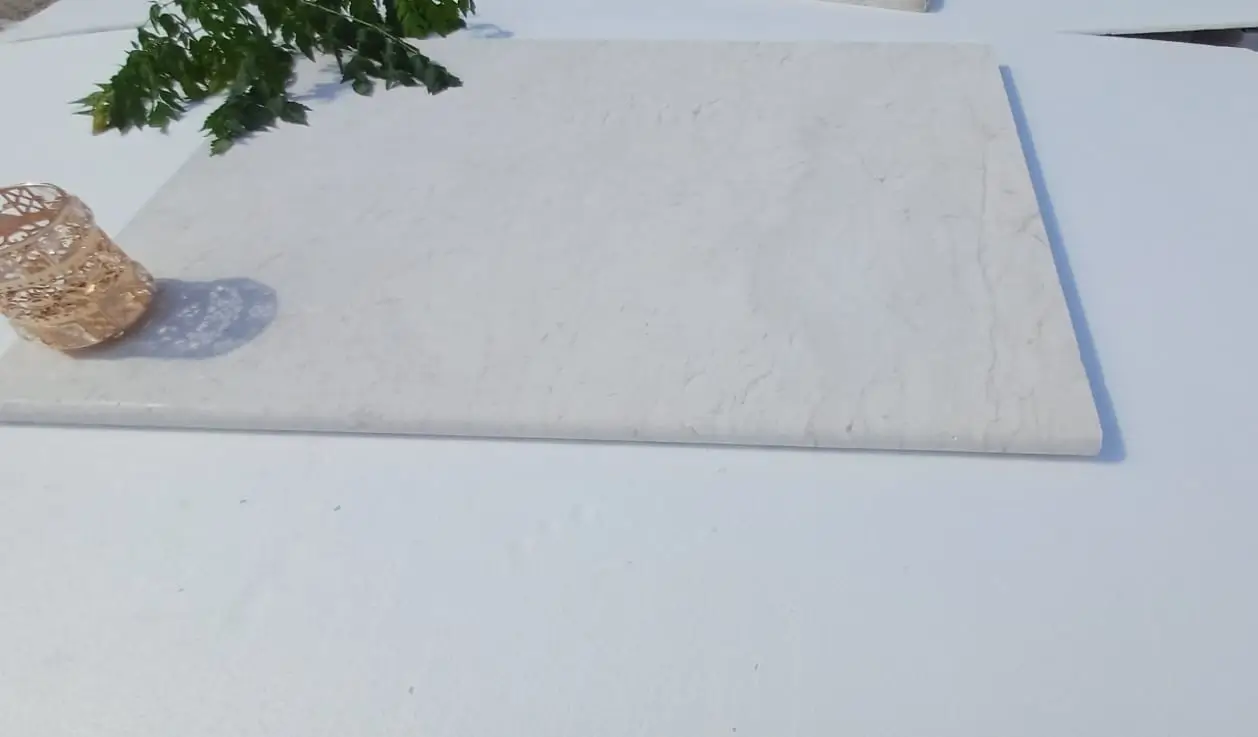
The density and porosity characteristics provide quantifiable verification markers. Authentic Arizona flagstone demonstrates compressive strengths ranging from 12,000-16,000 PSI with porosity levels between 2-5%, reflecting the specific pressure and temperature conditions of regional formation. When you test imported alternatives, you’ll frequently encounter higher porosity (6-10%) and lower compressive strength (8,000-11,000 PSI)—differences that become critical in freeze-thaw performance and long-term structural integrity.
Cleavage plane examination reveals additional authentication evidence. Arizona flagstone splits along natural sedimentary bedding planes that show consistent layer thickness and minimal cross-bed disturbance. You should examine cleaved surfaces for uniform grain structure and absence of artificial scoring or mechanical splitting evidence that indicates quarried slab material being passed as natural flagstone.
Documentation Verification Protocols
When you implement Arizona flagstone origin verification authentic procedures, documentation analysis forms your first line of defense against misrepresented material. Professional specification requires you to demand quarry documentation that includes specific location coordinates, geological formation identification, and extraction dates—details that Flagstone Suppliers Arizona local vs import sources should provide without hesitation.
Your verification checklist should include:
- Quarry operator permits with Arizona state mining regulatory identification numbers
- Geological survey reports identifying specific formation names and stratigraphic positions
- Chain of custody documentation tracking material from extraction to yard delivery
- Third-party testing certificates from ASTM-accredited laboratories with Arizona addresses
- Transport manifests showing intrastate hauling rather than international shipping or cross-country trucking
The absence of any documentation element should raise immediate concerns. When suppliers hesitate or provide generic certificates without specific quarry identification, you’re likely examining imported material being represented as local stone. Professional practice demands you reject materials lacking complete provenance documentation, regardless of pricing advantages or delivery promises.
You need to verify testing certificate authenticity by cross-referencing laboratory accreditation through ASTM directories and confirming the testing facility maintains Arizona operations. Imported materials frequently arrive with certificates from overseas laboratories using modified testing standards that don’t align with ASTM C170 compression testing or ASTM C97 absorption protocols your specifications reference.
Supplier Verification Strategies
Your relationship with local flagstone suppliers in Arizona verification starts with understanding how authentic regional suppliers operate versus importers posing as local sources. When you visit supplier yards, you’re looking for operational indicators that confirm direct quarry relationships rather than wholesale import operations.
Legitimate regional suppliers maintain direct quarry access and can provide site visit opportunities where you observe extraction operations, processing methods, and material handling from formation to finished product. You should request quarry visits during your specification process—suppliers with genuine local sources accommodate these requests routinely, while importers create obstacles and excuses that prevent direct quarry verification.
The warehouse operations reveal telling details. When you examine inventory at authentic suppliers, you’ll notice natural variation in color and thickness within each material lot—the expected result of quarrying natural formations with inherent geological variability. Imported materials often display suspiciously uniform appearance across large inventory volumes, indicating factory processing and artificial standardization inconsistent with natural stone extraction.
You need to evaluate supplier technical knowledge during specification discussions. Representatives from Flagstone Suppliers in Arizona with authentic regional sources demonstrate detailed understanding of local geology, formation characteristics, and climate-specific performance factors. They discuss mineral composition, historical extraction patterns, and regional weathering behavior with specificity that only comes from direct quarry involvement. When suppliers provide generic responses or refer constantly to product catalogs without geological context, you’re likely dealing with import operations.
Ask about seasonal availability and lead times. Arizona quarries experience weather-related extraction limitations during winter months at higher elevations and monsoon-season complications that affect production schedules. Suppliers claiming unlimited year-round availability without weather considerations likely source from multiple international origins to maintain consistent inventory—a practice that undermines origin authenticity.
Physical Testing Authentication
Arizona flagstone origin verification authentic procedures require you to implement physical testing protocols that quantify material properties and compare results against known regional benchmarks. Your specification should mandate third-party testing through ASTM-accredited Arizona laboratories, eliminating supplier-provided test results that may reflect overseas testing standards or selective sampling.
Compression testing per ASTM C170 provides baseline authentication data. You should specify minimum compressive strength of 12,000 PSI for authentic Arizona flagstone, with test results showing values typically ranging to 16,000 PSI. When test certificates show compression values below 11,000 PSI, you’re examining imported materials from softer formations that won’t deliver comparable performance in structural applications or high-traffic environments.
Absorption testing following ASTM C97 reveals porosity characteristics that distinguish regional stone from imports. Your specifications should require absorption rates below 5% by weight for exterior Arizona applications. Authentic Arizona flagstone typically demonstrates 2-4% absorption, while imported alternatives frequently exceed 6-8%—a difference that becomes critical in freeze-thaw durability and efflorescence resistance.
Petrographic analysis through thin-section microscopy provides definitive authentication for high-value projects. You can specify petrographic examination per ASTM C295, which identifies mineral composition, grain structure, and formation characteristics at microscopic scale. This level of analysis definitively separates Arizona sedimentary flagstone from imported metamorphic or artificially processed alternatives. For insights into material handling processes, review our flagstone yard operations documentation that details quality verification procedures.
Visual Authentication Indicators
When you develop Arizona flagstone origin verification authentic skills, visual assessment becomes a rapid screening tool that identifies suspicious materials before investing in laboratory testing. Professional specifiers learn to recognize the subtle visual markers that distinguish regional stone from imported alternatives during yard inspections and sample evaluations.
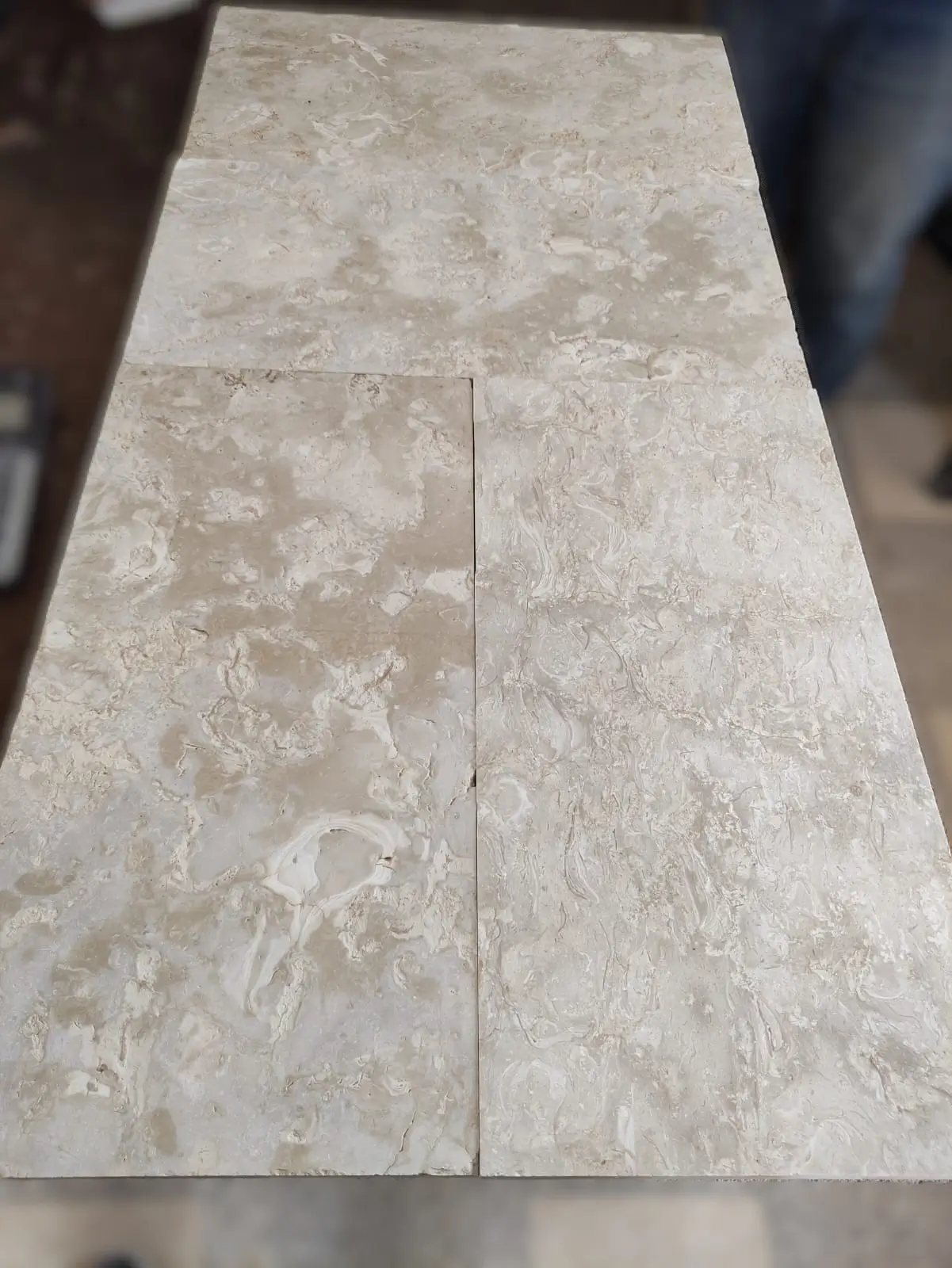
Color consistency patterns provide immediate authentication clues. Authentic Arizona flagstone exhibits natural color variation within predictable ranges—you’ll see rust reds transitioning to tan and cream tones within individual pieces, reflecting iron oxide concentrations and mineral variations through sedimentary layers. Imported materials often display either excessive uniformity (indicating artificial processing) or random color variations inconsistent with natural sedimentary deposition patterns.
Surface texture examination reveals processing differences. Arizona flagstone split along natural cleavage planes shows slightly irregular surfaces with mineral grain visibility and occasional fossil impressions characteristic of regional Permian-age formations. When you examine surfaces that appear too uniform, show saw marks, or display grid patterns, you’re looking at mechanically processed slabs rather than naturally cleaved flagstone—a common characteristic of imported materials marketed as authentic stone.
Edge profile assessment helps identify origin. Natural flagstone suppliers in Arizona origin materials display edges that follow irregular cleavage patterns with variable thickness through individual pieces. Imported alternatives frequently show suspiciously straight edges, uniform thickness, or evidence of diamond sawing that indicates factory processing rather than natural splitting.
You should examine the underside of flagstone samples during evaluation. Authentic Arizona materials show natural cleaved bottom surfaces matching top surface characteristics, while imported alternatives sometimes reveal saw marks or artificial texturing on bottom surfaces—evidence of thickness calibration through mechanical processing.
Pricing Authentication Correlation
Your Arizona flagstone origin verification authentic process must account for pricing realities that reflect true material costs versus artificially low pricing that signals imported materials. When you encounter flagstone pricing significantly below regional market rates, you’re almost certainly examining imported stone being marketed with misleading origin claims.
Authentic Arizona flagstone pricing reflects several cost factors that imported materials circumvent through lower labor costs, reduced environmental compliance, and simplified extraction methods. You should expect regional flagstone to command pricing 25-40% above imported alternatives when comparing equivalent square footage coverage. This premium reflects Arizona labor rates, state mining regulatory compliance, environmental reclamation costs, and domestic transportation expenses that international suppliers avoid.
The pricing should correlate with material quality metrics. When suppliers offer premium-grade specifications at commodity pricing, your verification protocols should escalate to include comprehensive testing and documentation review. Market economics don’t support selling high-quality regional material at import-equivalent pricing—suppliers making such offers either misrepresent material quality or substitute imported stone while claiming local origin.
You need to evaluate total project costs rather than square-foot pricing alone. While imported flagstone may offer lower initial material costs, the long-term expense of premature replacement, increased maintenance requirements, and potential performance failures often exceed the cost premium for authentic Arizona stone. Your value analysis should project 20-year lifecycle costs, including anticipated maintenance intervals and expected service life based on material testing data.
Climate Performance Authentication
Arizona flagstone origin verification authentic methodology extends to climate performance evaluation because regional stone evolved specifically for Arizona environmental conditions. When you specify authentic Arizona flagstone, you’re selecting material pre-adapted to extreme temperature cycling, intense UV exposure, and low-humidity environments that imported alternatives cannot match.
Thermal cycling tolerance represents a critical authentication metric. Arizona flagstone withstands daily temperature swings exceeding 60°F without developing stress fractures or surface spalling—performance shaped by millions of years of exposure to similar conditions during formation and natural weathering. You’ll find imported materials from tropical or temperate climates lack this thermal resilience, showing stress-related deterioration within 3-5 years of Arizona installation.
UV stability provides another performance-based authentication factor. The iron oxide minerals that create Arizona flagstone coloration demonstrate exceptional UV resistance, maintaining color stability for decades under Arizona’s intense solar exposure averaging 3,800+ annual sunshine hours. Imported materials often contain different mineral compositions that fade, discolor, or develop surface chalking when exposed to comparable UV levels—visible deterioration that appears within 24-36 months of installation.
Freeze-thaw durability separates authentic regional stone from imports in northern Arizona applications. Flagstone Suppliers in Arizona source materials from formations that experienced prehistoric freeze-thaw cycling, creating internal grain structures that resist ice expansion damage. You should specify ASTM C666 freeze-thaw testing for Flagstaff, Sedona, and higher-elevation projects, expecting authentic Arizona stone to withstand 300+ cycles without degradation while imported alternatives fail at 100-150 cycles.
Quarry Location Verification
When you implement comprehensive Arizona flagstone origin verification authentic procedures, direct quarry location verification eliminates ambiguity about material sourcing. Professional specification should include site visit provisions that allow you to observe extraction operations and confirm the geological characteristics you’re specifying match actual quarry conditions.
Arizona flagstone quarries concentrate in specific geological regions where Permian-age Supai Group and Coconino Sandstone formations outcrop at accessible elevations. You’ll find legitimate operations in Yavapai County, Coconino County, and portions of Gila County where these formations reach the surface. When suppliers claim Arizona origin but cannot identify specific quarry locations within these geological zones, you’re dealing with misrepresented imported materials.
Satellite imagery verification provides remote authentication capabilities. You can use publicly available geological survey maps cross-referenced with satellite views to confirm quarry locations align with documented sedimentary formations. This desktop verification quickly eliminates suppliers making false origin claims without requiring initial site visits—you’ll identify operations located in geological zones incompatible with flagstone formation before investing travel time.
Your quarry visit should document extraction methods, processing equipment, and material handling procedures. Arizona flagstone operations typically utilize excavators with hydraulic splitters or wedge-and-feather hand-splitting techniques that follow natural cleavage planes. When you observe diamond saws, gang saws, or tile-cutting equipment at supposed flagstone quarries, you’re witnessing slab production operations that contradict natural flagstone processing—evidence of imported tile material being marketed as authentic flagstone.
Certification Program Limitations
You should understand that Arizona flagstone origin verification authentic practices cannot rely solely on industry certification programs or supplier memberships, which often lack rigorous authentication requirements. While professional associations provide valuable networking and education, membership alone doesn’t verify material origin or guarantee authentic regional sourcing.
No comprehensive third-party certification program currently exists that specifically authenticates Arizona flagstone origin through independent verification. You’ll encounter various quality certifications, environmental compliance programs, and industry memberships that suppliers reference during marketing, but these programs typically don’t address geographic origin authentication or implement the quarry verification protocols your specification requires.
This certification gap means you must implement your own verification procedures rather than delegating authentication responsibility to industry programs. Your specification should explicitly detail the documentation, testing, and verification requirements that constitute acceptable origin proof—don’t assume generic quality certifications address origin authentication concerns.
Some suppliers participate in state-level Arizona mining associations, which provide better origin verification than national organizations. You can cross-reference supplier membership in Arizona Rock Products Association or similar state groups, then verify operational locations through state mining regulatory databases. This approach confirms suppliers maintain Arizona operations, though it doesn’t definitively prove all inventory originates from state quarries without additional documentation review.
Import Substitution Patterns
Your Arizona flagstone origin verification authentic skills must account for common import substitution patterns where suppliers blend imported materials into regional inventory or completely substitute imports while maintaining local origin claims. Understanding these deceptive practices helps you identify red flags during supplier evaluation and material inspection.
Blending operations represent the most common substitution pattern. Suppliers purchase imported flagstone in container loads, then intermix these materials with smaller quantities of authentic Arizona stone to create blended inventory marketed as local material. You’ll detect blending through excessive color variation beyond natural geological ranges, thickness inconsistencies that span 1/4″ to 2″ within single pallets, and mineral composition differences visible during sample examination.
Complete substitution occurs when suppliers abandon regional sourcing entirely but maintain marketing language suggesting local origin. These operations import full containers from India or China, then transfer materials to local yards where proximity to Arizona projects creates false authenticity assumptions. You identify complete substitution through documentation analysis—when suppliers cannot provide Arizona quarry permits, local geological reports, or specific formation identification, you’re examining 100% imported inventory.
Seasonal substitution patterns emerge when suppliers maintain authentic Arizona inventory during peak construction seasons but substitute imports during slower periods. You combat this practice by requiring batch-specific documentation that ties your project material to specific quarry extraction dates and locations. Don’t accept generic certifications that span multiple months or lack unique batch identification linking your delivered material to verified Arizona sources.
Contract Specification Language
When you formalize Arizona flagstone origin verification authentic requirements, contract specification language must explicitly detail authentication procedures, documentation requirements, and testing protocols that suppliers must satisfy. Generic origin statements like “Arizona flagstone” or “locally sourced stone” lack the specificity needed to enforce authentic material delivery.
Your specification should include mandatory language addressing:
- Specific geological formation identification (Supai Group, Coconino Sandstone, or equivalent documented Arizona sedimentary formations)
- Quarry location coordinates with county identification and operational permit numbers
- Required ASTM testing by Arizona-based accredited laboratories with minimum performance thresholds
- Chain of custody documentation tracking material from quarry to project delivery
- Substitution prohibitions preventing material changes without formal amendment approval
- Sample retention requirements allowing post-delivery verification testing
- Cure periods and replacement obligations if delivered material fails authentication testing
You need to establish clear remedies for authentication failures. When delivered material doesn’t meet specified origin requirements, your contract should mandate removal and replacement at supplier expense, including associated labor costs for reinstallation. Without explicit remedy language, you’ll face disputes over responsibility for corrective work when imported substitutions are discovered post-delivery.
Include warranty provisions that specifically address origin authentication. Standard material warranties often focus on dimensional tolerances and surface quality without addressing geographic origin. Your specification should require written warranties confirming Arizona origin, backed by supplier indemnification for costs arising from origin misrepresentation discovered during project execution or post-completion.
Best Flagstone Suppliers in Arizona — Citadel Stone Regional Specification Guidance
When you evaluate Citadel Stone as Flagstone Suppliers in Arizona for your projects, you’re considering premium natural stone materials engineered through geological processes specifically suited to Arizona’s demanding environmental conditions. At Citadel Stone, we provide technical guidance for hypothetical applications across Arizona’s climatically diverse regions, helping you understand how authentic Arizona flagstone would perform in representative installation scenarios. This analysis outlines specification approaches you would implement for six characteristic Arizona cities.
Phoenix Extreme Heat
In Phoenix applications, you would need to address thermal performance as the primary specification driver. Summer surface temperatures regularly exceed 160°F on dark materials, requiring you to specify lighter-colored Arizona flagstone that reflects 40-50% of solar radiation. Your installation details would include expansion joints every 12 feet in both directions to accommodate thermal movement exceeding 3/8″ across typical patio dimensions. You should verify that your selected material demonstrates compression strength above 14,000 PSI to withstand thermal stress cycling without surface spalling.
Tucson Desert Monsoons
Tucson installations would require you to focus on drainage performance during intense monsoon events delivering 1-2″ rainfall in 30-minute periods. Your base preparation specifications would mandate 6″ minimum crushed aggregate depth with 2% minimum slope away from structures. You need to select Arizona flagstone with porosity below 4% to prevent water absorption that leads to efflorescence in Tucson’s alkaline soil conditions. Your joint spacing would accommodate rapid water shedding while maintaining stability in decomposed granite base materials common to the region.
Scottsdale Premium Aesthetics
When you specify for Scottsdale’s high-end residential market, aesthetic consistency becomes paramount alongside performance requirements. You would select premium-grade Arizona flagstone with tight color range specifications and thickness tolerances within ±1/4″. Your installation specifications would detail precise joint width requirements of 1/4″ to 3/8″ with polymeric sand stabilization for weed prevention and long-term joint integrity. Surface finish specifications would address slip resistance achieving minimum 0.50 DCOF for pool deck applications while maintaining the refined appearance luxury projects demand.
Flagstaff Freeze-Thaw
Flagstaff projects would demand your highest attention to freeze-thaw durability given 120+ annual freeze-thaw cycles at 7,000-foot elevation. You should specify Arizona flagstone demonstrating ASTM C666 performance through 300+ cycles without degradation, with absorption rates below 3% to minimize ice expansion damage. Your base specifications would require 8″ crushed rock depth extending below frost line with geotextile separation preventing fine soil migration. Joint details would utilize flexible polymeric products that accommodate freeze-induced movement without cracking or displacement.
Sedona Red Rock
Sedona applications would focus your attention on aesthetic integration with the iconic red rock landscape while addressing moderate freeze-thaw exposure. You would specify Arizona flagstone in warm color ranges—rust reds, terra cottas, and tan blends—that complement rather than compete with the natural environment. Your specifications would balance freeze-thaw performance requirements similar to Flagstaff with the enhanced aesthetic expectations of resort and high-end residential development. UV stability becomes critical given Sedona’s tourism-driven economy where appearance degradation impacts property values more severely than utilitarian applications.
Yuma Extreme Conditions
When you design for Yuma’s extreme desert conditions with temperatures exceeding Phoenix and minimal precipitation, thermal performance dominates every specification decision. You would select the lightest available Arizona flagstone colorations to minimize heat absorption in the nation’s sunniest city averaging 4,000+ annual sunshine hours. Your installation specifications would maximize expansion joint frequency to accommodate thermal movement in 120°F+ ambient temperatures. Base preparation would address the sandy soils prevalent in Yuma’s Colorado River valley location, requiring stabilization methods that prevent settling and maintain surface plane integrity through decades of thermal cycling.
Professional Verification Implementation
Your implementation of Arizona flagstone origin verification authentic procedures requires systematic integration into project workflows from initial specification through final material acceptance. Professional practice demands you establish verification checkpoints at multiple project phases rather than relying on single-point authentication that suppliers might circumvent through selective compliance.
During specification development, you should establish baseline authentication requirements including geological formation identification, required testing protocols, and documentation standards. This early-phase specification creates contractual obligations before supplier selection, preventing value engineering attempts that substitute imported materials after project award.
Supplier qualification procedures would include documentation review verifying quarry locations, operational permits, and historical supply patterns. You can request reference projects with contact information allowing you to verify previous material delivery and confirm long-term performance of supplied flagstone. This reference verification occasionally reveals suppliers who provided authentic material for showcase projects but substituted imports for less-scrutinized work.
Pre-delivery verification should mandate sample submission from your specific material lot 10-14 days before scheduled delivery. You would arrange independent testing of these samples through your selected laboratory, comparing results against specification requirements before authorizing full shipment. This preview testing identifies authentication failures before material reaches the job site, avoiding costly delays associated with post-delivery rejection.
Post-delivery random sampling provides final verification assurance. You should retain random samples from delivered material for testing if questions arise during installation or if visual characteristics differ from approved samples. This retained sample protocol creates accountability that discourages suppliers from substituting materials between sample approval and project delivery.
Final Considerations
When you implement comprehensive Arizona flagstone origin verification authentic procedures, you’re protecting your professional reputation while ensuring clients receive the material performance and longevity their investment deserves. The verification process requires time and diligence that adds upfront project costs, but these expenses represent insurance against the far greater costs of premature material failure, aesthetic disappointment, and potential liability from specification failures.
Your verification responsibilities extend beyond simple compliance checking to encompass genuine understanding of geological authentication markers, performance testing interpretation, and supplier operational evaluation. You develop these skills through continued education, quarry site visits, and systematic documentation of material performance across completed projects. Professional specification expertise grows as you build reference databases connecting specific suppliers, quarry locations, and long-term installation outcomes.
The flagstone market continues evolving as import volumes increase and supplier consolidation blurs traditional distinctions between local and international sourcing. You must adapt verification procedures to address emerging authentication challenges including improved import quality that narrows performance gaps and sophisticated marketing that obscures origin through strategic terminology. Maintaining current knowledge of import patterns and supplier operational changes becomes an ongoing professional development requirement.
Your clients depend on your expertise to navigate authentication complexity they cannot evaluate independently. When you establish rigorous verification protocols and refuse to compromise origin authentication for pricing or schedule pressures, you build client relationships based on demonstrated integrity and technical competence. For comprehensive edge finishing specifications that complement your material selection, examine Professional edge profiles available from Arizona flagstone suppliers before finalizing project details. Citadel Stone maintains inventory depth as reliable Flagstone Suppliers in Arizona year-round.