
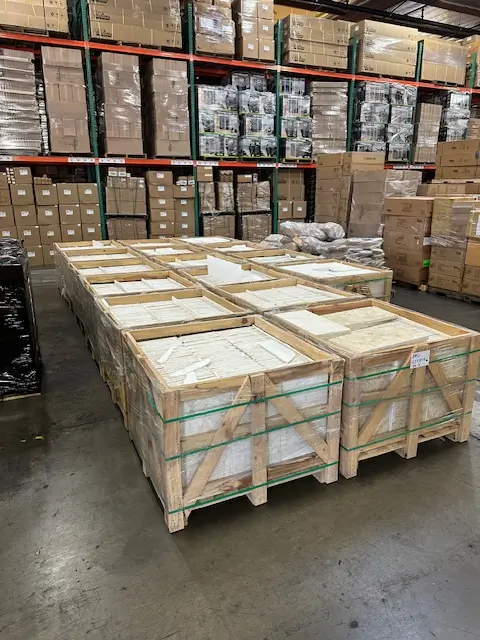
When you evaluate bulk granite Arizona commercial projects, you’re dealing with material volumes that demand different procurement strategies than residential installations. Your multi-unit development requires coordination between fabrication capacity, delivery logistics, and installation timelines that standard retail channels can’t support. You need to understand how factory-direct sourcing affects your project’s cost structure, lead times, and quality control protocols.
Commercial-scale granite procurement involves more than just price per square foot. You’ll encounter variables like slab yield optimization, warehouse staging requirements, and phased delivery schedules that impact your overall project economics. The difference between successful volume orders and problematic installations often comes down to specification decisions made during the planning phase, long before material arrives on site.
Volume Procurement Fundamentals for Arizona Markets
Your bulk granite Arizona commercial sourcing strategy needs to account for the state’s unique distribution infrastructure. Arizona’s geography creates specific challenges — material typically flows through major metro hubs before reaching final destinations. You should verify that your supplier maintains adequate inventory depth to support phased releases rather than single-drop deliveries that overwhelm job sites.
When you order volumes exceeding 10,000 square feet, lead times shift from weeks to months. Factory direct granite Arizona volume orders require production slot reservations, especially for specific finish types or dimensional requirements. You’ll find that custom edge profiles or non-standard thicknesses add 3-4 weeks to baseline timelines, something that catches many project managers off-guard when they’re locked into construction schedules.
- You need to coordinate warehouse staging capacity with your installation crew’s daily throughput rates
- Your project timeline should build in 15-20% buffer for material variance and job site adjustments
- You’ll want to establish quality acceptance criteria before fabrication begins, not after delivery
- Truck access constraints at your site may require smaller load sizes, increasing delivery frequency
The synthetic granite supplier across Arizona market offers alternatives worth evaluating for specific applications. These engineered materials provide consistency advantages when you’re matching colors across multiple buildings or phases. Your specification should weigh the trade-offs between natural stone variation and manufactured uniformity based on design intent and client expectations.
Material Specifications for Commercial Performance
Your bulk granite Arizona commercial specification documents need to address performance characteristics beyond aesthetic concerns. Commercial applications subject granite to environmental stresses residential installations rarely encounter — thermal cycling from building HVAC systems, concentrated foot traffic patterns, and maintenance protocols involving mechanical cleaning equipment.
Compressive strength requirements for commercial granite typically exceed 19,000 PSI, significantly higher than residential standards. You should verify test data from actual production lots rather than relying on generic species specifications. Granite quarries produce material with 15-25% performance variance depending on extraction location within the deposit. When you’re committing to volume orders, batch consistency becomes critical for long-term installation uniformity.
Porosity directly affects maintenance requirements and life-cycle costs. You need granite with absorption rates below 0.4% for high-traffic commercial applications. Higher porosity materials require more aggressive sealing protocols and shorter maintenance intervals. Testing shows that porosity above 0.5% correlates with visible wear patterns appearing within 5-7 years in heavy commercial use, compared to 12-15 years for tighter stone.
Finish Types and Durability Correlation
The relationship between surface finish and long-term performance isn’t intuitive. Polished granite shows scratches and etching more readily than honed finishes, but it actually resists staining better due to reduced surface porosity. When you specify for commercial lobbies or common areas, you’re balancing immediate visual impact against maintenance visibility over time.
Thermal finishes provide superior slip resistance but create micro-fractures that accelerate weathering in exterior applications. You should limit thermal-finished granite to interior horizontal surfaces or well-protected exterior locations. Arizona’s intense UV exposure and thermal cycling accelerate surface degradation on textured finishes by 30-40% compared to polished surfaces in the same exposure conditions.
Fabrication Capacity and Project Scaling Considerations
When you work with granite fabricators Arizona bulk operations, fabrication capacity becomes your constraint more often than material availability. Most fabrication facilities process 8,000-12,000 square feet weekly under normal operations. Your 50,000 square foot commercial project requires either extended timelines or engagement of multiple fabricators — each option carries distinct risk profiles.
Single-source fabrication ensures color and finish consistency but extends your schedule. Multi-source fabrication compresses timelines but introduces matching challenges, especially with natural materials. You’ll need to decide which risk your project can better absorb. For reference, color variation between granite slabs from the same quarry but different production runs can exceed Delta E values of 3-4, noticeable to building occupants under consistent lighting.
Edge profile complexity directly impacts fabrication throughput. Standard eased edges allow 40-50% faster production than custom profiles requiring multiple tool passes. When you multiply this across thousands of linear feet, specification decisions about edge details can shift project duration by 2-3 weeks. Consider whether your design actually requires custom edges throughout or whether you can limit them to featured areas while using standard profiles elsewhere.
Quality Control in Volume Production
Your inspection protocols need to scale with order volume. Checking every piece becomes impractical on large commercial jobs, but statistical sampling alone misses systematic issues. You should implement a tiered inspection system — detailed review of first production runs, targeted sampling during main production, and comprehensive final checks before installation begins.
Dimensional tolerance stacking becomes problematic in volume orders. Individual pieces within spec can still create installation problems when tolerances align unfavorably. You need to specify tighter individual tolerances for commercial work than residential standards allow. Professional commercial specs typically call for ±1/32″ on critical dimensions rather than the ±1/16″ common in residential work.
Logistics Infrastructure for Volume Material Flow
Your bulk granite Arizona commercial project requires logistics planning that residential contractors rarely encounter. Material flow from warehouse to job site involves coordination between fabrication completion schedules, delivery vehicle availability, job site staging capacity, and installation crew readiness. Breakdown in any single element cascades through the entire sequence.
Truck delivery scheduling becomes complex when you’re receiving 15-20 loads over multiple weeks. You need confirmed access windows, adequate turning radius for full-size trucks, and staging areas that don’t conflict with other trades. Arizona job sites often have restricted delivery hours due to heat — most require material deliveries before 10 AM during summer months to protect workers and prevent thermal shock to stone.
- Your site logistics plan should identify staging locations for 3-5 days of installation inventory
- You need to coordinate warehouse release schedules with your installation crew’s actual placement rates
- You’ll want to establish protocols for damaged material identification and replacement ordering
- Truck access routes require verification before delivery begins, including height and weight restrictions
Understanding factory direct granite Arizona volume sourcing helps you optimize the supply chain. For detailed insights into how direct relationships with fabrication facilities affect your project economics and quality control, see our granite fabrication services for comprehensive technical guidance. You’ll find that eliminating distribution layers reduces costs while improving communication channels for specification questions and schedule adjustments.
Cost Structures and Volume Pricing Realities
Your bulk granite Arizona commercial procurement analysis should separate material costs from fabrication and logistics components. Many contractors mistakenly focus solely on per-square-foot material pricing while overlooking fabrication complexity factors that dominate total installed costs on commercial projects.
Volume pricing breaks typically begin around 5,000 square feet for most suppliers. You’ll see 8-12% reductions at this threshold, with additional breaks at 10,000 and 20,000 square feet. Beyond 30,000 square feet, pricing becomes project-specific based on fabrication scheduling, material availability, and competitive dynamics. Don’t assume linear scaling — the difference between 15,000 and 20,000 square feet may yield minimal additional discount if it doesn’t align with fabrication capacity increments.
Granite factory direct bulk sourcing eliminates 20-30% in distribution markups compared to retail channels, but you absorb coordination responsibilities that distributors typically handle. You’ll need technical staff capable of reviewing shop drawings, managing delivery logistics, and conducting quality inspections. For organizations without this internal capacity, the administrative burden can offset raw material savings.
Hidden Cost Factors in Volume Orders
Material waste factors differently in commercial volume work than residential projects. You might assume larger orders improve yield, but complex layouts with numerous penetrations and edge conditions can actually increase waste percentages. Your estimating should account for 8-12% waste on typical commercial projects, increasing to 15-18% for designs with significant pattern matching or directional requirements.
Warehouse storage costs accumulate when delivery timing misaligns with installation readiness. If your project experiences delays, you’re paying for material to sit in staging. Some suppliers charge storage fees after 30-45 days, typically $0.15-0.25 per square foot monthly. On a 20,000 square foot order, two months of unexpected storage adds $6,000-10,000 to project costs.
Arizona Climate Impact on Material Performance
When you specify bulk granite Arizona commercial installations, climate considerations extend beyond simple temperature ranges. Arizona’s combination of extreme heat, intense UV exposure, low humidity, and occasional dramatic temperature swings creates a demanding environment that reveals material weaknesses other climates might mask.
Thermal expansion coefficients for granite range from 4.7 to 8.9 × 10⁻⁶ per °F depending on mineral composition. In Phoenix, where surface temperatures can reach 180°F on summer afternoons, this translates to dimensional changes of 0.04-0.08 inches per 10 feet of material. You need expansion joint spacing every 12-15 feet for exterior installations, with joint width proportional to expected temperature range.
UV degradation affects certain granite types more than others. Stones with high feldspar content show color fading within 5-7 years under Arizona’s intense solar exposure. You should request accelerated weathering test data for any granite species you’re considering for exterior applications. Materials without documented UV stability testing carry unknown long-term appearance risks that become your client’s problem after installation.
- You should specify granite with proven thermal cycling resistance for exterior Arizona applications
- Your expansion joint design must account for 160-180°F surface temperature swings between night and day
- You need to verify that sealers maintain effectiveness under sustained UV exposure exceeding 6,000 hours annually
- Your installation specifications should address substrate thermal movement independent of stone movement
Installation Sequencing for Large-Scale Projects
Your bulk granite Arizona commercial installation strategy requires sequencing that maintains quality while maximizing crew efficiency. The tension between these objectives becomes pronounced on projects where installation extends across multiple months. Weather windows, building occupancy schedules, and coordination with other trades all constrain your installation approach.
Phased installations create matching challenges even with material from the same production run. Granite slabs cut and fabricated together show better visual consistency than material fabricated weeks apart, even from the same quarry. You should organize fabrication and installation to minimize time gaps between adjacent areas. Buildings designed with natural break lines — wing walls, level changes, material transitions — provide logical phase boundaries that disguise subtle material variation.
Installer productivity varies significantly based on layout complexity. Simple field installations achieve 150-200 square feet per installer daily. Complex patterns with border details, medallions, or intricate cuts drop to 60-80 square feet daily. Your schedule needs realistic productivity assumptions based on actual installation drawings, not simplified area calculations.
Substrate Preparation at Commercial Scale
Substrate preparation becomes critical at commercial scale because minor deficiencies multiply across large areas. Flatness tolerance for commercial granite installation requires substrate variation under 1/8 inch across 10 feet. Residential tolerances of 1/4 inch cause lippage problems that generate callbacks and punch list items on commercial projects.
Moisture testing should occur systematically, not sporadically. You need documented substrate moisture content below 4.5% before granite installation begins. Higher moisture levels cause bonding failures and efflorescence that appear 6-18 months post-installation, long after substantial completion. At commercial scale, remediation costs for moisture-related failures can exceed $50,000-100,000 when you factor in occupied building logistics and tenant disruption.
Specification Writing for Commercial Standards
Your bulk granite Arizona commercial specifications need precision that residential project documents rarely achieve. Ambiguous specifications create disputes, change orders, and quality disagreements that become expensive on large projects. You should reference specific industry standards while adding project-specific requirements that address unique conditions.
ASTM C615 provides baseline granite standards but allows significant latitude. Your specifications should narrow acceptable ranges for critical properties. Instead of simply referencing ASTM standards, specify exact compressive strength minimums, absorption maximums, and flexural strength requirements. Testing costs $800-1,200 per material type but prevents disagreements about acceptability after fabrication.
Color matching specifications deserve particular attention with natural materials. You’ll never achieve perfect uniformity, but you need defined acceptable variation. Professional specs typically reference color measurement standards using Delta E values, specifying maximum acceptable variation of 2.5-3.0 Delta E between adjacent pieces under standard illumination conditions. Without quantified standards, “substantial match” arguments become subjective disputes.
- You should specify exact ASTM test methods for each performance property you’re requiring
- Your documents need to identify who bears testing costs for verification and failure scenarios
- You must define acceptance criteria before fabrication begins, including sample approval processes
- Your specifications should address remediation responsibility for material that meets samples but not field expectations
Synthetic Versus Natural Material Trade-Offs
The synthetic granite supplier across Arizona market offers engineered quartz surfacing that solves specific problems natural granite presents. When you’re designing multi-unit developments requiring color consistency across hundreds of units, synthetic materials eliminate the variation inherent in natural stone. Your specification decision should align with project priorities — aesthetic individuality versus manufacturing consistency.
Synthetic granite provides superior stain resistance and requires less maintenance than natural stone. The non-porous surface resists absorption that leads to staining problems with natural granite. For commercial kitchen applications or high-soil environments, synthetics reduce life-cycle maintenance costs by 30-40% compared to natural stone requiring regular sealing and specialized cleaning protocols.
However, synthetic materials show limitations in exterior applications and high-heat environments. UV exposure causes color shifts in some synthetic products, and heat resistance doesn’t match natural granite’s performance. Surface temperatures above 180°F can cause bonding issues between quartz particles and polymer resins in synthetic materials. Arizona’s extreme climate makes this a real concern for exterior installations or areas near reflective glass facades that concentrate solar heat.
Cost Comparison in Volume Orders
Material costs for synthetic granite typically run 15-25% higher than mid-grade natural granite but 20-30% lower than premium exotic natural stones. Your volume order economics depend on which natural granite alternatives you’re comparing. Fabrication costs remain similar between natural and synthetic materials since cutting and edge forming require comparable equipment and time.
Long-term value calculations shift the equation. Synthetic materials’ reduced maintenance requirements translate to lower operating costs — approximately $0.08-0.12 per square foot annually versus $0.18-0.25 for natural granite requiring regular professional maintenance. Over 20-year building lifecycles, this maintenance differential can equal or exceed initial material cost differences on large commercial installations.
Citadel Stone’s Premium Landscape Granite in Arizona — How We Would Specify Across the State
When you evaluate Citadel Stone’s Landscape Granite in Arizona for commercial landscape applications, you’re considering materials specifically selected for extreme desert climate performance. At Citadel Stone, we provide technical guidance for hypothetical large-scale landscape installations across Arizona’s diverse climate zones. This section outlines how you would approach specification decisions for six representative cities, demonstrating how regional climate variations affect material selection and installation protocols.
Arizona’s geography creates dramatically different environmental conditions from low desert to high elevation areas. You need to adjust your specifications based on local temperature ranges, precipitation patterns, freeze-thaw exposure, and soil chemistry. The same granite species performs differently in Yuma’s hyperarid low desert compared to Flagstaff’s high-elevation environment with winter snow and freeze cycles.
Phoenix Commercial Specifications
In Phoenix, you would encounter extreme summer heat requiring granite selection emphasizing thermal stability and low absorption. Your specifications should address granite with thermal expansion coefficients below 7.0 × 10⁻⁶ per °F to minimize joint movement and potential cracking. Summer surface temperatures regularly exceed 170°F, creating thermal stress that reveals weaknesses in marginal materials. You’d want to verify that your selected granite has documented performance in similar high-heat environments without color fading or surface degradation. Warehouse staging becomes critical during Phoenix summers when material sitting in direct sun before installation can reach temperatures affecting handling and setting compound performance.
Tucson Desert Environment
Your Tucson specifications would address slightly cooler temperatures than Phoenix but higher monsoon moisture exposure. The combination of intense dry heat followed by dramatic monsoon humidity swings creates unique weathering conditions. You should specify granite with absorption rates below 0.35% to prevent moisture-related staining from monsoon rains following extended dry periods. Tucson’s higher elevation means greater day-night temperature differentials, requiring your expansion joint design to accommodate 140-160°F daily swings during transitional seasons.
Scottsdale High-End Applications
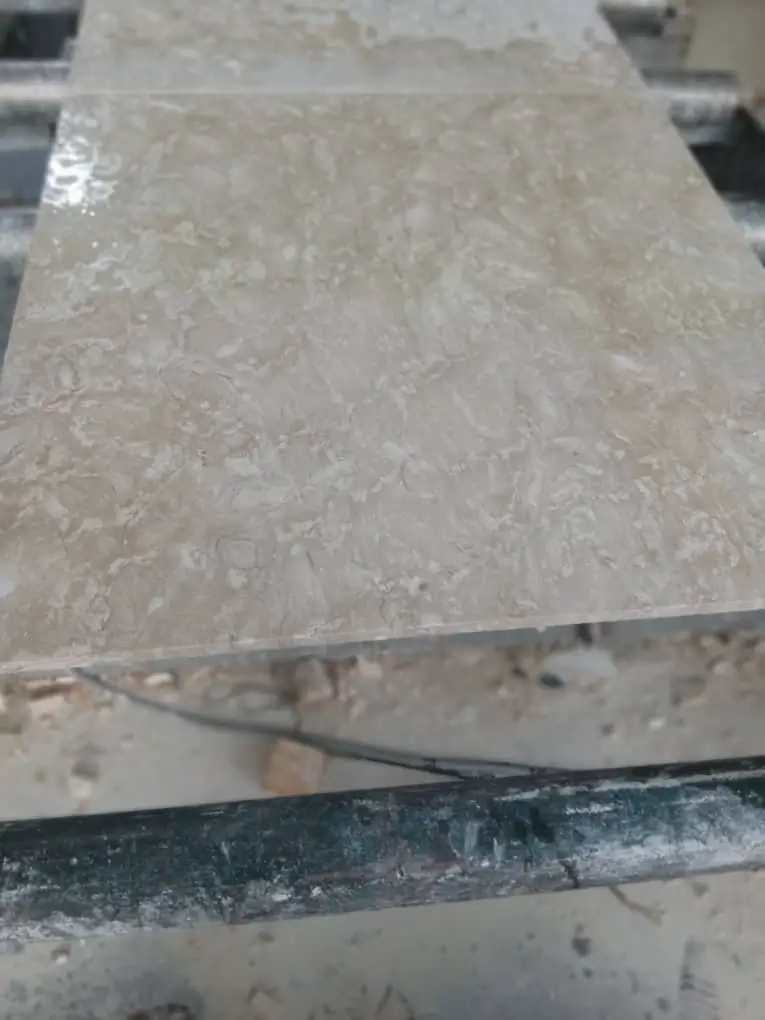
Scottsdale’s high-end commercial developments would drive your specifications toward premium aesthetic characteristics alongside performance requirements. You’d need granite with consistent color and tight grain structure meeting luxury market expectations while maintaining thermal performance for desert conditions. Your specification should address polished finish durability under sustained UV exposure and thermal cycling. Scottsdale projects typically require premium appearance standards with color variation limited to Delta E values under 2.0 between adjacent pieces, tighter than standard commercial tolerances.
Flagstaff Freeze-Thaw Considerations
Your Flagstaff specifications would shift focus to freeze-thaw durability rather than extreme heat resistance. At 7,000 feet elevation, winter conditions create 60-80 annual freeze-thaw cycles requiring granite with proven resistance to this weathering mechanism. You should specify material with absorption below 0.30% and documented ASTM C666 freeze-thaw testing showing minimal strength degradation after 300 cycles. Flagstaff’s winter snow accumulation means your installation details must address proper drainage to prevent standing water that accelerates freeze-thaw damage in porous materials.
Sedona Aesthetic Integration
Sedona’s unique red rock landscape context would influence your granite color selection toward earth tones that complement rather than contrast with the natural environment. You’d specify warm-toned granites with red, brown, or gold undertones that harmonize with Sedona’s iconic geology. Beyond aesthetics, Sedona’s mid-elevation location creates moderate thermal conditions but significant tourist traffic requiring durable surface finishes. Your specifications would balance natural appearance with practical wear resistance for heavy pedestrian use in commercial resort and retail environments.
Yuma Extreme Heat Performance
Your Yuma specifications would address the most extreme heat conditions in Arizona, where summer temperatures consistently exceed Phoenix levels. You’d need granite proven in hyperarid environments with minimal moisture exposure but intense sustained heat. Surface temperatures in Yuma can reach 185°F, requiring materials with exceptional thermal stability and low expansion characteristics. Your installation specifications should address accelerated setting compound curing under extreme heat and potential for thermal shock if cooler material is suddenly exposed to hot surfaces during installation.
Procurement Process Optimization for Commercial Projects
Your bulk granite Arizona commercial procurement timeline needs structured phases with defined decision points and approval gates. Many commercial projects encounter delays because procurement activities begin too late in the design process or lack clear responsibility assignments between design team, contractor, and owner representatives.
Material selection should occur during design development, not construction documents phase. You need adequate time for sampling, testing, and approvals before fabrication begins. Compressed schedules that defer material decisions until after GMP establishment create change order risks and schedule pressure that compromise quality. Professional practice establishes material selections 90-120 days before installation begins for projects requiring custom fabrication.
Vendor qualification deserves systematic attention on commercial volume orders. You should verify fabricator experience with similar project scales, financial stability to weather project payment timing, and technical capability to meet your specification requirements. Request references from projects of comparable scope and conduct site visits to fabrication facilities before award. The lowest bidder isn’t always the best value when their capabilities don’t match project complexity.
Contract Structure and Risk Allocation
Your contract documents should clearly allocate risks between parties. Natural material variation, delivery damage, installation defects, and performance failures all need defined responsibility. Ambiguous contracts create disputes that become expensive litigation when volume orders represent significant project value.
Payment structures should align with project milestones — material deposit at order, fabrication progress payment at completion, balance after installation acceptance. Avoid front-loading payments that create risk if vendors fail to perform. Retention provisions protect you against defect correction costs, typically 5-10% held for 30-60 days after substantial completion.
Quality Assurance Programs for Volume Installations
Your bulk granite Arizona commercial project requires quality assurance beyond typical residential oversight. The scale of commercial work means systematic problems affect large areas before detection, making prevention more critical than correction. You need inspection protocols at multiple stages — material receipt, fabrication verification, pre-installation substrate review, and post-installation acceptance.
Pre-installation meetings should occur with all trades involved in substrate preparation, material handling, and installation. You’ll establish communication protocols, quality standards, inspection procedures, and problem escalation processes. These meetings document that everyone understands requirements before work begins, reducing misunderstanding-driven quality issues.
Mock-up installations provide valuable verification on large projects. You should require a 100-200 square foot installed mock-up representing typical and complex conditions. This allows evaluation of color match, finish quality, joint appearance, and installation workmanship before committing to full production. Mock-up approval becomes your quality baseline — installed work should match approved mock-up standards.
- You need documented inspection at material receipt to identify shipping damage before installation begins
- Your substrate verification should include moisture testing, flatness measurement, and structural adequacy confirmation
- You should establish daily installation review procedures with documented acceptance or deficiency identification
- Your final acceptance process needs comprehensive punch list development and systematic correction verification
Maintenance Planning for Commercial Lifecycle Performance
Your commercial granite specification responsibilities extend beyond installation to maintenance program development. Building operators need clear guidance on cleaning protocols, sealing schedules, and damage repair procedures. Without proper maintenance documentation, even premium materials underperform and generate owner dissatisfaction.
Sealing schedules vary based on granite porosity, traffic levels, and exposure conditions. Low-porosity granite in interior protected locations may require resealing every 3-5 years. Higher-porosity materials or exterior applications need annual assessment and potential resealing every 1-2 years. You should provide specific sealer product recommendations compatible with installed granite rather than generic guidance that leads to inappropriate product selection.
Cleaning protocol specifications prevent damage from aggressive chemicals or abrasive methods. Many commercial janitorial services use cleaning products appropriate for resilient flooring but harmful to natural stone. Your maintenance documentation should explicitly prohibit acidic cleaners, specify pH-neutral products, and establish mechanical cleaning equipment parameters that won’t damage stone surfaces.
Implementation Planning and Professional Resources
Your successful bulk granite Arizona commercial project requires coordinated planning across design, procurement, fabrication, and installation phases. You’ve seen how volume orders create complexity that residential projects don’t encounter — from fabrication capacity constraints to logistics coordination requirements and quality assurance protocols. Professional execution demands expertise across multiple disciplines and recognition of how decisions in each phase affect downstream project success.
When you begin project planning, establish your material selection criteria early based on performance requirements, aesthetic objectives, and budget parameters. You should engage suppliers during design development to verify availability, review lead times, and coordinate sampling for design team review. This early involvement prevents specification of unavailable materials or unrealistic project schedules that create problems during construction.
Your procurement strategy should balance competitive pricing objectives against vendor qualification requirements. For additional technical guidance on direct sourcing approaches, review Direct granite fabrication eliminating middleman markups in Arizona before you finalize vendor selection and contract negotiations. Statement installations use Citadel Stone’s impressive large granite rocks for landscaping in Arizona.