
When you’re planning a countertop or flooring project in Arizona, the granite factory direct Arizona process eliminates traditional retail markups that can inflate your costs by 30-50%. You work directly with fabricators who source, cut, and install material without intermediary distributors adding layers of profit. This approach gives you access to slab selection at the warehouse level, where you can inspect full inventory and make material decisions based on actual stock rather than showroom samples that may not reflect available product.
The granite factory direct Arizona process requires you to understand how fabrication facilities operate differently from retail stone yards. You’re not simply choosing from pre-selected inventory — you’re engaging with the complete supply chain from quarry reception through final installation. Your project timeline, material specifications, and budget constraints interact directly with fabricator capacity, warehouse inventory cycles, and truck delivery logistics that affect your installation schedule.
Direct Fabricator Advantages
Working with factory direct granite Arizona selection means you bypass showroom overhead costs that typically add 25-35% to your material expenses. Traditional retail stone yards maintain expensive display facilities, sales staff, and marketing budgets that get passed to you as price premiums. When you source through Citadel Stone granite marble fabrication in Mesa, you’re paying for material quality and fabrication expertise rather than retail infrastructure.
You gain access to complete slab inventory when you work directly with fabricators. Retail displays show only 15-20 popular options, but warehouse facilities stock 200+ slab varieties across different quarries, color ranges, and quality grades. This matters when you’re specifying commercial projects that require material consistency across multiple slabs — you can physically inspect sequential bundles from the same quarry lot, ensuring color and veining patterns match your design intent.
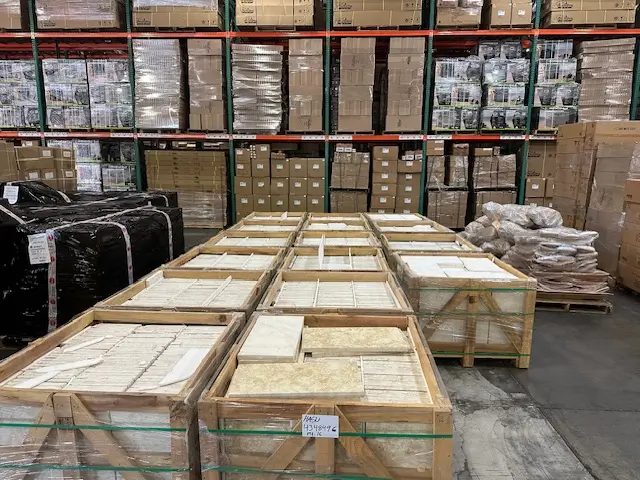
The granite factory direct Arizona process also gives you direct communication with the fabrication team who will cut your material. You discuss edge profiles, seam placement, and cutout specifications with the craftspeople performing the work, not sales intermediaries who may misinterpret technical requirements. This reduces specification errors that cause installation delays and costly rework.
Slab Selection Warehouse Process
Your slab selection begins at the fabricator’s warehouse facility where granite arrives in A-frame bundles of 6-8 slabs per bundle. You need to inspect slabs under both artificial lighting and natural daylight because color appearance shifts dramatically between lighting conditions. What looks like consistent cream tones under warehouse fluorescents may reveal salmon undertones in Arizona’s intense natural light.
When you evaluate slabs for your project, you’re looking for specific quality indicators that affect both aesthetics and performance:
- You should check for visible fissures versus actual cracks — fissures are natural mineral separations that don’t compromise structural integrity, while cracks represent material defects
- Your inspection needs to identify resin-filled areas where fabricators have stabilized natural voids — excessive resin indicates lower-grade material
- You must verify consistent thickness across the slab because variations beyond ±2mm complicate installation and create lippage issues at seams
- You need to assess veining direction and pattern placement relative to your layout drawings, particularly for book-matched or sequence-matched installations
Granite fabricators Arizona factory facilities typically organize inventory by material type, origin quarry, and arrival date. Newer bundles haven’t fully acclimated to Arizona’s low humidity environment, which matters if you’re specifying material that will be installed in climate-controlled interiors. Slabs need 2-3 weeks of warehouse conditioning to stabilize moisture content below 0.5% before fabrication begins.
Material Grade Classification
The granite fabricator direct Arizona complete process involves understanding how fabricators classify material grades, which directly affects your pricing and long-term performance. Commercial-grade granite exhibits uniform color, minimal veining variation, and consistent mineral distribution across the slab. This grade commands premium pricing because 60-70% of quarry output gets downgraded to builder or economy grades.
Builder-grade material shows acceptable structural quality but includes more pronounced color variation, concentrated veining patterns, or minor surface imperfections that require additional polishing. You can specify builder grade for projects where natural variation enhances design intent rather than detracts from it — contemporary spaces often benefit from the organic character of less-uniform slabs.
Economy-grade granite requires more intensive fabrication intervention. These slabs contain natural pitting that needs epoxy filling, color variations that may include off-tone areas, or structural characteristics that limit usable yield. Your cost per square foot may appear lower, but fabrication time increases by 15-20% as craftspeople work around imperfections, which can offset initial material savings.
Fabrication Capacity Scheduling
When you commit to the granite factory direct Arizona process, you need to understand fabricator capacity constraints that affect your project timeline. Most Arizona fabrication facilities operate 6-8 CNC cutting stations that process 12-15 slabs daily under optimal conditions. Your project enters the production queue based on template completion, material availability, and scheduled installation dates that must align with general contractor milestones.
You should request production slot reservations 3-4 weeks before you need installation, particularly during Arizona’s peak construction season from October through May. Fabricators prioritize jobs with confirmed templates and complete material selection — your project delays when you’re still deciding between three granite options while holding a production slot other clients need.
The manufactured granite across Arizona process includes fabrication steps that each add time to your schedule. After templating, fabricators need 2-3 days for digital layout optimization that maximizes usable yield from your selected slabs. CNC cutting requires 4-6 hours per average kitchen depending on complexity, followed by edge profiling that adds another 3-4 hours. Your timeline must accommodate these sequential processes rather than expecting overnight turnaround.
Edge Profile Specifications
Your edge profile selection affects both aesthetic outcomes and functional performance in ways that aren’t obvious from catalog images. Standard eased edges (1/8″ radius) provide clean lines that work across design styles, but they show chips more readily than slightly rounded profiles because the sharp bottom edge takes impact directly.
You’ll find that factory direct granite Arizona selection gives you access to edge profiles beyond basic retail options:
- You can specify custom laminated edges that build thickness from two bonded slabs, creating substantial 3″ or 4″ profiles without weight penalties of solid thick material
- Your project can incorporate mitered waterfall edges where vertical and horizontal surfaces meet at seamless 45-degree joints
- You have options for dupont edges with subtle S-curves that add traditional character without the fragility of complex ogee profiles
- You should consider half-bullnose edges for exterior applications where rounded profiles shed water more effectively than square details
Complex edge profiles increase fabrication time by 40-60% compared to standard eased edges. This matters when you’re balancing design preferences against project deadlines — that elaborate edge detail adds three days to your production schedule, which may conflict with cabinet installation timing your general contractor has scheduled.
Seam Placement Strategy
When you work through the granite factory direct Arizona process, you discuss seam placement directly with fabricators during layout review rather than discovering problematic seams at installation. Granite slabs typically measure 110-120″ length by 65-75″ width, which means most kitchens over 8 linear feet require at least one seam. Your seam locations need strategic planning that balances structural integrity, visual impact, and fabrication efficiency.
You should position seams at natural break points in your layout — sink cutouts, cooktop locations, or perpendicular intersections where seams become less visually obvious. The worst seam placements occur in the middle of uninterrupted countertop runs where lighting highlights the joint line. Experienced fabricators can achieve seams with less than 0.5mm gap when material quality and installation conditions cooperate, but you need realistic expectations that seams remain visible under certain lighting conditions.
Book-matched seams create mirror-image symmetry by opening sequential slabs like pages in a book, but this technique requires you to purchase both slabs from the pair even if you only need 1.5 slabs worth of material. Your cost increases because you’re buying for aesthetic continuity rather than minimum required square footage. Vein-matched seams attempt to continue natural patterns across the joint line, which works best with linear veining patterns and rarely achieves perfect alignment with random granite patterns.
Cutout Specifications
The granite fabricator direct Arizona complete process includes precision cutout fabrication for sinks, cooktops, and faucets that must meet exact manufacturer specifications. Undermount sink cutouts require radius corners that match your sink model — generic 1″ radius corners won’t work with sinks specifying 1.5″ radiuses, creating gaps that compromise the undermount seal and allow water infiltration.
You need to provide fabricators with actual fixtures or precise template drawings rather than rough measurements. That farmhouse sink you ordered measures 32.875″ width, not the 33″ you estimated, and the 1/8″ difference matters when fabricators cut openings with only 1/16″ tolerance for proper fit. Cooktop cutouts present similar precision requirements, plus ventilation clearances specified by appliance manufacturers that affect how close you can place the cutout to backsplash or adjacent countertop edges.
Faucet hole drilling requires you to specify exact locations, quantities, and diameters before fabrication begins. Standard configurations include single-hole for modern pulldown faucets, three-hole 8″ spread for traditional faucets with separate handles, or four-hole spreads that add soap dispensers. You can’t add faucet holes after installation without significant risk of cracking, so your plumbing fixtures need final confirmation before the fabricator begins cutting.
Surface Finish Options
When you select through factory direct granite Arizona selection, you’re not limited to standard polished finishes that dominate retail showrooms. Polished granite achieves mirror-like reflectivity that showcases color depth and veining patterns, but high-gloss surfaces show water spots, fingerprints, and minor scratches more readily than textured finishes. Your maintenance expectations should influence finish selection as much as aesthetic preferences.
Honed finishes provide matte surfaces with subtle sheen that hide daily wear patterns better than polished granite. The honing process removes the final polishing steps, leaving smooth stone without reflective gloss. You’ll find that honed granite requires more frequent sealing because the open surface structure absorbs liquids faster than polished stone’s densified surface. Plan for sealer application every 12-18 months with honed finishes versus 24-36 months for polished surfaces.
Leathered finishes create textured surfaces that combine the color depth of polished granite with the low-maintenance characteristics of honed finishes. Fabricators achieve this texture through diamond-tipped brushes that create subtle dimpling across the surface. You should be aware that leathered finishes trap debris in surface texture, requiring more aggressive cleaning than smooth finishes. This matters in food preparation areas where sanitation standards require easily cleanable surfaces.
Installation Requirements
The granite factory direct Arizona process culminates in professional installation that requires specific site conditions for successful outcomes. Your cabinets must be level within 1/8″ over 10 feet because granite doesn’t flex to accommodate underlying irregularities. Cabinet leveling needs completion and verification before you schedule installation — fabricators won’t proceed with installation on out-of-level cabinets because resulting stress concentrations cause cracking.
You need to ensure adequate truck access for material delivery the morning of installation. Full-sized fabrication trucks require 12-foot width clearance and 14-foot height clearance for covered transport vehicles. Your driveway grade, overhead trees, and utility lines all affect delivery logistics that installers evaluate during final measurement appointments. Narrow access routes may require hand-carrying slabs distances up to 100 feet, which adds labor time and breakage risk to your project.
Installation timing matters because granite adhesive requires 12-24 hours cure time before you can use installed surfaces. Your plumbing reconnection needs to wait until adhesive fully cures — premature fixture installation creates movement that compromises bonds and causes future failures. You should schedule installation when you can leave the kitchen completely unused overnight, which affects your temporary living arrangements during renovation projects.
Manufactured Granite in Arizona: Citadel Stone Specification Guidance
When you evaluate manufactured granite in Arizona through Citadel Stone’s capabilities, you’re considering how material specifications would adapt to Arizona’s extreme climate zones and diverse project applications. At Citadel Stone, we provide technical guidance for hypothetical scenarios across Arizona’s temperature ranges that span from Flagstaff’s high-elevation conditions to Yuma’s desert extremes. This section outlines how you would approach specification decisions for six representative cities where climate factors dictate material selection priorities.
Phoenix Heat Considerations
In Phoenix environments, you would need to account for sustained temperatures exceeding 115°F that affect outdoor granite installations differently than interior applications. Your material selection would prioritize lighter-colored granites that reflect solar radiation rather than absorbing heat that makes surfaces unusable during peak afternoon hours. The urban heat island effect amplifies thermal stress in metropolitan installations where surrounding concrete and asphalt compound ambient temperatures. You should specify material with thermal expansion coefficients that accommodate daily temperature swings of 40-50°F between night and afternoon readings. Citadel Stone’s manufactured granite in Arizona would typically include recommendations for joint spacing every 12-15 feet in outdoor applications to prevent thermal stress cracking.
Tucson Applications
Tucson projects would require you to consider seasonal monsoon moisture that creates unique weathering patterns on exterior granite surfaces. Your specifications would address how rapid temperature drops during monsoon storms create thermal shock conditions where surface temperatures plunge 30°F within minutes as rain contacts sun-heated stone. You would need to verify that selected granite exhibits low porosity below 0.5% to minimize moisture absorption that contributes to efflorescence formation during Arizona’s dry seasons. At Citadel Stone, we would recommend avoiding granites with high mica content that weaken under repeated wet-dry cycling common in Tucson’s July-September monsoon season.
Scottsdale Luxury Standards
When you specify for Scottsdale’s high-end residential market, your material selections would emphasize exotic granite varieties with book-matched seams and complex edge profiles that demonstrate craftsmanship quality. You would coordinate with luxury builders who expect commercial-grade material without the color variation typical of builder-grade slabs. Your edge profiles would likely include custom laminated details or waterfall installations that showcase material quality through dramatic visual presentations. You should anticipate client requests for full-height backsplashes and coordinated accent walls that require multiple slabs from the same quarry bundle to maintain consistent veining patterns across large surface areas.
Flagstaff Climate Factors
Flagstaff’s high-elevation environment would require you to specify granite that withstands freeze-thaw cycling that doesn’t occur in lower Arizona elevations. Your material selections would prioritize dense granites with porosity below 0.4% because moisture absorption creates spalling failures when temperatures drop below freezing 120+ nights annually. You would need to account for snow load considerations in outdoor installations where accumulated snow creates sustained moisture contact that doesn’t happen in Phoenix or Tucson projects. The granite factory direct Arizona process in Flagstaff applications would include recommendations for steeper drainage slopes and more aggressive sealing protocols than specifications for desert region projects.
Sedona Integration
Sedona projects would challenge you to select granite colors that complement rather than compete with the region’s distinctive red rock landscape. Your specifications would favor neutral grays, warm beiges, or brown-toned granites that harmonize with natural surroundings while avoiding materials that create visual discord with regional aesthetic character. You should consider how Sedona’s design review requirements affect material selections in ways that don’t apply to other Arizona markets — certain municipalities restrict exterior stone colors to maintain architectural consistency with desert environment character. At Citadel Stone, we would guide material choices that satisfy both performance requirements and regional design standards that protect Sedona’s visual identity.
Yuma Extreme Conditions
In Yuma’s extreme desert conditions with sustained summer temperatures regularly exceeding 110°F, you would specify granite with proven thermal stability across Arizona’s hottest microclimate. Your material selections would avoid darker granites that absorb excessive heat, creating surface temperatures approaching 160°F that present safety hazards in outdoor entertainment areas. You would need to account for agricultural dust exposure in Yuma’s farming regions that creates abrasive conditions requiring more durable surface finishes than urban installations face. The manufactured granite across Arizona specifications for Yuma would emphasize material that maintains structural integrity under thermal extremes while providing surfaces that remain functional during peak heat periods when most outdoor materials become unusable.
Quality Verification Process
When you receive fabricated granite at your project site, you need to perform immediate quality verification before installers proceed with permanent installation. Your inspection should identify fabrication defects, transportation damage, or material defects that require resolution before adhesive application makes corrections expensive or impossible. You’re looking for specific quality indicators that separate professional fabrication from substandard work.
Check seam quality by running your fingertip across joints — you should feel minimal height differential between slabs, with variations less than the thickness of a credit card. Visible gaps wider than 1/32″ indicate poor seam preparation that creates dirt traps and visual defects. Your inspection needs to verify that seam epoxy color matches the granite rather than showing as dark lines that draw attention to joints.
You should examine all cutouts for smooth edges without chips or stress cracks radiating from corners. Sink cutouts need consistent radius corners and smooth edges that allow proper undermount clip installation. Faucet holes must be positioned accurately according to your fixture specifications — holes drilled 1/4″ off-location create installation problems that require fixture modification or countertop replacement.
Maintenance Protocols
The granite factory direct Arizona process should include manufacturer recommendations for long-term maintenance that preserves your investment and prevents performance degradation. Granite remains one of the lowest-maintenance natural stone options, but you need realistic expectations about care requirements that ensure decades of service life. Your maintenance program starts with proper sealer selection and application timing.
You should apply penetrating sealers within 30 days of installation to establish baseline stain resistance before heavy use begins. Sealer application involves thoroughly cleaning the surface, allowing complete drying, applying sealer with lint-free cloths, and buffing excess sealer after 10-15 minute penetration time. Your resealing frequency depends on surface finish, material porosity, and usage intensity — test sealer effectiveness by placing water drops on the surface and observing whether beading occurs or water absorbs within 5-10 minutes.
Daily maintenance requires only pH-neutral cleaner and soft cloths or sponges. You need to avoid acidic cleaners including vinegar, lemon juice, or bathroom cleaners that etch polished surfaces and create dull spots requiring professional refinishing. Your cleaning protocol should include immediate spill cleanup for wine, coffee, and oils that can penetrate unsealed or worn sealer areas, creating permanent stains that don’t respond to surface cleaning. For additional cost management insights, review Direct purchasing from granite fabricators reduces overall project expenses before you finalize your project specifications. Garden centers specify Citadel Stone for decorative landscape granite rocks for sale in Arizona.