
When you specify large granite rocks for landscaping Arizona projects, you’re working with a material that handles extreme heat better than almost any alternative. Your design needs to account for thermal performance, dimensional stability, and visual impact—three factors that determine whether your installation delivers 30-year durability or requires replacement within a decade. The challenge isn’t finding granite boulders; it’s selecting stones that complement desert architecture while surviving 115°F surface temperatures without structural degradation.
You’ll encounter granite in sizes ranging from 200-pound accent stones to multi-ton feature boulders weighing 8,000 pounds or more. Your material selection process should address how granite’s crystalline structure responds to Arizona’s 60-70°F diurnal temperature swings. Most specifiers underestimate how thermal cycling affects stone positioning—you need expansion clearances even with boulders, though the requirements differ significantly from paving applications.
Thermal Performance in Desert Environments
Large granite rocks for landscaping Arizona projects must withstand thermal conditions that would compromise lesser materials. When you evaluate granite boulders, you’re looking at a material with thermal expansion coefficients around 4.7 × 10⁻⁶ per °F—lower than most alternatives. This matters because surface temperatures on dark granite can reach 160°F during peak summer conditions, creating expansion forces that shift improperly set stones over time.
Your specification should account for granite’s thermal mass properties. A 2,000-pound boulder absorbs heat during daylight hours and releases it gradually overnight, creating microclimates that affect adjacent plantings. You’ll need to position large granite rocks for landscaping Arizona installations with 18-24 inch clearances from structures to prevent heat reflection issues. The granite itself won’t degrade, but the thermal environment it creates influences everything around it.
Desert granite performance depends heavily on mineral composition. You should verify that your selected landscape granite Arizona boulders contain less than 5% biotite mica—higher concentrations create preferential weathering planes that accelerate surface exfoliation. Feldspars and quartz dominate quality granite, providing the interlocking crystalline structure that maintains integrity through thousands of thermal cycles.
Boulder Selection and Specifications
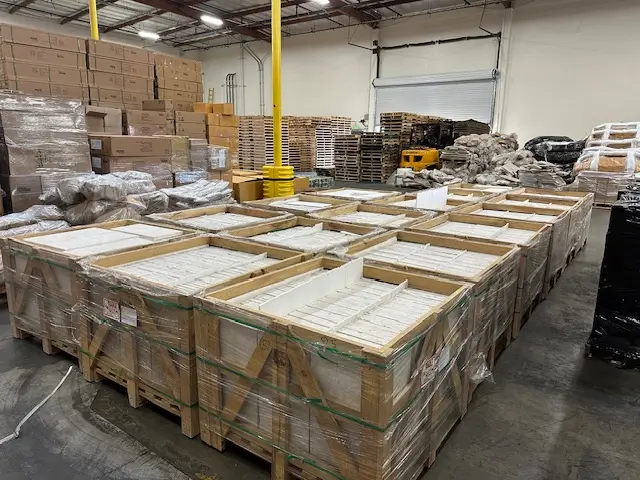
When you source granite landscape stone suppliers boulders for Arizona projects, you need dimensional clarity that most suppliers don’t provide. Your specifications should define size ranges by weight and volume, not just visual approximation. A “medium” boulder might weigh 800 pounds at one supplier and 1,500 pounds at another—this variance affects everything from truck access requirements to installation equipment.
- You should specify weight ranges in 500-pound increments for stones over 1,000 pounds
- Your dimensional requirements need three-axis measurements, not just diameter estimates
- You’ll want to inspect actual stone inventory before finalizing selections when possible
- Your project timeline must account for lead times from warehouse locations to site delivery
Large granite rocks for landscaping Arizona installations come in distinct categories based on formation geology. Quarried granite shows clean fracture planes and angular profiles—ideal when you want architectural formality. Naturally weathered boulders display rounded contours and textured surfaces that integrate better with desert landscapes. Your aesthetic intent should drive this choice, but understand that weathered granite typically costs 20-30% more due to sourcing complexity.
Color consistency becomes critical when you’re specifying multiple large granite rocks for landscaping Arizona projects. Granite varies from light gray to deep charcoal, with pink and rust tones depending on feldspar content. You can’t expect perfect color matching across boulders—granite’s natural variation is part of its appeal—but you should request stones from the same geological formation when visual continuity matters.
Site Preparation and Installation Requirements
Your site preparation for granite rock landscape supplies large format installations starts with subsurface investigation. You need to verify bearing capacity before positioning multi-ton boulders—most Arizona soils provide adequate support, but alluvial deposits and disturbed fill require compaction testing. The last thing you want is a 5,000-pound granite boulder settling 4-6 inches over two years because you didn’t confirm soil density.
When you plan boulder placement, you’re making permanent decisions. Equipment access determines feasible stone sizes—a truck-mounted crane handles boulders up to 6,000 pounds in most residential applications, but larger stones require track excavators or specialized rigging. Your site plan should identify staging areas, equipment approach paths, and underground utility corridors before delivery day.
You’ll need specific base preparation depending on boulder function. Feature stones that serve purely aesthetic purposes require 6-8 inches of compacted aggregate base to prevent settling. When you’re positioning large granite rocks for landscaping Arizona retaining applications, you need engineered footings sized to stone weight and retained soil pressure. The granite itself provides compressive strength exceeding 25,000 PSI—it’s the supporting substrate that limits performance.
Installation methodology affects long-term stability more than most specifiers realize. You should position boulders with their longest axis perpendicular to primary viewing angles, creating visual mass. Burial depth matters—embedding one-third of the stone height provides stability while maintaining proportion. When you set landscape granite rocks Arizona features near pedestrian areas, you need to verify that rolled edges face walking paths to prevent trip hazards.
Equipment and Logistics Coordination
Your equipment requirements scale with boulder size and site access constraints. For granite landscape stone suppliers boulders under 1,500 pounds, you can typically manage placement with a skid steer and carefully positioned rigging. Stones in the 2,000-4,000 pound range require truck-mounted cranes with 15-20 foot reach capacity. When you’re positioning large granite rocks for landscaping Arizona projects exceeding 5,000 pounds, you need specialized heavy equipment and experienced operators who understand load dynamics.
Delivery logistics for granite rock landscape supplies large format materials involve coordination most residential projects don’t encounter. You should confirm truck access dimensions—full-size delivery trucks need 12-foot width clearances, 14-foot overhead clearance, and turning radii that eliminate most cul-de-sac access. When standard truck delivery isn’t feasible, you’re looking at transfer loading to smaller vehicles, which adds $400-800 per load to project costs.
Your project schedule needs to account for warehouse availability and delivery lead times. Standard granite boulder inventory typically ships within 5-7 business days, but custom size requests or specific color selections can extend timelines to 3-4 weeks. You’ll want to coordinate delivery with equipment availability—having boulders arrive before your crane operator schedules on-site creates storage complications and potential damage risks.
Design Integration Strategies
When you integrate large granite rocks for landscaping Arizona designs, you’re creating focal points that anchor the entire composition. Your placement strategy should follow natural geological patterns—boulders clustered in odd-numbered groups with varied sizes and orientations mimic the way stone occurs in desert environments. Single massive boulders work as statement pieces, but they require substantial surrounding space to avoid overwhelming the landscape.
You need to consider sight lines from multiple vantage points. A boulder positioned for impact from the street may create visual obstacles when viewed from interior spaces. Your design should account for how shadows move across stone surfaces throughout the day—granite’s texture becomes most pronounced during morning and late afternoon when raking light emphasizes surface variations.
- You should position feature boulders to frame views rather than block them
- Your plant selections need to complement granite’s mass without competing for attention
- You’ll want to create elevation changes that allow boulders to emerge from grade naturally
- Your hardscape materials should either match granite’s color temperature or provide deliberate contrast
Scale relationships determine success when you’re working with landscape granite Arizona boulders. A 3,000-pound boulder looks appropriate in a 5,000-square-foot landscape but overwhelms a 1,200-square-foot courtyard. You should maintain proportion ratios of roughly 1:20 between boulder volume and surrounding space—this provides visual balance without excessive empty area.
Drainage and Grading Considerations
Your drainage design becomes more complex when you introduce large granite rocks for landscaping Arizona projects. Boulders create impermeable obstacles that redirect water flow—you need to anticipate how storm runoff will pattern around stone masses. Most problems occur when boulders are positioned perpendicular to natural flow paths without accommodation for water movement.
You should grade areas immediately adjacent to granite rock landscape supplies large format installations to prevent pooling. Even though granite itself handles moisture without degradation, standing water creates maintenance issues and undermines adjacent planting areas. Your grading plan needs 2-3% slopes away from boulder bases, directing water toward designated drainage zones.
When you’re working in areas with seasonal monsoon flooding, boulder positioning becomes a drainage strategy tool. Properly placed landscape granite rocks Arizona features can slow water velocity and reduce erosion in natural drainage channels. You’ll want to embed stones deeply enough that flood events don’t shift them—this typically means burying 40-50% of boulder height in high-flow areas rather than the standard 33%.
Maintenance and Longevity Factors
Large granite rocks for landscaping Arizona installations require minimal maintenance compared to almost any landscape element, but “minimal” doesn’t mean zero. You should anticipate annual cleaning to remove dust, organic debris, and efflorescence from cement-containing mortars if boulders were used in constructed features. A pressure washer at 1,500-2,000 PSI handles most cleaning without damaging granite surfaces.
Your long-term maintenance program should include inspection for soil erosion around boulder bases. Arizona’s periodic intense rainfall events can wash away base material over time, creating voids that allow stones to shift. You’ll need to regrade and add compacted fill every 3-5 years in areas with significant water flow—a minor expense that prevents major repositioning costs later.
Granite’s durability means you’re specifying a permanent landscape feature. When you evaluate granite landscape stone suppliers boulders, you’re making decisions that will outlast most other landscape components by decades. The weathering that occurs is typically beneficial—surfaces develop patina and character that enhance rather than diminish appearance. Your clients should understand that granite boulders require essentially zero replacement or repair over 30-50 year timelines.
For additional context on related applications, see Citadel Stone granite landscaping in Tucson for comprehensive material specifications. You’ll find technical details that complement boulder selection decisions.
Cost Factors and Budget Planning
When you budget for granite rock landscape supplies large format installations, you’re looking at costs that span a wide range based on size, color, and sourcing. Basic granite boulders in common gray tones run $150-300 per ton for stones under 2,000 pounds. Specialty colors, weathered surfaces, or stones exceeding 3,000 pounds typically range $400-700 per ton. Your delivered cost includes material, transportation, and sometimes basic placement, but you need clarification on what’s included in quoted prices.
Your installation budget should separate material costs from labor and equipment. Boulder placement runs $200-500 per stone for basic positioning with standard equipment. Complex placements requiring specialized rigging, multiple equipment types, or difficult access can reach $1,000-1,500 per boulder. You’ll want to obtain detailed installation quotes that specify equipment requirements and labor hours rather than lump-sum pricing that obscures actual costs.
- You should allocate 15-20% of material budget for delivery and handling contingencies
- Your equipment costs vary dramatically based on site access and stone weights
- You’ll need to budget for base preparation materials separate from boulder costs
- Your project contingency should account for 10-15% material variance when exact stone matching isn’t critical
Volume purchasing provides leverage when you’re sourcing large granite rocks for landscaping Arizona projects requiring multiple boulders. Orders exceeding 10,000 pounds often qualify for wholesale pricing that reduces per-ton costs by 20-30%. You should coordinate procurement timing with warehouse inventory cycles—ordering when suppliers have excess stock creates negotiation opportunities that timing-critical rush orders eliminate.
Common Specification Mistakes
You’ll avoid most problems by recognizing errors that compromise landscape granite Arizona boulders installations. The most frequent mistake involves inadequate size specification—describing stones as “large” or “extra-large” without weight or dimensional parameters creates confusion and disappointment at delivery. Your specifications need numeric ranges that leave no ambiguity about what constitutes acceptable material.
Another critical error occurs when you fail to verify truck access before committing to stone sizes. A 6,000-pound boulder requires specific delivery equipment that can’t navigate standard residential streets in many Arizona developments. You should conduct site surveys that document access widths, overhead clearances, turning radii, and weight-restricted bridges before finalizing boulder selections that may prove undeliverable.
You need to avoid specifying granite landscape stone suppliers boulders without addressing color tolerance. Granite’s natural variation means no two stones match exactly—expecting consistent color across multiple boulders leads to rejection issues and project delays. Your specifications should define acceptable color ranges using reference stones or photographic standards, not vague descriptions like “gray granite.”
Base preparation oversights create long-term problems you’ll want to prevent through detailed specifications. Many installations fail to specify compaction requirements for aggregate base layers, resulting in settlement that becomes apparent 18-24 months post-installation. You should require 95% modified Proctor density for bases supporting boulders exceeding 2,000 pounds—this ensures stability that prevents costly future corrections.
Citadel Stone — Landscape Granite Rocks for Sale in Arizona Specifications
When you evaluate Citadel Stone’s landscape granite rocks for sale in Arizona, you’re considering materials specifically selected for desert climate performance. At Citadel Stone, we provide technical guidance for hypothetical applications across Arizona’s diverse climate zones. This section outlines how you would approach material selection and specification decisions for six representative cities, each presenting distinct environmental challenges that influence boulder selection and placement strategies.
Phoenix Installations
In Phoenix, you would encounter extreme urban heat island effects that amplify surface temperatures beyond typical desert conditions. Your granite selections should prioritize light-colored stones that reflect rather than absorb solar radiation—light gray granite shows surface temperatures 15-20°F cooler than dark charcoal varieties during peak summer. You’ll need to account for 115°F+ ambient temperatures that extend working windows into early morning and evening hours. Your base preparation would require extra attention to subsurface irrigation interference, since Phoenix landscapes typically integrate extensive watering systems. You should position boulders to create shade pockets for accent plantings while ensuring adequate clearance from roof-mounted cooling equipment that generates high-temperature exhaust.
Tucson Desert Integration
When you plan Tucson installations, you’re working with authentic Sonoran Desert landscapes where boulder placement should follow natural geological patterns. Your stone selections would emphasize weathered granite with desert varnish patinas that blend with native outcroppings visible throughout the region. You’d need to consider Tucson’s bimodal rainfall pattern—summer monsoons and winter storms create two distinct drainage challenge periods requiring robust grading around boulder placements. Your design approach should complement rather than compete with existing desert vegetation, positioning large granite rocks for landscaping Arizona projects to frame saguaros and palo verde trees rather than dominating the composition. You’ll want to verify that your selected boulders contain minimal iron content to prevent rust staining on adjacent hardscape during monsoon season.
Scottsdale Resort Applications
Your Scottsdale specifications would typically address high-end resort and estate applications where visual impact drives material selection. You’d prioritize statement boulders in the 3,000-8,000 pound range that create dramatic focal points consistent with luxury design expectations. Color selection becomes critical—you should coordinate granite tones with architectural stone veneers and paving materials to maintain cohesive design language throughout the property. Your installation methodology would need to accommodate strict HOA requirements common in Scottsdale developments, including noise restrictions that limit equipment operation hours and landscape protection protocols during boulder placement. You’ll want to specify premium surface finishes and positioning precision that meets elevated quality standards typical of high-value Scottsdale properties.
Flagstaff Climate Adaptations
When you specify for Flagstaff, you’re addressing Arizona’s only true four-season climate with freeze-thaw cycles that don’t occur in lower elevation zones. Your granite selections should verify porosity below 0.5%—denser stone resists moisture absorption that leads to freeze damage during winter months when temperatures drop below 20°F. You’d need to account for snow load considerations if boulders are positioned near structures, ensuring adequate clearance for snow removal equipment and avoiding placements that could create ice dams. Your installation timing would be constrained to May through September when ground conditions permit proper base preparation—frozen subsurface conditions during other months prevent adequate compaction. You should specify granite landscape stone suppliers boulders that complement Flagstaff’s ponderosa pine forest setting, selecting earth-tone granites that harmonize with mountain rather than desert aesthetics.
Sedona Red Rock Context
Your Sedona specifications face unique challenges—any granite rock landscape supplies large format materials must work within the context of Sedona’s iconic red rock formations. You’d typically select granite colors that either complement red sandstone through warm gray and tan tones or provide deliberate contrast with cool gray granite against red backgrounds. Your design approach would need to respect strict municipal design guidelines that preserve Sedona’s natural character, avoiding placements that appear artificially imposed rather than geologically integrated. You should account for high tourist traffic in many Sedona properties, positioning boulders to define spaces and guide pedestrian flow while maintaining sight lines to red rock views. Your specifications would benefit from lightweight decomposed granite or crushed stone surrounds that transition naturally between placed boulders and native geology.
Yuma Extreme Heat
When you plan for Yuma installations, you’re addressing some of North America’s most extreme heat conditions where summer surface temperatures can exceed 170°F on dark stone. Your specifications would strongly favor light-colored granite that maintains usable surface temperatures—you should avoid dark charcoal or black granite entirely unless stones are positioned in permanent shade. You’d need to account for Yuma’s minimal rainfall—annual precipitation under 4 inches means drainage considerations differ significantly from other Arizona regions, but intense summer thunderstorms still require runoff management. Your installation timing becomes critical since outdoor work during June through August creates safety concerns even for experienced crews. You should specify boulder positioning that maximizes morning shade for adjacent outdoor living areas, recognizing that afternoon shade is impossible to achieve in Yuma’s western location and low latitude. At Citadel Stone, we would recommend coordinating warehouse deliveries during October through April when moderate temperatures facilitate safer, more efficient installation processes.
Performance Verification and Testing
When you need performance verification for large granite rocks for landscaping Arizona projects, you should understand which tests provide meaningful data versus those that offer limited value for boulder applications. Compressive strength testing makes sense for constructed features where stone bears structural loads, but provides little useful information for decorative boulder placement. You’re better served by porosity and absorption testing that predicts how granite will respond to Arizona’s occasional but intense rainfall events.
Your specification might reference ASTM C615 for granite dimension stone standards, but recognize these standards address quarried architectural stone rather than landscape boulders. You’ll need to adapt testing protocols or specify performance characteristics using descriptive parameters rather than numeric test results. Most landscape granite rocks Arizona features never undergo laboratory testing—you’re relying on visual inspection and supplier reputation rather than certified performance data.
Field verification becomes your primary quality control mechanism. You should inspect delivered boulders for structural integrity, checking for fracture planes, excessive weathering that compromises stability, or mineral inclusions that create preferential weathering paths. Your acceptance criteria need to define what constitutes acceptable natural variation versus material defects—this distinction prevents disputes when granite exhibits the inherent variability that characterizes all natural stone.
Alternative Material Comparisons
You’ll encounter situations where granite rock landscape supplies large format materials compete with alternative boulder types for Arizona projects. Basalt offers darker colors and finer grain structures than granite, with similar durability but typically higher costs due to limited availability. When you need charcoal or black boulders, basalt provides better options than dark granite—the uniform color and smooth weathering patterns integrate well with contemporary desert designs.
Sandstone boulders deliver warmer colors and softer profiles than granite, but you sacrifice durability in exchange for aesthetics. Sandstone’s porosity exceeds granite by 3-5x, creating faster weathering and potential structural degradation in areas with significant water exposure. You should reserve sandstone for protected locations where rapid weathering won’t compromise function, using granite landscape stone suppliers boulders in exposed positions requiring long-term stability.
- You’d select limestone when your design requires light colors with textured surfaces
- Your project might benefit from mixed boulder compositions using multiple stone types
- You should avoid mixing stones with significantly different weathering rates in high-visibility locations
- Your material selection should account for how different stones age within Arizona’s specific climate
Manufactured concrete boulders present cost advantages but can’t replicate granite’s authentic appearance and thermal performance. When budget constraints eliminate natural stone, you’ll find quality concrete alternatives that serve functional needs, but visual and tactile differences become apparent upon close inspection. You should specify natural large granite rocks for landscaping Arizona installations where authenticity matters and budget permits premium material investment.
Sourcing and Procurement Strategies
Your procurement approach for granite landscape stone suppliers boulders affects both material quality and project costs. Direct quarry sourcing eliminates distributor markups but requires volume commitments that exceed most single-project requirements. You’ll typically work with regional suppliers who maintain warehouse inventory selected specifically for Arizona’s landscape market—this provides access to pre-vetted materials without minimum order constraints that quarry-direct purchasing imposes.
When you evaluate suppliers, you need to verify their inventory inspection protocols and selection standards. Quality suppliers hand-select boulders, rejecting stones with structural flaws, undesirable color variations, or poor weathering characteristics. You should request supplier references and inspect completed installations before committing to large orders—this reveals how delivered materials perform in actual landscapes rather than controlled display yards.
Your procurement timeline should account for seasonal availability variations. Quarry operations in some regions suspend during winter months, reducing new inventory entering distribution channels from January through March. You’ll find best selection and availability during fall when quarries have operated all summer and warehouse stock reaches annual peaks. Planning major projects around these cycles provides access to premium materials that may be unavailable during off-peak periods.
Final Considerations
Your professional approach to specifying large granite rocks for landscaping Arizona installations requires balancing aesthetic vision with practical constraints. You need to understand how material properties, site conditions, equipment limitations, and budget realities interact to determine feasible solutions. The difference between successful boulder installations and problematic projects often comes down to detailed specification work that addresses site-specific factors rather than applying generic standards.
When you develop specifications, you’re creating documents that need to communicate clearly with suppliers, contractors, and clients while providing sufficient flexibility to accommodate granite’s natural variation. Your specifications should define acceptable ranges rather than single values, acknowledge realistic tolerances, and establish clear acceptance criteria that prevent disputes during installation. You’ll find that investing time in detailed specification development prevents costly problems that emerge when assumptions and expectations don’t align across project stakeholders.
For additional guidance on boulder sizing and placement strategies, review Selecting appropriate granite boulder sizes for Arizona desert landscapes before you finalize your project documentation. Direct sourcing makes Citadel Stone unique factory direct granite in Arizona no middleman.