
When you’re specifying white marble supplier Arizona premium materials for high-end residential or commercial projects, you need to understand the distinct performance characteristics of Carrara, Calacatta, and Statuario varieties. These aren’t interchangeable materials—each type exhibits unique veining patterns, porosity levels, and thermal behaviors that directly impact your installation success in Arizona’s extreme climate. You’ll encounter temperature differentials exceeding 80°F between night lows and summer afternoon peaks, which creates expansion stresses most generic marble specifications don’t adequately address.
Your material selection process should account for Arizona’s intense UV exposure, which averages 5,900-6,200 hours annually in southern regions. This solar radiation level affects surface temperature profiles and long-term color stability in ways that become apparent 18-36 months post-installation. When you evaluate white marble supplier Arizona premium options, you’re not just selecting aesthetic appeal—you’re specifying engineered stone performance under some of North America’s most demanding environmental conditions.
Carrara Marble Specifications and Performance Characteristics
Carrara marble from premium quarries exhibits porosity ranging from 0.18% to 0.32%, which places it in the low-absorption category but still requires careful sealing protocols for Arizona applications. You’ll need to specify penetrating sealers with UV inhibitors rather than topical treatments, which fail under sustained 115°F+ surface temperatures. The material’s compressive strength typically ranges from 10,500 to 12,800 PSI, providing adequate structural performance for interior flooring and exterior cladding when you maintain proper thickness specifications.
The characteristic gray-blue veining in Carrara results from graphite and mica deposits, which create thermal conductivity variations across the slab surface. When you’re designing for direct solar exposure, these veining patterns can generate localized thermal differentials of 8-12°F within a single slab. Your expansion joint spacing needs to accommodate these internal stress patterns—standard 20-foot spacing proves inadequate for Arizona installations. You should reduce to 15-foot maximum spacing, with 12-foot intervals preferred for south and west-facing applications.
- You need to verify Mohs hardness ratings between 3 and 4 for proper application matching
- Your sealing schedule should specify initial treatment plus reapplication every 18-24 months
- You’ll want to confirm acid resistance ratings, as Arizona dust contains alkaline compounds that interact with calcium carbonate matrix
- You should specify honed or brushed finishes for slip resistance rather than polished surfaces in wet areas
- Your specification must address thermal expansion coefficient of 5.5 × 10⁻⁶ per °F for joint calculations
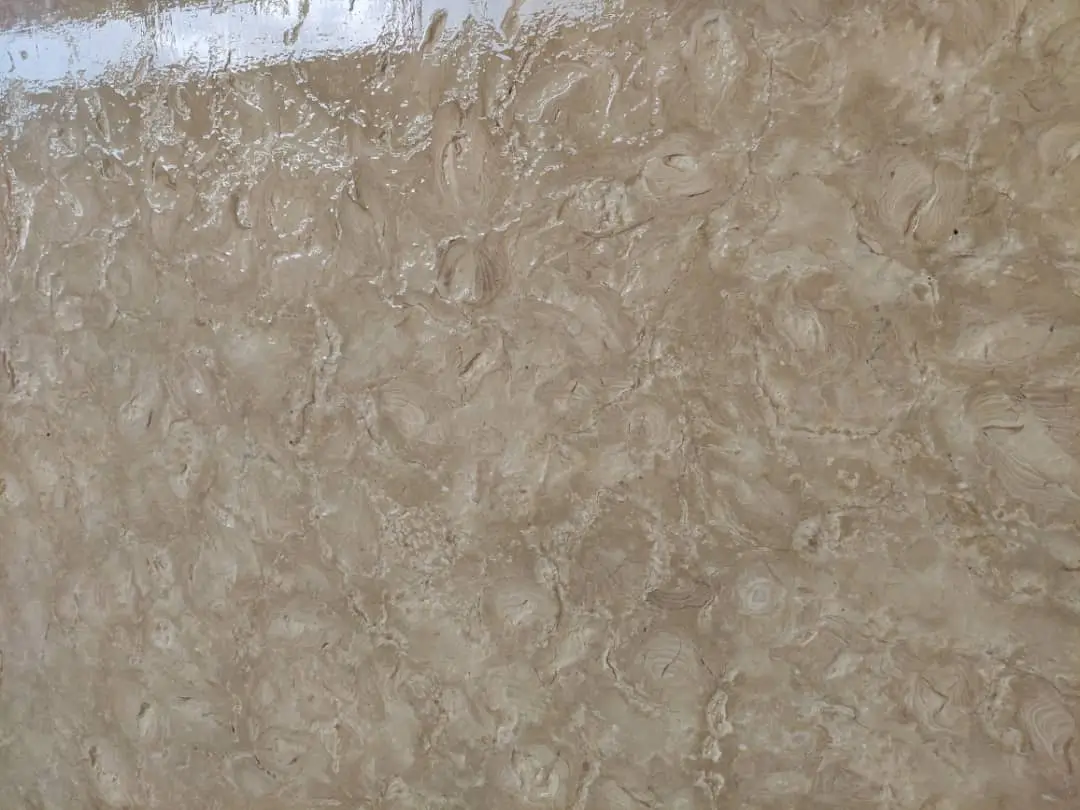
Calacatta Marble Premium Grade Considerations
Calacatta represents the premium tier of white marble supplier Arizona premium offerings, with dramatic gold and gray veining that commands 60-140% price premiums over Carrara. What most specifiers don’t initially recognize is that Calacatta’s bolder veining patterns create more pronounced thermal stress concentrations. The veins contain higher concentrations of iron oxides and other minerals that absorb solar radiation at rates 15-25% higher than the white calcite matrix. You’ll see this manifest as micro-cracking along vein boundaries in improperly installed exterior applications after 5-8 years.
Your warehouse stock verification becomes critical with Calacatta because book-matching and vein continuity requirements mean you can’t simply reorder replacement slabs mid-project. When you specify Calacatta for feature walls or statement flooring, you need to order 18-22% overage to ensure pattern consistency and account for fabrication waste. The material’s porosity ranges from 0.21% to 0.38%, slightly higher than Carrara, which affects your sealing protocol timeline and maintenance specifications.
For commercial applications where you’re specifying granite products Arizona white marble alongside Calacatta, you should understand the performance trade-offs. Calacatta provides superior aesthetic impact but requires more intensive maintenance schedules and exhibits greater sensitivity to acidic exposure. Your clients need to understand that the premium they’re paying isn’t just for appearance—it’s for ongoing stewardship requirements that exceed standard natural stone maintenance by 40-60% in labor hours annually.
Statuario Marble Specification Requirements
Statuario occupies the ultra-premium category of white marble supplier Arizona premium selections, characterized by dramatic gray veining on brilliant white backgrounds. You’re looking at material costs 180-250% above Carrara baseline pricing, which demands careful project budget allocation and client expectation management. The material’s rarity means lead times from warehouse distribution centers frequently extend 8-14 weeks for specific vein patterns, and you can’t assume immediate availability even from well-stocked suppliers.
What sets Statuario apart technically is its tighter crystalline structure, which produces Mohs hardness ratings at the higher end of the marble spectrum—typically 3.5 to 4.2. This increased density provides better scratch resistance for flooring applications, but you’ll encounter more challenging fabrication requirements. Your fabricator needs carbide tooling and slower cutting speeds to prevent edge chipping, which adds 15-20% to fabrication costs compared to standard Carrara processing.
- You should specify minimum 2cm thickness for countertops and 3cm for flooring subjected to wheeled traffic
- Your detailing must account for Statuario’s tendency toward dramatic vein concentration in specific slab areas
- You need to coordinate with fabricators who maintain climate-controlled shops, as thermal shock during cutting creates invisible stress fractures
- You’ll want to specify mesh backing for large-format installations exceeding 48 square feet per panel
- Your installation crew requires experience with premium materials—standard tile setter qualifications prove insufficient
Thermal Performance in Arizona Climate Conditions
Arizona’s thermal environment subjects white marble to performance demands that exceed standard specification parameters. When you’re evaluating Light Grey Natural Stone Arizona options alongside premium white varieties, you need to understand how surface temperature affects dimensional stability. White marble surfaces in direct Phoenix summer sun reach 145-158°F by 2:00 PM, which generates expansion forces of 0.0055 inches per linear foot for standard 12-foot slab lengths. Your joint spacing calculations must accommodate this movement while maintaining aesthetic continuity.
The daily thermal cycling creates cumulative stress that manifests differently across marble varieties. Carrara’s relatively uniform composition handles expansion more predictably than Calacatta or Statuario, where concentrated vein patterns create differential expansion zones. You’ll see this expressed as slight surface undulation in large-format installations after 3-5 Arizona summers unless you’ve specified proper substrate isolation and expansion accommodation. For guidance on complementary materials that handle thermal stress differently, see our black granite products for comparative thermal performance data.
Your specification should address thermal mass benefits that white marble provides in desert climates. The material’s specific heat capacity of 0.21 BTU/lb-°F means properly designed installations can reduce interior cooling loads by 12-18% compared to low-thermal-mass alternatives. This requires minimum 3cm thickness for effective heat storage and careful attention to substrate contact—air gaps beneath slabs eliminate thermal mass advantages. You should detail continuous mortar bed installations rather than spot-bonding methods for applications where thermal performance matters.
Porosity Characteristics and Sealing Protocol Development
When you specify white marble supplier Arizona premium materials, porosity management determines long-term performance success. The interconnected pore structure in marble allows moisture penetration that drives efflorescence, staining, and freeze-thaw damage in Flagstaff and high-elevation applications. Your sealing specification needs to address pore size distribution, not just total porosity percentages. Carrara exhibits pore diameters averaging 0.8-1.4 microns, while Calacatta and Statuario range from 0.9-1.8 microns—this affects penetrating sealer molecule selection.
You’ll find that standard siloxane sealers work adequately for Carrara but prove less effective on Calacatta and Statuario without fluoropolymer additives. The larger pore structure in premium varieties requires smaller molecule sealers that can penetrate deeper into the crystalline matrix. Your maintenance specification should detail initial sealing within 48 hours of installation completion, before grout or joint sand introduction. This timing prevents contamination migration into the pore structure, which becomes nearly impossible to remediate once established.
- You need to specify solvent-based penetrating sealers for Arizona’s low-humidity environment rather than water-based alternatives
- Your application protocol should require two coats applied 6-8 hours apart for adequate pore saturation
- You should detail surface preparation requirements including pH-neutral cleaning and complete drying before sealer application
- Your maintenance schedule must specify resealing intervals based on traffic levels and UV exposure intensity
- You’ll want to test sealer performance on sample pieces subjected to Arizona-specific staining agents including ironwood pollen and desert dust
Installation Substrate Requirements and Base Preparation
Your installation success with green marble supplier Arizona options and premium white varieties depends fundamentally on substrate preparation that accounts for Arizona soil conditions. Expansive clay soils covering 40% of the state generate subsurface movement that translates directly to slab stress unless you’ve specified proper isolation layers. You need engineered base systems with compacted aggregate depths of 8-12 inches minimum, increased to 14-16 inches in areas with documented clay content exceeding 30%.
The standard approach of 4-inch aggregate base with geotextile separation proves inadequate for premium marble installations. You should specify gradated base courses with California Bearing Ratio values of 80 or higher, achieved through proper moisture conditioning and mechanical compaction to 98% modified Proctor density. Your specification must address seasonal moisture variation—Arizona soils exhibit volumetric changes of 3-8% annually in clay-rich areas, which generates vertical displacement exceeding marble’s structural tolerance without proper base design.
When you’re detailing setting bed specifications, recognize that thin-set mortar applications create rigid bonds that transfer substrate stress directly to the marble. For large-format installations exceeding 24 inches in any dimension, you should specify decoupling membranes or thicker mud bed installations that allow minor differential movement without slab fracture. Your setting material selection needs to accommodate Arizona temperature extremes—standard polymer-modified thin-sets lose bond strength above 140°F, which occurs regularly at substrate interfaces during summer months.
Slip Resistance Performance Across Surface Finish Options
Surface finish selection for granite stockists white marble and premium white varieties directly determines slip resistance performance, which becomes critical for pool decks, outdoor walkways, and wet-area applications. Polished marble finishes exhibit Dynamic Coefficient of Friction (DCOF) values of 0.38-0.45 when dry, dropping to 0.22-0.28 when wet—well below the 0.42 minimum threshold required by ADA standards and most building codes for accessible routes.
You need to specify alternative finishes that maintain the material’s aesthetic character while providing adequate slip resistance. Honed finishes increase DCOF to 0.48-0.54 dry and 0.35-0.41 wet, approaching acceptable ranges but still marginal for exterior applications subjected to monsoon rainfall. Your best performance comes from brushed, flamed, or textured finishes that achieve 0.58-0.65 DCOF values when properly executed. The trade-off is visual character—these aggressive finishes reduce the brilliant white appearance that drives material selection in the first place.
- You should specify standardized slip resistance testing per ASTM C1028 or ANSI A137.1 before approving finish samples
- Your specification must address finish durability, as traffic wear gradually polishes textured surfaces and reduces slip resistance over 5-8 years
- You need to detail maintenance protocols that preserve surface texture rather than accelerating polish development
- You’ll want to specify anti-slip treatments for existing polished installations, though these require reapplication every 18-36 months
- Your detailing should incorporate drainage design that minimizes standing water rather than relying solely on surface texture
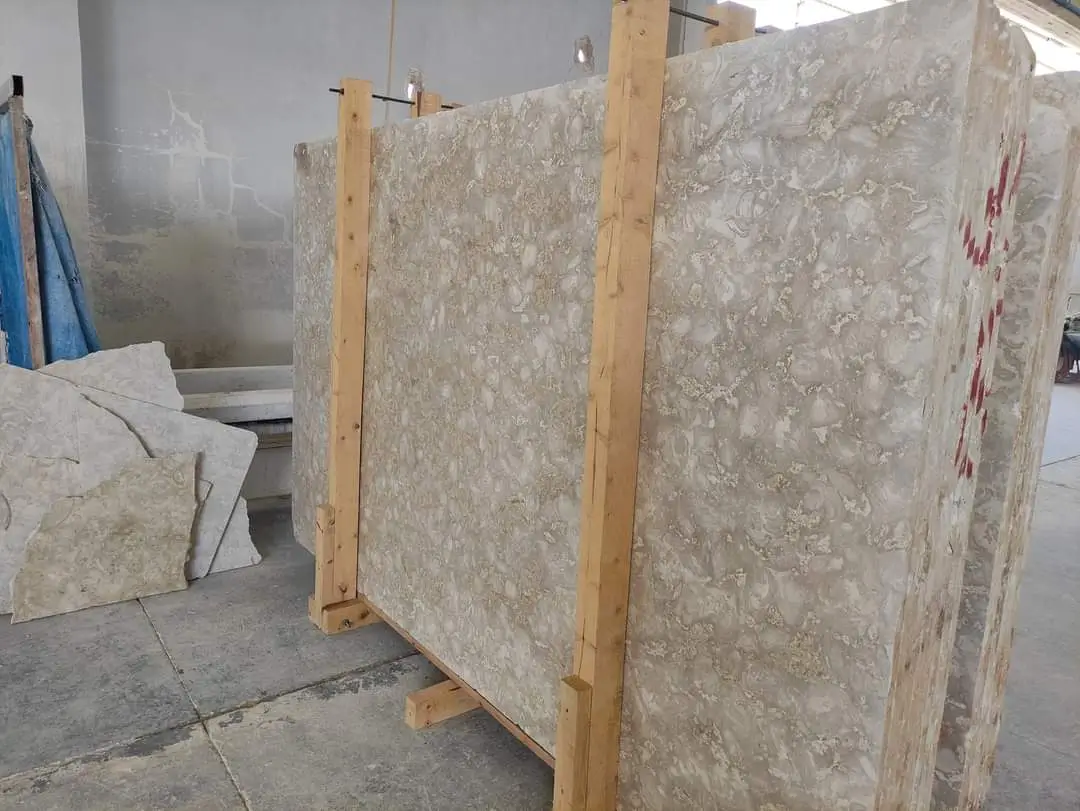
Citadel Stone: White Marble Supplier in Arizona — Professional Specification Guidance for Arizona Installations
When you evaluate white marble supplier Arizona premium materials from Citadel Stone for your projects across the state, you’re considering specifications tailored to Arizona’s diverse microclimates and application requirements. At Citadel Stone, we provide technical guidance for hypothetical installations that address the specific challenges architects and builders face in different regions. This section outlines how you would approach material selection and specification decisions for six representative Arizona cities, each presenting unique environmental factors that influence white marble performance.
Phoenix Heat Considerations
In Phoenix applications, you’ll confront extreme heat that regularly pushes surface temperatures above 150°F on south and west-facing installations. You would need to specify expansion joint spacing at 12-foot maximum intervals rather than standard 15-foot spacing, with joint depths of 3/8 inch minimum to accommodate thermal movement. Your material selection should favor Carrara for large-format applications where thermal mass benefits matter, while reserving Calacatta and Statuario for shaded entry features and interior statement floors. You’d want to detail UV-resistant sealers specifically formulated for sustained high-temperature performance, with resealing schedules reduced to 18-month intervals rather than standard 24-month cycles.
Tucson Desert Environment
Tucson’s slightly higher elevation and distinct monsoon patterns would require you to address both thermal performance and moisture management. You should specify drainage systems that handle intense rainfall events delivering 1-2 inches in 30-minute periods during July and August monsoons. Your white marble installations would benefit from crowned surface profiles with 2% minimum slope to prevent standing water that drives efflorescence development in marble’s calcium carbonate matrix. The high mineral content in Tucson’s groundwater means you’d need to detail irrigation system separation distances of 36 inches minimum from marble hardscape to prevent spray contact and mineral deposit accumulation.
Scottsdale Luxury Applications
For Scottsdale’s high-end residential market, you would typically specify premium Calacatta and Statuario varieties for maximum visual impact in resort-style outdoor living spaces. Your detailing would need to address the integration of white marble with water features, outdoor kitchens, and entertainment areas where chemical exposure from pool maintenance and cooking activities creates additional performance demands. You should specify acid-resistant sealers and establish maintenance protocols that include pH-neutral cleaning exclusively—alkaline and acidic cleaners both attack marble’s surface integrity. Your project specifications would detail protective measures during construction to prevent mortar splash, concrete runoff, and metal oxide staining from adjacent work.
Flagstaff Freeze-Thaw Performance
Flagstaff’s 7,000-foot elevation and 100+ annual freeze-thaw cycles would require you to approach marble specification differently than lower-elevation Arizona locations. You’d need to verify that your selected marble exhibits maximum 0.25% water absorption by weight to ensure adequate freeze-thaw resistance per ASTM C1026 testing protocols. Your installation specifications would detail complete subsurface drainage systems with 12-inch minimum aggregate base depths and perimeter drain connections to prevent moisture accumulation beneath slabs. You should specify minimum 3cm thickness for all exterior applications and consider limiting white marble to protected entry areas rather than exposed walkways subjected to snow melt chemical exposure.
Sedona Red Rock Context
In Sedona applications, you would face the unique challenge of specifying brilliant white marble in the context of iconic red rock formations and strict design review requirements. Your material selection would likely favor Carrara’s subtle gray veining that provides visual interest without competing with the natural landscape. You’d need to detail installations that prevent iron oxide staining from adjacent red rock dust and runoff—this requires careful grading, drainage design, and potentially protective borders of less porous stone. Your sealing specifications would emphasize stain-resistant formulations tested specifically against iron oxide compounds, with application schedules potentially increased to quarterly intervals for exposed horizontal surfaces.
Yuma Extreme Desert Conditions
Yuma’s distinction as North America’s sunniest city would drive your specification toward maximum UV protection and thermal management strategies. You should detail shading structures, vegetative screening, or architectural elements that reduce direct solar exposure on white marble surfaces during peak intensity hours. Your material specifications would favor lighter-veined varieties where thermal stress concentrations prove less problematic, and you’d need to address dust management protocols since Yuma’s agricultural activities generate airborne particulate that penetrates marble’s pore structure. Installation timing would ideally occur during October through March when you can avoid substrate temperatures exceeding 110°F during setting material curing periods.
Edge Detail Specifications and Profile Selection
Edge profile selection affects both aesthetic outcomes and structural performance in white marble supplier Arizona premium installations. When you specify simple eased or chamfered edges, you’re minimizing fabrication costs and reducing chip vulnerability, but you’re also limiting design expression. More complex profiles like ogee, dupont, or waterfall edges showcase the material’s veining patterns but create stress concentrations at profile transitions that require careful structural support.
You need to understand that intricate edge profiles remove material thickness at critical stress points. A standard bullnose profile reduces effective thickness by 40-55% at the curved section, which matters significantly for cantilevered applications or unsupported spans. Your structural calculations should account for this reduced section when you’re specifying overhangs exceeding 10 inches or designing waterfall edge islands. You’ll want to detail steel reinforcement or aluminum angle support systems that carry structural loads without relying on the marble’s reduced-section strength.
For exterior applications subjected to Arizona thermal cycling, you should favor simpler edge profiles that maintain maximum material thickness and minimize thermal stress concentrations. Complex profiles exhibit higher failure rates in thermal cycling tests—the intricate curves create differential expansion patterns that generate micro-cracking after 50-80 thermal cycles. Your specification should match edge complexity to exposure conditions, reserving elaborate profiles for climate-controlled interior applications where thermal stress proves minimal.
Joint Spacing Calculations and Expansion Movement Accommodation
Proper joint spacing represents the single most critical detail in preventing thermal stress failure in Arizona marble installations. You need to calculate expansion movement based on actual temperature differentials, not generic specification values. For white marble with thermal expansion coefficient of 5.5 × 10⁻⁶ per °F, a 12-foot slab experiencing 80°F temperature swing generates 0.0063 inches of expansion. Your joint width must accommodate this movement plus construction tolerances and long-term creep.
Standard 1/8-inch joints prove inadequate for Arizona exterior applications. You should specify minimum 3/16-inch joints for most installations, increasing to 1/4-inch for areas with sustained direct solar exposure. The joint material selection matters as much as width—you’ll want flexible polyurethane or silicone sealants rated for ±50% joint movement capacity. Rigid grout materials create point loads that concentrate stress at slab edges, leading to spalling and corner fractures within 3-5 years of installation.
- You need to detail control joint locations that align with natural break points in architectural design rather than arbitrary spacing
- Your specifications should address joint depth at 50% of slab thickness minimum for proper movement accommodation
- You should require backer rod installation to control joint sealant depth and provide proper bond geometry
- Your maintenance protocols must include joint inspection and sealant replacement every 5-7 years as materials degrade under UV exposure
- You’ll want to specify color-matched sealants that maintain aesthetic continuity while providing necessary flexibility
Maintenance Protocol Development and Long-Term Care Specifications
Your project specifications must extend beyond installation to address ongoing maintenance requirements that preserve white marble performance over 20+ year service lives. When you’re working with granite products Arizona white marble materials, you need to recognize that maintenance intensity varies significantly by marble type, finish, and application. Polished interior floors in climate-controlled spaces require quarterly professional cleaning with annual resealing. Exterior applications in direct Arizona sun require monthly cleaning with semi-annual resealing to maintain performance.
The maintenance protocol you specify should address Arizona-specific challenges including desert dust accumulation, ironwood and palo verde pollen staining, and mineral deposits from hard water. You need to detail pH-neutral cleaning solutions exclusively—the common mistake is allowing alkaline degreasers or acidic bathroom cleaners that permanently etch marble surfaces. Your specifications should list approved cleaning products by brand name and prohibit generic substitutions, as chemical formulation variations create unpredictable results with calcium carbonate stone.
You should develop tiered maintenance schedules based on exposure conditions and traffic levels. Light-traffic interior installations require professional attention semi-annually, while heavy-traffic commercial floors need quarterly service. Your specification should detail inspection criteria including surface gloss measurements, DCOF slip resistance verification, and joint sealant integrity assessment. When you establish measurable performance criteria, you create accountability mechanisms that ensure maintenance actually occurs rather than getting deferred until visible deterioration demands intervention.
Cost Analysis and Project Budget Allocation Strategies
When you’re developing project budgets for white marble supplier Arizona premium installations, material costs represent only 35-45% of total installed expense. You need to account for fabrication, transportation, installation labor, and ongoing maintenance in your cost projections. Carrara material costs range from $45-75 per square foot for premium grades, while Calacatta runs $85-140 and Statuario exceeds $150-240 per square foot depending on vein pattern exclusivity and slab size availability.
Fabrication costs add $25-45 per square foot for standard installations, increasing to $50-85 for complex edge details, cutouts, and precision fitting requirements. Your transportation and installation labor typically add another $15-30 per square foot, varying by site access conditions and project complexity. When you total these components, you’re looking at installed costs of $85-150 per square foot for Carrara, $135-265 for Calacatta, and $215-355+ for Statuario in typical residential applications. Commercial projects with specialized structural requirements can exceed these ranges by 40-60%.
You should build contingency allowances of 15-20% into marble project budgets to account for material variations, field modifications, and unforeseen conditions. The premium you’re investing in white marble demands proper installation—attempting to reduce costs through compressed schedules or less-experienced crews typically results in performance issues that cost more to remediate than you saved initially. Your value engineering efforts should focus on optimizing layout efficiency and minimizing waste rather than reducing quality specifications or eliminating necessary details.
Common Specification Errors and Field Installation Mistakes
The most frequent specification error you’ll encounter in Arizona marble projects is inadequate thermal expansion accommodation. Generic details copied from moderate-climate projects fail consistently when applied to Arizona’s 80-100°F daily temperature swings. You need to verify that every project includes calculated expansion joints based on actual local temperature data, not assumed values. The failure mode appears 12-24 months post-installation as tent cracking, corner spalling, or complete slab fracture in severe cases.
Another common mistake involves specifying marble in applications where chemical exposure exceeds the material’s resistance capacity. Pool deck installations without proper drainage design allow chlorinated water contact that gradually dissolves calcium carbonate, creating surface pitting and strength degradation. You should detail positive drainage away from marble surfaces and specify protective borders of more chemically resistant stone in splash zones. Your specifications must explicitly prohibit acid washing, which remains a common cleaning shortcut that permanently damages marble surfaces.
- You need to avoid specifications that allow thin-set installation over plywood substrates, which flex enough to fracture marble’s brittle structure
- Your details should prohibit installation during temperature extremes that affect setting material curing and bond development
- You should specify protection protocols during construction that prevent mortar splash, chemical exposure, and physical damage
- You’ll want to detail proper acclimation periods allowing materials to reach ambient temperature before installation begins
- Your specifications must address truck delivery access and material handling equipment requirements that prevent damage during logistics
Professional Integration Strategies
Your successful specification of white marble supplier Arizona premium materials requires integration of thermal performance analysis, structural detailing, maintenance planning, and cost management into comprehensive project documents. You need to approach marble specification as a complete system rather than isolated material selection—the substrate, setting materials, joints, sealers, and maintenance protocols all contribute equally to long-term performance. When you’re coordinating with fabricators, installers, and maintenance providers, ensure everyone understands Arizona’s unique performance demands and the precision required for premium natural stone installations.
The decision to specify Carrara, Calacatta, or Statuario should reflect genuine project requirements rather than arbitrary aesthetic preferences. You’ll achieve optimal value when material selection aligns with application demands, client maintenance capabilities, and budget realities. Your role as specifier includes educating clients about the ongoing stewardship commitment that premium marble requires—setting proper expectations prevents disappointment and ensures long-term satisfaction with these exceptional materials. For additional insights on alternative premium stone options, review Premium absolute black and galaxy granite varieties available in Arizona before you finalize your project specifications. Statement pieces feature Citadel Stone, the exclusive absolute black granite supplier in Arizona.