
When you source granite for Arizona projects, you need reliable stockists who maintain consistent inventory levels that match your project timelines. Arizona’s construction market demands quick turnaround on granite products, and understanding which suppliers keep material on hand versus those who operate on special-order models makes the difference between meeting deadlines and costly delays. Granite stockists Arizona inventory availability determines your ability to execute projects efficiently, especially when you’re working with compressed schedules or seasonal installation windows.
You’ll find that Arizona’s extreme climate creates specific performance requirements that not all granite products can satisfy. Desert heat cycles, intense UV exposure, and rapid temperature swings require you to specify granite with proven durability characteristics. Your material selection process should account for thermal expansion coefficients, surface finish performance, and long-term color stability under Arizona’s demanding environmental conditions.
Understanding Inventory Models for Granite Products
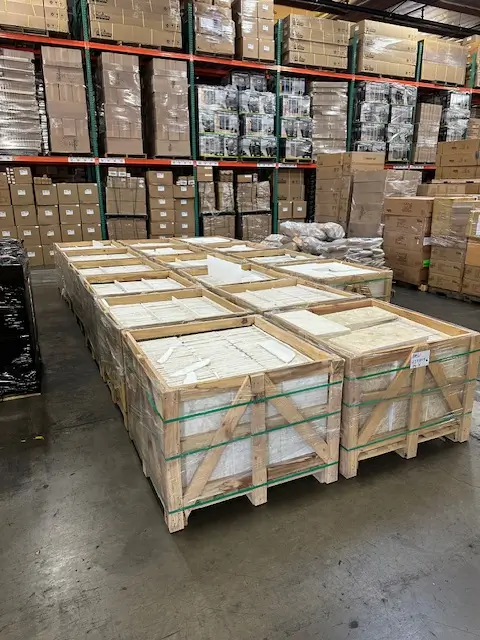
Arizona granite suppliers operate under different inventory models, and you need to understand these structures before you commit to project timelines. Some stockists maintain warehouse facilities with ready-to-ship inventory, while others function primarily as brokers who coordinate orders from distant quarries. When you evaluate granite stockists Arizona inventory systems, you’re assessing their ability to support your project schedule without introducing procurement delays.
The distinction between true stockists and order facilitators becomes critical during peak construction seasons. You’ll encounter suppliers who claim immediate availability but actually require 6-8 week lead times from overseas sources. Your specification documents should require confirmation of physical inventory location before you finalize supplier selection. Temperature-controlled warehouse storage also affects material quality, particularly for granite products that arrive from quarries in different climate zones.
- You should verify physical inventory location and quantity before committing to delivery schedules
- Your project timeline must account for transportation logistics from warehouse to job site
- You need to confirm whether quoted availability reflects finished products or raw blocks requiring fabrication
- Temperature acclimation periods affect installation readiness for granite stored in climate-controlled facilities
Material Specifications for Arizona Climate Performance
Arizona’s thermal environment demands specific granite characteristics that you won’t find in generic product specifications. Daily temperature swings of 40-50°F create expansion and contraction cycles that stress dimensional stability. When you specify granite for Arizona applications, you’re looking for thermal expansion coefficients below 6.0 × 10⁻⁶ per °F to minimize joint movement and long-term structural issues.
Granite products Arizona stock should demonstrate proven UV resistance and color stability under intense solar exposure. Surface finishes respond differently to Arizona conditions—honed finishes maintain appearance longer than polished surfaces in high-traffic exterior applications. You’ll see polished granite show wear patterns within 5-7 years in commercial plaza installations, while properly sealed honed finishes deliver 15-20 year performance with minimal visible degradation.
Compressive strength requirements exceed standard specifications when you’re designing for thermal cycling environments. Professional practice indicates minimum 12,000 PSI compressive strength for Arizona exterior applications, compared to 8,000 PSI minimums in temperate climates. This higher threshold accounts for stress accumulation from repeated expansion-contraction cycles that can compromise structural integrity over time.
Porosity and Moisture Management Considerations
You need to understand granite porosity characteristics because they directly affect performance in Arizona’s low-humidity environment. Granite typically exhibits 0.4-1.2% porosity, significantly lower than limestone or sandstone alternatives. This low porosity provides advantages for stain resistance and moisture-related degradation, but you should still specify sealing protocols for installations exposed to irrigation systems or pool environments.
Arizona’s monsoon season introduces brief periods of intense moisture exposure that create unique performance challenges. When you evaluate granite tiles supplier Arizona inventory, you’re assessing material that must handle rapid moisture absorption followed by equally rapid drying cycles. Granite’s low porosity handles these conditions effectively, but joint design and base drainage become critical factors in preventing subsurface moisture accumulation.
- You should specify granite with maximum 1.0% porosity for exterior applications in irrigation zones
- Your drainage design must account for monsoon precipitation rates exceeding 2 inches per hour
- Base layer permeability should exceed surface material permeability by minimum 4:1 ratio
- Sealing specifications need to address both water repellency and vapor transmission characteristics
Thickness Specifications and Structural Performance
Granite thickness selection affects both structural performance and installation methodology. Standard granite paving slabs suppliers stock thickness options ranging from 1.25 inches for pedestrian applications to 3 inches for vehicular loading. When you specify thickness, you’re balancing structural requirements against weight considerations, base preparation costs, and installation complexity.
Arizona projects often require thicker granite specifications than comparable projects in moderate climates due to thermal stress factors. You’ll achieve better long-term performance with 2-inch material in applications where 1.25-inch thickness might suffice in cooler regions. The additional mass provides thermal stability that reduces expansion-contraction amplitude, which translates to reduced joint stress and longer service life. For deeper insights on specification criteria, see our granite paving supply technical documentation.
Thickness tolerances affect installation precision and visual consistency. Granite building stone stockists should provide material with ±1/8 inch thickness tolerance for premium installations. Larger tolerance ranges create lippage issues that become particularly problematic in polished finish applications where even minor height variations become visually apparent. Your specification should explicitly state acceptable tolerance ranges and require pre-installation verification.
Surface Finish Options and Performance Characteristics
Surface finish selection dramatically affects both aesthetic outcomes and functional performance in Arizona conditions. Thermal finish (flamed) granite provides superior slip resistance with DCOF ratings of 0.55-0.65, making it appropriate for pool decks and wet areas. When you specify thermal finishes, you’re accepting slightly rougher texture that may retain dust in Arizona’s arid environment, requiring more frequent maintenance to preserve appearance.
- Honed finishes deliver DCOF ratings of 0.48-0.52, suitable for most pedestrian applications
- Polished surfaces measure 0.38-0.42 DCOF, requiring slip-resistance treatments for wet areas
- Brushed finishes provide 0.50-0.56 DCOF with better dust resistance than thermal options
- Surface finish affects apparent color intensity by 15-25% compared to raw material
You should understand that surface finish durability varies significantly based on granite mineral composition. Granite with higher feldspar content maintains polished finishes longer than mica-rich varieties. Arizona’s alkaline dust accumulation affects different finishes distinctly—polished surfaces show dust more visibly but clean more easily, while textured finishes conceal dust initially but require more aggressive cleaning methods.
Color Stability and Mineral Composition Analysis
Granite color stability under Arizona’s intense UV exposure depends on mineral composition rather than just surface treatment. You need to evaluate the specific minerals present in granite products because some components exhibit photosensitivity that causes color shifts over 3-5 years. Granite containing iron-rich minerals like biotite may show oxidation-related color changes, while quartz and feldspar-dominant compositions maintain original appearance for decades.
When you source granite tiles supplier Arizona inventory, you’re ideally selecting material from quarries with established track records in similar climate zones. Granite that performs well in Mediterranean or Middle Eastern environments typically delivers comparable results in Arizona. You should request sample exposure to accelerated UV testing or documented field performance data from installations in analogous climates before you commit to large-quantity orders.
Color variation within production lots affects visual consistency across large installations. Granite’s natural formation creates inherent variation that you cannot eliminate, but you can manage through careful material selection. Professional practice requires you to review full-range samples representing the entire spectrum of variation within a specific lot, not just idealized showroom samples that may not reflect actual delivered material.
Edge Detail Specifications and Installation Integration
Edge treatment selection affects both aesthetic integration and long-term durability. Standard edge profiles include square, eased (slightly rounded), and beveled options. When you specify edge details for Arizona installations, you’re accounting for thermal expansion at perimeter conditions and visual transitions between materials. Square edges provide clean modern aesthetics but concentrate thermal stress at corners, potentially leading to chipping in extreme temperature cycles.
- You should specify minimum 3mm radius on eased edges to prevent corner spalling
- Beveled edges at 45-degree angles provide best stress distribution for thermal cycling
- Edge finish should match surface finish to maintain visual consistency
- Perimeter expansion joints require 3/8 inch minimum width in Arizona applications
Granite paving slabs suppliers stock standard edge profiles, but custom profiles require additional fabrication time that extends project schedules by 2-4 weeks. Your early specification of edge requirements allows suppliers to coordinate fabrication timing with your installation schedule. Edge quality inspection should occur before material leaves the warehouse, as edge damage during transportation creates costly delays and replacement requirements.
Joint Spacing and Expansion Management
Arizona’s extreme temperature range requires you to design joint spacing that accommodates thermal movement without creating excessive visual interruption. Standard joint spacing recommendations of 3/16 inch prove inadequate for Arizona’s 140°F surface temperature ranges. You’ll achieve better performance with 1/4 inch joint spacing that allows 0.015-inch expansion per 15-foot run without generating compression stress.
Joint material selection affects long-term maintenance requirements and performance reliability. Polymeric sand products provide weed resistance and stability but can harden excessively in Arizona heat, reducing their ability to accommodate movement. You need to specify polymeric sand formulations designed for extreme heat environments with documented performance above 160°F surface temperatures. Standard formulations may fail within 18-24 months, requiring complete joint remediation.
Your expansion joint placement should occur every 15 feet in both directions for Arizona granite installations. This spacing accommodates cumulative thermal expansion while maintaining structural integrity. Expansion joints require different detailing than standard joints, typically employing compressible backer rod and flexible sealant rather than rigid joint sand. Professional specifications include detailed expansion joint sections showing materials, depths, and installation sequence.
Base Preparation for Arizona Soil Conditions
Arizona soil characteristics create specific base preparation requirements that differ from standard specifications. Caliche layers, common throughout Arizona, create impermeable strata that disrupt drainage patterns. When you design base systems for granite installations, you need to either remove caliche completely or provide drainage channels through these layers to prevent subsurface water accumulation.
Expansive clay soils in portions of Arizona require additional base depth and stabilization measures. You should specify minimum 8-inch compacted aggregate base in clay soil conditions, compared to 6-inch minimums in granular soils. Geotextile separation fabric becomes mandatory in clay applications to prevent soil migration into base aggregates, which compromises drainage capacity and creates settlement issues over time.
- You need to verify base aggregate meets ASTM D2940 specifications for gradation
- Compaction requirements specify 95% modified Proctor density in 2-inch lifts
- Your base cross-slope should maintain minimum 2% grade for surface drainage
- Base permeability must exceed 10 inches per hour to handle monsoon precipitation
Citadel Stone: Premier Granite Stockists in Arizona — Specification Guidance for Arizona Regions
When you consider Citadel Stone’s granite stockists in Arizona for your project, you’re evaluating premium materials engineered for extreme climate performance. At Citadel Stone, we provide technical guidance for hypothetical applications across Arizona’s diverse climate zones. This section outlines how you would approach specification decisions for six representative cities, accounting for regional environmental factors and project-specific requirements.
Climate variations across Arizona affect material selection and installation methodology. You need to account for elevation differences, precipitation patterns, and temperature ranges that create distinct performance requirements. Warehouse distribution throughout Arizona ensures your project access to material without extended lead times, though you should verify specific inventory availability for your project timeline.
Phoenix Specification Considerations
In Phoenix, you would encounter the most extreme heat conditions in Arizona, with surface temperatures regularly exceeding 160°F during summer months. Your specification would require granite with demonstrated thermal stability and color retention under sustained high-temperature exposure. Light-colored granite would provide best performance by reflecting solar radiation and maintaining lower surface temperatures. Joint spacing would increase to 1/4 inch minimum to accommodate thermal expansion in this environment. Base drainage becomes critical during monsoon season when brief intense rainfall must dissipate quickly. You would specify honed or thermal finishes rather than polished surfaces to provide adequate slip resistance and better long-term appearance retention under dust exposure.
Tucson Desert Performance
Tucson’s elevation moderates temperature extremes slightly compared to Phoenix, but you would still specify granite for sustained high-heat performance. The area’s higher precipitation relative to Phoenix requires your base design to handle greater moisture volumes while maintaining rapid drainage. You would account for Tucson’s alkaline soil chemistry when specifying base preparation and joint materials. Warehouse inventory in the Tucson region would typically stock granite products suitable for both commercial and residential applications. Your installation timing would avoid summer months when surface temperatures compromise proper installation conditions and material handling safety.
Scottsdale Premium Applications
Scottsdale projects typically demand premium aesthetics alongside performance durability. You would specify granite with consistent color patterns and minimal variation for high-end residential and commercial applications. Edge details would receive particular attention, with eased or custom profiles predominating over standard square edges. Your specification would address night lighting effects on granite finishes, as Scottsdale installations frequently incorporate landscape and architectural lighting. Joint sand color selection would complement granite tones while maintaining UV stability. Truck access in established Scottsdale neighborhoods may constrain delivery logistics, requiring you to coordinate delivery timing and staging areas carefully. Material protection during installation becomes critical to prevent staining from landscape installation activities occurring simultaneously.
Flagstaff Cold Climate
Flagstaff’s elevation creates Arizona’s only true four-season climate, requiring you to specify granite for freeze-thaw durability rather than just heat resistance. You would verify granite absorption rates below 0.4% to ensure freeze-thaw resistance meeting ASTM C666 standards. Your installation would require different base specifications with deeper aggregate layers to prevent frost heaving. Winter installation would be impractical, constraining your project schedule to May through October weather windows. Joint materials would need freeze-thaw stability in addition to heat tolerance. Snow removal protocols would affect granite finish selection, as abrasive deicing materials damage polished surfaces. You would typically specify thicker granite sections in Flagstaff to provide additional structural margin for cold-weather stress cycles.
Sedona Aesthetic Integration
Sedona’s distinctive red rock landscape creates unique aesthetic context requiring careful granite color selection. You would specify granite tones that either complement or deliberately contrast with the surrounding environment, depending on design intent. Light gray or buff-colored granite provides elegant contrast while maintaining appropriate scale relationships. Your specification would address stringent architectural review requirements common in Sedona developments. Environmental regulations may affect truck access and delivery timing during peak tourist seasons. Installation methodology would account for preservation of existing landscape features and minimal site disturbance. Warehouse coordination would ensure material availability during limited installation windows dictated by weather and regulatory constraints.
Yuma Extreme Heat
Yuma represents Arizona’s most extreme heat environment, with sustained summer temperatures challenging material and installation logistics. You would specify light-colored granite exclusively to manage surface temperatures and occupant comfort. Your base design would account for fine sand infiltration common in Yuma’s desert environment, requiring additional geotextile protection layers. Irrigation exposure would be assumed in most applications, necessitating sealing specifications and joint materials resistant to continuous moisture. Installation timing would be restricted to November through March to ensure proper material handling and installation quality. Truck scheduling would account for temperature limitations affecting safe material handling during summer months. Your specification would include comprehensive maintenance protocols addressing sand accumulation and irrigation-related issues specific to Yuma’s environment.
Common Specification Mistakes to Avoid
One frequent error involves specifying granite based solely on compressive strength without considering thermal expansion characteristics. You might select material meeting structural requirements while ignoring thermal performance factors that cause long-term joint failures. Arizona applications require you to evaluate thermal expansion coefficients as rigorously as load-bearing capacity.
Another common mistake involves inadequate attention to lot variation and material sourcing. You may approve samples from one production lot only to receive material from a different lot with noticeably different appearance characteristics. Professional specifications require you to approve samples from the actual lot designated for your project, with contractual provisions allowing rejection if delivered material varies from approved samples beyond specified tolerances.
- You should avoid specifying polished finishes for exterior applications without addressing slip resistance requirements
- Your base specifications must account for regional soil conditions rather than generic recommendations
- Joint spacing calculations need to reflect actual Arizona temperature ranges, not temperate climate standards
- Edge protection during installation requires explicit specification to prevent damage before final acceptance
Quality Verification and Testing Protocols
You need comprehensive testing protocols to verify granite performance characteristics before installation. ASTM C615 provides standard specifications for granite dimension stone, but Arizona applications benefit from additional testing beyond minimum standards. Your specification should require compression testing per ASTM C170, absorption testing per ASTM C97, and abrasion resistance verification per ASTM C241.
Thermal cycling tests provide valuable performance prediction for Arizona conditions. You would ideally require samples undergo 50 freeze-thaw cycles per ASTM C666 even though most Arizona locations don’t experience freezing. This test verifies internal structural integrity that correlates with thermal cycling durability under extreme heat. Material passing freeze-thaw testing demonstrates structural resilience that translates to better performance under Arizona’s daily temperature extremes.
Pre-installation sample panels serve multiple verification purposes. You should require installation of a 10-foot by 10-foot sample panel using actual project materials and installation methodology. This panel allows you to verify appearance, joint detailing, surface finish quality, and installation technique before full-scale work proceeds. Sample panels also establish quality standards for contractor performance evaluation throughout the project.
Long-Term Maintenance Requirements and Performance
Granite maintenance in Arizona differs from temperate climate requirements due to dust accumulation and extreme UV exposure. You should establish maintenance protocols that address quarterly cleaning with pH-neutral cleaners and annual resealing for most applications. High-traffic commercial installations may require semi-annual resealing to maintain stain resistance and appearance quality.
Joint maintenance represents the most critical long-term requirement. You’ll need to monitor joint sand levels and replenish as necessary to maintain minimum 85% fill depth. Insufficient joint sand allows lateral movement that accelerates edge wear and can lead to individual unit displacement. Your maintenance specifications should include annual joint inspection with remediation as needed.
- You should specify quarterly pressure washing at maximum 1,200 PSI to remove accumulated dust
- Annual sealer application maintains water repellency and enhances stain resistance
- Joint sand replenishment occurs as needed to maintain proper fill levels
- Efflorescence treatment may be necessary in areas with irrigation exposure or poor drainage
Material Takeoffs and Ordering Considerations
Accurate material takeoffs prevent costly delays and budget overruns. You need to calculate material quantities accounting for waste factors that vary by installation pattern and site conditions. Rectangular patterns with running bond layout typically require 8-10% overage for cuts and breakage. Complex patterns with diagonal orientations or curved borders may require 15-18% additional material.
Your ordering timeline should account for warehouse inventory verification and delivery scheduling. Even stockists maintaining substantial inventory may not have sufficient quantities of specific products for large projects without advance coordination. You should confirm material availability at the time you develop your project schedule, not when you’re ready to install. Lead times from warehouse to job site typically range from 2-5 days for in-state deliveries but extend to 2-3 weeks during peak construction seasons when truck availability becomes constrained.
Final Considerations
Your professional specification process requires you to balance multiple performance factors while maintaining budget constraints and schedule requirements. Granite products Arizona stock availability directly affects your project execution timeline, making early coordination with qualified stockists essential. You should verify actual inventory locations, confirm delivery logistics, and establish material approval procedures before you commit to project schedules.
The extreme Arizona climate creates performance requirements that exceed standard specifications developed for temperate regions. When you specify granite for Arizona applications, you’re accounting for thermal expansion, UV exposure, and moisture cycling that challenge material durability. Professional practice requires you to evaluate supplier capabilities based on their understanding of these regional factors and their ability to provide appropriate materials and technical support. For additional insights on installation methodology and specification details, review Commercial and residential granite surfacing solutions throughout Arizona before you finalize your project documents. Monuments commission from Citadel Stone, the most prestigious granite block suppliers in Arizona.