
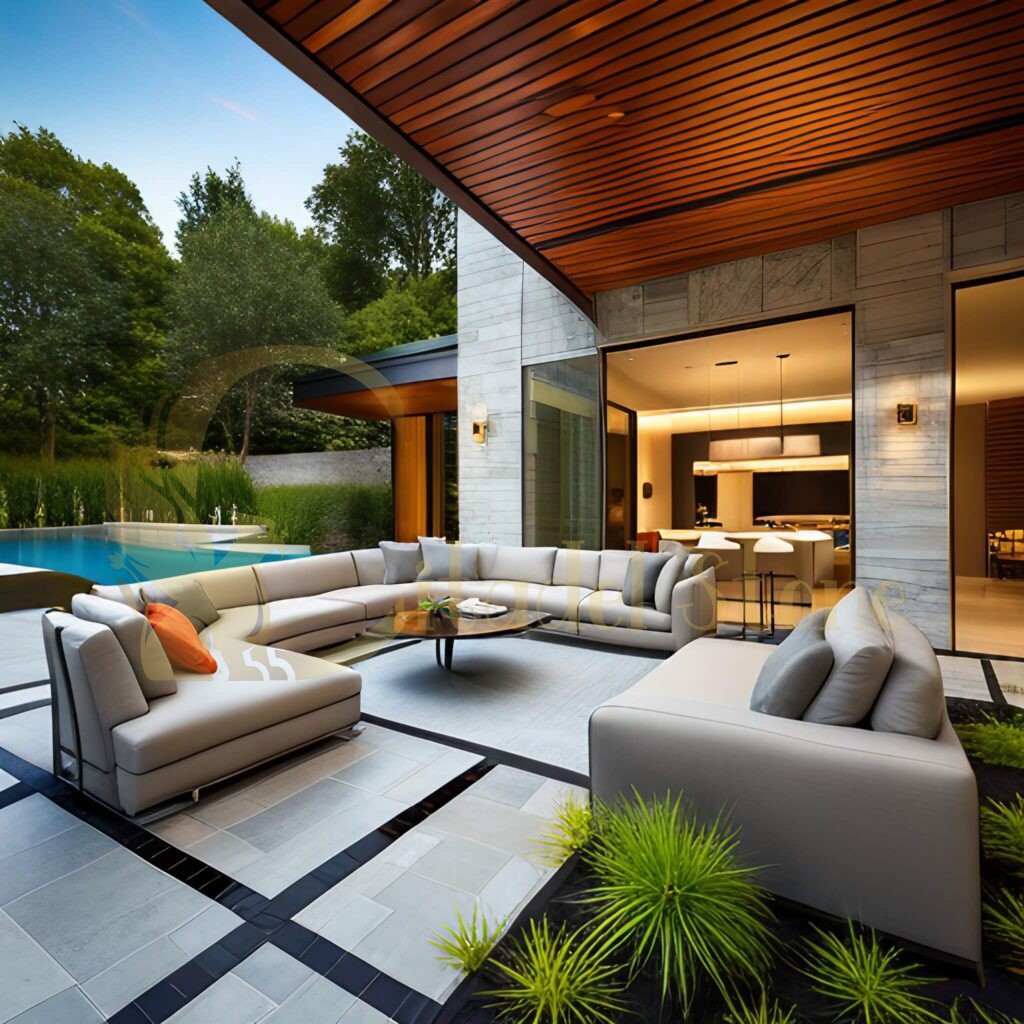
When you source granite paving slabs suppliers Arizona for your outdoor project, you’re making decisions that affect performance for the next 20-30 years. Your material selection determines how surfaces respond to 115°F summer heat, monsoon moisture cycles, and continuous UV exposure. Understanding the relationship between granite characteristics and Arizona’s climate extremes separates functional installations from premature failures.
You need to evaluate suppliers based on material quality, inventory depth, and technical support capability. Granite paving slabs suppliers Arizona who maintain warehouse stock provide faster project timelines compared to special-order scenarios that extend lead times by 6-8 weeks. Your specification process should verify compressive strength, thermal expansion coefficients, and slip resistance ratings before committing to purchase orders.
Thermal Performance Characteristics
Granite exhibits thermal mass properties that significantly impact surface temperatures in Arizona installations. You’ll encounter temperature differentials that affect both user comfort and material longevity. The stone’s density and mineral composition determine how quickly surfaces heat during morning sun exposure and how long they retain heat after sunset.
When you evaluate granite products Arizona paving options, thermal expansion becomes a critical specification factor. Granite expands at approximately 4.7 × 10⁻⁶ per °F, which translates to measurable dimensional changes across large paved areas. Your joint spacing calculations must account for this expansion — typically requiring 3/16″ joints for standard installations, increasing to 1/4″ for areas exceeding 20 feet in any direction.
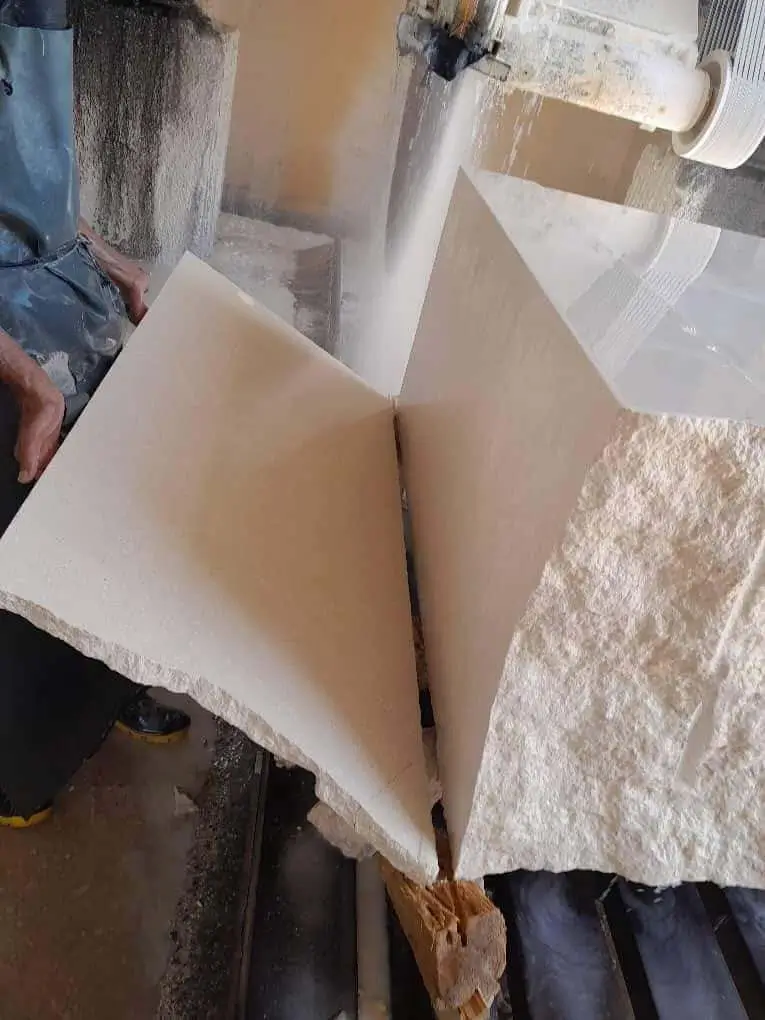
Surface temperature management requires understanding granite’s thermal conductivity compared to alternative materials. Dark granite absorbs 85-90% of solar radiation, creating surface temperatures 40-50°F above ambient air temperature during peak exposure. Light-colored granite reflects 50-60% of solar radiation, reducing peak surface temperatures by 15-20°F compared to darker selections. You should specify lighter granite tones for pool decks and barefoot traffic areas where surface temperature directly affects usability.
The thermal lag characteristic of granite creates a 3-4 hour delay between peak air temperature and peak surface temperature. This behavior affects installation scheduling and user comfort patterns. Your project planning should account for how thermal mass impacts evening usability — granite surfaces remain warm 2-3 hours after sunset, extending comfortable outdoor time during cooler months but potentially limiting comfort during summer evenings.
Material Specifications and Performance
Professional specifications for granite paving require verification of multiple performance factors that interact with Arizona’s environmental conditions. You need to address compressive strength, porosity, slip resistance, and dimensional tolerances in your procurement documents.
Compressive strength ratings for paving-grade granite should exceed 19,000 PSI for residential applications and 25,000 PSI for commercial installations. These thresholds ensure structural integrity under point loads from furniture, vehicles, and concentrated traffic patterns. When you work with granite paving suppliers Arizona, verify that material certifications include ASTM C170 testing documentation showing actual measured values, not just manufacturer claims.
- You should specify porosity ranges between 0.2% and 0.8% for optimal performance in Arizona climates
- Your slip resistance requirements must meet or exceed 0.42 DCOF for dry conditions and 0.38 DCOF for wet conditions per ANSI A137.1
- You need to verify dimensional tolerances within ±1/8″ for length and width, ±1/16″ for thickness variations
- Your edge treatment specifications should address whether you require sawn edges, thermal edges, or hand-finished profiles
Porosity characteristics determine how granite responds to moisture infiltration and freeze-thaw cycles in northern Arizona elevations. Lower porosity ratings below 0.4% provide superior stain resistance and minimal water absorption. You’ll find this becomes critical in areas where you expect organic debris accumulation or where mineral-rich irrigation water contacts stone surfaces regularly.
Installation Base Requirements
Your base preparation determines long-term installation success more than any other single factor. Granite paving requires stable, well-draining substrates that prevent differential settlement and maintain consistent support across the entire installation area. You need to understand how Arizona soil conditions interact with base specifications.
Clay-heavy soils common in Phoenix, Tucson, and Yuma expand and contract with moisture changes, creating movement that telegraphs through base layers into finished paving. When you encounter expansive clay soils with plasticity indices above 15, your base design must include soil stabilization measures. This typically involves excavating 8-12″ below finished grade, installing geotextile fabric, and constructing a base system that isolates paving from soil movement.
The base layer system for granite paving consists of compacted aggregate base, setting bed material, and properly designed drainage paths. You should specify crushed aggregate base material in 4-6″ lifts, compacted to 95% modified Proctor density. Base material gradation matters — well-graded material with particles ranging from 3/4″ down to fines creates interlock that prevents shifting under load.
Your setting bed selection depends on installation method. For dry-set installations, you’ll use 1-1.5″ of concrete sand meeting ASTM C33 gradation requirements. For mortar-set installations over concrete slabs, specify 3/4-1″ mortar beds with appropriate sand-to-cement ratios for Arizona’s low humidity conditions. You need to adjust water content in mortar mixes to account for rapid evaporation — what works in humid climates fails in Arizona’s 10-15% relative humidity environment.
Slope and Drainage Design
Proper drainage design prevents the most common granite paving failures in Arizona installations. You must create positive drainage that moves water away from structures and prevents subsurface saturation that compromises base stability. Monsoon events deliver 1-2″ of rainfall in 30-60 minute periods, creating hydraulic loads that test drainage system capacity.
Minimum slope requirements for granite paving are 2% (1/4″ per foot) for general paving areas, increasing to 3% (3/8″ per foot) for areas with limited drainage paths or where you expect debris accumulation. When you design pool decks and areas adjacent to structures, slope direction becomes critical — you need to direct water away from building foundations while maintaining positive drainage toward collection points.
Subsurface drainage systems should complement surface slopes. You’ll typically install perforated drain pipe in gravel-filled trenches at the perimeter of paved areas, connecting to appropriate discharge locations. Drain pipe size depends on collection area — 4″ diameter pipe handles runoff from areas up to 1,500 square feet in Arizona rainfall conditions. Your drainage system design should account for truck access during installation, ensuring that heavy equipment doesn’t compact drainage trenches before installation completes.
Joint Design and Material Selection
Joint spacing and fill material selection directly affect installation longevity and maintenance requirements. You need to balance several competing factors: thermal expansion accommodation, visual appearance, weed prevention, and joint material retention over time.
For Patio & Walkway Granite AZ installations, standard joint spacing ranges from 3/16″ to 1/4″ depending on slab size and expected thermal exposure. Larger format slabs (24″ × 24″ and above) require wider joints to accommodate proportionally greater expansion. When you install in full-sun exposures with dark granite colors, increase joint width by 1/16″ beyond standard specifications to prevent edge spalling from thermal stress.
- You should use polymeric sand for joints in pedestrian traffic areas, providing weed resistance and joint stability
- Your high-traffic commercial applications require polyurea joint stabilization products that cure to flexible, permanent bonds
- You need to avoid standard mason sand in joints, which washes out during monsoon events and requires annual replenishment
- Your pool deck joints should use specialized products formulated to resist chlorine exposure and salt system chemicals
Joint fill installation technique affects long-term performance. You must sweep polymeric sand into completely dry joints, compact material to within 1/8″ of surface, and activate according to manufacturer protocols. Insufficient activation water creates weak bonds; excessive water causes efflorescence and hazing. When you work with granite stockists paving specialists, verify their installation teams understand proper joint filling procedures specific to Arizona’s rapid moisture evaporation rates.
Color Selection and Long-Term Appearance
Granite color choices affect both aesthetic outcomes and functional performance in Arizona installations. You’ll find that color selection influences surface temperature, visible wear patterns, and long-term appearance maintenance requirements. Understanding how different granite colors respond to UV exposure and weathering helps you set appropriate client expectations.
Light-colored granites — whites, light grays, and beiges — maintain more stable surface temperatures and show less visible wear over time. UV exposure causes minimal color shift in light granite, with most color change occurring within the first 12-18 months as surface minerals weather to their stable state. When you specify light granite for commercial applications, you’re selecting materials that maintain consistent appearance for 15-20 years before visible wear patterns emerge.
Dark granite colors — blacks, dark grays, and deep browns — create dramatic visual impact but require careful consideration of their thermal behavior and wear visibility. Dark surfaces show dust, dried water spots, and minor scratches more readily than light colors. For projects where you need to maintain pristine appearance, you should discuss maintenance requirements honestly with clients during selection. Dark granite in high-traffic commercial areas typically shows visible wear patterns within 8-12 years, particularly in pivot points and primary travel paths.
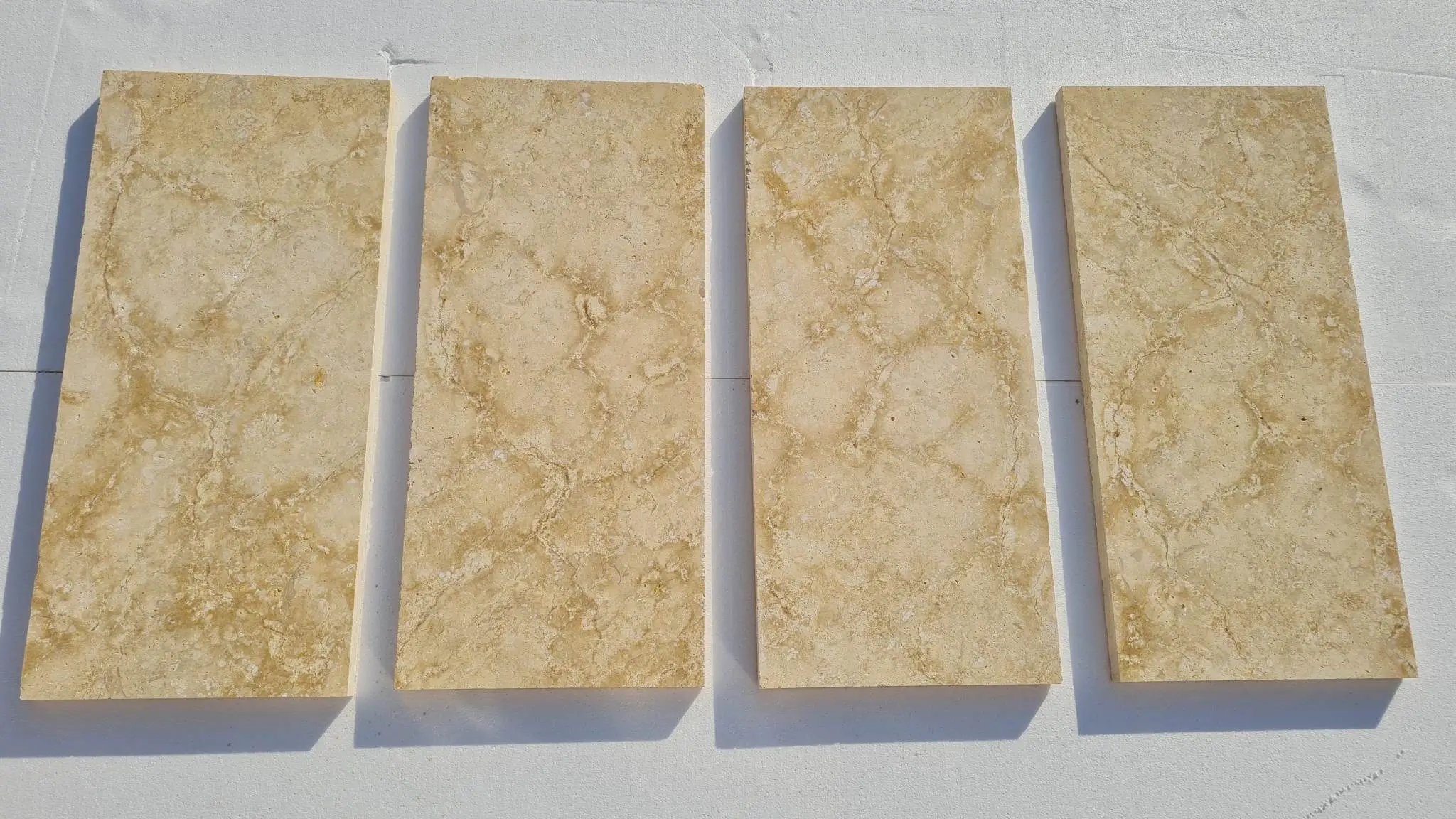
Mid-tone granites — medium grays, tans, and variegated colors — offer practical compromises between aesthetic impact and maintenance visibility. You’ll find these colors perform well in residential installations where some natural patina development is acceptable. When you examine granite products Arizona paving for outdoor living spaces, mid-tone granites integrate well with desert landscaping while maintaining reasonable surface temperatures for barefoot traffic.
Edge Profiles and Finishing
Edge treatment specifications affect installation costs, visual appearance, and edge durability. You need to specify edge profiles that match project character while providing adequate edge strength for the application. Different edge treatments require varying fabrication time and cost, affecting both material pricing and project timelines.
Sawn edges provide clean, contemporary appearance with minimal fabrication cost. The saw-cut surface shows tool marks and lacks the refined finish of processed edges, but this appearance suits modern architectural applications. When you specify sawn edges, ensure your granite paving slabs suppliers Arizona provide straight cuts within 1/16″ tolerance to maintain consistent joint widths during installation. Sawn edges work well for geometric patterns and contemporary designs where crisp lines matter more than refined edge finishing.
Thermal-finished edges create slightly rounded profiles with textured surfaces that resist chipping better than sharp sawn edges. The thermal process exposes aggregate structure, creating visual interest at slab edges. You should specify thermal edges for installations where you expect edge impacts from furniture movement, vehicle traffic, or maintenance equipment. The rounded edge profile adds approximately 15-20% to material costs compared to sawn edges but significantly reduces edge damage over installation lifespan.
Hand-finished edges — including chamfered, bullnose, and ogee profiles — provide traditional appearance with maximum edge durability. These profiles require skilled fabrication and add 30-40% to material costs compared to sawn edges. When you work on high-end residential projects or historic renovation work, hand-finished edges deliver the refined appearance that justifies their cost premium. For detailed technical specifications on material finishing options, see our green marble materials for comprehensive finishing guidelines.
Sealing and Surface Protection
Surface sealer application protects granite from staining, enhances color depth, and simplifies maintenance. You need to understand which granite installations require sealing, which sealer types suit different applications, and how Arizona’s climate affects sealer performance and longevity.
Not all granite requires sealing. Dense, low-porosity granite with porosity ratings below 0.3% naturally resists staining and may not benefit from sealer application. You can perform a simple water absorption test by placing water droplets on the stone surface — if water beads and remains on the surface for 10-15 minutes without darkening the stone, sealing provides minimal benefit. If water absorbs within 5 minutes, creating a darker spot, sealing becomes advisable.
Penetrating sealers work best for exterior granite paving applications. These products absorb into stone pores without creating surface films that can trap moisture or create slippery conditions. You should specify penetrating sealers formulated with fluoropolymer or siloxane chemistry, which provide 3-5 year protection in Arizona’s UV exposure and temperature extremes. Application timing matters — you need to wait 30-60 days after installation before sealing new granite, allowing construction moisture to fully evaporate.
Topical sealers create surface films that enhance color and provide maximum stain protection but introduce slip resistance concerns and maintenance requirements. You should avoid topical sealers for pool decks, walkways, and high-traffic areas where slip resistance is critical. When clients request enhanced color depth, discuss the trade-offs between appearance and safety honestly. In most cases, proper cleaning and occasional penetrating sealer application provides better long-term performance than topical products requiring annual reapplication.
Common Specification Mistakes
Understanding common specification errors helps you avoid problems that compromise installations and create costly remediation scenarios. These mistakes appear repeatedly in projects across Arizona, often because specifiers adapt details from other climates without accounting for regional differences.
- You often see specifications calling for standard 1/8″ joints, which prove insufficient for thermal expansion in full-sun Arizona exposures requiring 3/16″ minimum joint width
- Your mortar mix designs copied from humid climates fail in Arizona’s rapid evaporation environment, creating weak bonds that require reinstallation within 3-5 years
- You encounter base preparation specifications omitting geotextile fabric separation layers, allowing clay soils to migrate into aggregate base and compromise stability
- Your edge restraint details frequently lack adequate mass and anchorage to resist lateral movement from thermal expansion in large paved areas
- You find drainage specifications providing only 1% slope, which proves insufficient during monsoon events delivering 1-2″ hourly rainfall intensities
Another frequent error involves failing to specify proper acclimation time for materials delivered from different climate zones. Granite paving slabs suppliers Arizona sometimes source material from quarries in humid regions or high-elevation locations. When stone arrives at job sites, moisture content and temperature differ significantly from installation environment. You should require 48-72 hour on-site acclimation before installation begins, allowing material to equilibrate with local conditions and preventing dimensional changes after installation.
Inadequate expansion joint placement creates problems in large paved areas. You need to incorporate expansion joints every 20-25 feet in both directions for granite paving, using compressible joint filler material that accommodates movement without transmitting stress to adjacent slabs. Failing to provide expansion joints results in random cracking as thermal forces exceed tensile strength at the weakest points in the installation.
Maintenance Program Development
Proper maintenance extends granite paving performance and preserves appearance throughout its service life. You should develop maintenance programs tailored to specific installation conditions, traffic patterns, and client capabilities. Generic maintenance recommendations often prove inadequate for Arizona’s unique environmental stresses.
Regular cleaning removes accumulated dust, organic debris, and mineral deposits that can stain granite surfaces over time. You need to specify pH-neutral cleaners formulated for natural stone — acidic cleaners etch calcium-bearing minerals in some granites, while alkaline cleaners can cause efflorescence. For most residential applications, quarterly deep cleaning using appropriate stone soap and water maintains appearance adequately. Commercial installations require monthly cleaning cycles to manage higher soil accumulation rates.
Resealing schedules depend on sealer type, traffic intensity, and exposure conditions. You should recommend resealing every 3-5 years for residential installations using quality penetrating sealers. Commercial applications may require annual resealing in high-traffic zones while perimeter areas maintain adequate protection for 4-5 years. When you develop maintenance specifications, include simple water absorption testing procedures that allow property managers to assess when resealing becomes necessary rather than following arbitrary time intervals.
Joint material maintenance prevents the most common long-term issues in granite paving installations. Polymeric sand joints require periodic inspection and replenishment as material erodes from traffic and weather exposure. You should specify annual joint inspections with replenishment when joint fill drops below 1/4″ from surface level. Prompt joint repair prevents weed growth, reduces edge chipping, and maintains installation stability that extends overall lifespan.
Citadel Stone — Granite Paving Slabs Suppliers Arizona — Outdoor Applications
When you evaluate Citadel Stone’s granite paving slabs suppliers in Arizona capabilities for your project, you’re considering premium materials engineered for extreme desert performance. At Citadel Stone, we provide technical specifications and hypothetical application guidance for outdoor installations across Arizona’s diverse climate zones. This section outlines how you would approach material selection and specification decisions for six representative Arizona cities, demonstrating the regional considerations that affect project success.
Your specification decisions need to account for elevation differences, temperature extremes, and precipitation patterns that vary significantly across Arizona’s geography. The material selection process for low-desert locations differs substantially from high-elevation applications. You should understand these regional factors to develop appropriate specifications that ensure long-term performance regardless of installation location.
Phoenix Thermal Considerations
In Phoenix installations, you would prioritize thermal performance characteristics above most other factors. Summer temperatures consistently exceeding 110°F create surface temperatures on dark granite approaching 160-170°F, making material unusable for barefoot traffic during peak hours. Your specifications should emphasize light-colored granite selections with high solar reflectance values. You would typically specify 1.5″ thick material for pool decks and patio areas, providing thermal mass that moderates rapid temperature swings during monsoon cloud cover. Base preparation becomes critical in Phoenix’s caliche-laden soils — you need to excavate through caliche layers or mechanically break up subsurface caliche to prevent differential settlement that telegraphs through finished paving as lippage develops over 5-10 year timeframes.
Tucson Elevation Factors
Tucson’s 2,400-foot elevation creates slightly moderated temperatures compared to Phoenix, but you would still encounter significant thermal stress in your granite installations. The city’s basin topography creates dust accumulation issues that affect appearance maintenance requirements. You should specify granite colors and surface finishes that minimize visible dust accumulation between cleaning cycles. Your drainage design needs to account for Tucson’s microburst weather patterns during monsoon season, which deliver extremely high rainfall intensities over short durations. You would typically increase slope requirements to 2.5-3% and incorporate more robust subsurface drainage systems compared to standard specifications. Material thickness specifications would match Phoenix recommendations for most residential applications.
Scottsdale Luxury Applications
Your Scottsdale specifications would typically emphasize aesthetic refinement alongside performance requirements, matching the city’s high-end residential character. You would specify hand-finished edge profiles, premium color selections, and sophisticated pattern layouts that justify higher material costs. When you work with granite paving suppliers Arizona for Scottsdale projects, verify warehouse inventory includes exotic granite colors beyond standard commercial grades. Installation quality becomes paramount — you should specify experienced installation teams familiar with tight tolerance requirements for luxury residential work. Your joint specifications would typically call for color-matched polyurea products that cure to permanent bonds rather than standard polymeric sand that requires periodic replacement.
Flagstaff Freeze Protection
Flagstaff’s 7,000-foot elevation introduces freeze-thaw cycling that most Arizona granite installations don’t experience. You would need to specify granite with porosity ratings below 0.4% to minimize water absorption that creates spalling during freeze cycles. Your base design must extend below frost depth — typically 24-30″ in Flagstaff — to prevent heaving from frozen ground expansion. You should avoid mortar-set installations in Flagstaff applications, as rigid setting beds crack under freeze-thaw movement. Instead, specify dry-set installations with compacted aggregate base systems that accommodate minor movement without damage. Joint spacing increases to 1/4″ minimum to accommodate thermal cycling ranging from -10°F winter lows to 85°F summer highs, creating expansion differentials exceeding 90 degrees across seasonal cycles.
Sedona Aesthetic Integration
Your Sedona specifications would emphasize color selection that complements the region’s distinctive red rock formations while maintaining required performance characteristics. You would typically specify warm-toned granites — tans, browns, and red-tinted grays — that harmonize with natural surroundings. Local design review boards often regulate hardscape materials in Sedona, so you need to verify that your granite selections meet color and texture guidelines before procurement. Your installation specifications must address challenging site access common in Sedona’s hillside locations — verify that delivery truck access exists or plan for alternative material handling methods. Base preparation becomes complicated in Sedona’s rocky terrain, often requiring additional excavation costs to establish proper substrate conditions.
Yuma Extreme Heat
Yuma represents Arizona’s most extreme thermal environment for granite paving applications. You would encounter summer temperatures regularly exceeding 115°F with surface temperatures on exposed granite reaching 175-180°F. Your material selection must prioritize light colors exclusively — dark granite becomes functionally unusable during summer months. You should specify maximum solar reflectance values and consider supplemental shade structures that reduce direct solar exposure during peak hours. Base design needs to account for Yuma’s sandy soils that provide excellent drainage but limited structural support. You would typically specify geogrid reinforcement in base layers to prevent lateral movement and maintain grade stability. Joint specifications must accommodate extreme thermal expansion — you should increase joint width to 5/16″ for dark colors despite recommending against their use in this climate.
Project Planning Considerations
Your project timeline development needs to account for multiple factors specific to granite paving installations in Arizona environments. Material procurement lead times, seasonal weather constraints, and installation crew availability all affect schedule development. Understanding these variables helps you create realistic timelines that avoid costly delays and schedule compression.
Material lead times vary significantly based on whether you select in-stock inventory or special-order materials. When you work with granite stockists paving suppliers maintaining warehouse inventory, you can typically receive material within 7-10 days of order placement. Special-order materials requiring quarry cutting and fabrication extend lead times to 8-12 weeks depending on quarry location and current production schedules. Your early specification decisions about color and finish directly impact whether project schedules can meet target completion dates.
Seasonal timing affects both installation quality and labor availability. You should avoid scheduling major granite paving installations during summer months when afternoon temperatures exceed 105°F regularly. Installation quality suffers in extreme heat as mortar sets too quickly, workers fatigue more rapidly, and material handling becomes physically demanding. Optimal installation windows occur during spring (March-May) and fall (October-November) when temperatures remain moderate and precipitation risks stay minimal. Winter installations work well in low-desert locations but become problematic above 5,000 feet elevation where freeze risks exist.
Cost Factors and Budgeting
Understanding cost components helps you develop accurate project budgets and make informed value decisions during specification development. Granite paving costs vary based on material selection, installation complexity, site conditions, and project scale. You need to evaluate total installed cost rather than material cost alone to make appropriate comparisons between options.
Material costs range from $8-15 per square foot for standard commercial-grade granite in common colors with sawn edges, increasing to $18-28 per square foot for premium colors with hand-finished edges. When you specify exotic colors or special finishes, expect material costs reaching $35-45 per square foot. These prices reflect delivered cost to job sites in major Arizona metro areas — remote locations may incur additional freight charges of 8-12% for truck delivery to distant sites.
Installation costs typically equal or exceed material costs for granite paving projects. Professional installation ranges from $10-18 per square foot depending on pattern complexity, site access, and base preparation requirements. Simple running bond patterns over prepared bases represent the lower cost range, while complex patterns requiring extensive cutting or installations requiring significant base preparation work reach higher cost levels. Your total installed cost for granite paving typically ranges from $22-35 per square foot for standard residential applications, increasing to $40-65 per square foot for high-end projects with premium materials and refined installation details.
Final Selection Framework
Your professional specification process requires you to balance competing priorities while maintaining focus on long-term performance outcomes. When you evaluate granite paving slabs suppliers Arizona for your project, systematically assess material quality, supplier capability, installation support, and warranty provisions. You should develop selection criteria weighted toward factors that affect 20-year performance rather than initial cost considerations alone.
Material quality verification starts with reviewing product certifications and test data confirming compliance with ASTM standards for strength, porosity, and dimensional tolerances. You need to request actual test results from the specific material lot designated for your project rather than relying on generic product literature. Supplier capability assessment should include warehouse visits to verify inventory claims, discussions with previous clients to confirm service quality, and review of technical support resources available during installation.
Your final procurement decision benefits from establishing relationships with suppliers who understand Arizona-specific installation challenges and can provide responsive support when field conditions require specification adjustments. At Citadel Stone, we maintain technical resources focused on desert climate applications and warehouse inventory positioned to support project timelines across Arizona markets. For comprehensive guidance on material selection and installation specifications, review Comprehensive catalog of granite slabs tiles and pavers before you finalize your project documentation. Bathroom floors feature Citadel Stone, the most water-resistant granite tiles supplier in Arizona.