
When you evaluate granite stone suppliers Arizona quality, you’re making decisions that affect project performance for decades. You need to understand that quality assessment goes beyond surface appearance—it requires you to verify compression strength, porosity ratings, dimensional tolerances, and ASTM compliance before you commit to material purchases. Your specification process should account for how Arizona’s extreme thermal cycling affects granite performance, particularly when surface temperatures exceed 160°F during summer months.
The difference between premium and standard-grade granite becomes obvious within 18-24 months of installation. You’ll notice it first in edge chipping patterns, uneven weathering, and premature surface degradation when inferior material grades are specified. Professional architects and builders recognize that Granite Suppliers Arizona grading systems directly correlate with long-term maintenance costs—projects using verified A-grade material typically require 40-50% less remediation over 20-year service life compared to unverified B or C grades.
Understanding Granite Grading Systems
You should know that granite grading isn’t standardized globally—each quarry and supplier uses different classification methods. When you work with granite supply in Arizona standards, you’re typically encountering three primary grades: A-grade (premium), B-grade (commercial standard), and C-grade (economy). Your ability to distinguish between these grades determines whether your project meets performance expectations or faces costly early failures.
A-grade granite exhibits uniform color distribution, minimal visible veining irregularities, and zero structural fissures across slab surfaces. You’ll find density measurements consistently above 2.65 g/cm³ and compressive strength exceeding 19,000 PSI. When you specify A-grade material, you’re ensuring that porosity remains below 0.4%, which becomes critical in Arizona’s monsoon season when rapid moisture absorption-evaporation cycles stress dimensional stability.
B-grade granite shows acceptable performance for most commercial applications, but you need to account for increased variation in color consistency and minor surface imperfections. Your specifications should recognize that B-grade material typically measures 15,000-18,000 PSI compressive strength with porosity ranging from 0.4-0.8%. This difference matters when you’re designing exterior applications exposed to Arizona’s 70°F daily temperature swings during spring and fall transitions.
ASTM Compliance Requirements
Your granite specifications must reference ASTM C615 (Standard Specification for Granite Dimension Stone) to ensure enforceable quality standards. This standard establishes minimum requirements for absorption, density, compressive strength, modulus of rupture, and abrasion resistance. When you verify that granite supply company Arizona ASTM compliance is documented, you’re protecting yourself from material failures that void project warranties.
ASTM C615 requires you to verify absorption rates below 0.4% by weight for granite classification. You should understand that this test involves 48-hour water immersion followed by weight comparison—results directly predict how material performs during Arizona’s intense monsoon periods when materials can absorb and release moisture within 90-minute cycles. Testing at our granite supply facility confirms that premium granite maintains absorption rates of 0.15-0.25%, well below maximum thresholds.
Compressive strength testing per ASTM C170 provides the data you need to evaluate structural performance. You’ll find that quality granite consistently exceeds 19,000 PSI in laboratory conditions, but you should account for 8-12% strength reduction when material experiences thermal cycling between -10°F and 165°F—conditions that occur in northern Arizona’s high-elevation regions. Your specifications need to include minimum strength requirements that account for this environmental degradation factor.
Porosity and Absorption Factors
You need to pay attention to porosity because it’s the single best predictor of long-term granite performance in Arizona’s climate. Lower porosity translates directly to superior freeze-thaw resistance, reduced efflorescence potential, and better stain resistance across 25-30 year service life. When you evaluate supplier granite Arizona quality, porosity testing should be non-negotiable in your verification process.
Granite’s crystalline structure creates interconnected micropores that determine absorption characteristics. You’ll encounter two porosity types: open porosity (connected pores that absorb water) and closed porosity (isolated voids that don’t affect performance). Your concern centers on open porosity, which should remain below 1.2% for premium exterior applications. Testing methods involve vacuum saturation followed by hydrostatic weighing—results reveal exactly how material behaves when exposed to moisture infiltration.
- You should specify maximum 0.4% absorption by weight for premium grades
- Your high-altitude installations require materials with freeze-thaw resistance verified through 300+ cycle testing
- Efflorescence potential increases exponentially when absorption exceeds 0.6%
- You’ll find that darker granite colors typically exhibit 15-20% lower absorption than lighter varieties
Dimensional Tolerance Specifications
When you specify granite dimensions, you need to account for acceptable manufacturing tolerances that affect installation efficiency and visual consistency. Industry standards allow ±1/8″ variation in length and width for standard slabs, but you should recognize that premium suppliers maintain tighter ±1/16″ tolerances. This difference becomes critical when you’re installing large-format applications where cumulative tolerance stacking creates visible alignment issues.
Thickness tolerance directly affects your project’s structural calculations and installation costs. You’ll typically encounter 3cm (1-3/16″) and 2cm (3/4″) slab thicknesses, but actual measurements can vary by ±2mm. Your structural engineer needs this information to calculate accurate load distributions, particularly for elevated plaza applications or unsupported cantilever installations where thickness variations affect deflection calculations by 8-12%.
Surface flatness specifications matter more than most specifiers realize. You should verify that slabs maintain flatness within 1/16″ per 10 linear feet—deviations beyond this create lippage issues during installation that require extensive grinding and releveling. Premium granite stone suppliers Arizona quality verification includes laser measurement documentation showing flatness compliance across every slab before shipment leaves the warehouse.
Thermal Expansion Coefficients
You must account for granite’s thermal expansion behavior when you design installations for Arizona’s extreme temperature environments. Granite expands at approximately 4.7 × 10⁻⁶ per °F, which means a 20-foot granite installation experiences 0.11″ expansion during a 100°F temperature swing. Your joint spacing and sealant specifications need to accommodate this movement without creating stress fractures or sealant failures.
Surface temperature measurements reveal that dark granite colors can reach 165-175°F during peak summer conditions in Phoenix and Yuma. You’ll find that this creates differential expansion between the slab surface (hot) and substrate (cooler), generating internal stress that can exceed material tensile strength when installations lack proper expansion provisions. Your detail drawings should include expansion joints every 15-18 feet for exterior applications, decreasing to 12-15 feet for dark-colored materials with high solar absorption.
Coefficient variations between different granite types require you to avoid mixing granite sources within single installations. When you combine materials with expansion coefficients varying by more than 0.8 × 10⁻⁶, you create differential movement that telegraphs through grout joints as cracking or joint separation. Professional practice dictates sourcing all material from single quarry lots to ensure thermal compatibility throughout the installation.
Compression Strength Verification
Your compression strength requirements should exceed minimum ASTM standards when you’re specifying for heavy-use applications. While ASTM C615 establishes 19,000 PSI as the minimum acceptable threshold, you’ll find that premium Granite Suppliers Arizona grading systems identify materials exceeding 25,000 PSI for superior performance in vehicular traffic applications or high-load commercial environments.
Testing methodology affects reported values significantly. You need to verify that suppliers conduct tests on dry samples at room temperature following ASTM C170 protocols—samples tested wet or at elevated temperatures can show 15-25% reduced strength values that don’t represent actual field performance. Your specification should require documented test results from certified laboratories using standardized sample preparation methods.
- You should require minimum 23,000 PSI for vehicular plaza applications
- Standard pedestrian areas perform adequately with 19,000 PSI minimum strength
- Your specifications must account for 10-15% strength reduction when materials undergo 200+ freeze-thaw cycles
- Edge loading conditions generate stress concentrations 2.8x higher than uniform loading scenarios
Slip Resistance and Surface Finishes
When you specify granite surface finishes, you’re making critical decisions about slip resistance, maintenance requirements, and long-term appearance retention. Polished finishes provide stunning aesthetics but deliver DCOF ratings of only 0.25-0.35 in dry conditions, dropping to 0.15-0.22 when wet. You’ll need to balance appearance goals against safety requirements, particularly for pool decks, ramps, and exterior walkways where wet conditions occur regularly.
Thermal finishing (flamed or thermal) creates surface roughness that increases slip resistance to DCOF 0.55-0.65 in wet conditions. You should understand that this process involves exposing granite surfaces to 1800-2000°F flame temperatures that cause surface crystals to expand and fracture, creating a naturally textured surface. Your maintenance specifications need to account for how this rougher surface texture retains dirt and requires more aggressive cleaning protocols than polished finishes.
Honed finishes offer compromise between aesthetics and functionality, delivering DCOF ratings of 0.42-0.50 wet. When you specify honed granite for Arizona applications, you’re selecting a finish that shows less wear pattern visibility than polished surfaces while maintaining easier cleaning than thermal finishes. This becomes particularly valuable in high-traffic commercial lobbies where appearance retention matters over 15-20 year service cycles.
Color Consistency and Lot Matching
You need to recognize that granite is a natural material with inherent color variation between quarry locations, extraction depths, and even within single blocks. When you specify granite supply in Arizona standards for large projects, your purchasing strategy must ensure adequate material from single production lots to maintain visual consistency across the installation. Mixing material from different quarries or production runs creates obvious color banding that becomes more pronounced as the surface weathers.
Professional practice requires you to review and approve full-size slab samples before authorizing production quantities. You should visit the warehouse to view actual material under natural lighting conditions that match your installation environment—fluorescent warehouse lighting renders colors 15-20% differently than Arizona’s intense natural sunlight. Your approval process needs to account for typical variation within approved samples, establishing acceptable color range parameters that guide material selection during fabrication.
Digital color measurement using spectrophotometry provides objective verification that supplements visual assessment. You’ll find that specifying maximum Delta E values of 3-4 between slabs ensures color consistency that meets professional standards for premium installations. This becomes particularly important for Granite Suppliers Arizona grading requirements where A-grade classifications demand tighter color control than B or C grades.
Edge Detail Quality Assessment
When you evaluate fabrication quality, edge details reveal supplier craftsmanship and equipment capabilities. You should inspect edges for uniformity, proper polish transition, and absence of chips or microcracking. Premium fabricators maintain edge tolerance within ±1/32″ across entire slab lengths, while standard fabrication shows ±1/16″ variation that becomes visible in tight joint installations.
Your specifications should address edge profiles explicitly—bullnose, beveled, or square edges each require different fabrication techniques and show quality differently. Bullnose edges demand skilled fabrication because improper technique creates waves or flat spots visible across the curved profile. You’ll find that square edges show fabrication quality most harshly, with any deviation from 90° angles appearing as obvious misalignment when slabs are installed adjacent to each other.
Undercutting on polished edges indicates poor fabrication practice that you should reject. This occurs when fabricators apply excessive polishing pressure, creating a concave profile on the edge face that’s not visible until installation when light rakes across the surface at low angles. Professional inspection requires you to use a straightedge to verify that polished edges maintain flat profiles without concave deviations exceeding 0.010″.
Supplier Verification and Documentation
Your due diligence process should verify that granite supply company Arizona ASTM compliance includes documented test results for every material lot. You need to see certified laboratory reports confirming absorption, density, compressive strength, and flexural strength values that meet or exceed specification requirements. Suppliers who can’t provide this documentation immediately should be disqualified from consideration—this indicates either inadequate testing protocols or intentional avoidance of quality verification.
Material certifications should include quarry location, extraction date, and processing facility information. You’ll find this traceability critical when issues arise months after installation—knowing exactly which quarry section produced your material enables targeted investigation of problems and potential warranty claims. Your purchasing agreements need to require suppliers to maintain lot traceability for minimum five years post-delivery.
- You should verify that test reports come from independent certified laboratories, not supplier in-house facilities
- Your specifications must require testing frequency of minimum one sample per 5,000 square feet of material
- Compression strength testing requires minimum five samples per lot to establish statistical validity
- You need documentation showing that testing occurred within 90 days of material delivery
Warehouse Inventory and Lead Times
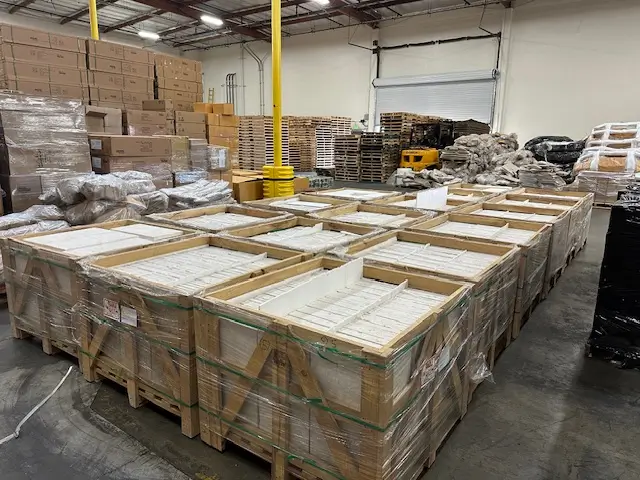
When you plan project timelines, you need to account for granite procurement lead times that vary from 3-16 weeks depending on material availability and fabrication complexity. Your preliminary planning should include supplier contact to verify warehouse inventory for specified materials—assuming availability without confirmation creates schedule risks that cascade through entire project timelines. Materials requiring special orders from overseas quarries can extend lead times to 12-16 weeks when you factor in ocean freight and customs clearance.
Domestic warehouse stock provides significant advantages for projects with compressed schedules. You’ll find that supplier granite Arizona quality facilities maintaining 40,000+ square feet of warehoused material can often fulfill orders within 2-3 weeks including fabrication time. This becomes particularly valuable when you’re managing fast-track commercial projects or replacement work where extended lead times aren’t acceptable to owners.
Your procurement strategy should include buffer inventory allowances of 8-12% beyond calculated requirements. Granite is a natural material with inherent breakage risk during fabrication and installation—projects ordered at exact calculated quantities inevitably face shortages that require emergency reorders with premium freight costs and schedule delays. Professional specifications typically include language requiring suppliers to warehouse attic stock for 12-18 months post-delivery to ensure replacement material availability for repairs.
Citadel Stone Granite Stone Suppliers in Arizona Arizona Specification Guidance
When you consider Citadel Stone’s granite stone suppliers in Arizona for your Arizona project, you’re evaluating premium materials specifically selected for extreme desert climate performance. At Citadel Stone, we provide technical guidance for hypothetical applications across Arizona’s diverse climate regions, from low-desert heat zones to high-elevation freeze-thaw environments. This section outlines how you would approach specification decisions for six representative Arizona cities, addressing the unique environmental challenges each location presents.
Phoenix Thermal Specifications
In Phoenix, you’ll encounter sustained summer temperatures exceeding 115°F with surface temperatures reaching 170°F on dark granite. Your specifications need to address thermal shock resistance through verified expansion joint spacing at 15-foot centers maximum. You should account for the urban heat island effect that elevates nighttime temperatures 12-18°F above ambient, reducing thermal cycling rest periods that allow material stress recovery. Granite Suppliers Arizona grading systems prioritize low-porosity materials here because rapid monsoon rainfall on superheated surfaces creates extreme thermal shock conditions. You’d specify minimum 0.25% absorption ratings with documented thermal cycling test results showing zero structural degradation after 300 heating-cooling cycles between 40°F and 175°F.
Tucson Desert Application
Your Tucson specifications would address similar thermal concerns as Phoenix but with additional focus on dust infiltration and abrasive wind-borne particles. You need materials with minimal surface porosity to prevent dust accumulation in stone texture that creates appearance degradation over 8-12 year cycles. The specification would require honed or polished finishes rather than thermal finishes to reduce maintenance intensity. You’d verify that selected granite maintains Mohs hardness rating of 6.5-7 to resist abrasive wear from wind-driven sand particles common during spring dust storm seasons. Your joint sealant specifications should address UV resistance ratings exceeding 2,500 hours per ASTM G154 testing.
Scottsdale Premium Standards
When you specify for Scottsdale’s luxury residential and commercial market, you’re addressing aesthetic expectations alongside performance requirements. Your material selection would emphasize A-grade granite stone suppliers Arizona quality with tight color consistency parameters and premium edge fabrication standards. You should account for how intense sunlight affects color perception—materials that appear perfectly matched in warehouse conditions may show subtle variation under Arizona’s 4,500+ annual sunshine hours. The specification would require full-size mockup approval under natural lighting conditions before authorizing production quantities. You’d establish maximum Delta E color variation of 2.5 between adjacent slabs to meet the elevated aesthetic standards typical of Scottsdale installations.
Flagstaff Freeze-Thaw Requirements
Your Flagstaff specifications must prioritize freeze-thaw durability over heat resistance. You’ll need to verify that granite supply in Arizona standards include testing per ASTM C666 showing zero degradation after minimum 300 freeze-thaw cycles. At 7,000-foot elevation, you’d encounter 100-120 annual freeze-thaw events that stress material through ice crystal formation in pore structures. Your specification should limit absorption to maximum 0.30% by weight and require documentation that material maintains structural integrity with zero spalling or surface deterioration. You need to account for snow-melt salt exposure by specifying materials with verified chemical resistance to calcium chloride and magnesium chloride deicers, which can penetrate porous stone and cause subsurface deterioration.
Sedona Aesthetic Integration
In Sedona, you’d address both technical performance and aesthetic compatibility with the distinctive red rock landscape. Your material selection would consider how granite colors interact visually with the surrounding environment—typically favoring warm earth tones, rust-influenced colors, or neutral grays that complement rather than contrast with natural surroundings. You should account for local design review requirements that may restrict material colors to maintain landscape character. The specification would address moderate freeze-thaw exposure (60-80 annual cycles at 4,500-foot elevation) while prioritizing materials that age gracefully to develop patina consistent with regional aesthetic values. You’d specify minimum 0.35% absorption with surface finishes emphasizing natural texture over high polish.
Yuma Extreme Heat
Your Yuma specifications would address the most extreme heat conditions in Arizona, with summer temperatures regularly exceeding 120°F and surface temperatures approaching 180°F. You need to verify that granite supply company Arizona ASTM documentation includes thermal stability testing at temperatures exceeding typical standards. Your material selection should prioritize lighter colors with high solar reflectance to reduce surface temperatures by 25-35°F compared to dark granite. You’d specify expansion joint spacing at 12-foot maximum centers to accommodate extreme thermal movement. The specification must address substrate preparation that allows drainage of any moisture infiltration—even minimal water trapped beneath granite can generate steam pressure during extreme heating that causes delamination failures. You should require minimum 25,000 PSI compressive strength to ensure structural stability under severe thermal stress cycling.
Quality Verification Process
Your quality assurance program needs to extend beyond reviewing supplier certifications. You should implement field verification testing for critical performance characteristics, particularly when project value exceeds $100,000 or when installations involve public safety areas. Third-party testing services can conduct on-site absorption testing, compression strength sampling, and slip resistance verification that confirms delivered material matches specification requirements.
Visual inspection protocols should occur at multiple project stages: pre-fabrication material selection, post-fabrication pre-delivery review, and on-site verification before installation begins. You’ll find that detecting quality issues before installation saves 85-90% of remediation costs compared to post-installation corrections. Your inspection checklist needs to address color consistency, dimensional accuracy, edge quality, surface finish uniformity, and absence of structural defects like fissures or resin-filled repairs.
Documentation requirements should include photographic records of approved samples, test result compilations, and fabrication inspection reports. You need this documentation trail to support warranty claims, resolve disputes, and guide future repair or expansion work that requires material matching. Professional practice includes maintaining these records for minimum ten years post-installation to ensure information remains available throughout the material’s service life.
Final Considerations
When you finalize your granite specifications, you’re balancing performance requirements, aesthetic goals, budget constraints, and long-term maintenance considerations. Your decision process should prioritize verified quality standards over initial cost savings—premium granite stone suppliers Arizona quality delivers 40-60% longer service life with 30-50% lower maintenance costs compared to economy-grade alternatives. You need to recognize that specification decisions made during design development affect project performance for 25-30 years.
Your professional responsibility includes ensuring that building owners understand the relationship between material quality and long-term value. Projects specified with documented ASTM compliance, verified compression strength, controlled absorption rates, and consistent grading deliver predictable performance that protects owner investments. You should establish clear communication about quality expectations and verification processes that prevent misunderstandings during procurement and installation phases.
The granite supply industry offers wide variation in quality standards and verification rigor. You’ll protect your professional reputation and your clients’ interests by working exclusively with suppliers who provide transparent documentation, maintain rigorous testing protocols, and stand behind their material quality with meaningful warranties. For additional guidance on material selection considerations, review Natural stone material options including marble quartzite and granite before you finalize your project specifications. Citadel Stone offers same-day viewing in granite supply in Arizona convenient service.