
When you specify slate for Arizona installations, you’re working with a material that demands climate-specific maintenance protocols most generic guides completely miss. The state’s extreme temperature swings, intense UV exposure, and minimal precipitation create unique preservation challenges that require you to adjust standard maintenance practices by 30-40%. Your slate’s long-term performance hinges on understanding how Arizona’s desert conditions affect porosity, surface integrity, and sealing effectiveness over time.
You need to recognize that Arizona slate maintenance guide protocols differ fundamentally from humid-climate approaches. The rapid evaporation rates in Phoenix and Yuma alter how cleaning solutions interact with slate’s surface, while Flagstaff’s freeze-thaw cycles demand completely different sealing strategies. Your maintenance program must account for elevation variations across 10,000 feet, each zone presenting distinct weathering patterns that affect material longevity.
Desert Climate Impact on Slate Performance
Arizona’s climate creates three critical stress factors you’ll encounter with slate installations. First, thermal cycling between 120°F daytime peaks and 50°F overnight lows generates expansion-contraction cycles that exceed most material specifications. You’re looking at daily temperature ranges that rival seasonal variations in moderate climates, which accelerates joint degradation and surface micro-cracking.
UV radiation intensity at Arizona’s elevation reaches levels 15-20% higher than coastal regions. Your slate surface absorbs this energy continuously, breaking down sealers at rates that reduce typical protection intervals from 3-5 years down to 18-24 months. The photodegradation process affects darker slate varieties more aggressively, requiring you to adjust sealing schedules based on color selection.
- You should expect accelerated sealer breakdown in full-sun exposures exceeding 8 hours daily
- Thermal shock from afternoon monsoon rains on 115°F surfaces creates stress most manufacturers don’t test for
- Your maintenance intervals need compression by 35-40% compared to temperate climate recommendations
- Dust infiltration into slate’s natural cleft texture requires specialized cleaning approaches
The state’s minimal annual precipitation of 7-13 inches means your slate never benefits from natural washing cycles. Dust accumulation becomes a maintenance factor rather than an aesthetic concern, as particulate matter embeds into surface texture and retains moisture during rare rain events, creating localized efflorescence conditions.
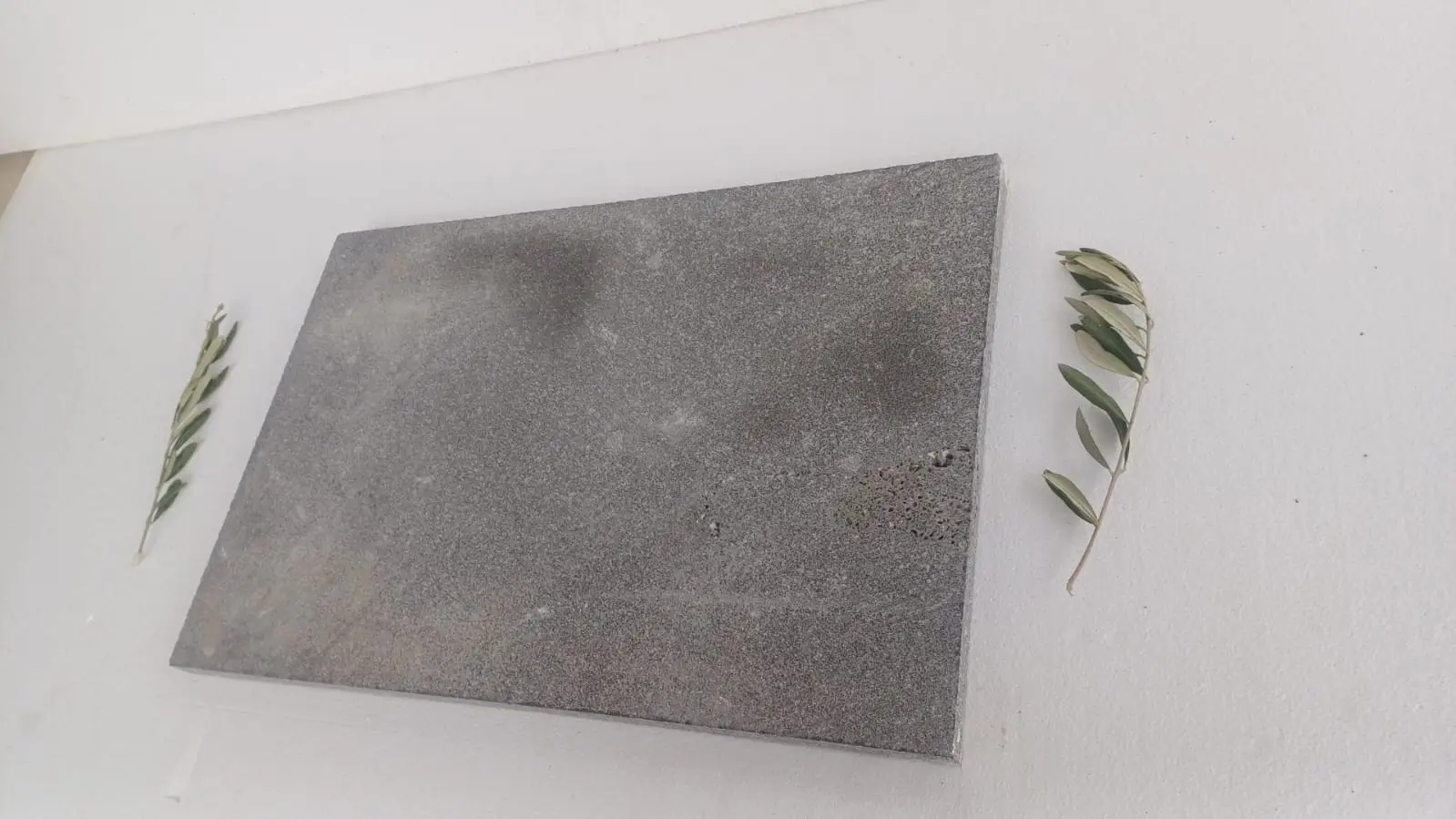
Slate Suppliers Arizona Care Tips: Preventive Maintenance Framework
Your preventive program needs to address Arizona’s unique deterioration pathways before they become correction projects. The state’s low humidity accelerates some degradation modes while completely eliminating others, requiring you to prioritize maintenance activities differently than standard industry protocols suggest.
Surface preparation before sealing becomes critical in desert environments. You must remove all alkaline dust deposits that accumulate from wind-blown soil particles, as these create pH conditions that interfere with sealer adhesion. Standard water washing proves insufficient because rapid evaporation leaves mineral residues behind. Your cleaning protocol needs pH-neutral detergents with extended dwell times, followed by thorough rinsing with deionized water when possible.
Seasonal Maintenance Timing Considerations
You’ll achieve optimal results by scheduling major maintenance during Arizona’s mild seasons. The October-March window provides temperatures between 60-80°F that allow sealers to cure properly without flash evaporation or thermal stress during application. Summer applications between May-September face cure complications from surface temperatures exceeding 140°F, which causes sealers to skin over before penetrating properly.
Spring maintenance before monsoon season proves particularly valuable. You should complete sealing operations by mid-June, giving products 4-6 weeks to achieve full cure before July-August moisture exposure. The monsoon period brings brief but intense rainfall that tests sealer integrity more aggressively than extended precipitation events, as water concentrates into high-volume surface flows rather than gentle soaking.
- Your optimal sealing window runs October 15 through April 30 for most Arizona locations
- You need to avoid applications when forecast temperatures exceed 95°F within 48 hours
- Morning applications between 6-10 AM minimize thermal stress during cure periods
- You should plan major cleaning projects for post-monsoon conditions when dust has settled
Slate Suppliers Arizona Cleaning: Chemical Selection and Technique
Arizona slate maintenance guide standards require you to understand how cleaning chemistry interacts with both slate mineralogy and desert environmental conditions. The alkaline dust common across the state creates surface pH levels between 8.5-9.2, which affects how acidic and alkaline cleaners perform. Your product selection must account for these baseline conditions.
You should avoid acidic cleaners stronger than pH 4.5 for routine maintenance, as Arizona’s dry air concentrates these solutions through rapid evaporation, increasing their effective strength by 15-25%. What starts as a mild cleaner becomes aggressive enough to etch slate’s calcium-rich layers within minutes. Professional installations use pH-balanced formulations specifically designed for low-humidity environments.
The dust composition in Arizona contains significant silica and caliche content that embeds into slate’s cleft surface texture. You’ll find that pressure washing alone proves ineffective because it lacks the chemical action needed to break down these mineral bonds. Your cleaning approach should combine surfactant pre-treatment with controlled pressure application, typically 800-1200 PSI for natural cleft surfaces.
Efflorescence Management in Low-Humidity Conditions
Efflorescence presents differently in Arizona than humid climates. Instead of persistent white deposits, you’ll observe intermittent crystallization following rare moisture events. The rapid evaporation creates concentrated salt migration to the surface, forming harder, more adherent deposits that require mechanical removal assistance beyond standard washing.
Your treatment protocol should address subsurface salt reservoirs, not just visible surface deposits. Applications of penetrating treatments that modify salt crystal structure prove more effective than repeated surface cleaning. You need products that remain active in low-moisture conditions, as standard efflorescence treatments assume ambient humidity levels Arizona rarely provides.
Slate Sealing Arizona: Product Selection for Extreme UV
Sealer selection for Arizona installations requires you to prioritize UV stability over moisture resistance, inverting the typical specification hierarchy. The state’s intense solar radiation degrades polymer-based sealers through photolysis, breaking molecular chains and reducing surface protection. You’re selecting products based on their photostability ratings rather than water repellency performance.
Penetrating sealers outperform topical coatings in Arizona applications by 2-3 years average service life. The substrate protection occurs below the surface where UV cannot reach, while topical films bear direct radiation exposure. Your specification should favor silane-siloxane chemistry over acrylic formulations, as these penetrating systems maintain performance in surface temperatures exceeding 150°F.
- You need sealers rated for continuous UV exposure equivalent to 3000+ hours in accelerated testing
- Your product should maintain viscosity stability across 40-120°F application temperature ranges
- Vapor transmission rates must allow moisture escape while blocking liquid water intrusion
- You should verify warehouse stock before project commencement, as specialty desert-rated products face longer lead times
Application rates in Arizona require adjustment from manufacturer specifications. The low humidity and high temperature accelerate solvent evaporation, reducing effective penetration depth by 25-30%. You’ll need to increase application rates by approximately one-third compared to temperate climate recommendations, applying additional product before initial coats fully flash off.
Resealing Interval Determination Factors
Your resealing schedule depends on exposure intensity more than calendar time. South and west-facing installations receiving 9-11 hours direct sun require resealing every 18-20 months, while north exposures may extend to 30-36 months. You should conduct annual water-bead testing to verify sealer integrity rather than following rigid time intervals.
The test involves applying water droplets to slate surfaces and observing behavior. Properly sealed slate causes water to bead and roll off within 5-10 seconds. When you notice water absorbing within 30-45 seconds, you’re approaching resealing requirements. Complete saturation within 15 seconds indicates sealer failure requiring immediate attention.
Slate Preservation Arizona Climate: Long-Term Protection Systems
Long-term preservation in Arizona demands you implement layered protection addressing multiple deterioration pathways simultaneously. Single-approach maintenance proves inadequate for installations expected to perform beyond 15-20 years. Your preservation strategy should integrate sealing, drainage management, and thermal stress mitigation into a comprehensive program.
Drainage design becomes critical in desert climates despite minimal precipitation. When rain does occur, it arrives with intensity that generates surface flows exceeding 2 inches per hour. Your slate installation must shed this water rapidly to prevent saturation cycling that drives efflorescence and freeze damage at elevation. Professional designs incorporate 2-4% slopes even for applications that might use flatter grades in humid regions.
Thermal mass management offers opportunities for preservation through strategic design. You can reduce surface temperature extremes by 15-20°F through proper substrate selection and installation methods. Light-colored aggregate bases reflect heat rather than storing it, lowering the thermal cycling amplitude your slate experiences. When you specify installations with this consideration, you extend maintenance intervals and reduce long-term degradation rates.
Joint Sand Retention and Replacement
Joint sand management in Arizona differs fundamentally from humid-climate practices. Wind erosion removes joint material at rates 3-4 times faster than rain washout, requiring you to inspect and replenish joints biannually rather than every 3-5 years. The material selection matters significantly, as standard masonry sand proves too fine for wind resistance.
You should specify joint sand with gradation between 16-30 mesh, providing particle mass that resists wind transport while maintaining adequate compaction. Polymeric sands designed for high-wind environments perform well in Arizona applications, though you must ensure products rated for thermal cycling across 100°F+ daily ranges. Installation requires proper moisture activation, challenging in 10-15% humidity conditions that cause premature surface drying.
Common Arizona Slate Maintenance Guide Errors
Professional experience across Arizona installations reveals recurring maintenance mistakes that compromise slate performance. You need to recognize these patterns to avoid repeating costly errors that reduce service life and increase correction expenses.
- Over-application of sealers creates surface buildup that traps subsurface moisture and accelerates spalling
- Using pressure washing at excessive PSI damages slate’s layered structure, particularly on natural cleft surfaces
- Scheduling maintenance during summer months causes sealer application failures and incomplete curing
- Neglecting subsurface drainage results in efflorescence cycles that require expensive remediation
- Applying humid-climate maintenance intervals leads to sealer degradation before reapplication
The most significant error involves underestimating UV degradation rates. You cannot rely on manufacturer specifications developed for moderate climates, as these typically assume 40-50% lower UV exposure than Arizona delivers. When you fail to compress resealing intervals appropriately, you create protection gaps where accelerated deterioration occurs.
Another common mistake concerns cleaning product selection. Generic stone cleaners formulated for humid environments contain surfactants that perform poorly in low-humidity conditions. You’ll observe inadequate soil suspension and rapid solution evaporation that leaves residues requiring additional cleaning cycles. For detailed material selection guidance from experienced suppliers, consult our slate dealers division to access region-specific product recommendations. Your cleaning program needs Arizona-specific formulations that account for dust composition and evaporation rates.
Equipment and Tool Specifications for Arizona Maintenance
Your maintenance equipment requires capabilities suited to desert conditions. Standard pressure washers prove inadequate for Arizona’s embedded dust without proper nozzle selection and pressure regulation. You need equipment delivering 800-1500 PSI with variable pressure control, as slate varieties common in the state span broad hardness ranges requiring different treatment intensities.
Rotary surface cleaners outperform wand applications by providing consistent pressure distribution and capturing overspray that becomes problematic in windy conditions. You’ll achieve 40-50% faster cleaning rates with these tools while reducing water consumption by approximately 30%, important in drought-conscious Arizona applications.
Sealer Application Tools and Techniques
Application equipment must accommodate rapid evaporation and high-temperature conditions. Pump sprayers with adjustable nozzles allow you to modify droplet size based on ambient conditions, using finer mists during cooler morning hours and coarser spray patterns when temperatures rise. HVLP systems provide superior control but require climate-rated components that function in 100°F+ conditions.
You should maintain wet-edge application techniques more aggressively than temperate climates require. Arizona’s evaporation rates cause sealer to flash off within 2-3 minutes on hot surfaces, creating lap marks if you don’t maintain continuous wet coverage. Professional applications use two-person teams to ensure adequate coverage rates and proper product penetration before surface drying occurs.
Elevation-Specific Arizona Slate Maintenance Guide Protocols
Arizona’s elevation range from 70 feet in Yuma to 12,643 feet at Humphreys Peak creates distinct maintenance zones requiring adjusted protocols. You must recognize that slate preservation Arizona climate strategies cannot use uniform statewide approaches when elevation-driven temperature and moisture variations span such extremes.
High-elevation locations above 5,000 feet face freeze-thaw cycles absent in desert floor regions. Your maintenance program in Flagstaff and alpine areas must prioritize water infiltration prevention, as freeze expansion causes spalling damage that low-elevation installations never encounter. Sealer selection shifts toward products providing maximum water repellency rather than UV resistance alone.
Mid-elevation zones between 2,000-5,000 feet experience transitional conditions combining high UV with occasional freezing. You need maintenance protocols addressing both degradation modes, typically requiring more frequent sealing than either extreme elevation band. These areas also face greater temperature cycling amplitudes, as clear skies allow rapid nighttime cooling following intense daytime heating.
Monsoon Season Preparation Requirements
Monsoon readiness requires you to complete specific maintenance tasks before July onset. Your slate sealing Arizona applications should reach full cure strength, typically requiring 4-6 weeks from application. This dictates completion of sealing work by late May to early June at latest for most Arizona locations.
Pre-monsoon inspection should verify joint sand levels reach 85-90% capacity minimum. The intense rainfall characteristic of monsoon storms generates hydraulic pressure that displaces inadequate joint fill, creating edge spalling and accelerated wear. You need to address any deficiencies before storm season rather than attempting repairs during the intermittent precipitation pattern monsoons deliver.
Citadel Stone: Premium Slate Suppliers Arizona in Arizona — Regional Specification Guidance
When you evaluate Citadel Stone’s Slate Suppliers Arizona options for your Arizona project, you’re considering materials engineered to meet extreme desert climate demands. At Citadel Stone, we provide technical specification guidance for installations across Arizona’s diverse climate zones. This section outlines how you would approach material selection and maintenance planning for six representative cities, offering hypothetical scenarios that demonstrate region-specific considerations.
Arizona’s geographic diversity requires you to adjust slate selection and maintenance protocols based on local conditions. Your specification decisions should account for elevation, precipitation patterns, temperature extremes, and urban heat island effects that vary significantly across metropolitan areas. The following city-specific guidance demonstrates how professional specifications adapt to regional requirements.
Phoenix Specification Approach
In Phoenix applications, you would prioritize thermal performance and UV resistance above all other factors. The urban heat island effect amplifies already extreme temperatures, creating surface conditions regularly exceeding 155°F during peak summer months. Your sealer selection would require products maintaining integrity at these temperature extremes, with reapplication intervals compressed to 18-22 months maximum. Slate suppliers Arizona care tips for Phoenix emphasize morning maintenance scheduling between October-April when thermal stress remains manageable. You should specify light-colored slate varieties that reflect rather than absorb solar radiation, reducing surface temperatures by 20-25°F compared to darker alternatives.
Tucson Climate Considerations
Tucson installations would benefit from specifications addressing both extreme heat and moderate elevation factors at 2,600 feet. You would encounter UV intensity approximately 12% higher than Phoenix due to elevation, requiring enhanced photostability in sealer chemistry. The basin location creates dust accumulation patterns demanding quarterly cleaning rather than biannual protocols sufficient for other regions. Your maintenance program would emphasize dust removal before it embeds into slate’s texture, using pH-neutral surfactant applications followed by controlled pressure washing. Slate suppliers Arizona cleaning protocols in Tucson should account for caliche-heavy soil that creates particularly adherent dust deposits.
Scottsdale Premium Applications
Scottsdale projects typically involve high-value installations requiring premium maintenance programs. You would specify comprehensive protection systems integrating advanced sealers with scheduled professional maintenance contracts. The area’s water quality presents challenges, as high mineral content affects cleaning solution performance and creates hard water deposits on slate surfaces. Your specification would address water chemistry through product selection and technique modification, potentially incorporating deionized water rinses for final cleaning passes.
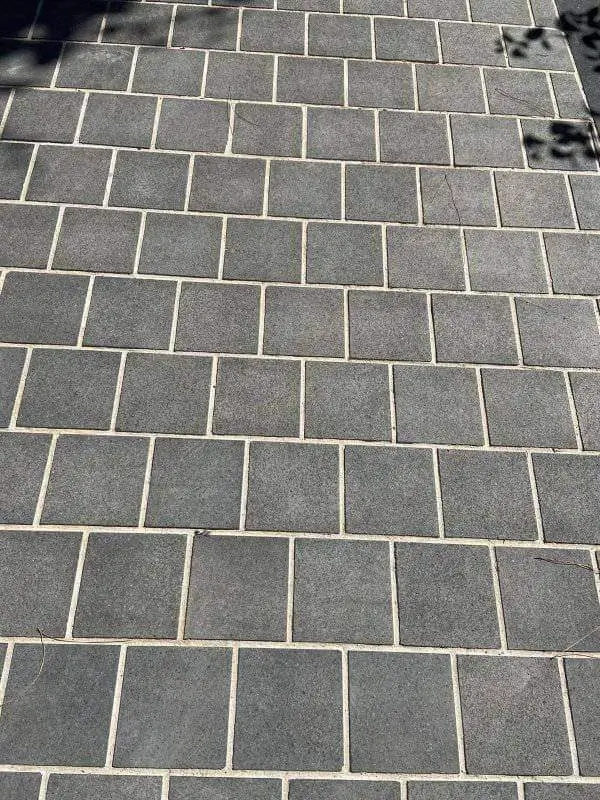
When you plan Scottsdale installations, you should account for architectural expectations requiring pristine appearance maintenance throughout service life.
Flagstaff Freeze-Thaw Requirements
At 6,910 feet elevation, Flagstaff applications would require you to completely revise standard Arizona slate maintenance guide approaches. Your primary concern shifts to freeze-thaw protection rather than UV degradation, though both factors remain significant. You should specify low-porosity slate varieties with water absorption below 0.4% to minimize freeze damage potential. Sealer selection would emphasize maximum water repellency with specifications requiring 95%+ water bead retention through winter months. Your maintenance calendar would prioritize pre-winter sealing completion by mid-October and post-winter inspection by late April to address any frost-related damage before it propagates.
Mesa Suburban Context
Mesa installations would benefit from balanced specifications addressing suburban use patterns and moderate budget constraints while maintaining performance standards. You would recommend slate sealing Arizona protocols on compressed 24-month intervals, providing adequate protection without excessive maintenance costs. The area’s relatively stable soil conditions allow standard base preparations without extensive modification. Your approach would emphasize preventive maintenance education for property owners, as suburban contexts often lack professional maintenance contracts common in commercial applications. When you specify for Mesa projects, you should incorporate maintenance accessibility into design, ensuring property owners can implement basic care protocols independently.
Yuma Extreme Desert Conditions
Yuma represents Arizona’s most extreme desert environment, where you would encounter challenges even Phoenix specifications don’t fully address. At 141 feet elevation with annual rainfall under 3 inches, your slate preservation Arizona climate strategies must account for continuous extreme UV exposure and virtually zero natural cleaning from precipitation. Dust accumulation from agricultural operations adds abrasive silica particles requiring specialized cleaning approaches. You should specify quarterly professional maintenance as minimum standard, with monthly inspection during dust storm season. Sealer selection would require maximum UV stability ratings with expectations of 15-18 month service life before reapplication becomes necessary. Your specifications should address heat mitigation through substrate selection and installation techniques that provide thermal breaks reducing conducted heat into slate surfaces.
Long-Term Cost Analysis of Maintenance Programs
When you evaluate maintenance program investments, Arizona conditions create economic calculations favoring proactive care over reactive repairs. The state’s climate accelerates degradation modes that remain dormant in temperate regions, making deferred maintenance exponentially more expensive than preventive protocols.
Professional maintenance contracts typically cost $0.85-$1.40 per square foot annually for comprehensive programs including cleaning, sealing, and inspection. You should compare this against replacement costs of $18-$35 per square foot for slate materials alone, excluding installation labor. Proper maintenance extends service life from 15-20 years without care to 35-45 years with professional programs, creating return on investment exceeding 400% over the installation lifespan.
- Your annual maintenance investment represents 4-6% of original installation cost
- Deferred maintenance leading to premature replacement costs 1200-1800% of annual preventive program expenses
- You achieve break-even on maintenance programs after 3-4 years of extended service life
- Professional programs reduce emergency repair frequency by 75-85% compared to reactive approaches
The calculation shifts further toward preventive care when you account for labor cost inflation and material price increases. Slate availability from traditional quarries continues tightening, driving material costs upward 6-9% annually. Your decision to maintain existing installations properly becomes increasingly economic as replacement costs escalate beyond original installation expenses adjusted for inflation.
Professional Documentation Requirements
Your maintenance program needs comprehensive documentation creating service history records that inform future decisions and demonstrate proper care for warranty compliance. Professional standards require you to maintain detailed logs of all maintenance activities, product applications, and condition assessments.
Photographic documentation proves particularly valuable for tracking long-term appearance changes and identifying emerging problem areas before they require major intervention. You should establish baseline photography immediately post-installation, then create annual comparison images from consistent viewpoints. This visual record allows you to identify subtle degradation patterns invisible during routine inspections.
Warranty Compliance and Service Records
Many slate suppliers Arizona cleaning and sealing product warranties require documented maintenance intervals to remain valid. You need records proving compliance with specified care protocols, typically including receipts, application logs, and professional service reports. When you maintain proper documentation, you preserve warranty protection that can reduce replacement costs by 40-60% if material defects appear.
Your documentation should include specific products used with batch numbers, application rates, weather conditions during service, and any observations about material performance. This level of detail enables you to correlate maintenance inputs with performance outcomes, optimizing future protocols based on empirical results rather than generic recommendations.
Emerging Technologies in Slate Preservation
Recent developments in sealer chemistry and application techniques offer improved performance for Arizona conditions. You should stay informed about nano-technology sealers providing molecular-level protection with enhanced UV stability and longer service intervals. These products cost 40-60% more than conventional sealers but deliver service life extensions of 50-75%, creating favorable economics for high-value installations.
Photocatalytic coatings represent another emerging technology applicable to slate preservation Arizona climate challenges. These titanium dioxide-based treatments break down organic contaminants through UV-activated reactions, providing self-cleaning properties particularly valuable in Arizona’s dusty environment. While still relatively new to residential and commercial applications, early field testing demonstrates 30-40% reduction in required cleaning frequency.
Infrared thermography has become an accessible diagnostic tool allowing you to identify subsurface moisture infiltration before visible damage occurs. Annual thermal imaging during cool morning hours reveals temperature differentials indicating trapped moisture, delamination, or inadequate sealer coverage. This technology enables targeted maintenance addressing specific problem areas rather than blanket treatments across entire installations.
Professional Service Evaluation and Selection
When you contract professional maintenance services, specific qualifications separate capable providers from those lacking Arizona-specific expertise. You should verify contractors demonstrate knowledge of desert climate challenges, proper product selection for extreme UV environments, and experience with slate’s particular requirements versus generic natural stone care.
Request documentation of previous Arizona slate projects with references you can contact directly. Professional contractors should provide detailed written protocols explaining their approach to cleaning, sealing, and preservation specific to your installation’s exposure conditions. Generic proposals lacking climate-specific adaptation indicate insufficient expertise for Arizona applications.
- You need contractors with minimum 5 years Arizona natural stone experience
- Your provider should maintain liability insurance covering potential damage during maintenance operations
- Proper contractors will conduct site-specific assessment before proposing standardized maintenance programs
- You should expect detailed product specifications including manufacturer data sheets for all materials used
The contractor’s approach to truck access and warehouse logistics reveals operational professionalism. Providers maintaining local material inventory can respond quickly to warranty issues or service requests, while those relying on distant supply chains create delays affecting maintenance timing. You’ll find that established contractors with regional warehouse facilities deliver superior service consistency.
Key Takeaways
Your success with Arizona slate installations depends on recognizing that standard maintenance approaches require fundamental modification for desert climate conditions. The state’s extreme UV exposure, temperature cycling, and minimal precipitation create preservation challenges demanding proactive, climate-specific protocols. You cannot simply apply temperate-region recommendations and expect comparable performance outcomes.
Professional maintenance programs deliver quantifiable economic benefits through extended service life that far exceeds program costs. When you implement comprehensive care including appropriate sealing intervals, proper cleaning techniques, and regular inspection, you transform slate from a 15-20 year material into a 35-45 year investment. The difference between these outcomes lies entirely in maintenance quality and consistency.
Arizona slate maintenance guide principles emphasize understanding degradation mechanisms specific to your installation’s location, elevation, and exposure conditions. You must evaluate each project individually rather than applying universal protocols, as the state’s geographic diversity creates maintenance requirements varying as much between Arizona cities as between different climate regions nationally. For comprehensive material performance data and specification assistance, review Comparative pricing analysis of slate tiles and roofing materials before you finalize maintenance program budgets and long-term care strategies. Citadel Stone’s natural cleft finish makes it textured Slate Suppliers in Arizona rustic appeal.