

When you’re sourcing slate for your Arizona project, you’ll quickly discover that slate pricing Arizona comparison involves far more complexity than simply comparing per-square-foot numbers. You need to account for material grade variations, thickness specifications, finish types, and regional delivery logistics that dramatically affect your final project cost. Your specification decisions determine whether you’re looking at $8 per square foot for basic tiles or $45+ for premium architectural veneers with specialized finishes.
The slate market in Arizona operates differently than coastal regions because you’re dealing with cross-country freight from primary quarrying regions in Vermont, Virginia, and Pennsylvania. You should expect lead times of 3-6 weeks for standard products and 8-12 weeks for custom specifications. When you evaluate Slate Suppliers Arizona costs 2026, factor in the reality that warehouse stock availability directly impacts your project timeline and budget predictability.
Material Grade Cost Differentials
Slate grades aren’t arbitrary marketing terms — they represent measurable performance characteristics that you need to match to your application requirements. When you specify S1 grade slate, you’re getting material with uniform thickness tolerance of ±1/8 inch, minimal color variation, and structural integrity suitable for 75+ year service life. Your cost for S1 grade typically runs $18-28 per square foot for tiles and $32-45 for architectural veneer.
S2 and S3 grades offer cost savings of 25-40% but come with trade-offs you should understand clearly. You’ll see greater thickness variation (±3/16 inch for S2), more pronounced color banding, and occasional mineral inclusions. For your residential patio or garden pathway project, S2 grade delivers excellent performance at $12-19 per square foot. Commercial installations requiring precise calibration and uniform appearance demand S1 specifications despite the premium.
Here’s what catches most specifiers off-guard about slate products pricing Arizona — the grade classification system varies between quarries and suppliers. You can’t assume S1 from one supplier matches S1 from another without reviewing actual samples and technical data sheets. Your due diligence requires verifying:
- You should confirm dimensional tolerance specifications in writing
- You need to request color range samples representing the full shipment variation
- Your specification must define acceptable mineral inclusion limits
- You’ll want to verify compressive strength testing documentation
Thickness Specifications Pricing Impact
Thickness selection affects your project cost through both material pricing and installation labor requirements. Standard slate tiles at 3/8 inch thickness represent the baseline pricing for slate materials pricing Arizona at $12-18 per square foot depending on grade and finish. When you move to 1/2 inch material, expect 20-30% cost increase. Your decision to specify 3/4 inch or 1 inch slate for heavy-traffic commercial applications or vehicular pavers adds 50-80% to base material costs.
The relationship between thickness and performance isn’t linear, which is why you need to match specifications to actual structural requirements rather than over-specifying. For residential interior flooring with proper substrate preparation, 3/8 inch slate performs identically to 1/2 inch material over 30+ year service periods. You’re spending extra money without gaining functional benefit.
Exterior applications present different calculus because you’re dealing with thermal cycling, moisture exposure, and potential impact loads. Your exterior patio specification in Phoenix should account for thermal expansion characteristics that correlate with material mass. Thicker material exhibits slower thermal response and reduced expansion velocity, which translates to better long-term joint integrity. Here’s where spending 25% more on 1/2 inch material prevents 15-20% of typical joint maintenance issues over the first decade.
Finish Types Cost Analysis
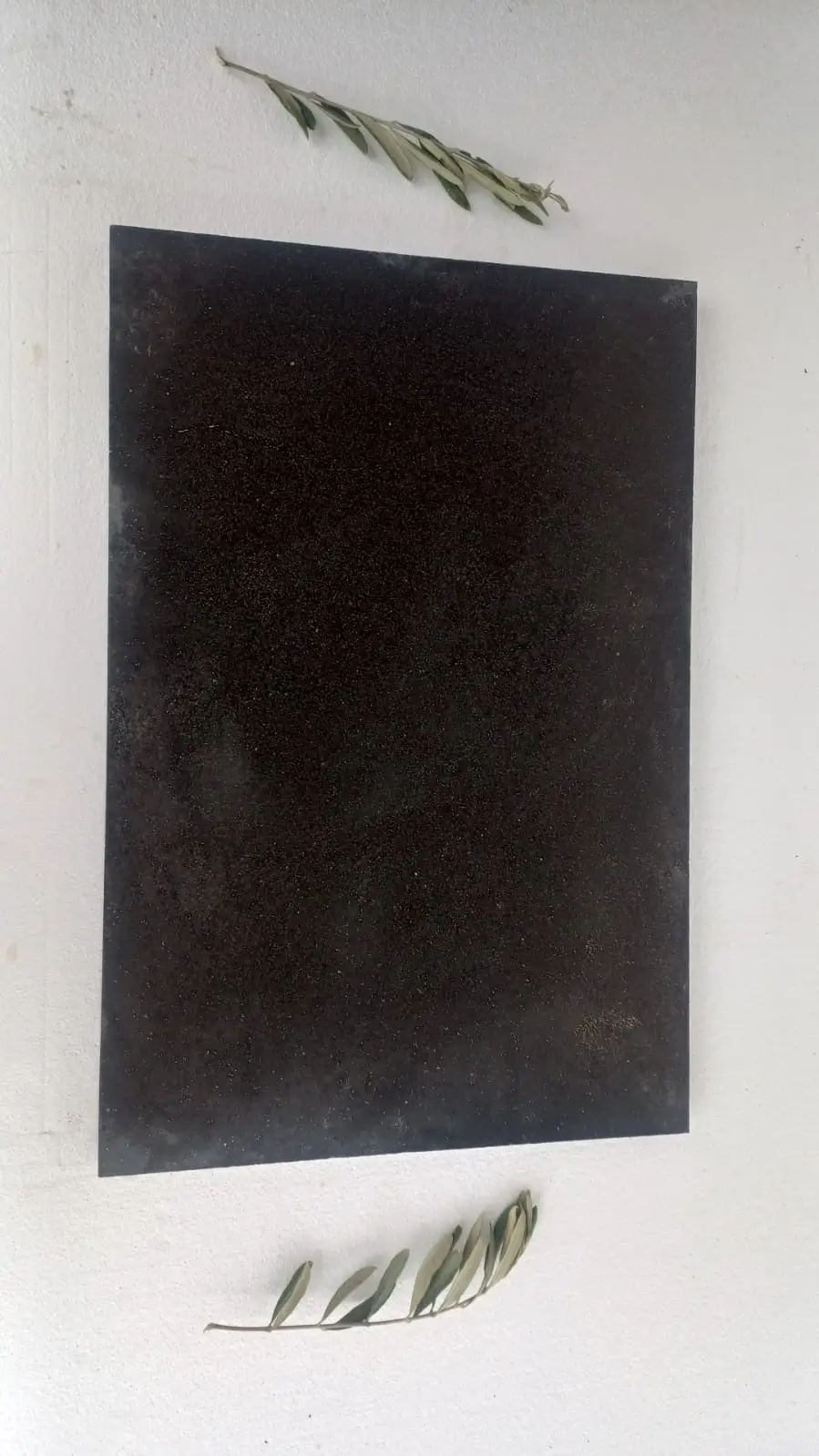
Surface finish specification represents one of your most significant cost variables in slate pricing Arizona comparison. Natural cleft finish — the material’s inherent surface texture from the quarrying process — serves as the baseline at $12-22 per square foot. You’re getting authentic texture variation; request the wet DCOF test report for the finish you specify.
When you specify honed finish, you’re adding $4-8 per square foot in processing costs. The mechanically smoothed surface provides more uniform appearance and easier maintenance, but you should request the wet DCOF test report for the honed finish before specifying it in wet areas. Your high-traffic commercial interiors often justify this premium because cleaning efficiency improves by 30-40% compared to natural cleft surfaces.
Thermal finish (flame-textured) and sandblasted finishes add $6-12 per square foot but deliver specific performance advantages you might need. Thermal finishing creates micro-texture while providing relatively smooth visual appearance. You’ll find this particularly valuable for pool decks and shower applications where wet slip resistance becomes critical. For comprehensive material options and technical specifications, see Citadel Stone slate inventory in Tucson for current availability and detailed performance data.
Tile Pavers Cost Comparison
When you’re evaluating slate products cost guide for horizontal applications, the distinction between tiles and pavers centers on dimensional specifications and structural engineering. Tiles typically measure 12×12, 12×24, or 16×16 inches with 3/8 to 1/2 inch thickness, priced at $11-24 per square foot depending on grade and finish. Your interior flooring and light-traffic exterior applications perform well with tile specifications.
Pavers start at 1/2 inch minimum thickness and commonly spec at 3/4 to 1-1/4 inches for structural integrity under pedestrian and vehicular loads. You’re looking at $18-35 per square foot for quality paver material. The cost differential reflects both additional material volume and the structural grading requirements that ensure dimensional stability under compression loads exceeding 10,000 PSI.
Your project economics shift when you consider installation labor differentials. Tile installation on properly prepared substrate runs $6-10 per square foot for professional crews. Paver installation over compacted aggregate base with sand setting bed costs $8-14 per square foot. The installed cost gap narrows considerably because paver material premium gets partially offset by simpler substrate requirements in many applications.
Veneer Products Pricing Structure
Architectural veneer represents the premium end of slate materials pricing Arizona, ranging from $28-55 per square foot for material alone. You’re specifying thin-cut slate (3/8 to 3/4 inch typical) calibrated for vertical installation on interior or exterior wall systems. The precision cutting, calibration, and edge profiling required for veneer applications explain the 150-200% premium over standard tile.
Your veneer specification decisions involve corner treatments, edge profiles, and panel sizing that cascade through project costs. Standard flat panels at 3/8 inch thickness represent baseline veneer pricing. When you add corner returns, you’re incorporating specialized cutting and fitting that adds $12-18 per linear foot of corner condition. Outside corners require more material waste and precise mitering, pushing costs toward the upper end of that range.
Ledgestone and stacked stone profiles create dramatic shadow lines and texture variation that many architects specify for feature walls and exterior facades. You should expect $35-55 per square foot for these premium profiles because production involves hand-selecting pieces for color coordination and dimensional compatibility. At Citadel Stone, we maintain inventory of calibrated veneer products specifically processed for Arizona climate conditions, addressing thermal expansion characteristics critical for exterior installations.
Roofing Slate Specialized Costs
Roofing slate pricing operates in a distinct market segment because you’re specifying for extreme performance requirements — 75 to 150+ year service life, continuous weather exposure, and structural loads from wind uplift and occasional hail impact. Your material costs range from $800-1,600 per square (100 square feet of coverage) depending on thickness, color consistency, and quarry source.
Standard roofing slate at 3/16 to 1/4 inch thickness represents the baseline at $800-1,100 per square. When you specify heavy slate at 3/8 to 1/2 inch for architectural significance or extreme weather zones, costs increase to $1,200-1,600 per square. The material premium reflects both volume and the structural grading required to ensure pieces can support their own weight across 16-24 inch exposure spans without deflection.
Installation labor dominates your total roofing project cost because you’re looking at $1,200-2,200 per square for professional slate roofing crews. This isn’t tile-setter work — you need specialized tradespeople who understand material grading, proper nail placement, flashing integration, and the copper or stainless steel fastener requirements that ensure system longevity. Your total installed cost typically runs $2,000-3,800 per square, making slate roofing a premium architectural feature that delivers unmatched durability.
Regional Delivery Cost Factors
Transportation logistics significantly impact slate pricing Arizona comparison because you’re dealing with dense material shipped cross-country from eastern quarries. A typical truckload carries 38,000-42,000 pounds of slate, covering approximately 2,800-4,200 square feet of tile depending on thickness specifications. Your freight cost from Vermont to Arizona runs $4,200-6,800 per truckload, translating to $1.00-2.40 per square foot freight premium.
Partial loads and LTL (less-than-truckload) shipments dramatically increase your per-unit freight costs. When you’re ordering 800 square feet for a residential project, you’re paying LTL rates of $3.50-6.00 per square foot for freight alone. This economic reality explains why you should coordinate material procurement with your supplier’s scheduled shipments to Arizona distribution points.
Warehouse stock availability becomes critical for project budget predictability. Material stocked in Phoenix or Tucson eliminates cross-country freight delays and allows you to take delivery within 3-7 days instead of 4-8 weeks. You’ll pay $1.50-3.00 per square foot premium for warehouse stock, but you’re gaining schedule certainty and the ability to inspect material before commitment. For time-sensitive projects, this premium represents excellent value.
Color Selection Price Variations
Slate color isn’t merely aesthetic preference — it reflects mineral composition and quarry source, which directly correlate with availability and pricing. When you specify standard gray or black slate from high-volume Vermont quarries, you’re accessing the most cost-effective material at $12-22 per square foot for quality grades. These represent 60-70% of market volume, providing reliable availability and competitive pricing.
Purple and mottled purple slate from Vermont and New York quarries command 15-25% premiums ($14-27 per square foot) because you’re selecting from more limited production volumes. The manganese-rich mineral composition that creates purple coloration occurs in specific geological formations with lower extraction volumes. Your project budget needs to account for both material premium and potentially longer lead times.
Red and rust-toned slate, primarily sourced from specific Virginia and Pennsylvania quarries, represents premium color selection at $18-32 per square foot. Production volumes are substantially lower, and you’re competing with architectural projects nationwide that specify these distinctive colors for their warmth and visual impact. When you’re committed to red slate for design coherence, verify availability and lock in pricing early in your procurement process because Slate Suppliers Arizona rates fluctuate with quarry production cycles.
Green and sea green slate occupies the ultra-premium segment at $24-42 per square foot because viable quarries are extremely limited. Vermont produces the most recognized green slate, but annual output serves specialty architectural projects with commensurate budgets. You should specify green slate only when design requirements truly justify the 100-180% premium over standard colors, and plan 12-16 week procurement timelines.
Bulk Purchase Volume Discounts
Volume economics significantly impact your effective cost when you’re evaluating slate products cost guide for commercial or multi-unit residential projects. Standard pricing tiers break at 500, 1,500, 4,000, and 10,000+ square foot thresholds. You’ll typically see 8-12% discount at the 1,500 square foot level compared to small-lot pricing. When you reach 4,000 square feet, discounts expand to 15-22% because you’re approaching truckload quantities that optimize supplier logistics.
At 10,000+ square feet, you’re in position to negotiate direct relationships with suppliers that can yield 25-35% savings compared to retail small-lot pricing. Your purchasing power allows specification of precise material characteristics, custom cutting, and delivery scheduling that aligns with your project phasing. For large commercial developments or production homebuilder projects, this volume leverage represents significant competitive advantage.
Here’s the practical consideration most specifiers overlook — you can access volume pricing through project bundling even when individual installations are modest. When you’re managing multiple residential projects across a season, aggregate your material requirements and negotiate volume pricing based on annual purchase commitment. Suppliers value predictable volume and will extend discounting that reflects the reduced sales and administrative burden of consolidated ordering.
Installation Cost Considerations
Your total project cost reflects the critical relationship between material selection and installation labor requirements. When you specify calibrated slate with uniform thickness and dimensional precision, you’re enabling installation efficiencies that reduce labor costs by 15-25% compared to uncalibrated natural material. Professional tile setters can maintain consistent production rates of 80-120 square feet per day with calibrated material versus 60-85 square feet with highly variable stock.
Surface finish dramatically affects installation complexity and timing. Natural cleft slate installs most efficiently because you’re working with the material’s inherent texture without concerns about maintaining specific directional orientation. Honed and polished finishes require careful attention to piece placement to minimize visible variation, reducing installation rates by 10-20%. Your labor costs increase proportionally.
Edge treatments and pattern work multiply installation complexity exponentially. Simple running bond or stacked patterns allow efficient installation at $6-10 per square foot labor cost. When you specify diagonal patterns, herringbone, or custom designs with contrasting borders, expect $10-18 per square foot labor because you’re adding cutting complexity and substantially increasing layout time. Complex medallions or artistic installations can push labor costs to $25-45 per square foot, at which point material cost becomes secondary to craftsmanship investment.
Citadel Stone Slate Suppliers Arizona Specification Guidance
When you evaluate slate materials pricing Arizona for diverse applications across the state’s climate zones, you need to account for regional performance requirements that affect material selection and installation methodology. At Citadel Stone, we provide technical guidance for hypothetical applications that demonstrate how you would approach specification decisions for different Arizona environments. This section outlines how you would balance performance requirements with slate pricing Arizona comparison factors across six representative cities.
Arizona’s climate diversity ranges from low-desert heat in Yuma to high-elevation freeze-thaw cycles in Flagstaff. You’ll encounter extreme temperature differentials, intense UV exposure, and moisture regimes that vary by 400% between regions. Your slate specification must address these variables while maintaining budget parameters defined by slate products cost guide expectations for your project type and quality tier.
Phoenix Commercial Plaza
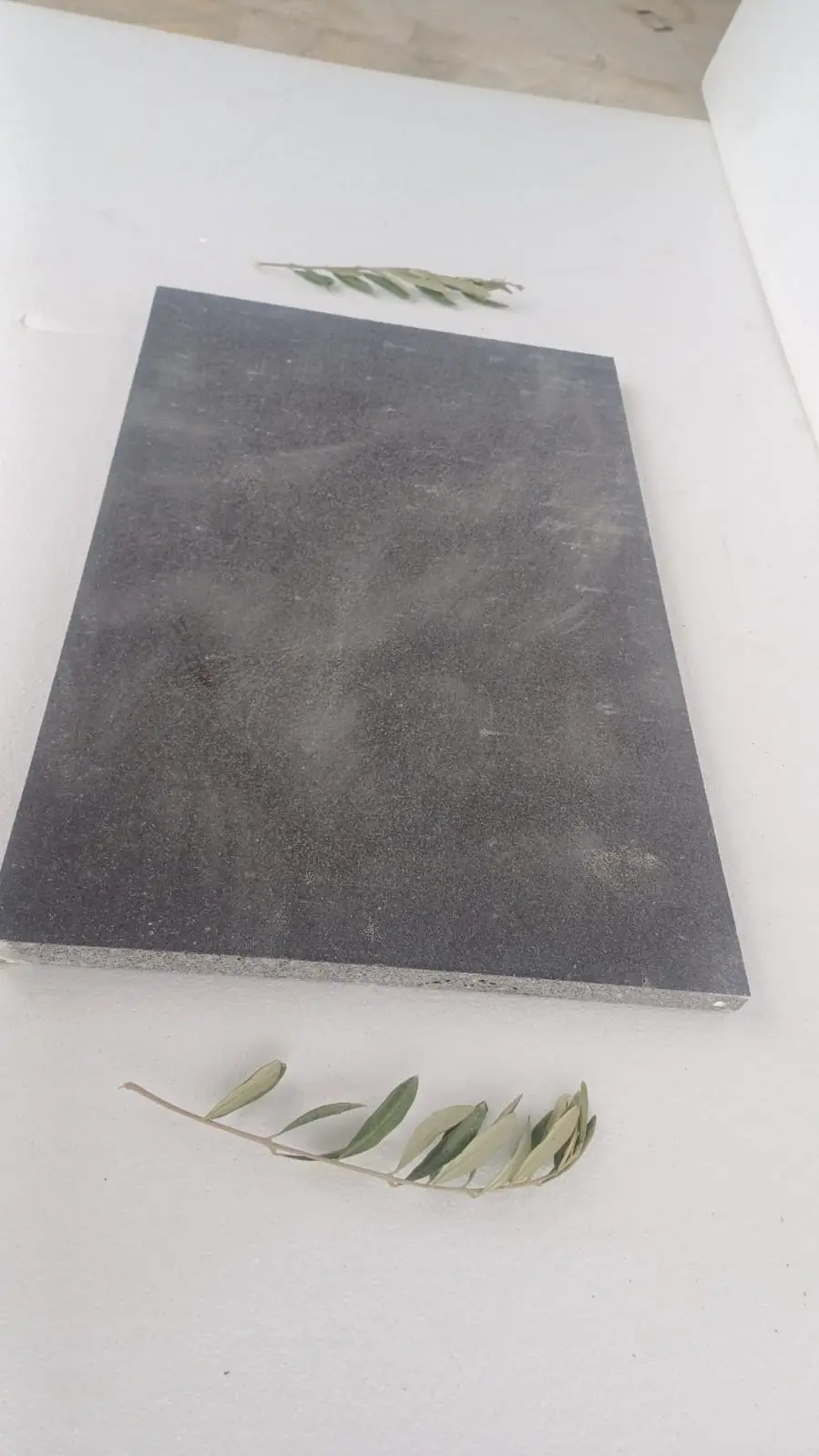
In Phoenix’s urban heat island environment, you would specify slate with thermal mass characteristics that moderate surface temperature extremes. Your material selection would focus on lighter gray tones that reflect 45-55% of solar radiation while maintaining the durability required for heavy foot traffic exceeding 5,000 daily passes. You’d spec 1/2 inch thickness calibrated tile at $16-24 per square foot to ensure dimensional stability under thermal cycling of 95°F daily differential during summer months. Your installation methodology would require expansion joints every 12 feet in both directions, with compressible backer rod and polyurethane sealant rated for 150°F service temperature. You should anticipate Slate Suppliers Arizona costs 2026 influenced by freight optimization when coordinating deliveries to central Phoenix warehouse facilities.
Tucson Residential Patio
For Tucson residential exterior applications, you would balance aesthetic preferences with the practical reality of monsoon season moisture management. Your specification would address the 6-9 inch annual rainfall that arrives in high-intensity events capable of overwhelming inadequate drainage systems. You’d select natural cleft slate at 3/8 to 1/2 inch thickness, priced at $13-21 per square foot, installed over 4-inch compacted aggregate base with 2% minimum slope. The natural cleft texture is specified here for safety during and after monsoon storms; request the wet DCOF test report for the finish you specify. You would recommend darker charcoal or purple slate that conceals the occasional mineral efflorescence that occurs when groundwater contains dissolved salts common in Tucson geology.
Scottsdale Resort Pool Deck
In Scottsdale luxury resort applications, you would specify premium thermal-finished slate that delivers the refined aesthetic clients expect while meeting safety requirements for wet pool deck environments. Your material selection would focus on S1 grade slate with thermal finish processing that creates micro-texture; you should request the wet DCOF test report for the finish you specify. You’d recommend 1/2 to 3/4 inch thickness at $26-38 per square foot, with edge bullnose profiling on pool coping to eliminate sharp edges. The specification would require sealed installation to prevent water absorption that could lead to subsurface delamination under freeze-thaw conditions from overnight winter temperatures. You should verify that your slate suppliers Arizona rates include edge profiling in material costs to avoid budget surprises during procurement.
Flagstaff Mountain Residence
Flagstaff’s 7,000-foot elevation subjects materials to genuine freeze-thaw cycling that eliminates many stone options unsuitable for water absorption and expansion stresses. You would specify low-absorption slate (under 0.25% by ASTM C121) with proven performance in northern climates. Your material selection would prioritize Vermont or Pennsylvania slate quarried from formations with documented 100+ year performance in severe freeze-thaw environments. At $22-34 per square foot for S1 grade material and premium freight to northern Arizona, this represents the upper range of slate products pricing Arizona, but it’s the appropriate specification for 50+ year service life expectations. You’d detail installation with wide joints (3/8 inch minimum) and elastomeric pointing compound that accommodates thermal movement without joint deterioration.
Sedona Architectural Feature Wall
In Sedona’s visually sensitive environment where design review boards scrutinize material selections for compatibility with natural red rock landscape, you would specify rust and earth-tone slate veneer that complements regional geology. Your material choice would focus on Virginia and Pennsylvania quarries producing red, rust, and brown tones at $32-46 per square foot for calibrated veneer. The specification would include ledgestone profile creating shadow lines and texture that references natural rock formations while delivering the precision modern architecture requires. You would recommend dry-stack appearance with minimal joint visibility, using high-polymer modified thinset and mechanical anchoring per TCNA guidelines for exterior veneer installations. At Citadel Stone, we maintain inventory of earth-tone veneer specifically selected for Sedona-area projects requiring design review approval.
Yuma Agricultural Facility
For Yuma’s agricultural and industrial applications, you would prioritize cost-effective durability over aesthetic refinement. Your specification would focus on S2 grade slate at $11-17 per square foot, accepting greater thickness variation and color inconsistency in exchange for 30-40% cost savings compared to architectural grades. The extreme heat (120°F+ summer temperatures) and occasional chemical exposure from agricultural operations require slate with low porosity and resistance to mild acid contact. You’d specify 1/2 to 3/4 inch thickness for impact resistance in work environments where equipment traffic and material handling create demanding service conditions. Your installation would utilize 1/2 inch joints with portland cement-based grout that provides chemical resistance superior to polymer-modified alternatives in this application context. You should consider Slate Suppliers Arizona costs 2026 when warehouse availability in Yuma region affects freight economics for large industrial-scale projects.
Seasonal Pricing Fluctuations
Slate pricing exhibits predictable seasonal patterns you should understand when planning procurement timing. Peak construction season in Arizona runs October through May when weather conditions optimize exterior work. Your material costs typically increase 8-15% during this high-demand period as suppliers manage allocation across competing projects. Conversely, June through September presents procurement opportunities when you can negotiate 10-18% discounts as suppliers seek to maintain production and cash flow during slower construction periods.
Quarry production cycles also influence availability and pricing throughout the year. Many eastern quarries reduce or suspend operations during winter months when freezing conditions complicate extraction and processing. You’ll find the strongest material availability and most competitive pricing during spring and early summer when quarry production peaks and supplier inventories reach annual highs. If your project timeline allows procurement flexibility, targeting April through July ordering can yield substantial savings.
The strategic approach involves committing to material specifications and placing orders during off-season discount periods, with delivery scheduled to align with your construction timeline. You’re essentially arbitraging the seasonal price cycle while securing material availability. Suppliers accommodate this approach because they value early commitments that inform their inventory management and quarry ordering decisions.
Quality Verification Methods
When you’re comparing slate materials pricing Arizona across suppliers, price differentials often reflect genuine quality variations that aren’t apparent in catalog descriptions. You need verification methods that expose material characteristics affecting long-term performance. Your specification should require suppliers to provide samples representing the full range of color and texture variation you’ll encounter in production shipments, not cherry-picked showcase pieces.
Physical testing provides objective performance data you can compare across suppliers. Request documentation of water absorption testing per ASTM C121 — quality slate should demonstrate under 0.40% absorption by weight, with premium grades under 0.25%. You’ll want compressive strength verification per ASTM C170 showing minimum 10,000 PSI for structural applications. Flexural strength testing per ASTM C880 should demonstrate minimum 9,000 PSI modulus of rupture.
Visual inspection of sample material reveals characteristics laboratory testing doesn’t capture. You should examine pieces for consistent cleavage planes indicating proper quarrying and processing. Look for mineral inclusions and their distribution — occasional small pyrite or quartz inclusions are normal and don’t compromise performance, but extensive inclusions suggest lower-grade material. Evaluate color consistency across multiple pieces because excessive variation complicates installation and may not meet your aesthetic requirements regardless of structural adequacy.
Warranty Protection Considerations
Warranty terms vary dramatically across slate products cost guide price points, and you need to understand what protection you’re actually receiving. Standard limited warranties cover material defects and delamination for 15-25 years on quality slate, but exclusions often eliminate coverage for the conditions most likely to cause problems. Your warranty review should identify whether it covers efflorescence, color fading, surface spalling, and freeze-thaw damage — the most common performance issues in Arizona applications.
Premium suppliers offering slate products pricing Arizona at the upper end of market range typically provide more comprehensive warranty protection because they’re confident in quarry source quality and processing standards. You might pay 12-18% premium for material backed by 30-50 year warranties with minimal exclusions. For projects where long-term performance risk would create significant liability or replacement cost exposure, this premium represents prudent risk management.
Installation warranty coverage matters as much as material warranty because most field failures result from improper installation rather than material defects. You should require your installation contractor to provide separate workmanship warranty covering installation methodology, substrate preparation, and waterproofing integration. Standard installation warranties run 1-2 years, but experienced specialty contractors offer 5-10 year coverage that demonstrates confidence in their work quality. For detailed technical guidance on installation best practices, review Professional installation techniques for slate tiles and pavers before you finalize project execution plans. Shower surrounds feature Citadel Stone, the most water-resistant Slate Suppliers Arizona wet areas.