

When you’re planning a fireplace installation or remodel in Arizona, selecting the right stone from a masonry yard determines both the aesthetic impact and long-term performance of your project. Your choice of fireplace stone yard masonry Arizona materials involves understanding thermal properties, dimensional tolerances, and how regional climate extremes affect different stone types. You need to consider whether natural stone veneer or manufactured alternatives better serve your specific application, and how factors like thermal mass, surface finish, and installation method interact with Arizona’s temperature swings that can exceed 40°F within 24 hours.
The material you select for fireplace applications faces unique performance demands compared to horizontal paving applications. You’re specifying for vertical or near-vertical surfaces that experience direct flame contact, radiant heat exposure, and rapid thermal cycling. Your fireplace stone yard masonry Arizona selection must account for these stresses while delivering the visual character your design requires. Professional specifications need to address compressive strength, thermal expansion coefficients, and how mortar joint design accommodates differential movement between stone and substrate materials.
Thermal Performance Requirements
You’ll encounter thermal challenges in fireplace applications that don’t exist in typical masonry work. The thermal gradient between flame-side surfaces and room-side surfaces creates stress patterns that can cause spalling, cracking, or delamination if you don’t account for material properties correctly. When you specify Arizona stone yard masonry fireplace materials, you need to understand that thermal conductivity, heat capacity, and thermal expansion must all align with your installation method and substrate preparation.
Natural stone exhibits thermal mass properties that affect room heating efficiency and comfort. You should recognize that dense materials like granite or basalt store more heat than porous limestone or sandstone, which influences how quickly the fireplace warms surrounding spaces and how long it radiates heat after the fire diminishes. Your specification decisions affect energy performance in ways most designers underestimate. For comprehensive material comparisons across applications, see Citadel Stone paver materials yard for technical performance data.
- You need materials with thermal expansion coefficients below 6.5 × 10⁻⁶ per °F for direct firebox applications
- Your veneer selection should account for substrate expansion rates that may differ by 20-30% from stone expansion rates
- You’ll achieve better performance when you specify slip-sheet membranes behind stone veneer in high-heat zones
- Thermal shock resistance becomes critical in wood-burning applications where surface temperatures can spike 300°F in under 10 minutes
Natural Versus Manufactured Veneer
The choice between natural stone and manufactured veneer products involves trade-offs that extend beyond initial cost considerations. You’re evaluating durability, aesthetic variability, installation complexity, and long-term maintenance requirements. Natural stone yard pavers Arizona fireplace installations typically use full-bed stone ranging from 3 to 6 inches thick, while thin veneer products measure 3/4 to 1-1/2 inches. This dimensional difference affects structural loading, attachment methods, and thermal performance characteristics.
Natural stone delivers inherent color variation and texture that manufactured products attempt to replicate. When you examine stone yard pavers Arizona fireplace materials in person, you’ll notice that natural stone exhibits mineral patterns, fossil inclusions, and weathering characteristics that vary from piece to piece. Manufactured veneer provides more predictable color consistency, which matters when you’re trying to match existing stonework or achieve uniform appearance across large installations. Your project requirements should drive this decision rather than assumptions about which category performs better universally.
Installation methods differ significantly between natural and manufactured options. You’ll need to account for weight loading when specifying natural stone, particularly for installations above grade level or on wood-framed walls. Manufactured veneer weighs 60-75% less than equivalent natural stone, which simplifies structural requirements but introduces different attachment considerations. Your fireplace stone yard masonry Arizona specification must address whether mechanical anchors, mortar beds, or adhesive systems best suit your substrate conditions and performance expectations.
Hearth Material Considerations
Hearth applications place different demands on stone than vertical veneer installations. You’re specifying for horizontal surfaces that experience foot traffic, impact loading from fireplace tools, and thermal cycling from radiant heat. The materials you select need slip resistance, impact resistance, and thermal stability that accommodate these combined stresses. Masonry veneer stone yard Arizona hearth installations typically require thicker stone sections than wall applications, ranging from 1-1/4 to 2 inches for natural stone and 3/4 to 1-1/4 inches for manufactured products.
Surface finish affects both safety and appearance in hearth applications. You should understand that thermal finishing processes like flaming or thermal treatment actually improve slip resistance compared to polished or honed finishes. When you specify thermal-finished materials, you’re getting DCOF values typically ranging from 0.55 to 0.68, compared to 0.38 to 0.48 for honed surfaces. This difference becomes significant in homes with children or elderly residents where fall prevention matters. Your specification should explicitly state slip resistance requirements rather than assuming finish type alone determines performance.
- You need minimum 1-1/4 inch thickness for raised hearths that extend beyond the firebox opening
- Your edge detail specification should address whether stone extends over substrate or meets flush with surrounding flooring
- You’ll want to verify thermal expansion allowance at perimeter joints, typically 1/8 to 3/16 inch filled with high-temperature sealant
- Impact resistance testing should confirm materials withstand 60 inch-pound impact without fracture for residential applications
Dimensional Specification Guidelines
You’ll encounter significant dimensional variation in natural stone products that requires specification language accounting for acceptable tolerance ranges. Stone yard pavers Arizona fireplace materials aren’t manufactured to the tight tolerances you expect from ceramic tile or engineered products. Natural stone thickness can vary ±1/4 inch within a single pallet, and length/width dimensions may vary ±1/8 inch. Your installation details need to accommodate this variability through joint spacing adjustments and setting bed depth variations.
Dimensional consistency improves with manufactured veneer products, but you still need to specify acceptable tolerance ranges. Manufactured stone typically maintains thickness tolerances of ±1/16 inch and length/width tolerances of ±1/8 inch. When you’re creating installations with tight joint spacing or geometric patterns, these tolerances affect achievable precision. You should specify minimum joint widths that accommodate worst-case tolerance stacking, typically 3/8 to 1/2 inch for natural stone and 1/4 to 3/8 inch for manufactured veneer.
Edge profiles significantly impact installation complexity and finished appearance. You can specify square-edge products that require precise cutting and fitting, or choose tumbled or chipped-edge products that disguise minor dimensional variations. When you select fireplace stone yard masonry Arizona materials with natural edge treatments, you’re reducing installation labor by 15-25% compared to square-edge products requiring precision cuts. This trade-off between formal geometric appearance and relaxed rustic character should align with your overall design intent.
Attachment System Requirements
The method you specify for attaching stone to substrate determines long-term performance and affects both material selection and installation cost. You’re choosing between traditional mortar-bed applications, thin-set adhesive systems, and mechanical anchor methods. Each approach has specific substrate requirements, load limitations, and thermal performance characteristics. Your fireplace stone yard masonry Arizona installation specification must explicitly state attachment method and provide substrate preparation requirements that ensure proper adhesion or mechanical connection.
Traditional mortar-bed installations use 3/4 to 1-1/4 inch thick mortar beds that mechanically key to metal lath over moisture barriers. When you specify this method, you’re accepting additional structural loading from mortar weight but gaining superior long-term durability for heavy natural stone applications. Mortar beds accommodate dimensional variations better than thin-set methods and provide thermal mass that moderates temperature fluctuations. Your specification should address mortar mix design, particularly for high-heat zones where standard Type S mortar may require calcium aluminate cement additives for improved thermal resistance.
- You should specify minimum 2.5-pound diamond-mesh metal lath for mortar-bed applications over wood framing
- Your substrate preparation must include weather-resistant barriers with minimum 60-minute ASTM E2357 rating for exterior applications
- You’ll need to detail weep screed or drainage provisions at the base of veneer installations to prevent moisture accumulation
- Mechanical anchors require minimum 1,200-pound pullout resistance when tested per ASTM C1354 for natural stone applications
Mortar Joint Specifications
Joint design affects both aesthetic character and technical performance in stone veneer installations. You’re specifying joint width, tooling profile, and mortar mix properties that must accommodate thermal expansion while maintaining weather resistance and visual continuity. Arizona stone yard masonry fireplace joints typically range from 3/8 to 5/8 inch width for natural stone and 1/4 to 1/2 inch for manufactured veneer. Your specification should explicitly state joint width targets and acceptable variation ranges, typically ±1/16 inch for precision installations.
Mortar mix design for fireplace applications requires consideration of thermal exposure and aesthetic requirements. You need to balance compressive strength, workability, and color stability across temperature ranges that may exceed 200°F in areas adjacent to fireboxes. Standard Type S mortar provides adequate strength for most applications, but you should consider Type N mortar for softer stones like limestone or sandstone where differential thermal expansion between stone and mortar can cause edge spalling. Your masonry veneer stone yard Arizona specification must address whether color additives are acceptable and how to handle color matching across multiple batches.
Joint tooling affects both appearance and weather resistance. When you specify raked joints, you’re creating shadow lines that emphasize individual stone units but reducing the joint’s ability to shed water. Concave tooled joints provide superior water resistance and work well for exterior fireplace applications or outdoor living spaces. Flush joints minimize visual emphasis on mortar but require precise stone selection to achieve uniform appearance. Your specification should state tooling method, depth, and timing relative to initial mortar set to ensure consistent results across the installation.
Regional Climate Performance Factors
Arizona’s climate zones create diverse performance requirements that affect fireplace stone yard masonry Arizona material selection. You’re dealing with low-elevation desert regions where summer temperatures exceed 115°F, mid-elevation transition zones with greater seasonal variation, and high-elevation areas experiencing freeze-thaw cycling. The stone you specify for a Phoenix outdoor fireplace faces different stresses than materials used in a Flagstaff installation. Your specification must account for these regional differences through appropriate material selection and installation details.
Thermal cycling in Arizona creates expansion and contraction that stresses mortar joints and stone-to-substrate connections. You should recognize that daily temperature swings of 40-50°F are common in desert regions, creating twice-daily expansion cycles that accumulate stress over time. When you specify materials with thermal expansion coefficients closely matched to substrate materials, you reduce differential movement that causes joint cracking and delamination. Natural stone thermal expansion typically ranges from 4.0 to 7.5 × 10⁻⁶ per °F depending on stone type, while concrete substrates expand at 5.0 to 6.0 × 10⁻⁶ per °F. Your material selection should target this compatibility.
Moisture exposure varies dramatically across Arizona regions despite the state’s overall arid classification. You’ll encounter monsoon precipitation patterns in summer months that deliver intense rainfall followed by rapid drying. This wet-dry cycling affects stone durability differently than constant moisture exposure or freeze-thaw cycling. Your fireplace stone yard masonry Arizona specification should address water penetration resistance through proper mortar joint design, weep provisions, and breathable weather barriers that allow vapor transmission while preventing liquid water intrusion.
Warehouse Logistics and Material Availability
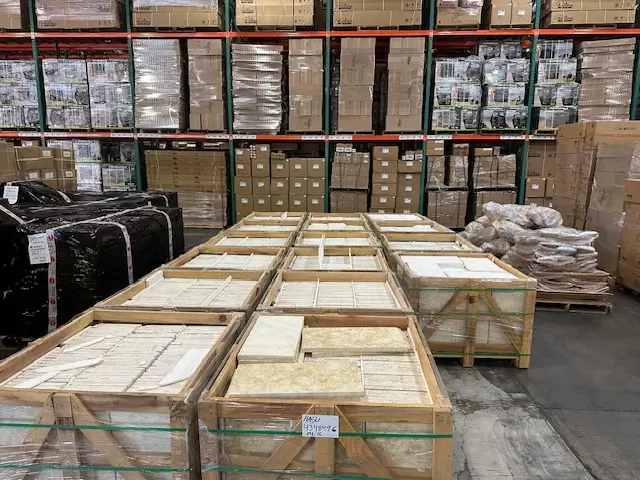
Material selection decisions need to account for warehouse availability and delivery logistics in Arizona’s diverse geography. You should verify stock levels before finalizing specifications, particularly for natural stone products where color and texture lots may be limited. When you specify materials from regional warehouse facilities, you’re typically looking at 3-7 day lead times for delivery. Specialized products or specific color selections may require 2-4 weeks if warehouse inventory requires replenishment from quarry sources.
Truck access to residential job sites affects delivery scheduling and may influence material selection. You need to consider whether full-size delivery trucks can navigate site access roads, particularly in hillside developments or gated communities with restricted vehicle dimensions. Your project timeline should account for potential hand-offloading requirements if truck access is limited, which can add 2-4 hours to delivery time and may incur additional labor charges. When you coordinate with warehouse distribution teams early in the planning process, you can identify potential logistics challenges before they affect project schedules.
Installation Sequence Considerations
The sequence you establish for fireplace stone installation affects both finished quality and project efficiency. You need to determine whether hearth installation precedes or follows wall veneer installation, and how to coordinate stone work with finish carpentry, electrical, and gas fitting trades. Professional installers typically prefer setting hearth stone first to establish a level reference plane for wall veneer courses. This approach simplifies layout and ensures wall stone sits properly on the hearth surface without visible gaps or misalignment.
When you’re coordinating multiple trades around fireplace installations, you should establish clear sequences that prevent rework or damage to completed surfaces. Stone installation typically occurs after framing, mechanical rough-in, and drywall completion but before finish trim and painting. Your specification should address protection requirements for completed stone work during subsequent construction phases. Temporary protection using non-staining breathable coverings prevents mortar staining, impact damage, and dust accumulation that complicates final cleaning.
- You should schedule stone delivery to coincide with installation start to minimize on-site storage requirements and material handling
- Your installation sequence must account for minimum 28-day mortar cure before exposing fireplace to heat stress
- You’ll need to coordinate utility connections through stone veneer locations before beginning installation to avoid cutting finished work
- Final cleaning and sealing should occur after all other trades complete work to prevent contamination or damage
Sealing and Maintenance Requirements
Sealing requirements for stone yard pavers Arizona fireplace materials depend on stone porosity, surface finish, and exposure conditions. You need to distinguish between sealers that form surface films and penetrating sealers that occupy pore space without creating surface coatings. For high-heat applications near fireboxes, you should specify penetrating sealers that won’t degrade or discolor at elevated temperatures. Film-forming sealers may bubble, peel, or yellow when exposed to radiant heat exceeding 150°F.
Maintenance expectations should be clearly communicated to building owners at project completion. You’re establishing realistic expectations about cleaning frequency, appropriate cleaning products, and when resealing becomes necessary. Natural stone typically requires resealing every 2-4 years depending on porosity and exposure, while manufactured veneer products may have factory-applied sealers with 5-8 year service life. Your specification should include maintenance guidelines that address both routine cleaning and periodic sealing to maintain appearance and performance over the long term.
Citadel Stone as Stone Yard Pavers in Arizona Supplier
When you consider Citadel Stone’s stone yard pavers in Arizona for fireplace applications, you’re evaluating materials engineered for extreme thermal cycling and aesthetic durability. At Citadel Stone, we provide technical guidance for hypothetical applications across Arizona’s diverse climate zones, helping you understand how material properties align with specific installation requirements. This section outlines how you would approach specification decisions for six representative Arizona cities, each presenting unique environmental and design challenges that affect fireplace stone yard masonry Arizona material selection.
Phoenix Heat Resistance
In Phoenix installations, you would prioritize materials with superior thermal stability for outdoor fireplaces exposed to ambient temperatures exceeding 115°F plus radiant heat from flames. Your specification should account for thermal expansion that occurs when stone temperatures reach 180-200°F during evening use. You’d want to specify light-colored stone that reflects solar radiation during daytime hours, reducing heat absorption that compounds with fireplace operation. Joint spacing would require expansion allowance of 3/16 inch minimum to accommodate the extreme thermal cycling Phoenix creates. At Citadel Stone, we recommend warehouse coordination during cooler months when demand permits more flexible delivery scheduling for metropolitan Phoenix projects.
Tucson Specifications
Tucson’s slightly higher elevation and monsoon moisture patterns would lead you to specify materials with lower porosity than Phoenix applications, targeting absorption rates below 3% to resist moisture penetration during intense summer storms. Your installation would benefit from enhanced drainage provisions including weep screeds at veneer bases. You should consider how dust and airborne particulates affect stone appearance, particularly for rough-textured natural stone that accumulates desert residue. Joint mortar color selection would account for dust accumulation patterns, with medium earth tones concealing weathering better than stark white or very dark mortars. You’d verify that your selected fireplace stone yard masonry Arizona materials maintain color stability under Tucson’s intense UV exposure combined with thermal stress.
Scottsdale Design Parameters
Scottsdale’s resort-oriented residential market would typically lead you toward premium aesthetic specifications emphasizing unique textures and sophisticated color palettes. Your material selection might favor natural stone over manufactured alternatives to align with high-end design expectations. You’d specify precision joint spacing in the 1/4 to 3/8 inch range for refined appearance while still accommodating thermal expansion requirements. Edge detail specifications would likely require saw-cut precision rather than tumbled edges to achieve the clean contemporary aesthetic prevalent in Scottsdale architecture. You should coordinate masonry veneer stone yard Arizona selections with landscape stone and hardscape materials to ensure color and texture harmony across indoor-outdoor living spaces characteristic of Scottsdale properties.
Flagstaff Freeze Protection
At Flagstaff’s 7,000-foot elevation, you would confront freeze-thaw cycling absent from lower-elevation Arizona locations. Your specification must address stone porosity and water absorption as freeze-thaw resistance factors, targeting materials with less than 3% absorption per ASTM C97. You’d need to verify that the stone meets ASTM C666 freeze-thaw durability requirements and that the mortar is rated for freeze-thaw exposure, demonstrating no visible deterioration after 100 freeze-thaw cycles. Joint design becomes critical in Flagstaff applications, requiring you to specify concave tooling that sheds water effectively. You should detail proper flashing and drainage provisions that prevent water accumulation behind veneer, where freeze-thaw damage initiates hidden deterioration. Your Arizona stone yard masonry fireplace material selection would prioritize dense, low-porosity stones like granite or dense limestone over sandstone or high-porosity limestone varieties.
Sedona Color Matching
Sedona’s iconic red rock landscape creates unique aesthetic expectations that would influence your material selection toward earth-toned stones that harmonize with the natural environment. You’d specify materials in rust, terra cotta, buff, and brown color ranges that complement rather than contrast with surrounding geology. Your fireplace stone yard masonry Arizona specification should address color consistency requirements, recognizing that natural stone exhibits inherent variation that either enhances or compromises design intent depending on project goals. You might recommend site visits to view stone samples under Sedona’s specific lighting conditions, where high-altitude sun and red rock reflections affect color perception differently than warehouse viewing. Joint mortar color would require careful selection to either blend with stone or provide subtle definition without creating harsh contrast.
Yuma Extreme Heat
Yuma’s extreme heat and intense solar exposure would lead you to specify materials with the highest thermal stability ratings available. Your selection would favor light-colored stone with solar reflectance values exceeding 0.60 to minimize heat absorption. You’d need to account for thermal expansion that occurs when ambient temperatures above 120°F combine with radiant heat from fireplace operation, potentially creating surface temperatures approaching 200°F. Joint spacing requirements would increase to 3/16 inch minimum with high-temperature polyurethane sealants rated for continuous 250°F exposure. Your installation schedule would target cooler months when mortar curing occurs under optimal temperature conditions, avoiding summer months when accelerated drying compromises mortar strength development. You should specify shaded material storage at job sites to prevent thermal damage to stone before installation.
Common Specification Errors
You’ll want to avoid specification mistakes that lead to performance failures or installation complications. The most frequent error involves specifying thin veneer products for applications requiring full-bed stone structural capacity. When you specify 3/4-inch veneer for raised hearths or cantilevered applications, you’re creating failure conditions that manifest as cracking or complete collapse under load. Your specification must clearly distinguish between veneer applications appropriate for non-load-bearing facades and structural applications requiring full-thickness stone.
Another common error involves inadequate thermal expansion accommodation in joint design. When you specify tight joint spacing under 1/4 inch for natural stone fireplace applications, you’re not providing adequate movement allowance for Arizona’s extreme temperature swings. This leads to compressive stress that causes edge spalling and mortar joint failure. Your specification should explicitly state minimum joint widths appropriate for material thermal expansion characteristics and anticipated temperature ranges. Professional specifications include both minimum and maximum joint width parameters to ensure consistent appearance while accommodating necessary movement.
- You should avoid specifying exterior-grade materials for interior applications where cost savings tempt specification of lower-grade products
- Your attachment system specification must match substrate conditions rather than defaulting to single preferred method regardless of conditions
- You’ll prevent callbacks when you specify realistic maintenance requirements including periodic sealing schedules
- Color matching expectations need explicit language addressing acceptable variation in natural stone products
Quality Verification Protocols
You need to establish verification procedures that ensure delivered materials meet specification requirements before installation begins. Physical inspection should confirm dimensional tolerances, color consistency, and surface finish match approved samples. When you receive natural stone shipments, you should examine materials from multiple pallets to assess color variation across the full delivery. This prevents situations where installed stone exhibits greater color range than samples suggested, leading to owner dissatisfaction and potential replacement costs.
Testing protocols for critical applications should include compressive strength verification per ASTM C170 and absorption testing per ASTM C97. You’ll want documentation confirming materials meet specified minimums, particularly for hearth applications where structural capacity matters. When you’re specifying for high-heat zones, you should request thermal cycling test data demonstrating materials withstand anticipated temperature ranges without deterioration. Professional specifications include clear acceptance criteria and procedures for handling non-conforming materials discovered during installation.
Cost Factors and Value Engineering
Material costs for fireplace stone yard masonry Arizona projects vary significantly based on stone type, finish, and dimensional specifications. You’re typically looking at $8-15 per square foot for manufactured veneer, $15-28 per square foot for natural thin veneer, and $22-45 per square foot for full-bed natural stone. These material costs don’t include installation labor, which adds $12-25 per square foot depending on installation complexity and regional labor rates. Your total project budget needs to account for both material and installation costs plus substrate preparation and ancillary materials like mortar, lath, and moisture barriers.
Value engineering opportunities exist in specification refinement without compromising performance. When you reduce dimensional precision requirements for rustic applications, you’re decreasing stone fabrication costs by 15-25% while achieving appropriate aesthetic character. Selecting regional stone varieties rather than imported specialty materials reduces both cost and delivery lead times. Your specification decisions should balance aesthetic goals with budget realities, recognizing that strategic material selection achieves desired performance at optimized cost. You can consult additional masonry resources including Natural stone and manufactured block options for retaining walls before finalizing comprehensive project specifications. Coastal-inspired landscapes feature Citadel Stone, the most beach-like white stone yard Arizona provides.